Műterem — Ingyenes világszerte történő szállítás — Szállítás: 2–6 hét
      William Nicholson, 1872 – 1949

      William Nicholson's 100 Most Famous Paintings

      Sara Bernhardt (1844–1923) (1897) is the painting William Nicholson is best remembered for. Chairing the Feathers The Eynsham Morris at the Gates of Blenheim Palace (1902) and Album Copies of Old Masters and other Paintings (no.28, p.13) complete the trio of best-loved canvases. Our catalogue counts 242 works by William Nicholson. Here are the 100 most famous, with the year, the museum and the story of each canvas.

      Ranked by our popularity score, which combines the searches, visits and orders for each work. Updated október 2026. Each painting on this page can be ordered as an oil reproduction painted by hand on linen canvas, or as a fine art print, made to the size you choose.

      Portrait of William Nicholson
      William Nicholson · 1872 – 1949
      Born · died
      1872 – 1949, Newark-on-Trent
      Movement
      Impressionistic realism
      Works in our catalogue
      242
      Most famous
      Sara Bernhardt (1844–1923) (1897)
      Most works at
      Royal Scottish Academy of Art - Architecture

      The ten best-loved paintings by William Nicholson

      Sara Bernhardt (1844–1923) (1897) by William Nicholson
      1

      Sara Bernhardt (1844–1923)

      1897 · Woodcut

      In this evocative monochrome portrait from 1897, Sir William Nicholson captures the magnetic presence of the incomparable Sara Bernhardt. The painting transcends a mere photographic likeness, offering instead a soulful meditation on fame, elegance, and the ephemeral nature of performance. As Bernhardt stands poised upon the stage, draped in an exquisite long dress and crowned with a sophisticated hat, the viewer is transported to the height of the Belle Époque.…

      Chairing the Feathers The Eynsham Morris at the Gates of Blenheim Palace (1902) by William Nicholson
      2

      Chairing the Feathers The Eynsham Morris at the Gates of Blenheim Palace

      1902 · Oil On Canvas · English Folk Dance And Song Society, London

      This captivating scene, "Chairing the Feathers The Eynsham Morris at the Gates of Blenheim Palace," transports the viewer directly into a moment of genteel celebration from the early twentieth century. One can almost hear the murmur of conversation and the rustle of fine fabrics surrounding this gathering. At the heart of the composition sits a distinguished gentleman, his attire suggesting an occasion of considerable importance or festive revelry. The magnificent…

      Album Copies of Old Masters and other Paintings (no.28, p.13) by William Nicholson
      3

      Album Copies of Old Masters and other Paintings (no.28, p.13)

      Sir William Newzam Prior Nicholson, a name perhaps less familiar than some of his contemporaries, nevertheless possessed an extraordinary artistic vision. His "Album Copies" – intimate renderings of masterworks created for private collections – offer a unique window into his meticulous technique and profound understanding of light, composition, and the human form. This particular piece, depicting a man standing beside a dog, is not merely a reproduction; it’s a distillation…

      Album Copies of Old Masters and other Paintings (no.5, p.5) by William Nicholson
      4

      Album Copies of Old Masters and other Paintings (no.5, p.5)

      Sir William Newzam Prior Nicholson's "Album Copies of Old Masters and other Paintings" represent a fascinating intersection of artistic reverence and accessible art production. This particular piece, an exquisite rendition of Anthony van Dyck’s iconic portrait “Charles I with M. de St Antoine,” offers a captivating glimpse into the Victorian era’s fascination with classical art while simultaneously showcasing Nicholson's remarkable skill as both a painter and a keen observer of…

      Glass and Fruit (1938) by William Nicholson
      5

      Glass and Fruit

      1938 · Kanadai Nemzeti Galéria, Ottawa

      In this 1938 oil on canvasboard, titled Glass and Fruit, the British artist William Nicholson explores a highly distilled approach to the still life. The work represents a departure from his more representational tendencies, leaning toward a significant degree of abstraction. It is a piece that demands a quiet, focused attention to understand its formal qualities.

      Sir William Henry Bragg (1862–1942) (1932) by William Nicholson
      7

      Sir William Henry Bragg (1862–1942)

      1932 · Oil On Canvas · The Royal Institution, London

      The room feels still, held in a moment of profound contemplation. Seated in a chair against a wall of subtle, textured plaster, an older gentleman meets the viewer's gaze with a directness that feels both heavy and light. There is a quiet dignity in his posture, a sense of a mind that has spent decades untangling the invisible structures of the universe. The light, streaming in from the upper left,…

      Field Marshal J. C. Smuts (1923) by William Nicholson
      8

      Field Marshal J. C. Smuts

      1923 · Oil On Canvas · Fitzwilliam Múzeum, Cambridge

      In the quiet, commanding presence of Sir William Nicholson’s 1923 masterpiece, Field Marshal J. C. Smuts, one finds much more than a mere historical record; one encounters a profound meditation on the weight of leadership and the grace of experience. This evocative oil painting captures the essence of a man who stood at the crossroads of history, portraying the South African statesman not just as a military strategist, but as…

      Lord Horder (1871–1955), FCVC, MD, FRCP, Physician to Five Successive British Monarchs (Edward VII to Elizabeth II) (1938) by William Nicholson
      9

      Lord Horder (1871–1955), FCVC, MD, FRCP, Physician to Five Successive British Monarchs (Edward VII to Elizabeth II)

      In this 1938 portrait, we encounter Lord Horder, a man whose life was defined by a quiet, steadfast proximity to the British monarchy. He sits with a composed, almost guarded posture, legs crossed in a manner that suggests both comfort and a disciplined restraint. His gaze is directed away from the viewer, fixed upon a distant point that implies a mind preoccupied with matters of state or the heavy weight…

      Title (Original): A Reduced Chart of Bombay Harbour, to form as an Index for the large one of Eight Sheets, by William Nichelson, Master of his Majesty’s Ship Elizabeth. (1763) by William Nicholson
      10

      Title (Original): A Reduced Chart of Bombay Harbour, to form as an Index for the large one of Eight Sheets, by William Nichelson, Master of his Majesty’s Ship Elizabeth.

      1763 · Print · Kalakriti Archives, Hyderabad

      To gaze upon "A Reduced Chart of Bombay Harbour" is to embark on a voyage through time, transported back to the mid-1760s when the tides of the Indian Ocean carried the weight of colonial ambition and maritime discovery. This exquisite piece of cartography, derived from the meticulous surveys of Captain William Nichelson around 1763, serves as much more than a mere navigational tool; it is a profound historical document that…

      William Nicholson: canvases 11 to 100 of the ranking

      An Old Glass Bottle (1920) by William Nicholson
      #18

      An Old Glass Bottle

      1920 · Leeds Art Gallery

      In this 1920 composition, we find ourselves in a space of profound quietude. The subject is a humble glass bottle, its surface marked by age and a slight…

      Bring this light home →
      Hampstead Heath, Flagstaff (1908) by William Nicholson
      #28

      Hampstead Heath, Flagstaff

      1908 · Bristol Museum - Art Gallery

      William Nicholson's "Hampstead Heath, Flagstaff," painted in 1908, isn’t merely a depiction of a London landscape; it’s a carefully constructed tableau brimming with quiet observation and subtle emotional…

      Have it painted by hand →
      Mushrooms (1927) by William Nicholson
      #30

      Mushrooms

      1927 · Nottingham Castle Museum And Art Gallery

      To gaze upon Sir William Nicholson’s depiction of mushrooms is to encounter a moment suspended between the wild forest floor and the cultivated elegance of a dining table.…

      Order this canvas →
      Santa Lucia, Malaga (1935) by William Nicholson
      #32

      Santa Lucia, Malaga

      1935

      In the quietude of 1935, Sir William Nicholson captured a moment of profound stillness in his evocative landscape, Santa Lucia, Malaga. This exquisite piece invites the viewer into…

      Have it painted by hand →
      William Henry Davies (1928) by William Nicholson
      #33

      William Henry Davies

      1928

      In this evocative 1928 portrait, Sir William Nicholson captures more than just the likeness of a man; he captures a profound sense of quietude and introspection. The painting,…

      Bring this light home →
      Music (1890) by William Nicholson
      #34

      Music

      1890 · Newark Town Hall Museum And Art Gallery

      To stand before "Music" is to be enveloped in a moment suspended between sound and silence. This exquisite portrait, dating from 1890, captures not merely the act of…

      Have it painted by hand →
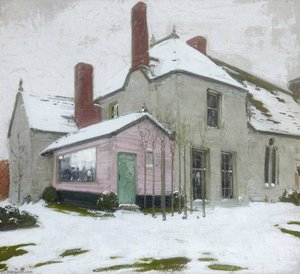
      Sutton Veny in Snow (1924) by William Nicholson
      #35

      Sutton Veny in Snow

      1924 · Royal Scottish Academy of Art - Architecture

      In the quietude of a frozen landscape, Sir William Nicholson captures a moment of profound stillness in Sutton Veny in Snow. Painted in 1924, this evocative oil on…

      Have it painted by hand →
      Still Life (1885) by William Nicholson
      #38

      Still Life

      1885 · Newark Town Hall Museum And Art Gallery

      In the quiet corners of art history, few masters captured the profound beauty of the mundane as gracefully as Sir William Nicholson. His 1885 masterpiece, Still Life, serves…

      Order this canvas →
      Hawking (1902) by William Nicholson
      #39

      Hawking

      1902 · National Trust

      William Nicholson’s “Hawking,” painted in 1902, isn't merely a portrait; it’s a carefully constructed tableau of Victorian sensibilities layered with subtle anxieties and burgeoning modernity. The subject, a…

      Have it painted by hand →
      The stack, Hoar's Fields (1927) by William Nicholson
      #49

      The stack, Hoar's Fields

      1927 · Art Gallery of New South Wales

      The stack, Hoar's Fields is a painting by Sir William Nicholson. Executed in 1927, the work reflects the artist's established approach to form and composition during the interwar…

      Order this canvas →
      Portrait of an Unidentified Gentleman by William Nicholson
      #53

      Portrait of an Unidentified Gentleman

      Royal Scottish Academy of Art - Architecture

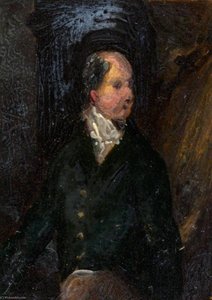
      Sir William Nicholson’s “Portrait of an Unidentified Gentleman,” painted circa 1868, is more than just a likeness; it's a carefully constructed tableau of understated elegance and contemplative melancholy.…

      Bring this light home →
      The Rose crested Cockatoo (1917) by William Nicholson
      #55

      The Rose crested Cockatoo

      1917 · Ashmolean Múzeum

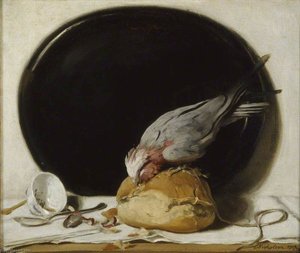
      Sir William Nicholson's 1917 painting, “The Rose-Crested Cockatoo,” isn’t merely a depiction of an exotic bird; it’s a carefully constructed meditation on observation, illusion, and the subtle interplay…

      Have it painted by hand →
      The Paper Poppies (1919) by William Nicholson
      #57

      The Paper Poppies

      1919 · The National Trust For Scotland

      In the quietude of “The Paper Poppies,” painted in 1919, Sir William Nicholson invites the viewer into a sanctuary of stillness that belies the profound turbulence of its…

      Bring this light home →
      Thomas Hamilton (1784–1858), RSA by William Nicholson
      #59

      Thomas Hamilton (1784–1858), RSA

      Royal Scottish Academy of Art - Architecture

      Sir William Nicholson’s “Thomas Hamilton (1784–1858), RSA” is more than a mere likeness; it's a carefully constructed tableau of 19th-century British identity, imbued with the quiet strength and…

      Have it painted by hand →
      Matadero, Segovia (1935) by William Nicholson
      #64

      Matadero, Segovia

      1935 · Fitzwilliam Múzeum

      William Newzam Prior Nicholson’s “Matadero, Segovia” isn't merely a depiction of a building; it’s a portal. Painted in 1935, this oil on panel captures the essence of a…

      Bring this light home →
      Armistice Night (1918) by William Nicholson
      #86

      Armistice Night

      1918 · Fitzwilliam Múzeum

      Sir William Nicholson's "Armistice Night," painted in 1918, isn’t merely a depiction of a wartime scene; it’s a visceral embodiment of the complex emotions swirling within a nation…

      Have it painted by hand →

      William Nicholson's canvases, period by period

      What William Nicholson painted most

      The four subjects that return most often on these canvases, each with its best-loved example.

      Where William Nicholson's canvases hang

      The 8 museums that hold the most of the paintings on this page.

      Museum City Works by William Nicholson Paintings from this list
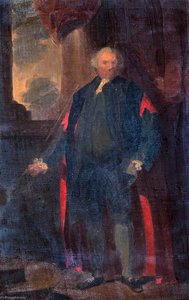
      Royal Scottish Academy of Art - Architecture, EdinburghRoyal Scottish Academy of Art - Architecture Edinburgh 102 Album Copies of Old Masters and other Paintings (no.28, p.13), Album Copies of Old Masters and other Paintings (no.5, p.5), Album Copies of Old Masters and other Paintings (no.98, p.43)
      National Trust, LondonNational Trust London 8 Master Anthony Bacon, Aged 3 (Anthony W. Bacon, Son of Thomas W. Bacon, 1873–1950, of Ramsden Hall, Essex), La Place du Petit Enfer, Dieppe, Hawking
      Fitzwilliam Múzeum, CambridgeFitzwilliam Múzeum Cambridge 7 Field Marshal J. C. Smuts, Matadero, Segovia, Armistice Night
      Newark Town Hall Museum And Art Gallery, NewarkNewark Town Hall Museum And Art Gallery Newark 4 Music, Still Life, Boy with the Caroline Mug
      Kanadai Nemzeti Galéria, OttawaKanadai Nemzeti Galéria Ottawa 3 Glass and Fruit, The Blue Gloves
      Fitzwilliam MuseumFitzwilliam Museum 3 Armistice Night, 1918, Still-life, fruit on a dish
      Nottingham Castle Museum And Art Gallery, NottinghamNottingham Castle Museum And Art Gallery Nottingham 3 Mushrooms, Miss Wish Wynne (1882–1931), Actress, in the Character of Janet Cannot for the Play 'The Great Adventure'
      Fenton House, LondonFenton House London 2 Hawking (La chasse au falcon), Francis and Christopher Bacon (Sons of Thomas Walter Bacon (1873-1950) of Ramsden Hall, Essex)

      William Nicholson's most famous canvas, decade after decade

      1. 1880s
        Still Life (1885) by William Nicholson
        38 of 100

        Still Life

        Age 8 – 17 · Newark Town Hall Museum And Art Gallery

        In the quiet corners of art history, few masters captured the profound beauty of the mundane as gracefully as Sir William Nicholson. His 1885 masterpiece, Still Life, serves…

      2. 1890s
        Sara Bernhardt (1844–1923) (1897) by William Nicholson
        Ranked 1 of 100

        Sara Bernhardt (1844–1923)

        Age 18 – 27

        In this evocative monochrome portrait from 1897, Sir William Nicholson captures the magnetic presence of the incomparable Sara Bernhardt. The painting transcends a mere photographic likeness, offering instead…

      3. 1900s
      4. 1910s
      5. 1920s
        Field Marshal J. C. Smuts (1923) by William Nicholson
        8 of 100

        Field Marshal J. C. Smuts

        Age 48 – 57 · Fitzwilliam Múzeum

        In the quiet, commanding presence of Sir William Nicholson’s 1923 masterpiece, Field Marshal J. C. Smuts, one finds much more than a mere historical record; one encounters a…

      6. 1930s
        Glass and Fruit (1938) by William Nicholson
        5 of 100

        Glass and Fruit

        Age 58 – 67 · Kanadai Nemzeti Galéria

        In this 1938 oil on canvasboard, titled Glass and Fruit, the British artist William Nicholson explores a highly distilled approach to the still life. The work represents a…

      William Nicholson's canvases, question by question

      Which canvas is William Nicholson most remembered for?Read the answer

      Sara Bernhardt (1844–1923) (1897), followed by Chairing the Feathers The Eynsham Morris at the Gates of Blenheim Palace (1902) and Album Copies of Old Masters and other Paintings (no.28, p.13).

      Sara Bernhardt (1844–1923): how old was William Nicholson when it was painted?Read the answer

      William Nicholson, born in 1872, was 25 years old: Sara Bernhardt (1844–1923) dates from 1897.

      What are William Nicholson's ten most famous canvases?Read the answer

      Sara Bernhardt (1844–1923), Chairing the Feathers The Eynsham Morris at the Gates of Blenheim Palace, Album Copies of Old Masters and other Paintings (no.28, p.13), Album Copies of Old Masters and other Paintings (no.5, p.5), Glass and Fruit, The Front Door and Porch of Chartwell, Sir William Henry Bragg (1862–1942), Field Marshal J. C. Smuts, Lord Horder (1871–1955), FCVC, MD, FRCP, Physician to Five Successive British Monarchs (Edward VII to Elizabeth II) and Title (Original): A Reduced Chart of Bombay Harbour, to form as an Index for the large one of Eight Sheets, by William Nichelson, Master of his Majesty’s Ship Elizabeth.. Each canvas in the ranking above comes with its year and its museum.

      How many paintings did William Nicholson create?Read the answer

      242 works by William Nicholson are in our catalogue, dated 1885 to 1938.

      Where do William Nicholson's most famous canvases hang today?Read the answer

      Mostly in Royal Scottish Academy of Art - Architecture (Edinburgh), National Trust (London) and Fitzwilliam Múzeum (Cambridge); the list above names each museum and its canvases.

      When did William Nicholson paint the most famous canvases?Read the answer

      In 1910s, which gave 24 of the 100 works on this page, Walter Greaves (1846–1930) among them.

      Which famous William Nicholson canvas came first, and which came last?Read the answer

      The earliest canvas here is Still Life (1885); the latest is Glass and Fruit (1938).

      Which subjects did William Nicholson paint most?Read the answer

      Portrait (22), Victorian era (10) and British art (9), across the 100 works on this page.

      Which medium appears most in William Nicholson's paintings?Read the answer

      Oil On Canvas, used in 19 of the 100 works on this page.

      Which movement is William Nicholson associated with?Read the answer

      Impressionistic realism, as the canvases on this page show.

      Which paintings by William Nicholson are held by the Royal Scottish Academy of Art - Architecture?Read the answer

      The Royal Scottish Academy of Art - Architecture, Edinburgh holds 13 of the works on this page, among them Album Copies of Old Masters and other Paintings (no.28, p.13), Album Copies of Old Masters and other Paintings (no.5, p.5) and Album Copies of Old Masters and other Paintings (no.98, p.43).

      Where can I buy a reproduction of a William Nicholson painting?Read the answer

      Yes. Every painting on this page can be ordered from its own page as an oil reproduction painted by hand, or as a fine art print, in the size you choose.

      Meet the painter: William Nicholson

      Early Life and Artistic Beginnings

      Sir William Newzam Prior Nicholson, született Newark-on-Trentben 1872-ben, egy olyan háttérből származott, amely ötvözte az ipari gyakorlatiasságot a művészi érzékkel. Apja, sikeres mérnök és konzervatív miniszterelnök-helyettes, disiplinát tanított, míg anya öröksége kapcsolódott Oxshirthshire esztétikai hagyományaihoz. Már fiatalon Nicholson mutatkozott be a művészetben, ahol William Cubley, egy helyi festő, aki maga is visszaterte gyökereit Sir Joshua Reynoldshez, tanította őt. Ez az korai kiabítás lett a felkészülésének alapja egy olyan karrierre, amely sokféle médiumon és stílusban virágzott. Egy rövid időtartama Hubert von Herkomer művészeti iskolájában kulcsfontosságú volt nemcsak a képességeinek fejlesztésében, hanem Mabel Pryde megismerésében is, aki feleségévé vált és egyre fontosabbá váló művészi úton haladt vele. Mabel révén találkozott James Prydével, egy olyan szövetséggel, amely hamarosan forradalmasította a brit vizuális kultúrát. A Beggarstaffs nem csupán reklámok voltak; ők állítások – erőteljes, grafikus kompozíciók, amelyek megfogták az emberek képzeletét. Ez időszak nem csupán kereskedelmi művészet volt; ez a vizuális kommunikáció újdefiniálása volt. A Beggarstaffs munkája kihívta a konvenciókat, útjai cleared the way for modern graphic design and established Nicholson's reputation as an innovator.

      The Beggarstaffs and a Revolution in Poster Art

      William Nicholson és James Pryde közötti együttműködés, a "J. & W. Beggarstaff" néven, forradalmasította a brit vizuális kultúrát. Ellentétben a viktoráliás poszterek által uralkodó díszes esztétikájával, bátran fogadták a merész egyszerűséget, a lenyűgöző sileteket, az alapszín használatát és a hagyományos perspektívától való elutasítását. A poszterek, mint például Don Quixote előadások és Harper’s Magazine című folyóiratok számára készültak, azonnal felismerhetővé váltak, befolyásolva egy generáció művészt és tervezőt. Ez időszak nem csupán kereskedelmi művészet volt; ez a vizuális kommunikáció újdefiniálása volt. A Beggarstaffs munkája kihívta a konvenciókat, útjai cleared the way for modern graphic design and established Nicholson's reputation as an innovator.

      From Woodcuts to Portraits: A Developing Style

      A Beggarstaffs partnerségének felbomlásakor Nicholson egy stílusos felfedezési időszakba lépett. Fókuszált a fafaragásra és a fafenyőnyomozásra, technikákkal, amelyek lehetővé tették számára, hogy tovább finomodjanak a vonal és az alak mesterségeiben. James McNeill Whistler befolyásolása ihlette őt, így elvágyta ezeket a módszereket, létrehozva összetett és lenyűgöző nyomatokat, amelyek bemutatták növekvő művészi érettségét. Ezek a művek meglepően jól tudták rögzíteni az esszenciát minimális részlet használatával, egy olyan tulajdonság, amely meghatározta stílusát. Ugyanakkor Nicholson elismert portréfestőként is bemutkozott, ahol számos jelentős személyiség számára kapott megbízásokat. Portréi nem csupán arcképek voltak; az emberi belső életének betekintése volt a finom kifejezések és pózok révén. A *Lady in Furs, Mme. P.* című műve példa erre, amely nemcsak fizikai megjelenést, hanem egy személyiség és társadalmi helyzet érzését is rögzíti.

      Still Life, Landscape, and Lasting Legacy

      Nicholson későbbi karrierjében a kompozíciók egyre inkább a still life-ra és a tájképfestészetre összpontosítottak. A still life-jai, mint például *The Lowestoft Bowl*, elismertek a részletességükben, harmonikus színpalettájukban és csendes intimitásukban. Személytelen tárgyakat pedig egy poéziai minőségnek ajándékozták, felmagasztalva őket nem csak reprezentációként, hanem szépség és elmélkedés szimbólumaként is. Tájképfestései gyakran a spanyol és olaszországi utazásai helyszíneit ábrázolták, amelyek megkülönböztetik őket a többi művésztől. A tájképeik fény és légkör érzékenységet mutatnak, a hely lényegét lenyűgöző módon rögzítve. Az egész életében Nicholson egy sokoldalú művész maradt, folyamatosan kísérletezett új technikákkal és megközelítésekkel. Gyermekkönyveket írt, a színpad számára tervezett, és folytatta nyomatok készítését festményei mellett. Sir William Nicholson hatása meghaladja egyéni termelését; inspirálta a művészeket a mesterség elkötelezettségével, innovatív szellemével és képességével, hogy szépséget találjon az átlagosban. Művei tanúságot tettek az művészet erejéről, amely megvilágítja az emberi tapasztalatot és megváltoztatja a világunk érzékelését. Ő halt meg 1949-ben, elhagyva gazdag művészi örökségét, amely ma is vonzza és inspirálja.

      All 242 works by William Nicholson →