Atelier — Spedizione gratuita in tutto il mondo — Consegna in 2–6 settimane

Da foto a dipinto Lista dei desideri Carrello
Anteprima in scala realeAnteprima in scala reale Anteprima in ARAnteprima in AR Passa alla stampa Passa alla stampaPassa all'immagine Passa all'immagine CondividiCondividi
DettagliDettagli Aggiungi ai preferiti Aggiungi ai preferiti Scarica immagineScarica immagine Articoli similiArticoli simili RadiografiaRadiografia SlideshowSlideshow

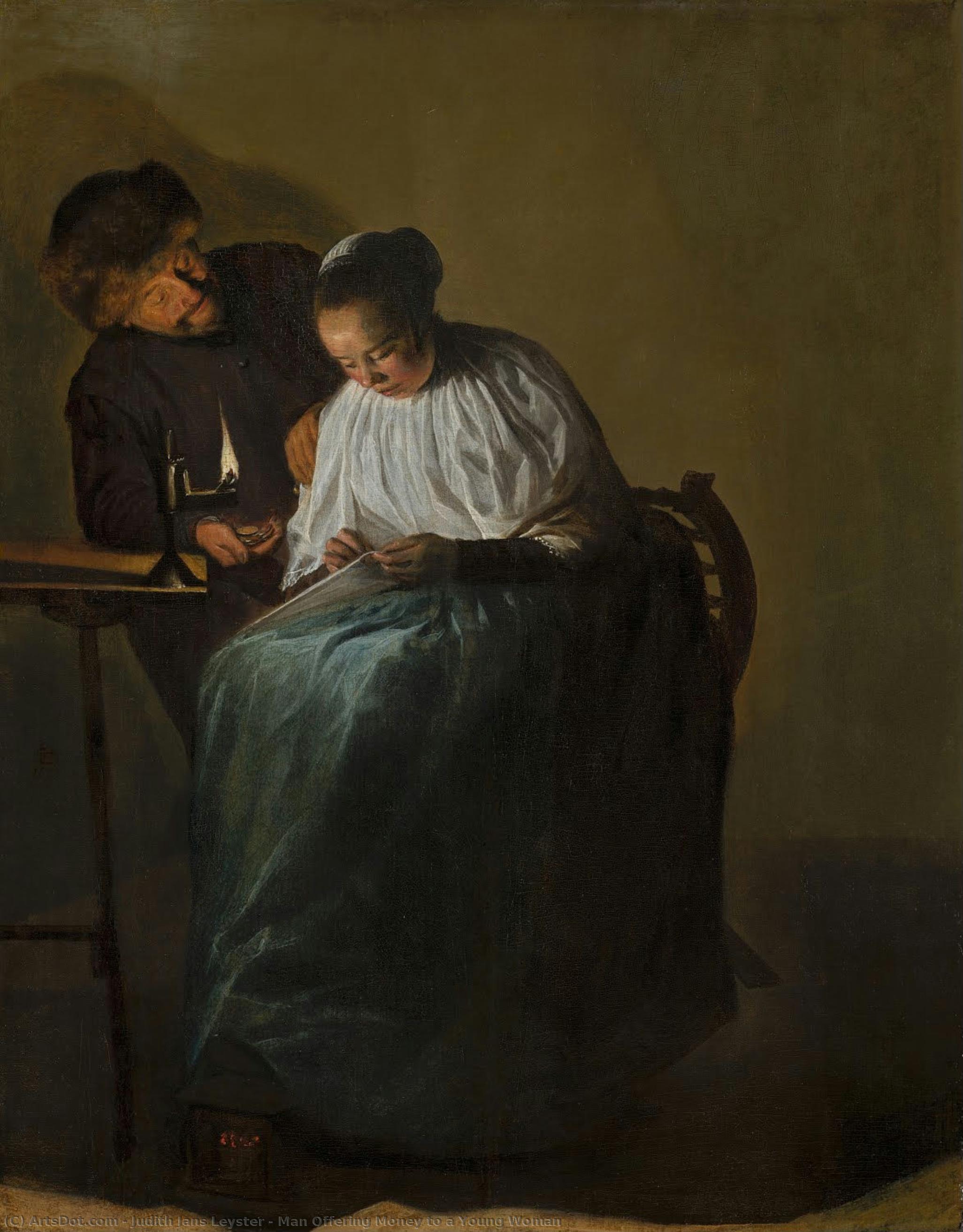
Man Offering Money to a Young Woman

Discover Judith Leyster’s "Man Offering Money," a captivating 1631 Dutch Golden Age painting. Explore its chiaroscuro style, feminist themes & intimate scene – a unique masterpiece!

Judith Jans Leyster (1609-1660): pittrice pioniera del Secolo d'Oro olandese, nota per scene di genere vivaci, ritratti e nature morte. Riscoperta nel 1893, la sua opera offre spunti sulla vita del XVII secolo.

Riproduzione a olio fatta a mano

Olio su tela dipinto a mano nelle tue dimensioni e con la tua cornice, realizzato su ordinazione dai nostri artisti. (Passa alla stampa Passa alla stampaPassa all'immagine Passa all'immagine)

P118B $10
P118H $10
P118W $10
P438Z $10
P508JH $12
P508YH $12
P805H $10
P805Z $10
P919BZ $10
P919G $10
P919XJ $10
P959ZH $10
P968JZ $12
W106C $8
W218G $10
W218JH $8
W218Y $10
W307PJ $10
W316G $10
W316PJ $8
W316Y $10
W398PJ $8
W4111J $10
W500HY $15
W500JH $15
W692G $12
W849H $8
W940BG $15
W953PJ $8

Standard
custom
CM
INCH

Scegli tra le nostre dimensioni predefinite, che rispettano le proporzioni originali dell'opera d'arte.

larghezza
altezza

È possibile inserire dimensioni personalizzate per adattare l'opera a una cornice o a uno spazio specifico. Se la dimensione selezionata non corrisponde alle proporzioni dell'immagine originale, provvederemo a ritagliare l'opera o a estendere il dipinto con elementi aggiuntivi dipinti a mano. Un mockup digitale ti sarà inviato per approvazione prima dell'inizio della produzione.
Si prega di notare che l'anteprima a schermo non riflette il ritaglio o l'estensione effettivi. Solo il mockup mostrerà accuratamente la composizione finale.
Sebbene siano disponibili dimensioni personalizzate, consigliamo di selezionare una dimensione dall'elenco predefinito per preservare le proporzioni originali.

Esempi di personalizzazione: sostituire il volto con una foto del cliente; aggiungere un animale domestico (ad esempio, sostituire un gatto con un cane); inserire un messaggio nascosto nello sfondo; cambiare il paesaggio o gli elementi dello sfondo.
Dopo l'ordine, il team di TopImpressionists.com contatterà il cliente via e-mail per le istruzioni e fornirà un'anteprima del mockup

Consegna in tutto il mondo () in 3/4 settimane anziché nelle normali 5 settimane. (11 Agosto). Nessun compromesso sulla qualità.

why_choose_icon
Spedizione espressa gratuita in tutto il mondo

why_choose_icon
Tela in lino di alta qualità
why_choose_icon
Assicurazione completa sulla spedizione
why_choose_icon
Garanzia di rimborso dei dazi doganali
why_choose_icon
Garanzia di fedeltà cromatica dell'originale
why_choose_icon
Politica di reso entro 60 giorni (solo per difetti di fabbricazione)
why_choose_icon
Garanzia di rimborso al 100%
why_choose_icon
Sconto per acquisti multipli

Prezzo totale

$ 294

reproduction

Man Offering Money to a Young Woman

Tecnica di riproduzione

Dimensioni della riproduzione

-

Prezzo totale

$ 294

Dettagli rapidi

  • Influences: Caravaggio
  • Subject or theme: Domestic Life; Moral Allegory
  • Artistic style: Realism
  • Year: 1631
  • Movement: Dutch Golden Age
  • Notable elements or techniques: Chiaroscuro; Subtle Pentimenti
  • Medium: Oil on Canvas

Quiz d'arte

Per ogni domanda è presente una sola risposta corretta.

Domanda 1:
What artistic style is prominently featured in Judith Leyster’s *Man Offering Money to a Young Woman*?
Domanda 2:
The painting depicts a scene reflecting which broader cultural concern prevalent during the Dutch Golden Age?
Domanda 3:
What is the primary medium used by Judith Leyster in this artwork?
Domanda 4:
The lighting technique employed in *Man Offering Money to a Young Woman* resembles that of which famous artist?
Domanda 5:
Symbolically, what does the woman’s focus on her sewing represent in relation to the broader context of Dutch society at the time?

Descrizione dell'opera

Judith Jans Leyster’s “Man Offering Money to a Young Woman”: A Portrait of Quiet Resistance

The Mauritshuis in The Hague houses one of the most striking paintings from the Dutch Golden Age—Judith Jans Leyster’s *Man Offering Money to a Young Woman*, completed around 1631. This deceptively simple composition, measuring just 30 x 24 cm, transcends its diminutive size to deliver a powerful message about gender roles and moral fortitude within the societal constraints of seventeenth-century Holland. It's a painting that continues to fascinate scholars and viewers alike, prompting ongoing debate about its interpretation and significance. ### Subject Matter and Context: Domesticity Under Scrutiny Leyster’s scene depicts a young woman diligently engaged in needlework—likely embroidery—by the flickering light of an oil lamp. Her feet rest on a foot warmer filled with burning coals, a detail that speaks to the practical realities of daily life for women during this period. The man seated beside her is older and dressed in a fur hat pulled down low over his forehead; he leans over her shoulder as he presents her with a handful of coins—a gesture laden with implication. This pairing immediately establishes a familiar motif prevalent in Northern European art: the “unequal love” narrative, where men attempt to seduce women by offering monetary rewards. However, Leyster’s genius lies not merely in presenting this trope but in subtly undermining its dominant interpretation. Unlike many depictions of similar themes—brothel scenes and flirtatious encounters—this painting avoids explicit sensuality. Instead, it focuses on the woman's unwavering concentration on her task, conveying a palpable sense of defiance against unwanted advances. ### Artistic Style and Technique: Chiaroscuro’s Dramatic Embrace Leyster employed a masterful technique known as chiaroscuro – dramatic contrasts between light and dark – reminiscent of Rembrandt’s work. This stylistic choice is evident throughout the canvas, casting deep shadows that accentuate the textures of the fabrics (particularly the woman's dress) and creating an atmosphere of solemn contemplation. The artist skillfully utilizes light to illuminate key elements—the lamp, the woman’s face, and her hand—drawing the viewer’s eye directly into the scene. The brushstrokes are smooth and deliberate, contributing to a sense of realism that belies the painting's understated aesthetic. Oil paint on canvas was the preferred medium for artists of Leyster’s time, allowing for rich colors and nuanced tonal gradations – qualities that are beautifully preserved in this remarkable artwork. ### Symbolism: Virtue Versus Temptation—A Silent Dialogue Beyond its formal elements, *Man Offering Money to a Young Woman* resonates with profound symbolic meaning. The foot warmer symbolizes domesticity and virtue—the woman’s steadfast commitment to her craft represents moral integrity amidst societal pressures. Conversely, the man embodies temptation and worldly desire, his fur hat serving as a visual marker of his perceived lack of refinement. Leyster's deliberate positioning of these figures—the woman focused on her work while ignoring the man’s advances—suggests that true strength lies in resisting allurements and upholding moral principles. The painting isn’t simply illustrating a narrative; it’s posing a question: What is more valuable – outward appearance or inner virtue? Leyster's subtle gesture of defiance speaks to a broader cultural preoccupation with gender roles and the importance of maintaining ethical conduct within a society grappling with changing social norms. ### Emotional Resonance: A Moment Frozen in Time Ultimately, *Man Offering Money to a Young Woman* captivates viewers not just through its visual beauty but also through its emotional depth. The painting evokes a feeling of quiet intensity—a palpable tension between desire and restraint—that lingers long after viewing. It’s a portrait that invites contemplation about the complexities of human relationships and the enduring power of moral conviction. Leyster's masterpiece continues to inspire artists and collectors alike, reminding us that art can convey profound truths about human experience without resorting to overt melodrama. Its understated elegance and symbolic richness solidify its place as one of the most compelling images from the Dutch Golden Age—a testament to Leyster’s artistic vision and her enduring contribution to art history.

Biografia dell'artista

Judith Jans Leyster (1609 - 1660): A Pioneer Among Masters

Judith Jans Leyster, born in Haarlem on July 28, 1609, stands as a remarkable figure within the Dutch Golden Age—a period of unparalleled artistic flourishing—and one whose legacy continues to inspire admiration and scholarly debate. Her life story is interwoven with threads of ambition, perseverance, and an extraordinary talent that defied societal expectations for women during her time. Little is known about Leyster’s formative years beyond her birth into a family of modest means; however, she quickly gained recognition as an artist thanks to the patronage of Frans Pietersz de Grebber, a respected Haarlem painter who served as her mentor and fostered her burgeoning artistic inclinations.

Early Training and Artistic Influences

The precise details surrounding Leyster’s training remain elusive, largely due to the scarcity of documentation from that era. Nevertheless, evidence suggests she honed her skills under De Grebber's tutelage—a pivotal encounter for any aspiring artist—absorbing techniques rooted in the Caravaggisti style. This movement championed dramatic chiaroscuro—the interplay of light and shadow—creating emotionally charged compositions reminiscent of Italian Baroque art. Leyster’s early works demonstrate a keen understanding of this stylistic approach, foreshadowing her distinctive artistic vision. Furthermore, Samuel Ampzing's book *Beschrijvinge ende lof der stad Haerlem* from 1628 mentions Leyster as an active artist during her youth, highlighting the importance of Haarlem’s artistic environment in shaping her career path.

A Career Defined by Resilience and Collaboration

Leyster’s professional life unfolded against a backdrop of considerable hardship—her father's bankruptcy forced her family to relocate to Utrecht—yet she steadfastly pursued her artistic endeavors despite these challenges. Notably, Leyster joined the Haarlem Guild of St. Luke in 1633, marking an unprecedented achievement for women artists at the time; she was one of the first female painters admitted into this prestigious institution. This accomplishment underscores Leyster’s determination to assert herself within a male-dominated artistic sphere and symbolizes her commitment to upholding professional standards. Her marriage to Jan Miense Molenaer in 1636 solidified her partnership with another influential artist, fostering a collaborative studio environment where they nurtured their creative energies together. Their combined output—characterized by lively genre scenes and captivating portraits—represents a cornerstone of Dutch Baroque art.

Notable Works and Artistic Style

Leyster’s oeuvre comprises approximately eighty paintings, predominantly genre scenes depicting everyday life—particularly musicians and drinkers—and intimate portraits capturing the nuances of human emotion. Her masterful use of light and shadow—a hallmark of Caravaggisti influence—elevates her compositions beyond mere representation, imbuing them with palpable drama and psychological depth. Among her most celebrated works are *Young Flute Player* (c. 1630), housed in the National Gallery of Art, Washington D.C., and *Merry Company*, which exemplifies her ability to convey complex narratives through visual storytelling. Her meticulous attention to detail—evident in depictions of clothing, textures, and facial expressions—demonstrates Leyster’s exceptional artistic skill and contributes to the enduring fascination surrounding her oeuvre.

Rediscovery and Legacy

Despite her undeniable talent and recognition during her lifetime, Judith Leyster's work largely vanished from scholarly discourse after her death in 1660. It wasn’t until 1893 that she was rediscovered by art historians—a serendipitous event triggered by a legal dispute concerning the attribution of *The Proposition*—leading to renewed investigations into her artistic achievements and correcting longstanding misinterpretations regarding her oeuvre. Today, Leyster is rightfully celebrated as one of the foremost painters of the Dutch Golden Age—a woman artist who bravely defied societal constraints and whose legacy continues to inspire admiration for her pioneering spirit and artistic brilliance. Her story serves as a poignant reminder of the importance of recognizing talent regardless of gender and underscores the transformative power of scholarly rediscovery in reshaping art history narratives.
Judith Jans Leyster

Judith Jans Leyster

1609 - 1660 , Paesi Bassi

Informazioni rapide

  • Artistic Movement Or Style: Età d'Oro Olandese
  • Artists Or Movements Influenced By This Artist: ['Caravaggisti']
  • Artists Who Influenced This Artist:
    • Frans Pietersz de Grebber
    • Jan Miense Molenaer
  • Date Of Birth: Luglio 28, 1609
  • Full Name: Judith Jans Leyster
  • Nationality: Olandese
  • Notable Artworks:
    • Giovane giocatore di flauto
    • Allegro compagnia
    • Autoritratto
  • Place Of Birth: Haarlem, Paesi Bassi
© TopImpressionists.com — Tutti i diritti riservati  ·  100% Dipinto a mano · Soddisfazione garantita · Spedizione gratuita in tutto il mondo
VISA MASTERCARD