


The Prelude to Passion: From Impressionist Light to Expressionist Soul
 10 Post-Impressionist Masterpieces That Changed Art Forever
Introduction To step into the world of Post-Impressionism is to leave behind the mere observation of light and enter a realm where color breathes, shapes vibrate, and the artist's inner psyche dictates the landscape. While the Impressionists sought t...
To walk through the hallowed halls of art history is to witness a profound evolution of the human spirit, a journey that begins with the gentle, sun-drenched whispers of Impressionism and culminates in the visceral, often turbulent cries of Expressionism. For those of us who have spent decades finding solace in the dappled light of a Monet or the tranquil waters of a Renoir, the transition to Expressionism can feel like a sudden awakening from a dream into a vivid, sometimes jarring, reality. Where the Impressionists sought to capture the ephemeral dance of light upon a lily pond—the fleeting, optical moment before it dissolves into memory—the artists who followed felt a growing hunger for something more permanent and much more profound. They were no longer content with merely reflecting the eye; they year tered to speak directly to the soul.
This shift was not a rejection of beauty, but rather a redirection of it. The Post-Impressionists, led by visionaries like Vincent van Gogh, began to infuse their canvases with a structural depth and an emotional weight that the soft edges of Impressionism could not sustain. They traded the hazy, atmospheric perfection of a summer afternoon for bold outlines and saturated pigments that breathed with their own heartbeat. It was here, in this transition from the observation of light to the expression of internal truth, that the seeds of Expressionism were sown. The art began to move inward, seeking to document not just what the world looked like, but how it felt to exist within its complex, often overwhelming, embrace.
Distorting Reality: The Subjective Lens of the Early 20th Century
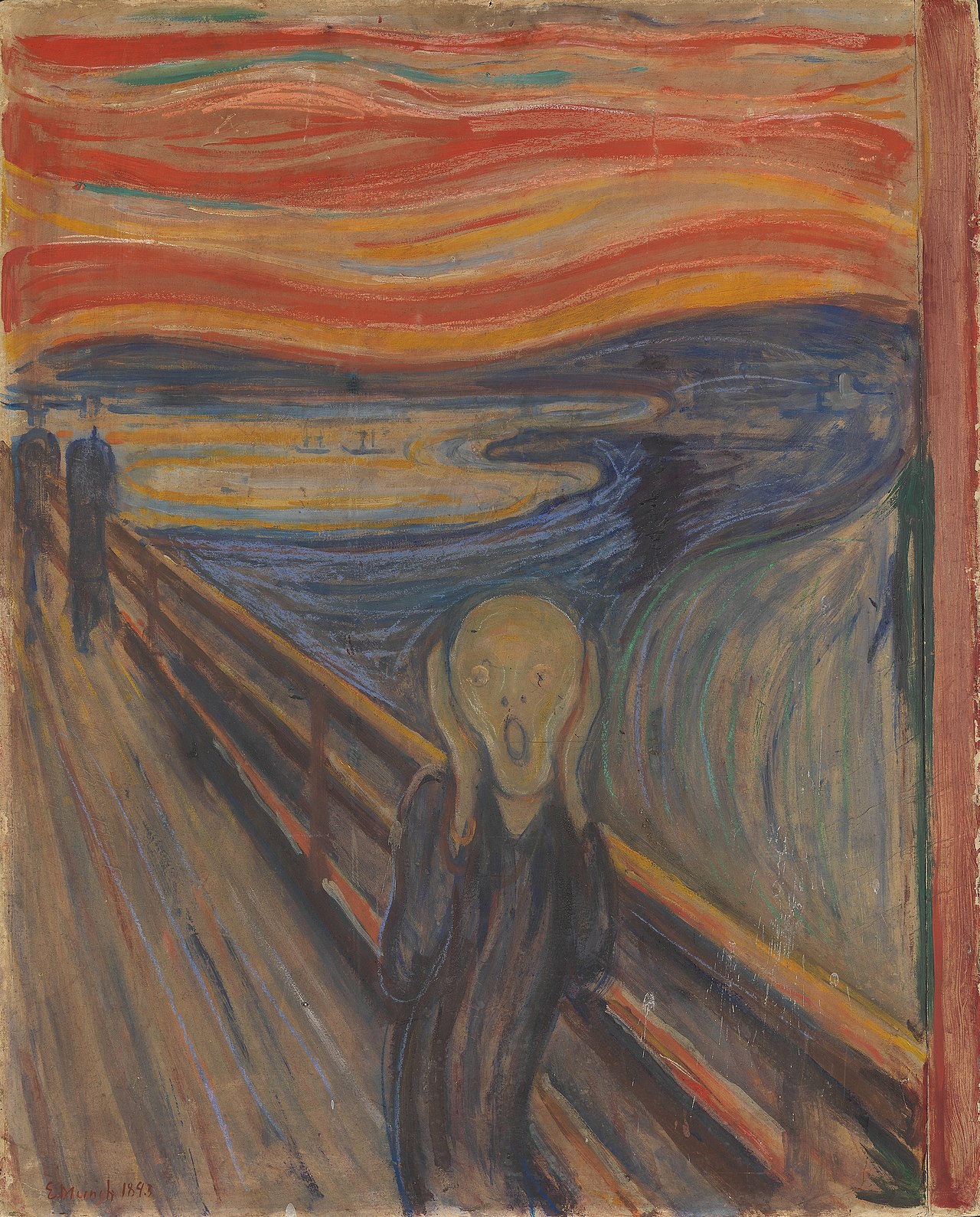 Expressionism
 is a modernist movement, initially in poetry and painting, originating in Northern Europe around the beginning of the 20th century. Its typical trait is to present the world solely from a subjective perspective, distorting it radically ...
As we entered the dawn of the 20th century, a new wave of avant-garde rebels emerged from Northern Europe, bringing with them a radical new way of seeing. Expressionism arrived not as a mere style, but as a profound psychological movement. Its defining characteristic was the embrace of subjectivity—the decision to present the world through a distorted lens, intentionally warping shapes and colors to evoke specific moods or ideas. For the Expressionist, physical reality was secondary to emotional resonance. A sky need not be blue if the artist’s heart is heavy with grief; a face need not be anatomically precise if it must convey the frantic energy of anxiety.
This era saw the birth of a visual language where color became a tool for psychological impact rather than naturalistic accuracy. By abandoning the constraints of Naturalism and the polite boundaries of the Academy, these artists created works that functioned as direct conduits to the human psyche. They utilized thick, textured brushstrokes—the impasto technique—to add a tactile dimension to their suffering and joy. When we gaze upon such works, we are not looking through a window at a landscape; we indeed find ourselves standing before a mirror of the artist's inner world, where every stroke of the brush is a heartbeat, and every vibrant, unnatural hue is an echo of an unspoken emotion.
A Symphony of Agony and Ecstasy: Analyzing Iconic Expressionist Masterpieces
 Capturing the Soul: The Most Emotionally Moving Impressionist and Post-Impressionist Masterpieces
The Luminous Revolution: How Impressionism Redefined the Art of Seeing Impressionistic Landscapes: 10 Masterpieces That Changed Art & Decor Introduction To gaze upon these ten canvases is to step directly into a world transformed by light, color, and...
No discussion of this movement would be complete without acknowledging the works that have become the very icons of human feeling. Consider, for instance, the haunting presence of Edvard Munch’s The Scream. In this masterpiece, the landscape itself seems to vibrate with a primal terror; the swirling, rhythmic lines of the sky and water mirror the internal panic of the figure, pulling the viewer into a state of shared existential dread. It is a work that transcends its era, remaining as potent today as it was in 1893, because it captures a universal truth about the fragility of our mental equilibrium.
Yet, Expressionism is not solely composed of shadows and angst. There is a profound ecstasy to be found in the movement's intensity. We see this in the works of the Post-Impressionist masters like Van Gogh, whose Irises or Starry Night utilize swirling, hypnotic energy to celebrate the spiritual vitality of nature. In these canvases, the thick application of paint and the collision of deep cobalt blues with radiant yellows create a cosmic dance that is both overwhelming and deeply comforting. These masterpieces remind us that even in our most turbulent moments, there is a magnificent, rhythmic beauty to be found in the very act of feeling intensely.
The Legacy of Intensity: How Neo-Expressionism Reclaimed the Human Figure
Neo-expressionism is a style of late modernist or early-postmodern painting and sculpture that emerged in the late 1970s. Neo-expressionists were sometimes called Transavantgarde, Junge Wilde or Neue Wilden ('The new wild ones'; 'New Fauves' would be...
As the decades passed and art moved through periods of cool abstraction and minimal restraint, a powerful resurgence occurred in the late 1970s known as Neo-Expressionism. Often referred to as the Neue Wilden or "The New Wild Ones," this movement was a spirited reaction against the perceived sterility of conceptual art. The Neo-Expressionists sought to return to the visceral power of the human form and the raw handling of materials. They looked back to the legends of the early 20th century—to Beckmann, Kirchner, and Munch—and breathed new life into their intense subjectivity.
Characterized by a rough, almost violent application of paint and a return to recognizable, albeit distorted, subjects, Neo-Expressionism brought a much-needed pulse back to the contemporary art market. It embraced the "wild" and the unrefined, using vivid colors and heavy textures to tackle themes of identity, history, and the human condition. This movement proved that the desire for emotional connection through art is an eternal one; even in a modern, digital age, we still crave the touch of the artist's hand and the raw, unadulterated truth found in a heavily textured canvas.
Bringing the Emotion Home: Curating Expressive Art for the Modern Collector
For the discerning collector, bringing Expressionist-inspired art into one’s home is an act of curation that goes far beyond mere decoration. It is about creating a sanctuary of feeling. When selecting pieces—whether they are hand-painted reproductions of the masters or custom commissions—one must consider how the intensity of the work interacts with the atmosphere of the space. An expressive, large-scale landscape can serve as a profound focal point in a room, drawing the eye and inviting deep contemplation.
At TopImpressionists.com, we understand that art is a lasting memory. We specialize in the delicate art of the "remix," allowing you to transform personal milestones into masterpieces. Imagine having a cherished family photograph reimagined with the thick, emotive impasto strokes of Van Gogh, or a modern portrait captured with the light-drenched, soulful essence of the Impressionist greats. Our artists, all holders of prestigious Fine Arts degrees, work meticulously on 100% cotton canvas to ensure that the visible brushstrokes and deep tonal ranges provide the tactile depth that a mere print can never achieve. Whether you are looking for a multi-panel set to adorn a grand staircase or a bespoke tribute to a loved one, we invite you to explore how the raw emotion of Expressionism can breathe new life into your personal collection.
Preserving the Pulse: The Art of Maintaining Textured Oil Masterpieces
To possess an oil painting characterized by such intense texture and vibrant pigment is to hold a living piece of history. Because these works rely so heavily on the physical depth of the paint—the peaks and valleys of the impasto—proper care is essential to ensure they remain vibrant for generations. The very elements that make them beautiful, such as the heavy application of oils and the use of specialized pigments, require a gentle hand in preservation.
To protect your investment, we recommend avoiding direct, harsh sunlight, which can cause certain pigments to fade over time. Furthermore, when displaying framed works, using acid-free matting is vital to create an air gap between the canvas and the glass, preventing moisture buildup that could affect the texture. At our studio, we use only the finest materials—such as flexible gesso to prevent cracking and Damar varnish to protect against dust and atmospheric pollutants. By treating these works with the reverence they deserve, you ensure that the pulse of the artist's emotion continues to beat strongly within your home, long after the brush has left the canvas.


