


The Eternal Rhythm: The Emotional Resonance of Seascape Art
To gaze upon the horizon is to engage in a silent, profound dialogue with the infinite. There exists a primal pull toward that ethereal boundary where the liquid expanse of the sea meets the sky—a threshold that promises both an escape from the terrestrial and a confrontation with the sublime. For those of us who have spent decades finding solace in the brushstrokes of the masters, seascape art offers far more than mere decoration; it provides a psychological anchor. In our increasingly hurried lives, the rhythmic movement of waves and the subtle interplay of light upon water possess a rare ability to soften the sharp edges of modern existence, inviting a sense of serene tranquility into our most intimate spaces.
The sea has long served as a profound dialogue between humanity and the eternal, acting simultaneously as a sanctuary of peace and a formidable display of power. This duality creates an emotional resonance that is uniquely suited for contemplation. Whether it is the vast, breathless embrace of the open sea or the gentle lapping of tide against a shore, these works evoke a deep-seated desire for reflection. When we integrate maritime themes into our homes, we are not simply decorating a wall; we are establishing a sense of place and emotional depth, allowing the art to actively shape the atmosphere of our living spaces with the salt-kissed tranquility of a distant coastal retreat.
From Documentation to Impressionism: A Chronology of the Waves
The history of maritime art is a fascinating evolution from functional documentation to pure aesthetic expression. For centuries, our relationship with the sea was defined by necessity, fear, and commerce. The earliest visual encounters were often practical—navigational charts, ship logs, and meticulous renderings of vessels used for trade and exploration. During the 17th-century Dutch Golden Age, the ship portrait became a powerful genre, reflecting the burgeoning maritime power of cities like Hamburg and Amsterdam. Artists such as Ludolf Backhuysen did not merely paint water; they were chroniclers of an era, capturing the grandeur of naval strength and the intrepid spirit of exploration with remarkable realism.
As time progressed, the focus shifted from the vessel to the very essence of the ocean itself. The transition toward Impressionism marked a revolutionary departure from the need for precise documentation. While earlier masters focused on the technical details of rigging and hull, the Impressionists sought to capture the fleeting, transient effects of light and weather. This movement, famously derived from the title Impression, Sunrise, allowed artists to move beyond the literal. We see this evolution in the way the sea transformed from a backdrop for human drama into a subject worthy of dedicated, emotional exploration—a shift that allowed the ocean's soul to finally emerge from the shadows of maritime record-keeping.
Mastering the Light: Monet and the Art of Atmospheric Motion
Claude Monet, the founder of French Impressionist painting, revolutionized how we perceive the natural world through his dedication to plein-air landscape painting. His philosophy was rooted in expressing perceptions before nature, a technique that found its most breathtaking expression in his studies of water and light. Through his famous series paintings, Monet demonstrated an unparalleled ability to show the effects of sunlight, time, and weather through color and contrast. He did not merely paint a subject; he painted the very air that surrounded it, capturing the way light dances upon a crest or dissolves into the mist of a morning fog.
In works such as Storm on the Cote de Belle-Ile, we witness the raw power and majestic beauty of an evocative seascape. Here, the Impressionist technique is at its most vibrant, using loose, vigorous brushstrokes and textured impasto to convey movement and emotion rather than precise realism. The layered application of oil paints creates a tactile surface that enhances the sense of chaos and vitality within the scene. By focusing on the transient effects of light and weather, Monet elevated the stormy coast into a symbol of nature’s uncontrollable power, inviting us to contemplate the sublime beauty found even within the most tumultuous moments of the natural world.
Techniques of the Tide: Capturing Texture, Tonality, and Energy
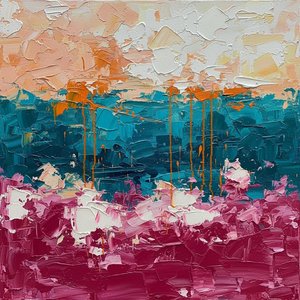 Crimson Tide and Teal Horizon: A Monumental Study in Textured Abstraction
Experience the raw emotion of Crimson Tide and Teal Horizon, a monumental textured abstraction by Christian Noiret featuring heavy impasto strokes and vibrant pigments, available as an exclusive one-of-one masterpiece.
Capturing the energy of a breaking wave requires more than just skill; it requires an intuitive understanding of light and tonality. To create a truly dramatic seascape, an artist must master the contrast between the shadow face of a wave and its sunlit crest. This relationship, known as tonality, is essential for creating depth. A masterful rule to remember is that as elements move forward in a painting, darks should become darker and lights should become lighter, while distant objects exhibit a much smaller graduation between tones. This creates the illusion of vast, receding space, drawing the viewer into the heart of the ocean.
The technical process is often a labor of intense preparation. Artists may begin by blocking in the sky with a palette of ultramarine blue, burnt umber, and titanium white, carefully outlining highlights with pure titanium white to mimic the frothy sea spray. The use of specific brushes—from flat bristles for broad strokes to fine round brushes for delicate details—allows for the depiction of both the heavy swell of the ocean and the light, ephemeral foam. When executed correctly, these techniques allow the artist to freeze time while simultaneously conveying the relentless, circular motion of energy passing through the water, turning a static canvas into a pulsing, living entity.
Curating the Coast: Integrating Maritime Masterpieces into the Modern Home
For the discerning collector, bringing the ocean home is an exercise in creating a sanctuary. The presence of maritime art can soften the sharp, modern architectural lines of contemporary interiors, providing a much-needed organic element. Whether you are drawn to the realistic, rugged coastlines found in the works of Louis Ginnett or the more abstract, light-drenched explorations of contemporary photographers like Don Long, each piece offers a unique way to connect with the sea. The key to successful integration lies in using these works to establish a sense of peace and place.
When selecting pieces for a collection, consider how the color palette of the artwork interacts with your existing decor. A subtle pastel seascape might complement a light, coastal-inspired room, while a bolder, more dramatic interpretation of a storm can serve as a powerful centerpiece for a grand hall or library. By choosing works that resonate with your personal history and emotional landscape, you transform your living space into a gallery of memories and reflections—a place where the eternal rhythm of the tides continues to pulse, long after the sun has set.


