--- title: Straw hat - Wikipedia url: https://en.wikipedia.org/wiki/Straw_hat hostname: wikipedia.org sitename: Wikimedia Foundation, Inc. date: 2004-03-26 --- # Straw hat A **straw hat** is a wide-brimmed [hat](https://en.wikipedia.org/wiki/Hat) tha...
To observe a straw hat within a painting is to witness a quiet intersection of utility and light. These objects, woven from wheat, rye, or the fine fibers of the Panama, are more than mere accessories for shade; they are vessels that hold the warmth of a summer afternoon. In the history of art, the straw hat serves as a recurring motif that bridges the gap between the humble labor of the field and the refined leisure of the city. It is an object defined by its texture—the rhythmic, braided patterns that catch the sun and cast intricate shadows across a brow or a wooden table.
This fascination with the woven brim finds an echo in the very way we perceive the natural world today. Just as the weaver interlaces individual strands to create a resilient form, the art lover seeks to connect the fine details of a single brushstroke to the broader movement of history. When we look at these works, we are not merely seeing a summer object; we and we are observing the way light interacts with the physical world, a dialogue that remains as relevant in a modern living space as it was in a nineteenth-century studio.
Still Life with Yellow Straw Hat – A Window Into Van Gogh’s Early Vision Vincent van Gogh's *Still Life with Yellow Straw Hat*, painted in 1881, represents a pivotal moment in his artistic development and offers a fascinating glimpse into the burgeon...
Before the vivid yellows of his later years became his signature, Vincent van Gogh worked within a much more restrained, somber palette. During his time in Nuenen, between 1881 and 1885, his focus was on the weight and presence of everyday objects. In Still Life with Yellow Straw Hat, there is no attempt at the fleeting atmospheric effects seen in later Impressionism. Instead, we find a meticulous study of form. The hat rests upon a wooden surface alongside a pipe and a bottle, rendered with smooth, careful brushwork that emphasizes the dark, earthy tones of the period.
This era of Van Gogh’s work reminds us of the importance of foundations. Long before the bright colors of Arles, there was the disciplined observation of texture and shadow in the Netherlands. The painting shows no sign of the brilliant coloration that would later define his legacy; rather, it displays a technical mastery of shading and light. It is a period characterized by a certain gravity, where even a simple yellow hat carries a sense of permanence. This commitment to the fundamental truth of an object—its weight, its roughness, and its color—is what allows the more expressive works of his later years to resonate so deeply.
Parisian Grace: Renoir and the Sociality of Summer
A Glimpse of Parisian Light: Pierre-Auguste Renoir’s ‘Girl Wearing a Straw Hat’ Pierre-Auguste Renoir's “Girl Wearing a Straw Hat” isn’t merely a portrait; it’s a distillation of the vibrant, sun-drenched atmosphere of late 19th-century Paris. Painte...
As the nineteenth century progressed, the straw hat moved from the heavy shadows of Nuenen into the dappled light of Parisian leisure. Pierre-Auguste Renoir utilized the motif to capture a specific social atmosphere—one of ease, youth, and the gentle movement of light through trees. In Girl wearing a Straw Hat, the subject is not merely wearing an accessory; she is enveloped in a scene of quiet contemplation. The hat, much like the lush greens of the background, helps to define the soft, Impressionistic atmosphere where edges begin to blur into the surrounding air.
This shift toward light and social grace finds a parallel in the way we approach portraiture today. Renoir’s ability to use a simple element like a brimmed hat to suggest a character's identity and social standing is a technique that continues to inspire custom commissions. We see this in the way modern collectors seek to capture not just a likeness, but a mood—a specific moment of light or a particular feeling of elegance. The hat becomes a tool for storytelling, much as it was for Renoir, providing a focal point for the viewer's gaze amidst the soft textures of the canvas.
From Field to Fashion: The Materiality of the Brim
The history of the straw hat is also a history of industry and global trade. The materials used—from the fine Toquilla straw of Ecuador to the sturdy rye straw of Eastern Europe—speak to a world interconnected by craft. In the mid-ninth century, particularly in places like Switzerland, the production of these hats transitioned from a localized, often undervalued craft into a high-fashion industry. This evolution was driven by the technical ability to braid and shape straw to emulate much more expensive materials, bringing a touch of luxury to a wider audience.
This transition from utility to ornament mirrors the way we value craftsmanship in our own era. We find beauty in the deliberate choice of material, whether it is the heavy impasto of an oil painting or the intricate weave of a handmade textile. The technical mastery required to transform raw plant fiber into a structured boater or a soft bonnet is much like the skill an artist employs when layering pigments to create depth. Both require a respect for the medium and an understanding of how structure can be used to convey elegance.
Introduction Imagine, if you will, standing on the sun-drenched shores of Valencia, where the Mediterranean breeze carries the scent of salt and the warmth of a summer afternoon. As you gaze across the horizon, the world seems to dissolve into a shim...
There is a specific quality to light as it hits a textured surface during the late afternoon—a moment where shadows lengthen and colors seem to deepen. Artists like Joaquín Sorolla mastered this "luminism," capturing the way the sun drenches a scene in gold. While his focus was often on the coastal landscapes of Spain, the principle remains the same: the use of light to create a visceral, sensory connection to the environment. The interplay of bright highlights and deep, cool shadows creates a sense of movement, as if the scene might change if one were to blink.
This pursuit of luminosity finds its echo in the way we curate our homes. We look for art that can transform a room, much like the sun transforms a landscape. A painting that understands the weight of shadow and the brilliance of light can provide a sense of depth to a flat wall. It invites us to slow down and notice the subtle shifts in tone, reminding us of the beauty found in the transient moments of the day.
The Enduring Texture: A Legacy in Every Stroke
Ultimately, whether we are looking at the meticulous earth tones of an early Van Gogh or the sun-soaked realism of Sorolla, the subject remains the same: the enduring presence of texture and light. The straw hat, with its ridges, weaves, and frayed edges, provides the perfect canvas for an artist to demonstrate their command over the physical properties of paint. It is a subject that demands both technical precision and emotional sensitivity.
As we continue to explore these historical works through our reproductions and custom commissions at TopImpressionists.com, we carry forward this respect for tradition. We aim to provide pieces that honor the visible brushstrokes and the deep tonal ranges of the masters, allowing the tactile beauty of the past to reside in the modern home. The legacy of the straw hat is not found in fashion trends, but in the permanent, textured truth of a well-executed painting.
A cura del team editoriale di TopImpressionists.com
Discover the tactile magic of Impressionism. Explore how the impasto technique breathes life into masterpieces through texture and light. Expert insights for art lovers seeking the soulful depth of hand-painted oil reproductions and custom fine art commissions.
Scopri i 25 capolavori di Pierre-Auguste Renoir: un viaggio emozionante tra luce, colore e l'essenza dell'Impressionismo. Esplora le storie dietro ogni opera e trova ispirazione per il tuo arredamento con riproduzioni d'arte di alta qualità. Scopri tutti i capolavori su TopImpressionists.com.




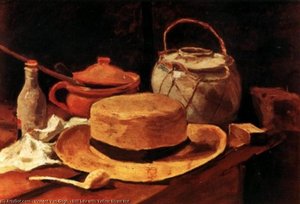 Still Life with Yellow Straw Hat
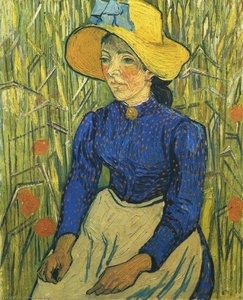
 Girl wearing a straw hat
 Master of Light: The 25 Most Iconic Paintings by Joaquín Sorolla


