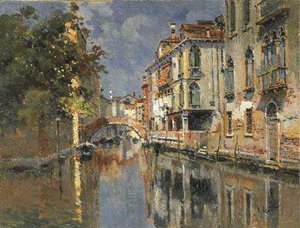
Il Visionario Veneziano di Málaga
Antonio María Reyna Manescau, un nome che evoca i riflessi tremolanti dei canali italiani e le tradizioni baciate dal sole dell'Andalusia, rimane una delle figure più affascinanti della Scuola di Pittura di Málaga. Nato il 5 dicembre 1859, nella tranquilla cittadina di Coín, in Spagna, la sua vita fu un ponte tra due mondi. Sebbene le sue radici fossero saldamente piantate nel suolo spagnolo, la sua anima artistica trovò la sua vera dimora tra i labirintici corsi d'acqua e la grandezza architettonica dell'Italia. Questa dualità—un cuore spagnolo che osserva un paesaggio italiano—infuse la sua opera di una sensibilità unica, fondendo il rigoroso addestramento accademico della giovinezza con una profonda, quasi poetica, devozione alla luce di Venezia.
I suoi primi anni furono segnati da un talento innato per il disegno, un dono coltivato all'interno della prestigiosa Scuola di Belle Arti di Málaga. Sotto la guida di maestri come Joaquín Martínez de la Vega e l'influente Bernardo Ferrándiz, Manescau assorbì i principi fondamentali della composizione classica e della precisione anatomica. Studiò accanto a contemporanei come José Moreno Carbonero, parte di una generazione di artisti spagnoli che avrebbero ridefinito i confini del proprio panorama nazionale. Tuttavia, fu la sua partenza per l'Italia all'inizio dei vent'anni a mutare irrevocabilmente il corso del suo viaggio creativo. Immerso nella vibrante atmosfera della scena artistica italiana e influenzato dalla presenza di altri artisti espatriati, iniziò ad allontanarsi dalle pure ricerche accademiche verso una forma di espressione più specializzata ed evocativa.
Una Maestria di Luce e Veduta
La svolta nella carriera di Manescau arrivò nel 1885, a seguito della sua prima, trasformativa visita a Venezia. Fu qui che scoprì la sua vera vocazione: la veduta, ovvero il paesaggio topografico altamente dettagliato. Divenne uno specialista nel catturare l'effimera bellezza del panorama veneziano, concentrandosi sull'intricata interazione tra pietra, acqua e luce. La sua tecnica era caratterizzata da un livello straordinario di precisione; non si limitava a dipingendo scene, ma rendeva meticolosamente le trame del marmo eroso dal tempo, i delicati increspamenti del Canal Grande e il modo in cui la luce solare danza sulle facciate architettoniche. Questa dedizione al dettaglio conferì alle sue tele un senso di presenza palpabile, invitando lo spettatore a immergersi direttamente nelle piazze brulicanti e nei canali silenziosi.
Oltre alla mera accuratezza tecnica, l'opera di Manescau è celebrata per la sua maestria nel colore e nell'atmosfera. Possedeva un'abilità quasi soprannaturale nel trasporre l'aria umida e luminosa di Venezia sulla tela, utilizzando una tavolozza sfumata per evocare le diverse ore del giorno e i mutamenti meteorologici. I suoi dipinti presentano spesso:
- Riflessi Luminosi: Il modo in cui l'acqua specchia i colori vibranti degli edifici circostanti, creando un senso di profondità infinita.
- Grandezza Architettonica: Un profondo rispetto per il peso storico di strutture come Piazza San Marco, rese con scala e intimità.
- Profondità Atmosferica: L'uso di transizioni morbide e variazioni tonali per suggerire le mattine nebiose o i tramonti dorati caratteristici della laguna veneziana.
Eredità e Significato Duraturo
Sebbene gran parte della sua vita sia stata trascorsa in Italia, Manescau non recise mai veramente i legami con la sua eredità spagnola. La sua opera rimane una parte vitale del lascito della Scuola di Málaga, rappresentando un periodo in cui gli artisti spagnoli guardavano verso l'Europa per espandere i propri orizzonti estetici. Mentre alcune delle sue opere più significative, come la scena classica Floralia, furono tragicamente perdute durante la Guerra Civile Spagnola, la sua opera superstite continua a imporre rispetto in prestigiose istituzioni di tutto il mondo. Dal Museo Thyssen di Málaga al Boston Museum of Art, le sue tele fungono da finestre su un'epoca scomparsa di viaggi romantici ed esplorazione artistica.
Oggi, Antonio María Reyna Manescau è ricordato non solo come un pittore di paesaggi, ma come un cronista della luce. La sua capacità di catturare la "preziosità" di un momento—il modo esatto in cui un'ombra cade su un canale o come un raggio di sole illumina un angolo di una piazza—assicura il suo posto nel pantheon dei maestri del XIX secolo. Egli rimane una testimonianza del potere della migrazione artistica, dimostrando che un pittore può trovare la propria voce più profonda abbracciando la bellezza di una riva straniera, portando con sé la luce della propria patria.
Domande e risposte
Quali colori ha usato più spesso Antonio María Reyna Manescau?
L'uso del colore di Antonio María Reyna Manescau nelle opere presenti su questo sito web può essere approfondito consultando la pagina Profilo Cromatico dell'Artista dell'artista.
In quali periodi è suddivisa la carriera di Antonio María Reyna Manescau?
La carriera di Antonio María Reyna Manescau si svela periodo dopo periodo nella pagina Cronologia artistica: una linea temporale orizzontale delle opere, raggruppate in capitoli relativi ai vari periodi della sua carriera.
Posso sfogliare le opere di Antonio María Reyna Manescau per tecnica?
Le opere di Antonio María Reyna Manescau possono essere consultate per tecnica nella pagina Per tecnica dell'artista.