
 キャンバスにアクリル絵具ウォールアートRomantic Realism
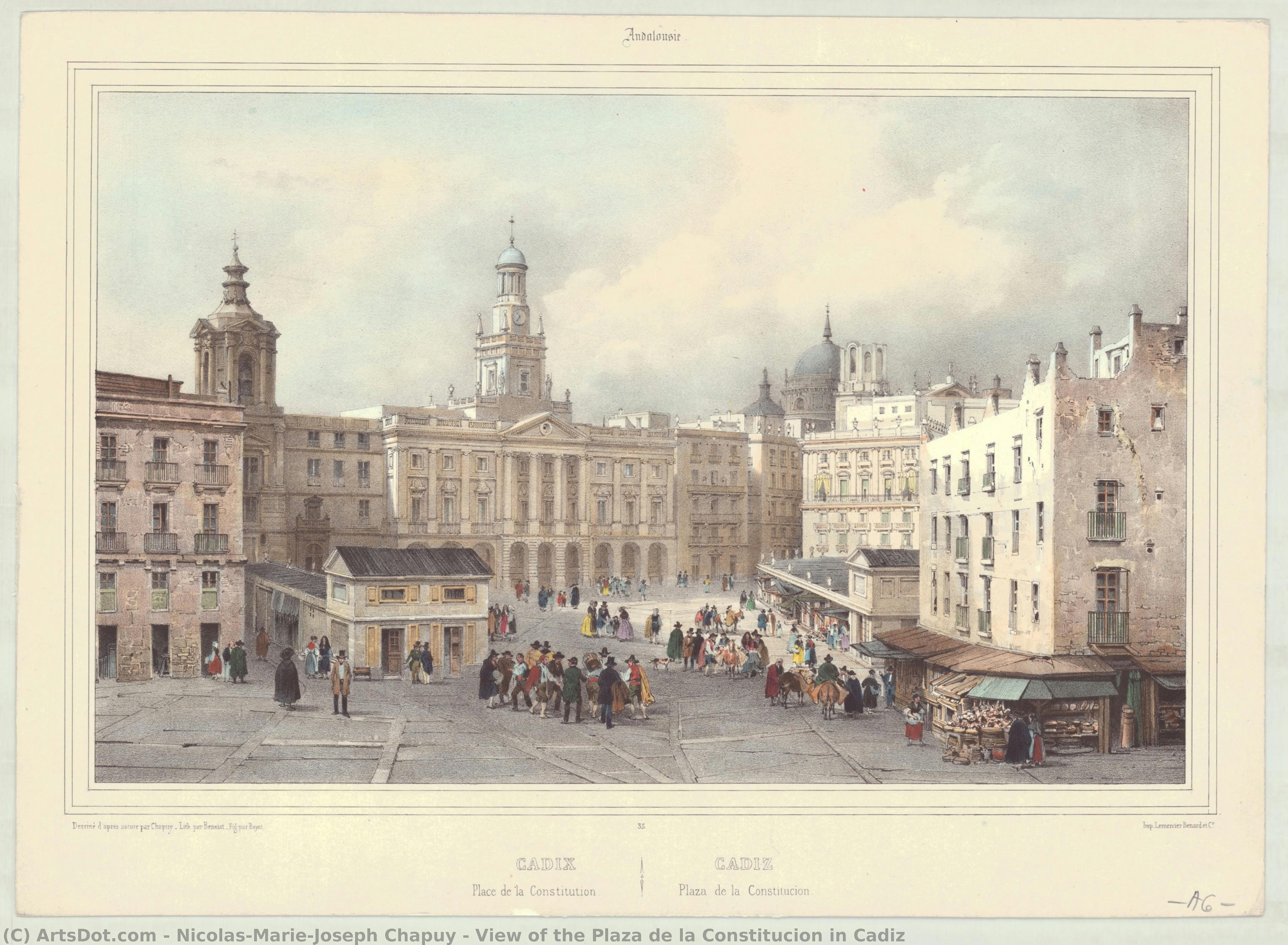
 1844
1844 21.0 x 33.0 cm
 アンダルシア公文書館




























作品のオリジナル比率に合わせた、当店の規定サイズからお選びください。

特定のフレームやスペースに合わせて、ご希望のサイズをご入力いただけます。選択されたサイズが元の画像の比率と異なる場合、アートワークをトリミングするか、手描きで要素を追加して絵画を拡張いたします。デジタルモックアップ を制作し、制作開始前にご確認(承認)をいただきます。
画面上のプレビューは、実際のトリミングや拡張を正確に反映しているものではありません。最終的な構図は、モックアップによってのみ正確にご確認いただけます。
カスタムサイズもご利用いただけますが、元の比率を維持するためには、あらかじめ用意されたリストからサイズを選択することをお勧めいたします。

プラザ・デ・ラ・コンスティチュシオンの眺め」
複製画のサイズ
In the heart of nineteenth-century Paris, a period defined by both romantic fervor and a burgeoning scientific precision, Nicolas-Marie-Joseph Chapuy emerged as a master of the lithographic stone. Born in 1790, Chapuy possessed a unique intellectual foundation that would later define his artistic legacy; his early education at the prestigious École polytechnique instilled in him a rigorous understanding of engineering and structural geometry. While many artists of his era sought the ephemeral beauty of light and shadow through brushstrokes, Chapuy found his calling in the permanence of architecture. He possessed an uncanny ability to translate the monumental weight of French cathedrals into the delicate, nuanced medium of lithography, bridging the gap between technical documentation and fine art.
His artistic journey was deeply intertwined with the preservation of France's cultural soul. During a time when the nation was re-evaluating its historical identity, Chapuy dedicated himself to an ambitious and monumental undertaking: Cathédrales françaises dessinées d’après nature (French Cathedrals Drawn As They Are). This project was not merely a collection of prints but a profound act of visual archaeology. Working initially alongside the esteemed Théodore de Jolimont, Chapuy transitioned from a meticulous assistant to a primary visionary. His process was one of extreme discipline; he did not simply sketch from afar but approached each structure with the eye of an engineer, measuring dimensions and capturing the intricate textures of weathered limestone and ornate carvings to ensure that every print served as a faithful record of the monument's physical reality.
The brilliance of Chapuy’s work lies in his ability to imbue cold stone with a sense of living history. Starting in 1823, his series of cathedral depictions began a chronological journey through the spiritual landscape of France. From the soaring heights of Notre Dame de Paris to the imposing majesty of Amiens, Reims, and Strasbourg, Chapuy’s lithographs captured the unique character of each site. His mastery of the lithographic medium allowed him to manipulate tonal gradations, creating a sense of depth and atmosphere that suggested the quiet sanctity of a cathedral interior or the dramatic interplay of sunlight against a Gothic facade. Each print was a testament to his devotion to detail, where the weight of a flying buttress or the delicate lace of a rose window could be felt through the grain of the paper.
Beyond his architectural triumphs, Chapuy’s versatility extended to topographical views and broader historical narratives. His work contributed to significant publications such as Paris dans sa Splendeur, which celebrated the grandeur of the French capital. Whether he was documenting a bustling plaza in Cadiz or the structural elegance of a Viennese railway station, his hand remained consistent in its pursuit of truth and beauty. Through his meticulous reproductions, Chapuy ensured that even as time and conflict might alter the physical world, the architectural splendor of the nineteenth century would remain eternally preserved in the collective memory of art lovers worldwide.

1790 - 1858 , France

Journey through 10 legendary watercolor masterpieces by Sargent, Turner & Homer! Explore iconic landscapes, portraits & floral art that redefined history. Find museum-quality reproductions and curated decor ideas at TopImpressionists.com.

Explore the captivating world of watercolor painting! Discover its rich history, essential techniques, influential artists & collecting tips. A comprehensive guide for art enthusiasts from TopImpressionists.

Explore the captivating history of watercolor painting, from ancient techniques to modern masters like Kandinsky & Blake. Discover essential artists, collecting tips & the emotional power of this luminous medium. Expert insights for art enthusiasts.

Explore the captivating world of watercolor painting! Discover its rich history, essential techniques, influential artists & collecting tips from art experts. A comprehensive guide for enthusiasts.

水彩画の歴史、技法、現代の実践を深く探求。巨匠たちの名画から初心者向けテクニックまで解説。TopImpressionists.comでは高品質な複製画やカスタムポートレートをご提供します。アートコンサルテーションも受付中。


最新の美術ニュース、限定オファー、そしてインテリアのアイデアをいち早くお届けします。
お客様のプロジェクトについてお聞かせください。当社の美術専門家が、お客様に合わせた3つのパーソナライズされた芸術提案をご提供いたします。
あなたにぴったりの3作品を無料で厳選いたします

 プレビュー
プレビュー
 プリントを購入
 シェアする
シェアする シェアする
シェアする
 詳細を見る
詳細を見る

 ダウンロード
 似ている作品
 X線調査
X線調査 スライドショー
 詳細を見る
詳細を見る









 ガラスオプションは、110cm未満のサイズでのみご利用いただけます。


