アトリエ — 世界中へ送料無料 — お届けまで2〜6週間
      エミール・ノルデ, 1867 – 1956

      The 100 Most Famous エミール・ノルデ Paintings, Ranked

      The best-loved painting by エミール・ノルデ is Sunset. Sea with Red Sky and Couple on the beach (1903) come next among the canvases readers know best. Our catalogue holds 394 works by エミール・ノルデ: here are the 100 most famous, each with its year, its museum and what makes it memorable.

      各作品の検索数、閲覧数、および注文数を組み合わせた当サイトの人気スコアに基づきランキングを作成しています。最終更新:10月 2026 Each painting on this page can be ordered as an oil reproduction painted by hand on linen canvas, or as a fine art print, made to the size you choose.

      エミール・ノルデの肖像画
      エミール・ノルデ · 1867 – 1956
      生没年
      1867 – 1956, ノールデ
      ムーブメント
      Expressionism
      カタログ掲載作品
      394
      最も有名な
      Sunset
      最多収蔵館
      バイエルン州立絵画コレクション

      Top 10 エミール・ノルデ paintings: the canvases everyone knows

      Sunset による エミール・ノルデ
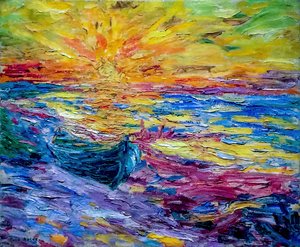
      1

      Sunset

      Oil On Canvas

      The sun hangs as a heavy, bright circle at the center of the sky, a singular eye watching the descent of the day. Below it, the atmosphere burns with shades of yellow, orange, and red, bleeding into one another to create a warm, thick air. The ocean receives this light, its waves rolling gently toward the shore in a rhythmic, quiet motion. A lone boat floats upon the water, a…

      Sea with Red Sky による エミール・ノルデ
      2

      Sea with Red Sky

      Oil

      Sea with Red Sky is an expressionist painting by Emil Nolde. The canvas captures a moment of intense color, where the sky burns with a deep, saturated red. This work belongs to the early movements of expressionism, a style that prioritizes the internal pulse of a subject over its literal likeness. The artist sought to translate raw sensation into pigment, moving beyond the surface of the natural world to reach…

      Couple on the beach (1903) による エミール・ノルデ
      3

      Couple on the beach

      1903 · Oil

      In "Couple on the beach" by Emil Nolde, painted about 1903, the arrangement of figures creates a quiet sense of intimacy against a vast landscape. At the center of the composition, a man and a woman stand close together. He has his arm around her, and she is dressed in a long dress. Their bodies are oriented toward the water, their gazes fixed on the horizon. This shared focus directs…

      Masks (1911) による エミール・ノルデ
      4

      Masks

      1911 · Acrylic On Canvas · ネルソン・アトキンス美術館, カンザスシティ

      Emil Nolde's "Masks," painted in 1911, isn’t merely a depiction of carnival revelry; it’s a profound exploration of identity, hidden desires, and the unsettling duality inherent within human nature. Created during his time as a key member of Die Brücke – “The Bridge” – a group pushing the boundaries of German Expressionism in Dresden and Berlin, the painting embodies the movement's core tenets: a rejection of academic realism in favor…

      Christ among the Children による エミール・ノルデ
      5

      Christ among the Children

      Oil On Canvas

      Emil Nolde’s “Christ Among the Children” is not merely a depiction of a biblical scene; it’s an immersive experience, a visceral outpouring of emotion rendered with the raw energy characteristic of his mature style. This large-scale painting captures a moment of profound intimacy – Christ surrounded by children – yet it vibrates with a primal intensity that speaks to the core of human connection and faith. The photograph reveals a…

      The Great Gardener による エミール・ノルデ
      6

      The Great Gardener

      The Great Gardener emerges from the brush of Emil Nolde, a man whose very name carries the weight of his birthplace. Born in 1867 in Nolde, Denmark, the artist carries the essence of his origins into every stroke. He moves through the world of color with a sense of purpose, much like the subject of this work. The painting, titled The Great Gardener, captures a moment of quiet connection within…

      Light-flooded Sea (Green) による エミール・ノルデ
      7

      Light-flooded Sea (Green)

      Watercolor

      Light-flooded Sea (Green) is a work by Emil Nolde. This piece presents a highly stylized and abstracted seascape, stripping the horizon of its literal boundaries. The subject matter focuses on the meeting of water and sky, rendered through a lens of intense, personal feeling rather than precise representation.

      Marshy Landscape under the Evening Sky による エミール・ノルデ
      8

      Marshy Landscape under the Evening Sky

      Watercolor

      The scene unfolds in Marshy Landscape under the Evening Sky, a work that carries the unmistakable hand of the artist Emil Nolde. This piece captures a specific, quiet moment where the land meets a heavy, atmospheric sky. The artist, Emil Nolde, was born in Nolde, Denmark, in 1867, and his connection to the natural world remains palpable in the way he approaches the canvas. He lived until 1956, leaving behind…

      Animal and Figures (1912) による エミール・ノルデ
      9

      Animal and Figures

      1912 · Black and White Photography · バイエルン州立絵画コレクション, ミュンヘン

      A monochrome stillness settles over the scene. Two men stand in the rigid geometry of early 20th-century military attire, their forms anchored against a dark, featureless void. They are framed by a slender pedestal that divides the composition with mathematical precision. On the left, a hand rests firmly on a hip; on the right, a hand finds rest upon the stand. The fabric of their tunics, the heavy weave of…

      Anna Wieds Garden による エミール・ノルデ
      10

      Anna Wieds Garden

      Acrylic

      Emile Nolde, a prominent German-Danish painter and printmaker, is renowned for his vibrant and expressive works of art. One of his notable pieces, Anna Wieds Garden, exemplifies the essence of Expressionism, a modernist movement that emerged in the early 20th century. This captivating oil painting is a testament to Nolde's unique style, which blends elements of Expressionism with a deep appreciation for nature. The Expressionist Style Expressionism, as described by…

      More エミール・ノルデ canvases, 11 to 100

      Festival Girls (1918) による エミール・ノルデ
      #11

      Festival Girls

      1918 · バイエルン州立絵画コレクション

      Festival Girls is a painting by Emil Nolde, executed in 1918. The work measures 67 x 58.5 cm and is rendered on canvas. This piece was created during…

      Order this canvas →
      Nordermühle (1932) による エミール・ノルデ
      #14

      Nordermühle

      1932 · バイエルン州立絵画コレクション

      is a studio portrait by the German artist Emile Nolde, dating to 1932. The work captures four individuals in a formal arrangement, presented as a monochromatic study of…

      Order this canvas →
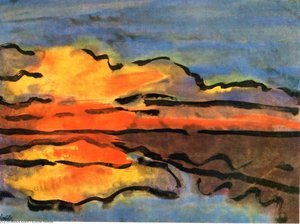
      untitled (1534) による エミール・ノルデ
      #15

      untitled (1534)

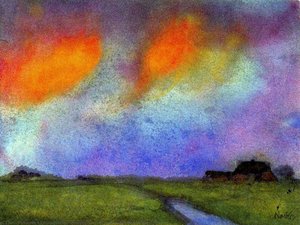
      The horizon is a wound of orange and red. Light bleeds through heavy, dark silhouettes of clouds, casting a warm glow over the quiet landscape. Below, the sand…

      Order this canvas →
      Shivering Russians (1914) による エミール・ノルデ
      #16

      Shivering Russians

      1914 · Statens Museum For Kunst

      The painting presents two figures in a tight, cropped composition, focusing on their upper bodies as they huddle together. They are enveloped in thick, heavy clothing that obscures…

      Bring this light home →
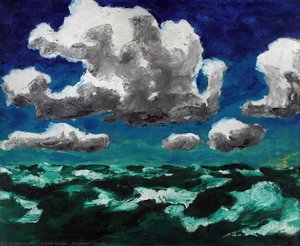
      Summer Clouds による エミール・ノルデ
      #17

      Summer Clouds

      Summer Clouds is an expressionist work by Emil Nolde. Born in 1867 in Nolde, Denmark, the artist developed a visual language centered on intense, personal feeling and the…

      Order this canvas →
      Wild Animals (1921) による エミール・ノルデ
      #24

      Wild Animals

      1921 · バイエルン州立絵画コレクション

      The work belongs to a period of intense experimentation. It reflects a shift toward the subjective, where the internal world dictates the external appearance. The textures are thick…

      Have it painted by hand →
      Autumn Sea による エミール・ノルデ
      #25

      Autumn Sea

      Emile Nolde’s “Autumn Sea” is not merely a depiction of a seascape; it’s an immersion into the raw, untamed heart of nature itself. Painted during his most intensely…

      Have it painted by hand →
      Mills (1924) による エミール・ノルデ
      #33

      Mills

      1924 · バイエルン州立絵画コレクション

      In the large-scale black and white group portrait titled "Mills" by Emil Nolde, a dense assembly of men is positioned in front of a wooden structure. The composition…

      Bring this light home →
      Robbers at Bombüll (1917) による エミール・ノルデ
      #34

      Robbers at Bombüll

      1917 · Statens Museum For Kunst

      Robbers at Bombüll is a painting by the German artist Emile Nolde. Created in 1917, this work belongs to the Expressionist movement. The piece focuses on a group…

      Have it painted by hand →
      Mask Still Life III, (1911) による エミール・ノルデ
      #35

      Mask Still Life III,

      1911

      The painting features five different faces on masks, each displaying unique expressions. These masks are arranged across the canvas in a specific configuration: the first face is in…

      Order this canvas →
      キリストの嘲笑 (1909) による エミール・ノルデ
      #36

      キリストの嘲笑

      1909

      エミール・ノールデ「モクティング・オブ・クリスト」について エミール・ノールデ「モクティング・オブ・クリスト」(1909年)は、ドイツの表現主義画家エミール・ノールデによる作品です。この絵画は、聖書におけるイエス・キリストに対する嘲笑をテーマにしています。表現主義的なスタイルで描かれ、その独特な色彩と技法が観る者の心を捉えます。特に、この絵画は単なる宗教的なモチーフではなく、人間の苦悩や人間性の暗い側面を象徴的に表現しており、美術愛好家やコレクターだけでなく、インテリアデザイナーにも幅広い魅力を持っています。 作品の背景と芸術的意義 ノールデが設立した「ブリュッケ」というグループの一員として活動していた時期に制作されたこの絵画は、当時のドイツ社会における不安と失望を反映しています。表現主義者はアカデミズム的な伝統に挑戦し、客観的な現実ではなく内面の感情を表現しようと試みました。この芸術革命は新たな芸術的可能性を開拓し、その後の世代のアーティストに大きな影響を与えました。特に、イエス・キリストに対する嘲笑は聖書の中で何度も繰り返されており、これは善と悪の対立を象徴的に表現していると考えられています。当時の美術家たちは、社会的な問題や政治的な状況に対して積極的に意見を発信し、芸術を通じて社会を変えようとしました。 表現主義的なスタイルと技法 ノールデは伝統的な絵画技法を放棄し、個人の経験を重視するスタイルを採用しました。「モクティング・オブ・クリスト」は彼の特徴的な表現主義的なスタイルを完璧に体現しています。歪んだ人物の描写、対照的な色彩の使用、そして力強い筆致が特徴です。厚いインプパスト層で油絵を重ねることで、絵画には緊急性と spontaneity が感じられます。輪郭線や視覚的な奥行きはほとんどありません。これらの要素は絵画に緊張感と感情的なエネルギーを与え、観る者を絵画の中心へと引き込みます。画家たちは、社会的な問題や政治的な状況に対して積極的に意見を発信し、芸術を通じて社会を変えようとしました。 色彩の表現と象徴性 絵画に使われた色彩は自然主義的ではありません。ノールデは皮膚の色を赤や緑など鮮やかな色で大胆に使い、感情的な効果を高めています。これらの色は単なる描写ではなく、感情的なシンボルとして機能しており、絵画に込められたメッセージを深めます。特に、この絵画はイエス・キリストに対する嘲笑という特定の出来事だけでなく、人間の苦悩や人間性の暗い側面を象徴的に表現しています。画家たちは、社会的な問題や政治的な状況に対して積極的に意見を発信し、芸術を通じて社会を変えようとしました。また、この絵画には様々な役割やアイデンティティを暗示するマスクが用いられています。これらのマスクは表現主義的なスタイルで描かれ、その独特な色彩と技法が観る者の心を捉えます。特に、この絵画は単なる宗教的なモチーフではなく、人間の苦悩や人間性の暗い側面を象徴的に表現しており、美術愛好家やコレクターだけでなく、インテリアデザイナーにも幅広い魅力を持っています。 まとめ エミール・ノールデ「モクティング・オブ・クリスト」は、表現主義の芸術的理念と技術を結びつけ、人間の感情を深く掘り下げた傑作です。この絵画は美術愛好家やコレクターだけでなく、インテリアデザイナーにも幅広い魅力を持っています。その鮮やかな色彩と力強い筆致は観る者の心を捉え、歴史的な背景と象徴性を読み解くことで、より豊かな芸術体験をもたらします。

      Have it painted by hand →
      花園(少女と洗濯) (1908) による エミール・ノルデ
      #37

      花園(少女と洗濯)

      1908 · Museum Kunstpalast

      1908年に描かれたエミール・ノルドの「花園(少女と洗濯)」は、見る者を鮮やかな色彩と生命力に満ちた楽園へと誘います。この作品は、初期表現主義を代表する画家の一人であるノルドが、単なる植物学的な正確さを追求することなく、自然への没入感という一瞬の純粋な感覚的な喜びを捉えようとした試みの結晶です。「ブリュッケ」の創設者として、ノルドは常に芸術の限界に挑戦し続けました。この作品に見られる大胆で抑制のない筆致と、強烈な色彩飽和度は、彼の特徴的なスタイルを如実に示しています。印象派の繊細なニュアンスを拒絶し、ノルドが優先したのは感情的なインパクトであり、その結果、キャンバス表面はまるで生命が脈打っているかのような質感を生み出し、鑑賞者の注意を引きつけます。

      Order this canvas →
      The Blacksmith (1912) による エミール・ノルデ
      #38

      The Blacksmith

      1912 · Statens Museum For Kunst

      is an oil painting by Emil Nolde, executed in 1912. The work emerged during a period of significant artistic transition for the creator, who was establishing a distinct…

      Have it painted by hand →
      Young Women (1947) による エミール・ノルデ
      #69

      Young Women

      1947 · Statens Museum For Kunst

      In this work, titled Young Women, we encounter a significant piece from the later period of Emil Nolde. Painted in 1947, the canvas reflects the artist's continued engagement…

      Bring this light home →
      Large Sunflowers (1928) による エミール・ノルデ
      #70

      Large Sunflowers

      1928 · メトロポリタン美術館

      The Presence of the Bloom In this 1928 oil painting on wood, the sunflowers emerge with a heavy, physical presence. There is no attempt at delicate botanical precision…

      Have it painted by hand →
      Figures and Dahlias (1919) による エミール・ノルデ
      #71

      Figures and Dahlias

      1919 · Statens Museum For Kunst

      Emile Nolde produced Figures and Dahlias in 1919. The artist, born in 1867 in Nordel, Germany, developed a practice centered on the physical properties of his materials. His…

      Bring this light home →
      Garden path による エミール・ノルデ
      #72

      Garden path

      A Symphony of Red: Exploring Emile Nolde’s “Garden Path” “Garden Path” by German-Danish Expressionist painter Emile Nolde is a captivating oil painting that plunges the viewer into an…

      Bring this light home →
      Masks (1911) による エミール・ノルデ
      #79

      Masks

      1911 · ネルソン・アトキンス美術館

      In the evocative realm of German Expressionism, few works capture the raw, unbridled energy of the human psyche quite like Emil Nolde’s Masks. Painted in 1911, this masterpiece…

      Have it painted by hand →
      Mother and Child による エミール・ノルデ
      #80

      Mother and Child

      Mother and Child, also known by the German title Mutter und Kind, is a work by the German artist Emil Nolde. Born in 1867, Nolde remained a significant…

      Order this canvas →
      In the coffee による エミール・ノルデ
      #82

      In the coffee

      In the coffee is a genre painting by Emil Nolde. Created in 1911, the work captures a social gathering within a cafe setting. The canvas holds a moment…

      Have it painted by hand →
      Child and Large Bird (1912) による エミール・ノルデ
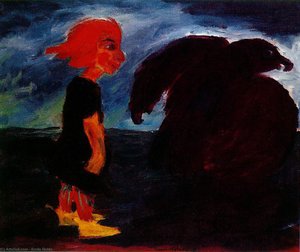
      #100

      Child and Large Bird

      1912 · Statens Museum For Kunst

      The painting Child and Large Bird by Emile Nolde is a captivating work of art that showcases the artist's unique style and technique. Created in 1912, this oil…

      Have it painted by hand →

      エミール・ノルデ's canvases, period by period

      What エミール・ノルデ painted most

      The four subjects that return most often on these canvases, each with its best-loved example.

      Where エミール・ノルデ's canvases hang

      このページに掲載されている絵画を最も多く所蔵している 7 の美術館

      美術館 都市 エミール・ノルデの作品 このリストの絵画
      バイエルン州立絵画コレクション, ミュンヘンバイエルン州立絵画コレクション ミュンヘン 10 Animal and Figures, Festival Girls, Nordermühle
      Statens Museum For Kunst, コペンハーゲンStatens Museum For Kunst コペンハーゲン 10 Shivering Russians, Robbers at Bombüll, The Blacksmith
      ネルソン・アトキンス美術館, カンザスシティネルソン・アトキンス美術館 カンザスシティ 2 Masks, Masks
      シュタットリッヒェ・クンストハレ・カールスルーエ, カールスルーエシュタットリッヒェ・クンストハレ・カールスルーエ カールスルーエ 4 At the Fountain
      ブリュッケ美術館, ベルリンブリュッケ美術館 ベルリン 2 Ridicule (Verspottung)
      Museum Kunstpalast, デュッセルドルフMuseum Kunstpalast デュッセルドルフ 1 花園(少女と洗濯)
      メトロポリタン美術館, ニューヨークメトロポリタン美術館 ニューヨーク 1 Large Sunflowers

      エミール・ノルデ's best-loved canvas of each decade

      1. 1900s
        Couple on the beach (1903) による エミール・ノルデ
        Canvas 3 of 100

        Couple on the beach

        年齢 33歳 – 42歳

        In "Couple on the beach" by Emil Nolde, painted about 1903, the arrangement of figures creates a quiet sense of intimacy against a vast landscape. At the center…

      2. 1910s
        Masks (1911) による エミール・ノルデ
        4 of 100

        Masks

        年齢 43歳 – 52歳 · ネルソン・アトキンス美術館

        Emil Nolde's "Masks," painted in 1911, isn’t merely a depiction of carnival revelry; it’s a profound exploration of identity, hidden desires, and the unsettling duality inherent within human…

      3. 1920s
        Wild Animals (1921) による エミール・ノルデ
        Canvas 24 of 100

        Wild Animals

        年齢 53歳 – 62歳 · バイエルン州立絵画コレクション

        The work belongs to a period of intense experimentation. It reflects a shift toward the subjective, where the internal world dictates the external appearance. The textures are thick…

      4. 1930s
        Nordermühle (1932) による エミール・ノルデ
        14 of 100

        Nordermühle

        年齢 63歳 – 72歳 · バイエルン州立絵画コレクション

        is a studio portrait by the German artist Emile Nolde, dating to 1932. The work captures four individuals in a formal arrangement, presented as a monochromatic study of…

      5. 1940s
        Young Women (1947) による エミール・ノルデ
        Ranked 69 of 100

        Young Women

        年齢 73歳 – 82歳 · Statens Museum For Kunst

        In this work, titled Young Women, we encounter a significant piece from the later period of Emil Nolde. Painted in 1947, the canvas reflects the artist's continued engagement…

      About エミール・ノルデ's canvases: your questions answered

      What is the best-known painting by エミール・ノルデ?Read the answer

      Sunset, followed by Sea with Red Sky and Couple on the beach (1903).

      What are the 10 most famous paintings by エミール・ノルデ?Read the answer

      Sunset, Sea with Red Sky, Couple on the beach, Masks, Christ among the Children, The Great Gardener, Light-flooded Sea (Green), Marshy Landscape under the Evening Sky, Animal and Figures と Anna Wieds Garden. Each canvas in the ranking above comes with its year and its museum.

      How many works did エミール・ノルデ paint in all?Read the answer

      394 works by エミール・ノルデ are in our catalogue, dated 1903 to 1947.

      Where can I see エミール・ノルデ's most famous canvases?Read the answer

      Mostly in バイエルン州立絵画コレクション (ミュンヘン), Statens Museum For Kunst (コペンハーゲン) と ネルソン・アトキンス美術館 (カンザスシティ); the list above names each museum and its canvases.

      When did エミール・ノルデ paint the best-loved canvases?Read the answer

      In 1910s, which gave 22 of the 100 works on this page, Masks among them.

      Which are エミール・ノルデ's earliest and latest famous canvases?Read the answer

      The earliest canvas here is Couple on the beach (1903); the latest is Young Women (1947).

      What did エミール・ノルデ paint most often?Read the answer

      Figures (12), Sky (10) と Sea (10), across the 100 works on this page.

      Which medium did エミール・ノルデ paint in most often?Read the answer

      Oil On Canvas, used in 14 of the 100 works on this page.

      Which movement is エミール・ノルデ's painting part of?Read the answer

      Expressionism, as the canvases on this page show.

      Which エミール・ノルデ canvases hang at the バイエルン州立絵画コレクション?Read the answer

      The バイエルン州立絵画コレクション, ミュンヘン holds 7 of the works on this page, among them Animal and Figures, Festival Girls と Nordermühle.

      Can I buy a reproduction of a エミール・ノルデ canvas?Read the answer

      Yes. Every painting on this page can be ordered from its own page as an oil reproduction painted by hand, or as a fine art print, in the size you choose.

      エミール・ノルデ: a life in paint

      エミール・ノールデの生涯とアイデンティティ

      1867年8月7日、ハンス・エミル・ハンセンとして生を受けた、後にエミール・ノールデとして知られることになるその男は、シュレースヴィヒ公国のノールデ村の近くで育ちました。彼の幼少期は、家族が営む農村の素朴な生活によって形作られました。しかし、彼はやがてその運命的な道から離れ、木彫り職人や家具装飾家としての道を選びます。この手触りのある肉体的な労働の経験が、後の絵画や版画への転換の礎となりました。彼が芸術家としての名を採用したのは、家族の期待から離れ、独自のアイデンティティを確立するための切実な試みでもあったのです。

      20世紀初頭における彼の存在感は、内面的なもの、そして主観的なものへの探求によって際立っていました。初期の表現主義者の一人として、彼は物事の表面的な描写を超越しようと試みました。彼は、アカデミックな伝統からの脱却を目指した芸術家集団「Die Brücke(橋)」のメンバーとなります。彼の作品は、しばしば心理的な深淵や原始的な衝動に焦点を当て、色彩と形態を用いることで、単なる外見の類似を超えた、より深い何かへと手を伸ばしました。彼は、強烈で個人的な感情というレンズを通して世界を見つめる画家だったのです。

      生い立ちと芸術への目覚め

      ハンス・エミル・ハンセンとして生まれた彼は、シュレースヴィヒ公国の農場で育ちました。デンマークとフリジアの農民であった両親のもと、田舎の生活のリズムが彼の幼少期を形作っていきました。しかし、やがて彼は、農夫としての人生は自分のものではないという確信に至ります。大地を耕す重労働と繰り返される日常は、彼の魂には馴染みませんでした。鋤(すき)を握る代わりに、彼の指先が求めたのは、木目の質感だったのです。

      彼は木彫り職人としての道を歩み始め、素材と対話し、確かな触覚的な繋がりを必要とする仕事に打ち込みました。この肉体労働の時期は、決して芸術への回り道ではなく、むしろ彼の表現の礎となりました。その後、カールスルーエやミュンヘンへと学びの場を広げますが、アカデミックな教育の枠組みは、彼にとってしばしば窮屈なものに感じられました。やがて彼は「エミール・ノールデ」という名を名乗るようになります。それは家族の期待から脱却し、自分自身のアイデンティティを確立するための、決意に満ちた一歩でした。

      芸術的発展と影響

      エミール・ノールデがキャンバスに向かう際のアプローチは、ポスト印象派のスタイルとの深い結びつきによって形作られました。彼はポール・ゴーギャンの作品に目を向け、単なる写実的な表現を超越する術を見出したのです。この転換により、彼は対象の外見的な姿ではなく、その内側に宿る重みに焦点を当てることが可能となりました。自然界への情熱は、しばしば花々への執着という形で現れましたが、それはフィンセント・ファン・ゴッホの影響を色濃く反映したものでした。彼は単に庭園を描いたのではありません。彼は花びらの中に脈打つ生命の鼓動を追い求めたのです。

      彼の歩む道は、決して平坦な直線ではありませんでした。Die Brücke(橋)の芸術家たちのなかで確固たる地位を築きながらも、その関心はしばしば異なる芸術的潮流へと彼を引き寄せました。1912年には、ヴァシリ・カンディンスキーが率いる「青騎士」のメンバーと共に展示を行っています。この時期の彼の人生は、自身の鋭い観察眼が捉える強烈な感覚を、いかにして視覚的な言語へと昇華させるかという、絶え間ない探求によって特徴づけられていました。色彩の探求と形態の探求の間を揺れ動きながら、彼は常に、絵具が世界の表面的な現象を超えて、何か深い何かを語り出すための方法を模索し続けていたのです。

      Die Brücke(橋)への参画

      1906年の初め、ドレスデンのアーノルド画廊で彼の作品が目に留められたことが、彼の芸術人生における大きな転換点となりました。この出会いをきっかけに、彼は表現主義の重要なグループであるDie Brücke(橋)への加入を要請されます。彼は1906年2月から1907年11月にかけて、この革新的な芸術集団の一員として活動しました。当時、ドレスデンを拠点としていたこのグループは、既存のアカデミックな伝統を打破し、新たな絵画言語を模索するという情熱的な試みを続けていたのです。

      グループでの活動において、彼の作品にはポスト印象派の影響が色濃く反映されていました。メンバーたちが既成概念からの脱却という共通の目的を掲げる中で、エミール・ノールデの歩みは常に独自の輝きを放っていました。彼は、故郷シュレースヴィヒ=ホルシュタインから持ち帰った、原始的な仮面や彫刻が持つ強烈な表現力への関心を、グループの探求に新たな視点として持ち込んだのです。ドレスデンで過ごしたこの時期は、彼がより独立した芸術家としての道を歩み始める前に、色彩と形態に対する独自の感性を確立させていくための、極めて重要な形成期となりました。

      技法と表現のスタイル

      エミール・ノールデの筆致には、色彩がもたらす直接的な感覚への執着が鮮やかに表れています。彼は20世紀初頭において、色彩の可能性を押し広げた先駆的な油彩画家であり、水彩画家でもありました。そのパレットは、重厚な黄金色のイエローや、深く情熱的なレッドへと強く傾倒しています。こうした色の選択は画面に確かな重みを与え、色彩を単なる装飾的な要素としてではなく、そこに実在する生命体のように感じさせるのです。彼は、それまでの伝統に見られたような繊細な光の移ろいに甘んじることはありませんでした。むしろ、対象をありのままに写し取ることよりも、主題が持つ感情的な真実を優先させる、ダイレクトな表現へと突き進んだのです。

      1930年代からその生涯を閉じるまで、水彩画は彼にとって主要な表現媒体となりました。水彩という媒体は、油彩画よりもはるかに速いスピードで、自身の思想や概念を紙の上へと昇華させることを可能にしたのです。その筆致の速さは、顔料の扱いにも如実に現れており、鮮烈で、どこか物悲しさを湛えた嵐の情景や、輝かしい花々を見事に描き出しています。絵具は、移ろいゆく光や天候の決定的な瞬間を捉えようとする、切迫したエネルギーを伴って躍動しています。彼の描く風景において、色彩は単に形の上に置かれた層ではありません。色彩そのものが、形を構成する実体となっているのです。

      迫害とナチス政権

      エミール・ノールデとナチス政権との関係は、極めて複雑で矛盾に満ちたものでした。彼はナチス党の党員でありながら、彼自身の描く絵画は国家によって激しく糾弾されることとなったのです。ナチス政権は彼の作品を「退廃芸術」と断じ、彼の政治的な帰属と芸術的な創造活動との間に、逃れようのない衝突を引き起こしました。この緊張関係のなか、ナチス党によって1,052点もの彼の作品が美術館から撤去されるという、痛ましい事態を招きました。

      歳月が流れるにつれ、彼が表現活動を続けるための制約は、より過酷なものへと変わっていきました。1941年以降、彼は絵画を描くことさえ禁じられたのです。この沈黙の時代、彼は自らの芸術的ビジョンを絶やさぬよう、別の手段へと向かいました。彼は何百もの水彩画を制作し、それらを密かに隠し続けました。それらはしばしば「描かれざる絵画」と呼ばれ、公式な美術界が彼のスタイルを拒絶し、背を向けていた暗黒の時代、その作品たちは人目に触れることなく、静かに息づいていたのです。

      主要な作品と芸術的功績

      エミール・ノールデの筆致は、色彩を直接的に塗り重ねることで、対象の本質を鮮烈に捉えようとするものでした。1912年に制作された男、女、そして猫は、物体や人物の形態に対する彼の深い関心を反映した傑作です。その後、1917年には花園(ウーテンヴァルフ)に見られるように、その眼差しは自然界の躍動へと向けられていきました。これらの作品には、厚塗りの絵の具を幾重にも重ねることで画面に質感を与え、彼独自の視覚的体験を貫こうとする揺るぎない情熱が刻まれています。

      歳月が流れるにつれ、彼と画材との関係もまた変容を遂げていきました。1930年代から晩年に至るまで、水彩画は彼の主要な表現手段となり、油彩画よりも迅速に、内なる思想を紙の上へと解き放つことを可能にしました。その真価は、1930年の水彩画嵐の海に顕著に表れています。そこでは、急速で表現力豊かな筆致によって、荒れ狂う水の動きが鮮やかに捉えられています。たとえ公の場での制作を禁じられた暗黒の時代であっても、彼は密かに創作を続け、自ら「描かれざる絵画」と呼んだ数百点もの水彩画を遺したのです。

      晩年の彼は、人間の形態や肖像画が持つ心理的な重みを探求し続けました。1937年に生み出された二重肖像は、一連の水彩画の習作から昇華された、極めて精神性の高い作品です。彼の芸術は、色彩という手段を用いて、個人の内奥に潜む真実へと手を伸ばし続けた、一人の芸術家の魂の記録として今もなお輝きを放っています。

      • 男、女、そして猫 (1912年)
      • 花園(ウーテンヴァルフ) (1917年)
      • 嵐の海 (1930年)
      • 二重肖像 (1937年)

      遺産と歴史的影響

      エミール・ノールデが遺した影響の重みは、色彩が単なる写実的な描写を超えて、自律的な動きを持つことを許容したその手法に深く刻まれています。キャンバスが内包し得る表現の境界を押し広げることで、彼は表現主義の進むべき方向性を形作る一翼を担いました。彼の作品は、過去のアカデミックな規範から脱却し、外見的な類似性よりも内面的な心理状態を優先させる、ダイレクトな表現へと向かいました。この転換は、絵具の塗布や色調の選択そのものが、加工されることのない生の存在感を伝えるための、新たな視覚言語となることを可能にしたのです。

      20世紀の初期芸術運動における彼の存在は、支配的な政治的・社会的情勢と対立することさえ厭わない、個としてのアーティストの在り方に一つの先例を示しました。たとえ彼の作品が公の場から排除され、「退廃芸術」というレッテルを貼られたとしても、彼は密かに芸術を紡ぎ続けました。この不屈の精神があったからこそ、色彩と形態に対する彼独自の探求は、最終的に近代美術への極めて重要な貢献として認められるに至ったのです。時代が求める枠組みに屈することを拒み、強烈な生命力を放ち続ける彼の作品群は、今なお多くの人々を惹きつけてやみません。


      代表的な作品:

      • キリストの嘲笑
      • 秋海
      • 仮面

      今日、彼の作品に触れるために

      公立美術館のコレクションを辿っていくと、彼の足跡は各地に点在しながらも、極めて重要な軌跡を描いていることがわかります。ドイツのハノーファーでは、シュプレンゲル美術館が、水彩画による力強い風景画嵐の海を所蔵しています。さらに北へ、スウェーデンのストックホルムへと足を運べば、近代美術館(Moderna Museet)において花園(ウーテンヴァルフ)を鑑賞することができます。これらの作品は、彼の手が異なる支持体や主題の上で、いかに鮮やかに躍動していたかを私たちに教えてくれます。

      ドイツの風景の中に彼の存在を刻み続けているのは、ブレーメンのベッチャー通り美術館です。また、彼の生涯と芸術的成果をより深く、濃密に辿りたいと願う人々のために、1956年にはノールデ財団(Nolde Stiftung Seebüll)が設立されました。この財団は、今なお彼の遺産を語り継ぐための中心的な拠点であり続けています。

      • 嵐の海
      • 花園(ウーテンヴァルフ)

      エミール・ノルデによる全 394点の作品 →