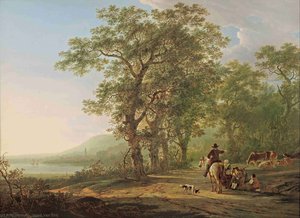
겨울의 포옹을 다스리는 거장: 야코프 판 스트레이의 삶과 유산
18세기 후반, 서리가 내려앉은 고요한 풍경 속에서 네덜란드의 계절적 순환이 지닌 덧없는 아름다움을 야코프 판 스트레이만큼이나 애틋하게 포착해낸 예술가는 드물었습니다. 1756년 10월 2일, 역사적인 도시 도르드레흐트에서 태어난 그는 네덜란드의 대기 변화와 영혼이 뗄 수 없는 관계로 맺어진 듯한 화가였습니다. 그는 예술적 헌신의 혈통 속에서 태어났으며, 그의 초기 교육을 담당했던 존경받는 화가이자 데생가인 레렌드 판 스트레이의 아들로 성장했습니다. 이러한 가족적 토대는 명망 높은 픽투라 도르드레흐트(Pictura Dordrecht) 드로잉 협회의 창립 멤버인 그의 형 아브라함의 존재와 결합되어, 야코프의 유년 시절이 네덜란드 시각 예술의 엄격한 전통 속에 깊이 뿌리내릴 수 있게 했습니다.
예술적 성숙을 향한 그의 여정은 조국을 넘어 안트베르펜의 활기찬 학문적 분위기로 이어졌습니다. 1774년에서 1776년 사이, 야코프 판 스트레이는 예술 아카데미에서 안드리스 코르넬리스 렌스의 가르침을 받았습니다. 이 형성기 동안 그의 기술적 숙련도는 빛에 대한 깊은 감수성과 결합하기 시작했습니다. 이러한 스승들의 지도 아래 그는 구도의 고전적 원칙과 그림자의 섬세한 상호작용을 마스터했으며, 이는 훗날 그의 상징이 된 얼어붙은 강물과 안개 낀 목초지에 생명력을 불어넣는 밑거름이 되었습니다.
황금기를 뿌리에 둔 예술적 비전
야코프 판 스트레이는 바로크 후기에서 로코코 초기로 넘어가는 전환기에 활동했음에도 불구하고, 그의 예술적 심장은 네덜란드 황금기에 대한 경외심에 닻을 내리고 있었습니다. 그는 앞으로 나아갈 길을 찾기 위해 17세기 거장들을 되돌아보았으며, 알베르트 퀴프의 대기 원근법과 렘브란트 판 레인의 극적인 명암 대비로부터 엄청난 영감을 얻었습니다. 과거와의 이러한 연결은 빛을 단순히 형태를 비추는 도구가 아니라, 감정과 계절의 분위기를 담아내는 매개체로 활용하는 그의 능력에서 여실히 드러납니다.
그의 작품 세계는 주제 면에서 놀라운 다채로움을 보여주지만, 특히 영원한 평온함을 불러일으키는 특정 장르에서 가장 찬란하게 빛납니다.
- 겨울 풍경화: 아마도 그의 가장 불멸의 업적이라 할 수 있는 이 작품들은 눈으로 뒤덮인 세상의 정적을 포착하며, 매서운 추위를 부드럽게 감싸는 은은하고 따스한 빛의 온기를 그려냅니다.
- 해양화: 네덜란드의 해양 유산에 대한 예리한 시각을 바탕으로, 그는 물의 움직임과 선박의 장엄함을 매우 정밀하게 묘사했습니다.
- 목가적 장면: 소와 양치기, 그리고 농촌 생활에 대한 그의 묘사는 자연의 리듬과 시골 풍경이 지닌 고요한 품격에 대한 깊은 존경을 반영합니다.
예술적 성취와 역사적 의의
화가이자 판화가, 데생가로서의 기술적 기량을 넘어, 야코프 판 스트레이는 당대인들에게 깊은 지성과 교양을 갖춘 인물로 추앙받았습니다. 그는 박식한 지식인으로서 티케겐스찹 픽투라(Teekengenootschap Pictura)에서 신화의 복잡성과 옛 거장들의 영원한 광휘에 대해 강연하며 도르드레흐트의 지적 삶에 기여했습니다. 자연을 세밀하게 관찰하는 관찰자이자 미술사를 수호하는 학자라는 이 이중적인 면모는, 그가 시각적으로 매혹적이면서도 지적으로 탄탄한 작품을 창조할 수 있게 한 원동력이었습니다.
그의 삶은 1815년에 막을 내렸지만, 야코프 판 스트레이의 영향력은 도르드레흐트 미술관부터 스미스소니언 미국 미술관에 이르기까지 그의 보물들을 소장한 수많은 컬렉션을 통해 오늘날까지 이어지고 있습니다. 단순한 풍경을 빛과 계절에 대한 심오한 명상으로 승화시킨 그의 능력은 네덜란드 미술사의 정전(canon)에 그의 자리를 확고히 해줍니다. 그는 단순히 눈에 보이는 것을 그린 것이 아니었습니다. 그는 바람의 느낌을, 눈의 무게를, 그리고 네덜란드 풍경이 지닌 영원한 평화를 그렸으며, 이를 통해 그것을 바라보는 모든 이들에게 경이로움을 선사하는 유산을 남겼습니다.
Q&A
야코프 판 스트레이의 모든 작품을 어디에서 볼 수 있나요?
이 사이트에 등록된 야코프 판 스트레이의 모든 작품은 작가의 전체 작품 보기 페이지에서 만나보실 수 있습니다.
야코프 판 스트레이 작가의 국적은 어디인가요?
야코프 판 스트레이은(는) 네덜란드 출신입니다.
야코프 판 스트레이의 작품을 팔레트별로 모아둔 곳은 어디인가요?
야코프 판 스트레이의 작품은 작가의 컬러 팔레트별로 보기 페이지에서 컬러 팔레트별로 만나보실 수 있습니다.