Of all Albrecht Dürer's paintings, Knight, Death, and the Devil (1513) is the most famous. Close behind come Jaunas Zuikis (1502) and Savęs portretas jaunesiam žmogui (1493). Among the 1,220 works by Albrecht Dürer in our catalogue, these 100 are the most celebrated, each shown with its date, its museum and its story.
Rangos vieta nulegiama pagal mūsų populiarumumo balas, kurį sudaro kiekvieno kūrinio paieškos, apsilankėjimai ir užsakėjimai. Atnaujinta spalis 2026. Each painting on this page can be ordered as an oil reproduction painted by hand on linen canvas, or as a fine art print, made to the size you choose.


Jaunas zuikis: Albrecht Dürerio gamtos studija Albrecht Dürerio „Jaunas zuikis“ (Vokietijoje – *Feldhase*) – tai 1502 metų akvarelė, kuri neatsiejamai susijusi su Šiaurės Renesanso meistriškumu ir natūralizmo idealais. Tai ne tik gyvūno portretas; tai gilus gamtos studija, atspindinti Dürerio nepriekaištingą stebėjimo gebėjimą ir įgūdžius perteikti subtilią šviesos ir šešėlio žaidimą. Šis kūrinys, saugomas Albertinos muziejuje Vienoje, yra nepralenkiamas pavyzdys detalumo ir emocinio poveikio sintezės mene. Žiūrint į tai gamtos stebuklą,…

Albrecht Dürer’s “Self-portrait at 22”: A Window into Renaissance Soul Albrecht Dürer's "Self-portrait at 22," executed in 1493, stands as a cornerstone of Northern Renaissance art—a meticulously crafted depiction that transcends mere likeness to embody the intellectual and spiritual currents of its time. Painted on vellum transferred to canvas, this artwork resides within the Louvre’s collection, offering visitors an unparalleled glimpse into the formative years of one of Europe's most…

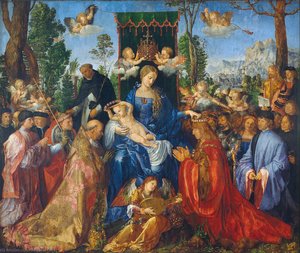
Albrecht Dürer’s “Feast Of The Rose Garlands,” completed in 1506, stands as an emblem of the High German Renaissance—a testament to meticulous observation and profound symbolic representation. More than just a depiction of biblical narrative, it embodies the humanist spirit that characterized the era, prioritizing human dignity and intellectual contemplation alongside artistic excellence.

Albrecht Dürer's ‘Self-Portrait,’ completed in 1498, stands as an unparalleled achievement of Northern Renaissance art—a testament to meticulous observation and profound psychological insight. More than just a likeness of the artist himself, it embodies the intellectual fervor and humanist ideals that characterized this transformative period in European culture.

Albrecht Dürer ir Šventosios Motinos Marijos Padovanų Aukso Šlovė Šventoji Motina Marija ir Žemiečioje gimęs Kristus – vienas iš žymiausių religinių paveikslų ciklus Renesanso metais. Štai kaip šis kūrinys išliko įvykis istorijoje ir kaip jis įkvėpė pasaulio meno meistrus. Šventosios Motinos Marijos Padovanų Aukso Šlovė yra vienas iš Albrechto Dürerio žymiausių darbų, kuriuos jis sukūrė 1504 metais Niurnberge. Šis paveikslo ciklas buvo įvykis Renesanso estetikoje ir simboliškai reikšmės šaltiniu. Paveikslą…

A Glimpse into Artistic Maturity: Dürer’s Self-Portrait at 22 This striking self-portrait, created in 1500 by the masterful Albrecht Dürer, is far more than a simple likeness; it's a bold statement of artistic identity and a pivotal work within the Northern Renaissance. Painted when he was just twenty-eight years old (though misdated as 1493), this piece resides in the Louvre Museum and showcases Dürer’s remarkable skill and evolving style. He…

The Adoration of the Trinity (Landauer Altar) emerges from the brush of Albrecht Dürer, a presence that commands the viewer's attention through its sheer scale and spiritual weight. Created in 1511, this monumental work captures a moment of celestial convergence. It exists as a profound visual hymn, where the divine and the earthly meet in a single, unified act of reverence. The air seems to thicken with the weight of…

Albrecht Dürerio „Jaunos Venecijietės Portretas“ – tai neatskiriama dalis Renesanso meno palikimo, atspindintis menininko kelionę į Italiją ir jo susidūrimą su naujomis dailės formomis. Sukurtas 1505 metais, šis kūrinys yra tarsi langas į XVI amžiaus Venecijos moters pasaulį, užfiksuotas vokiečių meistro žvilgsniu. Düreris, garsėjantis savo išskirtiniais medžio pjūviais ir graviūromis, čia demonstruoja naujai atrastą aliejaus dažų techniką ant beržo plokštelės, kuri leidžia sukurti švelnesnius tonus ir subtilesnius šešėlius nei anksčiau…

Albrecht Dürerio paveikslas „Kristus Tarp Mokytojų“ (1506 m.) – tai ne tik religinis motyvas, bet ir intelektualinė diskusija, įamžinta aliejumi ant medinės lentos. Šis kūrinys kviečia stebėtoją įsigilinti į Lukos evangelijoje aprašytą sceną Jeruzalės šventykloje, kur jaunas Jėzus diskutuoja su išsilavinusiais mokytojais. Dürerio meistriškumas leidžia mums pajusti tą pačią įtampą ir intelektualinę energiją, kuri vyravo toje istorinėje akimirką.

Stovėti prieš Albrechto Diurerio Rose girlienų šventę – tai tarsi būti perkeltam į patį Vokiškojo Renesanso širdį, į laikotarpį, kuriame humanistinis intelektualizmas ir gilus religinis atsidavimas švietė tobuloje…
Order this canvas →
Albrechto Diurerio (1471–1528) „Rožių Girliandos Altarpedinis Darbas“, sukurtas 1506 metais, yra neatsiejamas nuo Šiaurės Renesanso meno palikimo. Tai daugiau nei tik paveikslas; tai istorijos, religinio atsidavimo ir meniškos…
Bring this light home →
Tema ir dėmesio centras Šis meistriškas portretas įamžina intymią žmogaus veido artumą, pabrėždamas žmogaus emocijų gębę ir sudėtingumą. Ramus, tačiau intensyvus subjekto išraiška kviečia žiūrovą į tylios introspekcijos…
Bring this light home →
Pasaulio Genijaus – Albrechts Diurerio „Jaunos Venecijos Merginos“ Portreto Aprašas Šis portretas, sukurtas 1505 metais Albrechts Dürerio rankomis, yra ne tik dailės kūrinys, bet ir gyvai įvykusių laikų…
Have it painted by hand →
To gaze upon Albrecht Dürer’s Self-Portrait at the Age of Twenty Eight is to encounter more than just a painted likeness; it is to witness a profound moment…
Bring this light home →
In the quiet, hallowed halls of the Alte Pinakothek in Munich, there exists a masterpiece that does more than merely occupy space; it commands a profound silence. Albrecht…
Have it painted by hand →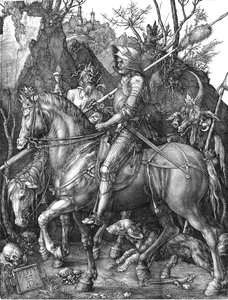
In the annals of the Northern Renaissance, few works command the same visceral intensity as Albrecht Dürer’s 1513 masterpiece, Knight, Death and the Devil. This monumental engraving is…
Bring this light home →
In the profound stillness of 1513, Albrecht Dürer captured a moment of intense spiritual confrontation in his masterful engraving, Knight, Death, and the Devil. This work, one of…
Bring this light home →
The Men's Bath is a woodcut created by Albrecht Dürer in 1497. The image captures a group of nude men gathered within a bathhouse. They occupy a space…
Bring this light home →
In the quiet, shadowed corners of the Northern Renaissance, few works capture the profound essence of human devotion as poignantly as Albrecht Dürer’s St Jerome in the Wilderness.…
Have it painted by hand →
In the annals of the Northern Renaissance, few images possess the haunting, visceral magnetism of Albrecht Dürer’s “The Sea Monster.” Created around 1498, this extraordinary engraving serves as…
Bring this light home →
Albrecht Dürer's “View of the Arco Valley in the Tyrol,” painted in 1495, stands as a cornerstone of Northern Renaissance art—a testament to meticulous observation and innovative technique.…
Have it painted by hand →
The scene unfolds in a moment of profound stillness and heavy sorrow. In this depiction of the Crucifixion of Jesus Christ, the weight of the event hangs in…
Order this canvas →
In the quiet, contemplative depths of Albrecht Dürer’s "The Seven Sorrows of the Virgin," created in 1496, we encounter more than a mere religious relic; we enter a…
Have it painted by hand →
In the quiet, shadowed corners of the Northern Renaissance, few works capture the profound essence of human devotion as poignantly as Albrecht Dürer’s St Jerome Penitent in the…
Order this canvas →
In the quiet, shadowed corridors of art history, few works command the visceral intensity of Albrecht Dürer’s Harrowing of Hell, also known as Christ in Limbo. Created between…
Bring this light home →
The monochrome print depicts a celestial event centered on the Virgin Mary. She sits upon a throne decorated with floral patterns. Christ, acting as King of Heaven, places…
Bring this light home →
Ramus kario žvilgsnis: Albrechto Dürerio „Hase“ Vienos iš garsiausių galerijų, Vienos Albertina muziejaus, kolekcijoje saugoma viena apgaubiančios paprastybės ir gilaus rezonanso Renesanso kūrybos: 1502 metais sukurtas Albrechto Dürerio…
Bring this light home →
Albrecht Dürer's "Small Passion: 2. Expulsion from Paradise," created in 1510, stands as a cornerstone of Northern Renaissance art—a testament to meticulous observation and profound symbolic representation. More…
Bring this light home →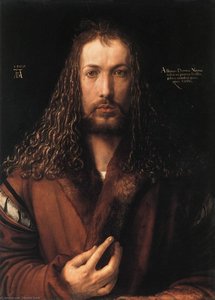
Albrecht Dürer's ‘Self-Portrait in a Fur-Collared Robe,’ painted circa 1500, stands as an unparalleled testament to the artistic fervor of the German Renaissance. More than just a depiction…
Have it painted by hand →
In the quiet, shadowed corridors of the Northern Renaissance, few works capture the raw, trembling essence of human vulnerability as masterfully as Albrecht Dürer’s Agony in the Garden.…
Have it painted by hand →
Albrecht Dürer's "The Temptation of the Idler," completed around 1498, stands as a cornerstone of Northern Renaissance printmaking—a masterful distillation of humanist thought and allegorical representation. More than…
Have it painted by hand →
The drawing, titled Hands of an Apostle, is a detailed study rendered in pen and ink on blue colored paper. The composition focuses exclusively on a pair of…
Order this canvas →
In the quiet, profound depths of Albrecht Dürer’s 1513 engraving, St Peter and St John Healing the Cripple (No. 16), we encounter a moment where the earthly and…
Have it painted by hand →
The forest holds its breath as a sudden, divine light pierces the dense canopy. Within this shadowed woodland, a Roman general named Placidus halts his pursuit, frozen by…
Have it painted by hand →
Albrecht Dürer’s “Courtyard of the Former Castle in Innsbruck with Clouds,” completed in 1494, transcends mere depiction; it embodies the very essence of Northern Renaissance artistic ambition. More…
Order this canvas →
Albrecht Dürer’s “The Bagpiper,” created in 1514, transcends mere visual representation; it embodies the spirit of the German Renaissance—a period defined by humanist ideals and an unwavering fascination…
Bring this light home →
Albrecht Dürer's "The Harrowing of Hell," or Christ in Limbo, from his monumental “Large Passion,” is not merely a depiction of biblical narrative; it’s a profound exploration of…
Order this canvas →
In the quiet, meticulous world of Northern Renaissance printmaking, few works command as much reverence as Albrecht Dürer’s 1513 masterpiece, Sudarium Displayed by Two Angels. This profound engraving…
Have it painted by hand →
Vaizdas išvaizduoja du vyenius, įklvėtus vidutiniuose broniuose, kiekvienas laikantis šildų, apdanguotų heraldiški simboliais. Vyras kairėje pusėje stovi prie mieklo, o tas dešinėje pusėje taip pat laiko šildą. Fone…
Order this canvas →
Albrecht Dürer's “The Virgin Mary in Prayer,” painted in 1518, isn’t merely a depiction of the biblical figure; it’s an intensely personal meditation rendered in oil on panel.…
Have it painted by hand →
In the annals of the German Renaissance, few names command as much reverence as Albrecht Dürer, a master who possessed the rare ability to marry scientific precision with…
Bring this light home →
St Eustace: A Detailed Exploration of Dürer's Masterpiece Subject Matter: Šiuolaikinė graviūra vaizduoja Šv. Eustacijų, taip pat Šv. Hubertą, Romos legionierių, kuris po susitikimo su elniais, kuriame tarp…
Order this canvas →
Albrecht Dürerio „Šventųjų iškilimų“ paveikslas yra galingas ir jaudinantis alievinis kūrinys, į whichį įlipta visa Šiaurės Renesanso esmė. Sukurtas 1508 metais, šis šedevras yra Dürerio meistriškumo, kaip både…
Have it painted by hand →
Albrecht Dürer's "St Jerome in His Study" is a remarkable black and white engraving that transports viewers to the private world of a Christian scholar and hermit. Completed…
Order this canvas →
Step closer to the print and observe how the ink settles into the paper. In this 1511 woodcut, we find St. Christopher navigating the currents of a river,…
Order this canvas →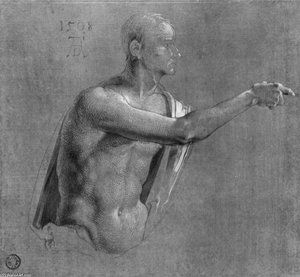
This detailed black and white drawing, executed in pen and ink on paper, presents a study of human anatomy focusing on the upper body of a male figure.…
Bring this light home →
This black and white drawing is a detailed portrait of Willibald Pirckheimer, created by Albrecht Dürer. The composition is a study in profile, focusing on the subject's face…
Order this canvas →
This monochrome drawing, executed in 1520, presents a bust-length view of Erasmus, depicted from the chest upward. The subject is positioned centrally, with his head slightly tilted to…
Order this canvas →
The Breath of Creation: A Vision of Adam In the quiet shadows of the Museo del Prado, Albrecht Dürer’s Adam stands as a monumental testament to the dawn…
Order this canvas →
1521 metais sukurta Albrechto Diurerio „93 metų senolio studija“ nėra tiesiog portretas; tai gili meditacija apie laiką, mirtį ir tylią senėjimo orumą. Šis kūrinys, iškeltas svariausio Renesanso Vokietijos…
Order this canvas →
The German artist Albrecht Dürer captures the essence of a profound intellect in his 1526 portrait, Erasmus of Rotterdam. This work emerges from a personal connection between the…
Order this canvas →
The Emperors Charlemagne and Sigismund: A Nuremberg Commission Reflects Renaissance Ideals This drawing by Albrecht Dürer represents more than just a portrait; it embodies the aspirations of a…
Have it painted by hand →
The artwork titled Jabach Altar: Saints Simeon and Lazarus is a religious art piece created by the artist Albrecht Dürer. This specific panel constitutes the right wing inside…
Have it painted by hand →
Wing of a Blue Roller, also known as Wing of a European Roller, is a nature study watercolor by the German artist Albrecht Dürer. Completed in 1512, the…
Order this canvas →
The Small Courier is a black and white engraving from 1496. The image depicts a dynamic scene of a man on horseback riding through a forest. The composition…
Have it painted by hand →
A Window Into Renaissance Identity: Examining Albrecht Dürer’s Self-Portrait at 26 The painting “Self-Portrait at 26,” executed by Albrecht Dürer in 1498, transcends mere representation; it embodies the…
Order this canvas →
In the quietude of Albrecht Dürer’s “Virgin and Child with a Pear,” we are invited into a sacred space that transcends the boundaries of time. Completed in 1512,…
Bring this light home →
In the quiet intensity of Albrecht Dürer’s Crowning with Thorns, we are invited into a moment of profound spiritual gravity. Created in 1504, during the height of the…
Order this canvas →
In this woodcut from 1511, we find ourselves drawn into a quiet, intimate corner of a room where a profound act of service is unfolding. The scene captures…
Order this canvas →
In the quietude of Albrecht Dürer’s “Head of an Angel,” completed in 1506, one encounters more than a mere portrait; one enters a meditative space where the boundaries…
Bring this light home →
In the quiet, hallowed halls of the Gemäldegalerie Alte Meister in Frankfurt, there exists a window into a vanished world, a moment of profound intimacy captured by the…
Order this canvas →
Albrecht Dürer’s “Eve,” completed in 1507, stands as a monumental achievement within the artistic landscape of the German Renaissance. Currently residing at the Museo del Prado in Madrid,…
Have it painted by hand →
In the annals of the German Renaissance, few names command as much reverence as Albrecht Dürer. Emerging from the industrious, artisan-driven atmosphere of Nuremberg in 1471, Dürer was…
Order this canvas →
A Dreamscape of Anxiety: Decoding Dürer’s Traumgesicht Albrecht Dürer's *Traumgesicht* (Dream Face), created in 1525, isn’t merely a depiction of a landscape; it’s an unsettling meditation on fear…
Have it painted by hand →
Two elderly figures, Joseph and Joachim, occupy the foreground in a formal, iconographic arrangement. On the left, a man in a green mantle and pink tunic holds a…
Bring this light home →
In the quiet stillness of 1504, Albrecht Dürer captured a moment that would transcend time, weaving together the earthly and the divine in his masterpiece, Adoration of the…
Have it painted by hand →
The air feels still around the Virgin Mary as she cradles the Christ Child in a quiet, intimate embrace. A soft light descends from the upper left, brushing…
Order this canvas →
In the quiet intersection of scientific inquiry and artistic mastery, Albrecht Dürer’s “The Southern Hemisphere of the Celestial Globe” emerges as a breathtaking window into the Renaissance mind.…
Have it painted by hand →
In the Martyrdom of the Ten Thousand, Albrecht Dürer presents an arresting testament to the artistic fervor and moral contemplation characteristic of the German Renaissance. This monumental work…
Order this canvas →
In the quiet, meticulous world of the German Renaissance, few works capture the unsettling intersection of the carnal and the supernatural as profoundly as Albrecht Dürer’s Satyr Family.…
Have it painted by hand →
Albrecht Dürer's "Study of Hands," created in 1506, is far more than a simple depiction of two hands grasping a hat; it’s a profound meditation on human skill,…
Have it painted by hand →
In the annals of the Northern Renaissance, few works command as much reverence for their technical complexity and symbolic depth as Albrecht Dürer’s "Triumphal Arch." Created in 1515,…
Bring this light home →
Albrecht Dürer's "Life of the Virgin: 6. Marriage of the Virgin," executed in 1504, stands as a testament to the artistic fervor of the German Renaissance—a period defined…
Bring this light home →
In the year 1496, within the vibrant, industrious atmosphere of Nuremberg, Germany, a young Albrecht Dürer captured a moment that would transcend the boundaries of mere sketchwork to…
Order this canvas →
In the quiet, shadowed corridors of the Northern Renaissance, few moments capture the intersection of the human and the divine as poignantly as Albrecht Dürer’s Small Passion: 32.…
Have it painted by hand →
In the quiet, profound depths of the Northern Renaissance, few artists possessed the ability to bridge the gap between the earthly and the divine as masterfully as Albrecht…
Have it painted by hand →
A Window into Renaissance Self-Reflection: Examining Albrecht Dürer’s “Self-Portrait at 26” The Museo del Prado in Madrid houses a masterpiece that transcends mere portraiture—Albrecht Dürer's "Self-Portrait at 26,"…
Have it painted by hand →
The artwork is a detailed black and white engraving depicting two figures, a man and a woman, seemingly engaged in conversation. The composition is vertically oriented with the…
Have it painted by hand →
The image is a monochromatic woodcut characterized by intricate linework and high contrast. The composition is dense with figures and architectural elements, creating a sense of dramatic tension.…
Order this canvas →
The engraving, titled Man Of Sorrows With Hands Raised, presents a central figure, presumably Christ, depicted in a state of suffering. The figure stands with arms raised, positioned…
Order this canvas →
In the quiet, meticulous lines of Albrecht Dürer’s Prudentia, we encounter more than just a portrait; we enter a profound meditation on the human intellect and the virtue…
Have it painted by hand →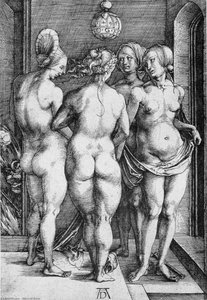

Albrecht Dürer's woodcut, "Christ on the Cross with the Virgin and St John," stands as a profoundly moving testament to the artist’s mastery of German Expressionism and his…
Order this canvas →

The artwork is a detailed black and white woodcut depicting a celestial scene with angels playing musical instruments. The image is vertically oriented, densely populated with figures and…
Bring this light home →
The artwork is a detailed black and white engraving depicting a chaotic battle scene between angels. The composition is vertically oriented and densely populated with figures engaged in…
Have it painted by hand →

A Moment Frozen in Ink: The Tension of the Northern Renaissance Christ before Caiaphas (No. 4) is not merely an engraving; it is a profound psychological drama captured…
Bring this light home →
In the heart of the German Renaissance, where the scent of heated metal and the precision of goldsmithing once defined the streets of Nuremberg, there emerged a portrait…
Have it painted by hand →
This artwork is a detailed black and white woodcut depicting two figures in conversation. The composition is centered around the two figures, positioned on either side of the…
Bring this light home →
A skull rests upon a draped cloth in the foreground, its hollow sockets staring from a position of quiet prominence. Beside this symbol of mortality, a crowned woman…
Order this canvas →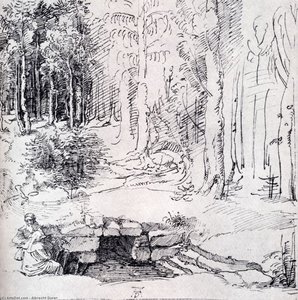

In the quiet, meticulous world of the German Renaissance, few hands could command the copper plate with as much spiritual authority as Albrecht Dürer. His 1523 engraving, Saint…
Order this canvas →
Albrechto Dürerio 1511 metais sukurtas darbas, "Paskutinė Vokršė", – ne tik religinio įvykio atvaizdavimas, bet ir reljefinės graviravimo meno puikus pavyzdys. Tai neatsilaičiamas elementas Nyderlandų renesanso meno palėpos,…
Have it painted by hand →
In the quiet intimacy of a single copperplate engraving, Albrecht Dürer managed to capture the thunderous pulse of human existence. Peasant Couple Dancing, executed in 1514, is far…
Have it painted by hand →
In the quiet intersection of art and science lies Albrecht Dürer’s Studies on the Proportions of the Female Body, a profound window into the intellectual fervor of the…
Have it painted by hand →
In the annals of the German Renaissance, few images possess the raw, kinetic energy found in Albrecht Dürer’s St Michael Fighting the Dragon. Created around 1498, this masterpiece…
Have it painted by hand →

The four subjects that return most often on these canvases, each with its best-loved example.
 #3 Savęs portretas jaunesiam žmogui
 #5 Svajūnė
 #10 Albrecht Dürer
A Life Forged in Nuremberg: The Early Years and ApprenticeshipAlbrecht Dürer, a name synonymous with the German Renaissance, emerged from the bustling artisan city of Nuremberg in 1471. His father, Albrecht Dürer the Elder, was a successfu
#19 The Men's Bath
8 muziejai, kuriuose saugoma daugiausia šioje pusėje esamų paveikslų.
| Muzejaus | Miestas | Albrecht Dürer darbai | Šiojo sąrašo paveikslai |
|---|---|---|---|
 Metropolitano meno muziejus |
Niujorkas | 52 | The Sea Monster, Crucifixion, St Jerome Penitent in the Wilderness |
 Graphische Sammlung Albertina |
Višina | 51 | Life of the Virgin: 18. The Coronation of the Virgin, Courtyard of the Former Castle in Innsbruck with Clouds, 93 metų senolio studija |
 British Museum |
Londonas | 67 | The Men's Bath, Small Passion: 2. Expulsion from the Paradise, Pattern from the Series of Six Knots 3 |
 Kunsthistorisches Museum |
Viena | 30 | Trinitė garbėjimas (Landau altorius), Jaunos Venecijietės Moters Portretas, Portret Jaunodos Venecijiečių Moters |
 Museo del Prado |
Madridas | 9 | Svajūnė, Adam, Self-Portrait at 26 |
 Bavarijos valstybinės paveikslų kolekcijos |
Miunchas | 10 | Self-Portrait at the Age of Twenty Eight, The Four Apostles, Jabach Altar: Saints Simeon and Lazarus |
 Alte Pinakothek |
Miunchenas | 26 | The Seven Sorrows of the Virgin, Self-Portrait in a Fur-Collared Robe, Silvaikiai vyrai su heraldiškomis skaldelėmis |
 Albertina |
Viena | 19 | Jaunas Zuikis, Kaišlys, The Harrowing of Hell or Christ in Limbo, from The Large Passion |
Albrecht Dürer’s “Self-portrait at 22”: A Window into Renaissance Soul Albrecht Dürer's "Self-portrait at 22," executed in 1493, stands as a cornerstone of Northern Renaissance art—a meticulously crafted…

Jaunas zuikis: Albrecht Dürerio gamtos studija Albrecht Dürerio „Jaunas zuikis“ (Vokietijoje – *Feldhase*) – tai 1502 metų akvarelė, kuri neatsiejamai susijusi su Šiaurės Renesanso meistriškumu ir natūralizmo idealais.…

In the quiet, hallowed halls of the Alte Pinakothek in Munich, there exists a masterpiece that does more than merely occupy space; it commands a profound silence. Albrecht…
Knight, Death, and the Devil (1513), followed by Jaunas Zuikis (1502) and Savęs portretas jaunesiam žmogui (1493).
Albrecht Dürer, born in 1471, was 42 years old: Knight, Death, and the Devil dates from 1513.
Knight, Death, and the Devil, Jaunas Zuikis, Savęs portretas jaunesiam žmogui, Feast Of The Rose Garlands, Svajūnė, Šventosios Moters Šventoje Gimimo Adoracija, Self-portrait at 22,1493, louvre, Trinitė garbėjimas (Landau altorius), Jaunos Venecijietės Moters Portretas ir Albrecht Dürer A Life Forged in Nuremberg: The Early Years and ApprenticeshipAlbrecht Dürer, a name synonymous with the German Renaissance, emerged from the bustling artisan city of Nuremberg in 1471. His father, Albrecht Dürer the Elder, was a successfu. Each canvas in the ranking above comes with its year and its museum.
1,220 works by Albrecht Dürer are in our catalogue, dated 1493 to 1528.
Mostly in Metropolitano meno muziejus (Niujorkas), Graphische Sammlung Albertina (Višina) ir British Museum (Londonas); the list above names each museum and its canvases.
In 1500s, which gave 33 of the 100 works on this page, Jaunas Zuikis among them.
The earliest canvas here is Savęs portretas jaunesiam žmogui (1493); the latest is Studies on the Proportions of the Female Body (1528).
Renaissance (29), Renaissance art (26) ir Engraving (11), across the 100 works on this page.
Engraving, used in 23 of the 100 works on this page.
Šiaurės renesansas, as the canvases on this page show.
The Metropolitano meno muziejus, Niujorkas holds 14 of the works on this page, among them The Sea Monster, Crucifixion ir St Jerome Penitent in the Wilderness.
Yes. Every painting on this page can be ordered from its own page as an oil reproduction painted by hand, or as a fine art print, in the size you choose.