Atelieris — Nemokamas pristatymas visame pasaulyje — Pristatymo laikas – 2–6 savaitės
      Edgar Degas, 1834 – 1917

      Edgar Degas's 100 Most Famous Paintings

      Šviesos išsipūtęs (1876) is the painting Edgar Degas is best remembered for; it belongs to the Musée d'Orsay, Paris. Motuoja, kuri apsidauki and The Dance Class (1873) complete the trio of best-loved canvases. Our catalogue counts 1,074 works by Edgar Degas. Here are the 100 most famous, with the year, the museum and the story of each canvas.

      Rangos vieta nulegiama pagal mūsų populiarumumo balas, kurį sudaro kiekvieno kūrinio paieškos, apsilankėjimai ir užsakėjimai. Atnaujinta spalis 2026. Each painting on this page can be ordered as an oil reproduction painted by hand on linen canvas, or as a fine art print, made to the size you choose.

      Edgar Degas portretas
      Edgar Degas · 1834 – 1917
      Gedė · mirė
      1834 – 1917, Paryžius
      Judėjimas
      Impresionizmas
      Darbai mūsų kataloge
      1.074
      Labiausiai žinomi
      Šviesos išsipūtęs (1876)
      Daugiausia darbų yra
      Metropolitano meno muziejus

      The ten best-loved paintings by Edgar Degas

      Šviesos išsipūtęs (1876) aut. Edgar Degas
      1

      Šviesos išsipūtęs

      1876 · Aliejus ant drobės · Musée d'Orsay, Paris

      Edgar Degas kūrinys „Šviesos išsipūtęs“ (1876) yra gausiai išreikškta Paryžiaus kavos kultūros apžvalga, įtrapusi į savo trauką XIX amžiaus miesto gyvenimo vienatvę ir introspekciją. Šis šedevras kviečia žiūrovą į tylios meditacijos akimirką, kurioje dvi figūros sėdi šis šalia, tačiau išlieka nepasiekiamos viena kitai, kiekvienai pasimetrusios savo pačių mintims.

      Motuoja, kuri apsidauki aut. Edgar Degas
      2

      Motuoja, kuri apsidauki

      Akrilas ant drobės · National Gallery, Londonas

      Privalaus poilsio akimirka: Edgar Degas' kūrinio „Motuoja, kuri apsidauki“ tyrimas Edgar Degas kūrinys „Motuoja, kuri apsidauki“ yra užburia pastelinis piešinys, įkūnijantis impressionizmo dvasią ir, tiksliau, *intimizmo* judelį. Šis darbas nėra tik nuogos vaizdepas; tai privačių akimirkų, pažeidžiamumo ir kasdienybės tylyjos grožio tyrimas – temų, kurios yra esminės Degas meninės vizijos. Kūrinys kviečia mus į trumpalaikę, asmeninę erdvę, suteikdamas galimybę pažvelgti į tai, kas slypi už pozacijuotos formalityiškumo, dažnai aptinamos XIX…

      The Dance Class (1873) aut. Edgar Degas
      3

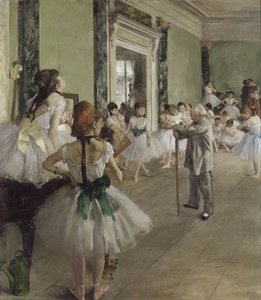
      The Dance Class

      1873 · Oil On Canvas · Musée d'Orsay, Paris

      To step into Edgar Degas’s “The Dance Class” is to transcend the boundaries of time and enter a sanctuary of disciplined grace. Painted around 1873, this masterpiece does not merely present a scene of balletic rehearsal; it offers an intimate, almost voyeuristic window into the quiet intensity of the dance studio. Unlike the grand, staged spectacles often associated with the opera, Degas directs our gaze toward the unvarnished reality of…

      The Bellelli Family aut. Edgar Degas
      4

      The Bellelli Family

      Oil On Canvas · Musée d'Orsay, Paris

      In the quiet, shadowed corners of a Parisian room, Edgar Degas captures something far more profound than a mere family gathering. The Bellelli Family, painted between 1858 and 1867, stands as an exquisite masterwork that transcends the boundaries of traditional portraiture. It is not simply a record of faces, but a psychological landscape where every gaze and posture whispers of unspoken tensions and deep-seated emotions. As one gazes upon this…

      Interior (also known as The Rape) (1868) aut. Edgar Degas
      5

      Interior (also known as The Rape)

      1868 · Aliejus ant drobės · Philadelphia Museum of Art, Filadelfija

      Edgar Degas’s “Interior,” often referred to as “The Rape,” is not merely a painting; it's an experience—a carefully constructed tableau of psychological tension and unspoken drama. Completed in 1868, this grisaille masterpiece resides within the Philadelphia Museum of Art, yet its power transcends its physical location, resonating with viewers long after they’ve turned away. It’s a work that invites speculation, prompting us to confront uncomfortable truths about human relationships and…

      Portraits in a New Orleans Cotton Office aut. Edgar Degas
      6

      Portraits in a New Orleans Cotton Office

      Portraits in a New Orleans Cotton Office Edgar Degas, one of the most celebrated artists of the Impressionist movement, gifted us Portraits in a New Orleans Cotton Office, an oil painting that encapsulates the very essence of his uncle’s cotton brokerage business during its calamitous bankruptcy. Completed in 1873, this masterpiece transcends mere visual representation; it stands as a testament to Degas' unparalleled skill and occupies a significant place within…

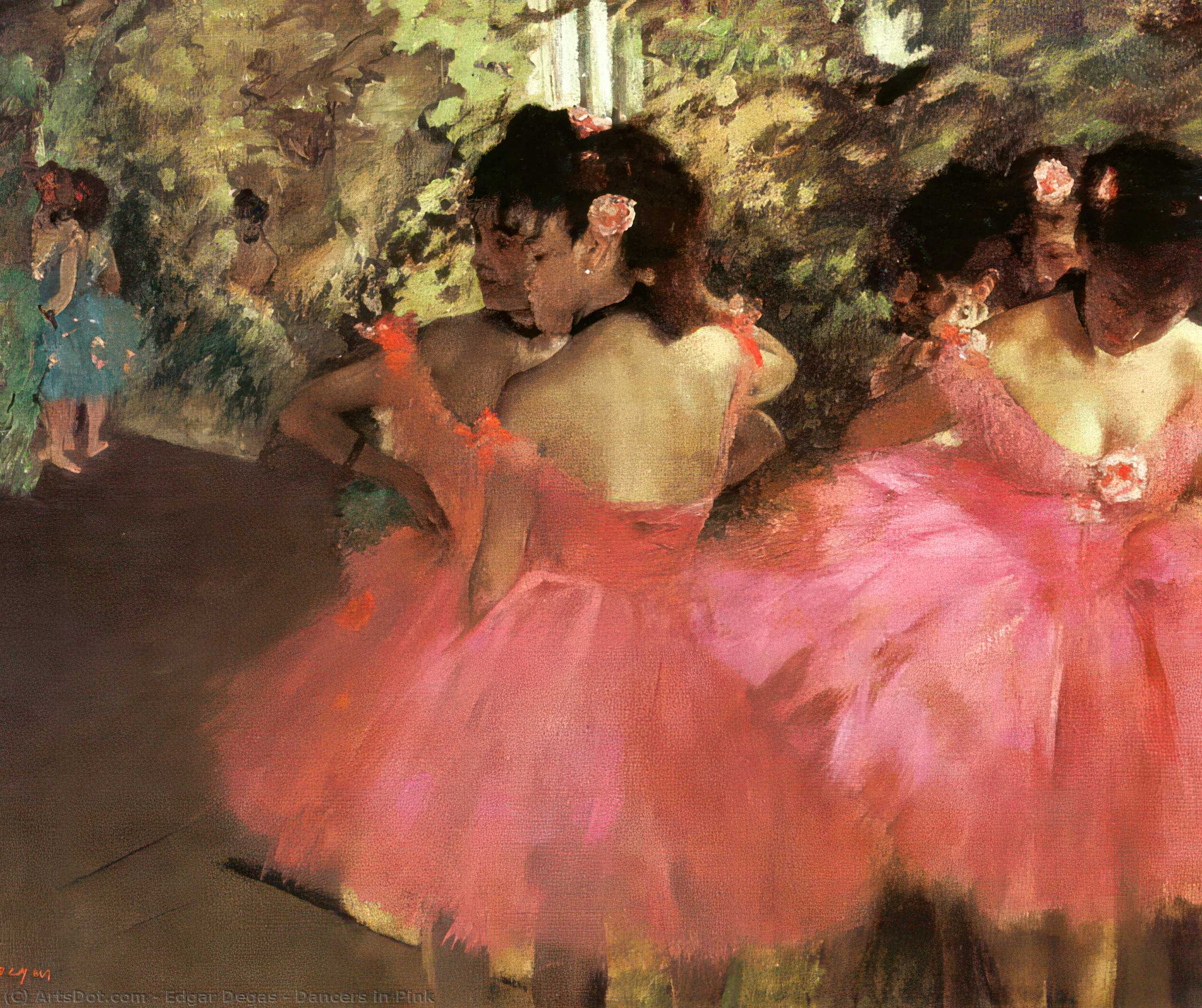
      Danceriai Pinkuose (1885) aut. Edgar Degas
      7

      Danceriai Pinkuose

      1885 · Aliejus ant drobės · Hill-Stead Museum, Farmington

      Baleto elegancija ir judesys, įtrapinti impresionistinio spindulio Edgaro Degaso „Danceriai rožinėse tutuškėse“ yra meistriškas baleto pasaulio vaizdymas, įtvirtintas naudojant būdingą šio paveikslą kūrėjo impresionistinį stilių. Šis įtraukiantis kūrinys kviečia žiūrovus į dinamišką šokio karštelį, kuriame susilieja žaizmingas judesys, elegancija ir gražumas. Gyvas šokio scena Paveikslas vaizduoja gyvą baleto šokėjų pusėdidį, kur jų rožinės tutuškės sukasi prieš šiltų spalvą fonu. Degaso gebėjimas įamžinti trumpalaikiškus pasirodymo akimirkas tampa akivaizdus per figūrụs sk…

      Šūkadė su gėlėmis (1878) aut. Edgar Degas
      8

      Šūkadė su gėlėmis

      1878 · Akrilas ant drobės

      Edgaras Degasas, vienas iš XIX amžiaus paskutinės pusės žymiausių impresionistinių artistas, įvykdė tikrą menišką revoluciją. Jo kūriniai iššoko iš akademinio meistriško pasaulio į šlovingą gyvenimą Paryžiuje ir įkvėpė daugybę jaunesniųjų dailininkų. „Šūdo balerina su gėlių puodžiui“ – tai ne tik vienas iš Debaso žymiausių darbų, bet ir simbolis baleto estetikai, jo šlovingai istorijai.

      Mis Lola, cirkas Fernando, NG L (1879) aut. Edgar Degas
      9

      Mis Lola, cirkas Fernando, NG L

      1879 · Aliejus ant drobės

      Edgar Degaso drobė „Mis Lola, Cirke Fernando“ (angl. Miss Lola, au Cirque Fernando) – tai neeilinė impresionistinio meno kūrinio interpretacija, kuri įamžina cirką kaip vieną iš Paryžiaus kultūros simbolių XIX amžiuje. Šis darbas, sukurtas 1879 metais, kviečia pasinerti į akrobato pasirodymą, užčiuopiant ne tik fizinį meistriškumą, bet ir subtilią emocinę atmosferą.

      Šokėjai prie treniruoklio 1 (1888) aut. Edgar Degas
      10

      Šokėjai prie treniruoklio 1

      1888 · Aliejus ant drobės · The Phillips Collection, Vašingtonas

      Edgar Degos „Šokėjai prie treniruoklio“ – tai neatsiejamas baleto pasaulio atvaizdas, užfiksuotas su nepriekaištinga meistriškumu ir jautrumu. Šis kūrinys, sukurtas 1888 metais, kviečia pasinerti į balerinos kasdienybę, į jos atsisakymą ir aistrą, kuri slypi už scenos magijos. Dvejos jaunos šokėjos, sustingusios prie treniruoklio, neatsiejamai susijungia su erdve, kurioje dirba, ir su tuo ritualu, kuris jas formuoja.

      Edgar Degas: canvases 11 to 100 of the ranking

      Kafė koncertas (Šuns daina) (1877) aut. Edgar Degas
      #11

      Kafė koncertas (Šuns daina)

      1877

      "Kafėje koncertas (Šuns daina)" – Paryžiaus nakties užburiantis atspaudas Edgar Degas'o „Kafėje koncertas (Šuns daina)“ neatsiejamai susijungia su Paryžiaus naktinio gyvenimo atmosfera XIX amžiaus pabaigoje. Šis paveikslas nukelia…

      Have it painted by hand →
      Moterė vonioje plauna (1892) aut. Edgar Degas
      #12

      Moterė vonioje plauna

      1892

      Edgar Degas’s Intimate Vizūra: Vandens Aktyvumas Šis pastelinis eskizas, Edgaro Degaso rankomis sukurtas 1892 metais, – ne tik dailės kūrinys, bet ir įtraukiantis į pasaulį, kuriame kasdienybė susiliejo…

      Order this canvas →
      Slaugytoja (1873) aut. Edgar Degas
      #13

      Slaugytoja

      1873

      „Sistrinė“ – Edgar Degaso Reljifo Nuojodos Šis reljifas, kurį sukūrė Edgaras Degasas 1873 metais, yra ne tik paveiksliškas fragmentas, bet ir nuostabiai išsaugotas momentas, įamžinęs vienos slaugytojos tylią…

      Have it painted by hand →
      Kafėjėje, taip pat vadinamas aut. Edgar Degas
      #14

      Kafėjėje, taip pat vadinamas

      Grand Palais

      Apie 1876 metais parašytas Hilaire-Germain-Edgario Degaso kūrinys „Kafėjessä“ nėra tiesiog dviejų人物, mėgaujančių Parisiu vakaraudės, vaizdas; tai kruopščiai stebėtas žmogaus sąveikos ir subtilaus gestų kalbos tyrimas pulsuojančio miesto aplinkoje.…

      Bring this light home →
      Dainyčiai (1898) aut. Edgar Degas
      #15

      Dainyčiai

      1898

      A Glimpse Behind the Curtain: Edgar Degas’s “Dancers” (1898) This captivating pastel work by Edgar Degas offers a rare and intimate look beyond the dazzling spectacle of the…

      Have it painted by hand →
      Šokio klasė (1874) aut. Edgar Degas
      #16

      Šokio klasė

      1874 · Metropolitano meno muziejus

      Edgar Degaso „Šokio klasė“: Akimirka Paryžiaus baleto pasaulyje „Šokio klasė“, sukurtas 1874 metais, yra Edgaro Degaso šedevras, kviečiantis pasinerti į Paryžiaus operos baleto repeticijų atmosferą. Šis paveikslas –…

      Order this canvas →
      Lenktynės Longšamo žirgai (1874) aut. Edgar Degas
      #17

      Lenktynės Longšamo žirgai

      1874 · Museum of Fine Arts

      Parisienė laisvė: Dekoduojant Degaso *Race Horses at Longchamp* Edgaro Degaso *Race Horses at Longchamp* (1874) nėra tiesiog sporto renginio paveikslas; tai gyva XIX amžiaus Parisio gyvenimo juoda sučiuptė,…

      Bring this light home →
      Šokėja scenoje (1880) aut. Edgar Degas
      #18

      Šokėja scenoje

      1880 · Hamburger Kunsthalle

      Lėtingas elegancijos momentas: tyrinėjant Degaso „Šokėją scenoje“ Šis užburęs pastelinės technikos kūrinys, autoriaus Edgaro Degaso darbas, nukelia mus į 1880 metų Paryžiaus baleto pasaulio širdį. Laikomas Hamburgo Kunsthalle…

      Order this canvas →
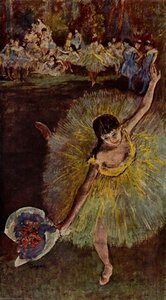
      The Star aut. Edgar Degas
      #20

      The Star

      Edgar Degas, a name synonymous with Impressionism, possessed a singular fascination that transcended mere artistic pursuit; he was utterly captivated by the world of ballet. Within his extensive…

      Order this canvas →
      Duos dantis į sceną (1878) aut. Edgar Degas
      #21

      Duos dantis į sceną

      1878

      Edgaro Degaso pastelinė tapybė „Du Dantis, Įeinančios į Sceną“, kuri buvo sukurta 1878 metais, yra ne tik baleto vaizdavimas; tai jausminga susidūrimo ir pastovumo užčiuoptis. Ši darbas, kuriamas…

      Order this canvas →
      Head of a Woman (1874) aut. Edgar Degas
      #24

      Head of a Woman

      1874 · National Gallery

      Step closer, and you might find yourself caught in the stillness of this moment. There is no grand theatricality here, only the presence of an unknown woman, perhaps…

      Have it painted by hand →
      Two harlequins (1886) aut. Edgar Degas
      #25

      Two harlequins

      1886

      Edgar Degas, a titan of French Impressionism, stands apart from his peers not merely for stylistic innovation but also for an unyielding dedication to capturing the quiet dramas…

      Order this canvas →
      Fan Mount: Ballet Girls (1879) aut. Edgar Degas
      #26

      Fan Mount: Ballet Girls

      1879 · Metropolitano meno muziejus

      The edges of the fan curve softly, framing a world that feels as though it might dissolve if one breathes too heavily. Three figures rest along the lower…

      Have it painted by hand →
      Sėdinti moteris, kuriam siūlo plaukus (1890) aut. Edgar Degas
      #27

      Sėdinti moteris, kuriam siūlo plaukus

      1890 · Musée d'Orsay

      Edgar Degaso „Sėdinė moteris, kurkienčioji keles“, pabaigta apie 1890 m., nėra tik namų ūkio veiklos aprašymas; tai gilus tyrimas motyviškumą, pagrįstumu ir kasdienybės praläufigu grožiu—Impressionizmo akmenią, kuris iki…

      Order this canvas →
      Yellow Dancers (In the Wings) (1875) aut. Edgar Degas
      #28

      Yellow Dancers (In the Wings)

      1875 · Art Institute of Chicago

      Three female figures occupy the foreground, positioned in a diagonal arrangement that leads the eye from the upper middle toward the lower right. The composition focuses on a…

      Bring this light home →
      Café Singer (1879) aut. Edgar Degas
      #29

      Café Singer

      1879 · Art Institute of Chicago

      A female singer occupies the center of this oil on canvas composition, her upper torso and head captured in a tight crop. The figure is positioned against a…

      Bring this light home →
      The Milliners (1882) aut. Edgar Degas
      #30

      The Milliners

      1882 · J. Paul Getty muziejus

      Two women sit at a worktable that cuts across the space at a sharp, unsettling angle. The room is crowded with the dark, rounded silhouettes of hat stands,…

      Bring this light home →
      Women Combing Their Hair (1876) aut. Edgar Degas
      #31

      Women Combing Their Hair

      1876 · The Phillips Collection

      Hilaire-Germain-Edgar Degas’s “Women Combing Their Hair,” painted circa 1876, is more than a simple depiction of domestic activity; it’s a profound meditation on movement, observation, and the fleeting…

      Have it painted by hand →
      A Roman Beggar Woman (1857) aut. Edgar Degas
      #33

      A Roman Beggar Woman

      1857 · Birmingham Museum and Art Gallery

      Edgar Degas buvo prancūzų dailininkas, skulptorius ir iliustratorius, kuris išsiskirstė nuo savo aukštųjų mokinių impresionistų judėjimo – diferenciacija, kurią jis stipriai gynė – ir yra pasaulyje šlovingai pagerbėtas…

      Have it painted by hand →
      At the Ballet (1881) aut. Edgar Degas
      #34

      At the Ballet

      1881

      A Glimpse Behind the Curtain: Decoding Degas’s “At the Ballet” Edgar Degas's 1881 pastel work, *At the Ballet*, offers a captivating and unusually intimate view into the world…

      Have it painted by hand →
      The Blue Dancers aut. Edgar Degas
      #36

      The Blue Dancers

      A Glimpse Behind the Curtain: Degas’s “The Blue Dancers” Edgar Degas's “The Blue Dancers,” painted in 1897, is more than just a depiction of ballerinas; it’s an intimate…

      Order this canvas →
      Dancierė savo apvilnių kambaryje (1879) aut. Edgar Degas
      #38

      Dancierė savo apvilnių kambaryje

      1879 · Norton Simon muziejus

      Edgar Degaso „Dancer in her Dressing Room“, pildytas 1879 m., nėra tik balerinos portretas; tai gilus apmąstymas apie praläufigą grožį, meninio kūrinio vienatvę ir Parizijos baleto pasaulio už…

      Order this canvas →
      Orchestra of the Opera (1869) aut. Edgar Degas
      #40

      Orchestra of the Opera

      1869

      Edgar Degas' "Orchestra of the Opera," painted in 1869, isn’t merely a depiction of musicians; it’s a meticulously observed slice of Parisian life, a backstage tableau brimming with…

      Order this canvas →
      The Bather (La Baigneuse) (1895) aut. Edgar Degas
      #41

      The Bather (La Baigneuse)

      1895 · Reading Public Museum

      The painting depicts a woman reclining on her side in a bathtub filled with water. She is positioned centrally within the frame, bathed in diffused natural light filtering…

      Have it painted by hand →
      Russian Dancers (1899) aut. Edgar Degas
      #42

      Russian Dancers

      1899

      A Glimpse into Movement and Modernity: Degas’s “Russian Dancers” Edgar Degas, a master of capturing fleeting moments and modern life, presents us with a captivating scene in “Russian…

      Bring this light home →
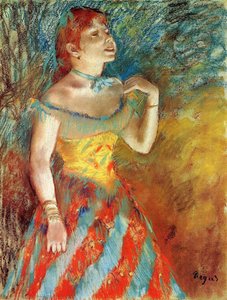
      Singer in Green (1884) aut. Edgar Degas
      #46

      Singer in Green

      1884 · Metropolitano meno muziejus

      In the heart of 1884 Paris, amidst the gaslit glow of cabarets and the rhythmic pulse of urban nightlife, Edgar Degas captured a moment that transcends time. Singer…

      Order this canvas →
      Žmogus šukuojantis plaukus (1894) aut. Edgar Degas
      #48

      Žmogus šukuojantis plaukus

      1894 · Metropolitano meno muziejus

      A Moment of Intimate Reflection: Degas’s *Woman Combing Her Hair* Edgar Degas's 1894 pastel, *Woman Combing Her Hair*, is a captivating study in quiet intimacy and the beauty…

      Bring this light home →
      Woman at a Window (1872) aut. Edgar Degas
      #51

      Woman at a Window

      1872 · Courtauld Gallery

      Edgar Degas's “Woman at a Window,” painted in 1872, is more than just a depiction of a figure observing the world outside; it’s a masterful exploration of light,…

      Order this canvas →
      Ballet Scene (1880) aut. Edgar Degas
      #52

      Ballet Scene

      1880 · Dixon Gallery and Gardens

      Ballet Scene is a painting by Edgar Degas. The composition focuses on a single female dancer positioned toward the front right of the stage. This figure is rendered…

      Order this canvas →
      Four Dancers (1902) aut. Edgar Degas
      #53

      Four Dancers

      1902

      To stand before Four Dancers is to step directly into a moment suspended in time—a breath held just before the music swells, or perhaps, the perfect echo after…

      Order this canvas →
      A Carriage at the Races (1872) aut. Edgar Degas
      #54

      A Carriage at the Races

      1872 · Museum of Fine Arts

      The painting depicts a horse-drawn carriage situated on a grassy field. Several horses are visible within the scene; some are positioned in the foreground while others are further…

      Have it painted by hand →
      Lady with a Parasol (1871) aut. Edgar Degas
      #55

      Lady with a Parasol

      1871 · Courtauld Gallery

      The scene unfolds through Lady with a Parasol, a work painted by Edgar Degas in 1871. This piece captures a fleeting moment of existence, frozen in time through…

      Order this canvas →
      Singer with a glove (1878) aut. Edgar Degas
      #57

      Singer with a glove

      1878

      To gaze upon Degas's depiction of "Singer with a glove" is to be instantly transported into the vibrant, yet fleeting, atmosphere of a Parisian cabaret in the late…

      Order this canvas →
      Mme Jacques Fourchy (1883) aut. Edgar Degas
      #58

      Mme Jacques Fourchy

      1883

      Edgar Degas's "Mme Jacques Fourchy," painted in 1883, isn’t merely a portrait; it’s a carefully constructed tableau vivant—a captured moment brimming with subtle observation and quiet intensity. This…

      Have it painted by hand →
      Field of Flax (1892) aut. Edgar Degas
      #59

      Field of Flax

      1892

      The artwork is a pastel depiction of a landscape featuring a field of flax. In the foreground, there are bright yellow flowers scattered throughout the scene. A diamond-shaped…

      Order this canvas →
      The Return of the Herd (1896) aut. Edgar Degas
      #60

      The Return of the Herd

      1896 · New Walk Museum - Art Gallery

      The painting depicts a rural scene featuring two horses positioned on a road in front of a house. One horse is situated toward the left side of the…

      Bring this light home →
      Žmogus Kanapėje (1872) aut. Edgar Degas
      #61

      Žmogus Kanapėje

      1872

      A Glimpse into Intimate Modern Life: Decoding Degas’ “Woman Seated on a Canape” Edgar Degas' 1872 oil on panel, *Woman Seated on a Canapé*, offers a captivating window…

      Bring this light home →
      Group of Dancers (1905) aut. Edgar Degas
      #64

      Group of Dancers

      1905

      The painting Group of Dancers is an oil on canvas that captures three women dancing together within a room. The scene is characterized by a sense of energy…

      Order this canvas →
      Conversation (1895) aut. Edgar Degas
      #67

      Conversation

      1895 · Yale University Art Gallery

      Edgar Degas's "Conversation," housed within the hallowed halls of the Yale University Art Gallery, isn’t merely a painting; it’s a meticulously crafted snapshot of Parisian social life at…

      Bring this light home →
      Two Dancers (1898) aut. Edgar Degas
      #69

      Two Dancers

      1898 · Staatliche Kunstsammlungen Dresden

      The scene unfolds through the delicate, layered application of pastel and charcoal, capturing a fleeting moment of grace. In this work, titled Two Dancers, the artist Edgar Degas…

      Have it painted by hand →
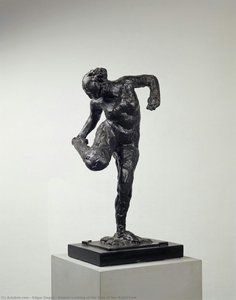
      Spanish dance (2018) aut. Edgar Degas
      #70

      Spanish dance

      2018 · Asociación Española de Pintores y Escultores

      In this sculpture, titled Spanish dance, we encounter the quiet intensity of Edgar Degas. Created in France during the 1880s, the work captures a specific, fleeting moment of…

      On the Stage (1880) aut. Edgar Degas
      #71

      On the Stage

      1880

      The stage lights seem to flicker even now as the eye wanders across the cream laid paper. A young woman holds the center of the frame, her body…

      Have it painted by hand →
      Horses and Jockeys (1886) aut. Edgar Degas
      #72

      Horses and Jockeys

      1886

      To gaze upon this depiction of horses and jockeys is to witness time itself captured in a fleeting, exhilarating instant. It is more than just a sporting scene;…

      Order this canvas →
      The Dancers (1885) aut. Edgar Degas
      #73

      The Dancers

      1885 · Metropolitano meno muziejus

      The air in the rehearsal space feels heavy with the scent of dust and tulle. In this 1885 pastel work, several ballerinas occupy a crowded, asymmetrical stage, caught…

      Bring this light home →
      Four dancers, ca National Galler (1899) aut. Edgar Degas
      #74

      Four dancers, ca National Galler

      1899 · National Gallery of Art

      To stand before this depiction of four dancers is to witness time suspended in a moment of pure, unbridled artistry. Hilaire-Germain-Edgar Degas captured not merely figures on pointe,…

      Order this canvas →
      Dancer Tilting (1883) aut. Edgar Degas
      #75

      Dancer Tilting

      1883

      Created in 1883, Dancer Tilting is a pastel drawing by Edgar Degas that captures a fleeting moment of movement. The composition centers on a young woman poised mid-leap,…

      Bring this light home →
      Ballet Scene aut. Edgar Degas
      #76

      Ballet Scene

      Dixon Gallery and Gardens

      In the quiet, focused moments before the curtain rises, there exists a unique tension—a blend of exhaustion and anticipation that Hilaire-Germain-Edgar Degas captured with unparalleled intimacy. Ballet Scene…

      Have it painted by hand →
      Liūdėjimas (1874) aut. Edgar Degas
      #77

      Liūdėjimas

      1874

      Edgaras Degas, vardas, kurį susiekiami su Impresionizmu, tačiau iš esmės atspalvotas nuo lengvo apibūdinimo, mus "Melnžioje" (1874 m.) dovanoja darbą, kuris viršytų paprastą portretą. Šis darbas, kuriamas pripažįstamame…

      Order this canvas →
      Dancer's Dressing Room (1878) aut. Edgar Degas
      #78

      Dancer's Dressing Room

      1878

      Edgar Degas’ “Dancer’s Dressing Room,” created in 1878, offers an intimate and captivating glimpse into the world of ballet. This pastel work exemplifies the Impressionist movement's focus on…

      Bring this light home →
      Dancers Practicing at the Barre (1877) aut. Edgar Degas
      #81

      Dancers Practicing at the Barre

      1877 · Metropolitano meno muziejus

      In the quiet, sun-drenched corners of a Parisian rehearsal studio, Edgar Degas captured something far more profound than a mere ballet rehearsal. “Dancers Practicing at the Barre,” painted…

      Order this canvas →
      Woman in a Café (1877) aut. Edgar Degas
      #82

      Woman in a Café

      1877

      In the heart of late 19th-century Paris, amidst the rhythmic pulse of urban life, Edgar Degas captured a scene that transcends the mere boundaries of a casual afternoon.…

      Order this canvas →
      Dancers (1895) aut. Edgar Degas
      #83

      Dancers

      1895

      Edgar Degas, a figure perpetually shadowed by the brilliance of Monet and Renoir yet undeniably pivotal to the Impressionist movement, possessed an artistic vision that defied easy categorization.…

      Bring this light home →
      Dancer Looking at the Sole of Her Right Foot (1921) aut. Edgar Degas
      #84

      Dancer Looking at the Sole of Her Right Foot

      1921 · Tel Aviv Museum of Art

      The quietude of a private moment settles over the bronze figure known as Dancer Looking at the Sole of Her Right Foot. Created by Edgar Degas, this work…

      Keturi Šokėjai (1900) aut. Edgar Degas
      #87

      Keturi Šokėjai

      1900 · National Gallery of Art

      A Glimpse into Fleeting Movement: Decoding Degas’s *Four Dancers* Edgar Degas's *Four Dancers*, painted in 1900, is more than just a depiction of ballerinas; it’s a masterful study…

      Order this canvas →
      The Tub (1889) aut. Edgar Degas
      #88

      The Tub

      1889

      Edgar Degas’ “The Ballet Class,” completed around 1874-1876, stands as a cornerstone of Impressionist art and a poignant glimpse into the world of ballet during its formative years.…

      Order this canvas →
      Woman with a Bandage (1873) aut. Edgar Degas
      #91

      Woman with a Bandage

      1873 · Detroito meno institutas

      A Moment of Quietude: Exploring Degas’ *Woman with a Bandage* Edgar Degas' *Woman with a Bandage*, painted in 1873, is more than just a portrait; it’s an intimate…

      Bring this light home →
      Dancers (8) (1900) aut. Edgar Degas
      #92

      Dancers (8)

      1900

      To stand before this depiction of Dancers (8) is to step directly into the vibrant, breathless atmosphere backstage—a moment suspended between performance and memory. Hilaire-Germain-Edgar Degas captured not…

      Have it painted by hand →
      Cafe-Concert Singer (1878) aut. Edgar Degas
      #93

      Cafe-Concert Singer

      1878

      To gaze upon Degas's Cafe-Concert Singer is to step directly into the smoky, vibrant heart of late nineteenth-century Paris. This painting captures more than just a moment; it…

      Have it painted by hand →
      The Rehearsal (1878) aut. Edgar Degas
      #94

      The Rehearsal

      1878 · Dumbarton Oaks

      To gaze upon The Rehearsal is to step directly into a moment suspended in time—a breath held just before the curtain rises, or perhaps, just after the applause…

      Have it painted by hand →
      Russian Dancer (1895) aut. Edgar Degas
      #96

      Russian Dancer

      1895

      In the delicate dance between light and shadow, Edgar Degas captures a moment of pure, unadulterated vitality in Russian Dancer. Created in 1895, this masterpiece serves as a…

      Order this canvas →
      View of Saint-Valery-sur-Somme (1898) aut. Edgar Degas
      #98

      View of Saint-Valery-sur-Somme

      1898 · Metropolitano meno muziejus

      Edgar Degas, a renowned French Impressionist painter, captivated audiences with his evocative landscape View of Saint-Valéry-sur-Somme in 1898. Now residing within the esteemed collection at the Metropolitan Museum…

      Bring this light home →
      Leon Bonnat (1863) aut. Edgar Degas
      #99

      Leon Bonnat

      1863

      In 1863, Edgar Degas turns his gaze toward a man who shares his devotion to the craft of seeing. This half-length portrait captures Léon-Joseph-Florentin Bonnat, not as a…

      Bring this light home →

      Edgar Degas's canvases, period by period

      What Edgar Degas painted most

      The four subjects that return most often on these canvases, each with its best-loved example.

      Where Edgar Degas's canvases hang

      8 muziejai, kuriuose saugoma daugiausia šioje pusėje esamų paveikslų.

      Muzejaus Miestas Edgar Degas darbai Šiojo sąrašo paveikslai
      Metropolitano meno muziejus, NiujorkasMetropolitano meno muziejus Niujorkas 52 Šokio klasė, Fan Mount: Ballet Girls, Three Dancers Preparing for Class
      Musée d'Orsay, ParisMusée d'Orsay Paris 55 Šviesos išsipūtęs, The Dance Class, The Bellelli Family
      National Gallery, LondonasNational Gallery Londonas 18 Motuoja, kuri apsidauki, Two Dancers in Their Dressing Room, Head of a Woman
      Norton Simon muziejus, PasadenaNorton Simon muziejus Pasadena 5 Dancierė savo apvilnių kambaryje, Šokio treniruotė opera teatro studijoje, Žmogus šukuojantis plaukus prieš veidrodį
      National Gallery of Art, VašingtonasNational Gallery of Art Vašingtonas 28 Four dancers, ca National Galler, Keturi Šokėjai
      Museum of Fine Arts, BostonasMuseum of Fine Arts Bostonas 10 Lenktynės Longšamo žirgai, A Carriage at the Races
      Art Institute of Chicago, ČikagosArt Institute of Chicago Čikagos 8 Yellow Dancers (In the Wings), Café Singer
      Courtauld Gallery, LondonasCourtauld Gallery Londonas 7 Woman at a Window, Lady with a Parasol

      Edgar Degas's most famous canvas, decade after decade

      1. 1850s
        A Roman Beggar Woman (1857) aut. Edgar Degas
        Canvas 33 of 100

        A Roman Beggar Woman

        Amžius 16 – 25 · Birmingham Museum and Art Gallery

        Edgar Degas buvo prancūzų dailininkas, skulptorius ir iliustratorius, kuris išsiskirstė nuo savo aukštųjų mokinių impresionistų judėjimo – diferenciacija, kurią jis stipriai gynė – ir yra pasaulyje šlovingai pagerbėtas…

      2. 1860s
        Interior (also known as The Rape) (1868) aut. Edgar Degas
        Canvas 5 of 100

        Interior (also known as The Rape)

        Amžius 26 – 35 · Philadelphia Museum of Art

        Edgar Degas’s “Interior,” often referred to as “The Rape,” is not merely a painting; it's an experience—a carefully constructed tableau of psychological tension and unspoken drama. Completed in…

      3. 1870s
        Šviesos išsipūtęs (1876) aut. Edgar Degas
        Ranked 1 of 100

        Šviesos išsipūtęs

        Amžius 36 – 45 · Musée d'Orsay

        Edgar Degas kūrinys „Šviesos išsipūtęs“ (1876) yra gausiai išreikškta Paryžiaus kavos kultūros apžvalga, įtrapusi į savo trauką XIX amžiaus miesto gyvenimo vienatvę ir introspekciją. Šis šedevras kviečia žiūrovą…

      4. 1880s
        Danceriai Pinkuose (1885) aut. Edgar Degas
        Canvas 7 of 100

        Danceriai Pinkuose

        Amžius 46 – 55 · Hill-Stead Museum

        Baleto elegancija ir judesys, įtrapinti impresionistinio spindulio Edgaro Degaso „Danceriai rožinėse tutuškėse“ yra meistriškas baleto pasaulio vaizdymas, įtvirtintas naudojant būdingą šio paveikslą kūrėjo impresionistinį stilių. Šis įtraukiantis kūrinys…

      5. 1890s
        Moterė vonioje plauna (1892) aut. Edgar Degas
        12 of 100

        Moterė vonioje plauna

        Amžius 56 – 65

        Edgar Degas’s Intimate Vizūra: Vandens Aktyvumas Šis pastelinis eskizas, Edgaro Degaso rankomis sukurtas 1892 metais, – ne tik dailės kūrinys, bet ir įtraukiantis į pasaulį, kuriame kasdienybė susiliejo…

      6. 1900s
        Trylika dantis, mėlynos sukne dos, raudonos bluzos (1903) aut. Edgar Degas
        Ranked 47 of 100

        Trylika dantis, mėlynos sukne dos, raudonos bluzos

        Amžius 66 – 75

        Try kelios dantis, mėlynos sukne dos, raudoni bluzonai Pasaulio meno sklaida yra kupina meistriškų darbų, kurie iki šiol ne tik įkvepia ir stebina mus. Vienas iš tokių meistriškų…

      Edgar Degas's canvases, question by question

      Which canvas is Edgar Degas most remembered for?Read the answer

      Šviesos išsipūtęs (1876), Musée d'Orsay, Paris. Motuoja, kuri apsidauki and The Dance Class (1873) follow.

      Šviesos išsipūtęs: how old was Edgar Degas when it was painted?Read the answer

      Edgar Degas, born in 1834, was 42 years old: Šviesos išsipūtęs dates from 1876.

      What are Edgar Degas's ten most famous canvases?Read the answer

      Šviesos išsipūtęs, Motuoja, kuri apsidauki, The Dance Class, The Bellelli Family, Interior (also known as The Rape), Portraits in a New Orleans Cotton Office, Danceriai Pinkuose, Šūkadė su gėlėmis, Mis Lola, cirkas Fernando, NG L ir Šokėjai prie treniruoklio 1. Each canvas in the ranking above comes with its year and its museum.

      How many paintings did Edgar Degas create?Read the answer

      1,074 works by Edgar Degas are in our catalogue, dated 1857 to 1905.

      Where do Edgar Degas's most famous canvases hang today?Read the answer

      Mostly in Metropolitano meno muziejus (Niujorkas), Musée d'Orsay (Paris) ir National Gallery (Londonas); the list above names each museum and its canvases.

      When did Edgar Degas paint the most famous canvases?Read the answer

      In 1870s, which gave 40 of the 100 works on this page, Šviesos išsipūtęs among them.

      Which famous Edgar Degas canvas came first, and which came last?Read the answer

      The earliest canvas here is A Roman Beggar Woman (1857); the latest is Group of Dancers (1905).

      Which subjects did Edgar Degas paint most?Read the answer

      Ballet (18), Dance (15) ir Dancers (11), across the 100 works on this page.

      Which medium appears most in Edgar Degas's paintings?Read the answer

      Oil On Canvas, used in 27 of the 100 works on this page.

      Which movement is Edgar Degas associated with?Read the answer

      Impresionizmas, as the canvases on this page show.

      Which paintings by Edgar Degas are held by the Metropolitano meno muziejus?Read the answer

      The Metropolitano meno muziejus, Niujorkas holds 9 of the works on this page, among them Šokio klasė, Fan Mount: Ballet Girls ir Three Dancers Preparing for Class.

      Where can I buy a reproduction of a Edgar Degas painting?Read the answer

      Yes. Every painting on this page can be ordered from its own page as an oil reproduction painted by hand, or as a fine art print, in the size you choose.

      Meet the painter: Edgar Degas

      The Life of Edgar Degas

      Paris, 1834. A child is born into a moderately wealthy family to Hilaire-Germain-Edgar De Gas. The name he would eventually simplify to Edgar Degas marks the beginning of a life defined by the tension between social expectation and artistic obsession. He grows up within the sophisticated atmosphere of the French capital, a setting that will later serve as the backdrop for his observations of modern life.

      The years pass in a blur of study and shifting interests. He moves from the structured environment of his upbringing toward the grit of the city's working spaces. He does not seek the sunlight of the outdoors, preferring the controlled, artificial light of the studio and the theater. His gaze settles on the dancers, the laundresses, and the racehorses of Paris, capturing the physical toll of labor and the fleeting movements of the stage. He remains a man of contradictions, often resisting the labels his contemporaries apply to him, insisting instead on his identity as a realist.

      The end comes in Paris on 27 September 1917. He leaves behind a vast body of work that spans many decades, including:

      Early Life, Family and Training

      Paris, 1834. The son of a banker and Célestine Musson De Gas, a Creole from New Orleans, Louisiana, Hilaire-Germain-Edgar De Gas enters a world of bourgeois stability. At eleven, he is enrolled at the Lycée Louis-le-Grand. The academic path is set, yet the boy’s focus drifts toward the halls of the Louvre. By 1853, having graduated from the Lycée with a baccalauréat in literature, he bypasses his father's expectations of a legal career. Instead, he registers as a copyist in the Louvre Museum, spending his hours tracing the lines of the masters.

      The training intensifies at the École des Beaux-Arts in Paris. He moves through the rigors of classical instruction, honing a precision that would define his later work. In 1855, a meeting occurs that leaves a permanent mark on his development: he meets Jean-Auguste-Dominique Ingres. The encounter cements a respect for draftsmanship and the importance of the line, even as he begins to move toward the modern subjects that would eventually define his career.

      Technique and Artistic Style

      Degas rejects the label of Impressionist. He prefers the term "Realist," a choice that dictates his entire approach to the canvas. He avoids the outdoor landscape and the loose, flickering brushstrokes favored by his contemporaries. Instead, he retreats into the controlled environment of the studio. Here, he masters the human form through rigorous draftsmanship. He is a superb draftsman, possessing a specific, technical command over the depiction of movement. He does not wait for the sun to hit a subject; he constructs his scenes through careful study in pencil or pastel. This preparation allows him to freeze a fleeting moment of motion with anatomical precision.

      Light in a Degas composition is rarely natural. He utilizes artificial light to emphasize the figures, creating a sense of theatricality and depth. One notable method is contre-jour, where he places his subject in shadow while the background remains brightly lit. This technique isolates the figure, pulling it forward from the environment. The result is a tension between the subject and the space they inhabit, often revealing the physical strain or the quiet, unposed reality of modern life.

      Key Works and Subjects

      The stage and the stable dominate his visual world. More than half of his output focuses on dancers, capturing them in moments of rehearsal and performance. He moves between the grace of a pirouette and the physical strain of the dance class. Beyond the theater, he turns his gaze toward the speed of the racetrack, documenting racehorses and the jockeys who ride them. These subjects are not merely decorative; they are studies in tension and movement.

      His reach extends into the private and the psychological. He produces portraits that reveal a complex inner life, often using unconventional angles to isolate his subjects. This focus on the human form is not limited to oil on canvas. He works through a variety of media, including prints, drawings, and wax sculptures. His ability to render the human figure is evident in his many studies of women, often focusing on the body in private, unobserved moments.

      Legacy and Lasting Impact

      The shift in late 19th-century art finds a central figure in Degas. Though he resisted the label, his presence helped establish the foundations of Impressionism. He moved away from the rigid, historical subjects of the academy, choosing instead to document the grit and grace of modern Parisian life. This departure from tradition paved the way for future generations of artists to explore the unvarnished reality of the human condition.

      His influence reaches far beyond the initial Impressionist circle. The structural innovations and unconventional compositions he developed left a mark on the trajectory of modern art. Specifically, his approach to form and movement can be seen in the later works of Pablo Picasso and Henri Matisse. He taught the art world to look at the world through asymmetrical angles and unexpected crops, turning the private, fleeting moments of a dancer or a laundress into permanent studies of motion.

      Where to See the Works Today

      The traces of Degas's observation remain scattered across major institutions, preserved in the quiet halls of Paris and beyond. In France, the Musée d'Orsay holds significant collections of his work, capturing the movement he spent a lifetime studying. The Louvre Museum also houses his art, while the Bibliothèque Nationale de France in Paris maintains his works within its archives. These collections offer a direct look at the technical precision and the study of form that defined his career.

      Across the Atlantic, the reach of his vision extends into the United States. The Metropolitan Museum of Art in New York holds his paintings, providing a window into the modern life he depicted with such scrutiny. In Philadelphia, the Philadelphia Museum of Art contains his works, ensuring his influence remains accessible to international audiences. These sites act as physical anchors for his legacy, where the lines and light he mastered are still visible to the modern eye.

      Visi 1074 Edgar Degas darbai →