Atelieris — Nemokamas pristatymas visame pasaulyje — Pristatymo laikas – 2–6 savaitės
      Egon Schiele, 1890 – 1918

      Egon Schiele's 100 Most Famous Paintings

      Portretas su Vala Neuzil (1912) is the painting Egon Schiele is best remembered for; it belongs to the Leopold Museum, Viena. Mirtis ir Žentelė (1915) and Savysekančiasis II (Mirtis ir Žmogus) (1911) complete the trio of best-loved canvases. Our catalogue counts 649 works by Egon Schiele. Here are the 100 most famous, with the year, the museum and the story of each canvas.

      Rangos vieta nulegiama pagal mūsų populiarumumo balas, kurį sudaro kiekvieno kūrinio paieškos, apsilankėjimai ir užsakėjimai. Atnaujinta spalis 2026. Each painting on this page can be ordered as an oil reproduction painted by hand on linen canvas, or as a fine art print, made to the size you choose.

      Egon Schiele portretas
      Egon Schiele · 1890 – 1918
      Gedė · mirė
      1890 – 1918, Tulnas
      Judėjimas
      Ekspresionizmas
      Darbai mūsų kataloge
      649
      Labiausiai žinomi
      Portretas su Vala Neuzil (1912)
      Daugiausia darbų yra
      Leopold Museum

      The ten best-loved paintings by Egon Schiele

      Portretas su Vala Neuzil (1912) aut. Egon Schiele
      1

      Portretas su Vala Neuzil

      1912 · Aliejus ant drobės · Leopold Museum, Viena

      Egon Schiele's "Portrait of Wally" (1912) isn’t merely a depiction of a young woman; it is a visceral exploration of human vulnerability and the unsettling beauty that lies within. This masterpiece, housed in Vienna's Leopold Museum, stands as a pivotal work of Austrian Expressionism, reflecting the anxieties and psychological complexities of a rapidly changing era on the cusp of World War I. The portrait captures Walburga "Wally" Neuzil, Schiele’s lover…

      Mirtis ir Žentelė (1915) aut. Egon Schiele
      2

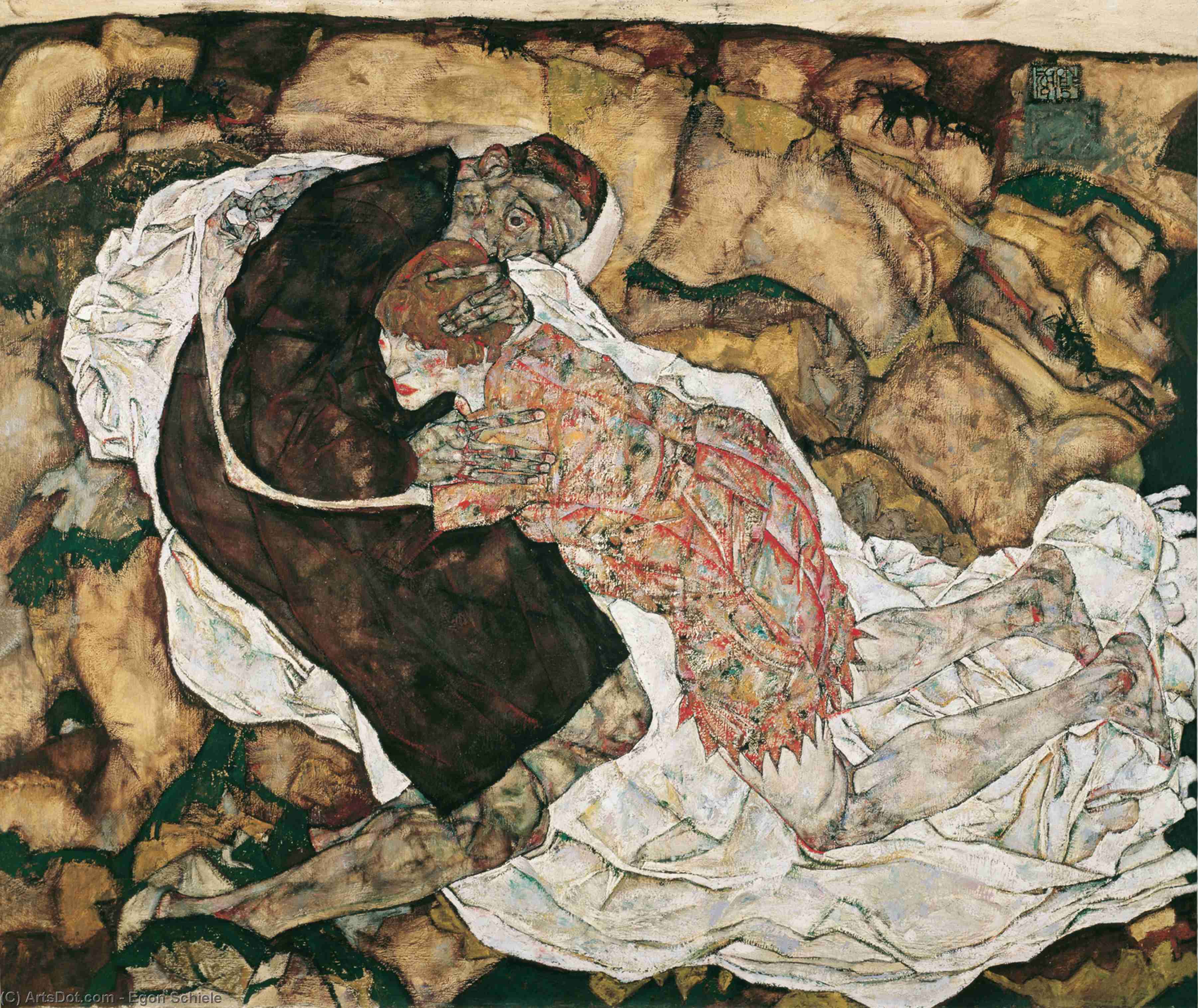
      Mirtis ir Žentelė

      1915 · Akrilas ant drobės · Austrian Gallery Belvedere, Viena

      Egon Šieleio "Mirtis ir Žentelė" – Ekspresionizmo Šalikas Egon Šieleio kūrinys “Mirtis ir Žentelė” (1915 m.) – tai ne tik paveikslių drobės fragmentas, bet visą gyvenimą užsiūrėjęs klausimas apie žmogaus egzistenciją. Tai ekspresionizmo šalis, kurioje susiduria tamsumas ir šviesos spinduliai, skurdas ir meilė, mirties niūnumas ir gyvybės atžalba. Šieleis, savo darbu, įkėlė į drobę Vienos visuomenės vidinį chaosą ir neramumus, susidūręs su karų traumomis ir pačius save pažinant. Jo kūriniai…

      Savysekančiasis II (Mirtis ir Žmogus) (1911) aut. Egon Schiele
      3

      Savysekančiasis II (Mirtis ir Žmogus)

      1911 · Aliejus ant drobės · Leopold Museum, Viena

      Painted in 1911, Egon Schiele’s “The Self-Seers II (Death and Man)” isn't merely a portrait; it is a visceral plunge into the depths of human psychology, a stark meditation on life, death, and the inescapable nature of existence. This work stands as a pivotal piece within early Expressionism, radiating an unsettling power that continues to captivate viewers over a century later. The painting presents a figure, formally dressed yet strikingly…

      Motina su dviem vaikais (1917) aut. Egon Schiele
      4

      Motina su dviem vaikais

      1917 · Aliejus ant drobės · Austrian Gallery Belvedere, Viena

      Egon Šieleio *Motina su dviem vaikais* (1917) yra ne tik įtikinamas darbas, bet ir gili emocijų bei susidūrimo su istorijos atspalviais išraiška. Ši drobė, kuria galite pasigirti turint Belvedere Austrijos galerijoje Vokeryje, išlieka svarbiausia Šieleio kūrinio dalimi, kurią žymiai paveikė jo trumpa, bet itin įtakinga karjera. Tai ne tik portretas; tai aštri analizė apie šeimos ryžių, liūdėjimo ir Europoje vyravusios neramybės.

      Šeima (1917) aut. Egon Schiele
      5

      Šeima

      1917 · Akrilas ant drobės · Austrian Gallery Belvedere, Viena

      Egon Šyleio 1917 metais nupintas *Gimina* – tai ne tik šeimos portretas, bet ir giliame emociniame ir psichologiniame paveike ištryliusios santykio, atviražmiškumo ir karų amžiuje vyravusių neramumų refleksija. Tai Šyleio ekspresionizmo meistriškojo įgūdžio rezultatas – darbas, kuris ne tik atspindi žmogaus sielos gelmes, bet ir keliauja per laiką.

      Lovers: Man and Woman I (1914) aut. Egon Schiele
      6

      Lovers: Man and Woman I

      1914 · Oil On Canvas

      Egon Schiele's 1914 painting, *Lovers: Man and Woman I*, isn’t merely a depiction of two figures; it’s a visceral exploration of human connection, vulnerability, and the unsettling beauty of mortality. Created during a period of intense personal struggle for the artist – marked by illness, loss, and a profound awareness of his own precarious existence – this work embodies the core tenets of Expressionism, translating raw emotion directly onto the…

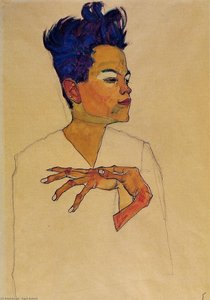
      Self Portrait with Hands on Chest (1910) aut. Egon Schiele
      7

      Self Portrait with Hands on Chest

      1910 · Akrilas ant drobės

      A Window into the Soul: Egon Schiele’s ‘Self Portrait with Hands on Chest’ (1910) This striking self-portrait by Austrian Expressionist master Egon Schiele is more than just a likeness; it's a raw and unflinching exploration of inner turmoil, vulnerability, and the search for identity. Created in 1910, at a pivotal moment in both his artistic development and personal life, this work embodies the core tenets of Expressionism while establishing Schiele’s…

      Apbučimas (Kochaniašių II) - - , (1917) aut. Egon Schiele
      8

      Apbučimas (Kochaniašių II) - - ,

      1917 · Akrilas ant drobės

      A Tangled Embrace: Decoding Schiele’s ‘Lovers II’ Egon Schiele's ‘Embrace (Lovers II)’ (1917) is not merely a depiction of intimacy; it’s a visceral exploration of the human condition, rendered with the raw emotionality that defines Expressionism. This powerful work, measuring 100 x 170 cm, transcends simple representation to become a symbolic landscape of vulnerability, desire, and perhaps even anxiety. Subject & Composition: A Study in Intertwined Forms The painting presents…

      Mondananti moteris (1912) aut. Egon Schiele
      9

      Mondananti moteris

      1912 · Leopold Museum, Viena

      Prisikurę šalia, galite pajusti, kaip įtraogia jus sunkios, ašarotos šios moters akys. Čia tvyro gili ramybė, tačiau ji nė šiek tiek ne tirpumą primena. Veidas yra blegas, beveik šukinį, o po akių duobėmis susidėbuojančios tamsios šešulys sufleruoja apie gilų, fizinį išsekimą. Jos galva yra apgaubta tamsia audine – tai detalė, kuri žiūrovą įtraukia į jos asmeninę gėle. Už jos, iš tamsaus fono, iškilia antros, labiau spektrinės veido – vyro, kurio…

      Savasis kaip Šventasis Sebastijonas (plakatas) (1914) aut. Egon Schiele
      10

      Savasis kaip Šventasis Sebastijonas (plakatas)

      1914 · Spaudas

      Egon Ščiele’s Nuosvingus “Savasis kaip Šventasis Sebastijonas” (Paskelbimas) Šis įspūdingas atspaudinys iš Egon Ščieleio 1914 metų kūrinio *Savasis kaip Šventasis Sebastijonas* užčiupti tiesioginius emocinį intensyvumą. Ne tik tiesiškas portretas, šis darbas yra galinga deklaracija dėl kentėjimo, menininko pažadūjimų ir pasaulio, nukrykusio į chaosą, išankymų. Ščiele ne tik iliustruoja Šventį Sebastijų; jis *tapo* juo, transformuoja asmeninį skausmą į universaliai suprantiamą vaizdą. Menų Magistras Ekspresionistiniu Stiliaus Šis darbas be jokio abejojimo šakotas…

      Egon Schiele: canvases 11 to 100 of the ranking

      Portrait of a Woman (1912) aut. Egon Schiele
      #11

      Portrait of a Woman

      1912

      Egon Schiele's Portrait of a Woman, painted in 1912, stands as a cornerstone of Austrian Expressionism and a poignant exploration of psychological depth. More than just a depiction…

      Bring this light home →
      Moa (1911) aut. Egon Schiele
      #12

      Moa

      1911 · Leopold Museum

      Moa nebuvo tik paprasta modelė, ji buvo neatsiejama Egono Šilės kūrybinio pasaulio dalis – šoklere ir artima drauge, kuri kartu su savo partneriu Erwinu Osenu dažnai pozirbavo prieš…

      Order this canvas →
      Agony (1912) aut. Egon Schiele
      #13

      Agony

      1912

      Egon Schiele, an Austrian Expressionist painter, is renowned for his intense and emotionally charged works. One such painting that exemplifies his unique style and thematic focus is "Agony",…

      Have it painted by hand →
      Trijų vyrų kompozicija (1910) aut. Egon Schiele
      #14

      Trijų vyrų kompozicija

      1910 · Leopold Museum

      A Fragile Dance of Form: Exploring Egon Schiele’s ‘Composition with Three Male Nudes’ Egon Šielyio 1910 m. *Kompozicija su trim vyrais* yra reikšmingas darbas, užfiksuojantis dailininko radikalų nutolimą…

      Have it painted by hand →
      Mother and Child (Madonna) (1908) aut. Egon Schiele
      #17

      Mother and Child (Madonna)

      1908

      In the realm of early twentieth-century modernism, few works capture the raw, psychological intimacy of human connection as poignantly as Egon Schiele’s “Mother and Child (Madonna).” Created in…

      Order this canvas →
      Two Women Embracing (1915) aut. Egon Schiele
      #18

      Two Women Embracing

      1915 · Szépművészeti Múzeum

      In the hauntingly beautiful realm of Austrian Expressionism, few works capture the raw, pulsating essence of human intimacy quite like Egon Schiele’s Two Women Embracing. This masterpiece serves…

      Bring this light home →
      The Artist's Mother, Sleeping (1911) aut. Egon Schiele
      #19

      The Artist's Mother, Sleeping

      1911

      A Portrait of Intimacy & Unease: Egon Schiele’s ‘The Artist's Mother, Sleeping’ Egon Schiele’s 1911 watercolor, *The Artist’s Mother, Sleeping*, is a profoundly moving and unsettling work that…

      Bring this light home →
      Savas portreto (1912) aut. Egon Schiele
      #20

      Savas portreto

      1912

      Egon Šylė (1890–1918), austriški ekspresionistinis dailininkas, išsiskiria kaip vieningos balsas tumultingo pradžios šimtmečio meno krašte. Jo kūriniai yra pagrindyti širdies emocija ir netikėtūs vaizdai – temos, kurių svarbiausias…

      Bring this light home →
      Couple Embracing aut. Egon Schiele
      #21

      Couple Embracing

      In the quiet, trembling lines of “Couple Embracing,” we encounter more than just a depiction of human intimacy; we witness a profound psychological excavation. Created in 1911, this…

      Have it painted by hand →
      Self-Portrait with Bare Shoulder (1912) aut. Egon Schiele
      #22

      Self-Portrait with Bare Shoulder

      1912 · Leopold Museum

      A single, intense gaze pierces through the heavy, agitated brushstrokes of this 1912 self-portrait. The artist’s head and shoulder occupy a tight, off-center position, creating an immediate sense…

      Bring this light home →
      Secession 49. Exhibition (1918) aut. Egon Schiele
      #23

      Secession 49. Exhibition

      1918

      In the hauntingly beautiful Secession 49. Exhibition, Egon Schiele invites us into a moment of profound stillness amidst the social currents of 1918 Vienna. This evocative work serves…

      Bring this light home →
      Gyvena nėra (1911) aut. Egon Schiele
      #26

      Gyvena nėra

      1911 · Prahos nacionalinė dailės galerija

      „Mėlynė“ yra šiek tiek daugiau nei tik paveiksla; tai Egon Šylelio ekspresionistinė šūka, kuri įvyko 1911 metais Čekijos Pragoje esančioje Nacionalinės Galerijoje. Šio aliejaus ant drobės meistras iš…

      Order this canvas →
      Šilė Gertrūda aut. Egon Schiele
      #29

      Šilė Gertrūda

      Egon Ščieleio portretas jo seserėtei, Gerti Ščielei, yra ne tik atvaizdas; tai nuostabiai gražus tyrimas jaunystei, silpnybei ir greškaičiai kylančioms baimėms, kuriančios pokyčių erą. Portretas nupintas 1909 metais,…

      Order this canvas →
      Kalnų srauta (1918) aut. Egon Schiele
      #31

      Kalnų srauta

      1918

      Egon Schiele's 1918 painting, *Mountain Torrent*, isn’t merely a depiction of a rushing river; it’s a visceral outpouring of the artist’s deeply felt anxieties and his profound engagement…

      Have it painted by hand →
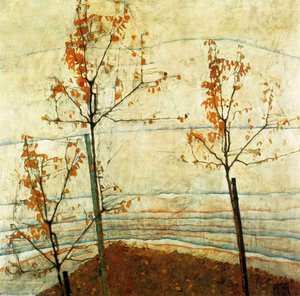
      Autumn Trees (1911) aut. Egon Schiele
      #32

      Autumn Trees

      1911

      Egon Schiele's "Autumn Trees," created in 1911, is a striking example of Austrian Expressionism, showcasing the artist’s unique ability to convey intense emotion through distorted forms and vibrant…

      Order this canvas →
      untitled (938) aut. Egon Schiele
      #34

      untitled (938)

      Egon Schiele's "Untitled (938)," a captivating oil on canvas, isn’t merely a depiction of two figures embracing; it’s an intensely personal exploration of vulnerability, desire, and the precariousness…

      Have it painted by hand →
      Schiele's Room in Neulengbach (1911) aut. Egon Schiele
      #35

      Schiele's Room in Neulengbach

      1911 · Kunsthistorisches Museum

      Egon Schiele, a prominent figure in the Expressionist movement, is renowned for his intense and emotionally charged works. One of his notable pieces, Schiele's Room in Neulengbach, offers…

      Order this canvas →
      The truth unveiled - - (1913) aut. Egon Schiele
      #43

      The truth unveiled - -

      1913

      Egon Schiele's "The Truth Unveiled," painted in 1913, isn’t merely a depiction of figures; it’s an excavation of the human psyche, a raw and unsettling exploration of mortality,…

      Bring this light home →
      Street in Krumau (1917) aut. Egon Schiele
      #45

      Street in Krumau

      1917

      The narrow street of this Austrian provincial town functions as a distillation of internal tension. Painted in 1917, the work moves beyond mere topography to map a sense…

      Order this canvas →
      self-portrait (1913) aut. Egon Schiele
      #49

      self-portrait

      1913

      Egon Schiele’s 1913 self-portrait is not a comfortable image. It’s a visceral, almost brutal depiction of an interior world grappling with uncertainty and perhaps even despair. Rendered in…

      Have it painted by hand →
      Viktorio Riterio von Bauero portretas (1918) aut. Egon Schiele
      #50

      Viktorio Riterio von Bauero portretas

      1918 · Austrian Gallery Belvedere

      Egonio Šilės „Portretas Viktorio Riterio von Bauero“, pildytas 1918 m., nėra tik paprastas išvaizdavimas; tai yra didikiai sukurta, išgausinta senų Vienos nerūmų ir tylios apmąstymo esencija. Sukurtas metu,…

      Have it painted by hand →
      schiele agonia 1912 aut. Egon Schiele
      #51

      schiele agonia 1912

      In the hauntingly intimate masterpiece Agonia, painted in 1912, Egon Schiele invites the viewer into a psychological landscape where the boundaries between physical struggle and existential dread dissolve.…

      Bring this light home →
      schiele sebastian aut. Egon Schiele
      #53

      schiele sebastian

      Egon Schiele's "Schiele Sebastian," a pivotal work within his extensive body of nude portraits, stands as a haunting testament to the artist’s unique vision and the turbulent emotional…

      Bring this light home →
      pregnant woman death aut. Egon Schiele
      #54

      pregnant woman death

      In the visceral landscape of early twentieth-century Expressionism, few works possess the unsettling psychological depth found in Egon Schiele’s “Pregnant Woman and Death.” Painted in 1911, this masterpiece…

      Have it painted by hand →
      Sunflowers (1911) aut. Egon Schiele
      #56

      Sunflowers

      1911

      The painting Sunflowers is a watercolor by Egon Schiele created in 1911. The composition features a variety of sunflowers depicted in different stages of bloom, with some flowers…

      Order this canvas →
      untitled (2447) aut. Egon Schiele
      #59

      untitled (2447)

      Egon Schiele's "Untitled (2447)" is not merely a depiction of two figures; it’s a raw, intensely personal exploration of vulnerability, connection, and the unsettling beauty of human emotion.…

      Bring this light home →
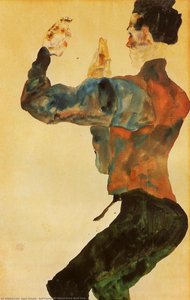
      Self Portrait (1911) aut. Egon Schiele
      #61

      Self Portrait

      1911

      The artwork is a watercolor painting titled Self Portrait, created in 1911. It depicts a nude figure positioned centrally against a muted background. The figure's arms are outstretched…

      Have it painted by hand →
      Study of hands (1913) aut. Egon Schiele
      #65

      Study of hands

      1913

      Two hands emerge from a vast, pale void, locked in a grip that feels both desperate and tender. The skin appears thin, almost translucent, revealing the delicate architecture…

      Have it painted by hand →
      scornful woman 1910 aut. Egon Schiele
      #66

      scornful woman 1910

      Egon Schiele’s “Scornful Woman,” painted in 1910, isn't merely a portrait; it’s a raw distillation of psychological turmoil and the unsettling beauty of human vulnerability. This arresting image,…

      Bring this light home →
      Reclining Female Nude (1917) aut. Egon Schiele
      #68

      Reclining Female Nude

      1917

      Egon Schiele's “Reclining Female Nude,” painted in 1917, stands as a poignant emblem of Expressionism—a movement characterized by raw emotion and unflinching honesty. More than just a depiction…

      Have it painted by hand →
      Autumn Sun (1912) aut. Egon Schiele
      #69

      Autumn Sun

      1912

      Egon Schiele, an Austrian artist known for his bold and emotive works, created the captivating painting "Autumn Sun" in 1912. This piece is a quintessential representation of the…

      Bring this light home →
      Conversion (1912) aut. Egon Schiele
      #70

      Conversion

      1912

      In the realm of early 20th-century art, few works capture the essence of human intimacy and emotional depth as profoundly as Egon Schiele's "Conversion." Painted in 1912, this…

      Order this canvas →
      Kneeling Young Man (1908) aut. Egon Schiele
      #71

      Kneeling Young Man

      1908

      Created in 1908, Kneeling Young Man is a significant work by the Austrian artist Egon Schiele. This piece emerged from the creative atmosphere of Vienna, Austria, during a…

      Have it painted by hand →
      Prostitute (Dirne) aut. Egon Schiele
      #72

      Prostitute (Dirne)

      Egon Schiele’s “Prostitute (Dirne)” stands as a haunting testament to the artist’s unflinching exploration of human psychology and sexuality, firmly rooted in the Expressionist movement that gripped Vienna…

      Have it painted by hand →
      Levitation (1915) aut. Egon Schiele
      #74

      Levitation

      1915

      Egon Schiele’s ‘Levitation,’ painted in 1915 during the height of Expressionism, isn't merely a depiction of two figures; it’s an invitation into a realm where rationality yields to…

      Have it painted by hand →
      Two young girls aut. Egon Schiele
      #75

      Two young girls

      An Intimate Embrace: Exploring Egon Schiele’s ‘Two Young Girls’ This captivating watercolor painting by Austrian Expressionist master, Egon Schiele, offers a profoundly intimate and emotionally charged depiction of…

      Order this canvas →
      Woman Undressing (1914) aut. Egon Schiele
      #76

      Woman Undressing

      1914

      In 1914, the artist Egon Schiele captured a singular moment of transition in Vienna, Austria. The work, titled Woman Undressing, presents a female nude in a state of…

      Order this canvas →
      Lovemaking (1915) aut. Egon Schiele
      #78

      Lovemaking

      1915 · Leopold Museum

      Egon Schiele's "Lovemaking," painted in 1915, is not a celebration of romantic bliss; rather, it’s a brutally honest and profoundly unsettling exploration of human connection – a moment…

      Order this canvas →
      Reclining Female Nude (1908) aut. Egon Schiele
      #79

      Reclining Female Nude

      1908

      is a watercolor and paper work created by the Austrian Expressionist Egon Schiele in 1908. This nude painting (nu) reflects the artist's departure from academic traditions toward a…

      Order this canvas →
      Moa (1911) aut. Egon Schiele
      #81

      Moa

      1911

      Egon Schiele’s “Moa”: A Study in Vulnerability and Expressionist Boldness The painting "Moa" by Egon Schiele, created in 1911, stands as a haunting testament to the artist's preoccupation…

      Order this canvas →
      untitled (5287) aut. Egon Schiele
      #82

      untitled (5287)

      In the quiet, unsettling depths of Egon Schiele’s Untitled (5287), one encounters more than just a figure study; one enters a profound psychological landscape. This work, a hauntingly…

      Have it painted by hand →
      The Bridge (1913) aut. Egon Schiele
      #83

      The Bridge

      1913

      Egon Schiele’s “The Bridge,” painted in 1913, stands as a cornerstone of early 20th-century Expressionist art—a movement that sought to convey raw emotion and psychological intensity rather than…

      Have it painted by hand →
      untitled (7272) aut. Egon Schiele
      #84

      untitled (7272)

      Egon Schiele's "Untitled (7272)" is not merely a depiction of a reclining figure; it’s an immersion into the raw, unsettling heart of the Expressionist soul. Painted in 1918,…

      Bring this light home →
      Reclining Girl, with Round Head aut. Egon Schiele
      #85

      Reclining Girl, with Round Head

      A Study in Vulnerability: Egon Schiele’s ‘Reclining Girl, with Round Head’ Egon Schiele's *Reclining Girl, with Round Head* is a profoundly moving watercolor that encapsulates the core tenets…

      Order this canvas →
      untitled (6044) aut. Egon Schiele
      #88

      untitled (6044)

      A man stares directly at the viewer, his expression caught in a moment of intense, perhaps even grotesque, animation. He wears a white shirt and tie, the formality…

      Order this canvas →
      Seated Couple, 1915 (1915) aut. Egon Schiele
      #92

      Seated Couple, 1915

      1915 · Albertina

      A Moment Frozen in Time: Exploring Egon Schiele’s “Seated Couple” The painting "Seated Couple," completed in 1915 by Austrian Expressionist Egon Schiele, transcends mere depiction; it embodies a…

      Order this canvas →
      Nude Self-Portrait (1910) aut. Egon Schiele
      #93

      Nude Self-Portrait

      1910 · Leopold Museum

      A Portrait of Vulnerability: Exploring Egon Schiele’s ‘Nude Self-Portrait’ The painting “Nude Self-Portrait” by Austrian Expressionist Egon Schiele stands as a haunting testament to the artist's preoccupation with…

      Bring this light home →
      Krumau Town Crescent I (1915) aut. Egon Schiele
      #94

      Krumau Town Crescent I

      1915 · Izraelio muziejus

      Egon Schiele's *Krumau Town Crescent I*, painted in 1915, isn’t merely a depiction of a provincial Austrian town; it’s a raw, intensely personal exploration of mortality, isolation, and…

      Have it painted by hand →
      untitled (1348) aut. Egon Schiele
      #96

      untitled (1348)

      In the hauntingly beautiful monochrome sketch untitled (1348), Egon Schiele invites us into a profound confrontation with the human psyche. Created around 1918, during the twilight of his…

      Have it painted by hand →
      Female nude (1910) aut. Egon Schiele
      #97

      Female nude

      1910

      Egon Schiele’s Intimate Exploration of the Human Form This captivating work on paper by Egon Schiele, created in 1910, offers a poignant glimpse into the artist's exploration of…

      Have it painted by hand →
      Procession (1911) aut. Egon Schiele
      #99

      Procession

      1911

      In the hauntingly beautiful masterpiece "Procession," created in 1911, Egon Schiele invites us into a psychological landscape where the boundaries between reality and inner turmoil dissolve. This seminal…

      Order this canvas →

      Egon Schiele's canvases, period by period

      What Egon Schiele painted most

      The four subjects that return most often on these canvases, each with its best-loved example.

      Where Egon Schiele's canvases hang

      8 muziejai, kuriuose saugoma daugiausia šioje pusėje esamų paveikslų.

      Muzejaus Miestas Egon Schiele darbai Šiojo sąrašo paveikslai
      Leopold Museum, VienaLeopold Museum Viena 46 Portretas su Vala Neuzil, Savysekančiasis II (Mirtis ir Žmogus), Mondananti moteris
      Austrian Gallery Belvedere, VienaAustrian Gallery Belvedere Viena 10 Mirtis ir Žentelė, Motina su dviem vaikais, Šeima
      Albertina, VienaAlbertina Viena 10 Girl Nude with Folded Arms, 1910, I Will Gladly Endure for Art and My Loved Ones, 1912, Seated Couple, 1915
      Kunsthistorisches Museum, VienaKunsthistorisches Museum Viena 4 Schiele's Room in Neulengbach
      Wien Museum, VienaWien Museum Viena 2 Gustav Klimtas ant mirties patalpyje
      Szépművészeti Múzeum, BudapeštasSzépművészeti Múzeum Budapeštas 1 Two Women Embracing
      Staatsgalerie Stuttgart, StutgartasStaatsgalerie Stuttgart Stutgartas 1 Prophets (also known as Double Self Portrait)
      Prahos nacionalinė dailės galerija, PrahaPrahos nacionalinė dailės galerija Praha 1 Gyvena nėra

      Egon Schiele's most famous canvases, one year after another

      Between 1907 and 1918, 12 years of Egon Schiele's painting, shown year after year through its most famous canvases.

      1. 1907
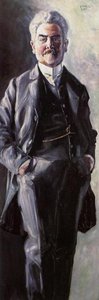
        Portrait of Leopold Czihaczek (1907) aut. Egon Schiele
        Canvas 52 of 100

        Portrait of Leopold Czihaczek

        Amžius 17

        Egon Schiele's 1907 “Portrait of Leopold Czihaczek” is more than just a likeness; it’s a raw, intensely personal exploration of the human condition. This oil on canvas painting,…

      2. 1907
        Portrait of Leopold Czihaczek, Standing (1907) aut. Egon Schiele
        55 of 100

        Portrait of Leopold Czihaczek, Standing

        Amžius 17

        In the hauntingly beautiful Portrait of Leopold Czihaczek, Standing, Egon Schiele invites us into a space where the boundaries between physical representation and psychological truth dissolve. Created in…

      3. 1908
        Mother and Child (Madonna) (1908) aut. Egon Schiele
        17 of 100

        Mother and Child (Madonna)

        Amžius 18

        In the realm of early twentieth-century modernism, few works capture the raw, psychological intimacy of human connection as poignantly as Egon Schiele’s “Mother and Child (Madonna).” Created in…

      4. 1908
        Kneeling Young Man (1908) aut. Egon Schiele
        Canvas 71 of 100

        Kneeling Young Man

        Amžius 18

        Created in 1908, Kneeling Young Man is a significant work by the Austrian artist Egon Schiele. This piece emerged from the creative atmosphere of Vienna, Austria, during a…

      5. 1909
        Man with Blue Headband and Hand on Cheek (1909) aut. Egon Schiele
        Canvas 57 of 100

        Man with Blue Headband and Hand on Cheek

        Amžius 19

        A Window into the Soul: Egon Schiele’s ‘Man with Blue Headband and Hand on Cheek’ This captivating drawing by Egon Schiele, created in 1909, is a powerful example…

      6. 1909
        Autumn Tree with Fuchsias (1909) aut. Egon Schiele
        Ranked 86 of 100

        Autumn Tree with Fuchsias

        Amžius 19

        In the heart of the early twentieth century, amidst the intellectual ferment of Vienna, Egon Schiele captured a moment of profound emotional resonance in his 1909 masterpiece, Autumn…

      7. 1910
        Self Portrait with Hands on Chest (1910) aut. Egon Schiele
        Canvas 7 of 100

        Self Portrait with Hands on Chest

        Amžius 20

        A Window into the Soul: Egon Schiele’s ‘Self Portrait with Hands on Chest’ (1910) This striking self-portrait by Austrian Expressionist master Egon Schiele is more than just a…

      8. 1910
        Trijų vyrų kompozicija (1910) aut. Egon Schiele
        Canvas 14 of 100

        Trijų vyrų kompozicija

        Amžius 20 · Leopold Museum

        A Fragile Dance of Form: Exploring Egon Schiele’s ‘Composition with Three Male Nudes’ Egon Šielyio 1910 m. *Kompozicija su trim vyrais* yra reikšmingas darbas, užfiksuojantis dailininko radikalų nutolimą…

      9. 1911
        Savysekančiasis II (Mirtis ir Žmogus) (1911) aut. Egon Schiele
        Canvas 3 of 100

        Savysekančiasis II (Mirtis ir Žmogus)

        Amžius 21 · Leopold Museum

        Painted in 1911, Egon Schiele’s “The Self-Seers II (Death and Man)” isn't merely a portrait; it is a visceral plunge into the depths of human psychology, a stark…

      10. 1911
        Moa (1911) aut. Egon Schiele
        12 of 100

        Moa

        Amžius 21 · Leopold Museum

        Moa nebuvo tik paprasta modelė, ji buvo neatsiejama Egono Šilės kūrybinio pasaulio dalis – šoklere ir artima drauge, kuri kartu su savo partneriu Erwinu Osenu dažnai pozirbavo prieš…

      11. 1912
        Portretas su Vala Neuzil (1912) aut. Egon Schiele
        Canvas 1 of 100

        Portretas su Vala Neuzil

        Amžius 22 · Leopold Museum

        Egon Schiele's "Portrait of Wally" (1912) isn’t merely a depiction of a young woman; it is a visceral exploration of human vulnerability and the unsettling beauty that lies…

      12. 1912
        Mondananti moteris (1912) aut. Egon Schiele
        Canvas 9 of 100

        Mondananti moteris

        Amžius 22 · Leopold Museum

        Prisikurę šalia, galite pajusti, kaip įtraogia jus sunkios, ašarotos šios moters akys. Čia tvyro gili ramybė, tačiau ji nė šiek tiek ne tirpumą primena. Veidas yra blegas, beveik…

      13. 1912
        Portrait of a Woman (1912) aut. Egon Schiele
        Ranked 11 of 100

        Portrait of a Woman

        Amžius 22

        Egon Schiele's Portrait of a Woman, painted in 1912, stands as a cornerstone of Austrian Expressionism and a poignant exploration of psychological depth. More than just a depiction…

      14. 1913
        The truth unveiled - - (1913) aut. Egon Schiele
        Ranked 43 of 100

        The truth unveiled - -

        Amžius 23

        Egon Schiele's "The Truth Unveiled," painted in 1913, isn’t merely a depiction of figures; it’s an excavation of the human psyche, a raw and unsettling exploration of mortality,…

      15. 1913
        Wally with a Red Blouse (1913) aut. Egon Schiele
        Canvas 46 of 100

        Wally with a Red Blouse

        Amžius 23

        In the turbulent landscape of early 20th-century Vienna, few images capture the fractured psyche of an era as poignantly as Egon Schiele’s “Wally with a Red Blouse.” Painted…

      16. 1914
        Lovers: Man and Woman I (1914) aut. Egon Schiele
        Canvas 6 of 100

        Lovers: Man and Woman I

        Amžius 24

        Egon Schiele's 1914 painting, *Lovers: Man and Woman I*, isn’t merely a depiction of two figures; it’s a visceral exploration of human connection, vulnerability, and the unsettling beauty…

      17. 1914
        Savasis kaip Šventasis Sebastijonas (plakatas) (1914) aut. Egon Schiele
        10 of 100

        Savasis kaip Šventasis Sebastijonas (plakatas)

        Amžius 24

        Egon Ščiele’s Nuosvingus “Savasis kaip Šventasis Sebastijonas” (Paskelbimas) Šis įspūdingas atspaudinys iš Egon Ščieleio 1914 metų kūrinio *Savasis kaip Šventasis Sebastijonas* užčiupti tiesioginius emocinį intensyvumą. Ne tik tiesiškas…

      18. 1915
        Mirtis ir Žentelė (1915) aut. Egon Schiele
        2 of 100

        Mirtis ir Žentelė

        Amžius 25 · Austrian Gallery Belvedere

        Egon Šieleio "Mirtis ir Žentelė" – Ekspresionizmo Šalikas Egon Šieleio kūrinys “Mirtis ir Žentelė” (1915 m.) – tai ne tik paveikslių drobės fragmentas, bet visą gyvenimą užsiūrėjęs klausimas…

      19. 1915
        Two Women Embracing (1915) aut. Egon Schiele
        Ranked 18 of 100

        Two Women Embracing

        Amžius 25 · Szépművészeti Múzeum

        In the hauntingly beautiful realm of Austrian Expressionism, few works capture the raw, pulsating essence of human intimacy quite like Egon Schiele’s Two Women Embracing. This masterpiece serves…

      20. 1916
        Portrait of an Old Man (also known as Johann Harms) (1916) aut. Egon Schiele
        Canvas 48 of 100

        Portrait of an Old Man (also known as Johann Harms)

        Amžius 26 · Solomon R. Guggenheim muziejus

        Egon Schiele's “Portrait of an Old Man (also known as Johann Harms),” painted in 1916, is not merely a likeness; it’s a profound meditation on aging, mortality, and…

      21. 1917
        Motina su dviem vaikais (1917) aut. Egon Schiele
        Canvas 4 of 100

        Motina su dviem vaikais

        Amžius 27 · Austrian Gallery Belvedere

        Egon Šieleio *Motina su dviem vaikais* (1917) yra ne tik įtikinamas darbas, bet ir gili emocijų bei susidūrimo su istorijos atspalviais išraiška. Ši drobė, kuria galite pasigirti turint…

      22. 1917
        Šeima (1917) aut. Egon Schiele
        5 of 100

        Šeima

        Amžius 27 · Austrian Gallery Belvedere

        Egon Šyleio 1917 metais nupintas *Gimina* – tai ne tik šeimos portretas, bet ir giliame emociniame ir psichologiniame paveike ištryliusios santykio, atviražmiškumo ir karų amžiuje vyravusių neramumų refleksija.…

      23. 1917
        Apbučimas (Kochaniašių II) - - , (1917) aut. Egon Schiele
        Canvas 8 of 100

        Apbučimas (Kochaniašių II) - - ,

        Amžius 27

        A Tangled Embrace: Decoding Schiele’s ‘Lovers II’ Egon Schiele's ‘Embrace (Lovers II)’ (1917) is not merely a depiction of intimacy; it’s a visceral exploration of the human condition,…

      24. 1918
        Secession 49. Exhibition (1918) aut. Egon Schiele
        Ranked 23 of 100

        Secession 49. Exhibition

        Amžius 28

        In the hauntingly beautiful Secession 49. Exhibition, Egon Schiele invites us into a moment of profound stillness amidst the social currents of 1918 Vienna. This evocative work serves…

      25. 1918
        Kalnų srauta (1918) aut. Egon Schiele
        Canvas 31 of 100

        Kalnų srauta

        Amžius 28

        Egon Schiele's 1918 painting, *Mountain Torrent*, isn’t merely a depiction of a rushing river; it’s a visceral outpouring of the artist’s deeply felt anxieties and his profound engagement…

      Egon Schiele's canvases, question by question

      Which canvas is Egon Schiele most remembered for?Read the answer

      Portretas su Vala Neuzil (1912), Leopold Museum, Viena. Mirtis ir Žentelė (1915) and Savysekančiasis II (Mirtis ir Žmogus) (1911) follow.

      Portretas su Vala Neuzil: how old was Egon Schiele when it was painted?Read the answer

      Egon Schiele, born in 1890, was 22 years old: Portretas su Vala Neuzil dates from 1912.

      What are Egon Schiele's ten most famous canvases?Read the answer

      Portretas su Vala Neuzil, Mirtis ir Žentelė, Savysekančiasis II (Mirtis ir Žmogus), Motina su dviem vaikais, Šeima, Lovers: Man and Woman I, Self Portrait with Hands on Chest, Apbučimas (Kochaniašių II) - - ,, Mondananti moteris ir Savasis kaip Šventasis Sebastijonas (plakatas). Each canvas in the ranking above comes with its year and its museum.

      How many paintings did Egon Schiele create?Read the answer

      649 works by Egon Schiele are in our catalogue, dated 1907 to 1918.

      Where do Egon Schiele's most famous canvases hang today?Read the answer

      Mostly in Leopold Museum (Viena), Austrian Gallery Belvedere (Viena) ir Albertina (Viena); the list above names each museum and its canvases.

      When did Egon Schiele paint the most famous canvases?Read the answer

      In 1911, which gave 13 of the 100 works on this page, Savysekančiasis II (Mirtis ir Žmogus) among them.

      Which famous Egon Schiele canvas came first, and which came last?Read the answer

      The earliest canvas here is Portrait of Leopold Czihaczek (1907); the latest is Secession 49. Exhibition (1918).

      Which subjects did Egon Schiele paint most?Read the answer

      Mortality (25), Vienna (17) ir Anxiety (14), across the 100 works on this page.

      Which medium appears most in Egon Schiele's paintings?Read the answer

      Acrylic On Canvas, used in 29 of the 100 works on this page.

      Which movement is Egon Schiele associated with?Read the answer

      Ekspresionizmas, as the canvases on this page show.

      Which paintings by Egon Schiele are held by the Leopold Museum?Read the answer

      The Leopold Museum, Viena holds 17 of the works on this page, among them Portretas su Vala Neuzil, Savysekančiasis II (Mirtis ir Žmogus) ir Mondananti moteris.

      Where can I buy a reproduction of a Egon Schiele painting?Read the answer

      Yes. Every painting on this page can be ordered from its own page as an oil reproduction painted by hand, or as a fine art print, in the size you choose.

      Meet the painter: Egon Schiele

      Egon Schiele

      Austrijos pozicija dviejų pasaulinio karo horizonte buvo labai abejojanti: vienu metu ji buvo šiek tiek iš Šiaurės į rytus, lengvai įsitikinusi veiksmų vyrai. Mažėjęs šalis po 1918 m., beveik visiškai neišplitusi tarptautiniu pasauliu buvo lengvai įvykdinta Hitlerio Reichui 1938 m.; meno srityje tai reiškė kad modernizmo istorija buvo išvykstanti nuo Šiaurės iki pietų, su pagrindiniu dėmesiu į formą. Vokelių šiek tiek pripažino ekspresionizmą kaip svarbų meno srovę; jis buvo vienas iš žymiausius austrių artistas XX amžiaus pradžioje – kartu su Gustavu Klimtu ir Oskar Kokoschka išvykę į Vieną buvo laikomas vienu iš Žyduvo šimtmečio svarbiausių vizualinių menininkų.

      Gyvenimas

      Egonas Šylė gimė 1890 m. vasario 3 d. Tulne, Austrijoje. Jo tėvas Adolfas Šylė buvo Tulno geležinkelio stoties direktorius ir gimė 1851 m. Vienoje Adolfo Šyly tevai turėjo tris jaunesnes seseris: Elvirą, Melaniją ir Gertrūdą. Elvira mirė vaikyste dėl gimtinių sifiliso. Jo tėvas buvo užsikrėtęs sifiliu įsimėlynėje savo jaunystės metais po vienos jo naujosios žmonos išėjimo iš kambario.

      Meno vystymasis

      Šylė mokytojo Christian Griepenkerl įtaką išgyveno Vienoje 1907 m. ir G. Klimtas tapo jo svarbiu rėmėju. Šylė paliko akademiją 1906 m., nes jos mokymo metodai buvo labai konservatyvus, ir įkūrė Naują austrių dailės grupę 1909 m. Grupėje vyravo ekspresionistinė estetika, kuri iššūkiant šiuolaikinėms kultūros normas.

      Žymūs kūriniai

      Šylė buvo vienas iš žymiausius austrių artistas XX amžiaus pradžioje – kartu su Gustavu Klimtu ir Oskar Kokoschka išvykę į Vieną buvo laikomas vienu iš Žyduvo šimtmečio svarbiausių vizualinių menininkų. Šylė buvo ekspresionizmo meno srovės atstovas.

      Žymūs veiksniai

      Šylė buvo žinomas dėl savo iššūkiantį įžiūrą į pasaulio problemas ir šiuolaikinę estetika, kuri iššūkiant šiuolaikinėms kultūros normas. Šylė buvo ekspresionizmo meno srovės atstovas.

      Visi 649 Egon Schiele darbai →