Atelieris — Nemokamas pristatymas visame pasaulyje — Pristatymo laikas – 2–6 savaitės
      Isakas Levitanas, 1860 – 1900

      Isakas Levitanas's 100 Most Famous Paintings

      Golden Autumn (1895) is the painting Isakas Levitanas is best remembered for; it belongs to the Tretyakov galerija, Maskva. Above the Eternal Peace and Haystacking (1900) complete the trio of best-loved canvases. Our catalogue counts 566 works by Isakas Levitanas. Here are the 100 most famous, with the year, the museum and the story of each canvas.

      Rangos vieta nulegiama pagal mūsų populiarumumo balas, kurį sudaro kiekvieno kūrinio paieškos, apsilankėjimai ir užsakėjimai. Atnaujinta spalis 2026. Each painting on this page can be ordered as an oil reproduction painted by hand on linen canvas, or as a fine art print, made to the size you choose.

      Isakas Levitanas portretas
      Isakas Levitanas · 1860 – 1900
      Gedė · mirė
      1860 – 1900, Kybartai
      Judėjimas
      Realism
      Darbai mūsų kataloge
      566
      Labiausiai žinomi
      Golden Autumn (1895)
      Daugiausia darbų yra
      Tretyakov galerija

      The ten best-loved paintings by Isakas Levitanas

      Golden Autumn (1895) aut. Isakas Levitanas
      1

      Golden Autumn

      1895 · Oil On Canvas · Tretyakov galerija, Maskva

      In the quiet transition between summer's warmth and winter's slumber, there exists a fleeting moment of unparalleled brilliance, a period where the earth seems to glow from within. Isaak Ilyich Levitan, the master poet of the Russian landscape, captures this ephemeral magic in his breathtaking masterpiece, Golden Autumn. This painting is not merely a depiction of a riverbank; it is an invitation into a world of profound serenity and contemplative…

      Haystacking (1900) aut. Isakas Levitanas
      3

      Haystacking

      1900 · Oil On Panel · Tretyakov galerija, Maskva

      In the vast tapestry of Russian landscape painting, few works capture the ephemeral intersection of human toil and natural majesty as poignantly as Isaak Ilyich Levitan’s “Haystacking.” Painted in 1900, this oil on panel masterpiece serves as a profound meditation on the rhythms of rural existence. The scene unfolds across a sun-drenched field, where golden haystacks punctuate the landscape like silent monuments to the harvest. Yet, beneath this surface of…

      Golden autumn (1895) aut. Isakas Levitanas
      4

      Golden autumn

      1895 · Oil On Canvas · Tretyakov galerija, Maskva

      In the hallowed halls of the Tretyakov Gallery in Moscow, there exists a canvas that does more than merely depict a season; it captures the very soul of the Russian landscape. Isaak Ilyich Levitan’s Golden Autumn, painted in 1895, is a monumental achievement that transcends simple representation to become a profound meditation on beauty and transition. As the eye wanders across the 82 x 126 cm expanse, one is immediately…

      The lake, Russian soil (1899) aut. Isakas Levitanas
      5

      The lake, Russian soil

      1899 · Oil On Canvas

      To gaze upon Isaak Ilyich Levitan's "The Lake, Russian Soil" is not merely to observe a painting; it is to be gently ushered into a state of profound tranquility. This masterpiece, born in 1899, captures the very soul of the Russian countryside—a place where nature and human life coexist in a hushed, almost dreamlike harmony. The scene unfolds around a placid lake, its surface mirroring the vast, atmospheric expanse above.…

      Summer Evening (1899) aut. Isakas Levitanas
      6

      Summer Evening

      1899 · Oil On Canvas · Tretyakov galerija, Maskva

      To gaze upon Isaak Ilyich Levitan's "Summer Evening" is to step across the threshold of time and into a moment suspended in amber light. This painting, executed in 1899, is not merely a depiction of a country road; it is an elegy to pastoral tranquility, a visual poem whispered by the setting sun over the rolling landscape of rural Russia. Levitan, the master poet of the Russian soul rendered in…

      Moonlit Night (1899) aut. Isakas Levitanas
      7

      Moonlit Night

      1899 · Oil On Canvas · Tretyakov galerija, Maskva

      A Symphony of Sorrow: Exploring Isaak Levitan’s “Moonlit Night” Isaak Ilyich Levitan (1860-1900), a titan amongst Russian landscape painters, didn't merely depict scenery; he wrestled with the very essence of melancholy and imbued his canvases with an unparalleled sensitivity to the human condition. His oeuvre is defined by a profound communion with nature—not one of triumphant grandeur but rather of quiet contemplation tinged with poignant longing—a characteristic that solidified his…

      Cloud (1878) aut. Isakas Levitanas
      8

      Cloud

      1878 · Oil On Canvas

      The sky dominates the canvas, a vast expanse where light and air collide. Large, white clouds drift through the scene, some appearing heavy and puffy while others stretch into thin, wispy filaments. There is a profound sense of openness here, a feeling of looking upward into an infinite, breathing space. Two small figures occupy the landscape, one on the left and one toward the right, their tiny forms providing a…

      Evening on the Volga (1887) aut. Isakas Levitanas
      9

      Evening on the Volga

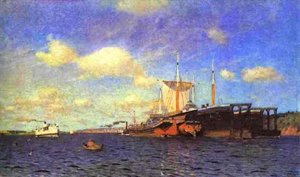
      1887 · Oil On Canvas · Tretyakov galerija, Maskva

      The Evening on the Volga is a breathtaking oil on canvas painting created by Isaak Ilyich Levitan in 1887. This beautiful piece is housed at the renowned Tretyakov Gallery in Moscow, Russia. The painting measures 50 x 81 cm and is a testament to the artist's skill in capturing the essence of the natural world. The Painting's Composition The scene depicts a serene evening on the Volga River, with boats…

      Alps. Snow. (1897) aut. Isakas Levitanas
      10

      Alps. Snow.

      1897 · Oil On Canvas · Yekaterinburg Museum of Fine Arts, Yekaterinburg

      There is a particular kind of stillness that only comes with heavy snow. In this 1897 oil on canvas, we find ourselves looking upon a landscape where the mountains do not merely exist, but seem to hold their breath. The composition is anchored by a large glacier in the foreground, its surface a complex interplay of light and shadow that suggests a profound, frozen depth. Beyond this icy expanse, the…

      Isakas Levitanas: canvases 11 to 100 of the ranking

      Fires (1885) aut. Isakas Levitanas
      #20

      Fires

      1885

      A Tranquil Landscape Ablaze: Exploring Levitan's "Fires" Isaak Ilyich Levitan’s “Fires,” painted in 1885, offers a captivating glimpse into the soul of the Russian countryside. This landscape painting…

      Have it painted by hand →
      By the whirlpool (1891) aut. Isakas Levitanas
      #21

      By the whirlpool

      1891

      Isaak Ilyich Levitan's By the Whirlpool is a captivating oil on canvas painting that embodies the essence of serenity and tranquility. Created in 1891, this masterpiece is a…

      Order this canvas →
      Fresh Wind. Volga (1895) aut. Isakas Levitanas
      #23

      Fresh Wind. Volga

      1895 · Tretyakov galerija

      To gaze upon Levitan's depiction of the Volga, "Fresh Wind," is to be swept away by a tide of profound tranquility. This painting is not merely a record…

      Have it painted by hand →
      Haystacks. Twilight (1899) aut. Isakas Levitanas
      #33

      Haystacks. Twilight

      1899 · Tretyakov galerija

      A Symphony of Russian Soul: The Life and Art of Isaak Ilyich Levitan Isaak Ilyich Levitan, a name synonymous with the evocative power of Russian landscape painting, was…

      Bring this light home →
      The Istra River. Study (1885) aut. Isakas Levitanas
      #35

      The Istra River. Study

      1885 · Tretyakov galerija

      Isaak Ilyich Levitan's "The Istra River Study," painted in 1885, isn’t merely a landscape; it’s a distilled essence of the Russian soul. This evocative work, a cornerstone of…

      Order this canvas →
      Valley of a River. Study (1890) aut. Isakas Levitanas
      #38

      Valley of a River. Study

      1890 · Tretyakov galerija

      In the quietude of the late nineteenth century, a profound shift occurred in the way the natural world was perceived through the lens of Russian art. Isaak Ilyich…

      Bring this light home →
      Springtime. The Last Snow. (1895) aut. Isakas Levitanas
      #39

      Springtime. The Last Snow.

      1895

      In the delicate intersection between the fading chill of winter and the burgeoning warmth of spring, Isaak Ilyich Levitan captures a moment of profound metamorphosis. Springtime. The Last…

      Order this canvas →
      Birch Grove (1885) aut. Isakas Levitanas
      #40

      Birch Grove

      1885

      In the quietude of Birch Grove, painted in 1885, one finds not merely a depiction of flora, but a profound meditation on the fleeting nature of time and…

      Bring this light home →
      Spring Flood (1897) aut. Isakas Levitanas
      #43

      Spring Flood

      1897 · Tretyakov galerija

      Isaak Ilyich Levitan's "Spring Flood," painted in 1897, is a captivating landscape that embodies the artist’s signature style – a poignant and evocative portrayal of the Russian countryside.…

      Bring this light home →
      In the Mountains in the Crimea (1886) aut. Isakas Levitanas
      #44

      In the Mountains in the Crimea

      1886 · Tretyakov galerija

      Isaac Ilyich Levitan's "In the Crimea Mountains," painted in 1886, isn’t merely a depiction of a landscape; it’s a profound meditation on solitude, memory, and the enduring spirit…

      Order this canvas →
      Field after Harvest. (1897) aut. Isakas Levitanas
      #45

      Field after Harvest.

      1897 · Armėnijos nacionalinė galerija

      A Symphony of Sorrow: Exploring Isaak Levitan’s “Field After Harvest” Isaak Ilyich Levitan's "Field after Harvest," painted in 1897, transcends mere depiction; it embodies the melancholic spirit characteristic…

      Order this canvas →
      Footbridge. Savvina Sloboda. Study (1884) aut. Isakas Levitanas
      #46

      Footbridge. Savvina Sloboda. Study

      1884 · Tretyakov galerija

      Isaak Ilyich Levitan's Footbridge. Savvina Sloboda. Study, created in 1884, is a captivating oil on canvas painting that embodies the tranquility of nature. This beautiful piece is housed…

      Order this canvas →
      Evening in the Field (1883) aut. Isakas Levitanas
      #48

      Evening in the Field

      1883 · Tretyakov galerija

      Isaak Ilyich Levitan (1860-1900), a titan amongst Russian landscape painters, didn't merely depict scenery; he wrestled with its soul. His canvases aren’t simply representations of what was seen…

      Order this canvas →
      Quiet cloister (1890) aut. Isakas Levitanas
      #49

      Quiet cloister

      1890

      Isaak Ilyich Levitan’s “Quiet Cloister,” painted around 1890, offers a captivating glimpse into the soul of rural Russia. This evocative landscape transcends mere representation; it's an emotional portrait…

      Bring this light home →
      Springtime in Italy (1890) aut. Isakas Levitanas
      #50

      Springtime in Italy

      1890 · Tretyakov galerija

      Isaak Ilyich Levitan's "Springtime in Italy," painted around 1890, isn't merely a landscape; it’s a distilled emotion rendered in oil on canvas. This evocative piece transcends the simple…

      Order this canvas →
      Oak (1880) aut. Isakas Levitanas
      #51

      Oak

      1880 · Tretyakov galerija

      Isaak Ilyich Levitan's "Oak," painted in 1880, transcends mere depiction; it embodies a profound connection to the Russian soul—a yearning for solace and beauty found within the immutable…

      Have it painted by hand →
      The First Green. May. Study (1883) aut. Isakas Levitanas
      #52

      The First Green. May. Study

      1883 · Tretyakov galerija

      Isaak Ilyich Levitan’s “The First Green. May. Study,” painted in 1883, isn't merely a depiction of a landscape; it’s a profound meditation on the ephemeral beauty of nature…

      Order this canvas →
      Road in a Wood (1881) aut. Isakas Levitanas
      #55

      Road in a Wood

      1881 · Tretyakov galerija

      Isaak Ilyich Levitan's "Road in a Wood," painted in 1881, is more than just a depiction of a forest path; it’s a profound meditation on the soul of…

      Order this canvas →
      Springtime in the Crimea (1900) aut. Isakas Levitanas
      #56

      Springtime in the Crimea

      1900 · Tretyakov galerija

      Isaak Ilyich Levitan's "Springtime in the Crimea," painted in 1900, isn’t merely a landscape; it’s a distillation of Russian soul. More than just a depiction of a Crimean…

      Bring this light home →
      Huts after sunset (1899) aut. Isakas Levitanas
      #57

      Huts after sunset

      1899

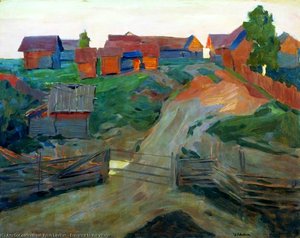
      To gaze upon Isaak Ilyich Levitan's "Huts after Sunset" is to step across the threshold of time and into a moment suspended in golden, ethereal light. This painting,…

      Have it painted by hand →
      Stormy day (1897) aut. Isakas Levitanas
      #58

      Stormy day

      1897 · Tretyakov galerija

      Introduction to the Painting Isaak Ilyich Levitan's Stormy Day is a captivating oil on canvas painting that showcases the artist's skill in capturing the essence of nature. Created…

      Have it painted by hand →
      In the North (1896) aut. Isakas Levitanas
      #59

      In the North

      1896 · Tretyakov galerija

      Isaak Ilyich Levitan's "In the North" (1896) isn’t merely a landscape painting; it’s a profound distillation of the Russian soul, a poignant exploration of solitude and the sublime…

      Order this canvas →
      March (1895) aut. Isakas Levitanas
      #60

      March

      1895 · Tretyakov galerija

      Isaac Ilyich Levitan's "March" isn't merely a depiction of a winter landscape; it’s a profound distillation of the Russian soul, captured in oil on canvas with an almost…

      Bring this light home →
      Twilight (1900) aut. Isakas Levitanas
      #61

      Twilight

      1900 · Tretyakov galerija

      Isaac Ilyich Levitan, a name inextricably linked with the melancholic beauty of late 19th-century Russian landscape painting, possessed an extraordinary ability to capture not just the visual elements…

      Bring this light home →

      Isakas Levitanas's canvases, period by period

      What Isakas Levitanas painted most

      The four subjects that return most often on these canvases, each with its best-loved example.

      Where Isakas Levitanas's canvases hang

      4 muziejai, kuriuose saugoma daugiausia šioje pusėje esamų paveikslų.

      Muzejaus Miestas Isakas Levitanas darbai Šiojo sąrašo paveikslai
      Tretyakov galerija, MaskvaTretyakov galerija Maskva 49 Golden Autumn, Above the Eternal Peace, Haystacking
      Izraelio muziejus, JeruzalėIzraelio muziejus Jeruzalė 3 Tombstone in the Jewish Graveyard, Russian Village, The Last Snow
      Yekaterinburg Museum of Fine Arts, YekaterinburgYekaterinburg Museum of Fine Arts Yekaterinburg 2 Alps. Snow.
      Armėnijos nacionalinė galerija, ErevanasArmėnijos nacionalinė galerija Erevanas 2 Field after Harvest.

      Isakas Levitanas's most famous canvas, decade after decade

      1. 1870s
        Cloud (1878) aut. Isakas Levitanas
        Ranked 8 of 100

        Cloud

        Amžius 10 – 19

        The sky dominates the canvas, a vast expanse where light and air collide. Large, white clouds drift through the scene, some appearing heavy and puffy while others stretch…

      2. 1880s
        Evening on the Volga (1887) aut. Isakas Levitanas
        Canvas 9 of 100

        Evening on the Volga

        Amžius 20 – 29 · Tretyakov galerija

        The Evening on the Volga is a breathtaking oil on canvas painting created by Isaak Ilyich Levitan in 1887. This beautiful piece is housed at the renowned Tretyakov…

      3. 1890s
        Golden Autumn (1895) aut. Isakas Levitanas
        Canvas 1 of 100

        Golden Autumn

        Amžius 30 – 39 · Tretyakov galerija

        In the quiet transition between summer's warmth and winter's slumber, there exists a fleeting moment of unparalleled brilliance, a period where the earth seems to glow from within.…

      4. 1900s
        Haystacking (1900) aut. Isakas Levitanas
        Ranked 3 of 100

        Haystacking

        Amžius 40 · Tretyakov galerija

        In the vast tapestry of Russian landscape painting, few works capture the ephemeral intersection of human toil and natural majesty as poignantly as Isaak Ilyich Levitan’s “Haystacking.” Painted…

      Isakas Levitanas's canvases, question by question

      Which canvas is Isakas Levitanas most remembered for?Read the answer

      Golden Autumn (1895), Tretyakov galerija, Maskva. Above the Eternal Peace and Haystacking (1900) follow.

      Golden Autumn: how old was Isakas Levitanas when it was painted?Read the answer

      Isakas Levitanas, born in 1860, was 35 years old: Golden Autumn dates from 1895.

      What are Isakas Levitanas's ten most famous canvases?Read the answer

      Golden Autumn, Above the Eternal Peace, Haystacking, Golden autumn, The lake, Russian soil, Summer Evening, Moonlit Night, Cloud, Evening on the Volga ir Alps. Snow.. Each canvas in the ranking above comes with its year and its museum.

      How many paintings did Isakas Levitanas create?Read the answer

      566 works by Isakas Levitanas are in our catalogue, dated 1875 to 1900.

      Where do Isakas Levitanas's most famous canvases hang today?Read the answer

      Mostly in Tretyakov galerija (Maskva), Izraelio muziejus (Jeruzalė) ir Yekaterinburg Museum of Fine Arts (Yekaterinburg); the list above names each museum and its canvases.

      When did Isakas Levitanas paint the most famous canvases?Read the answer

      In 1880s, which gave 52 of the 100 works on this page, Evening on the Volga among them.

      Which famous Isakas Levitanas canvas came first, and which came last?Read the answer

      The earliest canvas here is Village. Windmill. (1875); the latest is Haystacking (1900).

      Which subjects did Isakas Levitanas paint most?Read the answer

      Landscape (28), Trees (16) ir Russian landscape (16), across the 100 works on this page.

      Which medium appears most in Isakas Levitanas's paintings?Read the answer

      Oil On Canvas, used in 28 of the 100 works on this page.

      Which movement is Isakas Levitanas associated with?Read the answer

      Realism, as the canvases on this page show.

      Which paintings by Isakas Levitanas are held by the Tretyakov galerija?Read the answer

      The Tretyakov galerija, Maskva holds 27 of the works on this page, among them Golden Autumn, Above the Eternal Peace ir Haystacking.

      Where can I buy a reproduction of a Isakas Levitanas painting?Read the answer

      Yes. Every painting on this page can be ordered from its own page as an oil reproduction painted by hand, or as a fine art print, in the size you choose.

      Meet the painter: Isakas Levitanas

      Pradinis gyvenimas, šeima ir mokslas

      Isakas Levitanas gimė 1860 m. rugpjūčio 30 d. į Kauno apskrities (šiandien Lietuvos Kaunas rajono apylinkė) į Kauno žydų gyvenimo ir gyvenimo būdo centre, vadinamame Kibarty, kuris tuo metu prieneikė prie Rusijos imperijos. Jis augo šeimoje, kuri buvo skirstoma nedauginga, tačiau giliai pagarbiai žiūrėjo į švietimą. Jo tėvas, Elyashiv Levitanas, buvo rabino sūnus ir studijas baigė Jeshivoje. Ši kilmė suteikė šeimai raštingumo ir gilių mąstymo pagrindus, net ir kova su kasdienėmis ekonominės realybės sunkumais.

      1873 m. jaunasis menininkas stebėjosi Moskovos dailės, skulptūros ir architektūros mokykloje. Primetinės mokslų metų praleido kopijavimo klasėje, kur mokėsi formos ir mimitavimo pagrindų. Po metų disciplinuoto studijų jis persiklausė į naturalistinio dailės klasę, kad pradėtų kurti savo vidinį pasaulį ir suvokimą apie aplinką. Šiuo formavimo laikotarpiu jis mokėsi iš kelių išckiškų mokytojų, įskaitant Alexei Savrasovą, Vasily Perovą ir Vasylį Polenovą. Šie mentorai padėjo pagrįsti techninius įgūdžius, kurie vėliau tapo jo kūrybos stiliaus pagrindu.

      Technika ir meninė stilius

      Isakas Levitanas peržengė paprasto kraštotūros vaizdybos ribas ir sukūrė tai, kas vėliau tapo žinoma kaip „nuotaikos kraštotūra“. Jis neaimino tik užfiksuoti fizinių Rusijos kaimo kraštų bruožų; vietoje to jis panaudojo gamtą, kad išreikštų vidinę žmogaus sielos būseną. Jo požiūris gryniai remtasi kruopściu šviesos ir spalvų naudojimu, siekiant sujaudinti specificumas emocijas žiūrovui. Tai davė rezultatą – scenas, kurios dažnai atrodo prisiglaudusios tyliai apmąstymui ar skausmingai ilgesiui, užfiksuodamas trumpalaikį vienatvės akimirką didvyčiame gamtos sklaustinyje.

      Jo techninis procesas buvo įsiukūrintas tikslingame realizme, tačiau jis savo esminėms esme, esme ant pluošto, įpušė išskirtinę, ekspresyvią energiją. Jis dažnai dirbo laisvais, tekstūruotais brushstokais (teptukų traukpliais), kurie buvo sluoksniuojami vienas anten kitų, kad būtų sukurtos atmosferos pojūtis. Siekdamas pasiekti gilią erdvės gębę ir įamžinti subtilų, eterišką šviesos kokybę, jis taikė glazūros (glazuojimo) technikas. Per sluoksniuant plonus spalvų sluoksnius ant pirminio paveikslavimo, jis galėjo sukurti švelnius, švytinčius perėjimus, matomus jo dusklienos ar mirgantio upės paviršiaus vaizduose.

      Aplinkas, konkurentai ir mokiniai

      Isakas Levitanas savo gyvenimą itin glaudžiai įpinė į kūrybiškų minčių audinį. Jis rado sielos draugų bendrystėje su Konstantiniu Koroviniumi, Michailu Nesterovu bei architektu Fyodoru Shekhtel. Šie draugystės buvo daugiau nei tik socialiniai ryšiai; jos buvo bendros formos ir jausmo kalbos dalis. Jo ryšys su Nikolai Chekhov, garsiojo dramaturgo broliu, buvo ypač glaudus, suteikdamas stabilią atramą tarp sudėtingų profesinio gyvenimo akimirkų. Per šiuos menes, Isakas Levitanas tapo plačiau išvalytos mąlotųjų ir kūrėjų judėjimo dalimi, siekiant peržengti esamą rusų estetiką ir ją pervardoti.

      Jo profesinės prigairos atskleidė gilią atsidavimą besikeičančiai meno aplinkai. 1891 metais jis tapo „Peredvizhniki“ (Kūrinystės keliautojų) draugijos nariu – grupės, aktyviai veikios nuo 1870 metų. Šis prisijungimas įdiegė jį į svarbaus kolektyvo, skirto meno pristatymui žmonėms, ranga. Jis taip pat buvo „Meno pasaulio“ grupės narys, dar stiprinęs savo vietą tarp to laiko intelektualinių sūkurų. Šios priklausomybės nebuvo tik formalūs titulai, o veikiau aktyvaus dalyvavimo Rusijos kultūros transformacijos procesuose simbolis.

      Iki 1898 metų jo įtampa pasiekė ne tik studijas, bet ir klasę. Jis buvo paskirtas Moskovos dailės, skulptūros ir architektūros mokyklos kraštotūros studijos vadovu. Šioje pareigoje jis padėjo formą kitos kartos kryptimčiai, perduodamas technines ir emocines įžvalgas, kurias kauptavo per visą savo karjerą. Jis mokė tą pačią tylyją ir intensyvumą, kuris lydėjo jo patį požiūrį į gamtos pasaulį.

      Pagrindiniai darbai ir šedevrai

      Isakas Levitanas gebėjo per paislinčią Rusijos kaimo ramybę perteikti gilią jautrą, o šis gebėjimas skambiausiai išraiška jo 1890 metų kūrynoje „Tyloji vienuolija“. Šis paveikslas vaizduoja ramybėje užsipergamų vienuolį, paslėptą tankioje girioje, o uogojanti upė ir medinis tiltas veda žiūrovio žvilgsnį link bažnyčios bokšto, sukuriant gilią𝙈vienatvės studiją. Panašiu spalmingumu pasižymi ir jo 1895 metų paveikslas „Auksinė rudenė“, kuri per kruoptingą šviesos ir spalvų balansą atspindi besikeičančius metų laikus. 1897 metais jis sukūrė Pavasario užlūžį – kūrinį, kuris tapo neatsiejami Tretyakos galerijos kolekcijos dalimi ir yra aiškiausia jo ryšio su gamtos kraštotūra išraiška.

      Plankstis tolyg stilius evoliucionavo, o kūrybinė tema tapo vis tolioka ir sudėtingesnė. Vladimirka, ar Vladimirka magistralė, siūlo tamsesnį, skausmingesnį žemės vaizdą, vaizdindama kelią, kurią tekė toli į Sibyrijos gálos kolonijas siunčiami žmonės. Šis darbas nešioja egzistencinę svorio dalį, kuri išžengia už paprasto kraštotūros vaizduotumo ribas. Net vėlesni jo darbai demonstruoja transformaciją formų valdyme: Audringa diena atsisako griežto realizmo ir linksta link abstrakcijesnės bei emocingesnės išraiškos. Išbaigęs Mėnulio naktį 1899 metais, Isakas Levitanas jau gebėjo naudoti šviesą ir šešėlį, kad sukurtų gilią, beveik fiziškai jautiamą pr presence (požiūrio) pojūtį audinyje.

      • Tyloji vienuolija (1890)
      • Auksinė rudenė (1895)
      • Pavasario užlūžis (1897)
      • Mėnulio naktis (1899)

      Palikimas ir įtaka

      Isakas Levitanas pakeitė rusų kraštotūros dailės kryptį, atstumiuodamas nuo paprasto gamtos vaizduotumo link kažko daug labiau asmeniškumo. Jis tapo pagrindine figūra pliaukiant „nuotaikų kraštotūros“ stiliui – stiliui, kuriame gamtos pasaulis tampa įrankiu išreikšti žmogaus sielos vidinę būseną. Jo plėtniniai dažnai skamba psichologiškai ar filosofiškai, tarsi medžiai ir upės atspindėtų tylią, nepasakytą mintį. Užuot besikoncentravęs į grandinę ar dramatišką, jis rado gilią prasmę subtiliuose šviesos pokyčiuose ir miško plankių ramybėje.

      Jo buvimas meno pasaulyje buvo itin akivaizdus per jo mokymą ir ryšį su „Peredvizžnikų“ grupėmis. Vadovaudamas kraštotūros studijai Moskovos dailės, skulptūros ir architektūros mokykloje, jis padėjo pamatus būdami būsimoms kartoms suvokti rusų kaimo kraštovides. Jo kūryba išlieka rusų meno pavyzdžiu, įtvirtinančiu specifinį nacionalinį identitetą per plačiųjų laukų ir miškų vaizdavimą. Net ir vėliavosmeis, jo požiūris į spalvą ir šviesą toliau darė didelę įtaką menininkams, siekiantiems į lazurą perkelti vietos atmosferą.

      The Vladimirka (Vladimirka kelyas)
      Stormy Day
      Golden Autumn
      Spring Flood

      Visi 566 Isakas Levitanas darbai →