Atelieris — Nemokamas pristatymas visame pasaulyje — Pristatymo laikas – 2–6 savaitės
      Paul Klee, 1879 – 1940

      Paul Klee: The 100 Best-Known Paintings

      Of all Paul Klee's paintings, Naujasis angelas (1920) is the most famous; it hangs in the Izraelio muziejus, Jeruzalė. Close behind come Twittering Machine and Į Parnasą (1932). Among the 669 works by Paul Klee in our catalogue, these 100 are the most celebrated, each shown with its date, its museum and its story.

      Rangos vieta nulegiama pagal mūsų populiarumumo balas, kurį sudaro kiekvieno kūrinio paieškos, apsilankėjimai ir užsakėjimai. Atnaujinta spalis 2026. Each painting on this page can be ordered as an oil reproduction painted by hand on linen canvas, or as a fine art print, made to the size you choose.

      Paul Klee portretas
      Paul Klee · 1879 – 1940
      Gedė · mirė
      1879 – 1940, Münchenbuchsee
      Judėjimas
      Ekspresionizmas
      Darbai mūsų kataloge
      669
      Labiausiai žinomi
      Naujasis angelas (1920)
      Daugiausia darbų yra
      Metropolitano meno muziejus

      Paul Klee's 10 most celebrated paintings

      Naujasis angelas (1920) aut. Paul Klee
      1

      Naujasis angelas

      1920 · Monotipija · Izraelio muziejus, Jeruzalė

      Created in 1920, New Angel by Paul Klee offers a glimpse into the artist's singular vision. This work is a monoprint, a choice that reflects Klee's interest in the unique, unrepeatable qualities of a single impression. It is a quiet piece, one that relies on a stark black and white palette to establish its presence. The composition focuses on a bird's head, a motif Klee returned to frequently, positioned as…

      Twittering Machine aut. Paul Klee
      2

      Twittering Machine

      Piešiniai rašalu ant popieriaus · MOMA - Moderniosios menų muziejus, Niujorkas

      Sukurto apie 1922 metus, šis užburęngęs Paulio Klė kūrinys įkūnija ankstyvojo modernizmo dvasią, sujungdami žaismingus vaizdus su giliu simboliniu svertu. Dažnai vadinamas „Twittering Machine“ (Paukščių skambėjimo mašina), šis darbas yra esminis unikalios Klė meninės kalbos pavyzdys – kalbos, kuri birlieja abstraktumą, ekspresionizmą ir vaikiško stebėjimosi jaudą.

      Į Parnasą (1932) aut. Paul Klee
      3

      Į Parnasą

      1932 · Akrilas ant drobės · Berno meno muziejus, Bernas

      Captivating Subject and Symbolism This striking artwork presents a vibrant and layered landscape that invites viewers into a world of imagination and contemplation. Central to the composition is a luminous orange circle, reminiscent of a sun or moon, symbolizing energy, enlightenment, and the passage of time. Beneath this celestial body, a prominent triangular shape suggests a mountain or pyramid, evoking stability, aspiration, and spiritual ascent. The inclusion of an archway…

      Nilo legenda (1937) aut. Paul Klee
      4

      Nilo legenda

      1937 · Aliejus ant drobės · Berno meno muziejus, Bernas

      Tyrinėjamas turiningas naratyvas ir kultūrinė simbolika Pasinerkite į gyvybingą kultūrinio pasakojimo ir mitycznych simbolių audinį šiame užburiančiame paveikslėlyje. Įkvėptas legendinio Nilo, šis kūrinys per abstrakčius motyvus ir simbolines formas itin meistriškai suspilė vandens, gyvybės ir dvasios istoriją. Kompozicija primena senąją Egipto tematiką: hieroglifus primenančios simbolinės formos, stilizuoti augalai ir vandens sutvėriai atgaivina amžiną ryšį tarp Nilo upės ir civilizacijos lopnio. Šis kūrinys kviečia žiūrovus interpretuoti jo daugiasluomenį vaizdinį, atverdamas akimirką…

      Flora on sand (1927) aut. Paul Klee
      5

      Flora on sand

      1927 · Aliejus ant drobės

      Flora on Sand: A Symphony of Color and Geometric Form Paul Klee, a Swiss-born German painter, was renowned for his unique blend of expressionism, cubism, and surrealism. His impact on modern art is evident in his theoretical writings, notably his 'Paul Klee Notebooks.' One of his notable works, Flora on Sand, created in 1927, exemplifies his abstract style and showcases his fascination with children's art. This painting isn’t merely a…

      Žemės ėmės su geltonais paukščiais (1923) aut. Paul Klee
      6

      Žemės ėmės su geltonais paukščiais

      1923 · Akrilas ant drobės

      Žemės ėmės su geltonais paukščiais Žemės ėmės su geltonais paukščiais yra Paulio Klė kūrybos esminis ekspresionizmo ir surrealizmo derinys. Šis 1923 metais sukurtas darbas demonstruoja inovatyvų paveikslautojo požiūrį į spalvą, formą ir kompoziciją, kviečiant žiūrovą į uniklaus menininko vidinę erdvę. Meninė konteksto gylis Paulis Klė, Šveicarijoje gimęs vokiečių kilmės menininkas, suvaigino ir vaidino lemiamą vaidmenį moderniojo meno vystyme. Jo kūrybai įtakos davė įvairios meno kryptys, įskaitant ekspresionizmą, kubizmą ir surrealizmą.…

      Fish Image (1925) aut. Paul Klee
      7

      Fish Image

      1925 · Akrilas ant drobės

      A World Suspended: Decoding Paul Klee’s *Fish Image* (1925) Paul Klee's *Fish Image*, created in 1925, is more than just a depiction of aquatic life; it’s a captivating exploration of movement, symbolism, and the liminal space between reality and dream. Measuring 40 x 61 cm, this delicate painting exemplifies Klee’s unique artistic voice – one deeply rooted in Expressionism yet subtly influenced by Cubism and Surrealism. It invites viewers into…

      With the eagle aut. Paul Klee
      8

      With the eagle

      Painting · Centro Paul Klee, Bernas

      In the vast, kaleidoscopic landscape of twentieth-century modernism, few artists possess the ability to translate the invisible rhythms of the soul onto canvas as masterfully as Paul Klee. His work, With the Eagle, serves as a profound testament to this unique gift, acting not merely as a painting, but as a window into a psychological realm where color and form dance in a delicate, often mysterious, equilibrium. Created during the…

      In the Style of Kairouan (1914) aut. Paul Klee
      9

      In the Style of Kairouan

      1914

      In the annals of modern art, few moments are as transformative as Paul Klee’s 1914 masterpiece, "In the Style of Kairouan." This work serves as a profound declaration of independence from the constraints of representational art, marking Klee's pivotal transition toward an abstract expressionism that would redefine the twentieth century. The painting is not merely a composition of shapes; it is a visual manifestation of a spiritual and artistic epiphany.…

      Rožių sodas (1920) aut. Paul Klee
      10

      Rožių sodas

      1920 · Mišriųjų media technika · Lenbachhaus, Miunchenas

      Ramioๆ Müncheno Lenbachhaus kampelėse Paulio Klee kūrinys „Rose Garden“ (1920) laukia žiūrovų, siūlydamas vizualinę patirtį, kuri peržengia paprasto paveikslavimo ribas. Žvelgti į šį šedevrą tarika žingsnis į pasaulį, kuriame organika ir architektūra šoka tobulame, ritminiame vientisuje. Sukurtas svarią laiku Klee gyvenime – netrukus po jo tarnybos Pirme Karste ir tuo metu, kai jis prisijungė prie legendinės Bauhaus mokyklos fakulteto – šis darbas tarnauja kaip gili formos ir spalvos tyra. Tai…

      Paul Klee paintings ranked 11 to 100

      Mokinykla (1920) aut. Paul Klee
      #11

      Mokinykla

      1920 · Art Institute of Chicago

      Step closer and observe how the space seems to fold in on itself. In Schoolhouse, we encounter a world that does not follow the rules of perspective we…

      Order this canvas →
      Komikų skelbimo lapei (1938) aut. Paul Klee
      #12

      Komikų skelbimo lapei

      1938 · Metropolitano meno muziejus

      Introduction to Paul Klee and Comedians' Handbill Paul Klee, a Swiss-born German painter (1879-1940), was celebrated for his unique blend of expressionism, cubism, and surrealism. A master draftsman…

      Have it painted by hand →
      May Picture (1925) aut. Paul Klee
      #13

      May Picture

      1925 · Metropolitano meno muziejus

      May Picture: A Fragmented Landscape of Color and Rhythm Paul Klee’s “May Picture,” painted in 1925, stands as a testament to the artist's unwavering commitment to abstraction while…

      Bring this light home →
      Prestigiažoristis (Aitinis triukas) (1927) aut. Paul Klee
      #14

      Prestigiažoristis (Aitinis triukas)

      1927 · Philadelphia Museum of Art

      Lėno paviršiuje susiduria formų klasteris, kurios atsisako nusistatyti. Tamsi, suapvalinta spalva ciężiai dominuoja suliaudinta raudonos ir rožinės fone, primenant akį, stebintį iš užskliaustų. Ilgi, juodi linijų traukiniai per…

      Order this canvas →
      Įvairių perversijų analizė (1922) aut. Paul Klee
      #15

      Įvairių perversijų analizė

      1922 · Centre Pompidou

      Šis kūrinys pristato sluoksniuotą geometrinės ir organiškos formos susidėliojimą ant popieriaus, montuoto ant lentos. Spalvetų paletė pasisiyla nuobodus, subtilų tonų derinį: čia susitinka violetinė, purpura, gili mėlyna ir…

      Have it painted by hand →
      Arktinis rūsis (1920) aut. Paul Klee
      #16

      Arktinis rūsis

      1920 · Sezon Modern Art Museum

      Eterinėje Paulio Klė „Arktinio rūšio“ erdvėje realybės ir vaizduotės ribos ištirpsta šviesioje spalvų ir ritmo šokio dancėje. Šis 1920 metais sukurtas užburiantis kūrinys yra kvėpavimas į sapnų pasaulį,…

      Bring this light home →
      Untitled (1914) aut. Paul Klee
      #17

      Untitled

      1914 · Metropolitano meno muziejus

      There is a quiet, rhythmic pulse within this 1914 watercolor that suggests a world composed entirely of light and geometry. The piece presents an arrangement of overlapping rectangular…

      Bring this light home →
      Serpent (1926) aut. Paul Klee
      #18

      Serpent

      1926 · Museum of Fine Arts

      In the quiet, monochromatic realm of Paul Klee’s 1926 masterpiece, Serpent (also known as Schlangenbeute), a primal drama unfolds with breathtaking subtlety. This graphite drawing is far more…

      Bring this light home →
      Ugninis vakaras (1929) aut. Paul Klee
      #19

      Ugninis vakaras

      1929

      A Glimpse into Klee’s Abstract World: “Fire Evening” Subject and Style: Paul Klee's "Fire Evening," created in 1929, is a captivating example of abstract art. It eschews realistic…

      Order this canvas →
      The messenger of autumn (1922) aut. Paul Klee
      #20

      The messenger of autumn

      1922

      The Messenger of Autumn Paul Klee’s “The Messenger of Autumn” stands as an emblem of artistic innovation—a painting that transcends mere representation to embody a profound exploration of…

      Have it painted by hand →
      La Kash-Ne (1933) aut. Paul Klee
      #21

      La Kash-Ne

      1933 · Metropolitano meno muziejus

      1933 m., laikotarpiui, pažymėjamam gilių politinių permainų ir asmeninio permetimo, menininkas sukūrė La Kash-Ne. Šis kūrinys egzistuoja kaip monokrominis tyrimas, kuriame spalvų absence visiškai nukreipia mūsų dėmesį į…

      Have it painted by hand →
      Wallflower aut. Paul Klee
      #23

      Wallflower

      In the quiet, contemplative realm of Paul Klee’s 1938 masterpiece, 'Wallflower,' we encounter a work that transcends mere botanical depiction to become a profound meditation on existence. At…

      Order this canvas →
      Flora ant uolų Saulė (1940) aut. Paul Klee
      #24

      Flora ant uolų Saulė

      1940 · Kunstsammlung Nordrhein-Westfalen

      In the twilight of his extraordinary career, Paul Klee gifted the art world with 'Flora on Rocks Sun', a 1940 masterpiece that serves as a profound meditation on…

      Bring this light home →
      Botaninis teatras (1934) aut. Paul Klee
      #25

      Botaninis teatras

      1934 · Lenbachhaus

      Flora ir formos sapninė peizažas Ramioje, jaudinančioje Paulio Klė Botanical Theater (Botaninis teatras) erdvėje realybės ir vaizduotės ribos ištirpsta užburiančiame spalvų ir linijų š춤e. Šis 1934 metais sukurtas…

      Bring this light home →
      Woman in Peasant Dress (1940) aut. Paul Klee
      #26

      Woman in Peasant Dress

      1940

      Paul Klee, a Swiss-born German painter whose legacy extends far beyond his artistic output, remains an enigma to many. Born December 18, 1879, he defied categorization, forging a…

      Bring this light home →
      Figūrylių kolekcija (1926) aut. Paul Klee
      #27

      Figūrylių kolekcija

      1926 · Metropolitano meno muziejus

      Įžanga apie Paulį Klė ir ekspresionizmą Paulis Klė, Šveicarijoje gimęs vokiečių tapyskas (1879–1940), buvo garsėjantis savo unikaliu ekspresionizmo, kubizmo ir surrealizmo deriniu. Kaip meistriškas piešlys, giliai suvokiantis spalvų…

      Have it painted by hand →
      Dancing Girl (1940) aut. Paul Klee
      #28

      Dancing Girl

      1940 · Art Institute of Chicago

      A single, dark figure moves across a textured field. This humanoid form, rendered with thick and gestural lines, suggests a skeletal grace. It is a stick-figure shape that…

      Have it painted by hand →
      Moteris mezgianti (1915) aut. Paul Klee
      #29

      Moteris mezgianti

      1915 · Boca Raton meno muziejus

      Woman Knitting – A Fragment of Geometric Harmony Paul Klee’s “Woman Knitting” stands as a deceptively simple yet profoundly resonant exploration of domesticity and abstraction, born from the…

      Order this canvas →
      Black prince aut. Paul Klee
      #30

      Black prince

      A Fragmented Soul Emerging from the Void In the haunting depths of Paul Klee’s Black Prince, the viewer is not merely observing a portrait but witnessing a psychological…

      Order this canvas →
      Stiprus sapnas (1929) aut. Paul Klee
      #31

      Stiprus sapnas

      1929

      Lydas į šaltąją sąnašą: Paulio Klė kūrinio „Stiprus sapnas“ tyrimas 1929 metais sukurtas Paulio Klė „Stiprus sapnas“ yra užburiantis modernaus meno pavyzdys, giliai nukreiptas į sapnų pasaulį ir…

      Have it painted by hand →
      With the Egg (1917) aut. Paul Klee
      #32

      With the Egg

      1917

      Introduction to Paul Klee and His Artistic Style Paul Klee, a Swiss-born German painter (1879-1940), was celebrated for his unique blend of expressionism, cubism, and surrealism. A master…

      Have it painted by hand →
      Seventeen (1923) aut. Paul Klee
      #33

      Seventeen

      1923

      Paul Klee's “Seventeen,” created in 1927, stands as a cornerstone of Surrealist art—a testament to his singular ability to translate inner vision onto canvas. More than just an…

      Have it painted by hand →
      Astrological Fantasy Portrait (1924) aut. Paul Klee
      #34

      Astrological Fantasy Portrait

      1924 · Metropolitano meno muziejus

      In the vast, silent expanse of 1924, Paul Klee birthed a vision that continues to haunt and enchant the modern imagination. Astrological Fantasy Portrait is not merely a…

      Bring this light home →
      Mask of Fear aut. Paul Klee
      #35

      Mask of Fear

      MOMA - Moderniosios menų muziejus

      Introduction to Paul Klee and Expressionism Paul Klee, a Swiss-born German painter (1879-1940), was celebrated for his unique blend of expressionism, cubism, and surrealism. A master draftsman with…

      Bring this light home →
      Hot Pursuit (1939) aut. Paul Klee
      #36

      Hot Pursuit

      1939 · Fogg Museum

      The canvas breathes with a primitive energy, as if we are witnessing a ritual frozen in a moment of frantic motion. Dark, heavy black lines slash across the…

      Order this canvas →
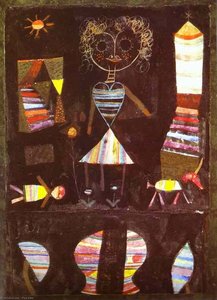
      Puppet theater (1923) aut. Paul Klee
      #37

      Puppet theater

      1923

      Puppet Theater: A Surrealist Dance of Forms by Paul Klee Paul Klee’s “Puppet Theater,” painted in 1923, isn't merely a depiction of theatrical imagery; it’s an embodiment of…

      Order this canvas →
      Temple Gardens (1920) aut. Paul Klee
      #38

      Temple Gardens

      1920 · Metropolitano meno muziejus

      Paul Klee's “Three Panels,” painted circa 1920, isn’t merely a collection of landscapes; it’s a carefully constructed meditation on perception, memory, and the fractured nature of experience. Emerging…

      Have it painted by hand →
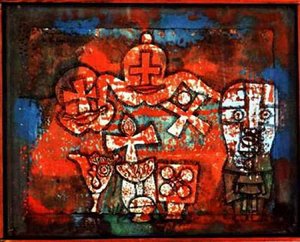
      Chinese porcelain (1940) aut. Paul Klee
      #39

      Chinese porcelain

      1940

      A Symphony of Geometric Abstraction In the twilight of his life, Paul Klee composed a visual masterpiece that transcends mere pigment on canvas. The Four Faces, painted in…

      Order this canvas →
      Egzotika (1939) aut. Paul Klee
      #40

      Egzotika

      1939 · Art Institute of Chicago

      Žiurėlis bėga per susiplėtusios formos kraštožemį, kuriame gili terakota ir degta siena susiduria su skairos mėlyvos bei laukine geltonos dėmėmis. Čia nėra horizonto, tik plokščias, geometrinis išdėstymas, primenantis…

      Have it painted by hand →
      Remembrance of a Garden (1914) aut. Paul Klee
      #41

      Remembrance of a Garden

      1914

      A Visionary Landscape of MemoryIn Paul Klee’s 1914 masterpiece, Remembrance of a Garden, the viewer is not merely presented with a landscape, but invited into a profound meditation…

      Bring this light home →
      Keistas žvalgimas (1930) aut. Paul Klee
      #42

      Keistas žvalgimas

      1930 · Art Institute of Chicago

      Tamsioje, tekstūruotoje erdvėje, užimtęs centrą, dominuoja ovali forma, kuri minimalistinėja geometrija užsimeria veido kontūrą. Kompoziciją grindžia somniška paletė, kurioje susipina pusinis mėlynas, anglies šeimpos ir gili pekių spalva.…

      Have it painted by hand →
      Boy in Fancy Dress (1931) aut. Paul Klee
      #43

      Boy in Fancy Dress

      1931 · Metropolitano meno muziejus

      A single figure emerges from a dense, rhythmic grid of color, appearing less like a solid person and more like a delicate arrangement of tiny, rectangular patches. This…

      Bring this light home →
      The Pathos of Fertility (1921) aut. Paul Klee
      #44

      The Pathos of Fertility

      1921 · Metropolitano meno muziejus

      The artwork consists of a centered, seated humanoid figure rendered through delicate black outlines on paper. The figure possesses a large, rounded belly that is decorated with organic…

      Bring this light home →
      Herojinis smuikavimas aut. Paul Klee
      #45

      Herojinis smuikavimas

      MOMA - Moderniosios menų muziejus

      Įžanga: Paulis Klė, Šveicarijoje gimęs vokiečių tapyskas (1879–1940), buvo garsėjantis savo unikaliu ekspresionizmo, kubizmo ir surrealizmo deriniu. Kaip meistriškas piešlys, giliai suvokiantis spalvų teoriją, Klė įtaką moderniam menui…

      Order this canvas →
      Arab Song (1932) aut. Paul Klee
      #46

      Arab Song

      1932 · The Phillips Collection

      In 1932, Paul Klee composed a visual arrangement that translates the atmosphere of North Africa into a simplified, rhythmic language. The work utilizes oil on burlap to create…

      Bring this light home →
      Flower Family V. (1922) aut. Paul Klee
      #48

      Flower Family V.

      1922 · Solomon R. Guggenheim muziejus

      Three stylized figures, possessing qualities of both human forms and botanical life, occupy a dark, textured space. A larger figure with an orange-toned body and a circular white…

      Order this canvas →
      Forgetful angel aut. Paul Klee
      #49

      Forgetful angel

      Paul Klee's “Forgetful Angel,” painted in 1939 amidst the gathering storm clouds of war, is not merely a depiction of an angel; it’s a profound meditation on memory,…

      Have it painted by hand →
      Singer of the Comic Opera (1927) aut. Paul Klee
      #50

      Singer of the Comic Opera

      1927 · Bavarijos valstybinės paveikslų kolekcijos

      Step closer to observe the way the light seems to emerge from within the figure itself. In Singer of the Comic Opera, we encounter a form that feels…

      Bring this light home →
      A Couple of Gods (1924) aut. Paul Klee
      #51

      A Couple of Gods

      1924 · Scharf-Gerstenberg Collection

      Step closer to observe these two figures. They emerge from a dark, textured void, appearing less like painted subjects and more like relics unearthed from a forgotten era.…

      Have it painted by hand →
      Walpurgis Night (1935) aut. Paul Klee
      #53

      Walpurgis Night

      1935

      The surface of Walpurgis Night consists of gouache applied to fabric stretched over plywood. A monochromatic blue palette dominates the visual field, ranging from deep navy and near-black…

      Bring this light home →
      Static-Dynamic Gradation aut. Paul Klee
      #54

      Static-Dynamic Gradation

      Metropolitano meno muziejus

      # Introduction to Expressionism and Paul Klee Expressionism is an art movement that emerged in the early 20th century, characterized by its emphasis on emotional experience and individual…

      Bring this light home →
      Colorful Architecture (1917) aut. Paul Klee
      #55

      Colorful Architecture

      1917 · Metropolitano meno muziejus

      A City Born of Dreams: Unveiling Paul Klee’s “Colorful Architecture” Paul Klee's 1917 watercolor, “Colorful Architecture,” is not a rendering of any identifiable place, but rather an evocation—a…

      Have it painted by hand →
      Possibilities at Sea (1932) aut. Paul Klee
      #56

      Possibilities at Sea

      1932 · Norton Simon muziejus

      A white-outlined diamond holds red grid lines against a dark grey background. On the right, this structure dominates the space. A single, bright white arrow points toward a…

      Have it painted by hand →
      Rose Wind aut. Paul Klee
      #57

      Rose Wind

      A Symphony in Color: Exploring Paul Klee’s Rose Wind The moment one encounters Rose Wind, there is an immediate sense of being swept into a rhythmic, breathing landscape…

      Bring this light home →
      Angel in the Making aut. Paul Klee
      #59

      Angel in the Making

      Paul Klee's ‘Angel in the Making’, painted around an unspecified date, is not merely a visual composition; it’s a whispered meditation on potentiality, a glimpse into the nascent…

      Order this canvas →
      Dying Down (1940) aut. Paul Klee
      #60

      Dying Down

      1940 · Scharf-Gerstenberg Collection

      The composition presents an arrangement of calligraphic, black lines that weave through patches of saturated color. These thick, fluid strokes intersect with deep crimson, burnt sienna, and ochre,…

      Bring this light home →
      Tighter rhythms and freer aut. Paul Klee
      #61

      Tighter rhythms and freer

      In the vibrant realm of Expressionist abstraction, Paul Klee’s Tighter rhythms and freer stands as a captivating exploration of color and structure. The painting presents an intricate composition…

      Bring this light home →
      The rumors (1939) aut. Paul Klee
      #62

      The rumors

      1939 · Barnes Foundation

      In the quiet, evocative depths of Paul Klee’s 1939 watercolor masterpiece, "The Rumors," we encounter a visual language that speaks far more than words ever could. Created during…

      Bring this light home →
      Rose garden (1920) aut. Paul Klee
      #63

      Rose garden

      1920

      A Garden of Geometric Dreams: Unveiling Paul Klee’s ‘Rose Garden’ Paul Klee's *Rose Garden*, painted in 1920, is far more than a depiction of flowers; it’s a pivotal…

      Bring this light home →
      Ad marginem (1930) aut. Paul Klee
      #64

      Ad marginem

      1930 · Kunstmuseum Basel

      Step closer to observe the quiet tension held within this 1930 composition. At first glance, the eye is drawn to a central, deep terracotta red orb, a circular…

      Bring this light home →
      Untitled (Reconstruction) (1926) aut. Paul Klee
      #65

      Untitled (Reconstruction)

      1926 · KODE Art museums and composer homes

      A Labyrinth of Form Step closer to observe the density of this 1926 composition. There is no single point for the eye to rest; instead, one finds oneself…

      Have it painted by hand →
      Tree Nursery (1929) aut. Paul Klee
      #67

      Tree Nursery

      1929 · The Phillips Collection

      A rhythmic, horizontal composition defines this 1929 work, utilizing layered bands of pale blue, soft pink, light yellow, sage green, and earthy ochre. The surface is marked by…

      Order this canvas →
      Fire in the Evening (1929) aut. Paul Klee
      #68

      Fire in the Evening

      1929 · MOMA - Moderniosios menų muziejus

      To look closely at this small work is to encounter a quiet, structured energy. Created in 1929, the piece presents itself through an arrangement of horizontal bands and…

      Bring this light home →
      The rumors (1939) aut. Paul Klee
      #69

      The rumors

      1939

      In the quiet, evocative depths of Paul Klee’s 1939 masterpiece, “The Rumors,” we encounter a visual language that speaks far more than words ever could. Created during one…

      Bring this light home →
      Smulki miestas (1936) aut. Paul Klee
      #71

      Smulki miestas

      1936 · Metropolitano meno muziejus

      Ši kompozicija pristato abstraktų, stipriai tekstūruotą paviršių, kuris primena fragmentišką, skeletinę miesto aplinką. Didelė, solidi juoda rodyklė leidžiasi iš viršutės centro, nukreipdama dėmės dėvį į tankų smilgybų linijų…

      Order this canvas →
      Populiari sienos apeima (1922) aut. Paul Klee
      #72

      Populiari sienos apeima

      1922 · Metropolitano meno muziejus

      Popieriaus centre dominuoja viena, išlyginta figūra, kurios buvimas pajutamas per subtilų formų ir linijų susidėliojimą. Ji žiūri į žiūtytoją didelėmis, migdolų formos akimis, kurios atrodo saugo ramią, nuolatinę…

      Have it painted by hand →
      Spalvos iš toliau (1932) aut. Paul Klee
      #76

      Spalvos iš toliau

      1932 · Izraelio muziejus

      Ši kompozicija pristato tankią, nefiguralią keturingų ir stačiakampių tinklą, kuri vienas ant to kitos uždraugia. Per paviršių vaizduoja smulkių, tamsių linijų tinklas, kuriamas nedidelių, lyg komórėles primenančių formų,…

      Bring this light home →
      View into the Fertile Country (1932) aut. Paul Klee
      #77

      View into the Fertile Country

      1932 · Städel Museum

      The Nile flows as a single, wavy line across the foreground. Behind this blue thread, geometric shapes rise like silent buildings. Rows of multicolored horizontal stripes stretch toward…

      Bring this light home →
      Polyphony (1932) aut. Paul Klee
      #78

      Polyphony

      1932 · Kunstmuseum Basel

      Small squares of deep blue, forest green, and ochre settle into a dense, rhythmic grid. Each rectangle rests against its neighbor like a note placed upon a staff.…

      Bring this light home →
      Bust of a Child aut. Paul Klee
      #80

      Bust of a Child

      Bust of a Child: An Expressionist Exploration by Paul Klee A Glimpse into Childhood Through Abstract Forms Paul Klee's "Bust of a Child" is a captivating artwork that…

      Order this canvas →
      The Lamb (1920) aut. Paul Klee
      #81

      The Lamb

      1920 · Städel Museum

      In the quiet, transformative landscape of early twentieth-century modernism, few works capture the intersection of spiritual devotion and geometric innovation as poignantly as Paul Klee’s “The Lamb,” completed…

      Bring this light home →
      Interior with the Clock (1913) aut. Paul Klee
      #82

      Interior with the Clock

      1913 · National Gallery of Art

      The paper holds a soft, ethereal world where shapes drift like clouds through an unseen room. Pale yellows and light blues mingle with lavender and dusty rose, creating…

      Have it painted by hand →
      Girl with Doll aut. Paul Klee
      #84

      Girl with Doll

      In the vast landscape of modern art, few works possess the intimate, rhythmic charm found in Paul Klee’s "Girl with Doll Carriage" (Mädchen mit Puppenwagen). Painted in 1923,…

      Bring this light home →
      Municipal Jewel (1917) aut. Paul Klee
      #85

      Municipal Jewel

      1917 · Metropolitano meno muziejus

      The painting Municipal Jewel presents an intricate cityscape composed of various shapes and colors. The palette features a vibrant mix of red, blue, yellow, green, and purple. Within…

      Have it painted by hand →
      Diana in the Autumn Wind (1934) aut. Paul Klee
      #87

      Diana in the Autumn Wind

      1934

      Paul Klee's “Diana in the Autumn Wind,” painted in 1934, stands as a cornerstone of surrealist art—a mesmerizing exploration of form and color that transcends mere representation. Created…

      Order this canvas →
      Fruits on Red (1930) aut. Paul Klee
      #88

      Fruits on Red

      1930 · Lenbachhaus

      The composition presents a delicate network of thin stems and rounded geometric forms set against a warm copper-red ground. Rather than a traditional arrangement of harvested produce, the…

      Bring this light home →
      Vartai sode (1926) aut. Paul Klee
      #89

      Vartai sode

      1926 · Kunstmuseum Bern

      Tamsioje, nuotaudų kupinoje atmosferoje prasideda ritmiškas tekstūrų šoklis. Akmuo iškart traukia į viršutinę kairę, kur koncentriškos oranžinės ir raudonos linijos pulsuoja pirštų formoje. Ši struktūra primena portalą, atsidarymą…

      Order this canvas →
      Captive (1940) aut. Paul Klee
      #91

      Captive

      1940

      A Portrait of Resilience: Paul Klee’s “Captive” Paul Klee's "Captive," painted in 1940 during the twilight years of his life and just months before his passing, is far…

      Bring this light home →
      Sunset (1930) aut. Paul Klee
      #92

      Sunset

      1930 · Art Institute of Chicago

      The oil on canvas, measuring 46.1 x 70.5 cm, presents an abstract arrangement of geometric and organic shapes. A neutral background is covered by a dense, layered pattern…

      Have it painted by hand →
      In Position (1939) aut. Paul Klee
      #93

      In Position

      1939

      Step closer to observe the delicate balance within this 1939 watercolor. There is a certain stillness here, an arrangement that feels both intentional and fragile. The composition rests…

      Order this canvas →
      Enclosure for Pachyderms (1940) aut. Paul Klee
      #94

      Enclosure for Pachyderms

      1940 · KODE Art museums and composer homes

      Created in 1940, this oil on canvas presents a structured network of thick, black, irregular lines that traverse the surface in a grid-like pattern. These dark strokes vary…

      Order this canvas →
      Crystal Gradation aut. Paul Klee
      #95

      Crystal Gradation

      Kunstmuseum Basel

      In the vast landscape of twentieth-century abstraction, few works possess the hypnotic, rhythmic quality found in Paul Klee’s "Crystal Gradation." Created during the artist's profound period in Murnau,…

      Order this canvas →
      El conquistador aut. Paul Klee
      #96

      El conquistador

      “The Great Bear,” painted in 1938 during Klee’s prolific period at Bauhaus Dessau, stands as a cornerstone of his artistic legacy. More than just a depiction of an…

      Order this canvas →
      Landscape with yellow church tower (1920) aut. Paul Klee
      #97

      Landscape with yellow church tower

      1920 · Bavarijos valstybinės paveikslų kolekcijos

      A complex, grid-like structure defines this 1920 landscape, utilizing a mosaic of geometric shapes to suggest a village setting. Horizontal lines traverse the canvas, establishing a rhythmic, layered…

      Have it painted by hand →
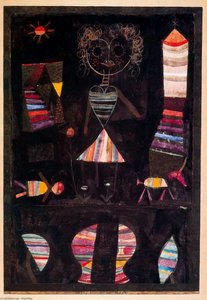
      Puppet Theatre aut. Paul Klee
      #98

      Puppet Theatre

      Paul Klee's "Puppet Theater" is far more than a mere depiction of figures; it serves as a profound invitation to delve into the realm of subconscious thought and…

      Have it painted by hand →

      Paul Klee's canvases, period by period

      What Paul Klee painted most

      The four subjects that return most often on these canvases, each with its best-loved example.

      Where Paul Klee's canvases hang

      8 muziejai, kuriuose saugoma daugiausia šioje pusėje esamų paveikslų.

      Muzejaus Miestas Paul Klee darbai Šiojo sąrašo paveikslai
      Metropolitano meno muziejus, NiujorkasMetropolitano meno muziejus Niujorkas 56 Komikų skelbimo lapei, May Picture, Untitled
      Art Institute of Chicago, ČikagosArt Institute of Chicago Čikagos 10 Mokinykla, Dancing Girl, Egzotika
      MOMA - Moderniosios menų muziejus, NiujorkasMOMA - Moderniosios menų muziejus Niujorkas 9 Twittering Machine, Mask of Fear, Herojinis smuikavimas
      Kunstmuseum Basel, BazelisKunstmuseum Basel Bazelis 8 Ad marginem, Polyphony, Crystal Gradation
      Lenbachhaus, MiunchenasLenbachhaus Miunchenas 6 Rožių sodas, Botaninis teatras, Fruits on Red
      Bavarijos valstybinės paveikslų kolekcijos, MiunchasBavarijos valstybinės paveikslų kolekcijos Miunchas 20 Singer of the Comic Opera, Landscape with yellow church tower
      The Phillips Collection, VašingtonasThe Phillips Collection Vašingtonas 8 Arab Song, Tree Nursery
      Scharf-Gerstenberg Collection, BerlinScharf-Gerstenberg Collection Berlin 6 A Couple of Gods, Dying Down

      Decade by decade: Paul Klee's most celebrated canvas

      1. 1910s
        In the Style of Kairouan (1914) aut. Paul Klee
        9 of 100

        In the Style of Kairouan

        Amžius 31 – 40

        In the annals of modern art, few moments are as transformative as Paul Klee’s 1914 masterpiece, "In the Style of Kairouan." This work serves as a profound declaration…

      2. 1920s
        Naujasis angelas (1920) aut. Paul Klee
        1 of 100

        Naujasis angelas

        Amžius 41 – 50 · Izraelio muziejus

        Created in 1920, New Angel by Paul Klee offers a glimpse into the artist's singular vision. This work is a monoprint, a choice that reflects Klee's interest in…

      3. 1930s
        Į Parnasą (1932) aut. Paul Klee
        Ranked 3 of 100

        Į Parnasą

        Amžius 51 – 60 · Berno meno muziejus

        Captivating Subject and Symbolism This striking artwork presents a vibrant and layered landscape that invites viewers into a world of imagination and contemplation. Central to the composition is…

      4. 1940s
        Flora ant uolų Saulė (1940) aut. Paul Klee
        Ranked 24 of 100

        Flora ant uolų Saulė

        Amžius 61 · Kunstsammlung Nordrhein-Westfalen

        In the twilight of his extraordinary career, Paul Klee gifted the art world with 'Flora on Rocks Sun', a 1940 masterpiece that serves as a profound meditation on…

      Your questions on Paul Klee's paintings, answered

      Which is the most celebrated painting by Paul Klee?Read the answer

      Naujasis angelas (1920), Izraelio muziejus, Jeruzalė. Twittering Machine and Į Parnasą (1932) follow.

      How old was Paul Klee at the time of Naujasis angelas?Read the answer

      Paul Klee, born in 1879, was 41 years old: Naujasis angelas dates from 1920.

      Which ten paintings is Paul Klee most famous for?Read the answer

      Naujasis angelas, Twittering Machine, Į Parnasą, Nilo legenda, Flora on sand, Žemės ėmės su geltonais paukščiais, Fish Image, With the eagle, In the Style of Kairouan ir Rožių sodas. Each canvas in the ranking above comes with its year and its museum.

      How many paintings by Paul Klee are known?Read the answer

      669 works by Paul Klee are in our catalogue, dated 1910 to 1940.

      Which museums hold Paul Klee's best-known canvases?Read the answer

      Mostly in Metropolitano meno muziejus (Niujorkas), Art Institute of Chicago (Čikagos) ir MOMA - Moderniosios menų muziejus (Niujorkas); the list above names each museum and its canvases.

      In which years did Paul Klee paint the most celebrated canvases?Read the answer

      In 1920s, which gave 36 of the 100 works on this page, Naujasis angelas among them.

      What are the first and the last of Paul Klee's famous canvases?Read the answer

      The earliest canvas here is Flower stand with watering can and bucket (1910); the latest is Flora ant uolų Saulė (1940).

      Which subjects return most often in Paul Klee's paintings?Read the answer

      Geometric shapes (43), Geometrinės formos (14) ir Color theory (11), across the 100 works on this page.

      What did Paul Klee usually paint with?Read the answer

      Watercolor, used in 21 of the 100 works on this page.

      To which art movement does Paul Klee belong?Read the answer

      Ekspresionizmas, as the canvases on this page show.

      What can I see by Paul Klee at the Metropolitano meno muziejus?Read the answer

      The Metropolitano meno muziejus, Niujorkas holds 17 of the works on this page, among them Komikų skelbimo lapei, May Picture ir Untitled.

      Can I order a hand-painted copy of a painting by Paul Klee?Read the answer

      Yes. Every painting on this page can be ordered from its own page as an oil reproduction painted by hand, or as a fine art print, in the size you choose.

      Paul Klee: the painter's story

      Spalvų ir Formos Panardinimas: Paulio Klė Gyvenimas

      Paulis Klė, vardas sinonimiškas žaismingam abstraktavimui ir gilioms emocinėms perspektyvoms, užima unikalumą XX amžiaus meno landšafte. Gimęs 1879 m. gruodžio 18 d. Miunchenbuksėje, Šveicarijoje, jo meninis kelias buvo nuolatinio tyrimo kupinas, nepaliekantis lengvai kategorizuojamas ir sukuriantis kelią, kuriame susipina ekspresionizmo, kubizmo ir surrealizmo įtakos į aiškiai asmeninę vizualinę kalbą. Klė vaikystės ugdymas skatino ankstyvą meno vertinimo jausmą; jo tėvas, vokietis muzikos mokytojas, o motina – šveicarų dainininkė, įdėjo jame jautrumą tiek girdimajai, tiek vizualiajai harmonijai. Šis fundamentinis ryšys tarp muzikos ir tapybos taps apibrėžiančiu jo kūrinių bruoku, formuojantis ne tik jo kompozicinį požiūrį, bet ir jo teorinį supratimą apie meną kaip abstraktaus išraiškos formą, panašią į muzikinę aranžuotę. Iš pradžių traukiamas piešti, Klė netrukus atsisakė realistinio atvaizdo siekimo, pripažindamas jo ribas perteikiant emocijų ir idėjų vidinį pasaulį, kurį jis norėjo išreikšti. Jis įstojo į Miuncheno Dailės akademiją tarp 1898 ir 1901 metų – laikotarpis, pažymėtas eksperimentais ir unikalios meninės savigynos kūrimu.

      Meninio Vizionavimo Formavimas

      Klė ankstyvieji darbai atskleidžia Art Nouveau ir Simbolizmo įtaką, tačiau net šių rėmelių viduje pasirodo užuominos jo ateities stiliui. Esminis momentas jo meninės raidos buvo 1914 m. kelionė į Tunisa. Šiaurės Afrikos intensyvi šviesa ir ryškios spalvos giliai paveikė jo spalvų vartojimą, įkvėpdamos jį pereiti nuo blausių tonų link drąsesnių, išraiškingesnių paletų. Šis patirtis pažymėjo lūžį, sustiprindamas jo atsidavimą abstrakcijai kaip būdu užfiksuoti suvokimo esmę, o ne tik paprastai atkartoti jo paviršių. Jis nematė tiesiog *matydamas* Tunisa; jis vertė savo emocinį atgarsį į vizualią formą. Per šį laikotarpį Klė bendravo su įvairiais meniniais judėjais, perimdamos jų principus, kartu nepajudindamas visiškai prisirišęs prie jokios vienos ideologijos. Jo susidomėjimas muzika išliko svarbiausias, ir jis dažnai kalbėjo apie tapybą kaip procesą, panašų į muzikos kūrinių komponavimą – elementų atsargų sutvarkymą, kad sukurtų harmoningą visumą. Šis sinestetinis požiūris yra akivaizdus jo linijų ritmingoje kokybėje, spalvų subtiliame balanse ir bendrame judėjimo jausme, kuris persmelkia daugelį jo darbų.

      Bauhauzas ir Tolesnė Plėtra: Klestinčio Periodo

      Nuo 1931 iki 1933 metų Klė priėmė mokytojo poziciją įtakingoje Bauhaus meno, dizaino ir architektūros mokykloje, kartu su Vasilijumi Kandinskiu. Šis laikotarpis pasirodė nepaprastai derantis jo meninės raidos požiūriu. Apstatytas inovatyvių mąstytojų ir kolegų menininkų, jis klestėjo aplinkoje, kuri skatino eksperimentus ir teorinius tyrimus. Jo darbai per šiuos metus gilinosi į spalvų teoriją ir formalius santykius, tyrinėjant abstrakčių formų sąveiką su emociniu išraiškimu. Tačiau ši kūrybinė oazė buvo sugriauta, kai Vokietijoje kilo naciūnizmas. 1933 metais Klė buvo atleistas iš Bauhaus dėl to, kad jo menas buvo pripažintas „degeneraciniu“ nacistinio režimo – šaltas liudijimas apie politinės ideologijos pavojų, slopindamas meninę laisvę. Priverstas grįžti į Šveicariją, jis tęsė piešti, tačiau jo sveikata blogėjo dėl vis didesnės politikos sumaidymo ir asmeninio vargo šešėlį. Nepaisant šių iššūkių, Klė liko atsidavęs savo meninei vizijai, sukurdamas darbus, kurie atspindi tiek epochos nerimas, tiek jo nesibaigiantis tikėjimas menu kaip priemone pranokti nelaimes.

      Temos, Stilius ir Pastovus Paveikslas

      Paulio Klė kūriniams būdinga žavinga žaidimo ir gilių apmąstymų kombinacija. Jis dažnai naudojo vaikiškas iliustracijas ir keistuolius, į juos įdėdamos simbolinio reikšmingumo sluoksnius. Jo meno temose pasikartojantys sodai, kraštovaizdyje, portretai ir abstraktaus susitarimo – kiekvienas tarnauja kaip priemonė tyrinėti žmogaus patirties sudėtingumą. Jo „Paulio Klė dienoraščiai“, paskelbti po jo mirties, suteikia neįkainojamų įžvalgų apie jo išsamius teorinius tyrimus spalvų ir dizaino klausimais, atskleidžia kruopštų ir intelektualų požiūrį į meninę kūrybą. Jis ne tik piešė; jis statė vizualinę kalbą, pagrįstą harmonijos, pusiausvyros ir emocinio atgarsio principais. Hamamet, Siblings, ir En la corriente seis umbrales yra tik keli pavyzdžiai, rodantys jo spalvų ir formos meistriškumą. Paulius Klė mirė 1940 m. birželio 29 d. Muralte, Šveicarijoje, palikdamas palikimą, kuris ir toliau įkvepia menininkus ir žavina auditoriją visame pasaulyje. Jis teisėtai laikomas vienu svarbiausių XX amžiaus menininkų, užpildęs tarpą tarp figūrinio ir abstraktaus išraiškos ir sustiprindamas savo vietą kaip ikoniniu naujove, kurio darbai lieka nuolat aktualūs.

      Muziejai & Tolimesnė Eksploracija

      • Zentrum Paul Klee (Bern): Namuose didžiausia Klė darbų kolekcija pasaulyje, siūlanti išsamų jo meninio kelio apžvalgą.
      • Berne Dailės muziejus: Yra reikšmingų Klė kūrinių kartu su Picasso ir Hodler meistriškais darbais.
      • Kunstmuseum Bern: Seniausias Šveicarijos meno muziejus, kuriame eksponuojama įvairi kolekcija, be kita ko, Klė ir kitų modernių meistrų darbai.
      Jo įtaka eina už tapybos ribų, paveikiant tokias sritis kaip dizainas, architektūra ir muzika. Paulio Klė darbų patrauklumas slypi jų gebėjime sužadinti stebėjimo jausmą ir kvietimu žiūrovams bendradarbiauti su menu emociniu ir intelektiniu lygmeniu – tai liudija jo genialumą ir nuolatinį indėlį į vizualinę kultūrą.

      Visi 669 Paul Klee darbai →