Atelieris — Nemokamas pristatymas visame pasaulyje — Pristatymo laikas – 2–6 savaitės
      Paul Signac, 1863 – 1935

      Paul Signac's 100 Most Famous Paintings

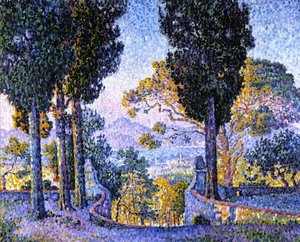
      Pušis ties Sent Tropezu (1909) is the painting Paul Signac is best remembered for; it belongs to the Pushkinio valstybinis dailės muziejus, Maskva. Pusryčiai (Mėsinė) (1887) and Boulevard de Clichy 1886 (1886) complete the trio of best-loved canvases. Our catalogue counts 399 works by Paul Signac. Here are the 100 most famous, with the year, the museum and the story of each canvas.

      Rangos vieta nulegiama pagal mūsų populiarumumo balas, kurį sudaro kiekvieno kūrinio paieškos, apsilankėjimai ir užsakėjimai. Atnaujinta spalis 2026. Each painting on this page can be ordered as an oil reproduction painted by hand on linen canvas, or as a fine art print, made to the size you choose.

      Paul Signac portretas
      Paul Signac · 1863 – 1935
      Gedė · mirė
      1863 – 1935, Paryžius
      Judėjimas
      Pointillism
      Darbai mūsų kataloge
      399
      Labiausiai žinomi
      Pušis ties Sent Tropezu (1909)
      Daugiausia darbų yra
      Musée d'Orsay

      The ten best-loved paintings by Paul Signac

      Pušis ties Sent Tropezu (1909) aut. Paul Signac
      1

      Pušis ties Sent Tropezu

      1909 · Aliejus ant drobės · Pushkinio valstybinis dailės muziejus, Maskva

      Šviesos ir spalvos simfonija: P. Signako „Pušis Sent Tropeze“ Paulio Signako drobė „Pušis Sent Tropeze“ – tai neatskiriama Prancūzijos Rivjeros dvasios dalis, įamžinta vibrantu koloritu ir dinamišku teptelių braižymu. Šis paveikslas kviečia pasinerti į Viduržemio jūros saulės šviesą, kur didingas pušis stovi tarsi amžių kertėjęs sargas prieš patį horizonto užburiančią paletę. Sukurtas 1909 metais, kūrinys yra ne tik menininko meistriškumo įrodymas, bet ir Neoimpresionizmo filosofijos atspindėjis – bandymo paversti spalvų…

      Pusryčiai (Mėsinė) (1887) aut. Paul Signac
      2

      Pusryčiai (Mėsinė)

      1887 · Aliejus ant drobės · Kröller-Müller muziejus, Otterlo

      1887 metais sukurtas Paulio Signaco meistriškas kūrinys, Pusryčiai (Valgykla), yra ne tik žavingas buitinio gyvenimo vaizdinys; tai lemiškas darbas neoimpresionizmo plėtrai ir įtraukiantis langas į vėliojo XIX amžiaus Prancūzijos socialinę dinamiką. Šis paveikslas kviečia mus pasdalinti tylią akimirką su buržuazine šeima, atvaizduota naudojant itin kruopştią techniką bei gilią šviesos ir spalvos supratimą.

      Boulevard de Clichy 1886 (1886) aut. Paul Signac
      3

      Boulevard de Clichy 1886

      1886 · Aliejus ant drobės · Minneapolis Institute of Art, Minneapolis

      Žiemos ramybė Paryzuje Paulio Signaco „Boulevard de Clichy 1886“ kviečia žiūrovą į ramią žiemos sceną vienoje žymiausių Paryžiaus bulvardų. Šis įtraukiantis kūrinys įamžina tyliąją šniegojojan dienos grožį, suteikdamas akimirkos ramybės skubėjant tame, pulsuojančiame miesto gyvenime. Kompozicija ir perspektyva Kūrinio kompozicija yra meistriškai subalansuota: centrinis dėmesys sutelktas į sniegu dengtą gatvę, kuri žiūrovą įtraukia tiesiai į paveikslą. Naudodamas linijinę perspektyvą, Signacas sukuria gylio pojūtį, todėl bulvardas atrodo tolantis į tolimybę. Gatvės…

      Two Cypresses, Mistral, Opus 241 (1893) aut. Paul Signac
      4

      Two Cypresses, Mistral, Opus 241

      1893 · Oil On Canvas · Kröller-Müller muziejus, Otterlo

      In the quiet halls of the Kröller-Müller Museum, there exists a window into a world where light does not merely fall upon objects but seems to vibrate from within them. Paul Signac’s Two Cypresses, Mistral, Opus 241, painted in 1893, is far more than a landscape; it is a rhythmic, breathing testament to the power of Neo-Impressionism. At first glance, the viewer is greeted by the commanding presence of two…

      Notre-Dame-de-la-Garde (La Bonne-Mere), Marseilles (1906) aut. Paul Signac
      5

      Notre-Dame-de-la-Garde (La Bonne-Mere), Marseilles

      1906 · Oil On Canvas · Metropolitano meno muziejus, Niujorkas

      Paul Signac's "Notre-Dame-de-la-Garde (La Bonne-Mère), Marseilles," painted between 1905 and 1906, is more than just a depiction of a harbor scene; it’s an embodiment of the Neo-Impressionist philosophy – a deliberate exploration of light, color, and the very mechanics of perception. Housed within the Metropolitan Museum of Art in New York, this canvas pulsates with life, capturing not merely what the eye sees but how it *experiences* the vibrant energy…

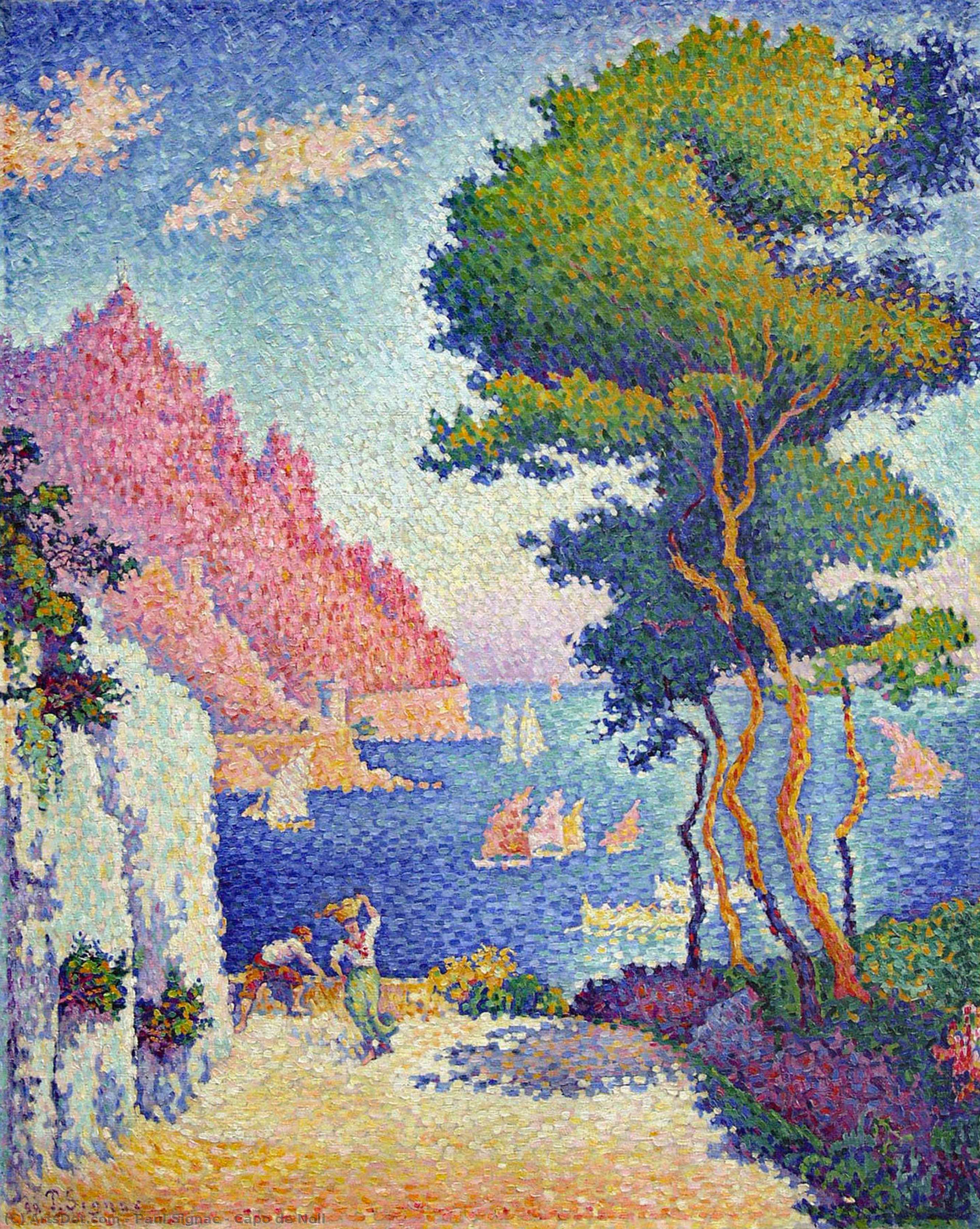
      Capo de Noli (1898) aut. Paul Signac
      6

      Capo de Noli

      1898 · Oil On Canvas · Wallraf-Richartzas Muziejus, Köln

      In the pantheon of Neo-Impressionist masterpieces, few works capture the ethereal dance between science and soul quite like Paul Signac’s 1898 triumph, Capo di Noli. This breathtaking canvas is far more than a mere coastal landscape; it is a profound meditation on the Mediterranean spirit, rendered through a lens of meticulous optical precision. As the viewer’s gaze meets the sun-drenched shores of the Italian Riviera, they are immediately transported to…

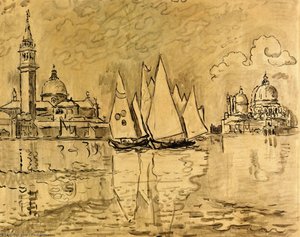
      Venice, The Pink Cloud (1909) aut. Paul Signac
      7

      Venice, The Pink Cloud

      1909 · Oil On Canvas · Albertina, Viena

      Venice, The Pink Cloud is an oil on canvas painting created in 1909. The scene depicts a Venetian waterway featuring several boats floating on the water. The composition includes two large sailboats, one positioned in the foreground and another further back, both with their sails raised. Additionally, smaller boats are scattered throughout the image, including one near the center and others toward the right side. A person is visible in…

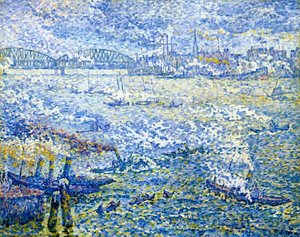
      Steamboats, Rotterdam (1906) aut. Paul Signac
      8

      Steamboats, Rotterdam

      1906 · Oil On Canvas · Shimane Art Museum, Matsue

      To stand before Paul Signac's depiction of Steamboats in Rotterdam is to be enveloped by a moment suspended between industry and profound tranquility. This painting, executed in 1906, does more than merely record a harbor scene; it captures the very essence of light interacting with water and man-made structures. The overall impression is one of vibrant, almost shimmering energy, yet this dynamism is anchored by an underlying sense of deep…

      The Tuna Boats, Groix (1929) aut. Paul Signac
      9

      The Tuna Boats, Groix

      1929 · Watercolor

      The Tuna Boats, Groix is a watercolor by the French artist Paul Signac. Created about 1929, the work captures a quiet moment upon the water. Several boats float within the frame, their shapes varying in scale and silhouette against the surface. The artist uses the fluid nature of the medium to define these vessels as they rest upon the sea.

      The Port at Sunset, Saint-Tropez, Opus 236 (1892) aut. Paul Signac
      10

      The Port at Sunset, Saint-Tropez, Opus 236

      1892 · Oil On Canvas · Museum Barberini, Potsdam

      Paul Signac’s “The Port at Sunset, Saint-Tropez, Opus 236” is more than a picturesque depiction of a Mediterranean harbor; it's a meticulously crafted meditation on light, color, and the restorative power of nature. Painted in 1892, this oil on canvas embodies the fervent spirit of Post-Impressionism, a movement born from a desire to transcend mere representation and delve into the very essence of visual experience. Created during a pivotal moment…

      Paul Signac: canvases 11 to 100 of the ranking

      Le Pont des Arts aut. Paul Signac
      #11

      Le Pont des Arts

      Museum Folkwang

      In the heart of Paris, where the Seine flows with the timeless grace of history, Paul Signac captured a moment of pure, shimmering transcendence in his 1912 masterpiece,…

      Order this canvas →
      La Voile verte (1904) aut. Paul Signac
      #12

      La Voile verte

      1904

      Paul Signac's 1904 painting, *La Voile verte*, is more than just a depiction of a serene coastal scene; it’s a meticulously constructed testament to the revolutionary principles of…

      Have it painted by hand →
      Le Corne d'Or, Le Pont (1907) aut. Paul Signac
      #13

      Le Corne d'Or, Le Pont

      1907

      To stand before Paul Signac’s "Le Corne d'Or, Le Pont" is to step directly into the luminous heart of early twentieth-century French coastal life. This painting is not…

      Order this canvas →
      Sunset, Herblay, Opus 206 (1889) aut. Paul Signac
      #17

      Sunset, Herblay, Opus 206

      1889 · Kelvingrove meno galerija ir muziejus

      In the quiet transition between day and night, where the sun dips below the horizon to leave behind a trail of amber and indigo, lies the soul of…

      Bring this light home →
      Sisteron (1902) aut. Paul Signac
      #20

      Sisteron

      1902

      Paul Signac’s 1902 painting, *Sisteron*, is more than just a depiction of a Provençal landscape; it’s a vibrant manifesto of Post-Impressionism, a testament to the artist’s unwavering pursuit…

      Have it painted by hand →
      The Pink Cloud, Antibes (1916) aut. Paul Signac
      #23

      The Pink Cloud, Antibes

      1916 · Portland Art Museum

      The Pink Cloud, Antibes emerges from the canvas as a luminous vision of the French coast. Painted in 1916, this work captures a moment where the sky over…

      Order this canvas →
      Antibes, the towers (1911) aut. Paul Signac
      #30

      Antibes, the towers

      1911 · Albertina

      Paul Signac’s “Antibes, the Towers,” painted in 1911, is more than just a picturesque depiction of a Provençal coastal town; it's a meticulously crafted testament to the revolutionary…

      Order this canvas →
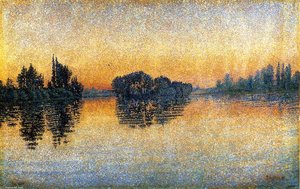
      Fog, Herblay, Opus 208 (1889) aut. Paul Signac
      #34

      Fog, Herblay, Opus 208

      1889 · Musée d'Orsay

      Paul Signac’s “Fog, Herblay,” painted in 1889, isn't merely a depiction of a riverside scene; it’s a meticulously constructed exploration of light and color, embodying the core tenets…

      Have it painted by hand →
      Concarneau (study) (1891) aut. Paul Signac
      #35

      Concarneau (study)

      1891

      To gaze upon this study of Concarneau is to be transported to a moment suspended between dawn and afternoon—a breath of salty air captured on canvas. The painting…

      Order this canvas →
      Castellane (1902) aut. Paul Signac
      #36

      Castellane

      1902

      In the realm of Post-Impressionism, few artists have captured the essence of natural landscapes as eloquently as Paul Signac. His painting, Castellane, created in 1902, is a testament…

      Bring this light home →
      Port of La Rochelle (1921) aut. Paul Signac
      #37

      Port of La Rochelle

      1921 · Musée d'Orsay

      Paul Signac's "Port of La Rochelle," painted in 1921, is more than just a depiction of a French harbor; it’s a meticulously constructed meditation on light, color, and…

      Bring this light home →
      The Velodrome (1899) aut. Paul Signac
      #38

      The Velodrome

      1899

      Paul Signac’s “The Velodrome,” painted in 1899, is more than just a depiction of an outdoor race; it's a vibrant embodiment of the burgeoning modernist movement. This oil…

      Bring this light home →
      Port of Saint-Cast (1890) aut. Paul Signac
      #39

      Port of Saint-Cast

      1890 · Museum of Fine Arts

      A Pioneering Vision of Impressionism Paul Signac's “Port of Saint-Cast,” painted in 1890, stands as a cornerstone of Neo-Impressionism—a movement born from the restless spirit of artistic innovation…

      Order this canvas →
      Women by the Well III (1892) aut. Paul Signac
      #40

      Women by the Well III

      1892 · Musée d'Orsay

      In this 1892 work, the composition centers on two women engaged in the daily task of drawing water. They are positioned near a well, their forms defined by…

      Bring this light home →
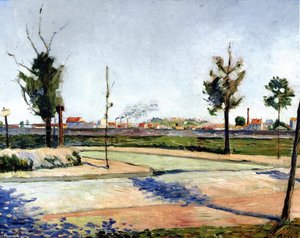
      The Road to Gennevilliers (1883) aut. Paul Signac
      #44

      The Road to Gennevilliers

      1883 · Musée d'Orsay

      The Road to Gennevilliers is an oil on canvas work by Paul Signac, executed in 1883. This landscape captures a rural setting, focusing on a winding road that…

      Order this canvas →
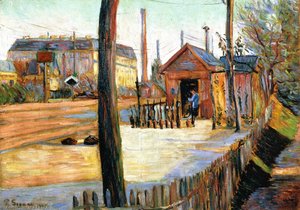
      The Junction at Bois-Columbes (1886) aut. Paul Signac
      #46

      The Junction at Bois-Columbes

      1886 · Van Gogos muziejus

      Paul Signac’s The Junction at Bois-Columbes is more than just a depiction of a bustling train station; it is a vibrant meditation on modern life, captured through the…

      Order this canvas →
      Les Andelys (1923) aut. Paul Signac
      #49

      Les Andelys

      1923

      Subject and Setting The canvas opens onto the gentle slope of Les Andelys, a town cradled by the Seine’s shimmering waters. Paul Signac invites us to wander along…

      Have it painted by hand →
      Marseille (1906) aut. Paul Signac
      #50

      Marseille

      1906

      To gaze upon Paul Signac's Marseille, painted in 1906, is to be enveloped by the very breath of a Mediterranean evening. This oil on panel reproduction captures more…

      Bring this light home →
      Women by the Well I (1892) aut. Paul Signac
      #51

      Women by the Well I

      1892 · Musée d'Orsay

      In this 1892 work, we encounter Women by the Well I, a significant piece by the French artist Paul Signac. This genre painting captures a quiet, unhurried moment…

      Order this canvas →
      Saint-Anne (Saint-Tropez) (1905) aut. Paul Signac
      #61

      Saint-Anne (Saint-Tropez)

      1905

      Paul Signac’s depiction of Saint-Anne (Saint-Tropez) transports the viewer to a moment suspended between day and night, a quintessential Mediterranean dream rendered with luminous brushstrokes. This painting is…

      Have it painted by hand →
      Fecamp, Sunshine (1886) aut. Paul Signac
      #63

      Fecamp, Sunshine

      1886

      “Fecamp, Sunshine,” painted in 1886 by Paul Signac, is more than just a depiction of a coastal scene; it's a meticulously constructed testament to the revolutionary principles of…

      Have it painted by hand →

      Paul Signac's canvases, period by period

      What Paul Signac painted most

      The four subjects that return most often on these canvases, each with its best-loved example.

      Where Paul Signac's canvases hang

      8 muziejai, kuriuose saugoma daugiausia šioje pusėje esamų paveikslų.

      Muzejaus Miestas Paul Signac darbai Šiojo sąrašo paveikslai
      Musée d'Orsay, ParisMusée d'Orsay Paris 19 Evening, Avignon (Château des Papes), Fog, Herblay, Opus 208, Port of La Rochelle
      Kröller-Müller muziejus, OtterloKröller-Müller muziejus Otterlo 10 Pusryčiai (Mėsinė), Two Cypresses, Mistral, Opus 241, Portrieux, The jetty, grey weather
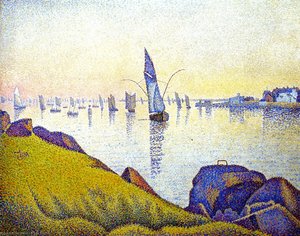
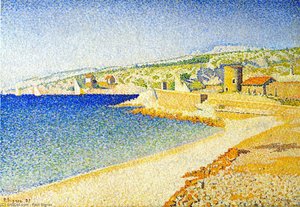
      Metropolitano meno muziejus, NiujorkasMetropolitano meno muziejus Niujorkas 7 Notre-Dame-de-la-Garde (La Bonne-Mere), Marseilles, Evening Calm, Concarneau, Opus 220 (Allegro Maestoso), The Jetty, Cassis, Opus 198
      Museum of Fine Arts, BostonasMuseum of Fine Arts Bostonas 4 Port of Saint-Cast, Port of Saint-Cast, View of the Seine at Herblay
      Wallraf-Richartzas Muziejus, KölnWallraf-Richartzas Muziejus Köln 6 Capo de Noli, The Seine near Courbevoie - River Landscape
      Albertina, VienaAlbertina Viena 4 Venice, The Pink Cloud, Antibes, the towers
      Museum Barberini, PotsdamMuseum Barberini Potsdam 4 The Port at Sunset, Saint-Tropez, Opus 236, Port en Bessin, the Beach
      Minneapolis Institute of Art, MinneapolisMinneapolis Institute of Art Minneapolis 2 Boulevard de Clichy 1886, Blessing of the Tuna Fleet at Groix

      Paul Signac's most famous canvas, decade after decade

      1. 1880s
        Pusryčiai (Mėsinė) (1887) aut. Paul Signac
        2 of 100

        Pusryčiai (Mėsinė)

        Amžius 17 – 26 · Kröller-Müller muziejus

        1887 metais sukurtas Paulio Signaco meistriškas kūrinys, Pusryčiai (Valgykla), yra ne tik žavingas buitinio gyvenimo vaizdinys; tai lemiškas darbas neoimpresionizmo plėtrai ir įtraukiantis langas į vėliojo XIX amžiaus…

      2. 1890s
        Two Cypresses, Mistral, Opus 241 (1893) aut. Paul Signac
        4 of 100

        Two Cypresses, Mistral, Opus 241

        Amžius 27 – 36 · Kröller-Müller muziejus

        In the quiet halls of the Kröller-Müller Museum, there exists a window into a world where light does not merely fall upon objects but seems to vibrate from…

      3. 1900s
        Pušis ties Sent Tropezu (1909) aut. Paul Signac
        1 of 100

        Pušis ties Sent Tropezu

        Amžius 37 – 46 · Pushkinio valstybinis dailės muziejus

        Šviesos ir spalvos simfonija: P. Signako „Pušis Sent Tropeze“ Paulio Signako drobė „Pušis Sent Tropeze“ – tai neatskiriama Prancūzijos Rivjeros dvasios dalis, įamžinta vibrantu koloritu ir dinamišku teptelių…

      4. 1910s
        The Pink Cloud, Antibes (1916) aut. Paul Signac
        23 of 100

        The Pink Cloud, Antibes

        Amžius 47 – 56 · Portland Art Museum

        The Pink Cloud, Antibes emerges from the canvas as a luminous vision of the French coast. Painted in 1916, this work captures a moment where the sky over…

      5. 1920s
        The Tuna Boats, Groix (1929) aut. Paul Signac
        Ranked 9 of 100

        The Tuna Boats, Groix

        Amžius 57 – 66

        The Tuna Boats, Groix is a watercolor by the French artist Paul Signac. Created about 1929, the work captures a quiet moment upon the water. Several boats float…

      Paul Signac's canvases, question by question

      Which canvas is Paul Signac most remembered for?Read the answer

      Pušis ties Sent Tropezu (1909), Pushkinio valstybinis dailės muziejus, Maskva. Pusryčiai (Mėsinė) (1887) and Boulevard de Clichy 1886 (1886) follow.

      Pušis ties Sent Tropezu: how old was Paul Signac when it was painted?Read the answer

      Paul Signac, born in 1863, was 46 years old: Pušis ties Sent Tropezu dates from 1909.

      What are Paul Signac's ten most famous canvases?Read the answer

      Pušis ties Sent Tropezu, Pusryčiai (Mėsinė), Boulevard de Clichy 1886, Two Cypresses, Mistral, Opus 241, Notre-Dame-de-la-Garde (La Bonne-Mere), Marseilles, Capo de Noli, Venice, The Pink Cloud, Steamboats, Rotterdam, The Tuna Boats, Groix ir The Port at Sunset, Saint-Tropez, Opus 236. Each canvas in the ranking above comes with its year and its museum.

      How many paintings did Paul Signac create?Read the answer

      399 works by Paul Signac are in our catalogue, dated 1882 to 1929.

      Where do Paul Signac's most famous canvases hang today?Read the answer

      Mostly in Musée d'Orsay (Paris), Kröller-Müller muziejus (Otterlo) ir Metropolitano meno muziejus (Niujorkas); the list above names each museum and its canvases.

      When did Paul Signac paint the most famous canvases?Read the answer

      In 1880s, which gave 45 of the 100 works on this page, Pusryčiai (Mėsinė) among them.

      Which famous Paul Signac canvas came first, and which came last?Read the answer

      The earliest canvas here is The Haystack (1882); the latest is The Tuna Boats, Groix (1929).

      Which subjects did Paul Signac paint most?Read the answer

      Boats (17), Color theory (13) ir Landscape (11), across the 100 works on this page.

      Which medium appears most in Paul Signac's paintings?Read the answer

      Oil On Canvas, used in 27 of the 100 works on this page.

      Which movement is Paul Signac associated with?Read the answer

      Pointillism ir Post-impressionism, as the canvases on this page show.

      Which paintings by Paul Signac are held by the Musée d'Orsay?Read the answer

      The Musée d'Orsay, Paris holds 9 of the works on this page, among them Evening, Avignon (Château des Papes), Fog, Herblay, Opus 208 ir Port of La Rochelle.

      Where can I buy a reproduction of a Paul Signac painting?Read the answer

      Yes. Every painting on this page can be ordered from its own page as an oil reproduction painted by hand, or as a fine art print, in the size you choose.

      Meet the painter: Paul Signac

      The Life and Identity of Paul Signac

      Born in Paris on 11 November 1863, Paul Signac entered a world that was beginning to shift under the weight of new visual ideas. He was the son of Jules Jean-Baptiste Signac and Héloïse Anaïs-Eugénie Deudon, a family that provided the foundation for a life dedicated to the pursuit of light. While his parents once envisioned a different path for him, the pull of the canvas proved stronger than any other calling. He would eventually become a central figure in the Neo-Impressionist movement, a man whose very identity was tied to the way color and light interacted upon a surface.

      His existence was marked by a deep connection to the sea and the shifting colors of the coast. He was a sailor at heart, a man who found his true rhythm amidst the waves and the sun-drenched harbors of the Mediterranean. This love for the water was not merely a hobby but a way of seeing the world, one that he translated into his paintings through a disciplined, almost scientific application of pigment. He sought to find order within the chaos of light, using his brushes to reconstruct the world through a meticulous, rhythmic method.

      By the time he passed away in 1935 at the age of 72, he had left behind a body of work that challenged the traditional boundaries of how we perceive color. His life was a long, steady pursuit of a specific kind of harmony, one that sought to marry the precision of science with the deep feelings of the artist. He lived through a period of immense change, remaining a steadfast advocate for his chosen methods until his final days in Paris.

      Early Life, Family and Training

      Born in Paris, the young Signac grew up in a household shaped by the commerce of the city. His father managed a shop on the Rue Frochot, where he sold luxury horse saddles and harnesses to a discerning clientele. This environment of craftsmanship and material detail provided a backdrop to a childhood that would soon shift toward the artistic heart of the capital. As his family moved into the Montmartre area, the boy found himself immersed in an urban center teeming with creative energy and the evolving spirit of the age.

      His early education was marked by a structured interest in form and construction. He spent his time studying architecture at the Collège Rollin in Montmartre until 1880. This training in the logic of space and structure would linger in his mind long after he turned his attention toward the canvas. By 1882, his path led him to the École des Arts-Décoratifs in Paris, where he sought to refine his technical abilities. It was during these formative years that the pull of the Seine and the light of the outdoors began to compete with the rigid lines of his architectural studies.

      The Development of Neo-Impressionism

      The seeds of Signac's transformation were sown during a visit to an exhibition in 1880, where the works of Claude Monet left a lasting impression upon him. This encounter stirred a curiosity that would eventually lead him away from the fleeting impressions of his youth toward a more structured way of seeing. By 1884, his path crossed with Georges Seurat, a meeting that would alter the course of his life and the history of painting. Together, they sought to move beyond the spontaneous brushwork of their predecessors, looking instead toward a method that combined art with the logic of light.

      This partnership focused on the development of Pointillism, a technique where tiny, distinct dots of pure color were applied to the canvas. They believed that by placing these dots side by side, the eye of the viewer would perform the work of mixing them, creating a luminosity that traditional blending could not achieve. While Seurat provided much of the initial theoretical weight, Signac became the movement's most vital voice. Following the death of his collaborator in 1891, Signac emerged as the principal spokesman for Divisionism, ensuring that their scientific approach to color and light would endure and influence the generations that followed.

      Technique and the Science of Color

      Signac sought to bring a sense of order to the canvas, treating the act of painting as a rigorous investigation into how the human eye perceives light. He moved away from the traditional method of mixing pigments on a palette, which he believed could dull the true intensity of color. Instead, he adopted a technique known as Pointillism, or Divisionism, where he applied tiny, distinct dots of pure color directly onto the surface. By placing complementary colors side by side, he relied on the viewer's own eye to perform the optical blending, creating a shimmering effect that felt more alive than a pre-mixed hue. This was a disciplined, almost mathematical approach to the canvas.

      His commitment to these principles was not merely a matter of habit but a deeply held intellectual conviction. He spent years studying the scientific laws of light and color, seeking to ground his art in the truths of physics. In 1899, he articulated these complex theories in his writing, From Eugène Delacroix to Neo-Impressionism. Through his work, he demonstrated that the artist could achieve a new kind of luminosity by respecting the purity of each pigment. As his career progressed, his application of these dots became more fluid and expressive, yet he never abandoned the fundamental science that governed his vision.

      Artistic Activity in Paris and Asnières

      The streets of Paris in the mid-1880s offered a restless energy that pulled Signac toward new ways of seeing. In 1886, he participated in the 8th Impressionist exhibition, contributing eighteen works that largely focused on city views and seascapes. His style at this time was caught in a transition, blending the loose, rapid brushstrokes of the Impressionists with the emerging, more disciplined application of color that would soon define his reputation. It was during this period of intense experimentation that he encountered Vincent van Gogh. The two men found a shared language in the light of the French landscape, and by 1887, they began to frequent Asnières-sur-Seine together. In the quietude of the riverbanks, they sought to capture the shifting atmosphere of the outskirts of the capital.

      As his ideas matured, Signac moved closer to the radical theories of his contemporaries. He found himself standing alongside figures such as Degas, Pissarro, Gauguin, and Seurat during the IX Impressionist Exhibition. These gatherings were more than mere social meetings; they were the crucibles where the future of modern painting was forged. While his early years were marked by a fascination with the river landscapes of the Seine, his time in Asnières allowed him to refine the rhythmic, mosaic-like application of paint that would eventually move away from the fleeting impressions of the past toward a more structured, scientific harmony.

      Coastal Life and the Mediterranean

      The pull of the sea eventually drew the artist away from the urban landscapes of the north. In 1892, he sailed the Garonne River southeast through France, seeking the light of the Mediterranean Sea. He dropped anchor in Saint-Tropez aboard his yacht, the Olympia, and found there a landscape that would become a major theme across his paintings. The shimmering waters and sun-drenched harbors offered a new rhythm for his brush, far removed from the riverbanks of the Seine.

      He found such deep inspiration in this southern light that he established a home in Saint-Tropez. This coastal retreat became a sanctuary where he could observe the interplay of color and tide. His technique began to change as he moved through these maritime settings; the strict, meticulous dots of his earlier years gradually gave way to a more fluid and expressive application of paint. The movement of the waves and the brightness of the Mediterranean air encouraged a broader palette and a more spontaneous touch.

      Key Works of the Artist

      In the early years of his experimentation, Signac sought to capture the pulse of the city through a rigorous, scientific lens. His 1886 work, Boulevard de Clichy, captures a winter scene in Paris, where the snowy boulevard is rendered through the meticulous application of small dots of pure color. This approach allowed him to translate the urban landscape into a rhythmic arrangement of light and shadow. By 1887, his focus shifted toward the quietude of domestic life. In Breakfast (The Dining Room), he applied thousands of tiny, distinct points of color to a scene of Belle Époque elegance, where sunlight streams through a window to illuminate a breakfast table with a vibrating energy.

      As his life moved toward the sea, his brushwork began to change, finding a new freedom in the light of the south. The 1895 painting The Red Buoy, Saint-Tropez demonstrates this evolution, using his mastery of Pointillism to catch the dynamic energy of the Mediterranean coast. The colors in these maritime scenes became more fluid and expressive, moving away from the strict, tiny dots of his earlier years toward a broader, more mosaic-like touch. Even when turning his attention to the people around him, his technique remained precise. His 1890 Portrait of Felix Feneon used this meticulous construction to explore light and color, presenting the subject with a clarity born from his revolutionary method.

      Leadership and the Avant-Garde

      Beyond the quietude of his coastal studies, Signac moved through the social circles of Paris with a firm sense of purpose. He was a well known Anarchist, a conviction that mirrored his desire to break away from the rigid, established structures of the art world. This spirit of rebellion found a practical outlet through his leadership within the Société des Artistes Indépendants. He held the presidency of this influential group from 1908 until his death in 1935, ensuring that the spirit of independence remained a guiding force for those who sought to challenge the status quo.

      His influence extended far beyond his own canvases, as he acted as a patron for those who dared to experiment. He possessed a keen eye for the new, recognizing the potential in the radical shifts of the coming century. By providing a platform for emerging talents, he helped foster the rise of movements that would change the course of modern art. He was among the first to offer his support to the pioneers of Fauvism and Cubism, welcoming their departures from tradition. Through his guidance, artists like Henri Matisse and André Derain found the space necessary to develop their own unique visions.

      Legacy and Influence on Modern Art

      The ripples of Signac’s experiments with light and color reached far beyond the quiet harbors of the Mediterranean. He acted as a bridge between the structured theories of the late nineteenth century and the explosive freedom of the next. By championing the idea that color could be applied with a rhythmic, almost musical intensity, he provided a foundation for those who sought to break away from traditional representation. His presence in the art world was felt not only through his brush but through his intellect, as he became a leading figure who helped define the direction of modern expression.

      This influence was particularly evident in the emergence of Fauvism. Signac’s approach to the canvas inspired artists like Henri Matisse and André Derain, who would later push the boundaries of color even further. He showed that the way an artist handles pigment can change the very way a viewer perceives reality. His commitment to the evolution of new styles ensured that his ideas remained a vital part of the artistic conversation, influencing a whole generation of painters who looked to his work to understand the potential of pure hue and light.

      Where to See the Works Today

      To witness the light that Signac so carefully studied, one must travel to the great halls of Paris. The Musée d'Orsay holds nine of his works, offering a significant gathering of his vision. It is there that the meticulous application of color becomes most apparent to the observer. In the same city, other treasures can be found, though the largest concentration remains in the French capital.

      Across the Atlantic, the Metropolitan Museum of Art in New York preserves five of his paintings, allowing those in the Americas to encounter his specific method of optical mixing. The reach of his influence extends even further, finding its way to the Kröller-Müller Museum in Otterlo, which maintains four of his pieces. These works allow us to see how his style evolved from the strict dots of his early years toward a more fluid touch.

      The presence of his art is truly global, reaching as far as the National Gallery of Victoria in Melbourne, where two of his works reside. These scattered collections ensure that his experiments with light and color remain accessible to those seeking to understand the science of his brushwork. Some of the specific pieces held in these various institutions include:

      Visi 399 Paul Signac darbai →