Atelieris — Nemokamas pristatymas visame pasaulyje — Pristatymo laikas – 2–6 savaitės
      Roy Lichtenstein, 1923 – 1997

      100 garsiausių Roy Lichtenstein paveikslų

      Būm! (1963) – tai tapinys, dėl kurio labiausiai žinomas Roy Lichtenstein. Mérkianti mergina (oversize) - (1600) ir Look Mickey (1961) užbaia labiausiai mylimų plėtojamų paveikslų trio. Mūsų kataloge yra 382 darbų autoriaus Roy Lichtenstein. Štai 100 garsiausiųjų: su metais, muziejumi ir kiekvieno płatinio pasakojimu.

      Rangos vieta nulegiama pagal mūsų populiarumumo balas, kurį sudaro kiekvieno kūrinio paieškos, apsilankėjimai ir užsakėjimai. Atnaujinta spalis 2026.

      Roy Lichtenstein portretas
      Roy Lichtenstein · 1923 – 1997
      Gedė · mirė
      1923 – 1997, Manhatanas
      Judėjimas
      Pop art
      Darbai mūsų kataloge
      382
      Labiausiai žinomi
      Būm! (1963)
      Daugiausia darbų yra
      Art Institute of Chicago

      Dešimties mėgstamiausių Roy Lichtenstein paveikslų

      Būm! (1963) aut. Roy Lichtenstein
      1

      Būm!

      1963 · Akrilas ant drobės

      Roy Lichtensteino „Whaam!“ – Pop Art Simbolis ir Karo Realumas „Whaam!“, Roy Lichtensteino 1963 m. sukurtas kūrinys, yra neatsiejamas nuo pop art judėjimo ir tapo vienu iš labiausiai atpažįstamų XX amžiaus meno simbolių. Šis didelio formato diptichas – tarsi sprogstanti karo, žiniasklaidos ir komiksų estetikos sintezė. Tai ne tik oro mūšio vaizdas; tai gili komentarų eilė apie susvetimėjimą, stilizuotą smurtą ir amerikiečių kultūrą vidurio XX amžiuje. Kūrinyje matome raudonai apipavidalintą…

      Mérkianti mergina (oversize) - (1600) aut. Roy Lichtenstein
      2

      Mérkianti mergina (oversize) -

      1600 · Skaitmeninė iliustracija

      Tema ir kompozicija Šis intriguojantis kūrinys įamžina emocinėmis įkrautą akimirkąaluiždingai vaizduodamas vandenyje nuskendusią moterį. Jos mąstanti išraiška,于akcentuojama veido skriejančiais šviesiais ašaromis, kviečia žiūrovus įslėpti į jautrumo, atsparumo ir vidinės turbulencijos naratyvą. Kompozicija centruojasi aplink jos veidą ir ranką, akimirksniu nukreipdama dėmesį į emocinę būseną, o aplink sukauptas stilizuotas vanduo sustiprina chaosą ir panirti pojūtį. Provokuojantis tekstas kalbos burbule – „MAN NESI BREIDĄ! AŠ LABAI LABAI NĖSČIAU – NEI SKAMBINTU BRADUI…

      Look Mickey (1961) aut. Roy Lichtenstein
      3

      Look Mickey

      1961 · Acrylic On Canvas

      Roy Lichtenstein's Look Mickey is a seminal work that bridges the artist's transition from abstract expressionism to pop art. Created in 1961, this oil on canvas painting is widely regarded for its ironic humor and aesthetic value, making it a cornerstone of the Pop Art movement. Artistic Technique Lichtenstein employed a limited palette consisting of primary colors and white, along with hand-painted dots to denote tonality in the comic strip…

      Drowning Girl (1963) aut. Roy Lichtenstein
      4

      Drowning Girl

      1963 · Aliejus ant drobės

      Melodramos meistras Roy Lichtenšteino ikoninė 1963 metų tapybos „Drebuanti mergina“ yra esminis pop arto kūrinys, įtrapiantis emocinio nerimo ir dramatiško pasakojimo esmę. Šis ryškus ir dinamiškas darbas akimirksniu pritraukia dėmesį savo drąsiais linijais, vaizdingomis spalvomis bei išraiškinga tema. Kūrybinėje erdvėje dominuoja centrinė figūra – moteris su stulbinančiais mėlynais plaukais, atrodanti esanti nevilties ar gilių mąstymų būsenoje. Jos veidas ir viršutinė kūno dalis užima kompozicijos pagrindą, sukurdami intensyvų židinį, kuris stipriai…

      Girl with ball (1961) aut. Roy Lichtenstein
      5

      Girl with ball

      1961 · Akrilas ant drobės

      Roy Lichtenšteino „Mergina su kamuoliu“ yra ikoninis 1961 metų kūrinys, į whichį įliptas esminis XX a. vidurio Amerikos popkultūros dvėses. Šis gyvybingas ir dinamiškas darbas vaizduoja tinklinio žaidimą, išsiskyrandį energija bei juduliu. Jo stilizuotas ir išraiškingas požiūras priverčia šį paveikslą išsiskirti bet kokiame meno kolekcijoje.

      Torpedo...Los! (1963) aut. Roy Lichtenstein
      6

      Torpedo...Los!

      1963 · Akrilas ant drobės

      Torpeda į „Los!“ – Popmeno Virsmo Simfonija Roy Lichtenšteino „Torpeda į „Los!“, sukurtas 1963 metais, nėra tik paveikslas; tai yra vizualinis šūvis, atspindintis XX amžiaus vidurio Amerikos kultūros bangą ir revoliuciją mene. Šis darbas, priklausantis popmenui, neatsiejamai susijęs su kariniu konfliktu, tačiau pateiktas per komiksų estetikos prizmę, kuriuo Lichtenšteinas išgarsėjo visame pasaulyje. Paveikslas atkreipia dėmesį į povandeninio laivo kapitono veidą, įsitempusią ir koncentruotą, pro periskopą stebintį jūros dugną. Jo burna…

      Roto Broil (1961) aut. Roy Lichtenstein
      7

      Roto Broil

      1961 · Akrilas ant drobės

      „Roto Broil“ (1961) – tai ne tik Roy Lichtensteinio, pop artų revoliucijos simbolio, kūrinys. Tai išskirtinis žvilnūnas į kasdienybę, padengtas ryškiomis spalvomis ir paslaptinga ironija. Ši drobė atspindi 1960-ųjų Amerikos sielą – norą paversti rutinos daiktus įtraukiama meno forma, o šiuo atveju, tai yra virtuvinio prietaiso, užpildyto batų, absurdas.

      Blam (1962) aut. Roy Lichtenstein
      8

      Blam

      1962 · Akrilas ant drobės

      Royas Lichtenšteino „Blam“ – Dinamiškos Pop Art Spalvų Eksplozija „Blam“ yra įspūdingas darbas, kuriame Royas Lichtenšteinas sujungia komiksų estetikos energiją ir pop art‘o drąsos. 1962 metais sukurtas šis kūrinys ne tik atskleidžia menininko inovatyvų požiūrį į vaizdą, bet ir įtraukia žiūrą į ameriketiškos kultūros ir visuomenės dramą bei emocijas. Štai sprogusio lėtaidžio fragmentas, apkasotas liepteliais ir degantis ugnimi – tai ne tik komiksų iliustracija, bet ir filosofinis klausimas apie jėgą,…

      Vak (1963) aut. Roy Lichtenstein
      9

      Vak

      1963 · Piešiniai rašalu ant popieriaus

      Dynamic Subject and Iconic Imagery This striking artwork captures a moment of explosive action, vividly illustrating a military aircraft amidst a powerful burst of destruction. The scene is infused with energy and intensity, depicting a missile or projectile unleashing a fiery explosion. The composition symbolizes themes of power, conflict, and the chaos of modern warfare, resonating with viewers who appreciate bold storytelling through visual art. Its dramatic subject matter makes…

      Be pavadinimo Roy Lichtenstein ^ Gian Franco Gorgoni (1988) (1988) aut. Roy Lichtenstein
      10

      Be pavadinimo Roy Lichtenstein ^ Gian Franco Gorgoni (1988)

      1988 · Mišriųjų media technika

      Tema ir kompozicija Šis užburiantis kūrinys meistriškai įamžina vienatį jokių vaizdą, traukiančią pro ramią paplūdimio peizažą saulėlydžio valandą. Jokėjo ir žirgo siluetai ryškiai išsiskiria fone esančiame gyvybingame, kietančiame skysių sūkurė, sukurdami galingą akcentą, kuris kelia judėjimo ir introspekcijos pojūtį. Nuostabi jūros peizažo plėtra, su mirgėjantiais vandenimis ir tolimu horizontu, kviečia žiūrėjus apsvarstyti kelionės, laisvės bei neatsiejamos ryšio tarp žmogaus ir gamtos temas. Subtili tolimo gyvūno prateisimo buvimas fone sustiprina mastą…

      Roy Lichtenstein: plėtojos nuo 11 iki 100 reitingo vietos

      Ei tu - (2402193) aut. Roy Lichtenstein
      #11

      Ei tu - (2402193)

      Dynamic Subject and Iconic Gesture This striking artwork captures a universally recognizable gesture—a pointing hand—conveying immediacy, command, and engagement. The bold, graphic depiction emphasizes the power of simple…

      MEŽĖ DĖL MĖLYNOS PLAUČŲ (1994) aut. Roy Lichtenstein
      #12

      MEŽĖ DĖL MĖLYNOS PLAUČŲ

      1994

      Tema ir kompozicija Šis intriguojantis kūrinys įamžina stilizuotą moters portretą su užburiančiais mėgiais, sukurtą naudojant drąžią ir grafikines estetikos priemones. Tiesiogus veido žvilgsmas bei šiek tiek provokuojanti išraiška…

      M-Galbūt (1965) aut. Roy Lichtenstein
      #13

      M-Galbūt

      1965

      Roy Lichtenstein „M-Galbūt“, sukurta 1965 metais, yra esminis pop art meno krypties pavyzdys, įtrapiantis trumpą emocinio pažeidžiamumo akimirką modernaus miesto gyvenimo kontekste. Šis ešlinėms audinėjoms paveikslas, šiuo metu…

      Lėtai iškilome (1964) aut. Roy Lichtenstein
      #14

      Lėtai iškilome

      1964

      „Mes aukštai šuomėme lėtai“ yra klasikinis Pop Art kūrinis Royui Lichtenšteinui, kuriame vaizduojami du žmonės įsimilinusios pozicijoje po vandeniu. Scena įkvepia romantizmą dažnai randama komiksų puslapiuose, kas yra…

      *Woman in Bath* (1963) aut. Roy Lichtenstein
      #15

      *Woman in Bath*

      1963

      A Pop Icon: Decoding Roy Lichtenstein’s ‘Woman in Bath’ Roy Lichtenstein's 1963 masterpiece, *Woman in Bath*, is more than just a painting; it’s a cornerstone of the Pop…

      Girl hair ribbon (1965) aut. Roy Lichtenstein
      #16

      Girl hair ribbon

      1965

      Roy Lichtensteinas ir „Dizzy“ – Pop Art Simbolis Roy Fox Lichtensteinas (1923–1997) buvo vienas žinomiausių XX a. JAV pop art menininkų. Jis išgarsėjo 1960-ais metais kūriniais, kurie buvo…

      Automobilas (1963) aut. Roy Lichtenstein
      #17

      Automobilas

      1963

      A Moment Frozen: Decoding Roy Lichtenstein’s “In the Car” Roy Lichtenstein's 1963 painting, *In the Car*, is a quintessential example of Pop Art’s groundbreaking impact on the art…

      Sinking Sun (1964) aut. Roy Lichtenstein
      #18

      Sinking Sun

      1964

      Roy Lichtenstein’s Sinking Sun, painted in 1964, isn't merely a depiction of a sunset; it’s a carefully constructed meditation on the anxieties and visual language of the burgeoning…

      Drowning Girl (1963) aut. Roy Lichtenstein
      #19

      Drowning Girl

      1963

      A Masterpiece of Melodrama: Decoding Roy Lichtenstein’s *Drowning Girl* Roy Lichtenstein's 1963 painting, *Drowning Girl*, is arguably one of the most iconic images of the Pop Art movement.…

      Betikrštumas (1963) aut. Roy Lichtenstein
      #20

      Betikrštumas

      1963

      Roy Lichtensteinio „Bedachlingis“, sukurtas 1963 m., yra pagrindinis kūrinys Pop Art judesioje ir išlieka pagoniška tema tiek menininkams, tiek kolekcioniams. Šis darbas, šiuo metu saugomas prestižinėje Kunstmuseum Basel…

      Spray (1962) aut. Roy Lichtenstein
      #21

      Spray

      1962

      A Burst of Urban Energy: Decoding Roy Lichtenstein’s ‘Spray’ ‘Spray,’ created in 1962 by American Pop Art icon Roy Lichtenstein, is a dynamic and visually arresting work that…

      Išsigandusi (1964) aut. Roy Lichtenstein
      #22

      Išsigandusi

      1964

      Spalvingame, dažnai sukrėtame 1960-ųjų metų vidurio Amerikos peizaže, mažai kas vaizdų įtraukia tą laikotarpio psichologinį įtampą taip jautriai kaip Roy Lichtenstein’o kūrinys „Frightens“ (Įsklebtė). Sukurtas 1964 metais, šis…

      Mąstanti apie jį (1963) aut. Roy Lichtenstein
      #23

      Mąstanti apie jį

      1963

      A Window Into Yearning: Roy Lichtenstein’s “Thinking of Him” Roy Fox Lichtenstein (1923–1997) buvo vienas žinomiausių XX a. JAV pop art menininkų. Jis išgarsėjo 1960-ais metais kūriniais, kurie…

      Mokslyje žiūrinti mergina (1964) aut. Roy Lichtenstein
      #24

      Mokslyje žiūrinti mergina

      1964

      Veidatlys modernizmui: Roy Lichtenstein’o „Mokslyje žiūrinti mergina“ Roy Lichtenstein’o 1964 m. tapusi „Mokslyje žiūrinti mergina“ nėra tik paprastas portretas; tai kruopščiai išformuota meditacija apie XX amžiaus vidurio Amerikos…

      Girl with ball (1961) aut. Roy Lichtenstein
      #25

      Girl with ball

      1961

      A Quintessential Pop Icon: Decoding Roy Lichtenstein’s ‘Girl with Ball’ Roy Lichtenstein's 1961 masterpiece, *Girl with Ball*, isn’t simply a painting; it’s a pivotal moment in art history…

      Still Life with Goldfish (and Painting of Golf Ball) (1972) aut. Roy Lichtenstein
      #26

      Still Life with Goldfish (and Painting of Golf Ball)

      1972

      A Pop Art Still Life: Deconstructing Domesticity in Lichtenstein’s 1972 Composition Roy Lichtenstein's *Still Life with Goldfish (and Painting of Golf Ball)* is a quintessential example of his…

      Verkianti mergaitė (1964) aut. Roy Lichtenstein
      #27

      Verkianti mergaitė

      1964

      Verkianti mergaitė: Emocijų tyrimas pop art paveikslų pasaulyje Autorius: Roy Lichtenstein Kūrinio kryptis: Pop art Metai: 1964 Technika: Porceliano emalį ant plieno Dydis: 116 x 116 cm Pop…

      Alka Seltzer (1966) aut. Roy Lichtenstein
      #28

      Alka Seltzer

      1966

      Introduction to Pop Art and Roy Lichtenstein Pop art is an art movement that emerged in the United Kingdom and the United States during the mid- to late-1950s.…

      Artist's studio - The dance (1974) aut. Roy Lichtenstein
      #29

      Artist's studio - The dance

      1974

      In the vibrant landscape of twentieth-century art, few works capture the playful tension between high culture and mass media as effectively as Roy Lichtenstein’s Artist's Studio - The…

      Juokiasi katė (1961) aut. Roy Lichtenstein
      #30

      Juokiasi katė

      1961

      A Whimsical Glimpse into Pop Art’s Genesis: Roy Lichtenstein's “Laughing Cat” Roy Lichtenstein, 1961 metų kūrinys, „Laughing Cat“, yra svarbus pirmasis darbas menininko karjeroje, kuris vėliau tapo vienu…

      Varoom (1963) aut. Roy Lichtenstein
      #31

      Varoom

      1963

      Roy Lichtenstein’s Varoom is a cornerstone of the Pop Art movement, born in 1963 and instantly captivating audiences with its bold visual language. More than just an image—it's…

      Figūros sa saulėlydžiu aut. Roy Lichtenstein
      #32

      Figūros sa saulėlydžiu

      Auksinė Pop Art stiliaus šita Žavinti Figūros sa saulėlydžiu šviesos žaivai Roy Lichtenstein kviečia mus į worldą, kuriame aukštosios dailės ir masinės žiniasklaidos ribos ištirpsta į gyvybingą, stilizuotą…

      Reclining Bather (1977) aut. Roy Lichtenstein
      #33

      Reclining Bather

      1977

      Roy Fox Lichtenstein's "Reclining Bather," completed in 1977, stands as a quintessential emblem of Pop Art—a movement that deliberately challenged the conventions of fine art by embracing imagery…

      Pop (1966) aut. Roy Lichtenstein
      #34

      Pop

      1966

      In the mid-1960s, the art world underwent a seismic shift, moving away from the heavy, emotional introspection of Abstract Expressionism toward something far more immediate and accessible. At…

      Sunrise (1965) aut. Roy Lichtenstein
      #35

      Sunrise

      1965

      Roy Fox Lichtenstein, born in Manhattan in 1923, wasn’t merely an artist; he was a provocateur, a cultural commentator who seized upon the burgeoning energy of post-war America…

      Ašmatau (1961) aut. Roy Lichtenstein
      #36

      Ašmatau

      1961

      A Window into Isolation: Decoding Roy Lichtenstein’s ‘Icansee’ Roy Lichtenstein's 1961 painting, *Icansee*, is more than just a striking visual statement; it’s a poignant exploration of observation, voyeurism,…

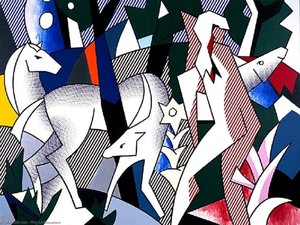
      Forest scene (1980) aut. Roy Lichtenstein
      #37

      Forest scene

      1980

      In the vast landscape of twentieth-century art, few works capture the tension between commercial aesthetics and natural majesty quite like Roy Lichtenstein’s “Forest Scene.” Created in 1980, this…

      Bauhaus stairway (1989) aut. Roy Lichtenstein
      #38

      Bauhaus stairway

      1989

      Bauhaus Stairway: A Dialogue Between Architecture and Pop Art Roy Lichtenstein’s *Bauhaus Stairway* (1989) stands as a fascinating testament to the artist's ability to synthesize seemingly disparate influences—the…

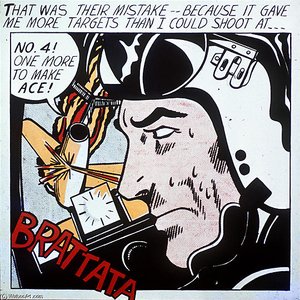
      Brattata (1962) aut. Roy Lichtenstein
      #39

      Brattata

      1962

      Roy Lichtenstein’s “Brattata,” completed in 1962, stands as a quintessential example of Pop Art's fascination with comic book aesthetics and its deliberate rejection of traditional artistic conventions. More…

      Pusia Veido su Votu (1963) aut. Roy Lichtenstein
      #40

      Pusia Veido su Votu

      1963

      Įspūdinga deklaracija raudoname ir baltaute: Dekodavimo Royo Lichtenšteino „Pusės Veido su Viliuku“ Royo Lichtenšteino 1963 metų kūrinys *Pusės Veido su Viliuku* yra ne tik portretas; tai galingas popartų…

      Coast Village (1987) aut. Roy Lichtenstein
      #41

      Coast Village

      1987

      In the vibrant tapestry of twentieth-century art, few works capture the intersection of mass media aesthetics and serene natural beauty as effectively as Roy Lichtenstein’s “Coast Village.” Created…

      Art (1962) aut. Roy Lichtenstein
      #42

      Art

      1962

      In the pantheon of twentieth-century masterpieces, few works possess the immediate, arresting power of Roy Lichtenstein’s 1962 creation, “Art.” At first glance, the piece presents a deceptively simple…

      Veidas (mėlynas nosis) (1986) aut. Roy Lichtenstein
      #43

      Veidas (mėlynas nosis)

      1986

      Įspūdinga Modernios Identitetų Portreto Dėstys: Royo Lichtenšteino *Face (green nose)* Royo Lichtenšteino 1986 metų aliejaus ant drobės kūrinis *Face (green nose)* yra įtakingas pavyzdys jo brandaus stiliaus ir…

      Mylėkanti Mergaitė (1964) aut. Roy Lichtenstein
      #44

      Mylėkanti Mergaitė

      1964

      Roy Lichtensteinio drobė, Sleeping Girl (1964), yra ne tik atspalvio poilsio vaizdas; tai svarstymas Pop Art judėjime, įtraukiantis tyrimą dėl moteriškumo, jautrumo ir atvaizdavimo esybės. Darbo pradžioje žiūrėtojas…

      Collage for Landscape with Scholar's Rock aut. Roy Lichtenstein
      #45

      Collage for Landscape with Scholar's Rock

      In the mid-1960s, the art world underwent a seismic shift, moving away from the heavy, introspective shadows of Abstract Expressionism toward the bright, unapologetic energy of Pop Art.…

      Sunaikinti (1965) aut. Roy Lichtenstein
      #46

      Sunaikinti

      1965

      Platioje dvidešimtmetžio meno erdvėje nedaug kūrinių, kurie su tokia skausminga jautrumo jėga užfiksuoja įtampą tarp amžinojo ir trumpalaikio kaip Roy Lichtenšteino 1965 m. tapyba "Sunaikinti". Šis šedevras tarnauja…

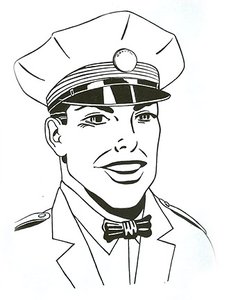
      Jet pilot aut. Roy Lichtenstein
      #47

      Jet pilot

      Roy Lichtenstein's 1962 graphite pencil drawing, “Jet Pilot,” is more than just a depiction of an aviator; it’s a meticulously crafted distillation of the anxieties and aspirations surrounding…

      Cathedral -6 State II (1969) aut. Roy Lichtenstein
      #48

      Cathedral -6 State II

      1969

      In the vibrant landscape of 1969, Roy Lichtenstein unveiled Cathedral -6 State II, an arresting testament to the transformative power of Pop Art. This artwork is far more…

      Glass and lemon in a mirror (1974) aut. Roy Lichtenstein
      #49

      Glass and lemon in a mirror

      1974

      In the vibrant landscape of twentieth-century art, few works capture the playful intersection of everyday reality and graphic illusion as masterfully as Roy Lichtenstein’s “Glass and lemon in…

      The hero's return (1950) aut. Roy Lichtenstein
      #50

      The hero's return

      1950

      The painting is a colorful and detailed depiction of a man holding a bow and arrow while standing next to two other people. The man with the bow…

      Landscape (1964) aut. Roy Lichtenstein
      #51

      Landscape

      1964

      The painting titled Landscape is a work by Roy Lichtenstein from 1964. The composition features a blue sky with white clouds, depicting a sunny day. In the foreground,…

      The kiss (1962) aut. Roy Lichtenstein
      #52

      The kiss

      1962

      Roy Lichtenstein's "The Kiss," painted in 1962, isn’t merely a depiction of romance; it’s a carefully constructed explosion of Pop Art sensibilities. This iconic work immediately grabs the…

      Stretcher Frame with Cross Bars III (1968) aut. Roy Lichtenstein
      #53

      Stretcher Frame with Cross Bars III

      1968

      Roy Lichtenstein, a prominent figure in the Pop Art movement, created Stretcher Frame with Cross Bars III in 1968. This painting is a quintessential example of his unique…

      Reflections Wonder Woman (1989) aut. Roy Lichtenstein
      #54

      Reflections Wonder Woman

      1989

      Roy Lichtenstein's "Reflections Wonder Woman," painted in 1989, isn’t merely a depiction of the iconic superhero; it’s a masterful distillation of Pop Art principles—a deliberate provocation and celebration…

      Kiss aut. Roy Lichtenstein
      #55

      Kiss

      A Kiss Transformed: Roy Lichtenstein’s Pop Art Embrace Roy Lichtenstein's *Kiss* is not merely a depiction of affection; it’s a bold statement on love, longing, and the very…

      Baked potato (1962) aut. Roy Lichtenstein
      #56

      Baked potato

      1962

      Roy Fox Lichtenstein's "Baked Potato," painted in 1962, isn’t merely a depiction of a simple culinary item; it’s a masterful distillation of Pop Art’s core tenets—boldness, irony, and…

      Mr. Bellamy (1961) aut. Roy Lichtenstein
      #57

      Mr. Bellamy

      1961

      Background and Description Mr. Bellamy, a seminal work by Roy Lichtenstein, embodies the quintessence of pop art, blending humor and satire with the familiar tropes of comic books.…

      Bathroom (1961) aut. Roy Lichtenstein
      #58

      Bathroom

      1961

      In the vast landscape of twentieth-century art, few works possess the immediate, graphic punch of Roy Lichtenstein’s 1961 masterpiece, "Bathroom." At first glance, the viewer is presented with…

      Silver Frame (1984) aut. Roy Lichtenstein
      #59

      Silver Frame

      1984

      In the mid-1980s, the art world found itself captivated by a resurgence of energy that looked backward to move forward, and at the heart of this movement stood…

      Stiklas - 7 (1970) aut. Roy Lichtenstein
      #60

      Stiklas - 7

      1970

      A Window into Pop Reflection: Decoding Roy Lichtenstein’s ‘Mirror - 7’ Roy Lichtenstein'o kūrinys “Mirror – 7”, sukurtas 1970 metais, yra ne tik abstrakcija; tai žaidybe ir kartu…

      Bedroom at Arles (1992) aut. Roy Lichtenstein
      #62

      Bedroom at Arles

      1992

      In the vast tapestry of art history, few encounters are as intellectually stimulating as Roy Lichtenstein’s 1992 masterpiece, Bedroom at Arles. This work is far more than a…

      Refrigerator (1962) aut. Roy Lichtenstein
      #63

      Refrigerator

      1962

      A Quintessential Lichtenstein: Exploring “Refrigerator” (1962) “Refrigerator,” created in 1962 by Roy Lichtenstein, is a striking example of the artist’s pioneering contribution to the Pop Art movement. This…

      Modular Painting with Nine Panels (1968) aut. Roy Lichtenstein
      #64

      Modular Painting with Nine Panels

      1968

      A Symphony of Structure: Deconstructing Lichtenstein’s ‘Modular Painting with Nine Panels’ Roy Lichtenstein's “Modular Painting with Nine Panels,” created in 1968, stands as a compelling testament to the…

      The Atom (1975) aut. Roy Lichtenstein
      #65

      The Atom

      1975

      Roy Lichtenstein’s “The Atom,” painted in 1975, is more than just a depiction of geometric shapes; it’s a carefully constructed explosion of Pop Art’s core tenets. This striking…

      House III (1997) aut. Roy Lichtenstein
      #66

      House III

      1997

      In the twilight of his illustrious career, Roy Lichtenstein turned his gaze toward one of the most enduring symbols of the American psyche: the suburban home. House III,…

      Bull Head III (1973) aut. Roy Lichtenstein
      #67

      Bull Head III

      1973

      In the vibrant landscape of twentieth-century art, few images command attention with such immediate, graphic authority as Roy Lichtenstein’s Bull Head III. At first glance, the viewer is…

      Donald Duck (1957) aut. Roy Lichtenstein
      #68

      Donald Duck

      1957

      The paper holds a sudden, frantic energy as Donald Duck stares out from a world of heavy, dark lines. There is no stillness here; instead, the charcoal moves…

      No - Nox (1962) aut. Roy Lichtenstein
      #69

      No - Nox

      1962

      Roy Lichtenstein's 1962 work, "No – Nox," isn’t a painting in the traditional sense; it’s a meticulously crafted graphic statement. Immediately arresting is its monochrome palette—a stark black…

      Washington crossing delaware (1951) aut. Roy Lichtenstein
      #70

      Washington crossing delaware

      1951

      Washington Crossing Delaware: A Pop Art Reinterpretation of History Roy Lichtenstein’s *Washington Crossing Delaware* stands as a pivotal artwork, encapsulating the spirit of Pop Art while simultaneously interrogating…

      Ruda Dėšinė (Švirkštas) (1965) aut. Roy Lichtenstein
      #71

      Ruda Dėšinė (Švirkštas)

      1965

      Roy Lichtensteinio „Ruda Dėbės“ – Simbolio Atgalas Roy Lichtensteinio „Ruda Dėbės“ (Brushstroke) kūrinys iš 1965 metų, paspaustas pirmos akimirkos žvilgsnyje, atskleidžia drąsią chromatinių redukcijų praktiškumą. Žavinga raudona sritis…

      Artist's Studio "Foot Medication" (1974) aut. Roy Lichtenstein
      #72

      Artist's Studio "Foot Medication"

      1974 · Art Institute of Chicago

      The eye enters a space that feels both expansive and strangely compressed, a large-scale interior where the walls are composed of overlapping rectangular planes. There is no traditional…

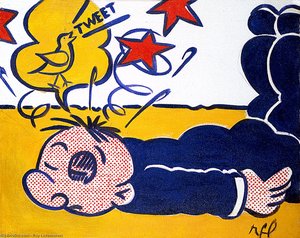
      Wimpy (Tweet) (1961) aut. Roy Lichtenstein
      #73

      Wimpy (Tweet)

      1961

      In the annals of twentieth-century art, few images possess the jarring, immediate power of Roy Lichtenstein’s 1961 masterpiece, "Wimpy (Tweet)." At first glance, the viewer is confronted with…

      Mao (1971) aut. Roy Lichtenstein
      #74

      Mao

      1971

      A Bold Statement in Monochrome: Exploring Roy Lichtenstein’s “Mao” The painting "Mao," executed by Roy Lichtenstein in 1971, stands as an arresting emblem of Pop Art's engagement with…

      Brattata (1962) aut. Roy Lichtenstein
      #75

      Brattata

      1962

      The Electric Pulse of Pop Art: Reimagining Brattata Brattata, a 1962 masterpiece by the visionary Roy Lichtenstein, serves as a thunderous declaration of the power inherent in popular…

      Dva obuoliai (1981) aut. Roy Lichtenstein
      #76

      Dva obuoliai

      1981

      A Bite of Pop: Decoding Lichtenstein’s “2 Apples” Roy Lichtenstein's "2 apples," sukurtas 1981 metais, yra netikėtai paprastas darbas, kuriame įvykdo pagrindinius principus jo iškilusiame Pop Art stiliuje.…

      The Cowboy (Red) (1951) aut. Roy Lichtenstein
      #77

      The Cowboy (Red)

      1951

      Roy Lichtenstein’s “The Cowboy (Red)” isn't merely a painting; it’s an explosion of color, a deliberate provocation, and a masterful distillation of the Pop Art movement’s core tenets.…

      Glass (1977) aut. Roy Lichtenstein
      #78

      Glass (1977)

      In his 1977 masterpiece, Glass, Roy Lichtenstein invites us to pause and reconsider the mundane objects that populate our daily lives. At first glance, the painting presents a…

      Live ammo (Ha! Ha! Ha!) (1962) aut. Roy Lichtenstein
      #79

      Live ammo (Ha! Ha! Ha!)

      1962

      In the landscape of twentieth-century art, few works capture the electric pulse of mid-century Americana as vibrantly as Roy Lichtenstein’s Live Ammo (Ha! Ha! Ha!). Created in 1962,…

      Preparedness (1968) aut. Roy Lichtenstein
      #80

      Preparedness

      1968

      In the vast landscape of twentieth-century art, few works capture the tension between mechanical precision and cultural anxiety as poignantly as Roy Lichtenstein’s 1968 masterpiece, Preparedness. This painting…

      Crying Girl (1963) aut. Roy Lichtenstein
      #81

      Crying Girl

      1963

      A Pop Art Icon: Exploring Roy Lichtenstein’s ‘Crying Girl’ Subject & Composition: This striking artwork is a faithful reproduction of Roy Lichtenstein's seminal 1963 work, ‘Crying Girl.’ The…

      Sailboats (1985) aut. Roy Lichtenstein
      #82

      Sailboats

      1985

      In the grand tapestry of twentieth-century art, few works capture the sun-drenched optimism of the American spirit quite like Roy Lichtenstein’s “Sailboats.” Completed in 1985, this masterpiece serves…

      Live ammo (1962) aut. Roy Lichtenstein
      #83

      Live ammo

      1962

      A Burst of Action: Decoding Roy Lichtenstein’s “Live Ammo” “Live Ammo,” created in 1962 by Pop Art master Roy Lichtenstein, is a dynamic and visually arresting work that…

      Interior with mobile aut. Roy Lichtenstein
      #84

      Interior with mobile

      A Sanctuary of Graphic Serenity In the quiet corners of Roy Lichtenstein’s Interior with Mobile, one finds a profound meditation on domestic peace. The painting invites the viewer…

      Despair (1979) aut. Roy Lichtenstein
      #85

      Despair

      1979

      In the pantheon of twentieth-century masterpieces, few works capture the intersection of mass media aesthetics and raw human vulnerability as poignantly as Roy Lichtenstein’s “Despair.” Created in 1979,…

      Magnifying glass (1963) aut. Roy Lichtenstein
      #86

      Magnifying glass

      1963

      A Window into Lichtenstein’s Pop Art Vision Roy Lichtenstein, born in Manhattan on October 27, 1923, irrevocably transformed the trajectory of twentieth-century art. His journey began with a…

      Two Green Apples (1980) aut. Roy Lichtenstein
      #87

      Two Green Apples

      1980

      A Pop Icon’s Subtle Still Life: Exploring Lichtenstein's "Two Green Apples" Roy Lichtenstein, a titan of the Pop Art movement, is overwhelmingly known for his bold, comic-inspired paintings.…

      That my ship was below them (1964) aut. Roy Lichtenstein
      #88

      That my ship was below them

      1964

      A Burst of Action: Decoding Roy Lichtenstein’s “That my ship was below them…” “That my ship was below them…” (1964), is a quintessential example of Roy Lichtenstein's groundbreaking…

      Brustrokes (1970) aut. Roy Lichtenstein
      #89

      Brustrokes

      1970

      In the vibrant landscape of twentieth-century American art, few works capture the electric pulse of popular culture quite like Roy Lichtenstein’s “Brustrokes.” Completed in 1970, this painting serves…

      Telaviv mural (1989) aut. Roy Lichtenstein
      #90

      Telaviv mural

      1989

      In the vibrant tapestry of twentieth-century art, few works command attention with such playful yet profound intensity as Roy Lichtenstein’s "Tel Aviv Mural." Completed in 1989, this striking…

      Collage for Nude (1997) aut. Roy Lichtenstein
      #91

      Collage for Nude

      1997

      Roy Lichtenstein's "Collage for Nude," created in 1997, isn’t merely a painting; it’s a carefully constructed dialogue between the familiar and the unsettling. This work, rendered in oil…

      Modular Painting with Four Panels #1 (1969) aut. Roy Lichtenstein
      #92

      Modular Painting with Four Panels #1

      1969 · Museum Ludwig

      Roy Lichtensteinio "Modular Painting #1": Geometrijos ir Pop Art Simfonija Royas Foxas Lichtenšteinas (1923–1997) buvo vienas žinomiausių XX a. JAV pop art menininkų. Jis išgarsėjo 1960-ais metais kūriniais,…

      Small explosion (1965) aut. Roy Lichtenstein
      #93

      Small explosion

      1965

      Roy Lichtenstein’s “Small Explosion,” painted in 1965, is more than just a depiction of a red circle; it’s a meticulously crafted detonation of Pop Art principles. This deceptively…

      I Love Liberty (1982) aut. Roy Lichtenstein
      #94

      I Love Liberty

      1982

      A Pop Icon Reimagined: Roy Lichtenstein’s “I Love Liberty” “I Love Liberty,” created in 1982 by master of Pop Art, Roy Lichtenstein, is a striking and dynamic reinterpretation…

      Woman (1981) aut. Roy Lichtenstein
      #95

      Woman

      1981

      A Dynamic Embrace: Decoding Lichtenstein’s ‘Woman’ (1981) This vibrant artwork by Roy Lichtenstein, created in 1981, is a quintessential example of his enduring Pop Art style. It depicts…

      Collage for Woman with Mirror (1996) aut. Roy Lichtenstein
      #96

      Collage for Woman with Mirror

      1996

      In the vast landscape of twentieth-century art, few names command as much immediate recognition as Roy Lichtenstein. His 1996 masterpiece, Collage for Woman with Mirror, serves as a…

      Drawing for Seductive Girl (1996) aut. Roy Lichtenstein
      #97

      Drawing for Seductive Girl

      1996

      This artwork is a drawing of a woman lying on her back with one leg raised in the air. She is depicted wearing a dress and has long…

      Collage for Interior with Ajax (1997) aut. Roy Lichtenstein
      #98

      Collage for Interior with Ajax

      1997

      Collage for Interior with Ajax is a painting created in 1997. The composition features a woman holding a vase up to her face, appearing to examine its contents…

      Mirror - 2 (1970) aut. Roy Lichtenstein
      #99

      Mirror - 2

      1970

      A Reflection on Modernity: Decoding Roy Lichtenstein’s “Mirror - 2” Roy Lichtenstein's "Mirror – 2," created in 1970, is not merely an image *of* a mirror, but rather…

      Art Critic (1996) aut. Roy Lichtenstein
      #100

      Art Critic

      1996

      The Stark Beauty of Pop: Roy Lichtenstein’s “Art Critic” Roy Lichtenstein's "Art Critic," painted in 1996, isn’t merely a portrait; it’s an arresting collision of styles and ideas…

      Roy Lichtenstein plėstiniai, pagal laikotarpį

      Early Pop Art

      1957 – 1961 · 3 darbai šiame sąraše

      Daugiausiai paveikęs Roy Lichtenstein

      Ketverios dažniausiai pasitaikančios šių plėstinių temos, kiekvienos su geriausiu pavyzdžiu.

      Kur kabinami Roy Lichtenstein plėtoiniai

      2 muziejai, kuriuose saugoma daugiausia šioje pusėje esamų paveikslų.

      Muzejaus Miestas Roy Lichtenstein darbai Šiojo sąrašo paveikslai
      Art Institute of Chicago, ČikagosArt Institute of Chicago Čikagos 4 Artist's Studio "Foot Medication"
      Museum Ludwig, KelnasMuseum Ludwig Kelnas 1 Modular Painting with Four Panels #1

      enkliausias Roy Lichtenstein paveikslas, dešimtmetį po dešimties

      1. 1950s
        The hero's return (1950) aut. Roy Lichtenstein
        50 iš 100

        The hero's return

        Amžius 27 – 36

        The painting is a colorful and detailed depiction of a man holding a bow and arrow while standing next to two other people. The man with the bow…

      2. 1960s
        Būm! (1963) aut. Roy Lichtenstein
        Lėno drobė 1 iš 100

        Būm!

        Amžius 37 – 46

        Roy Lichtensteino „Whaam!“ – Pop Art Simbolis ir Karo Realumas „Whaam!“, Roy Lichtensteino 1963 m. sukurtas kūrinys, yra neatsiejamas nuo pop art judėjimo ir tapo vienu iš labiausiai…

      3. 1970s
        Still Life with Goldfish (and Painting of Golf Ball) (1972) aut. Roy Lichtenstein
        26 iš 100

        Still Life with Goldfish (and Painting of Golf Ball)

        Amžius 47 – 56

        A Pop Art Still Life: Deconstructing Domesticity in Lichtenstein’s 1972 Composition Roy Lichtenstein's *Still Life with Goldfish (and Painting of Golf Ball)* is a quintessential example of his…

      4. 1980s
        Be pavadinimo Roy Lichtenstein ^ Gian Franco Gorgoni (1988) (1988) aut. Roy Lichtenstein
        10 vieta iš 100

        Be pavadinimo Roy Lichtenstein ^ Gian Franco Gorgoni (1988)

        Amžius 57 – 66

        Tema ir kompozicija Šis užburiantis kūrinys meistriškai įamžina vienatį jokių vaizdą, traukiančią pro ramią paplūdimio peizažą saulėlydžio valandą. Jokėjo ir žirgo siluetai ryškiai išsiskiria fone esančiame gyvybingame, kietančiame…

      5. 1990s
        MEŽĖ DĖL MĖLYNOS PLAUČŲ (1994) aut. Roy Lichtenstein
        12 iš 100

        MEŽĖ DĖL MĖLYNOS PLAUČŲ

        Amžius 67 – 74

        Tema ir kompozicija Šis intriguojantis kūrinys įamžina stilizuotą moters portretą su užburiančiais mėgiais, sukurtą naudojant drąžią ir grafikines estetikos priemones. Tiesiogus veido žvilgsmas bei šiek tiek provokuojanti išraiška…

      Roy Lichtenstein drobės, atsakymas į kiekvieną klausimą

      Kuo labiausiai žinomas Roy Lichtenstein plėslas?Perskaitykite atsakymą

      Būm! (1963), o po to – Mérkianti mergina (oversize) - (1600) ir Look Mickey (1961).

      Būm!: kiek metų buvo Roy Lichtenstein, kai šis darbas buvo sukurtas?Perskaitykite atsakymą

      Roy Lichtenstein, gimęs 1923, buvo 40 metų amžiaus: Būm! datuojamas 1963 m.

      Kokie yra 10 garsiausių mokslų Roy Lichtenstein paveikslų?Perskaitykite atsakymą

      Būm!, Mérkianti mergina (oversize) -, Look Mickey, Drowning Girl, Girl with ball, Torpedo...Los!, Roto Broil, Blam, Vak ir Be pavadinimo Roy Lichtenstein ^ Gian Franco Gorgoni (1988). Kiekvienas viršuje esančiame reitinge nurodytas platinas yra su nurodyta gamybos metų ir muziejaus informacija.

      Kiek paveikslų sukūrė Roy Lichtenstein?Perskaitykite atsakymą

      Mūsų kataloge yra 382 Roy Lichtenstein darbų, datuoti nuo 1950 iki 1997.

      Kur šiandien eksponuojami garsiausi Roy Lichtenstein plėtoiniai?Perskaitykite atsakymą

      Daugiausia – Art Institute of Chicago (Čikagos) ir Museum Ludwig (Kelnas); viršuje esančiame sąraše nurodytas kiekvienas muziejus ir jo plėtojimo darbai.

      Kada Roy Lichtenstein namai dažniausiai tapo savo garsiausiais paveiksliais?Perskaitykite atsakymą

      1960s laikotarpiu, kurio metu buvo pateikta 55 iš 100 šioje pusėje esančių darbų, tarp jų buvo Būm!.

      Kuris garsus Roy Lichtenstein plėtinis buvo sukurtas pirmiausia, o kuris – paskutinis?Perskaitykite atsakymą

      Čia esamasis plėslas yra The hero's return (1950), o vėliausias – House III (1997).

      Kurią temą Roy Lichtenstein tapė dažniausiai?Perskaitykite atsakymą

      Ben-day dots (18), Geometric shapes (13) ir Comic book (10) iš 100 šioje pusėje esamų darbų.

      Kuri technika dažniausiai pasitaiko Roy Lichtenstein paveiksluose?Perskaitykite atsakymą

      Akrilas ant drobės, naudojamas 25 iš 100 šioje pusėje esančių darbų.

      Su kokiu kierliu siejama Roy Lichtenstein?Perskaitykite atsakymą

      Pop art, kaip tai rodo šio puslapio plėtočiai.

      Susipažinkite su paveikslastoviu: Roy Lichtenstein

      The Life of Roy Lichtenstein

      Manhattan, New York City, October 27, 1923. Roy Lichtenstein enters the world as the son of Milton and Beatrice. The urban energy of the metropolis provides the backdrop for a life that will eventually challenge the boundaries of fine art. He grows up in an upper-middle-class Jewish family, absorbing the cultural rhythms of the city through museums and jazz music.

      The trajectory of his career shifts during the mid-twentieth century. He emerges as a leading figure of the Pop Art movement, a period defined by a radical departure from the heavy, emotional brushwork of Abstract Expressionism. Instead of looking inward, he looks outward at the glossy, mechanical surfaces of American mass culture. He finds his subject matter in the most overlooked corners of daily life: the dramatic panels of comic books and the stark, repetitive patterns of commercial advertising.

      His work transforms the ephemeral language of print into something monumental. By adopting the visual shorthand of the masses, he forces a confrontation between high-end gallery prestige and the everyday pulse of the street. His presence in the art world is marked by a deliberate detachment, using the very tools of industrial reproduction to redefine what a painting can be.

      Early Life, Family and Training

      Manhattan, 1923. The city provides the backdrop for Roy Fox Lichtenstein's arrival into an upper-middle-class Jewish family. His father, Milton, works as a real estate broker, while his mother, Beatrice, a trained pianist, introduces him to the cultural rhythms of New York. These early years are marked by a dual immersion in the visual and the auditory; he spends his childhood exploring museums and attending concerts, developing a deep appreciation for jazz music that persists throughout his life.

      The trajectory shifts toward formal discipline in 1939. He enters the Art Students League of New York, placing himself under the instruction of Reginald Marsh. Here, the focus remains on the fundamentals of drawing and painting. He moves from these early explorations toward higher education, enrolling at Ohio State University to pursue a degree in fine arts. This academic foundation provides the technical rigor that will eventually underpin his later, more radical departures from traditional representation.

      Military Service and Return to Study

      The trajectory of Lichtenstein's education shifts abruptly in 1943. The draft pulls him from the classroom and into the United States Army. For two years, the focus moves from the studio to the front lines of Europe. He serves in France, Belgium, and Germany, navigating the chaos of the war years between 1943 and 1945. During this period, he works as an orderly, a draftsman, and an artist, sketching the reality of his surroundings while the conflict reaches its peak.

      The war ends, but the transition back to civilian life is not immediate. After the cessation of hostilities in 1945, Lichtenstein remains in France for a time, intending to study at the Sorbonne. This plan dissolves when his father becomes gravely ill, forcing a return to the United States. He heads back to Ohio State University to finish what he started. By 1946, he completes his BFA, ready to re-enter the professional art world as a trained practitioner.

      Teaching Career and Early Works

      The post-war years find Lichtenstein navigating the academic landscape of the American Midwest and East Coast. He serves as an art instructor at Ohio State University, a position he holds on and off for a decade. During this period, his creative output shifts. He moves away from the heavy, emotional brushwork of Abstract Expressionism. Instead, he begins to experiment with Cubist interpretations and lyrical works inspired by the Bayeux Tapestry. He also explores Western themes, producing series of drawings and paintings that reflect a growing interest in stylized, printed imagery.

      The transition toward a more graphic language accelerates through his various academic appointments. In 1957, he moves to the State University of New York, Oswego, to teach industrial design. This role coincides with a period of intense experimentation. He begins to combine cartoon characters, such as Mickey Mouse and Donald Duck, with abstract backgrounds. This hybrid approach marks a departure from traditional fine art. He later serves as an assistant professor at Douglass College, Rutgers, State University of New Jersey, and as an assistant professor at SUNY Oswego. These academic environments provide the stability for him to refine a visual language that rejects the texture of traditional painting in favor of something more mechanical and detached.

      Technique and Signature Style

      The canvas becomes a site of mechanical precision. Lichtenstein strips away the visible brushstroke, replacing the artist's hand with the cold, calculated language of mass production. He adopts the aesthetics of comic books and advertising, utilizing bold, primary colors and heavy black outlines to define his subjects. The imagery feels detached, mimicking the flat, impersonal quality of a printed page rather than a hand-painted surface.

      Texture is achieved through a deliberate, systematic application of Ben-Day dots. These small, colored circles create shading and gradations, replicating the look of cheap commercial printing. He does not paint these dots individually. Instead, he uses stencils made of thin plastic or metal, sweeping a brush or rag across the surface to ensure a uniform, machine-made appearance. This technique turns the act of painting into a process of reproduction, blurring the line between fine art and industrial output.

      Key Works and Iconic Paintings

      The shift toward his signature style arrives in 1961 with Look Mickey. Here, the appropriation of a Disney character marks a departure from his earlier abstract experiments. He moves away from the heavy, emotional brushwork of the previous decade, opting instead for the mechanical clarity of the comic strip. The work functions as a bridge, translating the language of pulp fiction into a formal, large-scale composition.

      By 1963, the scale of his visual interrogation expands. Whaam! explodes across the canvas, utilizing the dramatic, fragmented panels of war comics to capture a moment of high-octane violence. Simultaneously, Drowning Girl presents a different kind of tension. It focuses on a woman submerged in water, her face marked by stylized tears and a speech bubble that expresses a sense of personal defiance. These works do not merely depict scenes; they freeze the melodrama of mass media into static, graphic objects.

      The 1964 painting Nurse continues this exploration of the romantic and the dramatic. It utilizes the same high-contrast outlines and Ben-Day dots that define his most recognized period. The subject, a nurse from a comic romance novel, is rendered with a detachment that emphasizes the artificiality of the source material. His output during this era remains focused on the intersection of human emotion and industrial reproduction.

      Later Years and Death

      The 1960s brought a shift in his personal life when he married Dorothy Herzka in 1968. This period saw him continuing to produce a vast body of work, expanding his reach through various mediums. His output remained prolific, spanning over five thousand works including paintings, sculptures, and murals. He moved beyond the initial shock of his comic-inspired style to explore more complex compositions, including series that referenced classical art and landscapes.

      The end came abruptly in the late 1990s. In August 1997, he contracted pneumonia. The illness proved too much for his system. He died from complications of the infection on September 29, 1997. He was 73 years old.

      Legacy and Lasting Impact

      The boundaries between high art and popular culture dissolve in the wake of his influence. By lifting the visual language of comic strips and advertising into the gallery, he forced a confrontation between fine art and the mass-produced imagery of everyday life. This shift did more than change the subject matter of painting; it challenged the very definition of artistic authorship and originality. His work remains a catalyst for critical dialogue regarding the intersection of art, culture, and commerce.

      His presence is felt in major museum collections worldwide. From the halls of the Tate in London to the Museum of Modern Art in New York, his aesthetic remains a fundamental part of the modern canon. The impact of his method extends into graphic design, illustration, and contemporary digital art, where the tension between the mechanical and the hand-painted continues to resonate. He did not merely participate in the Pop Art movement; he helped originate it, establishing a visual vocabulary that remains a primary reference point for how we consume images in a media-saturated age.

      Visi 382 Roy Lichtenstein darbai →