Atelieris — Nemokamas pristatymas visame pasaulyje — Pristatymo laikas – 2–6 savaitės
      Tiepolo, 1696 – 1770

      Tiepolo's 100 Most Famous Paintings

      The Immaculate Conception (1767) is the painting Tiepolo is best remembered for; it belongs to the Museo del Prado, Madridas. Nepūstų Neptūnas Venecijai (1740) and Dėbūs Oro Įrašas complete the trio of best-loved canvases. Our catalogue counts 494 works by Tiepolo. Here are the 100 most famous, with the year, the museum and the story of each canvas.

      Rangos vieta nulegiama pagal mūsų populiarumumo balas, kurį sudaro kiekvieno kūrinio paieškos, apsilankėjimai ir užsakėjimai. Atnaujinta spalis 2026. Each painting on this page can be ordered as an oil reproduction painted by hand on linen canvas, or as a fine art print, made to the size you choose.

      Tiepolo portretas
      Tiepolo · 1696 – 1770
      Gedė · mirė
      1696 – 1770, Venecija
      Judėjimas
      Rococo
      Darbai mūsų kataloge
      494
      Labiausiai žinomi
      The Immaculate Conception (1767)
      Daugiausia darbų yra
      Metropolitano meno muziejus

      The ten best-loved paintings by Tiepolo

      The Immaculate Conception (1767) aut. Tiepolo
      1

      The Immaculate Conception

      1767 · Aliejus ant drobės · Museo del Prado, Madridas

      Giambattista Tiepolo's "The Immaculate Conception," painted in 1767, isn’t merely a depiction of the Virgin Mary; it’s an immersive experience of celestial grace and profound spiritual drama. This monumental canvas, measuring nearly three meters tall, transports the viewer to a realm where divine intervention unfolds with breathtaking splendor. Commissioned during a period of fervent religious devotion in Europe, Tiepolo masterfully blends Baroque dynamism with Rococo elegance, creating a work that…

      Nepūstų Neptūnas Venecijai (1740) aut. Tiepolo
      2

      Nepūstų Neptūnas Venecijai

      1740 · Aliejus ant drobės · Dojų rūmai, Venecija

      Mitologinė drama Pasinerkite į užburiančią Giovanni Battista Tiepolo kūrinio „Neptūnas renka dovanas Venecijai (detale)“ pasaulį – šedevalo, kuris sugyvina mitinę realybę. Šis dramatiškas ir intensyvus paveikslas įamžina įtampą bei simbolizmą kupiną sceną, kurioje romėnų jūros dievas Neptūnas dalyvauja galingoje sąveiko ak momento. Centrinė figūra – barudingas, barzotas vyras – atrodo kovojantis arba sulaikomas, apsuptintas chaotiškų monetų ir jūros sutvėrių. Ši dinamiška kompozicija žiūrovą įtraukia į pasakojimą, kuris yra vienu metu…

      Dėbūs Oro Įrašas aut. Tiepolo
      3

      Dėbūs Oro Įrašas

      Aliejus ant plokštės · Dulwich Picture Gallery, Londonas

      Giambattista Tiepolo: Šviesos ir Dievo Atvaizdas „Virtuozas ir dvasios siela“ – taip apibūdinama Giambattista Tiepolo, vieno žymiausių baroko periodiko menininkų. Jo kūriniai, ypač monumentalūs freskai, išlieka įspūdingais liudijimais apie jo talentą ir viziją. Ši reprodukcija, pavadinta „Dėmesio ir Dorybės Atakas“, atskleidžia Tiepolo charakteristinį stilių – dinamiškumą, dramatiškumą ir šviesos magiją, kuri sukuria įspūdingą atmosferą. Vaizdas pasakoja apie aukštyn besišliaujančią dvasinę kelionę, kurioje angelai ir dieviški veikėjai simboliškai atstojami žmogaus siekimams…

      Bacchus and Ariadne (1743) aut. Tiepolo
      4

      Bacchus and Ariadne

      1743 · Oil On Canvas · National Gallery of Art, Vašingtonas

      The scene unfolds within a lush, wooded landscape where light breaks through the canopy to touch skin and silk. At the center, Bacchus and Ariadne meet amidst a swirl of movement. The composition follows a pyramidal structure, pulling the eye upward toward the figures of the deities. Around them, small putti and attendants drift through the trees, their forms caught in a state of perpetual motion. Deep blues and earthy…

      Apollo and Marsyas (1725) aut. Tiepolo
      5

      Apollo and Marsyas

      1725 · Oil On Canvas · Gallerie dell'Accademia di Venezia, Venecija

      To stand before Giovanni Battista Tiepolo's "Apollo and Marsyas" is to be enveloped in a wash of celestial light and dramatic human emotion. This magnificent oil on canvas, dating from 1725, is not merely a depiction of mythological figures; it is a vibrant celebration of artistic prowess itself. The air within the painting seems thick with music, divine energy, and the tension inherent in genius confronting hubris. Tiepolo, the undisputed…

      The Apotheosis of the Spanish Monarchy (1764) aut. Tiepolo
      6

      The Apotheosis of the Spanish Monarchy

      1764 · Oil On Canvas · Metropolitano meno muziejus, Niujorkas

      The canvas opens like a window into a bright, upward rush. Light does not strike the figures from a single source; it seems to breathe from the very clouds themselves. In this Rococo vision, the heavy weight of the world dissolves into a pale, luminous ether. Sky blues and creamy whites dominate the view, creating a sense of celestial ascension that pulls the eye toward the heavens. Figures move in…

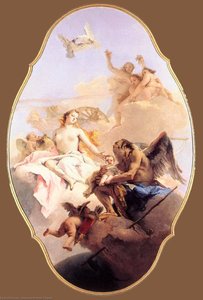
      Allegory of Strength and Wisdom (1740) aut. Tiepolo
      7

      Allegory of Strength and Wisdom

      1740 · Oil On Canvas · Museo Poldi Pezzoli, Milanas

      Giambattista Tiepolo's 1740 masterpiece, *Allegory of Strength and Wisdom*, is more than a painting; it’s an immersive theatrical experience rendered in oil on canvas. This dramatic scene, measuring 35 x 30 cm, captures the essence of Baroque artistry – a potent blend of classical ideals, emotional intensity, and masterful illusionism. The artwork immediately commands attention with its turbulent seascape and sky, a backdrop to a profoundly symbolic interaction between figures…

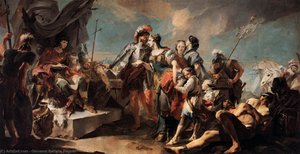
      The Meeting of Antony and Cleopatra (1745) aut. Tiepolo
      8

      The Meeting of Antony and Cleopatra

      1745 · Oil On Canvas · Metropolitano meno muziejus, Niujorkas

      Giambattista Tiepolo’s “The Meeting of Antony and Cleopatra,” painted in 1745-47, isn't merely a historical depiction; it’s a vibrant distillation of Roman drama, Egyptian allure, and the burgeoning Rococo aesthetic that defined Venice at the time. Commissioned by the French art patron Abbé de Saint-Non, this oil sketch – remarkably alive with color and movement – captures a pivotal moment from Plutarch's timeless tale: the clandestine rendezvous between the Roman…

      Worshippers (1743) aut. Tiepolo
      9

      Worshippers

      1743 · Fresco · Gallerie dell'Accademia di Venezia, Venecija

      To stand before a section of Giambattista Tiepolo’s ‘Worshippers’ is to step directly into the heart of eighteenth-century Venetian splendor. This fresco, dating from 1743, is not merely a depiction of figures; it is an immersive architectural vision rendered in pigment and light. The scene unfolds within what appears to be a magnificent gallery or balcony, a space designed to elevate the spiritual experience for its viewers. Tiepolo, the undisputed…

      The Triumph of Marius (1729) aut. Tiepolo
      10

      The Triumph of Marius

      1729 · Oil On Canvas · Metropolitano meno muziejus, Niujorkas

      Step closer to observe the sheer scale of this canvas. Painted in 1729, when the artist was barely thirty, The Triumph of Marius captures a specific, heavy moment from Roman history. We see the general Marius parading the North African ruler Jugurtha through the streets of Rome in chains following his victory in 104 B.C. The composition is built upon an upward-surging, pyramidal structure that pulls your gaze from the…

      Tiepolo: canvases 11 to 100 of the ranking

      The Capture of Carthage (1725) aut. Tiepolo
      #11

      The Capture of Carthage

      1725 · Metropolitano meno muziejus

      The air thickens with the heat of conflict in The Capture of Carthage, a work by Giambattista Tiepolo. Created in 1725, the scene pulls the viewer directly into…

      Have it painted by hand →
      Portrait of Daniele IV Dolfin (1750) aut. Tiepolo
      #12

      Portrait of Daniele IV Dolfin

      1750 · Fondazione Querini Stampalia

      This magnificent portrait, measuring 235 x 158 cm and dating from 1750, offers a captivating glimpse into the world of Venetian nobility through the masterful hand of Giambattista…

      Bring this light home →
      Bellerophon on Pegasus (1746) aut. Tiepolo
      #16

      Bellerophon on Pegasus

      1746 · Palazzo Labia

      To gaze upon this magnificent depiction of Bellerophon riding his winged steed, Pegasus, is to be swept away by a torrent of mythological grandeur. This fresco, executed in…

      Kristus duodantis raktus Šv. Petrui (1598) aut. Tiepolo
      #17

      Kristus duodantis raktus Šv. Petrui

      1598 · Liuvro muziejus

      Giambattista Tiepolo kūrinys „Kristus duodamas raktus Šv. Petrui“, parašytas 1598 metais, yra daugiau nei tiesiog religinis vaizdinys; tai gyvas įtodas puikiai žydinčiam Venecijos menui High Renaissance laikotarpiu ir…

      Have it painted by hand →
      Angelica and Medoro with the Shepherds (1757) aut. Tiepolo
      #20

      Angelica and Medoro with the Shepherds

      1757 · Villa Valmarana

      To stand before Angelica and Medoro with the Shepherds is to be enveloped by the very breath of eighteenth-century Venetian light. This magnificent fresco, executed in 1757 by…

      The Glorification of the Barbaro Family (1750) aut. Tiepolo
      #22

      The Glorification of the Barbaro Family

      1750 · Metropolitano meno muziejus

      Giambattista Tiepolo’s “The Glorification of the Barbaro Family” isn't merely a painting; it’s an immersive theatrical experience captured on canvas. Completed around 1750 for the opulent Palazzo Barbaro…

      Bring this light home →
      The Scourge of the Serpents (detail) (1732) aut. Tiepolo
      #26

      The Scourge of the Serpents (detail)

      1732 · Gallerie dell'Accademia di Venezia

      In the breathtaking detail of The Scourge of the Serpents, we are transported directly into the heart of the eighteenth century, witnessing the unparalleled mastery of Giambattista Tiepolo.…

      Order this canvas →
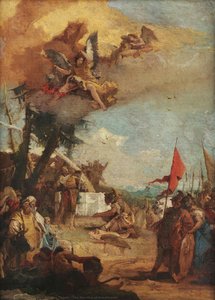
      The Sacrifice of Melchizedek (1740) aut. Tiepolo
      #27

      The Sacrifice of Melchizedek

      1740 · Parrocchiale

      In the grand tapestry of the Venetian Rococo, few works command the eye with such theatrical splendor as Giambattista Tiepolo’s The Sacrifice of Melchizedek. Painted in 1740, this…

      Order this canvas →
      Apollo and the Continents (1752) aut. Tiepolo
      #28

      Apollo and the Continents

      1752 · Rezidencijos laiptinė

      In the heart of the Würzburg Residence, within the stairwell of the Residenz, lies one of the most breathtaking achievements in the history of Western art: the fresco…

      Annunciation (1724) aut. Tiepolo
      #29

      Annunciation

      1724 · Ermitažas

      Giambattista Tiepolo’s “Annunciation,” painted in 1724, is more than just a depiction of a biblical moment; it’s an immersive experience, a testament to the Venetian artist’s mastery of…

      Have it painted by hand →
      The Sacrifice of Melchizedek (1740) aut. Tiepolo
      #30

      The Sacrifice of Melchizedek

      1740 · T nacionalinis dailės muziejus

      Giambattista Tiepolo's “The Sacrifice of Melchizedek,” painted in 1740, is a breathtaking testament to the Venetian artist’s mastery of light, color, and narrative. Measuring 67 x 91 cm,…

      Bring this light home →
      Madonna of the Goldfinch (1770) aut. Tiepolo
      #31

      Madonna of the Goldfinch

      1770

      In the luminous realm of Rococo mastery, few works capture the delicate intersection of the earthly and the divine as poignantly as Giambattista Tiepolo’s Madonna of the Goldfinch.…

      Order this canvas →
      The Three Angels Appearing to Abraham (1726) aut. Tiepolo
      #32

      The Three Angels Appearing to Abraham

      1726 · Palazzo Patriarcale

      In the hallowed atmosphere of the San Giorgio Maggiore basilica in Venice, Giambattista Tiepolo’s monumental fresco, "The Three Angels Appearing to Abraham," unfolds as a breathtaking encounter between…

      The Investiture of Herold as Duke of Franconia (1751) aut. Tiepolo
      #33

      The Investiture of Herold as Duke of Franconia

      1751 · Imperatorinė Würzburgo rezidencijos salė

      A Symphony of Light and Ceremony: Exploring Tiepolo’s “The Investiture of Herold as Duke of Franconia” Giambattista Tiepolo, born in Venice in 1696 and passing away in 1770,…

      Apollo and the Continents (1739) aut. Tiepolo
      #34

      Apollo and the Continents

      1739 · Kimbell Art Museum

      A Celestial Celebration: Giambattista Tiepolo’s Apollo and the Continents Giambattista Tiepolo, a name synonymous with Venetian light and opulent illusionism, produced an extraordinary oil sketch that served as…

      Bring this light home →
      The Judgment of Solomon (1728) aut. Tiepolo
      #35

      The Judgment of Solomon

      1728

      In the heart of the Patriarchal Palace in Udine, Italy, lies one of the most breathtaking achievements of the eighteenth century: The Judgment of Solomon. Painted by the…

      St. Jerome (1720) aut. Tiepolo
      #36

      St. Jerome

      1720 · Art Gallery of South Australia

      A Symphony of Light and Shadow: Exploring Tiepolo’s St. Jerome The artwork, “St. Jerome,” by Giambattista Tiepolo, transcends mere depiction; it embodies the very spirit of Baroque Venetian…

      Bring this light home →
      Untitled (D2X7FN) (1740) aut. Tiepolo
      #38

      Untitled (D2X7FN)

      1740 · Metropolitano meno muziejus

      In the luminous realm of eighteenth-century Venetian art, few names evoke the sheer brilliance of light and movement quite like Giovanni Battista Tiepolo. His masterpiece, A Female Allegorical…

      Order this canvas →
      The Prophet Isaiah (1726) aut. Tiepolo
      #40

      The Prophet Isaiah

      1726 · Palazzo Patriarcale

      Giambattista Tiepolo’s “The Prophet Isaiah,” completed in 1726, is more than just a painting; it's an immersive journey into the heart of Rococo artistry and a testament to…

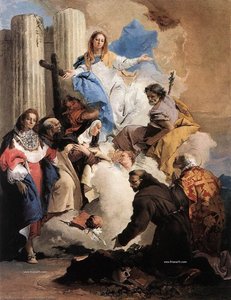
      The Virgin with Six Saints (1737) aut. Tiepolo
      #41

      The Virgin with Six Saints

      1737 · Szépművészeti Múzeum

      Giambattista Tiepolo's “The Virgin with Six Saints,” painted in 1737, is more than a religious depiction; it’s an immersive experience of light and emotion, a testament to the…

      Bring this light home →
      Prudence, Sincerity, and Temperance (1743) aut. Tiepolo
      #42

      Prudence, Sincerity, and Temperance

      1743 · Scuola Grande dei Carmini

      Giambattista Tiepolo’s “Prudence, Sincerity, and Temperance,” completed in 1743, is more than a mere depiction of three allegorical figures; it’s a masterful orchestration of light, color, and symbolism…

      The Last Supper (1745) aut. Tiepolo
      #44

      The Last Supper

      1745 · Liuvro muziejus

      Leonardo da Vinci’s The Last Supper, housed within the refectory of Santa Maria delle Grazie in Milan, isn't merely a painting; it’s an immersive experience. Completed between 1495…

      Order this canvas →
      The Theological Virtues (1755) aut. Tiepolo
      #45

      The Theological Virtues

      1755 · Musées Royaux des Beaux-Arts

      A Symphony of Faith and Light: Exploring Tiepolo’s ‘The Theological Virtues’ Giovanni Battista Tiepolo's “The Theological Virtues,” completed around 1755, stands as a testament to Venetian Rococo artistry—a…

      Bring this light home →
      Apollo and Marsyas (1757) aut. Tiepolo
      #48

      Apollo and Marsyas

      1757 · Statens Museum For Kunst

      is a mythological painting executed by the Venetian artist Giovanni Battista Tiepolo in 1757. The work belongs to the mythological genre, capturing a specific moment of tension between…

      Have it painted by hand →
      The Adoration of the Magi (1750) aut. Tiepolo
      #54

      The Adoration of the Magi

      1750 · Metropolitano meno muziejus

      A Symphony of Light and Illusion: Exploring Tiepolo’s ‘The Adoration of the Magi’ Giambattista Tiepolo (1696 – 1770) remains an undisputed maestro, a painter who redefined Venetian art…

      Order this canvas →
      Bellerophon on Pegasus (detail) (1746) aut. Tiepolo
      #55

      Bellerophon on Pegasus (detail)

      1746 · Palazzo Labia

      The gaze meets the soaring movement of Bellerophon on Pegasus (detail), a work that captures a moment of mythic flight. Created in 1746, this fresco breathes life into…

      Venus and Vulcan (1760) aut. Tiepolo
      #57

      Venus and Vulcan

      1760

      The painting Venus and Vulcan by Giovanni Battista Tiepolo is a stunning example of Rococo art, characterized by its intricate details, soft colors, and mythological themes. Created in…

      Bring this light home →
      Adoration of the Magi (1700) aut. Tiepolo
      #58

      Adoration of the Magi

      1700 · Cantor Arts Center at Stanford University

      A Symphony of Light and Faith: Exploring Tiepolo’s “Adoration of the Magi” Giovanni Battista Tiepolo's "Adoration of the Magi" transcends mere depiction; it embodies the very spirit of…

      Order this canvas →
      The Death of Hyacinth (1752) aut. Tiepolo
      #59

      The Death of Hyacinth

      1752 · Thyssen-Bornemisza muziejus

      A Symphony of Light and Loss: Exploring Tiepolo’s “The Death of Hyacinth” Giovanni Battista Tiepolo's "The Death of Hyacinth," completed in 1752, isn’t merely a depiction of mortality;…

      Have it painted by hand →
      The Beheading of St John the Baptist (1732) aut. Tiepolo
      #61

      The Beheading of St John the Baptist

      1732 · Nationalmuseum

      The Beheading of St John the Baptist emerges from the year 1732, a moment frozen in time through the hand of Giovanni Battista Tiepolo. This religious piece captures…

      Virtue and Abundance (1760) aut. Tiepolo
      #62

      Virtue and Abundance

      1760 · Metropolitano meno muziejus

      Within a circular frame, two figures drift through a sea of soft, billowing clouds. The scene feels caught in a moment of weightless grace, as if the heavens…

      Bring this light home →
      Madonna of the Goldfinch (1760) aut. Tiepolo
      #63

      Madonna of the Goldfinch

      1760 · National Gallery of Art

      Giambattista Tiepolo’s Madonna of the Goldfinch: A Symphony of Venetian Light The Madonna of the Goldfinch, painted in 1760 by Giovanni Battista Tiepolo, transcends mere portraiture; it embodies…

      Bring this light home →
      The Battle of Vercellae (1725) aut. Tiepolo
      #65

      The Battle of Vercellae

      1725 · Metropolitano meno muziejus

      Giambattista Tiepolo’s “Battle of Vercellae,” painted in 1725, is not merely a historical depiction; it's a meticulously crafted theatrical tableau brimming with the grandeur and calculated drama characteristic…

      Bring this light home →
      The Chariot of Aurora (1764) aut. Tiepolo
      #67

      The Chariot of Aurora

      1764 · Metropolitano meno muziejus

      The Chariot of Aurora is an oil on canvas by Giovanni Battista Tiepolo. Created about 1764, this work represents a significant moment in the Rococo style. It captures…

      Bring this light home →
      The Flight into Egypt (1768) aut. Tiepolo
      #68

      The Flight into Egypt

      1768 · Metropolitano meno muziejus

      The sky opens above a rocky outcrop, a vast expanse of pale blue and soft white. Light descends from the upper left, touching the faces of the holy…

      Have it painted by hand →
      Phaeton and Apollo (1730) aut. Tiepolo
      #69

      Phaeton and Apollo

      1730 · Bowes Museum

      The celestial tension of Phaeton and Apollo by Giovanni Battista Tiepolo captures a moment of profound mortal ambition and divine hesitation. Created in 1730, the work centers on…

      Have it painted by hand →
      Madonna and Child (1730) aut. Tiepolo
      #70

      Madonna and Child

      1730 · Detroito meno institutas

      This oil on canvas painting, dated 1730, presents an intimate portrait of a woman cradling an infant within an oval composition. The figures are positioned in a tight,…

      Order this canvas →
      Saint Roch (1730) aut. Tiepolo
      #71

      Saint Roch

      1730 · Minneapolis Institute of Art

      In this religious art piece, we encounter Saint Roch, a figure rendered with a quiet, contemplative gravity. The painting, titled Saint Roch, was executed by the Venetian master…

      Order this canvas →
      Grammar (1760) aut. Tiepolo
      #72

      Grammar

      1760 · Metropolitano meno muziejus

      Grammar is a work by the Venetian artist Giovanni Battista Tiepolo. Created in 1760, the piece reflects the late period of a career that spanned the eighteenth century.…

      Have it painted by hand →
      Sketch for "Venus and Vulcan" (1765) aut. Tiepolo
      #73

      Sketch for "Venus and Vulcan"

      1765 · Philadelphia Museum of Art

      This oil sketch on paper and canvas presents a mythological scene centered on the goddess Venus. She reclines upon white, cloud-like drapery that occupies much of the central…

      Bring this light home →
      The Rape of Europa (1743) aut. Tiepolo
      #75

      The Rape of Europa

      1743 · Škotijos Nacionalinė galerija

      The Rape of Europa, also known as The Abduction of Europa, is an oil on canvas painting by the Venetian artist Giovanni Battista Tiepolo. Created about 1743, this…

      Bring this light home →
      A Female Allegorical Figure (1740) aut. Tiepolo
      #77

      A Female Allegorical Figure

      1740 · Metropolitano meno muziejus

      Painted in 1740, "A Female Allegorical Figure" holds a significant place within Tiepolo's oeuvre. It was originally part of a larger decorative scheme, potentially intended for the Sala…

      Bring this light home →
      Virgin and Child (1720) aut. Tiepolo
      #79

      Virgin and Child

      1720 · Walters Art Museum

      This work, titled Virgin and Child, was painted by Giovanni Battista Tiepolo. The artist, who was born in Venice, Italy, in 1696, spent his life developing a profound…

      Bring this light home →
      Armida Abandoned by Rinaldo (1743) aut. Tiepolo
      #81

      Armida Abandoned by Rinaldo

      1743 · Art Institute of Chicago

      The scene unfolds in a moment of profound emotional fracture. In this oil painting on canvas, titled Armida Abandoned by Rinaldo, the Italian painter Giovanni Battista Tiepolo captures…

      Have it painted by hand →
      Carrying the Cross (1738) aut. Tiepolo
      #82

      Carrying the Cross

      1738 · Staatliche Museen zu Berlin

      Giambattista Tiepolo’s “Carrying the Cross”: A Symphony of Venetian Light The painting "Carrying the Cross," executed by Giambattista Tiepolo in 1738, stands as a testament to the zenith…

      Have it painted by hand →
      Saint Cecilia (1750) aut. Tiepolo
      #83

      Saint Cecilia

      1750 · Museu Nacional d'Art de Catalunya

      This oil on canvas work is titled Saint Cecilia. The painting was executed by the artist Giovanni Battista Tiepolo in 1750. It depicts the religious figure Saint Cecilia,…

      Order this canvas →
      Christ on the Route to Calvary (1730) aut. Tiepolo
      #85

      Christ on the Route to Calvary

      1730 · Thyssen-Bornemisza muziejus

      The oil on canvas titled Christ on the Route to Calvary was painted by Giovanni Battista Tiepolo about 1730. This religious art piece captures a heavy, singular moment…

      Order this canvas →
      View of the stairwell aut. Tiepolo
      #100

      View of the stairwell

      Residenz

      Giambattista Tiepolo's "View of the Stairwell" is more than just a depiction of an architectural space; it’s a meticulously crafted illusion, a testament to the Venetian master’s unparalleled…

      Bring this light home →

      Tiepolo's canvases, period by period

      What Tiepolo painted most

      The four subjects that return most often on these canvases, each with its best-loved example.

      Where Tiepolo's canvases hang

      8 muziejai, kuriuose saugoma daugiausia šioje pusėje esamų paveikslų.

      Muzejaus Miestas Tiepolo darbai Šiojo sąrašo paveikslai
      Metropolitano meno muziejus, NiujorkasMetropolitano meno muziejus Niujorkas 23 The Apotheosis of the Spanish Monarchy, The Meeting of Antony and Cleopatra, The Triumph of Marius
      Ermitažas, Šv. PeterburgasErmitažas Šv. Peterburgas 9 Annunciation, Coriolanus at the Walls of Rome, Mucius Scaevola before Porsenna
      Gallerie dell'Accademia di Venezia, VenecijaGallerie dell'Accademia di Venezia Venecija 9 Apollo and Marsyas, Worshippers, The Scourge of the Serpents (detail)
      Palazzo Labia, VenicePalazzo Labia Venice 8 Bellerophon on Pegasus, The Banquet of Cleopatra (detail), Bellerophon on Pegasus (detail)
      Art Institute of Chicago, ČikagosArt Institute of Chicago Čikagos 5 Virgin and Child with Saints Dominic and Hyacinth, Armida Encounters the Sleeping Rinaldo, Armida Abandoned by Rinaldo
      National Gallery of Art, VašingtonasNational Gallery of Art Vašingtonas 10 Bacchus and Ariadne, Madonna of the Goldfinch
      Museo del Prado, MadridasMuseo del Prado Madridas 8 The Immaculate Conception, Queen Zenobia before Emperor Aurelianus
      Villa Valmarana, VicenzaVilla Valmarana Vicenza 5 Angelica and Medoro with the Shepherds, Venus Appearing to Aeneas on the Shores of Carthage

      Tiepolo's most famous canvas, decade after decade

      1. 1710s
        Rape of the Sabine Women (1718) aut. Tiepolo
        Canvas 74 of 100

        Rape of the Sabine Women

        Amžius 14 – 23 · Ermitažas

        The painting Rape of the Sabine Women is a significant work by the artist Giovanni Battista Tiepolo. This canvas captures a moment of intense struggle, rendered through the…

      2. 1720s
        Apollo and Marsyas (1725) aut. Tiepolo
        5 of 100

        Apollo and Marsyas

        Amžius 24 – 33 · Gallerie dell'Accademia di Venezia

        To stand before Giovanni Battista Tiepolo's "Apollo and Marsyas" is to be enveloped in a wash of celestial light and dramatic human emotion. This magnificent oil on canvas,…

      3. 1730s
      4. 1740s
        Nepūstų Neptūnas Venecijai (1740) aut. Tiepolo
        2 of 100

        Nepūstų Neptūnas Venecijai

        Amžius 44 – 53 · Dojų rūmai

        Mitologinė drama Pasinerkite į užburiančią Giovanni Battista Tiepolo kūrinio „Neptūnas renka dovanas Venecijai (detale)“ pasaulį – šedevalo, kuris sugyvina mitinę realybę. Šis dramatiškas ir intensyvus paveikslas įamžina įtampą…

      5. 1750s
        Portrait of Daniele IV Dolfin (1750) aut. Tiepolo
        Ranked 12 of 100

        Portrait of Daniele IV Dolfin

        Amžius 54 – 63 · Fondazione Querini Stampalia

        This magnificent portrait, measuring 235 x 158 cm and dating from 1750, offers a captivating glimpse into the world of Venetian nobility through the masterful hand of Giambattista…

      6. 1760s
        The Immaculate Conception (1767) aut. Tiepolo
        Canvas 1 of 100

        The Immaculate Conception

        Amžius 64 – 73 · Museo del Prado

        Giambattista Tiepolo's "The Immaculate Conception," painted in 1767, isn’t merely a depiction of the Virgin Mary; it’s an immersive experience of celestial grace and profound spiritual drama. This…

      7. 1770s
        Madonna of the Goldfinch (1770) aut. Tiepolo
        31 of 100

        Madonna of the Goldfinch

        Amžius 74

        In the luminous realm of Rococo mastery, few works capture the delicate intersection of the earthly and the divine as poignantly as Giambattista Tiepolo’s Madonna of the Goldfinch.…

      Tiepolo's canvases, question by question

      Which canvas is Tiepolo most remembered for?Read the answer

      The Immaculate Conception (1767), Museo del Prado, Madridas. Nepūstų Neptūnas Venecijai (1740) and Dėbūs Oro Įrašas follow.

      The Immaculate Conception: how old was Tiepolo when it was painted?Read the answer

      Tiepolo, born in 1696, was 71 years old: The Immaculate Conception dates from 1767.

      What are Tiepolo's ten most famous canvases?Read the answer

      The Immaculate Conception, Nepūstų Neptūnas Venecijai, Dėbūs Oro Įrašas, Bacchus and Ariadne, Apollo and Marsyas, The Apotheosis of the Spanish Monarchy, Allegory of Strength and Wisdom, The Meeting of Antony and Cleopatra, Worshippers ir The Triumph of Marius. Each canvas in the ranking above comes with its year and its museum.

      How many paintings did Tiepolo create?Read the answer

      494 works by Tiepolo are in our catalogue, dated 1716 to 1770.

      Where do Tiepolo's most famous canvases hang today?Read the answer

      Mostly in Metropolitano meno muziejus (Niujorkas), Ermitažas (Šv. Peterburgas) ir Gallerie dell'Accademia di Venezia (Venecija); the list above names each museum and its canvases.

      When did Tiepolo paint the most famous canvases?Read the answer

      In 1720s, which gave 20 of the 100 works on this page, Apollo and Marsyas among them.

      Which famous Tiepolo canvas came first, and which came last?Read the answer

      The earliest canvas here is The Triumph of David (1716); the latest is Madonna of the Goldfinch (1770).

      Which subjects did Tiepolo paint most?Read the answer

      Clouds (14), Woman (13) ir Mythology (12), across the 100 works on this page.

      Which medium appears most in Tiepolo's paintings?Read the answer

      Oil On Canvas, used in 47 of the 100 works on this page.

      Which movement is Tiepolo associated with?Read the answer

      Rococo, as the canvases on this page show.

      Which paintings by Tiepolo are held by the Metropolitano meno muziejus?Read the answer

      The Metropolitano meno muziejus, Niujorkas holds 17 of the works on this page, among them The Apotheosis of the Spanish Monarchy, The Meeting of Antony and Cleopatra ir The Triumph of Marius.

      Where can I buy a reproduction of a Tiepolo painting?Read the answer

      Yes. Every painting on this page can be ordered from its own page as an oil reproduction painted by hand, or as a fine art print, in the size you choose.

      Meet the painter: Tiepolo

      Ankstyvasis gyvenimas, šeima ir mokymasis Venecijoje

      Giovanni Battista Tiepolo į šį pasaulį atvyko 1696 m. kovo 5 dieną. Jis buvo šeimynės šešių vaikų vyriausiasis, gimęs Orsettos ir Domenico Tiepolo šeimoje. Jo tėvas dirbo nedideliu laivų prekybininku, tačiau mirė, kai Giovanni Battista Tiepolo buvo dar mažas vaikas. Šeima gyveno Venecijoje, kur 1696 m. balandžio 16 d. berniukas buvo krikstytas vietinėje San Pietro di Castello bažnyčioje. Šie ankstyvieji metai Venecijos lagūnoje sukūrė ypatingą aplinką, kuri vėliau tapo pagrindu jo gebėjimui meistriškai valdyti šviesą ir spalvą.

      Jo oficialus meninis mokymasis prasidėjo Gregorio Lazzarini dirbtuvėse. Dirbdamas kartu su Lazzarini, jis įsisavino kompozicijos discipliną bei techninius venecijietikos tradicijos reikalavimus. Praėjus 1710-ųjų vidurampiui, jo kūryba jau pradėjo dominuoti viešose erdvėse. Vienas iš ankstyviausių žinomų jo darbų yra apačiųios (spandrelės) apačioje esantys apaštų vaizdiniai Venecijos Santa Maria dei Derelitti bažnyčioje, datuojami 1715–1716 m.

      • Apaštų vaizdiniai, 1715–16

      Rėmėjai, dirbtuvė ir didieji užsakymai

      Giovanni Battista Tiepolo kūrybos horizontai siekė kur kas toliau nei Venecijos kanalų rėmulių. Jis buvo itin produktyvus tapininkas, kuris nuolatos keliavo tarp Italijos, Vokmės ir Ispanijos, atsakydamas į didžiųjų kūrinių užsakymus iš aukščiausios aukštinės. Jo vardas buvo įrašytas senųjų Italijos šeimų ir įvairių religinių ordenų sąrašuose. Jis net pasiekė tokį prestižą, kad tapo Giovanni II Cornaro kleriko ir valdovo paveikslavimo meistru. Tokia nepertraukiamų užsakymų srovė reikalavo itin produktyvios dirbtuvės, kuri galėtų užtikrinti neįtikėtiną jo kūrybos apimtis.

      Jo užsakymų mastas dažnai atitiko ambicijas karališkųjų dvarų, kuriuose jis lankėsi. Jis gavo darbus iš Ispanijos, Vokmės, Švedijos ir Rusijos karališkųjų namų. Šie rėmėjai ieškojo jo ypatingo gebėjimo transformuoti milžiniškas erdves naudojant šviesą ir spalvą. Jo reputacija augo visoje Europoje, nes samtmetai pripažino jį kaip galingiausią XVIII amžiaus dekoratyvinių freskų meistrą. Jis ne tik tapė sienas; jis atsakė į monarchų ir aukščiausios klerykijos kvietimus, užpildindamas jų salas gyvybiškumo ir šviesos magija.

      Technika ir meninė stilius

      Giovanni Battista Tiepolo kūrė per rokoko estetiką, kurioje pagrindinė dėmės dėkingas sklaidos ir judesio pojūčiui. Jo brushwork – meistriškas brushas – dažnai sukuria mirgėjantį šviesos žaiburą, kuris atrodo kylanis iš pačių figūrų vidaus. Kompozicijas jis damantis naudojdamas subtilių mėlyvų dangų ir sidabrinų debesų motyvų, scenas papildydamas rožinės, geltonos bei oranžinės spalvos šviesos šeržais. Šis požiūris leido jam sunkias, monumentalias lubas paversti atviromis, luministinėmis erdvėmis. Jis gausiai pasilavė iš Veronesės tradicijų, ypač pasireiškia tai elegantiškų kostiumų ir grandioziškų architektūriškų aplinkų naudojime. Jo spalpų paletės dažnai atspindi tą ypatingą šviesą, kurią galima atrasti tik Venecijos dangaus peizažuose.

      Menininko rankos darbui priklauso kelių šalių pirmaininkų įtampa. Jis stebėjo dramatišką Tintoreto stilių bei Sebastiano Ricci, Giovanni Battista Piazzetta ir Federico Bencovich kūrinius. Šios įtakos padėjo jam išvystyti šviesos ir šešėlio valdymo būdą, kuris atrodo kartu teatrališkas ir natūralus. Jo gebėjimas valdyti didelio masto erdves remėsi giliu supratimu, kaip spalva interasuoja su šviesa. Dažnai naudojdamas itin plonus glazūrus, jis siekė gylio, metodas, kuris padėjo jam valdyti milžiniškas, atviras kompozicijas, reikalingas jo grandiniams freskoms.

      Pagrindiniai šedevrai ir išskirtiniai darbai

      San Giorgio Maggiore bažnyčioje įsukurtas „Švč. Mergelės Marijos uangkatimas“ išlieka jo svarbiausiu meniniu pasiekimu. Šiame darbe Dievo Motina kelia się į dangų, apsuorinta nuostabiu, dangiškų figūrų procesiju, kurioje spalvos ir judesys sukuria neįtikėtiną dinamišką sūpurtį, įtraukiantį žiūrovą į dvasinę sceną. Netoliese, Romos Šv. Petro baziliko sienose, jo kūrinys „Šv. Petro triumfas“ per itin tikslų detalų ir šviesos žaismą perteikia didingą popiežionišką koronaciją, transformuodamas sakralinę erdvę į teatrališką vizualinę dramą.

      Giovanni Battista Tiepolo meistriškumas dirbant su šviesa itin ryškiai atsiskleidžia „Ašios Dievo Motinos“ skicui, kuris yra aliejinės dailės studija, atskleidžianti jo techninę genialumą. Naudodamas itin plonus glazūros sluoksnius, jis sukuria gylio ir šviesos pojūtį, kuris atrodo beveik pulsuojantis. Šiuos pačios būdos principus jis taikė ir didelėms, monumentalioms paviršiams. Pavyzdžiui, 1745 metais parašyta „Paskutinė Liektoji Vakarea“ šiandien saugoma Paryžiuje, Luvros muziejuje. Jo kūrybos pūstomatė yra paliktas ir „Bešlapos Mergelės Marijos“ darbas, sukurtas tarp 1767 ir 1769 metų.

      Giovanni Battista Tiepolo gebėjimas įtvirtinti žmogaus dramą ir istorinius temas itin akivaizdus jo įvairiuose užsakymuose. „Antono ir Kleopatros susitikimas“ yra viena iš New Yorko Metropolitan veilingio meno muziejaus kolekcijų perlaidų. Šie darbai demonstruoja nuolatinį menininko susidomėjimą tuo, kaip figūros užima erdvę – nesvarbu, ar tai būtų nedidelis skicai, ar milžiniškas, architektūrinis platumas.

      Würzburgo didysis freskos kūrinys

      Vokatijoje, Würzburgo rezidencijoje, saugomi vieni iš didžiausių ir įspūdingiausių Giovanni Battista Tiepolo kūrinių. Residenzės laiptinė puošia monumentalus lubų freska, kuris iš esmės keičia žmogaus suvokimą erdvės: žiūrint į viršų, architektūra atrodo besinorianti į švytintį, debesimis užimtą eterą, kuriame kartu gyvena dievai ir mortalai. Šis tapybinis darbas remiasi apačia žiūrinčio perspektyvos technika, dėl kurios sunki mūrinė konstrukcija atrodo pranykusi, pasiekianti pačią dangų galybę.

      Tačiau tikrasis vizualinis šūbis pasiekiama Residenzės Imperatoriškajame salone, kuriame tarp 1751 ir 1752 metų buvo sukurta dar viena milžomiška lubų freska. Šis kūrinys yra vienas didžiausių ir svarbiausių freskų pavyzdžių visoje Europoje. Jis atskleidžia spiralią šviesos ir spalvų vandenį, kuriame alegoriškos figūros šoka tarp debesų, šventindamos Habsburgų dinastiją. Meistriškas brushas sukuria iliuzionistinią gylį, kuris fizinį lubų paviršių pakeičia gyvybišku istorijos ir teisingumo spektakliu.

      Palikimas ir meninė įtaka

      Giovanni Battista Tiepolo kūrybos mastas išlieka neiperžinomas, palikdamas po savimi milžinišką šedevrų rinkinį, į kurį gyvai įtvirtinta apie 800 tapybių ir 2 400 piešinių. Jis buvo XVIII amžiaus Venecijos mokyklos pagrindinė figūra, savo meniniu kelioniu pervandamas Italijos, Vokmėijos ir Ispanijos karališkusus dvarus. Jo gebėjimas įsivyti Paolo Veronesės spalvų kalbą buvo tokio gylio, kad samtų žmonės jam suteikė „Veroneseredivio“ vadovę. Jis ne tik kopiavo praeitį; jis perrašė Venecijos tradicijos šviesą ir spalvą į naują, išplėstą kalbą, skirtą būtent rokoko erai.

      Jo buvimas dekoratyvinėse meno srtiesiškose buvo jautro visoje Europoje. Giovanni Battista Tiepolo buvo aprašomas kaip didžiausias XVIII amžiaus Europos dekoratyvinis tapininkas – žmogus, kurio brushas galėjo lubas paversti atviru dangumi. Jis dirbo tokia greičia ir aistra, kad galėjo milžiniškas erdves užpildyti dievais ir šventuonėmis. Jo įtaka ypač ryškiai pasireiškia tai, kaip jis valdė šviesą, priverčiant ją spinduliuoti ne iš išorės, o iš pačių figūrų esybės.

      Kur galima pamatyti jo šedevrus šiandien

      Norint pajusti jo kūrybos dvasią, dažniausiai reikia kreiptis į pačias erdves, kurias jis buvo pavizduotas transformuoti. Jo tapyba išliko ten, kur ji buvo sukurta – bažnyčiose, prabangiuose rūmuose ir muziejuose. Venecijoje jo buvimas jautiamas tyliuose Gallerie dell'Accademia kampeliuose bei už Palazzo Labia sienomis. Nuo Venecijos lagūnos iki Vokatijos ir Ispanijos karališkųjų dvarų, jis paliko neištrinokamą pėdomis savo architektūros ir interjerų transformacijos menas.

      Didžiausios kolekcijos visame pasaulyje saugo jo drobinius. Niujorko Metropolitanikos meno muziejuje saugoma keletas jo darbų, įskaitant Pasižadėjimą su Magiškaisiais karaliukais bei Antono ir Kleopatros susitikimą. Paryžiuje jo paveikslai saugomi Prancūzijos vadovaučiame Louvre, o Sankt Peterburgo Ermitaže išliko jo sukurtos iliuzijos. Madride, Prado muziejuje, galima pasimautyti stebėti Bešalinės Mergelės Marijos kūrinį.

      Visi 494 Tiepolo darbai →