Atelier — Gratis verzending wereldwijd — Levertijd 2–6 weken
      Edward Hopper, 1882 – 1967

      The 100 Most Famous Edward Hopper Paintings, Ranked

      The best-loved painting by Edward Hopper is Nachtuilen, Het Art Institute of Chicago, Chicago (1942), which hangs in the Art Institute of Chicago, Chicago. Automat (small) and Huis bij de spoorlijn (1925) come next among the canvases readers know best. Our catalogue holds 366 works by Edward Hopper: here are the 100 most famous, each with its year, its museum and what makes it memorable.

      Ranked by our popularity score, which combines the searches, visits and orders for each work. Updated oktober 2026.

      Portrait of Edward Hopper
      Edward Hopper · 1882 – 1967
      Born · died
      1882 – 1967, Upper Nyack
      Movement
      Hedendaags realisme
      Works in our catalogue
      366
      Most famous
      Nachtuilen, Het Art Institute of Chicago, Chicago (1942)
      Most works at
      MoMA - Museum of Modern Art

      Top 10 Edward Hopper paintings: the canvases everyone knows

      Nachtuilen, Het Art Institute of Chicago, Chicago (1942) by Edward Hopper
      1

      Nachtuilen, Het Art Institute of Chicago, Chicago

      1942 · Olieverf op canvas · Art Institute of Chicago, Chicago

      Edward Hoppers ‘Nighthawks’, geschilderd in 1942, is meer dan slechts een weergave van het nachtelijk leven in een Amerikaanse stad. Het is een iconisch beeld geworden, dat diep resoneert met de moderne mens en zijn gevoelens van vervreemding en stille eenzaamheid. De schilderij toont een helder verlicht diner, een tijdelijke oase in de duisternis, bevolkt door enkele figuren die elk verloren lijken te zijn in hun eigen gedachten. Het werk…

      Automat (small) by Edward Hopper
      2

      Automat (small)

      Acrylic On Canvas · Des Moines Art Center, Des Moines

      Edward Hopper’s “Automat” (small), a deceptively simple depiction of a woman seated alone at a cafe table, is a masterclass in conveying the profound sense of solitude that characterized much of 20th-century American life. Painted during a period of rapid urbanization and social change, this work resonates with a quiet melancholy that speaks to the alienation inherent in modern existence. Hopper’s ability to capture fleeting moments of human experience –…

      Huis bij de spoorlijn (1925) by Edward Hopper
      3

      Huis bij de spoorlijn

      1925 · Olieverf op canvas · MoMA - Museum of Modern Art, New York City

      Introduction to Edward Hopper and His Work Edward Hopper, a renowned American artist, is celebrated for his captivating oil paintings that often depicted modern life in the early 20th century. One of his most notable works is "House by the Railroad," which is currently housed at the Museum of Modern Art (New York, United States). This painting, created in 1925, showcases Hopper's unique style and ability to evoke a sense…

      New York Film (1939) by Edward Hopper
      4

      New York Film

      1939 · Acryl op canvas · MoMA - Museum of Modern Art, New York City

      Het SchilderkunstwerkEdward Hopper's "CITE>New York Movie" is een aangrijpend olieverfschilderij op canvas, gemaakt in 1939. Het bevindt zich momenteel in het prestigieuze Museum of Modern Art (MoMA) in New York City, Verenigde Staten. Dit meesterwerk belichaamt Hoppers unieke vermogen om de essentie van het stadsleven vast te leggen, waarbij hij vaak focust op thema's als isolatie en contemplatie. Compositie en SymboliekHet schilderij toont een vrouw die alleen voor een rode…

      untitled (5560) by Edward Hopper
      5

      untitled (5560)

      Oil On Canvas · MoMA - Museum of Modern Art, New York City

      Edward Hopper's untitled (5560) is far more than a mere depiction of a roadside service station; it is a distilled essence of the American experience, a moment frozen in time that speaks volumes about human connection and the profound weight of isolation. Painted during the transformative years between 1942 and 1945, this monochrome masterpiece captures a scene familiar to the mid-century traveler—the late-night glow of artificial light illuminating a sparsely…

      Early sunday morning Whitney Museum of American (1930) by Edward Hopper
      6

      Early sunday morning Whitney Museum of American

      1930 · Oil On Canvas · Whitney Museum of American Art, New York

      Early Sunday Morning: A Portrait of Quietude Edward Hopper’s “Early Sunday Morning,” painted in 1930, isn't merely a depiction of a New York City street; it’s an arresting distillation of the anxieties and aspirations inherent in the American psyche during the Depression era. Executed in oil paint on canvas, this iconic piece exemplifies Hopper’s signature style – American Scene Painting—characterized by stark realism combined with a palpable sense of solitude…

      Automat (1927) by Edward Hopper
      7

      Automat

      1927 · Olieverf op canvas

      Een Meesterwerk van Stilte en Licht Edward Hoppers "Automat" (1927) is een essentieel voorbeeld van het Amerikaans Realisme, waarin de verstilde eenzaamheid en de introspectieve stemming die zo kenmerkend zijn voor zijn oeuvre, perfect worden gevangen. Dit suggestieve schilderij nodigt de kijker uit in een gedimd interieur waar een eenzame vrouw aan een ronde tafel zit in wat lijkt op een automat—een type zelfbedieningsrestaurant dat populair was in het Amerika…

      Zondag (1926) by Edward Hopper
      8

      Zondag

      1926 · Olieverf op canvas · The Phillips Collection, Washington, D.C.

      De essentie van stedelijke eenzaamheid Edward Hoppers "Sunday" vangt de stilte en introspectie van een stedelijke scène op wat lijkt op een zondagochtend. Het schilderij toont een eenzame man die op een houten bank zit voor gesloten winkelpuien, wat een gevoel van eenzaamheid en contemplatie oproept dat zo kenmerkend is voor het werk van Hopper. Dit meesterwerk is een meesterlijke verkenning van de menselijke conditie, geplaatst tegen de achtergrond van…

      Gas (1940) by Edward Hopper
      9

      Gas

      1940 · Olieverf op canvas

      Een Tijdloze Weergave van Amerikaanse Eenzaamheid Edward Hoppers "Gas" (1940) is een meesterlijke verkenning van eenzaamheid en nostalgie, waarin een ouderwetse benzinepomp wordt gevangen in het zachte, natuurlijke licht. Dit evocatieve schilderij nodigt de kijker uit in een moment dat bevroren is in de tijd, waarbij de stilte van het Amerikaanse platteland tastbaar aanwezig is. De scène ademt een gevoel van introspectie uit, wat het tot een aangrijpende toevoeging maakt…

      Chop Suey (1929) by Edward Hopper
      10

      Chop Suey

      1929 · Olieverf op canvas

      "Chop Suey," gecreëerd door Edward Hopper in 1929, is een meeslepend olieverfschilderij dat de kijker uitnodigt in de intieme maar geïsoleerde wereld van een diner uit de jaren twintig. Dit meesterwerk belichaamt Hoppers kenmerkende stijl, waarbij hij Amerikaans Realisme vermengt met subtiele expressionistische invloeden om een gevoel van nostalgie en stille introspectie op te roepen.

      More Edward Hopper canvases, 11 to 100

      Het Büro voor Nacht (1940) by Edward Hopper
      #11

      Het Büro voor Nacht

      1940

      Een Moment van Stilte en Reflectie: Een Analyse van "Office at Night" Edward Hopper's "Office at Night," geschilderd in 1940, is een prachtige illustratie van het Amerikaanse realisme…

      Zomer (1943) by Edward Hopper
      #12

      Zomer

      1943

      Geschilderd in 1943, tijdens een periode van grote maatschappelijke veranderingen en oorlogstijdige onzekerheid, is “Summertime” een schoolvoorbeeld van Edward Hoppers meesterlijke vermogen om het stille drama van het…

      Zonnelicht in een Cafetaria (1958) by Edward Hopper
      #13

      Zonnelicht in een Cafetaria

      1958 · Yale University Art Gallery

      Edward Hoppers Sunlight in a Cafeteria (1958) is een meesterlijke weergave van stedelijke eenzaamheid, uitgevoerd met de precisie en emotionele diepte die zijn iconische stijl definiëren. Dit olieverfschilderij…

      Mensen aan de Zon (1960) by Edward Hopper
      #14

      Mensen aan de Zon

      1960

      Een sereen moment vastgelegd in de tijd Edward Hoppers "Mensen in de Zon" nodigt de kijker uit tot een verstilde scène van vijf individuen die genieten van een…

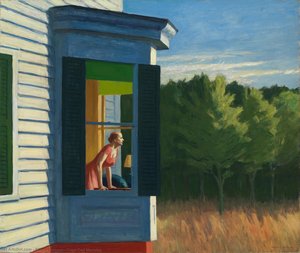
      Cape Cod Morning (1950) by Edward Hopper
      #15

      Cape Cod Morning

      1950

      Edward Hoppers "Cape Cod Morning" legt een sereen en toch intrigerend moment van eenzaamheid vast. Het schilderij toont een vrouw die bij een open raam zit, terwijl haar…

      Kamers voor Toeristen (1945) by Edward Hopper
      #16

      Kamers voor Toeristen

      1945 · Yale University Art Gallery

      Edward Hopper's “Rooms for Tourists,” geschilderd in 1945, is meer dan een afbeelding; het is een moment vastgelegd in de tijd. Het werk, met afmetingen van 107 x…

      nighthawks (1942) by Edward Hopper
      #17

      nighthawks

      1942 · Art Institute of Chicago

      A Window Into Loneliness: Exploring Edward Hopper’s Nighthawks Edward Hopper's "Nighthawks," completed in 1942 during the tumultuous backdrop of World War II, transcends mere representation; it embodies a…

      Compartiment C Wagen by Edward Hopper
      #18

      Compartiment C Wagen

      "Compartiment C Wagen" is een treffend voorbeeld van Hoppers fascinatie voor eenzame figuren in transit. Het schilderij toont een dame die alleen in een treincompartiment zit, haar gezicht…

      Twee Komieken (1965) by Edward Hopper
      #19

      Twee Komieken

      1965

      Edward Hoppers schilderij uit 1965, “Twee Komieken”, is niet louter een afbeelding van twee figuren op een podium; het is een zorgvuldig geconstrueerde meditatie over eenzaamheid, de vluchtigheid…

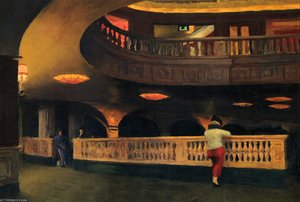
      New York Movie, MoMA, NY (1939) by Edward Hopper
      #21

      New York Movie, MoMA, NY

      1939

      Het kunstwerk toont een schemerig vertrek – wellicht een hotellobby of een statig appartement – bevolkt door een handvol figuren. De compositie is doelbewust complex en creëert een…

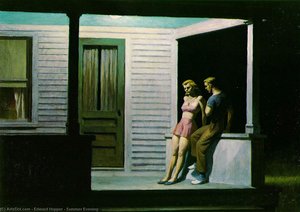
      Summer Evening (1947) by Edward Hopper
      #22

      Summer Evening

      1947

      A Portrait of Quietude: Exploring Edward Hopper’s “Summer Evening” Edward Hopper's "Summer Evening" isn’t merely a depiction of a scene; it’s an exquisitely crafted meditation on human experience—a…

      Hotel room (1931) by Edward Hopper
      #23

      Hotel room

      1931

      The Poignant Stillness of a Private Moment In Edward Hopper’s 1931 masterpiece, Hotel Room, the viewer is invited into a sanctuary of profound introspection. The scene is deceptively…

      Excursion into Philosophy by Edward Hopper
      #24

      Excursion into Philosophy

      A Quiet Drama: Unveiling Edward Hopper’s “Excursion into Philosophy” Edward Hopper's "Excursion into Philosophy" is a profoundly evocative work that encapsulates the core tenets of American Realism, offering…

      The Cat Boat (1922) by Edward Hopper
      #25

      The Cat Boat

      1922 · Smithsonian American Art Museum

      Edward Hopper's “The Cat Boat,” created in 1922, stands as a quintessential emblem of American Modernism—a deceptively simple scene imbued with profound psychological depth. More than just depicting…

      Rooms By The Sea (1951) by Edward Hopper
      #26

      Rooms By The Sea

      1951

      Rooms By The Sea: A Portrait of Quiet Contemplation Edward Hopper’s “Rooms by the Sea” transcends mere depiction; it's a distillation of mood, an embodiment of American Modernism’s…

      Reclining Nude (1927) by Edward Hopper
      #27

      Reclining Nude

      1927

      Introduction Reclining Nude, a watercolour painting by Edward Hopper, is a quintessential example of the artist's unique style and contribution to the New Realism movement. Created in 1927,…

      Rooms by the Sea (1951) by Edward Hopper
      #28

      Rooms by the Sea

      1951

      The Painting: A Representation of Serenity "CITE>Edward Hopper's 'Rooms by the Sea' (1951) is a masterpiece that embodies the essence of stillness and contemplation. The painting, available for…

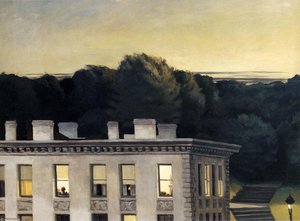
      House At Dusk (1935) by Edward Hopper
      #29

      House At Dusk

      1935

      The Painting: An Overview "CITE>Edward Hopper:CITE>'s House At Dusk, created in 1935, is a quintessential example of the artist's ability to capture the essence of American life through…

      Apotheek (1927) by Edward Hopper
      #30

      Apotheek

      1927 · Museum of Fine Arts

      Een Stil Moment in de Stad: Het Verkennen van Edward Hopper's "Drug Store" (1927) “Drug Store,” geschilderd in 1927 door de Amerikaanse meester Edward Hopper, is een aangrijpend…

      Sun on Prospect Street (Gloucester, Massachusetts) (1934) by Edward Hopper
      #31

      Sun on Prospect Street (Gloucester, Massachusetts)

      1934

      Edward Hopper's "Sun on Prospect Street" isn't merely a depiction of a Gloucester street scene; it’s a distilled essence of early 20th-century American experience. Painted in 1934, during…

      Woman in the Sun (1961) by Edward Hopper
      #32

      Woman in the Sun

      1961

      A Moment Frozen in Light: Edward Hopper’s “Woman in the Sun” Edward Hopper's "Woman in the Sun," painted in 1961, isn’t merely a depiction of a nude figure;…

      Second Story Sunlight (1960) by Edward Hopper
      #33

      Second Story Sunlight

      1960

      A Moment Suspended: Unveiling Edward Hopper’s “Second Story Sunlight” Edward Hopper's 1960 oil on canvas, *Second Story Sunlight*, is a quintessential example of American Realism at its most…

      Night Windows (1928) by Edward Hopper
      #34

      Night Windows

      1928 · MoMA - Museum of Modern Art

      A Window Into Solitude: Exploring Edward Hopper’s Night Windows Edward Hopper, a name synonymous with the quiet contemplation of modern existence, wasn't merely capturing landscapes; he was distilling…

      New York Office (1962) by Edward Hopper
      #35

      New York Office

      1962

      Edward Hopper’s “New York Office,” painted in 1962, transcends mere depiction; it embodies the very essence of modern solitude—a feeling profoundly familiar to viewers grappling with the complexities…

      Office in a Small City (1953) by Edward Hopper
      #36

      Office in a Small City

      1953

      In the vast gallery of American Realism, few works possess the haunting, cinematic stillness found in Edward Hopper’s 1953 masterpiece, Office in a Small City. To gaze upon…

      City Roofs (1932) by Edward Hopper
      #37

      City Roofs

      1932

      A Quiet Moment of Urban Existence Edward Hopper’s “City Roofs” (1932) is more than just a depiction of a cityscape; it's a poignant meditation on modern life, isolation,…

      Self-Portrait (1930) by Edward Hopper
      #38

      Self-Portrait

      1930

      This oil on canvas painting depicts a man wearing a brown hat and a blue shirt. He is shown with a serious expression, looking directly at the viewer.…

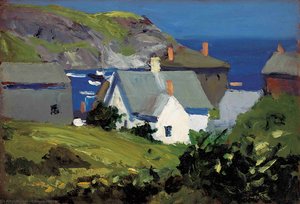
      Huizen van Monhegan, Maine by Edward Hopper
      #39

      Huizen van Monhegan, Maine

      Introductie tot het Amerikaans Realisme Edward Hopper, een vooraanstaande Amerikaanse realistisch schilder, staat bekend om zijn meeslepende olieverfschilderijen die zowel stedelijke als landelijke scènes verbeelden. Zijn unieke stijl…

      Four Lane Road by Edward Hopper
      #40

      Four Lane Road

      Edward Hopper's "Four Lane Road," painted in 1956, isn’t merely a depiction of a roadside scene; it’s a distilled essence of the American experience – a poignant meditation…

      Woman at Cafe Table (1907) by Edward Hopper
      #41

      Woman at Cafe Table

      1907 · Whitney Museum of American Art

      Woman at Cafe Table: A Portrait of Urban Isolation Edward Hopper’s “Woman at Cafe Table,” painted in 1906-1907, stands as a quintessential emblem of New Realism and embodies…

      First Row Orchestra (1951) by Edward Hopper
      #42

      First Row Orchestra

      1951 · Hirshhorn Museum and Sculpture Garden

      A Portrait of Quiet Observation: Exploring Edward Hopper’s “First Row Orchestra” Edward Hopper's "First Row Orchestra," painted in 1951, transcends mere depiction; it embodies the very essence of…

      House by the Railroad by Edward Hopper
      #43

      House by the Railroad

      In his 1925 masterpiece, House by the Railroad, Edward Hopper presents a scene that captures a profound sense of isolation through a meticulously controlled interplay of light and…

      untitled (3714) by Edward Hopper
      #44

      untitled (3714)

      Edward Hopper's "Untitled (3714)," painted in 1942, isn’t merely a depiction of a diner interior; it’s a distilled essence of modern American loneliness. This deceptively simple scene—an elderly…

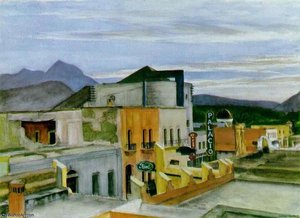
      el palacio (1946) by Edward Hopper
      #45

      el palacio

      1946

      Edward Hopper’s 1946 painting, “El Palacio,” isn’t merely a depiction of a city street; it’s a carefully constructed tableau of urban solitude and the quiet anxieties of modern…

      the city (1927) by Edward Hopper
      #46

      the city

      1927

      The City, painted by Edward Hopper in 1927, is a striking black and white depiction of early 20th-century American urban life. This artwork isn't merely a representation of…

      rooms by the sea by Edward Hopper
      #47

      rooms by the sea

      Edward Hopper’s Rooms by the Sea is a painting from 1951 that depicts an interior space with a doorway opening toward the ocean. The scene features a room…

      The Camel's Hump (1931) by Edward Hopper
      #49

      The Camel's Hump

      1931

      Edward Hopper's "The Camel’s Hump," painted in 1931, isn’t merely a depiction of a mountain range; it’s a distilled essence of American loneliness and the quiet drama unfolding…

      the el station by Edward Hopper
      #50

      the el station

      In the quiet, heavy atmosphere of Edward Hopper’s “The El Station,” we are invited into a moment suspended in time, where the bustling energy of the American metropolis…

      Dawn in Pennsylvania (1942) by Edward Hopper
      #51

      Dawn in Pennsylvania

      1942

      A Solitary Glimpse: Dawn in Pennsylvania by Edward Hopper Edward Hopper’s *Dawn in Pennsylvania*, painted in 1942, isn't merely a depiction of a railroad station; it’s a distilled…

      Corn Hill (1930) by Edward Hopper
      #52

      Corn Hill

      1930

      Edward Hopper's "Corn Hill," painted in 1930, isn’t merely a depiction of a rural landscape; it’s a poignant meditation on isolation and the quiet dignity of human existence…

      tramp steamer (1908) by Edward Hopper
      #53

      tramp steamer

      1908

      A Storm-Tossed Soul: Edward Hopper’s “Tramp Steamer” Edward Hopper's "Tramp Steamer," painted in 1908, isn’t merely a depiction of a ship at sea; it’s a profound meditation on…

      Self Portrait, , Whitney Museum of American (1930) by Edward Hopper
      #54

      Self Portrait, , Whitney Museum of American

      1930

      Edward Hopper's "Self Portrait," painted in 1930, isn’t merely a depiction of an artist; it’s a distilled essence of the anxieties and quietude that defined much of early…

      Rocks at the Fort Gloucester (1924) by Edward Hopper
      #55

      Rocks at the Fort Gloucester

      1924

      Edward Hopper's 1924 painting, “Rocks at the Fort Gloucester,” is more than just a landscape; it’s a quiet meditation on human presence within the vastness of nature and…

      Morning sun, Columbus Museum of Art, Columbus, (1952) by Edward Hopper
      #56

      Morning sun, Columbus Museum of Art, Columbus,

      1952

      A Window into Quietude: Exploring Edward Hopper’s “Morning Sun” Edward Hopper's "Morning Sun," painted in 1952, isn’t merely a depiction of a room; it’s an encapsulation of the…

      Study of a Seated Woman (1899) by Edward Hopper
      #57

      Study of a Seated Woman

      1899

      Edward Hopper's "Study of a Seated Woman," rendered in 1899, isn’t merely a depiction of a figure; it’s a distilled essence of late 19th-century American introspection. This intimate…

      Portrait Of Orleans by Edward Hopper
      #58

      Portrait Of Orleans

      WahooArt offers exquisite hand-painted reproductions of Edward Hopper's "Portrait of Orleans," allowing you to bring this iconic work of American art into your home or office. Each reproduction…

      sun empty room by Edward Hopper
      #59

      sun empty room

      Edward Hopper's "Sun in an Empty Room," painted in 1963, isn’t merely a depiction of a vacant room; it’s a distilled essence of modern American isolation and the…

      The Long Leg (1930) by Edward Hopper
      #60

      The Long Leg

      1930

      A Quiet Drama on the Waves: Edward Hopper’s *The Long Leg* (1930) Edward Hopper's *The Long Leg*, painted in 1930, is more than just a seascape; it’s a…

      Bridle Path (1939) by Edward Hopper
      #61

      Bridle Path

      1939

      Bridle Path: A Portrait of Quietude in Modern America Edward Hopper’s “Bridle Path,” painted in 1939, stands as a quintessential emblem of American Realism—a genre that sought to…

      night windows by Edward Hopper
      #62

      night windows

      In the quietude of a dimly lit room, where the boundaries between the interior soul and the external world begin to blur, lies the profound essence of Edward…

      Hotel by a Railroad (1952) by Edward Hopper
      #63

      Hotel by a Railroad

      1952

      Edward Hopper's "Hotel by a Railroad," painted in 1952, isn’t merely a depiction of an interior scene; it’s a carefully constructed meditation on loneliness, isolation, and the subtle…

      Queensborough-Bridge (1913) by Edward Hopper
      #64

      Queensborough-Bridge

      1913

      In the vast landscape of American modernism, few images capture the quiet tension of urban existence as poignantly as Edward Hopper’s Queensborough Bridge. Painted in 1913, this monumental…

      paris street by Edward Hopper
      #65

      paris street

      In the quiet corners of Edward Hopper’s “Paris Street,” we encounter more than just a cityscape; we find a profound meditation on the human condition. Painted in 1926,…

      cape cod morning by Edward Hopper
      #66

      cape cod morning

      In the quietude of an early summer morning, Edward Hopper captures a moment that feels both profoundly intimate and hauntingly distant. Cape Cod Morning is not merely a…

      sunday by Edward Hopper
      #67

      sunday

      The Painting and Its Context Sunday, a painting by Edward Hopper, is a quintessential representation of modern American life in the early 20th century. Created in 1926, this…

      Evening Wind by Edward Hopper
      #68

      Evening Wind

      Edward Hopper’s “Evening Wind,” executed in 1930, stands as a quintessential emblem of American Modernism—a deceptively simple image brimming with psychological depth and masterful artistic execution. More than…

      ongetiteld (7523) by Edward Hopper
      #69

      ongetiteld (7523)

      Een Blik op het Moderne Leven: Edward Hoppers ongetiteld (7523) Dit meeslepende werk van Edward Hopper, voorlopig getiteld “ongetiteld (7523)”, biedt een fascinerend venster op de sociale dynamiek…

      People in the Sun (1960) by Edward Hopper
      #70

      People in the Sun

      1960

      Edward Hopper's People in the Sun, completed in 1960, serves as a profound meditation on the human experience, capturing a sense of quietude and the pervasive feeling of…

      The lee shore, private (1941) by Edward Hopper
      #71

      The lee shore, private

      1941

      Edward Hopper's "The Lee Shore," painted in 1941, isn’t merely a depiction of a coastal scene; it’s a distilled essence of American loneliness and the subtle anxieties simmering…

      Rocks and Sea (1919) by Edward Hopper
      #72

      Rocks and Sea

      1919 · Whitney Museum of American Art

      A Moment Frozen in Azure The sea air feels heavy and salt-laden as the eye meets the deep, blue expanse of this landscape. In this 1919 scene, the…

      Zelfportret by Edward Hopper
      #73

      Zelfportret

      Edward Hopper's "Self Portrait" (1925-1930), housed within the Whitney Museum of American Art, isn’t merely a depiction of an artist; it’s a profound meditation on isolation, observation, and…

      Sheridan Theatre by Edward Hopper
      #74

      Sheridan Theatre

      Edward Hopper’s Sheridan Theatre, painted in 1937, isn't merely a depiction of an interior scene; it’s a carefully constructed tableau of loneliness and unspoken narratives. The painting immediately…

      Freight Car at Truro by Edward Hopper
      #75

      Freight Car at Truro

      In the vast, sweeping landscape of American art, few images capture the heavy, cinematic silence of a moment quite like Edward Hopper’s Freight Car at Trurol. Painted in…

      Lighthouse at Two Lights (1929) by Edward Hopper
      #76

      Lighthouse at Two Lights

      1929

      Edward Hopper’s Lighthouse at Two Lights, completed in 1929, presents a striking visual meditation on the interplay between light and shadow. The composition features a tall lighthouse situated…

      summer interior (1909) by Edward Hopper
      #77

      summer interior

      1909

      Edward Hopper’s Summer Interior, painted in 1909, presents a scene of profound stillness within a domestic setting. The composition centers on a young woman positioned on the floor…

      cape cod evening by Edward Hopper
      #78

      cape cod evening

      In the quiet corners of American Modernism, few images resonate with as much profound, whispered intensity as Edward Hopper’s Cape Cod Evening. At first glance, the painting presents…

      rooms for tourists by Edward Hopper
      #80

      rooms for tourists

      A Quiet American Narrative: Exploring Edward Hopper’s “Rooms for Tourists” Rooms for Tourists, painted in 1945 by the master of American Realism, Edward Hopper, is a captivating study…

      Ochtend in Zuid-Carolina by Edward Hopper
      #81

      Ochtend in Zuid-Carolina

      Edward Hopper’s “South Carolina Morning,” geschilderd in 1955, is meer dan een simpel portret; het is een diepe reflectie over eenzaamheid, veerkracht en de complexiteit van het leven…

      Intermission (small) by Edward Hopper
      #82

      Intermission (small)

      Edward Hopper’s Solitary Stage: Unpacking “Intermission” Edward Hopper's "Intermission" (1963) isn’t merely a painting; it’s a distilled moment of American solitude, a poignant tableau captured with the artist’s…

      untitled (7096) by Edward Hopper
      #83

      untitled (7096)

      Edward Hopper’s “Untitled (7096),” a painting rendered in the twilight hours, isn’t merely a depiction of a pharmacy storefront; it’s a distilled essence of 20th-century American loneliness. Completed…

      Eleven AM by Edward Hopper
      #84

      Eleven AM

      Edward Hopper, een meester van Amerikaanse realisme, bezat een bijzondere gave om de essentie van het moderne leven vast te leggen – zijn stille wanhoop, zijn doordringende eenzaamheid…

      New York Pavements, (1924) by Edward Hopper
      #85

      New York Pavements,

      1924

      Edward Hopper's "New York Pavements," painted in 1924, stands as a quintessential emblem of American Modernism—a deceptively simple depiction that speaks volumes about the anxieties and quiet contemplations…

      Lighthouse and Building, Portland by Edward Hopper
      #86

      Lighthouse and Building, Portland

      Edward Hopper’s Luminous Solitude: Exploring “Lighthouse and Building” Edward Hopper's "Lighthouse and Building," painted in 1927, isn’t merely a depiction of a coastal scene; it’s a masterful distillation…

      Circle Theatre by Edward Hopper
      #87

      Circle Theatre

      In the quiet, heavy atmosphere of Edward Hopper’s "Circle Theatre," we are invited to witness more than just a street corner in a bustling metropolis; we are invited…

      Room in Brooklyn (1932) by Edward Hopper
      #88

      Room in Brooklyn

      1932 · Museum of Fine Arts

      Edward Hopper's "Room in Brooklyn," painted in 1932, isn’t merely a depiction of an interior space; it’s a distilled essence of American loneliness and the quiet contemplation that…

      Seven A.M. (1948) by Edward Hopper
      #90

      Seven A.M.

      1948

      In the quiet, early hours of a mid-century morning, Edward Hopper’s "Seven A.M." invites us into a space where time seems to hold its breath. Painted in 1948,…

      The City (1927) by Edward Hopper
      #91

      The City

      1927

      A Quiet Vision of Urban Life: Edward Hopper’s “The City” (1927) Subject and Composition: “The City” presents a strikingly composed street corner scene, a quintessential example of Edward…

      First Row Orchestra (1951) by Edward Hopper
      #92

      First Row Orchestra

      1951

      A Moment Frozen in Time: Edward Hopper’s “First Row Orchestra” Edward Hopper's "First Row Orchestra," painted in 1951, isn’t merely a depiction of an evening at the theater;…

      House with big pine by Edward Hopper
      #93

      House with big pine

      The painting depicts a white house featuring a black roof and a large chimney positioned on its side. Two windows are visible within the structure. The setting includes…

      Valley Of The Seine (1908) by Edward Hopper
      #94

      Valley Of The Seine

      1908

      Edward Hopper's "Valley Of The Seine," painted in 1908, isn’t merely a landscape; it’s a distilled essence of early 20th-century America – a poignant tableau of solitude and…

      Ryder's House (1933) by Edward Hopper
      #95

      Ryder's House

      1933

      Edward Hopper’s “Ryder’s House,” completed in 1933, stands as a quintessential emblem of American Realism during the Depression era. More than just a depiction of a simple farmhouse…

      Intermission by Edward Hopper
      #96

      Intermission

      Edward Hopper’s Intermission, painted in 1963, isn't merely a depiction of a theater lobby; it’s a meticulously crafted tableau of human isolation and the poignant beauty of unspoken…

      Gas, Moma, NY (1940) by Edward Hopper
      #97

      Gas, Moma, NY

      1940

      Edward Hopper’s “Gas,” painted in 1940 and currently residing at MoMA (Museum of Modern Art), isn't merely a depiction of a roadside gas station; it’s a masterful distillation…

      Cape Cod Morning (1950) by Edward Hopper
      #98

      Cape Cod Morning

      1950

      In the vast landscape of American modernism, few images resonate with as much profound stillness as Edward Hopper’s 1950 masterpiece, Cape Cod Morning. This striking canvas serves as…

      Room for tourists, Yale University Art Gallery, (1945) by Edward Hopper
      #99

      Room for tourists, Yale University Art Gallery,

      1945

      A Quiet American Night: Exploring Edward Hopper’s “Room for Tourists” “Room for Tourists,” painted in 1945 by master realist Edward Hopper, is more than just a depiction of…

      Eleven A.M. (1926) by Edward Hopper
      #100

      Eleven A.M.

      1926

      Edward Hopper’s “Eleven A.M.” (1926) is more than just a depiction of a woman in a room; it’s a meticulously crafted meditation on the quiet loneliness inherent within…

      Edward Hopper's canvases, period by period

      What Edward Hopper painted most

      The four subjects that return most often on these canvases, each with its best-loved example.

      Where Edward Hopper's canvases hang

      The 8 museums that hold the most of the paintings on this page.

      Museum City Works by Edward Hopper Paintings from this list
      MoMA - Museum of Modern Art, New York CityMoMA - Museum of Modern Art New York City 4 Huis bij de spoorlijn, New York Film, untitled (5560)
      Whitney Museum of American Art, New YorkWhitney Museum of American Art New York 10 Early sunday morning Whitney Museum of American, Woman at Cafe Table, Rocks and Sea
      Art Institute of Chicago, ChicagoArt Institute of Chicago Chicago 3 Nachtuilen, Het Art Institute of Chicago, Chicago, nighthawks, Interior (Model Reading)
      Yale University Art Gallery, HartfordYale University Art Gallery Hartford 3 Zonnelicht in een Cafetaria, Kamers voor Toeristen
      Museum of Fine Arts, BostonMuseum of Fine Arts Boston 3 Apotheek, Room in Brooklyn
      Hirshhorn Museum and Sculpture Garden, Washington, D.C.Hirshhorn Museum and Sculpture Garden Washington, D.C. 3 First Row Orchestra
      Smithsonian American Art Museum, Washington, D.C.Smithsonian American Art Museum Washington, D.C. 2 The Cat Boat
      Des Moines Art Center, Des MoinesDes Moines Art Center Des Moines 1 Automat (small)

      Edward Hopper's best-loved canvas of each decade

      1. 1890s
        Study of a Seated Woman (1899) by Edward Hopper
        Ranked 57 of 100

        Study of a Seated Woman

        Age 8 – 17

        Edward Hopper's "Study of a Seated Woman," rendered in 1899, isn’t merely a depiction of a figure; it’s a distilled essence of late 19th-century American introspection. This intimate…

      2. 1900s
        Woman at Cafe Table (1907) by Edward Hopper
        41 of 100

        Woman at Cafe Table

        Age 18 – 27 · Whitney Museum of American Art

        Woman at Cafe Table: A Portrait of Urban Isolation Edward Hopper’s “Woman at Cafe Table,” painted in 1906-1907, stands as a quintessential emblem of New Realism and embodies…

      3. 1910s
        Queensborough-Bridge (1913) by Edward Hopper
        Ranked 64 of 100

        Queensborough-Bridge

        Age 28 – 37

        In the vast landscape of American modernism, few images capture the quiet tension of urban existence as poignantly as Edward Hopper’s Queensborough Bridge. Painted in 1913, this monumental…

      4. 1920s
        Huis bij de spoorlijn (1925) by Edward Hopper
        3 of 100

        Huis bij de spoorlijn

        Age 38 – 47 · MoMA - Museum of Modern Art

        Introduction to Edward Hopper and His Work Edward Hopper, a renowned American artist, is celebrated for his captivating oil paintings that often depicted modern life in the early…

      5. 1930s
        New York Film (1939) by Edward Hopper
        4 of 100

        New York Film

        Age 48 – 57 · MoMA - Museum of Modern Art

        Het SchilderkunstwerkEdward Hopper's "CITE>New York Movie" is een aangrijpend olieverfschilderij op canvas, gemaakt in 1939. Het bevindt zich momenteel in het prestigieuze Museum of Modern Art (MoMA) in…

      6. 1940s
        Nachtuilen, Het Art Institute of Chicago, Chicago (1942) by Edward Hopper
        Canvas 1 of 100

        Nachtuilen, Het Art Institute of Chicago, Chicago

        Age 58 – 67 · Art Institute of Chicago

        Edward Hoppers ‘Nighthawks’, geschilderd in 1942, is meer dan slechts een weergave van het nachtelijk leven in een Amerikaanse stad. Het is een iconisch beeld geworden, dat diep…

      7. 1950s
        Zonnelicht in een Cafetaria (1958) by Edward Hopper
        13 of 100

        Zonnelicht in een Cafetaria

        Age 68 – 77 · Yale University Art Gallery

        Edward Hoppers Sunlight in a Cafeteria (1958) is een meesterlijke weergave van stedelijke eenzaamheid, uitgevoerd met de precisie en emotionele diepte die zijn iconische stijl definiëren. Dit olieverfschilderij…

      8. 1960s
        Mensen aan de Zon (1960) by Edward Hopper
        Ranked 14 of 100

        Mensen aan de Zon

        Age 78 – 85

        Een sereen moment vastgelegd in de tijd Edward Hoppers "Mensen in de Zon" nodigt de kijker uit tot een verstilde scène van vijf individuen die genieten van een…

      About Edward Hopper's canvases: your questions answered

      What is the best-known painting by Edward Hopper?Read the answer

      Nachtuilen, Het Art Institute of Chicago, Chicago (1942), Art Institute of Chicago, Chicago. Automat (small) and Huis bij de spoorlijn (1925) follow.

      What age was Edward Hopper when Nachtuilen, Het Art Institute of Chicago, Chicago was painted?Read the answer

      Edward Hopper, born in 1882, was 60 years old: Nachtuilen, Het Art Institute of Chicago, Chicago dates from 1942.

      What are the 10 most famous paintings by Edward Hopper?Read the answer

      Nachtuilen, Het Art Institute of Chicago, Chicago, Automat (small), Huis bij de spoorlijn, New York Film, untitled (5560), Early sunday morning Whitney Museum of American, Automat, Zondag, Gas and Chop Suey. Each canvas in the ranking above comes with its year and its museum.

      How many works did Edward Hopper paint in all?Read the answer

      366 works by Edward Hopper are in our catalogue, dated 1899 to 1965.

      Where can I see Edward Hopper's most famous canvases?Read the answer

      Mostly in MoMA - Museum of Modern Art (New York City), Whitney Museum of American Art (New York) and Art Institute of Chicago (Chicago); the list above names each museum and its canvases.

      When did Edward Hopper paint the best-loved canvases?Read the answer

      In 1920s, which gave 15 of the 100 works on this page, Huis bij de spoorlijn among them.

      Which are Edward Hopper's earliest and latest famous canvases?Read the answer

      The earliest canvas here is Study of a Seated Woman (1899); the latest is Twee Komieken (1965).

      What did Edward Hopper paint most often?Read the answer

      Solitude (46), Isolation (35) and Urban landscape (27), across the 100 works on this page.

      Which medium did Edward Hopper paint in most often?Read the answer

      Oil On Canvas, used in 34 of the 100 works on this page.

      Which movement is Edward Hopper's painting part of?Read the answer

      Hedendaags realisme and American realism, as the canvases on this page show.

      Which Edward Hopper canvases hang at the MoMA - Museum of Modern Art?Read the answer

      The MoMA - Museum of Modern Art, New York City holds 4 of the works on this page, among them Huis bij de spoorlijn, New York Film and untitled (5560).

      Edward Hopper: a life in paint

      De Stilte van het Amerikaanse Landschap

      Edward Hopper werd geboren in Upper Nyack, Verenigde Staten van Amerika. Zijn vroege jaren werden doorgebracht met het observeren van de wereld met een onvermoeibare blik, een gewoonte die begon met kindertekeningen die met uiterste precisie gedateerd en gesigneerd waren. Hoewel zijn ouders een pragmatisch pad in de commerciële illustratie voorstelden, bleef zijn focus gericht op de schone kunsten. Hij studeerde aan de New York School of Art onder William Merritt Chase en Robert Henri. Deze jaren gaven hem de technische vaardigheid die nodig was om de wereld onverbloemd en eerlijk af te beelden. Hij zocht niet naar de vluchtige penseelstreken van de impressionisten die hij in Parijs ontmoette. In plaats daarvan ontwikkelde hij een manier van kijken die de stilte van een moment verkiest boven de beweging van een menigte.

      Zijn werk concentreert zich vaak op het alledaagse. Hij keek naar huizen, diners, kantoren en hotelkamers. Hij stripte onnodige details weg om de onderliggende emotionele waarheid van een scène te vinden. In House by the Railroad (1925) onthult een eenvoudige compositie een gevoel van mysterie en isolement. Hij gebruikte licht en schaduw niet louter om een kamer te beschrijven, maar om een stemming te creëren. De precieze weergave van een schaduw op een muur of de manier waarop het licht een raam raakt, werd zijn methode om de psychologische staat van zijn onderwerpen te communiceren.

      Licht en het Stedelijk Interieur

      De manier waarop licht een ruimte binnendringt, is een centrale personage in zijn schilderijen. In Nighthawks (1942) snijdt het harde tl-licht van een nachtelijke diner door de duisternis van een verlaten stedelijke straat. De figuren binnen zijn fysiek dicht bij elkaar, maar lijken verloren in hun eigen gedachten, losgekoppeld van elkaar. Dit gevoel van anonimiteit in een drukke stad werd een terugkerend thema. Hij legde de spanning vast van het alleen zijn op een openbare plek, een gevoel dat resoneert in werken als Automat en Office in a Small City. Hij was gefascineerd door de manier waarop kunstlicht interageert met de natuurlijke duisternis van de nacht.

      Zijn vrouw, Josephine Nivison Hopper, was een constante aanwezigheid. Zij was een medekunstenaar en diende vaak als zijn model. Haar aanwezigheid is voelbaar in de karakterisering van vele van zijn vrouwelijke figuren. Samen leefden zij een bescheiden leven en brachten vaak de zomers door in New England, wat een grote invloed had op de landschappen die hij schilderde. Zijn afbeeldingen van het Amerikaanse landschap, zowel landelijk als stedelijk, benadrukken vaak een zekere soberheid of leegte. Of het nu gaat om een tankstation langs de weg in Gas (1940) of een stille kamer in een hotel, het onderwerp is altijd de kruising tussen een fysieke plek en een private, innerlijke ervaring.

      Een Erfenis van Observatie

      De invloed van Hopper strekt zich uit tot in de visuele taal van film en literatuur. Zijn vermogen om een gevoel van psychologische spanning te creëren door middel van compositie is opgemerkt door velen die de manier bestuderen waarop verhalen door beelden worden verteld. Zijn schilderijen zijn te vinden in grote musea wereldwijd, in collecties zoals het Whitney Museum of American Art en het Museum of Fine Arts in Boston. Hij streefde niet naar grote historische epossen. Hij vond zijn onderwerp in de stille hoeken van het dagelijks leven, waarbij hij een eenvoudig raam of een voorbijganger transformeerde tot een studie van de menselijke conditie. Zijn werk blijft een studie van de stilte die tussen mensen bestaat.

      All 366 works by Edward Hopper →