Atelier — Gratis verzending wereldwijd — Levertijd 2–6 weken
      Filippo Lippi, 1406 – 1469

      De 100 beroemdste schilderijen van Filippo Lippi, gerangschikt

      Het meest geliefde schilderij van Filippo Lippi is Madonna with Child and Angels (1460). Adoration of the Magi (1445) en The Annunciation (1435) volgen daarna in de lijst met doeken die lezers het beste kennen. Onze catalogus bevat 277 werken van Filippo Lippi: hier zijn de 100 bekendste, elk met het jaartal, het museum en wat het werk zo bijzonder maakt.

      Gerangschikt op basis van onze populariteitsscore, die de zoekopdrachten, bezoeken en bestellingen voor elk werk combineert. Bijgewerkt in oktober 2026. Elk schilderij op deze pagina kan worden besteld als een handgeschilderde oliereductie op linnen canvas, of als een fine art print, uitgevoerd in de door u gekozen afmeting.

      Portret van Filippo Lippi
      Filippo Lippi · 1406 – 1469
      Geboren · overleden
      1406 – 1469, Florence
      Stroming
      Vroege renaissance
      Werken in onze catalogus
      277
      Meest bekend
      Madonna with Child and Angels (1460)
      Meeste werken in
      Duomo

      Top 10 schilderijen van Filippo Lippi: de doeken die iedereen kent

      Madonna with Child and Angels (1460) door Filippo Lippi
      1

      Madonna with Child and Angels

      1460 · Oil

      The Madonna with Child and Angels is a stunning painting created by the renowned Italian artist Fra Filippo Lippi in 1460. This beautiful artwork is a testament to the artist's skill and mastery of the early Renaissance style. The painting depicts the Virgin Mary holding her child, surrounded by two angels, creating a serene and peaceful atmosphere. The Artist and His Style Fra Filippo Lippi was a Carmelite priest and…

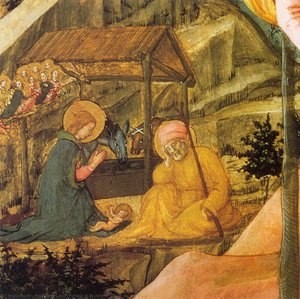
      Adoration of the Magi (1445) door Filippo Lippi
      2

      Adoration of the Magi

      1445 · Tempera On Panel · National Gallery of Art, Washington

      In the heart of the Florentine Renaissance, a masterpiece emerged that would bridge the gap between the ethereal spirituality of the Middle Ages and the burgeoning humanism of a new era. The Adoration of the Magi is not merely a painting; it is a breathtaking visual symphony, a circular tondo that captures the very moment the divine intersects with the earthly. As your eyes wander through this complex composition, you…

      The Annunciation (1435) door Filippo Lippi
      3

      The Annunciation

      1435 · Oil · National Gallery of Art, Washington

      Fra Filippo Lippi's 1435 tempera painting, “The Annunciation,” is more than just a depiction of a pivotal biblical moment; it’s a profound exploration of faith, humility, and the burgeoning humanism of the early Renaissance. Housed within the National Gallery of Art in Washington D.C., this work transcends its historical context to resonate with viewers centuries later, offering a glimpse into the artist's exceptional skill and deeply considered vision.

      The Annunciation - tempera on wood - (1440) door Filippo Lippi
      4

      The Annunciation - tempera on wood -

      1440 · Tempera

      The Divine Encounter: An Exploration of Lippi's Annunciation To stand before The Annunciation by Fra Filippo Lippi is to step across the threshold of time and into a moment suspended between the earthly and the divine. This exquisite work, executed in 1440 using the delicate medium of tempera on wood, captures the pivotal instant when the Archangel Gabriel announces to Mary that she shall conceive the Son of God. It…

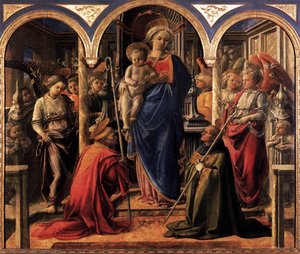
      Madonna and Child Enthroned with Saints (detail) (1430) door Filippo Lippi
      5

      Madonna and Child Enthroned with Saints (detail)

      1430 · Oil On Canvas · Museo della Collegiata, Empoli

      To gaze upon this detail from Filippo di Tommaso Lippi’s Madonna and Child Enthroned with Saints is to step directly into the luminous heart of the early Renaissance. The scene unfolds with an almost palpable sense of reverence, drawing the viewer into a sacred moment captured in oil paint. At the core, the Virgin Mary presides with serene majesty, her presence anchoring the entire composition. Before her kneels a figure,…

      Madonna della Cintola (detail) (1455) door Filippo Lippi
      6

      Madonna della Cintola (detail)

      1455 · Oil On Panel · Museo Civico, Prato

      To stand before a detail from Filippo di Tommaso Lippi’s Madonna della Cintola is to step directly into the luminous, deeply spiritual atmosphere of the early Italian Renaissance. This painting, executed around 1455, is not merely a depiction of sacred figures; it is a profound meditation on faith, lineage, and divine grace. The composition immediately draws the eye to the central grouping—the venerable male figure holding his staff, flanked by…

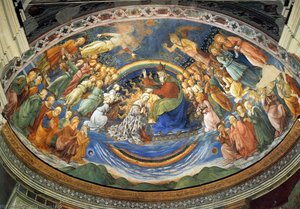
      Coronation of the Virgin (detail) (18) (1467) door Filippo Lippi
      7

      Coronation of the Virgin (detail) (18)

      1467 · Acrylic On Canvas · Duomo, Spoleto

      Filippo di Tommaso Lippi's “Coronation of the Virgin,” painted in 1467, isn’t merely a depiction of a religious scene; it’s an immersive experience, a window into the heart of Renaissance Florence and the fervent spirituality of its artists. This exquisite fresco, currently housed within the Uffizi Gallery in Florence, captures a pivotal moment – Mary's divine coronation – with a breathtaking blend of realism, symbolic richness, and masterful technique. Lippi,…

      Coronation of the Virgin (detail) (1441) door Filippo Lippi
      8

      Coronation of the Virgin (detail)

      1441 · Tempera On Panel · Galleria degli Uffizi, Florence

      The Coronation of the Virgin is a renowned painting by the Italian artist Fra Filippo Lippi, created in 1441. This tempera on panel artwork is housed at the Galleria degli Uffizi in Florence, Italy, and is considered one of the most significant works of the Early Renaissance. The Painting's Composition and Style The painting depicts a religious scene with a group of figures dressed in medieval clothing, including angels, saints,…

      Funeral of St Jerome (1460) door Filippo Lippi
      9

      Funeral of St Jerome

      1460 · Tempera · Duomo, Prato

      To stand before Fra Filippo Lippi’s Funeral of St. Jerome is to step across the threshold of time and into a moment suspended by profound reverence. This monumental canvas, executed in 1460, does more than merely depict a funeral; it captures the very essence of spiritual transition—the solemn passage from earthly life to eternal rest. The scene unfolds with an almost palpable weight, drawing the viewer into the hushed gathering…

      Madonna Enthroned with Saints (detail) (1445) door Filippo Lippi
      10

      Madonna Enthroned with Saints (detail)

      1445 · Tempera On Panel · Galleria degli Uffizi, Florence

      In this detail from the 1445 panel, the Virgin Mary occupies the central space, seated upon a monumental throne. Her face is rendered with a soft, rounded form, and she holds the infant Jesus against her chest. Behind her, two men are positioned in a vertical arrangement. One figure stands closely behind the throne, while another man appears further back, creating a sense of layered depth within the religious scene.…

      Meer canvassen van Filippo Lippi, van 11 tot 100

      Annunciation (detail) (1443) door Filippo Lippi
      #12

      Annunciation (detail)

      1443 · Alte Pinakothek

      To gaze upon this detail from Fra Filippo Lippi’s Annunciation (1443) is to step directly into the luminous, contemplative heart of the Early Renaissance. It is not merely…

      Bestel dit canvas →
      The Beheading of John the Baptist (1452) door Filippo Lippi
      #13

      The Beheading of John the Baptist

      1452 · Duomo

      Executed in 1452, this fresco utilizes pigment applied directly to wet plaster to capture a pivotal biblical moment within the Duomo of Prato, Italy. The technique lends a…

      Adoration of the Magi (detail) (1445) door Filippo Lippi
      #14

      Adoration of the Magi (detail)

      1445 · National Gallery of Art

      In the heart of the Florentine Renaissance, where the spiritual and the human began to dance in a delicate, newfound harmony, Filippo di Tommaso Lippi captured a scene…

      Bestel dit canvas →
      Madonna with Child and Two Angels (1465) door Filippo Lippi
      #15

      Madonna with Child and Two Angels

      1465 · Galleria degli Uffizi

      Within the hallowed halls of the Uffizi Gallery in Florence resides a painting that transcends mere representation, offering instead a poignant glimpse into the heart of 15th-century Italy…

      Bestel dit canvas →
      Madonna Enthroned (1437) door Filippo Lippi
      #17

      Madonna Enthroned

      1437 · Galleria Nazionale d’Arte Antica

      To gaze upon Fra Filippo Lippi's Madonna Enthroned is to step directly into the luminous heart of the early Italian Renaissance. This masterpiece, painted in 1437, transcends mere…

      Laat het met de hand schilderen →
      St Michael (detail) (1456) door Filippo Lippi
      #18

      St Michael (detail)

      1456 · Cleveland Museum of Art

      This detail from a 1456 tempera on panel painting focuses on the face and upper torso of St Michael. The figure is depicted with an intense expression, eyes…

      Bestel dit canvas →
      Coronation of the Virgin (detail) (15) (1441) door Filippo Lippi
      #19

      Coronation of the Virgin (detail) (15)

      1441 · Galleria degli Uffizi

      In the delicate fragment of Filippo di Tommaso Lippi’s Coronation of the Virgin, we are invited to step through a portal into the heart of the Italian Renaissance.…

      Annunciation (1445) door Filippo Lippi
      #20

      Annunciation

      1445 · Basilica di San Lorenzo

      In the quiet, hallowed atmosphere of the Quattrocento, few moments capture the intersection of the celestial and the earthly as poignantly as Filippo di Tommaso Lippi’s Annunciation. This…

      Kroning van Maria (1467) door Filippo Lippi
      #24

      Kroning van Maria

      1467 · Duomo

      In the heart of the Italian Renaissance, few works capture the ethereal intersection of human devotion and divine majesty as profoundly as Fra Filippo Lippi’s Coronation of the…

      Coronation of the Virgin (detail) (17) (1467) door Filippo Lippi
      #28

      Coronation of the Virgin (detail) (17)

      1467 · Duomo

      In the heart of the Italian Renaissance, few works capture the ethereal intersection of human devotion and divine majesty as profoundly as Filippo di Tommaso Lippi’s Coronation of…

      Annunciation (detail) (14) (1443) door Filippo Lippi
      #29

      Annunciation (detail) (14)

      1443 · Alte Pinakothek

      In the quiet, hallowed corridors of the Alte Pinakothek in Munich, there exists a moment frozen in time, a fragment of celestial grace captured by the hand of…

      Annunciation (detail) (18) (1445) door Filippo Lippi
      #30

      Annunciation (detail) (18)

      1445 · Basilica di San Lorenzo

      In the quiet corridors of art history, few moments capture the intersection of the divine and the earthly as tenderly as Fra Filippo Lippi’s Annunciation. This exquisite detail,…

      Bestel dit canvas →
      Annunciation (1445) door Filippo Lippi
      #31

      Annunciation

      1445 · Basilica di San Lorenzo

      Filippo Lippi’s “Annunciation,” painted around 1445 during his formative years in Florence, is more than just a depiction of a pivotal biblical moment; it's a profound meditation on…

      Haal dit licht in huis →
      Madonna and Child (1440) door Filippo Lippi
      #33

      Madonna and Child

      1440 · National Gallery of Art

      A Vision of Devotion: Exploring Filippo Lippi’s Madonna and Child The painting “Madonna and Child,” attributed to Filippo di Tommaso Lippi, stands as a testament to the artistic…

      Bestel dit canvas →
      Death of the Virgin (1467) door Filippo Lippi
      #34

      Death of the Virgin

      1467 · Duomo

      Fra Filippo Lippi's “Death of the Virgin,” painted in 1467 and housed within the majestic Duomo of Spoleto, Italy, isn’t merely a depiction of mortality; it’s a profound…

      Haal dit licht in huis →
      Spoleto-Coronation of the Virgin (1469) door Filippo Lippi
      #36

      Spoleto-Coronation of the Virgin

      1469

      The Spoleto-Coronation of the Virgin is a significant fresco by the Florentine painter Filippo Lippi. It forms a central part of the larger Life of the Virgin fresco…

      Vision of St Augustine in his Cell (1438) door Filippo Lippi
      #37

      Vision of St Augustine in his Cell

      1438 · Galleria degli Uffizi

      “Vision of St Augustine” stands as a cornerstone of Early Renaissance art—a poignant meditation on faith and contemplation rendered with breathtaking precision by Fra Filippo Lippi. Created in…

      Bestel dit canvas →
      Herod's Banquet (1452) door Filippo Lippi
      #38

      Herod's Banquet

      1452 · Duomo

      The air in the banquet hall feels heavy with the scent of roasted meats and the tension of an unspoken command. Within this ornate room, light pours through…

      Female Figure (Prophetess.) (1430) door Filippo Lippi
      #43

      Female Figure (Prophetess.)

      1430 · Harvard University Art Museum

      Filippo di Tommaso Lippi's "Female Figure (Prophetess.)," painted around 1430, isn’t merely a portrait; it’s a carefully constructed meditation on faith, prophecy, and the enigmatic power of womanhood…

      Haal dit licht in huis →
      Death of the Virgin (detail) (1467) door Filippo Lippi
      #46

      Death of the Virgin (detail)

      1467 · Duomo

      The "Death of the Virgin (detail)" by Filippo Lippi captures a moment of profound stillness. Created around 1467, this work resides within the Duomo in Spoleto. It focuses…

      Virgin and Child with Angels (1460) door Filippo Lippi
      #47

      Virgin and Child with Angels

      1460 · Cleveland Museum of Art

      Virgin and Child with Angels is a work by the Italian artist Filippo Lippi. Executed about 1460, the piece belongs to the Early Renaissance period. The composition centers…

      Bestel dit canvas →
      Saint Dominic (1460) door Filippo Lippi
      #49

      Saint Dominic

      1460 · Courtauld Gallery

      In this vertical portrait, we encounter Saint Dominic in a moment of profound stillness. He is positioned within an architectural niche, a choice that lends the figure a…

      Laat het met de hand schilderen →
      Saint James the Less (1460) door Filippo Lippi
      #50

      Saint James the Less

      1460 · Courtauld Gallery

      The portrait presents Saint James the Less, a single male figure captured in a moment of quietude. This depiction by Filippo Lippi focuses entirely on the presence of…

      Bestel dit canvas →
      Saint Peter (1460) door Filippo Lippi
      #51

      Saint Peter

      1460 · Courtauld Gallery

      This vertical portrait depicts an elderly man, identified as Saint Peter, positioned within a narrow, arched architectural niche. The figure is shown from the waist up, facing forward…

      Haal dit licht in huis →
      St Alberto of Trapani (1452) door Filippo Lippi
      #55

      St Alberto of Trapani

      1452 · Duomo

      The panel presents St Alberto of Trapani, a work executed by the Florentine painter Filippo Lippi. Created about 1452, the image captures a moment of quietude within a…

      Haal dit licht in huis →
      Disputation in the Synagogue (detail) (1452) door Filippo Lippi
      #57

      Disputation in the Synagogue (detail)

      1452 · Duomo

      We are looking at a detail from Disputation in the Synagogue, a work by the Florentine painter Filippo Lippi. This specific fragment offers a closer view of a…

      The Funeral of St Stephen (1460) door Filippo Lippi
      #58

      The Funeral of St Stephen

      1460 · Duomo

      The air in the hall feels heavy, thick with the scent of damp stone and extinguished candles. A body lies draped in cloth, a pale shape amidst the…

      The Funeral of St Stephen (detail) (1460) door Filippo Lippi
      #61

      The Funeral of St Stephen (detail)

      1460 · Duomo

      To gaze upon this detail from The Funeral of St Stephen is to step directly into the profound, hushed atmosphere of late Quattrocento Florence. Filippo di Tommaso Lippi,…

      Madonna della Cintola (detail) (1455) door Filippo Lippi
      #62

      Madonna della Cintola (detail)

      1455 · Museo Civico

      In the delicate brushstrokes of Fra Filippo Lippi’s Madonna della Cintola (detail), we find ourselves transported to the heart of the Italian Renaissance, where the boundaries between the…

      Bestel dit canvas →
      Annunciation (detail) (17) (1445) door Filippo Lippi
      #66

      Annunciation (detail) (17)

      1445 · Basilica di San Lorenzo

      Filippo Lippi’s “Annunciation,” executed around 1450 in Florence, is more than just a depiction of a pivotal biblical moment; it's a vibrant testament to the burgeoning Renaissance spirit.…

      Haal dit licht in huis →
      Disputation in the Synagogue (detail) (8) (1452) door Filippo Lippi
      #72

      Disputation in the Synagogue (detail) (8)

      1452 · Duomo

      In the delicate detail of Disputation in the Synagogue, we are invited into a world where the boundaries between the divine and the everyday blur with exquisite grace.…

      Head of a Woman (1452) door Filippo Lippi
      #74

      Head of a Woman

      1452 · Galleria degli Uffizi

      The portrait titled Head of a Woman emerged from the studio of Filippo di Tommaso Lippi in 1452. This work resides within the Galleria degli Uffizi in Florence,…

      Laat het met de hand schilderen →
      Herod's Banquet (detail) (1452) door Filippo Lippi
      #75

      Herod's Banquet (detail)

      1452 · Duomo

      In this 1452 fresco detail, we find ourselves amidst a lively social assembly, a moment frozen in the quiet tension of a banquet. The scene unfolds around a…

      Figure study (1452) door Filippo Lippi
      #76

      Figure study

      1452 · Galleria degli Uffizi

      A Study in Contemplation: Filippo Lippi’s Figure Drawing The artwork presented here—a meticulously rendered pen drawing titled “Figure study”—offers a glimpse into the artistic sensibilities of Filippo di…

      Laat het met de hand schilderen →
      The Funeral of St Stephen (detail) (9) (1460) door Filippo Lippi
      #87

      The Funeral of St Stephen (detail) (9)

      1460 · Duomo

      In this fresco detail, we find ourselves amidst a solemn procession, a fragment of a larger narrative cycle. The scene captures a group of figures gathered in grief,…

      De doeken van Filippo Lippi, periode voor periode

      Wat Filippo Lippi het meest schilderde

      De vier onderwerpen die het meest voorkomen op deze doeken, elk met zijn meest geliefde voorbeeld.

      Waar de doeken van Filippo Lippi hangen

      De 8 musea met de meeste schilderijen op deze pagina.

      Museum Stad Werken van Filippo Lippi Schilderijen uit deze lijst
      Duomo, PratoDuomo Prato 35 Funeral of St Jerome, The Beheading of John the Baptist, Herod's Banquet
      Galleria degli Uffizi, FlorenceGalleria degli Uffizi Florence 19 Coronation of the Virgin (detail), Madonna Enthroned with Saints (detail), Madonna Enthroned with Saints (detail)
      National Gallery of Art, WashingtonNational Gallery of Art Washington 9 Adoration of the Magi, The Annunciation, Adoration of the Magi (detail)
      Duomo, SpoletoDuomo Spoleto 8 Coronation of the Virgin (detail) (18), Kroning van Maria, Coronation of the Virgin (detail) (17)
      Basilica di San Lorenzo, FlorenceBasilica di San Lorenzo Florence 5 Annunciation, Annunciation (detail) (18), Annunciation
      Courtauld Gallery, LondenCourtauld Gallery Londen 4 Female Saint with a Flail (Saint Walburga?), Saint Dominic, Saint James the Less
      Museo Civico, PratoMuseo Civico Prato 7 Madonna della Cintola (detail), Madonna della Cintola (detail), Madonna della Cintola (detail)
      Cleveland Museum of Art, ClevelandCleveland Museum of Art Cleveland 5 St Michael (detail), Virgin and Child with Angels, Panel from a Triptych: St. Anthony Abbot

      De meest geliefde canvas van Filippo Lippi uit elk decennium

      1. 1430s
        The Annunciation (1435) door Filippo Lippi
        Op nummer 3 van 100

        The Annunciation

        Leeftijd 24 – 33 · National Gallery of Art

        Fra Filippo Lippi's 1435 tempera painting, “The Annunciation,” is more than just a depiction of a pivotal biblical moment; it’s a profound exploration of faith, humility, and the…

      2. 1440s
        Adoration of the Magi (1445) door Filippo Lippi
        Canvas 2 van 100

        Adoration of the Magi

        Leeftijd 34 – 43 · National Gallery of Art

        In the heart of the Florentine Renaissance, a masterpiece emerged that would bridge the gap between the ethereal spirituality of the Middle Ages and the burgeoning humanism of…

      3. 1450s
        Madonna della Cintola (detail) (1455) door Filippo Lippi
        Op nummer 6 van 100

        Madonna della Cintola (detail)

        Leeftijd 44 – 53 · Museo Civico

        To stand before a detail from Filippo di Tommaso Lippi’s Madonna della Cintola is to step directly into the luminous, deeply spiritual atmosphere of the early Italian Renaissance.…

      4. 1460s
        Madonna with Child and Angels (1460) door Filippo Lippi
        Op nummer 1 van 100

        Madonna with Child and Angels

        Leeftijd 54 – 63

        The Madonna with Child and Angels is a stunning painting created by the renowned Italian artist Fra Filippo Lippi in 1460. This beautiful artwork is a testament to…

      Over de doeken van Filippo Lippi: uw vragen beantwoord

      Wat is het bekendste schilderij van Filippo Lippi?Lees het antwoord

      Madonna with Child and Angels (1460), gevolgd door Adoration of the Magi (1445) en The Annunciation (1435).

      Hoe oud was Filippo Lippi toen Madonna with Child and Angels werd geschilderd?Lees het antwoord

      Filippo Lippi, geboren in 1406, was 54 jaar oud: Madonna with Child and Angels dateert uit 1460.

      Wat zijn de 10 bekendste schilderijen van Filippo Lippi?Lees het antwoord

      Madonna with Child and Angels, Adoration of the Magi, The Annunciation, The Annunciation - tempera on wood -, Madonna and Child Enthroned with Saints (detail), Madonna della Cintola (detail), Coronation of the Virgin (detail) (18), Coronation of the Virgin (detail), Funeral of St Jerome en Madonna Enthroned with Saints (detail). Elk canvas in de bovenstaande ranglijst is voorzien van het jaartal en het museum.

      Hoeveel werken heeft Filippo Lippi in totaal geschilderd?Lees het antwoord

      277 werken van Filippo Lippi zijn opgenomen in onze catalogus, gedateerd van 1430 tot 1469.

      Waar kan ik de beroemdste doeken van Filippo Lippi bekijken?Lees het antwoord

      Voornamelijk in Duomo (Prato), Galleria degli Uffizi (Florence) en National Gallery of Art (Washington); de bovenstaande lijst vermeldt elk museum en de bijbehorende doeken.

      Wanneer schilderde Filippo Lippi deze geliefde doeken?Lees het antwoord

      In 1460s, die 33 van de 100 werken op deze pagina vertegenwoordigt, waaronder Madonna with Child and Angels.

      Wat zijn de vroegste en laatste beroemde doeken van Filippo Lippi?Lees het antwoord

      Het oudste canvas hier is Madonna and Child Enthroned with Saints (detail) (1430); het nieuwste is Spoleto-Coronation of the Virgin (1469).

      Wat schilderde Filippo Lippi het vaakst?Lees het antwoord

      Virgin mary (22), Religious art (14) en Religious scene (14), verspreid over de 100 werken op deze pagina.

      Met welk medium schilderde Filippo Lippi het vaakst?Lees het antwoord

      Tempera On Panel, gebruikt in 28 van de 100 werken op deze pagina.

      Bij welke stroming behoort het schilderij van Filippo Lippi?Lees het antwoord

      Vroege renaissance, zoals de doeken op deze pagina laten zien.

      Welke doeken van Filippo Lippi hangen in het Duomo?Lees het antwoord

      Het Duomo, Prato herbergt 16 van de werken op deze pagina, waaronder Funeral of St Jerome, The Beheading of John the Baptist en Herod's Banquet.

      Kan ik een reproductie van een Filippo Lippi canvas kopen?Lees het antwoord

      Ja. Elk schilderij op deze pagina kan via de eigen pagina worden besteld als een handgeschilderd olieverfreproductie, of als een fine art print, in de door u gekozen afmeting.

      Filippo Lippi: een leven in verf

      A Florentine Rebel: The Life and Art of Filippo Lippi

      Filippo di Tommaso Lippi, beter bekend als Fra Filippo Lippi, was een figuur die zowel door artistieke genialiteit werd verheven als door een leven vol schandaal en onconventionele keuzes. Geboren in Florence in 1406 uit een familie van slachters, waren zijn vroege jaren gekenmerkt door verlies; hij werd op jonge leeftijd wegens de dood van zijn ouders, alleen achtergelaten aan de zorg van zijn tante, Mona Lapaccia. Deze omstandigheden leidden uiteindelijk tot zijn toetreding tot de Carmelietenorde in 1420, een pad dat niet alleen zijn artistieke ontwikkeling vormde maar ook de complexiteit van zijn karakter definieerde. Binnen deze kloostermuren begon jonge Filippo met zijn formele opleiding en ontdekte hij cruciaal zijn passie voor schilderkunst. De invloed van deze omgeving is tastbaar in veel van zijn werk: een delicate balans tussen spirituele toewijding en een toenemende menselijke gevoeligheid.

      Van Religieuze Vows tot Artistische Innovatie

      Lippi’s toetreding tot de Carmelietenorde in 1420 was niet slechts het gevolg van omstandigheden, maar leek zijn artistieke drang te ontketenen. Hij nam zijn geloften op zestienjarige leeftijd en werd rond 1425 priester, waarbij hij bleef in de priorij tot 1432. Het is tijdens deze periode dat kunsthistoricus Giorgio Vasari beschrijft hoe Lippi gefascineerd raakte door de baanbrekende fresco’s van Masaccio in de Brancacci Kapel – een ontmoeting die cruciaal bleek te zijn. De impact van Masaccio's naturalisme en innovatieve lichtgebruik is duidelijk zichtbaar in Lippi’s vroege werken, zoals de *Tarquinia Madonna*, waar een nieuwe realiteit begint te verschijnen. Echter, Lippi was niet simpelweg een imitator; hij ontwikkelde snel zijn eigen kenmerkende stijl, gekenmerkt door lyrische gratie, delicate kleuren en een subtiele emotionele diepte die hem onderscheidde van zijn tijdgenoten. Hij begon religieuze scènes te vullen met een gevoel van intimiteit en menselijke verbinding, weg van de meer rigide formaliteit van eerdere devotionele kunst.

      Een Meester van Compositie en Controverse

      Lippi’s artistieke carrière bloeide op in Florence, waar hij commissies ontving van prominente families zoals de Medici. Werken zoals *De Aankondiging en de Zeven Heiligen* tonen zijn vermogen om complexe composities te creëren vol symbolische betekenis en elegante detail. De *Kroning der Maagd*, voltooid in 1441 voor de nonnen van Sant’Ambrogio, is bijzonder opmerkelijk; het bevat een halflange figuur die velen zien als een zelfportret van Lippi zelf – een moedige uitspraak van artistieke identiteit binnen een religieuze context. Maar zijn leven was verre van sereen. Hij werd vaak verwikkeld in financiële moeilijkheden, juridische geschillen en beschuldigingen van vervalsing. Misschien de meest sensationele episode was zijn ontvoering van Lucrezia Buti, een non uit Prato, met wie hij na jaren van schandaal en controverse uiteindelijk trouwde. Deze daad, hoewel schokkend voor die tijd, spreekt Lippi’s rebelse geest en zijn bereidheid om maatschappelijke normen te verwerpen in de jacht op persoonlijke geluk te spreken.

      De Invloed van Masaccio en de Vroege Stijl

      Lippi’s artistieke ontwikkeling werd sterk beïnvloed door Masaccio, wiens werk hij ontmoette in de Brancacci Kapel. De nadruk op realisme, het gebruik van licht en schaduw, en de compositie waren allemaal elementen die Lippi overnam. Zijn vroege werken, zoals de *Tarquinia Madonna*, laten deze invloed duidelijk zien. Echter, Lippi was niet alleen een imitator; hij ontwikkelde al snel zijn eigen stijl, gekenmerkt door lyrische gratie, delicate kleuren en een subtiele emotionele diepte. Hij begon religieuze scènes te vullen met een gevoel van intimiteit en menselijke verbinding, weg van de meer rigide formaliteit van eerdere devotionele kunst. De *Annunciatie* en de *Zeven Heiligen*, besteld door Cosimo de Medici, zijn voorbeelden van deze stijl.

      Een Meester van Compositie en Controverse

      Lippi’s artistieke carrière bloeide op in Florence, waar hij commissies ontving van prominente families zoals de Medici. Werken zoals *De Aankondiging en de Zeven Heiligen* tonen zijn vermogen om complexe composities te creëren vol symbolische betekenis en elegante detail. De *Kroning der Maagd*, voltooid in 1441 voor de nonnen van Sant’Ambrogio, is bijzonder opmerkelijk; het bevat een halflange figuur die velen zien als een zelfportret van Lippi zelf – een moedige uitspraak van artistieke identiteit binnen een religieuze context. Maar zijn leven was verre van sereen. Hij werd vaak verwikkeld in financiële moeilijkheden, juridische geschillen en beschuldigingen van vervalsing. Misschien de meest sensationele episode was zijn ontvoering van Lucrezia Buti, een non uit Prato, met wie hij na jaren van schandaal en controverse uiteindelijk trouwde. Deze daad, hoewel schokkend voor die tijd, spreekt Lippi’s rebelse geest en zijn bereidheid om maatschappelijke normen te verwerpen in de jacht op persoonlijke geluk te spreken.

      Legacy and Influence

      Ondanks de turbulentie van zijn leven liet Filippo Lippi een onuitwisbare stempel achter op de Renaissance kunst. Hij was een zeer gevraagde schilder, en zijn werkplaats werd een broedplaats voor toekomstige meesters. Onder zijn meest uitstekende leerlingen waren Sandro Botticelli en Francesco di Pesello (Pesellino), beiden van wie afstamming zou leiden tot aanzienlijke erkenning in hun eigen recht. Lippi’s invloed kan worden gezien in de lyrische schoonheid en emotionele expressiviteit die kenmerken veel van de Florentijnse schilderkunst tijdens het late Quattrocento. Hij bracht de kloof tussen de vroege Renaissance naturalisme van Masaccio en de verfijndere esthetiek van de Gouden Eeuw samen, waardoor een nieuwe generatie kunstenaars werd geopend om de mogelijkheden van menselijke vorm en emotie te verkennen. Zijn vermogen om religieuze toewijding te combineren met wereldse realisme, gekoppeld aan zijn innovatieve composities en uitstekende techniek, versterkte zijn plaats als een van de meest belangrijke en boeiende figuren van de Italiaanse Renaissance. Hij stierf in Spoleto in 1469, nalatend een erfenis die tot op de dag van vandaag bewondering en bewondering inspireert. Zijn kunst is een getuigenis van de kracht van menselijke creativiteit en de blijvende aantrekkingskracht van schoonheid.

      Alle 277 werken van Filippo Lippi →