Atelier — Gratis verzending wereldwijd — Levertijd 2–6 weken
      Joaquín Sorolla Y Bastida, 1863 – 1923

      The 100 Most Famous Joaquín Sorolla Y Bastida Paintings, Ranked

      The best-loved painting by Joaquín Sorolla Y Bastida is Walk on the Beach (Paseo a orillas del mar) (1909), which hangs in the Sorolla Museum, Madrid. Valencia beach in the morning light (1908) and Yo soy el pan de la vida (also known as I am the Bread of Life) (1897) come next among the canvases readers know best. Our catalogue holds 969 works by Joaquín Sorolla Y Bastida: here are the 100 most famous, each with its year, its museum and what makes it memorable.

      Ranked by our popularity score, which combines the searches, visits and orders for each work. Updated oktober 2026. Each painting on this page can be ordered as an oil reproduction painted by hand on linen canvas, or as a fine art print, made to the size you choose.

      Portrait of Joaquín Sorolla Y Bastida
      Joaquín Sorolla Y Bastida · 1863 – 1923
      Born · died
      1863 – 1923, Valencia
      Movement
      Impressionistisch landschap
      Works in our catalogue
      969
      Most famous
      Walk on the Beach (Paseo a orillas del mar) (1909)
      Most works at
      Hispanic Society Museum - Library

      Top 10 Joaquín Sorolla Y Bastida paintings: the canvases everyone knows

      Walk on the Beach (Paseo a orillas del mar) (1909) by Joaquín Sorolla Y Bastida
      1

      Walk on the Beach (Paseo a orillas del mar)

      1909 · Oil On Canvas · Sorolla Museum, Madrid

      A Sun-Drenched Moment: Joaquín Sorolla’s “Walk on the Beach” Joaquín Sorolla y Bastida, a name synonymous with the vibrant luminosity of Spanish light and life, gifted us with countless canvases brimming with joy and an almost palpable sense of summer. Among his most beloved works stands "Walk on the Beach" (Paseo a la orilla del mar), painted in 1909, a captivating tableau that transcends mere representation to become a profound…

      Valencia beach in the morning light (1908) by Joaquín Sorolla Y Bastida
      2

      Valencia beach in the morning light

      1908 · Oil On Canvas · Hispanic Society Museum - Library, New York

      In the soft, burgeoning glow of a Mediterranean dawn, Joaquín Sorolla y Bastida captures more than just a landscape; he captures the very breath of life. Valencia Beach in the Morning Light, completed in 1908, stands as a breathtaking testament to Spanish Impressionism, inviting the viewer to step into a world where the boundary between sea and sky dissolves into pure luminosity. As one gazes upon this masterpiece, there is…

      Yo soy el pan de la vida (also known as I am the Bread of Life) (1897) by Joaquín Sorolla Y Bastida
      3

      Yo soy el pan de la vida (also known as I am the Bread of Life)

      1897 · Oil On Canvas

      Joaquín Sorolla y Bastida's "Yo soy el pan de la vida," also known as "I am the Bread of Life," is a monumental oil on canvas painting completed in 1897. Measuring an impressive 415 x 533 cm, this artwork depicts a pivotal moment from the New Testament – Jesus Christ addressing a large crowd near the Sea of Galilee. The scene is dynamic and bustling, filled with numerous figures rendered…

      The Pink robe by Joaquín Sorolla Y Bastida
      4

      The Pink robe

      Oil On Canvas

      To step into the world of Joaquín Sorolla y Bastida is to step directly into the radiant warmth of a Mediterranean afternoon. His masterpiece, "The Pink Robe," transcends mere depiction; it embodies the very essence of Impressionism, capturing a moment suspended in time—a quiet dialogue between two women bathed in the golden glow of sunlight. Painted circa 1908-1909, this artwork offers an unparalleled glimpse into Sorolla's masterful vision, where light…

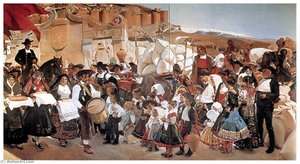
      Extremadura, The Market (1917) by Joaquín Sorolla Y Bastida
      5

      Extremadura, The Market

      1917 · Oil On Canvas · Hispanic Society Museum - Library, New York

      In the grand tapestry of Spanish Impressionism, few works capture the pulse of a nation as vibrantly as Joaquín Sorolla y Bastida’s “Extremadura, The Market.” Completed in 1917, this monumental oil on canvas is far more than a mere depiction of commerce; it is a breathtaking window into the soul of rural Spain. As part of his celebrated Vision of Spain series, Sorolla transcends the boundaries of traditional genre painting…

      Wandelen langs de zeekust (1909) by Joaquín Sorolla Y Bastida
      6

      Wandelen langs de zeekust

      1909 · Olieverf op canvas · Sorolla Museum, Madrid

      Joaquín Sorolla y Bastida's "Wandeling langs de kust", geschilderd in 1909, is niet louter een weergave van een zomermiddag; het is een voortreffelijke distillatie van licht, beweging en de vluchtige schoonheid van het dagelijwtse leven. Dit werk, gecreëerd tijdens een periode van immense artistieke bloei voor de Spaanse schilder – volgend op zijn gevierde tentoonstellingen in Amerika – vertegenwoordigt een cruciale verschuiving in Sorolla's stijl. Hij bewoog zich naar een…

      The Smugglers (1919) by Joaquín Sorolla Y Bastida
      7

      The Smugglers

      1919 · Oil On Canvas

      To gaze upon Joaquín Sorolla y Bastida’s 1919 masterpiece, "The Smugglers," is to step directly into the radiant embrace of a Spanish summer. This expansive canvas, measuring an impressive 84 x 165 cm, does far more than merely depict a coastal scene; it serves as a profound sensory experience, capturing the very soul of the Mediterranean coast near Ibiza. Sorolla, often revered as the "Master of Light," utilizes the shimmering…

      Lighthouse walk at Biarritz (1906) by Joaquín Sorolla Y Bastida
      8

      Lighthouse walk at Biarritz

      1906 · Oil On Canvas · Museum of Fine Arts, Boston

      In the luminous masterpiece Lighthouse Walk at Biarritz, Joaquín Sorolla y Bastida invites us into a world where the boundaries between reality and impression dissolve into a golden haze. Completed in 1906, this breathtaking canvas is far more than a mere depiction of a seaside stroll; it is a profound celebration of the Spanish Belle Époque, captured with an unparalleled mastery of light. As we gaze upon the scene, we…

      Clotilde on the Beach (1904) by Joaquín Sorolla Y Bastida
      9

      Clotilde on the Beach

      1904 · Acrylic On Canvas · Sorolla Museum, Madrid

      Joaquín Sorolla’s “Clotilde on the Beach,” painted in 1904, isn't merely a depiction of a seaside scene; it’s an immersion into the heart of Spanish summer – a vibrant distillation of light, color, and the quiet joy of family life. Sorolla, a master of *plein air* painting, captures a fleeting moment with breathtaking immediacy, transporting the viewer to the warm sands of Valencia's Playa de El Cabanyal. The canvas breathes…

      Messalina in the Arms of the Gladiator (1886) by Joaquín Sorolla Y Bastida
      10

      Messalina in the Arms of the Gladiator

      1886 · Oil

      The ground is a bed of scattered flora and heavy silence. A woman lies motionless, her hair woven with blossoms that seem to hold the weight of her stillness. She is a pale shape against the earth, appearing either lost in a deep unconsciousness or surrendered to death. Above her, a man looms, his presence defined by the sharp edge of a knife held in his hand. The outdoor setting…

      More Joaquín Sorolla Y Bastida canvases, 11 to 100

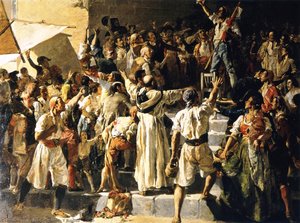
      The Cry of El Palleter (1884) by Joaquín Sorolla Y Bastida
      #12

      The Cry of El Palleter

      1884 · Palau de la Generalitat

      To step into the world of Joaquín Sorolla y Bastida is to surrender oneself to the radiant warmth of the Mediterranean sun. In his 1884 masterpiece, "The Cry…

      Order this canvas →
      Promenade by the Sea (1909) by Joaquín Sorolla Y Bastida
      #13

      Promenade by the Sea

      1909

      A Symphony of Light and Leisure: Exploring Joaquín Sorolla’s Promenade by the Sea Joaquín Sorolla y Bastida stands as one of Spain's most beloved Impressionist painters, celebrated for…

      Bring this light home →
      Self-portrait (1909) by Joaquín Sorolla Y Bastida
      #16

      Self-portrait

      1909 · Sorolla Museum

      Joaquín Sorolla y Bastida's 1909 self-portrait is more than just a likeness; it’s a potent distillation of the artist’s life, his spirit, and the very essence of Spain…

      Have it painted by hand →
      De Siësta (1911) by Joaquín Sorolla Y Bastida
      #20

      De Siësta

      1911 · Sorolla Museum

      Joaquín Sorolla y Bastida (1863 – 1923) staat te boek als een van Spanje's meest gevierde impressionisten, een schilder wiens doeken de essentie van het mediterrane leven vangen…

      Bring this light home →
      Rocks of the Cape, Javea (1905) by Joaquín Sorolla Y Bastida
      #23

      Rocks of the Cape, Javea

      1905 · Hispanic Society Museum - Library

      To gaze upon Joaquín Sorolla y Bastida’s 1905 masterpiece, "Rocks of the Cape, Javea," is to step directly into the radiant embrace of a Spanish summer. This oil…

      Bring this light home →
      Valencian Fisherwomen (1915) by Joaquín Sorolla Y Bastida
      #27

      Valencian Fisherwomen

      1915

      This oil on canvas painting by Joaquín Sorolla depicts a bustling scene on the coast, where a group of women stands in the water near several boats. The…

      Order this canvas →
      Netten van Vissen (1893) by Joaquín Sorolla Y Bastida
      #28

      Netten van Vissen

      1893

      De naam Joaquín Sorolla roept onmiddellijk beelden op van een zonnig, levendig Spaans landschap – en met goed rechtvaardigheid. Sorolla was meer dan alleen een schilder; hij was…

      Have it painted by hand →
      Swimmers, Javea (1905) by Joaquín Sorolla Y Bastida
      #32

      Swimmers, Javea

      1905

      The painting depicts two people swimming in the ocean. The first person is positioned on the left side of the canvas, while the second person is on the…

      Order this canvas →
      My Kids (1897) by Joaquín Sorolla Y Bastida
      #39

      My Kids

      1897

      Joaquín Sorolla y Bastida’s "My Kids" is not merely a depiction of three children; it is an effusion of pure, untainted joy captured on canvas. Completed in 1897,…

      Have it painted by hand →
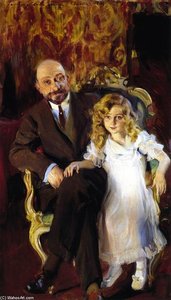
      Manuel B. Cossio (1908) by Joaquín Sorolla Y Bastida
      #40

      Manuel B. Cossio

      1908

      Subject and Composition The canvas presents a dignified figure, Manuel B. Cossio, rendered in a crisp suit and tie that speaks of early twentieth‑century Spanish professionalism. His stern…

      Have it painted by hand →
      Tipos de Salamanca (1912) by Joaquín Sorolla Y Bastida
      #41

      Tipos de Salamanca

      1912

      A Study in Spanish Identity Three figures are arranged within a shallow, formal space, dressed in traditional Spanish attire. The composition centers on these individuals, utilizing organic lines…

      Bring this light home →
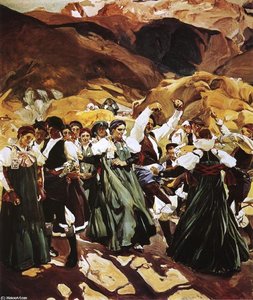
      The Jota (Aragon) (1914) by Joaquín Sorolla Y Bastida
      #43

      The Jota (Aragon)

      1914 · Hispanic Society Museum - Library

      A Symphony of Light and Spanish Spirit: Joaquín Sorolla’s “The Jota (Aragon)” Joaquín Sorolla y Bastida, a painter inextricably linked with the radiant heart of Spain, gifted us…

      Have it painted by hand →
      The Painter's Studio (1888) by Joaquín Sorolla Y Bastida
      #50

      The Painter's Studio

      1888

      To stand before Joaquín Sorolla y Bastida's The Painter's Studio is to step directly into a moment suspended in golden light, a breath held within the vibrant tapestry…

      Bring this light home →
      After a Bathe by Joaquín Sorolla Y Bastida
      #53

      After a Bathe

      Hispanic Society Museum - Library

      Joaquin Sorolla y Bastida stands as one of Spain’s most beloved painters, celebrated for his luminous canvases that effortlessly blend realism with an ethereal quality—a hallmark of his…

      Order this canvas →
      The Two Sisters (1909) by Joaquín Sorolla Y Bastida
      #54

      The Two Sisters

      1909 · Art Institute of Chicago

      In the luminous realm of Joaquín Sorolla y Bastida, light is not merely an element of the landscape; it is the very soul of the canvas. His 1909…

      Bring this light home →
      Fiesta Gallega by Joaquín Sorolla Y Bastida
      #57

      Fiesta Gallega

      Joaquín Sorolla y Bastida's *Fiesta Gallega* (1907) is more than just a depiction of a rural Spanish gathering; it’s an embodiment of the vibrant spirit of Spain itself.…

      Have it painted by hand →
      La bendicion de Isaac by Joaquín Sorolla Y Bastida
      #58

      La bendicion de Isaac

      In the profound stillness of La bendición de Isaac, Joaquín Sorolla y Bastida captures a pivotal moment from Hebrew tradition. The painting depicts the patriarch Isaac, now aged…

      Order this canvas →
      At the Pool in the Artist (1898) by Joaquín Sorolla Y Bastida
      #60

      At the Pool in the Artist

      1898 · Museo de Arte de Ponce

      Joaquín Sorolla y Bastida’s “At the Pool in the Artist’s Garden,” painted in 1898, isn’t merely a depiction of a summer afternoon; it’s an immersion into the very…

      Have it painted by hand →
      The Siesta (1911) by Joaquín Sorolla Y Bastida
      #62

      The Siesta

      1911

      Joaquin Sorolla y Bastida’s “The Siesta,” completed in 1911, transcends mere depiction; it embodies a philosophy – the deliberate embrace of stillness and beauty found within the simplest…

      Bring this light home →
      Maria la guapa (1914) by Joaquín Sorolla Y Bastida
      #64

      Maria la guapa

      1914

      Joaquín Sorolla's 1914 painting, *Maria la Guapa*, isn't merely a portrait; it’s an immersion into the heart of Spain’s golden age. This captivating work, depicting a young woman…

      Order this canvas →
      Sea Idyll (1908) by Joaquín Sorolla Y Bastida
      #65

      Sea Idyll

      1908 · Hispanic Society Museum - Library

      Joaquin Sorolla y Bastida, a pivotal figure in late 19th and early 20th century Spanish art, possessed an extraordinary gift for capturing the ephemeral beauty of light and…

      Order this canvas →
      The Kiss (1899) by Joaquín Sorolla Y Bastida
      #66

      The Kiss

      1899

      The Kiss by Joaquín Sorolla Y Bastida: A Moment of Spanish Light Subject Matter: Joaquin Sorolla’s “The Kiss” is an exquisite portrayal of intimacy and reverence, depicting a…

      Have it painted by hand →
      My Children (1904) by Joaquín Sorolla Y Bastida
      #67

      My Children

      1904 · Museo Sorolla

      Joaquín Sorolla’s “My Children,” painted in 1904, isn't merely a portrait; it’s an immersion into the heart of a sun-drenched Spanish afternoon. The scene unfolds within a modest…

      Have it painted by hand →
      Children on the Seashore (1903) by Joaquín Sorolla Y Bastida
      #68

      Children on the Seashore

      1903 · Philadelphia Museum of Art

      The Painting's Essence Joaquín Sorolla y Bastida's Children on the Seashore, created in 1903, is a beautiful depiction of children playing on the beach near the ocean. The…

      Have it painted by hand →
      Maria Planas de Gil (1906) by Joaquín Sorolla Y Bastida
      #69

      Maria Planas de Gil

      1906

      Joaquín Sorolla's ‘Maria Planas de Gil,’ painted in 1906, is more than simply a portrait; it’s an exquisite distillation of the Spanish light that defined his oeuvre and…

      Have it painted by hand →
      Ramón Pérez de Ayala (1920) by Joaquín Sorolla Y Bastida
      #71

      Ramón Pérez de Ayala

      1920 · Hispanic Society Museum - Library

      In the luminous realm of Spanish Impressionism, few works capture the intersection of human character and atmospheric brilliance as profoundly as Joaquín Sorolla y Bastida’s 1920 masterpiece, Ramón…

      Order this canvas →
      The Return from the Fishing (1898) by Joaquín Sorolla Y Bastida
      #73

      The Return from the Fishing

      1898 · National Museum of Fine Arts

      Joaquín Sorolla y Bastida's “The Return from the Fishing,” completed in 1898, isn’t merely a depiction of a seaside scene; it’s an embodiment of Impressionism at its finest—a…

      Have it painted by hand →
      Under the awning, Zarauz (1910) by Joaquín Sorolla Y Bastida
      #74

      Under the awning, Zarauz

      1910 · Saint Louis Art Museum

      Joaquin Sorolla y Bastida's "Under the Awnings, Zarauz," painted in 1910, is a captivating Impressionist work that transports viewers to a sun-drenched beach scene in Spain. Housed within…

      Have it painted by hand →
      Fisherwomen (1911) by Joaquín Sorolla Y Bastida
      #75

      Fisherwomen

      1911

      Introduction to the Artist and Painting Joaquín Sorolla y Bastida, a renowned Spanish painter, is celebrated for his vivid depictions of everyday life in Spain. One of his…

      Order this canvas →
      Penitents, Holy Week, Seville (1914) by Joaquín Sorolla Y Bastida
      #76

      Penitents, Holy Week, Seville

      1914 · Hispanic Society Museum - Library

      Joaquín Sorolla y Bastida's "Penitents, Holy Week, Seville," painted in 1914, is a captivating oil on canvas that transports viewers to the heart of Spain’s deeply rooted religious…

      Bring this light home →
      Swimmers, Jávea (1905) by Joaquín Sorolla Y Bastida
      #77

      Swimmers, Jávea

      1905 · Sorolla Museum

      Joaquin Sorolla y Bastida's "Swimmers, Jávea," painted in 1905, isn’t merely a depiction of two women enjoying the Mediterranean Sea; it’s an exquisite distillation of light, movement, and…

      Bring this light home →
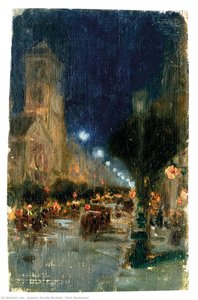
      Paris Boulevard (1885) by Joaquín Sorolla Y Bastida
      #79

      Paris Boulevard

      1885 · Sorolla Museum

      Joaquin Sorolla y Bastida’s “Paris Boulevard,” painted in 1885, isn’t merely a depiction of a city street at night; it’s an immersive experience. Captured during his formative years…

      Have it painted by hand →
      Joaquín (1917) by Joaquín Sorolla Y Bastida
      #80

      Joaquín

      1917 · Sorolla Museum

      Joaquín Sorolla’s 1917 painting, “Joaquín,” isn't merely a likeness; it’s a carefully constructed tableau vivant, capturing the essence of early 20th-century Spanish society and the burgeoning spirit of…

      Bring this light home →
      La siesta (1912) by Joaquín Sorolla Y Bastida
      #82

      La siesta

      1912

      Joaquín Sorolla’s “La Siesta,” painted in 1912, is more than just a depiction of women resting outdoors; it's an embodiment of the Spanish spirit – a celebration of…

      Have it painted by hand →
      Wounded foot (1909) by Joaquín Sorolla Y Bastida
      #84

      Wounded foot

      1909

      Joaquín Sorolla y Bastida's “Wounded Foot,” painted in 1909, transcends mere depiction; it embodies the very essence of Impressionism and offers a poignant glimpse into the spirit of…

      Order this canvas →
      Seville, the Bullfighters (1915) by Joaquín Sorolla Y Bastida
      #85

      Seville, the Bullfighters

      1915 · Hispanic Society Museum - Library

      Seville, the Bullfighters is a captivating oil on panel painting created in 1915 by the renowned Spanish artist Joaquín Sorolla y Bastida. Measuring an impressive 350 x 231…

      Order this canvas →
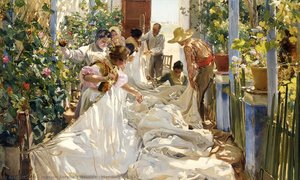
      Mending the Sail (1896) by Joaquín Sorolla Y Bastida
      #86

      Mending the Sail

      1896

      Joaquín Sorolla Y Bastida, a name synonymous with the radiant light and vibrant energy of Spain, was more than just a painter; he was a chronicler of his…

      Order this canvas →
      La vuelta de la pesca (1894) by Joaquín Sorolla Y Bastida
      #88

      La vuelta de la pesca

      1894

      Introduction Joaquín Sorolla y Bastida, a renowned Spanish painter, created the captivating oil on canvas painting titled La Vuelta de la Pesca. This artwork is a testament to…

      Have it painted by hand →
      Maria in a Red Blouse (1910) by Joaquín Sorolla Y Bastida
      #90

      Maria in a Red Blouse

      1910

      Joaquin Sorolla’s “Maria in a Red Blouse,” painted in 1910, is more than just a portrait; it's an exquisite distillation of light, emotion, and the Spanish spirit. This…

      Order this canvas →
      On the coast of Biarritz (1906) by Joaquín Sorolla Y Bastida
      #91

      On the coast of Biarritz

      1906

      The painting depicts a lively seaside scene, capturing the essence of leisure and summertime joy. At its core is a group of figures – three prominent individuals standing…

      Order this canvas →
      Beneath the Canopy by Joaquín Sorolla Y Bastida
      #93

      Beneath the Canopy

      Joaquín Sorolla y Bastida's "Beneath the Canopy" is more than just a depiction of a sun-drenched beach; it’s an embodiment of the Spanish spirit – vibrant, joyful, and…

      Order this canvas →
      untitled (2616) by Joaquín Sorolla Y Bastida
      #95

      untitled (2616)

      In this breathtaking untitled masterpiece by the legendary Spanish Impressionist Joaquín Sorolla y Bastida, the viewer is invited to step into a sun-drenched sanctuary where time seems to…

      Bring this light home →
      Running along the beach (1908) by Joaquín Sorolla Y Bastida
      #96

      Running along the beach

      1908

      Joaquín Sorolla y Bastida's "Running along the beach," painted in 1908, is more than just a picturesque depiction of seaside leisure; it’s a masterful distillation of light, movement,…

      Order this canvas →
      Don Rafael Altamira y Crevea (1913) by Joaquín Sorolla Y Bastida
      #97

      Don Rafael Altamira y Crevea

      1913 · Hispanic Society Museum - Library

      Don Rafael Altamira y Crevea sits in a centered, three-quarter length pose, his presence defined by a heavy, luminous red mozzetta that anchors the composition. The portrait captures…

      Have it painted by hand →
      On the Coast of Valencia (1898) by Joaquín Sorolla Y Bastida
      #99

      On the Coast of Valencia

      1898 · National Museum of Fine Arts

      The painting On the Coast of Valencia by Joaquin Sorolla Y Bastida is a beautiful depiction of people on the beach with boats in the water. Created in…

      Bring this light home →
      The Alcazar at Seville by Joaquín Sorolla Y Bastida
      #100

      The Alcazar at Seville

      Joaquín Sorolla y Bastida's “The Alcazar at Seville” is more than just a depiction of a magnificent building; it’s an immersive experience, a palpable distillation of light and…

      Bring this light home →

      Joaquín Sorolla Y Bastida's canvases, period by period

      What Joaquín Sorolla Y Bastida painted most

      The four subjects that return most often on these canvases, each with its best-loved example.

      Where Joaquín Sorolla Y Bastida's canvases hang

      The 8 museums that hold the most of the paintings on this page.

      Museum City Works by Joaquín Sorolla Y Bastida Paintings from this list
      Hispanic Society Museum - Library, New YorkHispanic Society Museum - Library New York 113 Valencia beach in the morning light, Extremadura, The Market, Rocks of the Cape, Javea
      Sorolla Museum, MadridSorolla Museum Madrid 72 Walk on the Beach (Paseo a orillas del mar), Wandelen langs de zeekust, Clotilde on the Beach
      National Museum of Fine Arts, Buenos AiresNational Museum of Fine Arts Buenos Aires 8 The Return from the Fishing, On the Coast of Valencia
      Museo del Prado, MadridMuseo del Prado Madrid 10 Aureliano de Beruete y Moret, Jr.
      J. Paul Getty Museum, Los AngelesJ. Paul Getty Museum Los Angeles 6 Courtyard of the Dances, Alcazar of Sevilla
      Musée d'Orsay, ParijsMusée d'Orsay Parijs 4 The Return from Fishing: Hauling the Boat (study)
      Art Institute of Chicago, ChicagoArt Institute of Chicago Chicago 2 The Two Sisters
      Museum of Fine Arts, BostonMuseum of Fine Arts Boston 1 Lighthouse walk at Biarritz

      Joaquín Sorolla Y Bastida's best-loved canvas of each decade

      1. 1880s
        Messalina in the Arms of the Gladiator (1886) by Joaquín Sorolla Y Bastida
        Ranked 10 of 100

        Messalina in the Arms of the Gladiator

        Age 17 – 26

        The ground is a bed of scattered flora and heavy silence. A woman lies motionless, her hair woven with blossoms that seem to hold the weight of her…

      2. 1890s
      3. 1900s
        Walk on the Beach (Paseo a orillas del mar) (1909) by Joaquín Sorolla Y Bastida
        Canvas 1 of 100

        Walk on the Beach (Paseo a orillas del mar)

        Age 37 – 46 · Sorolla Museum

        A Sun-Drenched Moment: Joaquín Sorolla’s “Walk on the Beach” Joaquín Sorolla y Bastida, a name synonymous with the vibrant luminosity of Spanish light and life, gifted us with…

      4. 1910s
        Extremadura, The Market (1917) by Joaquín Sorolla Y Bastida
        Canvas 5 of 100

        Extremadura, The Market

        Age 47 – 56 · Hispanic Society Museum - Library

        In the grand tapestry of Spanish Impressionism, few works capture the pulse of a nation as vibrantly as Joaquín Sorolla y Bastida’s “Extremadura, The Market.” Completed in 1917,…

      5. 1920s
        Ramón Pérez de Ayala (1920) by Joaquín Sorolla Y Bastida
        71 of 100

        Ramón Pérez de Ayala

        Age 57 – 60 · Hispanic Society Museum - Library

        In the luminous realm of Spanish Impressionism, few works capture the intersection of human character and atmospheric brilliance as profoundly as Joaquín Sorolla y Bastida’s 1920 masterpiece, Ramón…

      About Joaquín Sorolla Y Bastida's canvases: your questions answered

      What is the best-known painting by Joaquín Sorolla Y Bastida?Read the answer

      Walk on the Beach (Paseo a orillas del mar) (1909), Sorolla Museum, Madrid. Valencia beach in the morning light (1908) and Yo soy el pan de la vida (also known as I am the Bread of Life) (1897) follow.

      What age was Joaquín Sorolla Y Bastida when Walk on the Beach (Paseo a orillas del mar) was painted?Read the answer

      Joaquín Sorolla Y Bastida, born in 1863, was 46 years old: Walk on the Beach (Paseo a orillas del mar) dates from 1909.

      What are the 10 most famous paintings by Joaquín Sorolla Y Bastida?Read the answer

      Walk on the Beach (Paseo a orillas del mar), Valencia beach in the morning light, Yo soy el pan de la vida (also known as I am the Bread of Life), The Pink robe, Extremadura, The Market, Wandelen langs de zeekust, The Smugglers, Lighthouse walk at Biarritz, Clotilde on the Beach and Messalina in the Arms of the Gladiator. Each canvas in the ranking above comes with its year and its museum.

      How many works did Joaquín Sorolla Y Bastida paint in all?Read the answer

      969 works by Joaquín Sorolla Y Bastida are in our catalogue, dated 1881 to 1920.

      Where can I see Joaquín Sorolla Y Bastida's most famous canvases?Read the answer

      Mostly in Hispanic Society Museum - Library (New York), Sorolla Museum (Madrid) and National Museum of Fine Arts (Buenos Aires); the list above names each museum and its canvases.

      When did Joaquín Sorolla Y Bastida paint the best-loved canvases?Read the answer

      In 1910s, which gave 34 of the 100 works on this page, Extremadura, The Market among them.

      Which are Joaquín Sorolla Y Bastida's earliest and latest famous canvases?Read the answer

      The earliest canvas here is Seascape, Ships in the Port (1881); the latest is Ramón Pérez de Ayala (1920).

      What did Joaquín Sorolla Y Bastida paint most often?Read the answer

      Sunlight (18), Spain (17) and Beach scene (14), across the 100 works on this page.

      Which medium did Joaquín Sorolla Y Bastida paint in most often?Read the answer

      Oil On Canvas, used in 85 of the 100 works on this page.

      Which movement is Joaquín Sorolla Y Bastida's painting part of?Read the answer

      Impressionistisch landschap, as the canvases on this page show.

      Which Joaquín Sorolla Y Bastida canvases hang at the Hispanic Society Museum - Library?Read the answer

      The Hispanic Society Museum - Library, New York holds 11 of the works on this page, among them Valencia beach in the morning light, Extremadura, The Market and Rocks of the Cape, Javea.

      Can I buy a reproduction of a Joaquín Sorolla Y Bastida canvas?Read the answer

      Yes. Every painting on this page can be ordered from its own page as an oil reproduction painted by hand, or as a fine art print, in the size you choose.

      Joaquín Sorolla Y Bastida: a life in paint

      Vroege jaren, familie en opleiding

      Joaquín Sorolla Y Bastida kwam op 27 februari 1863 ter wereld in Valencia, Spanje. Als oudste kind van een ambachtsman, Joaquín Sorolla, en zijn echtgenote Concepción Bastida, begon zijn leven in een wereld die getekend zou worden door een plotselinge en zware stilte. In augustus 1865 eiste een cholera-epidemie het leven van beide ouders, een tragedie die Joaquín en zijn zus Concha tot wezen maakte. De broer en zus vonden hun toevlucht bij hun oom en tante, een slotenmaker, die de stabiliteit bood die de kinderen zo hard nodig hadden om op te groeien.

      De vonk van talent ontbrandte al vroeg in zijn jeugd in Valencia. In zijn geboortestad kreeg hij zijn eerste lessen in de kunst, waarbij hij een natuurlijk talent ontwikkelde dat simpelweg niet genegeerd kon worden. Deze vroege vorming legde het fundament voor een formele opleiding onder gerenommeerde kunstenaars, waaronder Cayetano Capuz en José Benlliure. Deze mentoren hielpen bij het verfijnen van de technische vaardigheden die hem uiteindelijk de weg zouden wijzen naar een wereld voorbij de lokale kunstscene, op zoek naar bredere en glanzendere horizonten.

      Het leven en de carrière in Madrid

      In 1888 sloot Joaquín de liefde met Clotilde García del Castillo, een vrouw die hij al kende sinds zijn jonge jaren, toen hij in het atelier van haar vader werkte. Hun gezamenlijke leven verhuisde in 1890 naar Madrid, een overgang die een cruciaal hoofdstuk markeerde in zowel zijn persoonlijke als professionele ontwikkeling. Terwijl zij zich in de hoofdstad vestigden, groeide hun gezin; tegen 1895 waren Maria, Joaquín en Elena een feit. Deze jaren vormden een periode van het opbouwen van zowel een huiselijk leven als een reputatie die uiteindelijk de grenzen van Spanje ver zou overschrijden.

      Gedurende het decennium dat volgde op zijn verhuizing naar Madrid, verschoof de focus van Joaquín Sorolla Y Bastida naar het creëren van monumentale doeken. Hij bracht een groot deel van zijn tijd door met het werken aan imposante onderwerpen, variërend van mythologische en historische scènes tot orientalistische thema's en sociale studies. Zijn ambitie was tastbaar in de schaal van zijn werk, terwijl hij streefde naar het vertalen van complexe narratieven door zijn penseelstreek. Deze periode van intense creativiteit zorgde ervoor dat zijn roem groeide door diverse internationale tentoonstellingen. Hij presenteerde zijn werk in salons over heel Europa en de Amerika's, in steden als Parijs, Venetië, München, Berlijn en Chicago.

      Belangrijke Werken en Grote Prestaties

      Een cruciaal keerpunt in zijn carrière vond plaats met de creatie van Sad Inheritance in 1899. Dit monumentale canvas, waarop kinderen te zien zijn die in de zee baden, werd gepresenteerd tijdens de Wereldtentoonstelling in Parijs. Het werk bracht hem een mate van erkenning die zijn leven voorgoed zou veranderen, wat er uiteindelijk toe leidde dat hij in 1900 werd benoemd tot Ridder in de Eer van de Legioen van Eer. In datzelfde jaar ontving hij de Grand Prix en een erepening op de Parijse expositie, een moment dat zijn definitieve doorbraak op het internationale toneel markeerde.

      Zijn succes bleef onverminderd groeien tijdens de eerste jaren van de nieuwe eeuw. In 1901 werd hij bekroond met de erepening op de Nationale Tentoonstelling in Madrid. Deze onderscheidingen weerspiegelden zijn unieke vermogen om te schakelen tussen zware, sociale thema's en de stralende, zonovergoten scènes die uiteindelijk zijn reputatie zouden definiëren. Zijn invloed reikte ver voorbij de grenzen van Spanje, aangezien zijn talent om licht en leven te vangen hem opdrachten opleverde van grote internationale instellingen.

      Een van zijn meest ambitieuze projecten was de opdracht voor het creëren van Vision of Spain voor de Hispanic Society of America. Deze serie monumentale werken stelde hem in staat om zijn diepe verbondenheid met zijn vaderland uit te drukken door middel van grootschalige verhalen. Zijn carrière werd gekenmerkt door deze momenten van grote triomf, waarin zijn technische meesterschap samensmolten met een diep gevoel van artistiek doel.

      • Sad Inheritance (1899)
      • Vision of Spain

      Techniek en Artistieke Stijl

      De manier waarop Sorolla werkte, voelde even onrustig en levendig aan als de Middellandse Zee zelf. Hij was een schilder die de directheid van de buitenlucht verfoerlijkte en er bijna al zijn werken en plein air schilderde. Deze toewijding aan het werken in de open lucht stelde hem in staat om de veranderlijke elementen recht in de ogen te kijken. Hij streefde er niet louter naar om een scène vast te leggen; hij zocht naar de essentie van de interactie tussen het licht en de wereld, in het bijzonder de manier waarop het danst over het zonovergoten water en de huid van zijn onderwerpen doet oplichten. Zijn penseelvoering was los en energiek, waarbij hij dikke, expressieve streken gebruikte om de vluchtige beweging van het zonlicht naar het canvas te vertalen.

      Zijn technische focus was vaak verdeeld tussen het intieme en het monumentale. Hij voelde zich even op zijn gemak bij het weergeven van een verstild portret als bij het aanpakken van grootschalige sociale of historische thema's. Er schuilt een zekere behendigheid in de wijze waarop hij het landschap hanteerde, waarbij hij mensen vaak plaatste in een stralende, Spaanse zon die de grenzen tussen de zee en de lucht doet vervagen. Deze benadering transformeerde alledaagse momenten tot iets dat onmiddellijk en ademend aanvoelde. Hij richtte zich op de texturen van het dagelijks leven, waarbij hij licht gebruikte om de vormen van de mensen en de omgevingen waarin zij zich bevonden, te definiëren.

      De laatste jaren en het overlijden

      De laatste jaren van het leven van Joaquín Sorolla Y Bastida werden gekenmerkt door een monumentale onderneming die een enorme fysieke en mentale uithoudingsvermogen vereiste. Hij bracht een groot deel van deze periode door met het werken aan zijn monumentale muurschilderingen, een project dat zijn volledige aandacht en kracht opeiste. Het lukte hem om in juli 1919 het laatste paneel van deze grootschalige werken te voltooien, wat een belangrijk hoogtepunt en een afsluiting vormde van zijn creatieve levensloop.

      Echter, zijn vermogen om te blijven schilderen werd al snel onderbroken door gezondheidsproblemen. In 1920 kreeg hij te maken met een beroerte, een gebeurtenis die zijn schilderkunstige activiteit beperkte en het ritme van zijn leven ingrijpend veranderde. Deze periode van herstel was een stille afwijking van de energieke, buitenlucht-sessies die zijn eerdere jaren zo hadden gedefinieerd. Hij overleed op 10 augustus 1923 en kreeg zijn laatste rustplaats in de Cementeri de Valencia, Spanje, waarmee hij terugkeerde naar de regio die altijd zo centraal had gestaan in zijn leven en zijn kunst.

      Nalatenschap en Blijvende Invloed

      De impact van Joaquín Sorolla Y Bastida reikte veel verder dan de kustlijnen van zijn geboorteland Spanje. Zijn aanwezigheid in de internationale kunstwereld werd bezegeld door zijn lidmaatschap van verschillende prestigieuze instellingen, waaronder de Académie des Beaux-Arts in Parijs, de Nationale Academie voor Schone Kunsten in Lissabon en de Real Academia de Bellas Artes de San Carlos in Valencia. Deze eerbewijzen weerspiegelden een carrière die erin slaagde de kloof tussen lokale identiteit en wereldwijde erkenning te overbruggen. Hij werd gevierd als de 'Lievelingszoon van Valencia', een titel die getuigde van de diepe verbondenheid tussen de schilder en het unieke licht van zijn geboorteregio.

      Vandaag de dag bevinden zijn doeken zich in collecties verspreid over Spanje, Europa en Amerika. Zijn vermogen om de beweging van de zee en de warmte van de zon te vertalen naar een plat vlak, zorgde ervoor dat zijn visie een blijvend onderdeel werd van het collectieve bewustzijn. Zijn werken worden nog steeds bestudeerd en bewonderd in grote musea, waarbij hij een aanwezigheid behoudt die continenten overspant. Zijn invloed is nog steeds voelbaar in de manier waarop hij een specifiek gevoel van plaats en licht wist te vangen, waarmee hij een oeuvre achterliet dat een vitaal onderdeel blijft van het artistieke landschap.

      • Sad Inheritance (1899)
      • Children on the Seashore (1903)
      • The Return from Fishing; Hauling the Boat (1894)

      Waar u zijn meesterwerken vandaag de dag kunt bewonderen

      Voor wie de voetstappen wil volgen in de ruimtes die zijn leven hebben gevormd, biedt het Museo Sorolla in Madrid een zeldzame blik in zijn persoonlijke wereld. Dit unieke museum, gewijd aan één enkele kunstenaar, is gevestigd in zijn voormalige woning en atelier, waardoor de intieme sfeer waarin hij leefde en werkte, prachtig bewaard is gebleven. Binnen deze muren vindt men verstilde, persoonlijke werken zoals My Children, die een ontroerende inkijk geven in zijn privéleven, ver weg van de monumentale opdrachten die zijn carrière zo kenmerkten.

      De invloed van Joaquín Sorolla Y Bastida reikt echter veel verder dan de grenzen van Spanje en is diep verankerd in grote internationale collecties. In New York herbergt de Hispanic Society Museum - Library vele van zijn werken, waardoor een aanzienlijk deel van zijn artistieke nalatenschap toegankelijk blijft voor degenen die de Verenigde Staten bezoeken. Ook in Europa is zijn aanwezigheid onmiskenbaar, in het bijzonder in Parijs, waar het Musée d'Orsay het meesterwerk The Return from Fishing; Hauling the Boat in zijn collectie bewaart.

      • My Children, Museo Sorolla, Madrid
      • The Return from Fishing; Hauling the Boat, Musée d'Orsay, Parijs

      All 969 works by Joaquín Sorolla Y Bastida →