
Atelier — Gratis verzending wereldwijd — Levertijd 2–6 weken
      Maria Oksentiivna Primatsjenko, 1908 – 1997

      Maria Oksentiivna Primatsjenko: The 97 Best-Known Paintings

      Of all Maria Oksentiivna Primatsjenko's paintings, Three Parrots on a Soldier's Grave (1982) is the most famous. Close behind come I Give My Little Stars to Children (1983) and The Little Elephant Who Wanted to Be a Sailor (1973). Among the 97 works by Maria Oksentiivna Primatsjenko in our catalogue, these 97 are the most celebrated, each shown with its date, its museum and its story.

      Ranked by our popularity score, which combines the searches, visits and orders for each work. Updated oktober 2026.

      Portrait of Maria Oksentiivna Primatsjenko
      Maria Oksentiivna Primatsjenko · 1908 – 1997
      Born · died
      1908 – 1997, Kyiv Oblast
      Movement
      Naive art / primitivism
      Works in our catalogue
      97
      Most famous
      Three Parrots on a Soldier's Grave (1982)

      Maria Oksentiivna Primatsjenko's 10 most celebrated paintings

      Let Us Go to the Betrothal Party (1968) by Maria Oksentiivna Primatsjenko
      7

      Let Us Go to the Betrothal Party

      1968 · Gouache

      In the vibrant tapestry of twentieth-century Naive Art, few works radiate as much warmth and cultural vitality as Maria Primachenko’s 1968 masterpiece, "Let Us Go to the Betrothal Party." This gouache painting is far more than a mere depiction of a festive occasion; it is an immersive window into the heart of Ukrainian folklore. At its center, a man and a woman stand in a tender embrace, their figures rendered…

      Flax Blooms and a Cossack Goes to a Girl (1982) by Maria Oksentiivna Primatsjenko
      8

      Flax Blooms and a Cossack Goes to a Girl

      1982 · Acrylic On Canvas

      In the enchanting realm of Maria Primachenko’s artistry, the boundaries between reality and folklore dissolve into a vibrant tapestry of color and cultural memory. Her masterpiece, Flax Blooms and a Cossack Goes to a Girl, serves as a breathtaking window into the soul of Ukraine. At first glance, the viewer is swept up in a whirlwind of saturated hues and whimsical forms that evoke the joyous spirit of a traditional…

      Maria Oksentiivna Primatsjenko paintings ranked 11 to 97

      My Flowers To Those Who Love Peace (1983) by Maria Oksentiivna Primatsjenko
      #11

      My Flowers To Those Who Love Peace

      1983

      In this 1983 work, Maria Primachenko offers a quiet, colorful meditation on the concept of tranquility. The composition centers on a stylized, ornamental structure, reminiscent of a central…

      Wild Bull and Raven Are Friends (1983) by Maria Oksentiivna Primatsjenko
      #14

      Wild Bull and Raven Are Friends

      1983

      In the enchanting realm of Maria Primachenko’s 1983 masterpiece, "Wild Bull and Raven Are Friends," the boundaries between reality and folklore dissolve into a vibrant tapestry of color…

      Crane Makes Friends with a Fox (1979) by Maria Oksentiivna Primatsjenko
      #15

      Crane Makes Friends with a Fox

      1979

      The Maria Primachenko painting, "Crane Makes Friends with a Fox", is a captivating example of Naive Art/Primitivism, a style characterized by its simplicity, flat rendering, and lack of…

      Lovely Spring, What Did You Bring. (1977) by Maria Oksentiivna Primatsjenko
      #16

      Lovely Spring, What Did You Bring.

      1977

      In the vibrant masterpiece "Lovely Spring, What Did You Bring," the legendary Ukrainian artist Maria Primachenko invites us into a world where nature and myth intertwine with breathtaking…

      Two-Headed Chicken (1977) by Maria Oksentiivna Primatsjenko
      #17

      Two-Headed Chicken

      1977

      In this 1977 composition, two large yellow birds occupy the central space of a 62 x 85 cm canvas. These avian figures possess elongated necks and are positioned…

      Ukrainian Wedding (1966) by Maria Oksentiivna Primatsjenko
      #18

      Ukrainian Wedding

      1966

      In the vibrant tapestry of twentieth-century Naive Art, few threads are as luminous and emotionally resonant as those woven by Maria Primachenlyko. Her 1966 masterpiece, Ukrainian Wedding, serves…

      Ukraine Blooming (1979) by Maria Oksentiivna Primatsjenko
      #19

      Ukraine Blooming

      1979

      In the enchanting realm of Naive Art, few works capture the pure, unadulterated joy of nature quite like Maria Primachenko’s Ukraine Blooming. Created in 1979, this masterpiece serves…

      Flax Blooms, a Bride Goes to Her Groom (1983) by Maria Oksentiivna Primatsjenko
      #20

      Flax Blooms, a Bride Goes to Her Groom

      1983

      In the enchanting realm of Maria Primachenko’s imagination, reality dissolves into a tapestry of myth and memory. Flax Blooms, a Bride Goes to Her Groom serves as a…

      Do I Love Orchards, Do I Love Forests (1968) by Maria Oksentiivna Primatsjenko
      #21

      Do I Love Orchards, Do I Love Forests

      1968

      In the vibrant masterpiece Do I Love Orchards, Do I Love Forests, created in 1968, the legendary Ukrainian artist Maria Primachenko invites us into a world where the…

      Wild and Big-Eared (1977) by Maria Oksentiivna Primatsjenko
      #22

      Wild and Big-Eared

      1977

      The Naive Art/Primitivism style has always been a fascinating genre, and one artist who embodies its spirit is Maria Primachenko. Her painting, Wild and Big-Eared, created in 1977,…
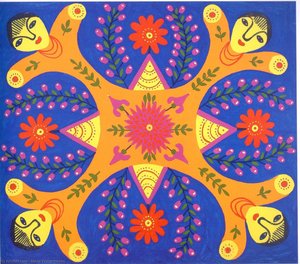
      Tablecloth (1976) by Maria Oksentiivna Primatsjenko
      #23

      Tablecloth

      1976

      Created in 1976, this gouache work by Maria Primachenko utilizes a flattened perspective to organize a complex visual field. The composition centers on a large circle, which is…

      Ukrainian Dancers (1983) by Maria Oksentiivna Primatsjenko
      #24

      Ukrainian Dancers

      1983

      In the vibrant tapestry of twentieth-century Ukrainian art, few works capture the pure, unadulterated joy of nature quite like Maria Primachenko’s Ukrainian Dancers. Created in 1983, this masterpiece…

      Monkey Riding a Four-Headed Beast (1982) by Maria Oksentiivna Primatsjenko
      #25

      Monkey Riding a Four-Headed Beast

      1982

      The painting Monkey Riding a Four-Headed Beast by Maria Primachenko is a vibrant and captivating example of Naive Art/Primitivism, a style characterized by its simplicity, flat rendering, and…

      Dumplings on the Shelf (1979) by Maria Oksentiivna Primatsjenko
      #26

      Dumplings on the Shelf

      1979

      In the tender, vibrant strokes of "Dumplings on the Shelf," we encounter the enchanting world of Maria Primachenko, a master of Naive Art who transformed the mundane into…
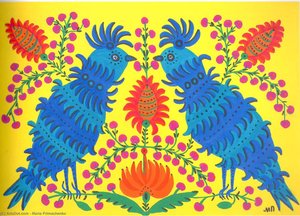
      Two Kites (1982) by Maria Oksentiivna Primatsjenko
      #27

      Two Kites

      1982

      In the vibrant realm of Naive Art, few works capture the whimsical essence of nature as tenderly as Maria Primachenko’s 1982 masterpiece, Two Kites. This enchanting gouache painting…

      Red Poppies (1982) by Maria Oksentiivna Primatsjenko
      #29

      Red Poppies

      1982

      Red Poppies is a work by Maria Prymachenko, executed in 1982. Measuring 85 x 61 cm, the piece belongs to the Naive Art and Primitivism movements. It reflects…

      Poppy (1983) by Maria Oksentiivna Primatsjenko
      #52

      Poppy

      1983

      In the enchanting realm of Naive Art, few works capture the rhythmic pulse of life as tenderly as Maria Primachenko’s Poppy. Created in 1983, this masterpiece serves as…

      This Bear Wants to Have Some Flour Milled (1972) by Maria Oksentiivna Primatsjenko
      #54

      This Bear Wants to Have Some Flour Milled

      1972

      In the enchanting realm of Maria Primachenko’s imagination, the boundaries between the mundane and the magical dissolve into a vibrant tapestry of color and folklore. Her captivating gouache…

      Tiger Laughs (1982) by Maria Oksentiivna Primatsjenko
      #66

      Tiger Laughs

      1982

      Here are the cantos, eighteen of them, each one different in form, mood, color, beat, scale, and key. There are no cadenzas. Each is separate. Each can stand…

      Pigeons (1968) by Maria Oksentiivna Primatsjenko
      #75

      Pigeons

      1968

      In the vast landscape of twentieth-century art, few voices resonate with as much pure, unadulterated joy as that of Maria Primachenko. Her 1968 masterpiece, "Pigeons," serves as a…

      A Cow Like That Gives 5,000 Liters a Day (1978) by Maria Oksentiivna Primatsjenko
      #76

      A Cow Like That Gives 5,000 Liters a Day

      1978

      The painting "A Cow Like That Gives 5,000 Liters a Day" by Maria Primachenko is a stunning example of Naive Art/Primitivism, a style characterized by its simplicity, flat…

      Ukrainian Dough Looks Into Every House (1977) by Maria Oksentiivna Primatsjenko
      #77

      Ukrainian Dough Looks Into Every House

      1977

      In the enchanting realm of Maria Primachenko’s 1977 masterpiece, "Ukrainian Dough Looks Into Every House," the boundaries between reality and myth dissolve into a vibrant, dreamlike landscape. This…

      My Bouquet to Grain Growers (1983) by Maria Oksentiivna Primatsjenko
      #78

      My Bouquet to Grain Growers

      1983

      In the vibrant tapestry of twentieth-century Ukrainian art, few works capture the whimsical essence of life quite like Maria Primachenko’s My Bouquet to Grain Growers. Created in 1983,…

      Our Army, Our Protectors (1978) by Maria Oksentiivna Primatsjenko
      #79

      Our Army, Our Protectors

      1978

      The painting "Our Army, Our Protectors" by Maria Primachenko is a stunning example of Naive Art/Primitivism, a style characterized by its simplicity, flat rendering, and lack of formal…

      Savage Hump-Shaker (1977) by Maria Oksentiivna Primatsjenko
      #80

      Savage Hump-Shaker

      1977

      The Naive Art/Primitivism style has always been a fascinating genre, and one artist who embodies its spirit is Maria Primachenko. Her painting, Savage Hump-Shaker, created in 1977, is…

      Maiden and Cossack Enjoying a Ride on Horseback (1982) by Maria Oksentiivna Primatsjenko
      #81

      Maiden and Cossack Enjoying a Ride on Horseback

      1982

      The painting Maiden and Cossack Enjoying a Ride on Horseback by Maria Primachenko is a stunning example of Naive Art, a style characterized by its simplicity, flat rendering,…

      A Hare's Birthday Party (1977) by Maria Oksentiivna Primatsjenko
      #82

      A Hare's Birthday Party

      1977

      The Naive Art/Primitivism style has always been a fascinating genre, and one artist who embodies its spirit is Maria Primachenko. Her painting, "A Hare's Birthday Party", created in…

      A Coward Went A-Hunting (1983) by Maria Oksentiivna Primatsjenko
      #83

      A Coward Went A-Hunting

      1983

      The Naive Art/Primitivism movement has long been a source of fascination for art enthusiasts, and Maria Primachenko's work is a stunning example of this style. Her painting, A…

      A Bunch of Red Flowers on Read Army Day (1970) by Maria Oksentiivna Primatsjenko
      #84

      A Bunch of Red Flowers on Read Army Day

      1970

      The painting A Bunch of Red Flowers on Read Army Day is a stunning example of Naive Art/Primitivism, a style characterized by its simplicity, flat rendering, and lack…

      October Flowers (1968) by Maria Oksentiivna Primatsjenko
      #85

      October Flowers

      1968

      The painting October Flowers is a stunning example of Naive Art/Primitivism, a style characterized by its simplicity, flat rendering, and lack of formal training. Created in 1968 by…

      This Beast is Making Magic (1983) by Maria Oksentiivna Primatsjenko
      #86

      This Beast is Making Magic

      1983

      The painting "This Beast is Making Magic" by Maria Primachenko is a captivating example of Naive Art/Primitivism, a style characterized by its simplicity, flat rendering, and lack of…

      Menagerie (1977) by Maria Oksentiivna Primatsjenko
      #87

      Menagerie

      1977

      The Menagerie by Maria Primachenko is a captivating example of Naive Art/Primitivism, a style characterized by its simplicity, flat rendering, and lack of formal training. Created in 1977,…

      An Outer Space Memory (1977) by Maria Oksentiivna Primatsjenko
      #88

      An Outer Space Memory

      1977

      The Maria Primachenko painting, An Outer Space Memory, is a fascinating example of Naive Art/Primitivism. Created in 1977, this piece showcases the artist's unique style and perspective. The…
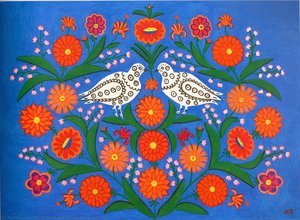
      Pigeon and Dove (1982) by Maria Oksentiivna Primatsjenko
      #89

      Pigeon and Dove

      1982

      The painting "Pigeon and Dove" by Maria Primachenko is a stunning example of Naive Art/Primitivism, a style characterized by its simplicity, flat rendering, and lack of formal training.…

      Blue Birds in Flowers (1983) by Maria Oksentiivna Primatsjenko
      #90

      Blue Birds in Flowers

      1983

      The painting Blue Birds in Flowers by Maria Primachenko is a stunning example of Naive Art, a style characterized by its simplicity, flat rendering, and lack of formal…

      Dear Cosmonauts, I Give You These Red Poppies (1983) by Maria Oksentiivna Primatsjenko
      #91

      Dear Cosmonauts, I Give You These Red Poppies

      1983

      The painting Dear Cosmonauts, I Give You These Red Poppies is a stunning example of Naive Art/Primitivism, a style characterized by its simplicity, flat rendering, and lack of…

      Wild Cat (1977) by Maria Oksentiivna Primatsjenko
      #92

      Wild Cat

      1977

      The Wild Cat painting by Maria Primachenko is a stunning example of Naive Art/Primitivism, a style characterized by its simplicity, flat rendering, and lack of formal training. Created…

      Red Snowball Tree Blooms Over a Well (1982) by Maria Oksentiivna Primatsjenko
      #93

      Red Snowball Tree Blooms Over a Well

      1982

      The painting "Red Snowball Tree Blooms Over a Well" by Maria Primachenko is a stunning example of Naive Art/Primitivism, a style characterized by its simplicity, flat rendering, and…

      A Dove Has Spread Her Wings and Asks for Peace (1982) by Maria Oksentiivna Primatsjenko
      #94

      A Dove Has Spread Her Wings and Asks for Peace

      1982

      The painting A Dove Has Spread Her Wings and Asks for Peace by Maria Primachenko is a stunning example of Naive Art/Primitivism, a style characterized by its simplicity,…

      Ukrainian Milkmaids Work Hard Like Miners (1970) by Maria Oksentiivna Primatsjenko
      #95

      Ukrainian Milkmaids Work Hard Like Miners

      1970

      The Ukrainian Milkmaids Work Hard Like Miners painting by Maria Primachenko is a stunning example of Naive Art/Primitivism, a style characterized by its simplicity, flat rendering, and lack…

      Ola Man and Old Woman Carry a Turnip (1983) by Maria Oksentiivna Primatsjenko
      #96

      Ola Man and Old Woman Carry a Turnip

      1983

      The painting "Ola Man and Old Woman Carry a Turnip" by Maria Primachenko is a stunning example of Naive Art/Primitivism, a style characterized by its simplicity, flat rendering,…

      The Lark (1976) by Maria Oksentiivna Primatsjenko
      #97

      The Lark

      1976

      The Maria Primachenko painting, The Lark, is a stunning example of Naive Art/Primitivism, a style characterized by its simplicity, flat rendering, and lack of formal training. Created in…

      Maria Oksentiivna Primatsjenko's canvases, period by period

      What Maria Oksentiivna Primatsjenko painted most

      The four subjects that return most often on these canvases, each with its best-loved example.

      Decade by decade: Maria Oksentiivna Primatsjenko's most celebrated canvas

      1. 1930s
      2. 1960s
        Let Us Go to the Betrothal Party (1968) by Maria Oksentiivna Primatsjenko
        7 of 97

        Let Us Go to the Betrothal Party

        Age 52 – 61

        In the vibrant tapestry of twentieth-century Naive Art, few works radiate as much warmth and cultural vitality as Maria Primachenko’s 1968 masterpiece, "Let Us Go to the Betrothal…

      3. 1970s
      4. 1980s

      Your questions on Maria Oksentiivna Primatsjenko's paintings, answered

      Which is the most celebrated painting by Maria Oksentiivna Primatsjenko?Read the answer

      Three Parrots on a Soldier's Grave (1982), followed by I Give My Little Stars to Children (1983) and The Little Elephant Who Wanted to Be a Sailor (1973).

      How old was Maria Oksentiivna Primatsjenko at the time of Three Parrots on a Soldier's Grave?Read the answer

      Maria Oksentiivna Primatsjenko, born in 1908, was 74 years old: Three Parrots on a Soldier's Grave dates from 1982.

      Which ten paintings is Maria Oksentiivna Primatsjenko most famous for?Read the answer

      Three Parrots on a Soldier's Grave, I Give My Little Stars to Children, The Little Elephant Who Wanted to Be a Sailor, Corncob Horse in Outer Space, Lamd Has Harnesed a Wolf, Magpie in Roses, Let Us Go to the Betrothal Party, Flax Blooms and a Cossack Goes to a Girl, Black Beast and Taras Hryhorovych Shevchenko Arrives From His Exile to Flowering Ukraine. Each canvas in the ranking above comes with its year and its museum.

      How many paintings by Maria Oksentiivna Primatsjenko are known?Read the answer

      97 works by Maria Oksentiivna Primatsjenko are in our catalogue, dated 1936 to 1983.

      In which years did Maria Oksentiivna Primatsjenko paint the most celebrated canvases?Read the answer

      In 1980s, which gave 46 of the 97 works on this page, Three Parrots on a Soldier's Grave among them.

      What are the first and the last of Maria Oksentiivna Primatsjenko's famous canvases?Read the answer

      The earliest canvas here is Black Beast (1936); the latest is I Give My Little Stars to Children (1983).

      Which subjects return most often in Maria Oksentiivna Primatsjenko's paintings?Read the answer

      Animals (30), Flowers (23) and Birds (14), across the 97 works on this page.

      What did Maria Oksentiivna Primatsjenko usually paint with?Read the answer

      Gouache, used in 24 of the 97 works on this page.

      To which art movement does Maria Oksentiivna Primatsjenko belong?Read the answer

      Naive art / primitivism, as the canvases on this page show.

      Maria Oksentiivna Primatsjenko: the painter's story

      Een leven geworteld in de Oekraïense bodem

      Maria Aksentievna Primachenko, geboren in het kleine dorpje Bolotnya nabij Kyiv in 1908, groeide uit tot een van de meest gevierde en kenmerkende kunstenaars van Oekraïne—een ware visionair wiens werk elke categorisering tart. Haar leven was diep verweven met de ritmes van het rurale bestaan, een wereld doordrenkt van oude folklore, levendige tradities en een intieme verbondenheid met de natuur. Van jongs af aan week Maria's pad af van conventionele verwachtingen; het doormaken van polio als kind dwong haar voor lange perioden binnenshuis te blijven, maar deze isolatie bleek onverwacht vruchtbare grond voor artistieke bloei. Haar moeder en grootmoeder, bekwame borduursters, brachten haar de ingewikkelde technieken en de symbolische taal van de Oekraïense volkskunst bij—een erfgoed dat de fundamenten van haar unieke stijl zou vormen. Deze vroege lessen waren niet louter technisch; het was een overdracht van cultureel geheugen, een manier om de wereld te zien, doordrenkt van betekenis en magie. Het was in deze vormende jaren, omringd door kleurrijke draden en eeuwenoude patronen, dat Maria begon een buitengewone visuele woordenschat te ontwikkelen.

      De Naïeve Openbaring: Een Bevrijde Stijl

      Primachenko's kunst wordt vaak omschreven als "naïef", een term die misleidend beperkend kan zijn. Hoewel zij geen formele artistieke opleiding genoot, bezit haar werk een diepe verfijning—een rauwe, ongetemde energie gekoppeld aan een diep begrip van compositie en kleur. In de jaren 30, nadat zij was ontdekt door kunstenares Tetiana Floru, trad Maria toe tot de Kyiv Coöperatieve Borduurvereniging, waar haar talent snel duidelijk werd. Dit leidde tot een uitnodiging om deel te nemen aan experimentele workshops in het Kyiv Museum van Oekraïense Kunst, wat een cruciaande moment markeerde in haar artistieke reis. Het was hier dat zij de motieven en technieken van het borduurwerk begon te vertalen naar schilderijen—grootschalige doeken vol fantastische wezens, levendige bloemen en scènes uit het dagelijks leven, opnieuw verbeeld door een uniek persoonlijke lens. Haar onderwerpen waren niet enkel gebaseerd op observatie; ze ontspruitten aan dromen, herinneringen en een diepe bron van verbeelding. Leeuwen met menselijke gezichten, vogels verwikkeld in speelse hofmakerij, paarden versierd met ingewikende patronen—dit waren geen loutere representaties, maar belichamingen van hoop, angst en de onverwoestbare geest van Oekraïne.

      Symboliek verweven in elke penseelstreek

      De kracht van Primachenko's kunst ligt niet alleen in de visuele uitbundigheid, maar ook in de rijke symboliek. Haar schilderijen zijn doordrenkt met motieven uit de Oekraïense folklore—oude zonnewielen die leven en vernieuwing vertegenwoordigen, vogels als symbool voor vrijheid en vrede, en paarden die fungeren als beschermers tegen kwade geesten. Deze symbolen werden niet bewust ingezet als een vorm van gecodeerde boodschappen; ze ontstonden organisch uit haar culturele achtergrond en intuïtieve begrip van de natuurlijke wereld. De dieren in haar schilderijen nemen vaak menselijke eigenschappen aan—ze vieren bruiloften, verjaardagen en andere sociale gebeurtenheden—waardoor de grenzen tussen het dierenrijk en de menselijke wereld vervagen. Deze antropomorfisme is niet louter speels, maar weerspiegelt een diep respect voor alle levende wezens en een geloof in hun inherente waardigheid. Haar gebruik van kleur is eveneens betekenisvol—gedurfde, verzadigde tinten die vreugde, vitaliteit en een gevoel van buitenaardse schoonheid oproepen. De gelaagdheid van patronen en texturen creëert een dynamisch visueel oppervlak dat de kijker meezuigt in haar fantastische wereld.

      Erkenning en een blijvende erfenis

      Het talent van Maria Primachenko bleef niet onopgemerkt. In 1937 werd haar werk tentoongesteld op de Wereldtentoonstelling in Parijs, waar het het publiek betoverde—en zelfs de bewondering oogstte van Pablo Picasso, die beroemd verklaarde dat zij beroemder had kunnen worden dan hijzelf als zij in Frankrijk had gewoond. Zij ontving een gouden medaille op de expositie en verwierf internationale erkenning voor haar unieke stijl. Ondanks perioden van ontbering en politieke onrust, bleef Primachenko haar hele leven schilderen en creëerde zij meer dan 800 werken die de schoonheid en veerkracht van Oekraïne vieren. Haar kunst werd een symbool van nationale identiteit—een getuigenis van de blijvende kracht van volkstradities en de menselijke geest. Vandaag de dag wordt Maria Primachenko vereerd als een van de belangrijkste kunstenaars van Oekraïne, waarbij haar beeltenis te vinden is op postzegels en munten. De recente aanvallen op het Ivankiv Historisch en Lokaal Museum, waar veel van haar schilderijen ondergebracht waren, hebben enkel de noodzaak onderstreept om haar nalatenschap te beschermen—een culturele schat die het hart en de ziel van een natie belichaamt.

      Een oproep tot vrede: Primachenko in de moderne wereld

      In de nasleep van de Russische invasie van Oekraïne in 2022 heeft de kunst van Maria Primachenko een nieuwe resonantie gekregen. Haar levendige schilderijen, die vaak scènes van harmonie tussen mens en dier uitbeelden, zijn krachtige symbolen van vrede en verzet geworden. De vernietiging van enkele van haar werken tijdens de aanvallen op Ivankiv diende als een pijnlijke herinnering aan de kwetsbaarheid van cultureel erfgoed in tijden van conflict. Het heeft echter ook geleid tot een hernieuwde waardering voor haar kunst—een bewijs van de blijvende kracht en universele boodschap ervan. De schilderijen van Primachenko zijn niet louter esthetische objecten; het zijn uitingen van hoop, veerkracht en een diepe liefde voor Oekraïne. Haar nalatenschap blijft kunstenaars en publiek over de hele wereld inspireren, en herinnert ons aan het belang van het behoud van culturele tradities en het vieren van de schoonheid van menselijke creativiteit in het aangezicht van tegenspoed. Haar werk staat als een levendig testament voor de onuitputtelijke kracht van kunst—een baken van hoop in een wereld die vaak wordt overschaduwd door duisternis.

      All 97 works by Maria Oksentiivna Primatsjenko →