Atelier — Gratis verzending wereldwijd — Levertijd 2–6 weken
      Theodore Robinson, 1852 – 1896

      De 100 bekendste schilderijen van Theodore Robinson

      The Layette (1892) is het schilderij waar Theodore Robinson het meest om bekendstaat; het maakt deel uit van de collectie van het National Gallery of Art, Washington. Capri (1890) en In a Daisy Field (1884) maken het trio van meest geliefde doeken compleet. Onze catalogus bevat 260 werken van Theodore Robinson. Hier zijn de 100 bekendste, inclusief het jaar, het museum en het verhaal achter elk canvas.

      Gerangschikt op basis van onze populariteitsscore, die de zoekopdrachten, bezoeken en bestellingen voor elk werk combineert. Bijgewerkt in oktober 2026. Elk schilderij op deze pagina kan worden besteld als een handgeschilderde oliereductie op linnen canvas, of als een fine art print, uitgevoerd in de door u gekozen afmeting.

      Portret van Theodore Robinson
      Theodore Robinson · 1852 – 1896
      Geboren · overleden
      1852 – 1896, Irasburg
      Stroming
      Impressionism
      Werken in onze catalogus
      260
      Meest bekend
      The Layette (1892)
      Meeste werken in
      Musée Condé

      De tien meest geliefde schilderijen van Theodore Robinson

      The Layette (1892) door Theodore Robinson
      1

      The Layette

      1892 · Oil On Canvas · National Gallery of Art, Washington

      There is a profound stillness in this scene, a moment captured where the rush of the world seems to pause. We find a woman seated in a wooden chair, her attention entirely absorbed by the delicate task of needlework. She is positioned slightly to the right, framed by the organic weight of a large tree trunk and the soft, dappled patterns of sunlight filtering through a leafy canopy. The light…

      Capri (1890) door Theodore Robinson
      2

      Capri

      1890 · Acrylic On Canvas · Thyssen-Bornemisza Museum, Madrid

      The Enchanting Capri by Theodore Robinson The painting “Capri” by Theodore Robinson stands as a testament to Impressionist vision blended with American Romanticism—a captivating glimpse into the Italian island’s ethereal beauty captured in 1890. More than just a scenic depiction, it embodies Robinson's profound engagement with light and color, reflecting his belief that art should convey emotion rather than merely represent reality. Executed on canvas using oil paints, “Capri” showcases…

      In the Grove (1888) door Theodore Robinson
      5

      In the Grove

      1888 · Oil On Canvas · Baltimore Museum of Art, Baltimore

      In the quietude of a sun-drenched woodland, Theodore Robinson’s “In the Grove” invites the viewer into a moment of profound stillness. Painted in 1888, this masterpiece serves as a cornerstone of American Impressionism, capturing not just a landscape, but an emotional atmosphere that feels both fleeting and eternal. The scene unfolds with a delicate grace, centered around a woman positioned amidst towering, ancient trees. As she gazes downward, perhaps lost…

      Theodore Robinson: doeken 11 tot 100 van de ranglijst

      Girl at Piano (1887) door Theodore Robinson
      #11

      Girl at Piano

      1887 · Toledo Museum of Art

      Girl at Piano is an oil on canvas painting by the American artist Theodore Robinson. Created about 1887, the work depicts a woman seated at a piano within…

      Laat het met de hand schilderen →
      In the Garden (1889) door Theodore Robinson
      #52

      In the Garden

      1889

      In the quiet embrace of 1889, Theodore Robinson captured a moment of profound tranquility in his masterpiece, In the Garden. This exquisite oil on canvas serves as a…

      Haal dit licht in huis →

      Wat Theodore Robinson het meest schilderde

      De vier onderwerpen die het meest voorkomen op deze doeken, elk met zijn meest geliefde voorbeeld.

      Waar de doeken van Theodore Robinson hangen

      De 8 musea met de meeste schilderijen op deze pagina.

      Museum Stad Werken van Theodore Robinson Schilderijen uit deze lijst
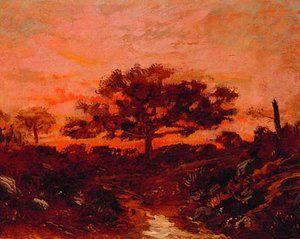
      Musée Condé, ChantillyMusée Condé Chantilly 3 Normandy farms, Twilight in Sologne
      Thyssen-Bornemisza Museum, MadridThyssen-Bornemisza Museum Madrid 2 Capri, The Old Bridge
      Baltimore Museum of Art, BaltimoreBaltimore Museum of Art Baltimore 5 In the Grove
      Metropolitan Museum of Art, New YorkMetropolitan Museum of Art New York 5 Self Portrait
      National Gallery of Art, WashingtonNational Gallery of Art Washington 3 The Layette
      Saint Louis Art Museum, Saint LouisSaint Louis Art Museum Saint Louis 2 The Large Oak Tree, Forest of Fontainebleau
      Columbia Museum of Art, ColumbusColumbia Museum of Art Columbus 1 Nantucket
      Toledo Museum of Art, ToledoToledo Museum of Art Toledo 1 Girl at Piano

      Het beroemdste canvas van Theodore Robinson, decennium na decennium

      1. 1860s
      2. 1870s
      3. 1880s
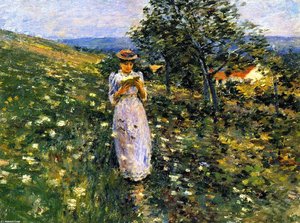
        In a Daisy Field (1884) door Theodore Robinson
        Canvas 3 van 100

        In a Daisy Field

        Leeftijd 28 – 37

        Theodore Robinson executed In a Daisy Field as an oil on canvas. While the work is dated 1884, the lower right corner bears the signature and inscription 'Th.…

      4. 1890s
        The Layette (1892) door Theodore Robinson
        Canvas 1 van 100

        The Layette

        Leeftijd 38 – 44 · National Gallery of Art

        There is a profound stillness in this scene, a moment captured where the rush of the world seems to pause. We find a woman seated in a wooden…

      De doeken van Theodore Robinson, vraag voor vraag

      Waarom wordt Theodore Robinson het meest herinnerd om welk canvas?Lees het antwoord

      The Layette (1892), National Gallery of Art, Washington. Capri (1890) en In a Daisy Field (1884) volgen.

      The Layette: hoe oud was Theodore Robinson toen dit werd geschilderd?Lees het antwoord

      Theodore Robinson, geboren in 1852, was 40 jaar oud: The Layette dateert uit 1892.

      Wat zijn de tien beroemdste doeken van Theodore Robinson?Lees het antwoord

      The Layette, Capri, In a Daisy Field, Pere Trognon and His Daughter at the Bridge, In the Grove, Study in the forest of Fontainebleau, View of the belfry of Orleans, Nantucket, Flower of Memory en Plain. Elk canvas in de bovenstaande ranglijst is voorzien van het jaartal en het museum.

      Hoeveel schilderijen heeft Theodore Robinson gemaakt?Lees het antwoord

      260 werken van Theodore Robinson zijn opgenomen in onze catalogus, gedateerd van 1866 tot 1892.

      Waar hangen de beroemdste doeken van Theodore Robinson tegenwoordig?Lees het antwoord

      Voornamelijk in Musée Condé (Chantilly), Thyssen-Bornemisza Museum (Madrid) en Baltimore Museum of Art (Baltimore); de bovenstaande lijst vermeldt elk museum en de bijbehorende doeken.

      Wanneer schilderde Theodore Robinson de beroemdste doeken?Lees het antwoord

      In 1880s, die 34 van de 100 werken op deze pagina vertegenwoordigt, waaronder In a Daisy Field.

      Welk beroemd canvas van Theodore Robinson was het eerst, en welke was het laatst?Lees het antwoord

      Het oudste canvas hier is Sunset in the forest (1866); het nieuwste is The Layette (1892).

      Welke onderwerpen schilderde Theodore Robinson het meest?Lees het antwoord

      Forests (20), Landscape (10) en Lakes (9), verspreid over de 100 werken op deze pagina.

      Welk medium komt het meest voor in de schilderijen van Theodore Robinson?Lees het antwoord

      Oil On Canvas, gebruikt in 5 van de 100 werken op deze pagina.

      Bij welke stroming wordt Theodore Robinson gerekend?Lees het antwoord

      Impressionism en Realism, zoals de doeken op deze pagina laten zien.

      Welke schilderijen van Theodore Robinson zijn in de collectie van het Musée Condé?Lees het antwoord

      Het Musée Condé, Chantilly herbergt 2 van de werken op deze pagina, waaronder Normandy farms en Twilight in Sologne.

      Waar kan ik een reproductie van een schilderij van Theodore Robinson kopen?Lees het antwoord

      Ja. Elk schilderij op deze pagina kan via de eigen pagina worden besteld als een handgeschilderd olieverfreproductie, of als een fine art print, in de door u gekozen afmeting.

      Maak kennis met de schilder: Theodore Robinson

      A Pioneer of American Light: The Life and Art of Theodore Robinson

      Theodore Robinson, a name perhaps less immediately recognizable than those of Monet or Renoir, nevertheless occupies a pivotal position in the story of American art. Born in rural Vermont in 1852, his journey was one of persistent artistic seeking, culminating in a unique synthesis of European Impressionism and distinctly American sensibilities. His life, though tragically cut short at the age of forty-four, left an enduring legacy as a key figure in bringing the shimmering light and broken color of France to a new generation of American painters. Robinson’s early years were marked by frequent relocation; his family moved to Wisconsin when he was just three years old, and he briefly studied art in Chicago before venturing east to New York City in 1874. There, he enrolled at the National Academy of Design and the Art Students League, laying a foundation in traditional techniques that would later be brilliantly transformed by his experiences abroad. These formative years were also shaped by practical necessity; Robinson often supplemented his artistic pursuits with teaching positions, a task he found draining due to chronic asthma which plagued him throughout his life.

      From Realism to the Allure of Giverny

      Robinson’s initial artistic inclinations leaned towards realism, mirroring the prevailing tastes of the time. He favored scenes of quiet domesticity and agrarian life, depicting figures engaged in everyday activities with a meticulous attention to detail. Think of images of farmers working their fields, or families gathered around a hearth – these were the subjects that initially drew him. However, a turning point arrived in 1884 when he embarked on an extended stay in France. It was here, in the idyllic countryside surrounding Paris, that his artistic vision underwent a profound shift. He settled in Giverny, becoming intimately acquainted with Claude Monet and absorbing the principles of Impressionism firsthand. This wasn’t merely a stylistic adoption; it was a complete reimagining of how light, color, and atmosphere could be captured on canvas. Monet's guidance proved invaluable, encouraging Robinson to embrace a more spontaneous approach, focusing on the fleeting effects of light and shadow rather than precise representation. The influence is palpable in works like *Giverny 1*, *Giverny 2*, and *Giverny 3*, where dappled sunlight filters through trees, creating an ethereal quality that transcends mere depiction. He didn’t simply copy Monet; he filtered the Impressionist aesthetic through his own American lens, retaining a sense of structure and form that distinguished his work from its French counterparts.

      A Bridge Between Worlds: Sharing the Vision

      Robinson's significance extends beyond his individual paintings; he served as a crucial conduit between the European avant-garde and the burgeoning American art scene. His position in Giverny placed him at the center of an American artistic colony, allowing him to share his newfound knowledge and enthusiasm with fellow painters like Julian Alden Weir and John Henry Twachtman. He became a passionate advocate for Impressionism, tirelessly demonstrating its techniques and principles to those who sought his guidance. This role as a mentor and interpreter was particularly important in a time when American art was still largely dominated by academic traditions. His influence is evident in the work of many artists who visited Giverny, helping to establish an American Impressionist style that was both indebted to French innovations and uniquely its own. He brought back not just techniques but also a philosophy – a way of seeing and responding to the world around him.

      Major Achievements and Artistic Style

      Robinson’s most celebrated works are undoubtedly those created in Giverny, where he spent the most productive years of his career. These landscapes—often characterized by their muted colors, atmospheric haze, and subtle shifts in light—are a testament to his ability to capture the essence of a place rather than its literal appearance. His paintings aren’t bold or dramatic; instead, they possess a quiet dignity and an almost meditative quality. The use of broken color, inspired by Monet, creates a shimmering effect that evokes the feeling of sunlight filtering through foliage. He was particularly adept at depicting water—lakes, rivers, and ponds—transforming them into luminous surfaces reflecting the sky above. His work stands apart from many other American Impressionists because he retained a strong sense of composition and structure, avoiding the sometimes-disordered brushstrokes of his contemporaries. Robinson’s legacy is found in his ability to synthesize European artistic trends with his own unique vision, creating a distinctly American form of Impressionism.

      Later Years and Lasting Legacy

      Returning to America in 1892, Robinson sought to apply his Impressionist vision to the landscapes of his native country. He worked alongside Weir and Twachtman at Cos Cob, Connecticut, a thriving art colony, and painted scenes along the canals of New York State before eventually settling in Vermont, hoping to recreate a Giverny-like environment closer to home. However, his health continued to deteriorate, and he faced increasing financial hardship. His final years were marked by isolation and struggle, culminating in his death in 1896. Ironically, many of his paintings remained unsold during his lifetime, only gaining recognition after his passing. Today, Theodore Robinson’s work is held in major museum collections, including the Metropolitan Museum of Art, a testament to his enduring artistic merit. His meticulous diaries, preserved at the Frick Art Reference Library, offer invaluable insights into his creative process and intellectual life. Robinson's legacy is a testament to the enduring appeal of light, color, and the pursuit of artistic truth.
      • Notable Works: Giverny 1, Giverny 2, Giverny 3, La débâcle (1892)
      • Influences: Claude Monet, John La Farge, Carolus-Duran, Jean-Léon Gérôme
      • Artistic Movement: American Impressionism

      Alle 260 werken van Theodore Robinson →