Atelier — Gratis verzending wereldwijd — Levertijd 2–6 weken
      Valentin Serov, 1865 – 1911

      De 100 bekendste schilderijen van Valentin Serov

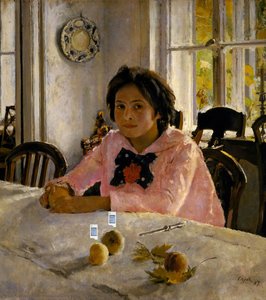
      Meisje met perziken (1887) is het schilderij waar Valentin Serov het meest om bekendstaat; het maakt deel uit van de collectie van het Tretyakov Gallery, Moskou. Portrait of Anton Chekhov (1903) en Portrait of Henrietta Girshman (1907) maken het trio van meest geliefde doeken compleet. Onze catalogus bevat 289 werken van Valentin Serov. Hier zijn de 100 bekendste, inclusief het jaar, het museum en het verhaal achter elk canvas.

      Gerangschikt op basis van onze populariteitsscore, die de zoekopdrachten, bezoeken en bestellingen voor elk werk combineert. Bijgewerkt in oktober 2026. Elk schilderij op deze pagina kan worden besteld als een handgeschilderde oliereductie op linnen canvas, of als een fine art print, uitgevoerd in de door u gekozen afmeting.

      Portret van Valentin Serov
      Valentin Serov · 1865 – 1911
      Geboren · overleden
      1865 – 1911, Sint-Petersburg
      Stroming
      Realism
      Werken in onze catalogus
      289
      Meest bekend
      Meisje met perziken (1887)
      Meeste werken in
      Nationale Galerie van Armenië

      De tien meest geliefde schilderijen van Valentin Serov

      Meisje met perziken (1887) door Valentin Serov
      1

      Meisje met perziken

      1887 · Olieverf op canvas · Tretyakov Gallery, Moskou

      In het verstilde licht van 1887 legt Valentin Serov een vluchtig moment van de kindertijd vast in zijn schilderij, Meisje met perziken. De scène draait om de elfjarige Vera Mamontova, een jong meisje wiens aanwezigheid de ruimte vult met een gevoel van sereniteit. Ze zit aan een tafel, haar blik vastberaden en peinzend, terwijl de middagzon door de kamer filtert. Dit portret is meer dan louter een gelijkenis; het is…

      Portrait of Anton Chekhov (1903) door Valentin Serov
      2

      Portrait of Anton Chekhov

      1903 · Oil On Canvas

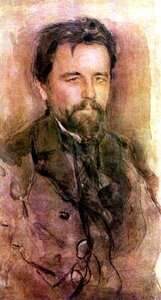
      is a work by the Russian artist Valentin Serov. Executed in 1903, the painting presents a focused study of the subject, a man characterized by a prominent beard. The portrait captures a sense of quiet observation, presenting the sitter in a manner that suggests introspection or weariness.

      Portrait of Henrietta Girshman (1907) door Valentin Serov
      3

      Portrait of Henrietta Girshman

      1907 · Oil On Canvas

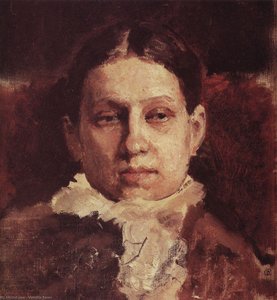
      Valentin Serov’s “Portrait of Henrietta Girshman,” painted in 1907, is more than just a likeness; it's a carefully constructed tableau that invites the viewer to step into a private moment. Executed with a masterful blend of realism and impressionistic techniques, the painting captures the quiet intimacy of a woman preparing herself – perhaps for an evening out, or simply lost in contemplation – within the luxurious confines of her dressing…

      Winter in Abramtsevo (1886) door Valentin Serov
      4

      Winter in Abramtsevo

      1886 · Oil On Canvas

      We are looking at Winter in Abramtsevo, a landscape painting by Valentin Serov. Created in 1886, this work captures a quiet moment within the Russian countryside. The original title of the piece is Зима в Абрамцево. It remains a significant example of Serov's early engagement with the natural world and the specific atmosphere of the Abramtsevo area.

      George the Victorious (1885) door Valentin Serov
      5

      George the Victorious

      1885 · Oil

      The air feels heavy with the scent of dust and iron as a white horse surges forward, its muscles rippling under a coat that catches the light. Atop this powerful creature sits a knight, a figure of singular focus amidst a dark, moody landscape. He holds a red flag aloft, the fabric snapping in a wind we cannot see, its golden emblem catching the light like a sudden spark in…

      Autumn evening. Domotkanovo (1886) door Valentin Serov
      6

      Autumn evening. Domotkanovo

      1886 · Oil On Canvas

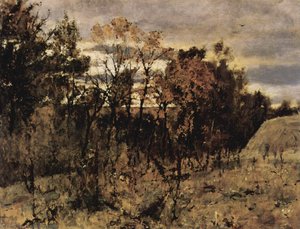
      The air in Domotkanovo carries a heavy, amber light. In this 1886 scene, the landscape breathes through a palette of changing leaves and cooling earth. Trees stand in the background, their foliage turning to shades of copper and gold, marking the slow descent of the year. A field stretches forward, catching the fading warmth of an autumn evening. Two horses move through this space, their presence grounding the scene in…

      Portrait of Pavel Tretyakov (1899) door Valentin Serov
      8

      Portrait of Pavel Tretyakov

      1899 · Watercolor · Tretyakov Gallery, Moskou

      Valentin Alexandrovich Serov presents Portrait of Pavel Tretyakov through a vertical composition that focuses on the subject from the waist up. Positioned slightly off-center, the middle-aged man is depicted with his arms crossed, a stance that establishes a sense of introspective stillness. The subject is set against a non-descript, washed background, which creates a shallow depth and pushes the figure toward the foreground.

      Valentin Serov: doeken 11 tot 100 van de ranglijst

      A Breton woman. (1901) door Valentin Serov
      #23

      A Breton woman.

      1901 · Nationaal Museum in Warschau

      is an oil on canvas painting by the Russian artist Valentin Serov. Created in 1901, the work captures a solitary woman in a moment of quietude. The subject…

      Bestel dit canvas →
      The Grand Eagle Cup (1910) door Valentin Serov
      #76

      The Grand Eagle Cup

      1910 · Nationale Galerie van Armenië

      To stand before Valentin Alexandrovich Serov’s The Grand Eagle Cup is to step through a veil and into a moment suspended in time—a quiet tableau vivant imbued with…

      Laat het met de hand schilderen →

      De doeken van Valentin Serov, periode voor periode

      Wat Valentin Serov het meest schilderde

      De vier onderwerpen die het meest voorkomen op deze doeken, elk met zijn meest geliefde voorbeeld.

      Waar de doeken van Valentin Serov hangen

      De 6 musea met de meeste schilderijen op deze pagina.

      Museum Stad Werken van Valentin Serov Schilderijen uit deze lijst
      Nationale Galerie van Armenië, JerewanNationale Galerie van Armenië Jerewan 3 Wife of Kostroma manifacture's director, The Grand Eagle Cup, Portrait of Maria Akimova
      Tretyakov Gallery, MoskouTretyakov Gallery Moskou 11 Meisje met perziken, Portrait of Pavel Tretyakov
      Nationaal Museum in Warschau, WarschauNationaal Museum in Warschau Warschau 4 Portrait of a woman, A Breton woman.
      National Art Museum of The Republic of Belarus, MinskNational Art Museum of The Republic of Belarus Minsk 1 Portrait of O. F. Tomara
      Kiev National Picture Gallery, KyivKiev National Picture Gallery Kyiv 1 Elizaveta Alexeevna Krasilshikova
      Finnish National Gallery, HelsinkiFinnish National Gallery Helsinki 1 Still Life

      Het beroemdste canvas van Valentin Serov, decennium na decennium

      1. 1870s
        Still Life (1879) door Valentin Serov
        78 van 100

        Still Life

        Leeftijd 5 – 14 · Finnish National Gallery
      2. 1880s
        Meisje met perziken (1887) door Valentin Serov
        1 van 100

        Meisje met perziken

        Leeftijd 15 – 24 · Tretyakov Gallery

        In het verstilde licht van 1887 legt Valentin Serov een vluchtig moment van de kindertijd vast in zijn schilderij, Meisje met perziken. De scène draait om de elfjarige…

      3. 1890s
        Portrait of Pavel Tretyakov (1899) door Valentin Serov
        Op nummer 8 van 100

        Portrait of Pavel Tretyakov

        Leeftijd 25 – 34 · Tretyakov Gallery

        Valentin Alexandrovich Serov presents Portrait of Pavel Tretyakov through a vertical composition that focuses on the subject from the waist up. Positioned slightly off-center, the middle-aged man is…

      4. 1900s
        Portrait of Anton Chekhov (1903) door Valentin Serov
        2 van 100

        Portrait of Anton Chekhov

        Leeftijd 35 – 44

        is a work by the Russian artist Valentin Serov. Executed in 1903, the painting presents a focused study of the subject, a man characterized by a prominent beard.…

      5. 1910s

      De doeken van Valentin Serov, vraag voor vraag

      Waarom wordt Valentin Serov het meest herinnerd om welk canvas?Lees het antwoord

      Meisje met perziken (1887), Tretyakov Gallery, Moskou. Portrait of Anton Chekhov (1903) en Portrait of Henrietta Girshman (1907) volgen.

      Meisje met perziken: hoe oud was Valentin Serov toen dit werd geschilderd?Lees het antwoord

      Valentin Serov, geboren in 1865, was 22 jaar oud: Meisje met perziken dateert uit 1887.

      Wat zijn de tien beroemdste doeken van Valentin Serov?Lees het antwoord

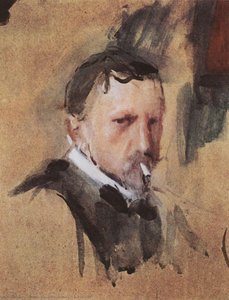
      Meisje met perziken, Portrait of Anton Chekhov, Portrait of Henrietta Girshman, Winter in Abramtsevo, George the Victorious, Autumn evening. Domotkanovo, Bathing a Horse, Portrait of Pavel Tretyakov, Self-Portrait en Portrait of the Artist Pavel Tchistyakov. Elk canvas in de bovenstaande ranglijst is voorzien van het jaartal en het museum.

      Hoeveel schilderijen heeft Valentin Serov gemaakt?Lees het antwoord

      289 werken van Valentin Serov zijn opgenomen in onze catalogus, gedateerd van 1879 tot 1911.

      Waar hangen de beroemdste doeken van Valentin Serov tegenwoordig?Lees het antwoord

      Voornamelijk in Nationale Galerie van Armenië (Jerewan), Tretyakov Gallery (Moskou) en Nationaal Museum in Warschau (Warschau); de bovenstaande lijst vermeldt elk museum en de bijbehorende doeken.

      Wanneer schilderde Valentin Serov de beroemdste doeken?Lees het antwoord

      In 1900s, die 35 van de 100 werken op deze pagina vertegenwoordigt, waaronder Portrait of Anton Chekhov.

      Welk beroemd canvas van Valentin Serov was het eerst, en welke was het laatst?Lees het antwoord

      Het oudste canvas hier is Still Life (1879); het nieuwste is Portrait of N.P. Lamanova (1911).

      Welke onderwerpen schilderde Valentin Serov het meest?Lees het antwoord

      Famous people (50), Portraits (49) en Men (24), verspreid over de 100 werken op deze pagina.

      Welk medium komt het meest voor in de schilderijen van Valentin Serov?Lees het antwoord

      Oil On Canvas, gebruikt in 6 van de 100 werken op deze pagina.

      Bij welke stroming wordt Valentin Serov gerekend?Lees het antwoord

      Realism en Impressionism, zoals de doeken op deze pagina laten zien.

      Welke schilderijen van Valentin Serov zijn in de collectie van het Nationale Galerie van Armenië?Lees het antwoord

      Het Nationale Galerie van Armenië, Jerewan herbergt 3 van de werken op deze pagina, waaronder Wife of Kostroma manifacture's director, The Grand Eagle Cup en Portrait of Maria Akimova.

      Waar kan ik een reproductie van een schilderij van Valentin Serov kopen?Lees het antwoord

      Ja. Elk schilderij op deze pagina kan via de eigen pagina worden besteld als een handgeschilderd olieverfreproductie, of als een fine art print, in de door u gekozen afmeting.

      Maak kennis met de schilder: Valentin Serov

      A Life Immersed in Art and Aristocracy

      Valentin Alexandrovich Serov, born into a world already resonating with artistic brilliance on January 19, 1865, in Saint Petersburg, was destined to become one of Russia’s most celebrated portraitists. His lineage itself spoke volumes – the son of composer Alexander Serov and Valentina Bergman, also a gifted musician, young Valentin grew up enveloped by creativity. This nurturing environment wasn't merely about exposure; it instilled within him a deep appreciation for harmony, form, and emotional expression—qualities that would profoundly shape his artistic vision. From an early age, he was encouraged to explore his talents, receiving initial instruction in Paris and Moscow under the watchful eye of Ilya Repin, a master of realist painting. This foundational training emphasized observation, meticulous detail, and a commitment to capturing the essence of human character. Later studies at the St. Petersburg Academy of Arts with Pavel Chistyakov further honed his technical skills, grounding him in classical principles while simultaneously fostering an emerging individuality. Serov’s upbringing wasn't solely artistic; it was also deeply intertwined with Russia’s elite circles, providing access to a world he would later immortalize on canvas.

      The Blossoming of a Portraitist: Early Works and Influences

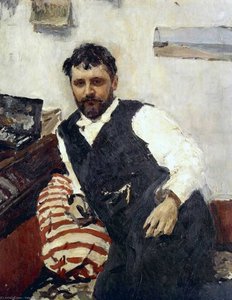
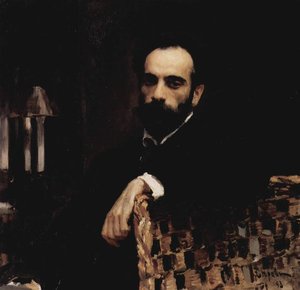
      Serov’s early period is marked by an extraordinary sensitivity to light and atmosphere, evident in works like *Girl with Peaches* (1887) and *Girl Covered by the Sun* (1888). These paintings, now iconic treasures of the Tretyakov Gallery, weren't simply portraits; they were studies in fleeting moments, capturing the ephemeral beauty of childhood. The loose brushwork and vibrant color palette hinted at an Impressionistic sensibility, yet remained firmly rooted in a realist tradition. He wasn’t merely depicting likenesses but conveying a sense of spontaneity and inner life. This ability to capture psychological depth became a hallmark of his style. He absorbed influences from the Old Masters during visits to European museums, studying Rembrandt, Velázquez, and Veronese, learning their techniques for rendering light, shadow, and texture. The artistic colony at Abramtsevo also played a crucial role in his development, exposing him to new ideas and fostering collaborations with fellow artists like Mikhail Vrubel and Konstantin Korovin. These interactions broadened his horizons and encouraged experimentation. His portraits of the 1890s – **Konstantin Korovin**, **Isaac Levitan**, and **Nikolai Leskov** – demonstrate a growing confidence in his ability to convey not just physical appearance but also the intellectual and emotional character of his subjects.

      Navigating Tradition and Modernity: A Shifting Style

      As Serov matured, his artistic style underwent a subtle yet significant transformation. While he continued to receive commissions from Russia’s aristocracy – portraits of Grand Duke Pavel Alexandrovich, S.M. Botkin, and Felix Yusupov attest to this – his approach became more nuanced and psychologically penetrating. He moved away from the purely descriptive towards a deeper exploration of character, often employing a restrained palette dominated by blacks, greys, and browns to emphasize mood and introspection. From 1900 onwards, Serov’s work began to reflect a growing engagement with modernism, though he never fully abandoned his commitment to realism. He became involved with the influential art association *Mir Iskusstva* (“World of Art”), which championed new artistic trends and challenged traditional conventions. This association exposed him to Art Nouveau aesthetics and encouraged experimentation with form and composition. His portrait of **Maxim Gorky** (1904) exemplifies this shift, presenting a powerful and unconventional depiction of the writer as a man of the people. He skillfully balanced his academic training with emerging artistic currents, creating a unique style that was both sophisticated and emotionally resonant.

      Major Achievements and Recognition

      Throughout his career, Serov achieved widespread recognition for his exceptional talent and distinctive style. He became a member of the Imperial Academy of Arts (1903) and the St. Petersburg Society of Artists, solidifying his position as one of Russia’s leading artistic figures. His works were exhibited extensively in both Russia and abroad, garnering critical acclaim and attracting collectors from around the world. Serov's portraits are particularly celebrated for their psychological depth and ability to capture the essence of his subjects—from the aristocratic elite to prominent intellectuals and cultural figures. Notable examples include *The Girl with Peaches*, *Girl Covered by the Sun*, *Portrait of Konstantin Korovin*, and numerous depictions of members of the Russian aristocracy. His graphic works, including drawings and watercolors, further showcased his artistic versatility and technical skill. Serov’s influence extended beyond his own creations; he also mentored young artists, shaping the future direction of Russian art.

      Legacy and Lasting Impact

      Valentin Serov’s untimely death on December 5, 1911, at the age of 46, cut short a brilliant career, but his legacy endures as one of Russia's most important portrait painters. He left behind a body of work that not only captured the likenesses of his contemporaries but also offered profound insights into Russian society and culture at a pivotal moment in history. His ability to combine technical mastery with psychological depth set him apart from his peers, and his paintings continue to captivate audiences today.
      • He bridged the gap between realism and modernism.
      • His portraits offer invaluable glimpses into the lives of Russia’s elite.
      • His influence can be seen in the work of subsequent generations of Russian artists.
      Serov's contribution extends beyond his paintings; he was also a dedicated teacher, shaping the artistic development of numerous students. His commitment to both tradition and innovation ensured that his influence would continue to resonate long after his passing. Exploring Serov’s work is not merely an exercise in art appreciation; it is a journey into the heart of Russian history and culture, offering a window into a world of elegance, intellect, and emotional complexity.

      Alle 289 werken van Valentin Serov →