Atelier — Gratis verzending wereldwijd — Levertijd 2–6 weken
      Walter Sickert, 1860 – 1942

      The 100 Most Famous Walter Sickert Paintings, Ranked

      The best-loved painting by Walter Sickert is The Idyll (1931), which hangs in the Ferens Art Gallery, Kingston upon Hull. The Cigarette (Jeanne Daurmont) (1906) and Chagford, Devon, across Fields (1915) come next among the canvases readers know best. Our catalogue holds 292 works by Walter Sickert: here are the 100 most famous, each with its year, its museum and what makes it memorable.

      Ranked by our popularity score, which combines the searches, visits and orders for each work. Updated oktober 2026. Each painting on this page can be ordered as an oil reproduction painted by hand on linen canvas, or as a fine art print, made to the size you choose.

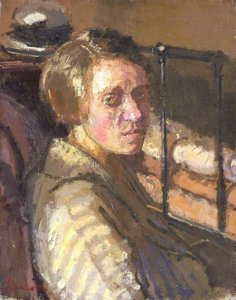
      Portrait of Walter Sickert
      Walter Sickert · 1860 – 1942
      Born · died
      1860 – 1942, München
      Movement
      Post-impressionism
      Works in our catalogue
      292
      Most famous
      The Idyll (1931)
      Most works at
      Tate Gallery

      Top 10 Walter Sickert paintings: the canvases everyone knows

      The Idyll (1931) by Walter Sickert
      1

      The Idyll

      1931 · Oil On Canvas · Ferens Art Gallery, Kingston upon Hull

      In the quietude of 1931, Walter Richard Sickert captured a scene that transcends mere landscape, offering instead a profound meditation on connection and stillness. The Idyll is not simply a depiction of a lakeside retreat; it is a psychological threshold where the boundaries between the external world and internal emotion blur. The painting presents two figures poised before a tranquil expanse of water, their presence anchored by a shared, silent…

      The Cigarette (Jeanne Daurmont) (1906) by Walter Sickert
      2

      The Cigarette (Jeanne Daurmont)

      1906 · Oil On Canvas · Metropolitan Museum of Art, New York

      A monochromatic portrait captures Jeanne Daurmont in profile, her form emerging from a dark, indistinct background through a careful application of chiaroscuro. The composition focuses on the head and shoulders, positioned slightly off-center to create a sense of quiet intimacy. A light source from the front-left illuminates the subject's face and neck, while deep shadows swallow much of her hair and the brim of her wide hat.

      Cicely Hey (1923) by Walter Sickert
      8

      Cicely Hey

      1923 · Oil On Canvas · British Council Collection, Londen

      In the quiet intensity of Walter Richard Sickert’s 1923 masterpiece, “Cicely Hey,” we encounter more than just a portrait; we step into a profound psychological landscape. The painting captures a young woman in a moment of suspended animation, where her outward serenity is subtly undercut by an unmistakable sense of inner distress. As the viewer approaches this canvas, the subject's gaze pulls us into a state of deep contemplation, inviting…

      Mrs Swinton (1905) by Walter Sickert
      9

      Mrs Swinton

      1905 · Oil On Canvas

      A Glimpse into the Life of Mrs. Swinton The painting Mrs Swinton by Walter Richard Sickert, created in 1905, is a captivating portrait that invites viewers to ponder the life and character of its subject. Located at the Fitzwilliam Museum in Cambridge, United Kingdom, this oil on canvas piece is a testament to Sickert's skill in capturing the essence of his subjects. The Composition and Symbolism The painting depicts Mrs.…

      Gatti’s Hungerford Palace of Varieties. Second Turn of Katie Lawrence (1888) by Walter Sickert
      10

      Gatti’s Hungerford Palace of Varieties. Second Turn of Katie Lawrence

      1888 · Oil On Canvas · Yale University Art Gallery, New Haven

      We are looking at Gatti’s Hungerford Palace of Varieties. Second Turn of Katie Lawrence, an oil on canvas created by Walter Sickert. This work, dating to 1888, captures a specific moment within the theatrical atmosphere of the music hall. The scene focuses on Katie Lawrence, a music hall singer, as she performs her turn on stage.

      More Walter Sickert canvases, 11 to 100

      The Miner (1935) by Walter Sickert
      #15

      The Miner

      1935 · Birmingham Museum and Art Gallery

      Walter Richard Sickert's "The Miner," painted in 1935-36, isn’t merely a depiction of a working man; it’s an intimate excavation of human experience. This oil painting, currently residing…

      Bring this light home →
      George Moore (1890) by Walter Sickert
      #16

      George Moore

      1890

      A Glimpse into Introspection: Walter Sickert's Portrait of George Moore This compelling portrait offers a poignant glimpse into the life of Irish author and playwright George Moore, captured…

      Order this canvas →
      The Brighton Pierrots (1915) by Walter Sickert
      #17

      The Brighton Pierrots

      1915 · Het Ashmolean Museum van Kunst en Oudheden

      The scene unfolds in the monochrome shadows of a seaside night. Under the artificial glow of the pier, figures move through a landscape of salt air and darkness.…

      Bring this light home →
      George Moore (1890) by Walter Sickert
      #35

      George Moore

      1890 · Tate Gallery

      Walter Richard Sickert’s portrait, "George Moore," is not merely a likeness captured on canvas; it is an encounter with a profound, internalized moment. The subject confronts the viewer…

      Have it painted by hand →
      Ennui (1918) by Walter Sickert
      #37

      Ennui

      1918 · Het Ashmolean Museum van Kunst en Oudheden

      In the dim, muted light of Walter Richard Sickert’s 1918 masterpiece, Ennui, we are invited into a private moment of profound emotional stagnation. The painting serves as a…

      Order this canvas →
      Mrs Swinton (1906) by Walter Sickert
      #42

      Mrs Swinton

      1906 · Fitzwilliam College

      In the quiet, evocative depths of Walter Richard Sickert’s 1906 masterpiece, "Mrs Swinton," viewers are invited into a world where the boundaries between portraiture and atmosphere dissolve. This…

      Have it painted by hand →
      The Sisters Lloyd (1889) by Walter Sickert
      #47

      The Sisters Lloyd

      1889 · Government Art Collection

      Walter Richard Sickert’s The Sisters Lloyd transports us into an intimate moment suspended in time, a scene steeped in the delicate artifice of domestic life. This portrait captures…

      Have it painted by hand →
      Jacques-Emile Blanche (1910) by Walter Sickert
      #48

      Jacques-Emile Blanche

      1910 · Tate Gallery

      In the quiet, shadowed corners of late nineteenth and early twentieth-century European art, few works capture the profound weight of identity as poignantly as Walter Richard Sickert’s “Jacques-Émile…

      Bring this light home →
      Israel Zangwill (1898) by Walter Sickert
      #49

      Israel Zangwill

      1898

      In the quiet depths of Walter Richard Sickert’s 1898 masterpiece, Israel Zangwill, we encounter more than just a mere likeness; we are invited into a profound moment of…

      Have it painted by hand →
      Baccarat, Dieppe (1920) by Walter Sickert
      #50

      Baccarat, Dieppe

      1920 · Auckland Art Gallery Toi o Tāmaki

      The scene unfolds in a moment of quiet concentration as a group of people gathers closely around a table. In Baccarat, Dieppe, the artist Walter Sickert captures a…

      Order this canvas →
      Mrs Barrett (1905) by Walter Sickert
      #51

      Mrs Barrett

      1905 · Tate Gallery

      Walter Richard Sickert’s ‘Mrs Barrett’: A Study in Shadows and Subtlety Walter Richard Sickert's “Mrs Barrett,” painted around 1905, isn’t merely a portrait; it’s a carefully constructed tableau…

      Bring this light home →
      The Yellow Sleeve (1904) by Walter Sickert
      #54

      The Yellow Sleeve

      1904 · New Walk Museum - Art Gallery

      In the quiet corners of art history, few moments possess the profound stillness found in Walter Richard Sickert’s 1904 masterpiece, The Yellow Sleeve. This evocative portrait invites the…

      Have it painted by hand →
      Camden Town Portrait (1915) by Walter Sickert
      #58

      Camden Town Portrait

      1915 · Amgueddfa Cymru - National Museum of Wales

      Camden Town Portrait - A Study in Shadow and Observation Walter Richard Sickert’s “Camden Town Portrait,” completed in 1915–16, resides within the National Museum Wales collection—a deceptively simple…

      Order this canvas →
      The Bar Parlour (1922) by Walter Sickert
      #59

      The Bar Parlour

      1922 · Fitzwilliam College

      In the quiet, amber-hued corners of early twentieth-century London, Walter Richard Sickert found his most profound muses. The Bar Parlorp, painted in 1922, serves as a masterful window…

      Bring this light home →
      The Horses of St Mark's, Venice (1905) by Walter Sickert
      #60

      The Horses of St Mark's, Venice

      1905 · Birmingham Museum and Art Gallery

      Walter Richard Sickert's "The Horses of St Mark's, Venice," painted in 1905, is a captivating oil on canvas that transports viewers to the heart of Venice. This artwork,…

      Order this canvas →
      Harold Gilman (1912) by Walter Sickert
      #62

      Harold Gilman

      1912 · Tate Gallery

      Walter Richard Sickert’s depiction of Harold Gilman is more than just a likeness; it is a carefully preserved moment plucked from the vibrant, sometimes fraught, atmosphere of early…

      Have it painted by hand →
      Miss Earhart's Arrival (1932) by Walter Sickert
      #64

      Miss Earhart's Arrival

      1932 · Tate Gallery

      Walter Richard Sickert’s Miss Earhart's Arrival is not merely a depiction of a rainy day; it is an immersion into a specific, charged moment of modern urban life.…

      Bring this light home →
      The Front at Hove (1930) by Walter Sickert
      #67

      The Front at Hove

      1930 · Tate Gallery

      Walter Richard Sickert's "The Front at Hove," painted in 1930, isn’t merely a depiction of a seaside scene; it’s a carefully constructed tableau brimming with psychological depth and…

      Bring this light home →
      Santa Maria del Carmelo, Venice (1900) by Walter Sickert
      #68

      Santa Maria del Carmelo, Venice

      1900 · Het Ashmolean Museum van Kunst en Oudheden

      In the quiet, amber-hued twilight of Venice, where the mist of the lagoons meets the ancient stone of the city, Walter Richard Sickert captured a moment of profound…

      Order this canvas →
      Ennui (1917) by Walter Sickert
      #69

      Ennui

      1917 · Ashmolean Museum

      Walter Richard Sickert's 1917 painting, *Ennui*, is not merely a depiction of two women; it’s a carefully constructed tableau of quiet desperation, a poignant snapshot of the burgeoning…

      Bring this light home →
      A Marengo (1903) by Walter Sickert
      #71

      A Marengo

      1903 · Tate Gallery

      Walter Richard Sickert's “A Marengo,” painted in 1903, isn’t merely a depiction of two women engaged in conversation; it’s a carefully constructed tableau brimming with psychological depth and…

      Have it painted by hand →
      The Oxford Music Hall by Walter Sickert
      #73

      The Oxford Music Hall

      Art Gallery of New South Wales

      The Oxford Music Hall is a significant work by the artist Walter Sickert. This piece, which is also known by the alternative title The old Bedford, offers a…

      Bring this light home →
      Her Majesty's (1934) by Walter Sickert
      #74

      Her Majesty's

      1934 · Ashmolean Museum

      A Glimpse of Victorian Grandeur: Walter Richard Sickert’s “Her Majesty’s” Walter Richard Sickert's "Her Majesty’s," painted around 1934, isn’t merely a depiction of a London theatre; it’s a…

      Order this canvas →
      Wellington House Academy (1914) by Walter Sickert
      #75

      Wellington House Academy

      1914

      In the soft, filtered light of 1914, Walter Richard Sickert captured a moment that transcends mere musical practice to become a profound study of human connection and shared…

      Order this canvas →
      Interior of St Mark's, Venice (1895) by Walter Sickert
      #76

      Interior of St Mark's, Venice

      1895 · Tate Gallery

      Walter Richard Sickert’s “Interior of St Mark’s, Venice” (1895-6) isn't merely a depiction of a cathedral; it’s an immersive experience. This oil on canvas transports the viewer directly…

      Bring this light home →
      Bathing Huts, Dieppe (1890) by Walter Sickert
      #83

      Bathing Huts, Dieppe

      1890 · Courtauld Gallery

      Walter Richard Sickert's "Bathing Huts, Dieppe" isn’t merely a depiction of a coastal scene; it’s a carefully constructed tableau brimming with atmosphere and a subtle undercurrent of melancholy.…

      Have it painted by hand →

      Walter Sickert's canvases, period by period

      What Walter Sickert painted most

      The four subjects that return most often on these canvases, each with its best-loved example.

      Where Walter Sickert's canvases hang

      The 8 museums that hold the most of the paintings on this page.

      Museum City Works by Walter Sickert Paintings from this list
      Tate Gallery, LondenTate Gallery Londen 19 George Moore, Jacques-Emile Blanche, Mrs Barrett
      Het Ashmolean Museum van Kunst en Oudheden, OxfordHet Ashmolean Museum van Kunst en Oudheden Oxford 6 The Brighton Pierrots, Ennui, Santa Maria del Carmelo, Venice
      Fitzwilliam College, CambridgeFitzwilliam College Cambridge 4 Mrs Swinton, The Bar Parlour, The Old Bedford Music Hall
      Ashmolean Museum, OxfordAshmolean Museum Oxford 4 Ennui, Her Majesty's, Gaieté Montparnasse, dernière galerie de gauche
      Birmingham Museum and Art Gallery, BirminghamBirmingham Museum and Art Gallery Birmingham 7 The Miner, The Horses of St Mark's, Venice
      Art Gallery of New South Wales, SydneyArt Gallery of New South Wales Sydney 6 Portrait of the artist's first wife, née Ellen Cobden, The Oxford Music Hall
      Metropolitan Museum of Art, New YorkMetropolitan Museum of Art New York 4 The Cigarette (Jeanne Daurmont), Reclining Nude (Thin Adeline)
      Courtauld Gallery, LondenCourtauld Gallery Londen 4 View of Dieppe with Eglise du Pollet, Bathing Huts, Dieppe

      Walter Sickert's best-loved canvas of each decade

      1. 1880s
      2. 1890s
        Portrait of the artist's first wife, née Ellen Cobden (1893) by Walter Sickert
        12 of 100

        Portrait of the artist's first wife, née Ellen Cobden

        Age 30 – 39 · Art Gallery of New South Wales

        The work titled Portrait of the artist's first wife, née Ellen Cobden is a painting by the artist Walter Sickert. The subject of this portrait is Ellen Cobden,…

      3. 1900s
        The Cigarette (Jeanne Daurmont) (1906) by Walter Sickert
        2 of 100

        The Cigarette (Jeanne Daurmont)

        Age 40 – 49 · Metropolitan Museum of Art

        A monochromatic portrait captures Jeanne Daurmont in profile, her form emerging from a dark, indistinct background through a careful application of chiaroscuro. The composition focuses on the head…

      4. 1910s
      5. 1920s
        Portrait of Rear Admiral Walter Lumsden, C.I.E., C.V.O. (1927) by Walter Sickert
        Canvas 6 of 100

        Portrait of Rear Admiral Walter Lumsden, C.I.E., C.V.O.

        Age 60 – 69 · Minneapolis Institute of Art

        Portrait of Rear Admiral Walter Lumsden, C.I.E., C.V.O. is an oil on canvas created by Walter Sickert. The work dates to 1927. It is currently held in the…

      6. 1930s
        The Idyll (1931) by Walter Sickert
        Ranked 1 of 100

        The Idyll

        Age 70 – 79 · Ferens Art Gallery

        In the quietude of 1931, Walter Richard Sickert captured a scene that transcends mere landscape, offering instead a profound meditation on connection and stillness. The Idyll is not…

      About Walter Sickert's canvases: your questions answered

      What is the best-known painting by Walter Sickert?Read the answer

      The Idyll (1931), Ferens Art Gallery, Kingston upon Hull. The Cigarette (Jeanne Daurmont) (1906) and Chagford, Devon, across Fields (1915) follow.

      What age was Walter Sickert when The Idyll was painted?Read the answer

      Walter Sickert, born in 1860, was 71 years old: The Idyll dates from 1931.

      What are the 10 most famous paintings by Walter Sickert?Read the answer

      The Idyll, The Cigarette (Jeanne Daurmont), Chagford, Devon, across Fields, The Laundry Shop, Dieppe, France, The Red Shop (The October Sun), Portrait of Rear Admiral Walter Lumsden, C.I.E., C.V.O., The Honourable Lady Fry, Cicely Hey, Mrs Swinton and Gatti’s Hungerford Palace of Varieties. Second Turn of Katie Lawrence. Each canvas in the ranking above comes with its year and its museum.

      How many works did Walter Sickert paint in all?Read the answer

      292 works by Walter Sickert are in our catalogue, dated 1880 to 1937.

      Where can I see Walter Sickert's most famous canvases?Read the answer

      Mostly in Tate Gallery (Londen), Het Ashmolean Museum van Kunst en Oudheden (Oxford) and Fitzwilliam College (Cambridge); the list above names each museum and its canvases.

      When did Walter Sickert paint the best-loved canvases?Read the answer

      In 1890s, which gave 25 of the 100 works on this page, Portrait of the artist's first wife, née Ellen Cobden among them.

      Which are Walter Sickert's earliest and latest famous canvases?Read the answer

      The earliest canvas here is Violets (1880); the latest is Pimlico (1937).

      What did Walter Sickert paint most often?Read the answer

      Portrait (12), Victorian era (11) and Woman (9), across the 100 works on this page.

      Which medium did Walter Sickert paint in most often?Read the answer

      Oil On Canvas, used in 33 of the 100 works on this page.

      Which movement is Walter Sickert's painting part of?Read the answer

      Post-impressionism and Impressionism, as the canvases on this page show.

      Which Walter Sickert canvases hang at the Tate Gallery?Read the answer

      The Tate Gallery, Londen holds 12 of the works on this page, among them George Moore, Jacques-Emile Blanche and Mrs Barrett.

      Can I buy a reproduction of a Walter Sickert canvas?Read the answer

      Yes. Every painting on this page can be ordered from its own page as an oil reproduction painted by hand, or as a fine art print, in the size you choose.

      Walter Sickert: a life in paint

      Walter Richard Sickert: Een Schaduw en Licht in de Kunst

      Walter Richard Sickert, geboren in München in 1860, was een figuur die voortdurend tussen werelden leek te zweven – Duits door geboorte, Brits door adoptie, en een kunstenaar die onophoudelijk oscilleerde tussen de gevestigde tradities van schilderkunst en de opkomende stromingen van modernisme. Zijn vroege leven was gekenmerkt door beweging; de verhuizing van het gezin naar Engeland in 1868, aangemoedigd door politieke verschuivingen in Europa, stelde hem in staat een gevoel van vervreemding te ontwikkelen dat mogelijk zijn hele leven zijn fascinatie met buitenstaanders en gemarginaliseerde figuren voedde. Hoewel afkomstig uit een familie met een artistieke traditie – zijn vader, Oswald Sickert, was een Deense schilder – had jonge Walter aanvankelijk ambitieën voor het toneel, waar hij kortstondig als acteur optrad naast de beroemde Sir Henry Irving. Deze vroege ervaring met prestatie, met de kunst van illusie en karakter, zou zijn artistieke visie diepgaand beïnvloeden, een theatraliteit en psychologische diepte in zijn schilderijen leggen die hem onderscheidden van zijn tijdgenoten. Echter, de aantrekkingskracht van visuele expressie bleek sterker, waardoor hij zich in 1881 inschreef op de Slade School en vervolgens toegewijd pupil werd van James Abbott McNeill Whistler. Deze begeleiding was vormend, instillerend in Sickert een voorkeur voor tonale studies geschilderd *alla prima*, direct vanuit de natuur, en een verfijnde esthetische gevoeligheid die zijn vroege werk onderbouwde. De invloed van Whistler was niet alleen technisch; het bevorderde een waardering voor artistieke onafhankelijkheid en een bereidheid om conventies uit te dagen.

      De Onderwereld van Londen en de Allure van Modern Leven

      Sickert’s artistieke kompas keerde snel af naar de levendige, vaak roestige realiteiten van Londens leven. Hij werd gefascineerd door de sfeer van de stad’s muziekzalen – ruimtes vol energie, spektakel en een diverse groep mensen. Zijn schilderijen uit deze periode, zoals Katie Lawrence at Gatti's, zijn opmerkelijk voor hun onverbloemelijke weergave van deze omgevingen en hun inwoners. Ze waren niet alleen representaties; ze waren verkennende verkenningen van moderne stedelijke existentie, vastleggend de vluchtige momenten en rauwe emoties die in die muren werden ervaren. Hij streefde ernaar om het leven te schilderen zoals het werd geleefd, niet zoals het werd geïdealiseerd, een radicaal afwijzing van Victoriaanse artistieke conventies. Deze toewijding aan realisme veroorzaakte controverse. Critici beschouwden zijn onderwerpen als “lelijk” en “vuil”, uitdaagend tegen gevoeligheden die de voorkeur gaven aan geïdealiseerde representaties. Sickert’s bereidheid om gewone mensen, met name vrouwelijke artiesten, eerlijk en zonder romantiek te portretteren was een provocerende daad, foreshadowing de verschuiving naar sociaal realisme in de kunst van de 20e eeuw. Zijn tijd doorgebracht in Dieppe, Frankrijk, vanaf 1894, bood ook nieuwe perspectieven op licht, kleur en compositie, terwijl zijn latere bezoeken aan Venetië zijn benadering van het schilderen van interieurs en complexe arrangementen van figuren verder verfijnde. Hij was niet alleen het vastleggen wat hij zag; hij interpreteerde het door een duidelijk persoonlijke lens, waardoor zelfs de meest alledaagse scènes een gevoel van mysterie en psychologische spanning overdroeg.

      Een Katalysator voor Verandering: De Camden Town Group en verder

      Naarmate de 20e eeuw begon, werd Sickert een centrale figuur in de opkomende Britse avant-garde beweging. Hij sloot zich in 1888 aan bij het New English Art Club, waarbij hij zich allinieerde met kunstenaars die Franse Impressionistische principes omarmden. Later speelde hij een sleutelrol bij het oprichten van de Camden Town Group in 1911 – een collectief van kunstenaars dat toegewijd was aan het portretteren van modern leven met onverbloemelijke eerlijkheid en stijlinnovatie. Sickert’s invloed op deze groep was aanzienlijk, waarbij hij hen aanmoedigde om traditionele academische beperkingen te doorbreken en nieuwe vormen van expressie te verkennen. Hij pleitte voor een onromantiseerde visie op het stedelijke landschap, gericht op alledaagse scènes en gewone mensen. Zijn schilderijen uit deze periode toonden vaak verontrustende onderwerpen, zoals zijn Camden Town Murder-serie, die een groeiende fascinatie met misdaad en psychologische spanning weerspiegelden. Deze bereidheid om moeilijke thema’s aan te pakken cementeerde zijn reputatie als een provocerende en uitdagende kunstenaar. Hij was niet alleen geïnteresseerd in het vastleggen van de oppervlakte van dingen; hij wilde dieper duiken in de donkere hoeken van de menselijke psyche, thema's van vervreemding, angst en morele ambiguïteit verkennen.

      Erfgoed en Aanhoudende Mysterieën

      Walter Richard Sickert’s nalatenschap strekt zich verder uit dan zijn productieve output. Hij was een katalysator voor verandering in de Britse kunst, waardoor toekomstige generaties van kunstenaars het pad volgden om modernisme te omarmen en nieuwe vormen van expressie te verkennen. Zijn invloed is zichtbaar in het werk van vele kunstenaars die hem hebben gevolgd, met name die verbonden zijn aan de Camden Town Group en andere avant-garde bewegingen. Sickert’s pioniersgeest, zijn toewijding aan realisme en zijn bereidheid om conventies uit te dagen, resoneren nog steeds met kunstenaars vandaag de dag. Hoewel controverses rondom zijn leven – waaronder speculatie over zijn mogelijke betrokkenheid bij de Jack the Ripper moorden – lagen van intrige toe voegen aan zijn verhaal, doen ze geen afbreuk aan zijn artistieke prestaties. Zijn schilderijen blijven krachtige getuigenissen van een veranderende wereld, bieden glimpen in het leven en de ervaringen van mensen die door traditionele kunstgeschiedenis vaak werden overzien. *Hij was een kunstenaar die durfde te kijken voorbij het oppervlak, om de ongemakkelijke waarheid van het moderne leven aan te pakken en deze vast te leggen op doek.*

      Belangrijke Details & Invloeden

      • Geboren: 31 mei 1860, München
      • Gestorven: 22 januari 1942, Bathampton, Engeland
      • Kerninvloeden: James Abbott McNeill Whistler, Edgar Degas
      • Verbonden groepen: New English Art Club, Camden Town Group
      Sickert’s werk is te vinden in belangrijke musea wereldwijd, waardoor zijn visie voor toekomstige generaties blijft inspireren en provoceren. Hij blijft een cruciale figuur in de geschiedenis van de Britse kunst, een kunstenaar die durfde conventies uit te dagen en de wereld vast te leggen zoals hij hem zag – in al zijn schoonheid, lelijkheid en complexiteit.

      All 292 works by Walter Sickert →