Atelier — Gratis frakt til hele verden — Leveringstid 2–6 uker
      Frédéric Bazille, 1841 – 1870

      De 88 mest kjente maleriene av Frédéric Bazille, rangert

      Det mest kjente maleriet av Frédéric Bazille er Bader (1869), som henger i Fogg Art Museum, Cambridge. Familieforening (1867) og The Pink Dress (1864) er de neste i rekken av maleriene leserne kjenner best. Vår katalog inneholder 88 verk av Frédéric Bazille: her er de 88 mest kjente, hver med årstall, museum og hva som gjør dem minneverdige.

      Rangert etter vår popularitetsscore, som kombinerer søk, besøk og bestillinger for hvert verk. Oppdatert October 2026. Hvert maleri på denne siden kan bestilles som en håndmalt oljereproduksjon på linlerret, eller som et kunsttrykk i ønsket størrelse.

      Portrett av Frédéric Bazille
      Frédéric Bazille · 1841 – 1870
      Født · død
      1841 – 1870, Montpellier
      Bevegelse
      Impressionist landscape
      Verker i vår katalog
      88
      Mest kjente
      Bader (1869)
      Flest verk hos
      Musée Fabre

      Topp 10 Frédéric Bazille-malerier: de mest kjente verkene

      Bader (1869) av Frédéric Bazille
      1

      Bader

      1869 · Olje på lerret · Fogg Art Museum, Cambridge

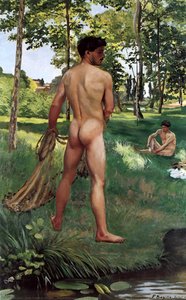
      Jean Frédéric Bazille’s Celebration of Youthful Vitality Jean Frédéric Bazille’s “Bathers (Summer Scene),” completed in 1869, stands as a cornerstone of Impressionism – an artistic movement that irrevocably altered the landscape of European painting. More than just a depiction of nude figures enjoying a tranquil summer afternoon; it embodies Bazille's profound engagement with capturing fleeting moments and conveying the very essence of natural beauty. This canvas pulsates with energy, radiating…

      Familieforening (1867) av Frédéric Bazille
      2

      Familieforening

      1867 · Olje på lerret · Musée d'Orsay, Paris

      En kort introduksjon til en tragisk kunstner Jean Frédéric Bazille er en kunstner hvis liv, dessverre, ble for kort. Han var født i Montpellier, Frankrike, i 1841, og hans historie er et bemerkende eksempel på et stort potensial som ble knust altfor tidlig. Bazilles oppvekst var preget av en spenning mellom hans ambisjoner innen kunst og familiens ønsker om en mer sikker fremtid gjennom medisinstudier. Denne dualiteten formet hans tidlige…

      The Pink Dress (1864) av Frédéric Bazille
      3

      The Pink Dress

      1864 · Acrylic On Canvas · Musée d'Orsay, Paris

      Marilyn Monroe’s “Pink Dress,” designed by William Travilla for Howard Hawks’ 1953 film *Gentlemen Prefer Blondes*, transcends mere costume; it embodies an enduring symbol of glamour, ambition, and the seductive allure of Hollywood. The dress itself—a shocking pink silk satin gown adorned with black satin lining and a large bow—represents more than just fabric and embellishments; it encapsulates a pivotal moment in cinematic history and continues to fascinate audiences today.

      La Toilette (1870) av Frédéric Bazille
      4

      La Toilette

      1870 · Acrylic On Canvas · Musée Fabre, Montpellier

      The Painting's Significance and Context La Toilette, an oil-on-canvas painting by Jean Frédéric Bazille, is a remarkable work of art that showcases the artist's skill in capturing intimate moments. Created in 1869-1870, this painting is one of Bazille's last works before his untimely death in the Franco-Prussian War. Composition and Symbolism The painting depicts three women in a room, with one woman lying on a bed while the other two…

      Landscape on the Shore of Lez (1870) av Frédéric Bazille
      5

      Landscape on the Shore of Lez

      1870 · Oil

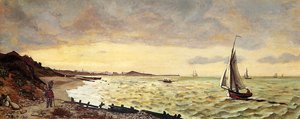
      Landscape on the Shore of Lez is a significant work by Frédéric Bazille, an artist whose life was marked by a brief but intense period of creativity. Born in 1841, Bazille’s career was tragically cut short when he died in 1870. This particular painting, completed in June 1870, represents one of his final artistic statements. It is a large landscape that the artist himself described as an eclogue, a term…

      The Family Gathering (1867) av Frédéric Bazille
      6

      The Family Gathering

      1867 · Oil On Canvas · Musée d'Orsay, Paris

      To stand before The Family Gathering is to step directly into a sun-dappled afternoon of pure, unscripted joy. This painting by Jean Frédéric Bazille captures more than just a social assembly; it arrests the very essence of conviviality. One feels the gentle warmth emanating from the canvas, as if the viewer has stumbled upon this private moment in time. The composition is masterfully arranged beneath the generous canopy of a…

      The Scoter (1864) av Frédéric Bazille
      7

      The Scoter

      1864 · Oil · Musée Fabre, Montpellier

      The painting depicts a bird perched upon a wooden surface that possesses a yellowish hue. The central subject is a bird that appears to be dead or in the process of dying. This bird is positioned near the center of the frame and occupies most of the composition.

      Le petit jardinier, ca Museum of Fine Arts, (1867) av Frédéric Bazille
      8

      Le petit jardinier, ca Museum of Fine Arts,

      1867 · Oil On Canvas · Museum of Fine Arts, Houston, Houston

      A woman in a pink dress occupies the center of this 1867 composition, her form integrated into a lush, verdant landscape. She holds a watering can, a quiet gesture of tending to the earth. Around her, the garden is alive with color and movement. A large bush erupts with red flowers, providing a sharp contrast to the deep greens of the foliage. In the distance, another figure walks away, adding…

      Portrait of an Unknown Sitter as a Troubadour (1875) av Frédéric Bazille
      10

      Portrait of an Unknown Sitter as a Troubadour

      1875 · Oil On Canvas · Dallas Museum of Art, Dallas

      In this intimate oil portrait, we find ourselves drawn into a quiet, private moment with a young man. The composition is a close-up, bust-length study that pushes the subject toward the viewer through a dramatic use of chiaroscuro. A deep, nearly black background provides a void from which the sitter emerges, illuminated by a highly directional light source. This light catches the contours of his face, leaving the other side…

      Flere lerreter av Frédéric Bazille, fra 11 til 88

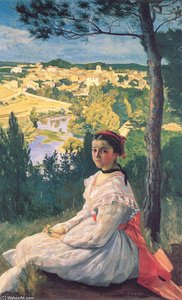
      View of the Village (1868) av Frédéric Bazille
      #18

      View of the Village

      1868 · Musée Fabre

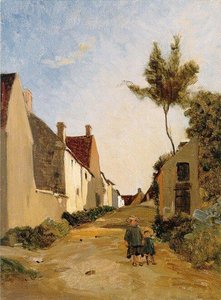
      Jean Frédéric Bazille’s “View of the Village,” painted in 1868, stands as a quintessential example of the Impressionist spirit—a movement that sought to capture fleeting impressions of light…

      Få det malt for hånd →
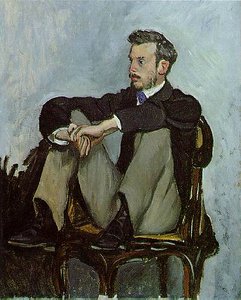
      Portrait of Renoir (1867) av Frédéric Bazille
      #20

      Portrait of Renoir

      1867 · Musée d'Orsay

      Jean Frédéric Bazille's “Portrait of Renoir” stands as a testament to the burgeoning Impressionist movement, capturing not merely an likeness but also a palpable sense of contemplative emotion.…

      Ta med deg dette lyset hjem →
      Portrait of Edmond Maitre (1869) av Frédéric Bazille
      #22

      Portrait of Edmond Maitre

      1869 · National Gallery of Art

      In the quiet corners of art history, certain works possess the power to halt time, offering a window into a moment of profound stillness. Jean Frédéric Bazille’s “Portrait…

      Få det malt for hånd →
      Reclining Nude (1864) av Frédéric Bazille
      #23

      Reclining Nude

      1864 · Musée Fabre

      Jean Frédéric Bazille's 'Reclining Nude,' painted in 1864, is more than just a depiction of the human form; it’s a carefully constructed evocation of serenity and sensual grace,…

      Bestill dette lerretet →
      Fontainebleau forest (1865) av Frédéric Bazille
      #24

      Fontainebleau forest

      1865 · Musée d'Orsay

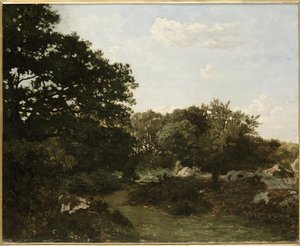
      In this 1865 oil on canvas, we find ourselves standing at the edge of the Fontainebleau forest. The composition is asymmetrical, drawing the eye toward a dense, dark…

      Bestill dette lerretet →
      Portrait of Edouard Blau (1866) av Frédéric Bazille
      #25

      Portrait of Edouard Blau

      1866 · National Gallery of Art

      “Portrait of Édouard Blau,” painted by Jean Frédéric Bazille in 1866, stands as a testament to the burgeoning Impressionist movement's fascination with capturing fleeting moments of light and…

      Bestill dette lerretet →
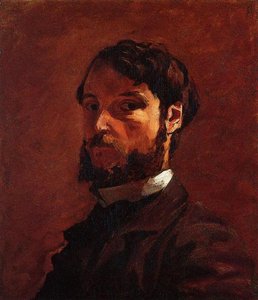
      Self Portrait (1870) av Frédéric Bazille
      #26

      Self Portrait

      1870

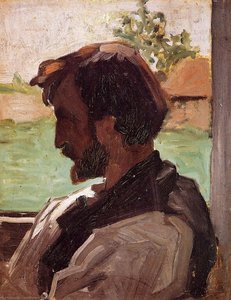
      In this poignant Self Portrait, painted in 1870, we encounter Frédéric Bazille not merely as a painter, but as a man caught in the delicate transition between youthful…

      Bestill dette lerretet →
      Self-Portrait (1867) av Frédéric Bazille
      #28

      Self-Portrait

      1867 · Minneapolis Institute of Art

      Self-Portrait is an oil on canvas painting by the artist Frédéric Bazille. Created in France, this work belongs to the Impressionism movement. The subject of the painting is…

      Bestill dette lerretet →
      Queens Gate at Aigues-Mortes (1867) av Frédéric Bazille
      #63

      Queens Gate at Aigues-Mortes

      1867 · Metropolitan Museum of Art

      Jean Frédéric Bazille's "Queens Gate at Aigues-Mortes," painted in 1867, isn’t merely a depiction of a medieval fortification; it’s an exquisite distillation of Impressionist philosophy and a poignant…

      Bestill dette lerretet →
      Landscape at Chailly (1865) av Frédéric Bazille
      #65

      Landscape at Chailly

      1865 · Art Institute of Chicago

      Jean Frédéric Bazille’s “Landscape at Chailly,” painted in 1865, isn't merely a depiction of a Swiss hillside; it’s a distilled essence of Impressionist philosophy—a fleeting capture of light,…

      Få det malt for hånd →
      Toilet (1870) av Frédéric Bazille
      #70

      Toilet

      1870 · Musée Fabre

      Painted in 1870, tragically just months before Jean Frédéric Bazille's untimely death at the age of twenty-nine, *Toilet* (La Toilette) is a pivotal work within the burgeoning Impressionist…

      Få det malt for hånd →
      Summer Scene (Bathers) av Frédéric Bazille
      #72

      Summer Scene (Bathers)

      Fogg Museum

      Jean Frédéric Bazille's “Summer Scene (Bathers)” captures a quintessential moment of leisure and joy, transporting the viewer to the sun-drenched landscapes of Provence. Painted in 1873, just months…

      Ta med deg dette lyset hjem →
      Portrait of Renoir (1867) av Frédéric Bazille
      #82

      Portrait of Renoir

      1867 · Cleveland Museum of Art

      The Portrait of Renoir is an oil on canvas figure portrait created by the artist Frédéric Bazille. Executed in 1867, this work depicts Pierre-Auguste Renoir, who was a…

      Få det malt for hånd →
      Edouard Blau (1869) av Frédéric Bazille
      #83

      Edouard Blau

      1869 · National Gallery of Art

      This oil on canvas work, titled Edouard Blau, was executed by the French artist Frédéric Bazille. It offers a quiet study of the sitter, a French dramatist, critic,…

      Få det malt for hånd →

      Frédéric Bazilles lerreter, periode for periode

      Hva Frédéric Bazille malte mest av

      De fire motivene som går igjen oftest på disse lerretene, hver med sitt mest kjente eksempel.

      Der Frédéric Bazille sine lerreter henger

      De 8 museene som innehar flest av maleriene på denne siden.

      Museum By Verker av Frédéric Bazille Malerier fra denne listen
      Musée Fabre, MontpellierMusée Fabre Montpellier 23 La Toilette, The Scoter, Petite Italienne chanteuse des rues
      Musée d'Orsay, ParisMusée d'Orsay Paris 8 Familieforening, The Pink Dress, The Family Gathering
      National Gallery of Art, WashingtonNational Gallery of Art Washington 6 Portrait of Edmond Maitre, Portrait of Edouard Blau, Edmond Maître
      Minneapolis Institute of Art, MinneapolisMinneapolis Institute of Art Minneapolis 2 Self-Portrait, The Banks of the Lez
      Art Institute of Chicago, ChicagoArt Institute of Chicago Chicago 2 Landscape at Chailly, Self Portrait with Palette
      Fogg Art Museum, CambridgeFogg Art Museum Cambridge 1 Bader
      Museum of Fine Arts, Houston, HoustonMuseum of Fine Arts, Houston Houston 1 Le petit jardinier, ca Museum of Fine Arts,
      Dallas Museum of Art, DallasDallas Museum of Art Dallas 1 Portrait of an Unknown Sitter as a Troubadour

      Frédéric Bazilles mest elskede lerreter fra hvert tiår

      1. 1850s
      2. 1860s
        Bader (1869) av Frédéric Bazille
        1 av 88

        Bader

        Alder 19 – 28 · Fogg Art Museum

        Jean Frédéric Bazille’s Celebration of Youthful Vitality Jean Frédéric Bazille’s “Bathers (Summer Scene),” completed in 1869, stands as a cornerstone of Impressionism – an artistic movement that irrevocably…

      3. 1870s
        La Toilette (1870) av Frédéric Bazille
        Lerret 4 av 88

        La Toilette

        Alder 29 · Musée Fabre

        The Painting's Significance and Context La Toilette, an oil-on-canvas painting by Jean Frédéric Bazille, is a remarkable work of art that showcases the artist's skill in capturing intimate…

      Om Frédéric Bazille sine lerreter: dine spørsmål besvart

      Hva er det mest kjente maleriet av Frédéric Bazille?Les svaret

      Bader (1869), Fogg Art Museum, Cambridge. Familieforening (1867) og The Pink Dress (1864) følger.

      Hvor gammel var Frédéric Bazille da Bader ble malt?Les svaret

      Frédéric Bazille, født i 1841, var 28 år gammel: Bader er fra 1869.

      Hva er de 10 mest kjente maleriene til Frédéric Bazille?Les svaret

      Bader, Familieforening, The Pink Dress, La Toilette, Landscape on the Shore of Lez, The Family Gathering, The Scoter, Le petit jardinier, ca Museum of Fine Arts,, Saint-Saveur og Portrait of an Unknown Sitter as a Troubadour. Hvert lerret i rangeringen ovenfor er oppgitt med årstall og museum.

      Hvor mange verk malte Frédéric Bazille totalt?Les svaret

      88 verk av Frédéric Bazille finnes i vår katalog, datert fra 1859 til 1870.

      Hvor kan jeg se de mest kjente maleriene til Frédéric Bazille?Les svaret

      Hovedsakelig i Musée Fabre (Montpellier), Musée d'Orsay (Paris) og National Gallery of Art (Washington); listen ovenfor navngir hvert museum og deres lerreter.

      Når malte Frédéric Bazille sine mest kjente lerreter?Les svaret

      I 1860s, som utgjorde 54 av de 88 verkene på denne siden, var Bader blant dem.

      Hvilke er Frédéric Bazilles tidligste og nyeste berømte malerier?Les svaret

      Det eldste lerretet her er fra Mystic marriage of Saint Catherine (1859); det nyeste er fra La Toilette (1870).

      Hva malte Frédéric Bazille oftest?Les svaret

      Portraits (6), Men (6) og French painting (5), fordelt på 88 verk på denne siden.

      Hvilket medium malte Frédéric Bazille oftest i?Les svaret

      Oil On Canvas, brukt i 23 av de 88 verkene på denne siden.

      Hvilken kunstretning tilhører maleriet til Frédéric Bazille?Les svaret

      Impressionist landscape, som lerretet på denne siden viser.

      Hvilke lerreter av Frédéric Bazille henger på Musée Fabre?Les svaret

      Musée Fabre, Montpellier har 23 av verkene på denne siden, inkludert La Toilette, The Scoter og Petite Italienne chanteuse des rues.

      Kan jeg kjøpe en reproduksjon av et lerret av Frédéric Bazille?Les svaret

      Ja. Hvert maleri på denne siden kan bestilles fra sin egen side som en håndmalt oljereproduksjon, eller som et kunsttrykk i den størrelsen du velger.

      Frédéric Bazille: et liv i maling

      The Brief Radiance of Jean Frédéric Bazille

      Jean Frédéric Bazille’s story is one of immense promise tragically cut short, a fleeting yet significant contribution to the burgeoning Impressionist movement. Born in Montpellier, France, on December 6, 1841, into a prosperous Protestant family involved in wine production, Bazille initially seemed destined for a life far removed from the world of art. His parents, while supportive, insisted he pursue medical studies alongside his artistic inclinations – a compromise reflecting the societal expectations of the time and their desire for his financial security. This duality would shape his early years, dividing his attention between anatomical dissection and the captivating allure of color and light. However, it was within the vibrant atmosphere of Paris, where he relocated in 1862 to continue his medical training, that Bazille’s artistic path truly began to unfold.

      Forging a Path Amongst Giants

      Paris proved to be a crucible for young Bazille. He quickly fell in with a circle of artists who would become synonymous with Impressionism: Claude Monet, Pierre-Auguste Renoir, and Alfred Sisley. Studying under Charles Gleyre provided him with formal training, but it was the shared passion and radical ideas exchanged amongst these friends that truly ignited his artistic vision. Bazille’s financial stability – a fortunate contrast to the often precarious existence of his companions – allowed him to generously support them, offering studio space and materials. This generosity wasn't merely practical; it stemmed from a deep camaraderie and belief in their collective potential. He became a vital hub for this emerging group, fostering an environment of experimentation and mutual encouragement. His early works, like *The Pink Dress* (c. 1864), already demonstrate a keen eye for capturing fleeting moments and the effects of light – hallmarks that would define Impressionism. He wasn’t simply mimicking established styles; he was actively participating in the creation of something entirely new. Bazille's work often depicted scenes of Parisian life, infused with an intimate understanding of his friends and their shared experiences.

      A Style Defined by Light and Friendship

      Bazille's artistic style, though developing rapidly, possessed a unique character within the broader Impressionist aesthetic. While sharing their fascination with *plein air* painting – working outdoors to directly capture the nuances of natural light – his compositions often exhibited a more structured quality than Monet’s or Renoir’s. He frequently combined figure painting with landscape, placing his subjects thoughtfully within their environment, as seen in masterpieces like *Family Reunion* (1867-1868). This work is not merely a depiction of familial gathering; it's an exploration of light filtering through the trees, animating the scene and imbuing it with a sense of warmth and intimacy. His paintings weren’t just about *what* he saw, but *how* he saw it – the emotional resonance evoked by color, form, and light. He was deeply influenced by Eugène Delacroix, whose vibrant use of color resonated with his own artistic sensibilities, yet he moved beyond academic conventions to embrace a more modern sensibility. Bazille’s palette often featured rich, warm tones, reflecting the southern French landscapes that held such significance for him.

      A Life Interrupted: Legacy and Remembrance

      The blossoming career of Jean Frédéric Bazille was brutally interrupted by the Franco-Prussian War in 1870. Driven by a sense of patriotic duty, he joined a Zouave regiment just months after the conflict erupted. Tragically, he was killed in action on November 28, 1870, at the young age of 28, near Beaune-la-Rolande. His death sent shockwaves through the artistic community, robbing them of a talented friend and generous benefactor. His premature demise meant his work remained relatively unknown for many years. However, in recent decades, Bazille’s contributions have been increasingly recognized and celebrated. Today, his paintings are held in prestigious museums like the Musée d'Orsay in Paris, and reproductions allow art lovers worldwide to experience the beauty and innovation of his vision. Bazille’s legacy extends beyond his artistic output; he embodies the spirit of youthful idealism, unwavering dedication, and the power of friendship that defined the early days of Impressionism. He remains a poignant reminder of the potential lost, yet also a testament to the enduring impact of a brief but brilliant career.

      Family Background and Early Influences

      Born into a prominent Protestant family in Montpellier, Bazille’s upbringing was markedly different from many of his artistic peers. His parents, Gaston Bazille (a respected agronomist and senator) and Camille Vialars (descended from a wealthy Toulouse family), instilled in him a strong sense of responsibility and a deep appreciation for the arts. This privileged background provided him with financial stability, allowing him to pursue both medicine and painting without the constant worry of poverty that plagued many artists of the time. The family’s connection to the cultural life of Montpellier – including its museum and artistic society – undoubtedly shaped his early exposure to art and influenced his aesthetic sensibilities. His ancestry included goldsmiths and merchants, reflecting a history of entrepreneurialism and craftsmanship that may have subtly informed his approach to painting.

      Key Works and Artistic Development

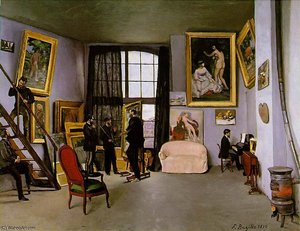
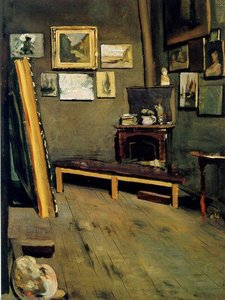
      Bazille’s oeuvre, though limited in size due to his tragically short life, showcases a remarkable evolution in style. Early works like *The Pink Dress* demonstrate his nascent talent for capturing fleeting moments and experimenting with color and light – hallmarks of the Impressionist movement. However, it was in *Family Reunion* (1867-1868) that he truly established his unique voice, blending figure painting with landscape to create a harmonious composition imbued with warmth and intimacy. This work exemplifies his ability to capture not just the visual appearance of a scene but also its emotional atmosphere. Other notable paintings include *Studio in Rue de Furstenberg* (c. 1867), which offers a glimpse into the social life of Parisian artists, and *Bathers (Summer Scene)* (c. 1869), showcasing his interest in depicting figures within natural settings. Throughout his career, Bazille consistently sought to integrate modern compositional strategies – such as unusual cropping and dynamic perspectives – with traditional painting techniques.

      A Tragic End and Lasting Impact

      Bazille’s promising artistic career was abruptly cut short by the Franco-Prussian War. Driven by a sense of patriotic duty, he enlisted in the army just months before the conflict erupted and perished in action on November 28, 1870. His untimely death robbed the art world of a talented and visionary artist, but his legacy has endured through the recognition of his paintings and the inspiration he provided to later generations of Impressionists. Today, Bazille is increasingly appreciated as a key figure in the development of modern painting, celebrated for his innovative approach to composition, his masterful use of color, and his profound understanding of light and atmosphere. His story serves as a poignant reminder of the fragility of artistic genius and the enduring power of friendship and dedication.

      Alle 88 verk av Frédéric Bazille →