Atelier — Gratis frakt til hele verden — Leveringstid 2–6 uker
      Jackson Pollock, 1912 – 1956

      The 100 Most Famous Jackson Pollock Paintings, Ranked

      The best-loved painting by Jackson Pollock is Høstrytme. Nummer 30, 1950. Nummer 1, 1949 (1950) and Konvergens come next among the canvases readers know best. Our catalogue holds 186 works by Jackson Pollock: here are the 100 most famous, each with its year, its museum and what makes it memorable.

      Ranked by our popularity score, which combines the searches, visits and orders for each work. Updated October 2026. Each painting on this page can be ordered as an oil reproduction painted by hand on linen canvas, or as a fine art print, made to the size you choose.

      Portrait of Jackson Pollock
      Jackson Pollock · 1912 – 1956
      Born · died
      1912 – 1956, Cody
      Movement
      Abstract expressionism
      Works in our catalogue
      186
      Most famous
      Høstrytme. Nummer 30, 1950
      Most works at
      MoMA - Museum of Modern Art

      Top 10 Jackson Pollock paintings: the canvases everyone knows

      Høstrytme. Nummer 30, 1950 by Jackson Pollock
      1

      Høstrytme. Nummer 30, 1950

      Olje på lerret

      “Autumn Rhythm. Number 30, 1950” is more than just a painting; it's an immersive journey into the heart of Abstract Expressionism, a visceral testament to Jackson Pollock’s revolutionary approach to art. Created during his intensely productive “drip period” between 1947 and 1950, this monumental canvas pulsates with energy – a visual record of the artist’s raw emotion and deeply personal engagement with the creative act itself. It's a work that…

      Nummer 1, 1949 (1950) by Jackson Pollock
      2

      Nummer 1, 1949

      1950 · Olje på lerret · Private collection, New York City

      Skapt i 1950, legemliggjør dette fascinerende verket revolusjonens ånd innenfor Abstrakt Ekspresjonisme og står som et fremragende eksempel på Jackson Pollocks ikoniske “drypp”-teknikk. Med sine imponerende mål – 240 x 120 cm – krever det oppmerksomhet ikke bare gjennom sin skala, men også gjennom den rene energien som stråler fra dens komplekse overflate. Maleriet er mer enn et visuelt objekt; det er en fysisk manifestasjon av skaperprosessen selv.

      Konvergens by Jackson Pollock
      3

      Konvergens

      Olje på lerret

      Jackson Pollock’s ‘Convergence’: En Revolution av Farge og Energi Jackson Pollock's “Convergence” er mer enn bare et maleri; det er en dypfølt opplevelse – et monumentalt vitnesbyrd om kraften i abstrakt ekspresjonisme og et definerende verk innen amerikansk kunst etter krigen. Skapt under en kritisk periode i kunsthistorien, fanger dette arbeidet innovasjon og utfordrer tradisjonelle forestillinger om representasjon, og inviterer betrakteren inn i en dynamisk verden av farger og energi.…

      Tall nummer 1A by Jackson Pollock
      4

      Tall nummer 1A

      Olje på lerret

      Essensen av abstrakt ekspresjonisme Jackson Pollocks "Number 1A" er et kroneksempel på abstrakt ekspresjonisme, en retning som redefinerte amerikansk kunst i midten av det 20. århundre. Dette fengslende verket legemliggjør den rå energien og spontaniteten som Pollock er viden kjent for, noe som gjør det til et uunværlig tilskudd til enhver samtidskunstsamling eller moderne interiør. En dans mellom kaos og kontroll Kunstverket presenterer en abstrakt komposisjon preget av kaotiske, energiske…

      Hvit Lys (1954) by Jackson Pollock
      5

      Hvit Lys

      1954 · Olje på lerret · MoMA - Museum of Modern Art, New York City

      “Hvit Lys” er mer enn bare et bilde; det er en dør inn i et intenst, kaotisk univers skapt av Paul Jackson Pollock. Denne kraftfulle abstraksjonen fra 1954 fanger essensen av den amerikanske abstrakte ekspresjonismen – en bevegelse som revolusjonerte kunstens landskap og utfordret tradisjonelle definisjoner av representasjon. Billedet inviterer oss til å bli fanget i et virvar av farger, teksturer og energiske linjer, et vitnesbyrd om kunstnerens evne til…

      One. Number 31, 1950 by Jackson Pollock
      6

      One. Number 31, 1950

      Painting

      In the pantheon of modern art, few works command the room with such raw, unbridled intensity as Paul Jackson Pollock’s “One: Number 31, 1950.” To stand before this canvas is to witness a moment of pure, unfiltered creation captured in time. As a cornerstone of the Abstract Expressionist movement, this painting transcends the boundaries of traditional composition, offering instead a dense, rhythmic web of energy that seems to pulse with…

      Number 5 (1948) by Jackson Pollock
      7

      Number 5

      1948 · Oil On Canvas

      A Universe Unfurled: Decoding Jackson Pollock’s No. 5, 1948 Jackson Pollock’s *No. 5, 1948* isn't simply a painting; it is an event frozen in time – a visual record of energy, gesture, and the very act of creation. This monumental work stands as perhaps the most iconic example of Abstract Expressionism, captivating viewers for decades with its complex layering and seemingly chaotic beauty. It’s a piece that demands attention, sparking…

      Mural (1943) by Jackson Pollock
      8

      Mural

      1943 · Acrylic On Canvas

      Jackson Pollock's "Mural," completed in 1943, isn't merely a painting; it’s an immersive experience, a visceral embodiment of the burgeoning abstract expressionist movement. Commissioned by Peggy Guggenheim as a centerpiece for her Manhattan townhouse, this monumental work – measuring a commanding 247 x 605 cm – immediately announces Pollock’s arrival as a revolutionary force in the art world. The sheer scale invites contemplation, drawing the viewer into a swirling vortex…

      Number 5 (1948) by Jackson Pollock
      9

      Number 5

      1948 · Oil On Canvas

      Jackson Pollock’s *No. 5*, created in 1948, stands as an emblem of Abstract Expressionism—a movement that irrevocably altered the landscape of modern art. More than just a painting; it's a visceral embodiment of emotion, intellect, and revolutionary technique, captivating viewers with its mesmerizing complexity and enduring legacy. This monumental canvas, measuring eight by four feet on fiberboard, transcends mere visual representation, inviting contemplation about the very nature of artistic expression…

      Alchemy (1947) by Jackson Pollock
      10

      Alchemy

      1947 · Acrylic On Canvas

      A Dance of Chaos and Transformation: Exploring Jackson Pollock’s Alchemy The Genesis of Spontaneity Decoding the Drip Technique Historical Resonance and Symbolic Weight A Legacy of Innovation Jackson Pollock’s *Alchemy*, a monumental work from 1947, isn't merely a painting; it’s an immersive experience, a visceral embodiment of the burgeoning Abstract Expressionist movement. Created during a pivotal moment in American art history, this piece captures the raw energy and revolutionary spirit…

      More Jackson Pollock canvases, 11 to 100

      Number 6 (1949) by Jackson Pollock
      #12

      Number 6

      1949

      Number 6 stands as a pivotal work within Jackson Pollock's oeuvre and the broader movement of Abstract Expressionism. Emerging in post-World War II America, this style rejected traditional…

      Order this canvas →
      Number 23, 1951 by Jackson Pollock
      #13

      Number 23, 1951

      Chrysler Museum of Art

      Paul Jackson Pollock's "Number 23, 1951" isn’t merely a painting; it’s an immersion. Created during a pivotal period of his artistic evolution – the “black pourings” – this…

      Have it painted by hand →
      Number 1 (1948) by Jackson Pollock
      #14

      Number 1

      1948 · MoMA - Museum of Modern Art

      Jackson Pollock's "Number 1, 1948," housed within the hallowed halls of the Museum of Modern Art in New York, isn’t merely a painting; it’s an immersion. It’s a…

      Bring this light home →
      There Were Seven in Eight (1945) by Jackson Pollock
      #15

      There Were Seven in Eight

      1945 · MoMA - Museum of Modern Art

      A Descent Into Chaotic Beauty The canvas of Jackson Pollock’s 1945 masterpiece, "There Were Seven in Eight," serves as a visceral gateway into the turbulent heart of Abstract…

      Have it painted by hand →
      Saint by Jackson Pollock
      #16

      Saint

      Jackson Pollock is widely regarded as one of the most influential artists of the 20th century, and his painting Saint is a quintessential example of his unique style.…

      Bring this light home →
      The She Wolf (1943) by Jackson Pollock
      #17

      The She Wolf

      1943

      Jackson Pollock's “The She Wolf,” completed in 1943, is more than just an abstract canvas; it’s a visceral plunge into the heart of early Abstract Expressionism and a…

      Have it painted by hand →
      Blue poles (Number 11) (1952) by Jackson Pollock
      #19

      Blue poles (Number 11)

      1952

      Jackson Pollock’s “Blue Poles (Number 11),” completed in 1952, isn’t merely a painting; it’s an explosion of controlled chaos, a visceral embodiment of the abstract expressionist movement. Measuring…

      Have it painted by hand →
      Yellow Islands by Jackson Pollock
      #21

      Yellow Islands

      A Symphony of Chaos: Exploring Jackson Pollock’s ‘Yellow Islands’ Jackson Pollock's ‘Yellow Islands’, painted in 1952, stands as a pivotal work within the Abstract Expressionist movement – a…

      Have it painted by hand →
      Black Pouring over Color by Jackson Pollock
      #22

      Black Pouring over Color

      A Dance with Color: Jackson Pollock’s “Black Pouring over Color” Jackson Pollock's "Black Pouring over Color," created in 1950, isn’t merely a painting; it’s an immersive experience—a visceral…

      Bring this light home →
      The Flame (1938) by Jackson Pollock
      #23

      The Flame

      1938

      The painting The Flame consists of oil on fiberboard, measuring 51 x 76 cm. The surface features a central motif of an incandescent blaze that moves through an…

      Bring this light home →
      Portrait and a Dream by Jackson Pollock
      #24

      Portrait and a Dream

      Jackson Pollock’s Portrait and a Dream (1953) isn’t merely a painting; it’s an immersion into the very heart of Abstract Expressionism, a visceral embodiment of the artist’s process…

      Have it painted by hand →
      Number 3 (1948) by Jackson Pollock
      #25

      Number 3

      1948

      Jackson Pollock: A Revolutionary in Abstract Expressionism Jackson Pollock (1912-1956) stands as a monumental figure within the abstract expressionist movement, forever altering the trajectory of modern art. His…

      Order this canvas →
      Ocean Greyness by Jackson Pollock
      #26

      Ocean Greyness

      Ocean Greyness is an oil painting created by Jackson Pollock in 1953. This work measures 229 x 146.7 cm and is currently held in the Solomon R. Guggenheim…

      Have it painted by hand →
      The Moon-Woman by Jackson Pollock
      #27

      The Moon-Woman

      To stand before Jackson Pollock’s "The Moon-Woman" is to enter a realm where the boundaries between reality and the subconscious begin to dissolve. At first glance, the viewer…

      Bring this light home →
      Lucifer (1947) by Jackson Pollock
      #28

      Lucifer

      1947

      Jackson Pollock’s “Lucifer,” painted in 1947, isn’t merely a painting; it’s an immersion. Measuring a substantial 268 x 104 cm, this work embodies the raw energy and profound…

      Have it painted by hand →
      Woman by Jackson Pollock
      #29

      Woman

      Jackson Pollock's “Woman,” completed in 1945 and currently residing within the hallowed halls of the Museum of Modern Art in New York City, isn’t merely a painting; it’s…

      Bring this light home →
      Untitled (Naked Man) by Jackson Pollock
      #30

      Untitled (Naked Man)

      A Figure Forged in Turmoil: Exploring Pollock’s ‘Untitled (Naked Man)’ This powerful painting by Jackson Pollock plunges the viewer into a vortex of emotion and raw energy. Depicting…

      Have it painted by hand →
      Lavender Mist_Number 1 by Jackson Pollock
      #31

      Lavender Mist_Number 1

      Jackson Pollock’s “Lavender Mist_Number 1” isn't merely a painting; it’s an immersion, a visceral experience captured on canvas. This seminal work from the late 1940s embodies the revolutionary…

      Have it painted by hand →
      Birth by Jackson Pollock
      #32

      Birth

      A Tempestuous Birth: Decoding Pollock’s Abstract Vision Jackson Pollock's *Birth* (1948-51) is a pivotal work within his mature “drip” period and a cornerstone of Abstract Expressionism. More than…

      Order this canvas →
      Blue (Moby Dick) by Jackson Pollock
      #33

      Blue (Moby Dick)

      Jackson Pollock's “Blue (Moby Dick),” painted in 1943, isn’t merely a canvas splashed with color; it’s an immersive experience, a visual embodiment of the anxieties and primal forces…

      Order this canvas →
      The key (1946) by Jackson Pollock
      #34

      The key

      1946 · Art Institute of Chicago

      A Dance Across Canvas: Exploring Jackson Pollock’s ‘The Key’ Subject Matter & Composition The artwork depicts a group of individuals engaged in various postures—seated on chairs, standing upright,…

      Bring this light home →
      Untitled II by Jackson Pollock
      #35

      Untitled II

      To stand before an Untitled II by Paul Jackson Pollock is not merely to observe paint on canvas; it is to witness an event. It is a raw,…

      Bring this light home →
      Cathedral by Jackson Pollock
      #36

      Cathedral

      Introduction to Jackson Pollock and Abstract Expressionism Paul Jackson Pollock, known professionally as Jackson Pollock, was an American painter and a major figure in the abstract expressionist movement.…

      Have it painted by hand →
      Number 27, 1950 by Jackson Pollock
      #38

      Number 27, 1950

      Jackson Pollock’s ‘Number 27, 1950’: A Symphony of Controlled Chaos Number 27, 1950 is a landmark achievement in the history of Abstract Expressionism, embodying the movement's radical departure…

      Have it painted by hand →
      Circumcision January (1946) by Jackson Pollock
      #40

      Circumcision January

      1946

      Jackson Pollock, a titan of 20th-century art, remains synonymous with abstract expressionism. His painting, Circumcision January, exemplifies his groundbreaking approach and continues to captivate viewers with its dynamic…

      Bring this light home →
      Sheet of Studies (1941) by Jackson Pollock
      #41

      Sheet of Studies

      1941

      A Window into Pollock’s Subconscious: “Sheet of Studies” (1941) This intensely energetic work on paper, created in 1941, offers a fascinating glimpse into the formative period of Jackson…

      Have it painted by hand →
      Number 12, 1949 by Jackson Pollock
      #42

      Number 12, 1949

      A Universe Within: Decoding Jackson Pollock’s “Number 12, 1949” Jackson Pollock's "Number 12, 1949" isn't simply a painting; it’s an event frozen in time – a visual record…

      Order this canvas →
      War by Jackson Pollock
      #43

      War

      War: A Descent into Chaos – Jackson Pollock’s Post-Traumatic Masterpiece Jackson Pollock's *War*, painted in 1947, isn’t merely a canvas splashed with color; it’s a visceral embodiment of…

      Bring this light home →
      Marrón y plata by Jackson Pollock
      #44

      Marrón y plata

      A Symphony of Shadow and Silver: Exploring Jackson Pollock’s “Marrón y plata” Jackson Pollock's "Marrón y plata" ("Brown and Silver") stands as a pivotal work within his celebrated…

      Bring this light home →
      Pattern (1945) by Jackson Pollock
      #45

      Pattern

      1945

      is a work by the American artist Paul Jackson Pollock. He painted this canvas in 1945, a year that marked his move from the streets of Manhattan to…

      Bring this light home →
      Number 10 (1949) by Jackson Pollock
      #46

      Number 10

      1949

      A Tempestuous Vision: Exploring Jackson Pollock’s ‘Number 10’ Number 10, created in 1949, stands as a monumental example of Jackson Pollock's revolutionary drip painting technique and the apex…

      Bring this light home →
      Untitled 28 by Jackson Pollock
      #47

      Untitled 28

      A Visceral Encounter: Decoding Jackson Pollock’s “Untitled 28” This intensely compelling work by Jackson Pollock, known simply as “Untitled 28,” offers a raw and unsettling glimpse into the…

      Bring this light home →
      Number 25 (1950) by Jackson Pollock
      #48

      Number 25

      1950

      To stand before Number 25 is to confront pure, unmediated action. This canvas does not merely depict an image; it records an event—a moment of intense physical and…

      Untitled (1939) by Jackson Pollock
      #49

      Untitled

      1939 · Art Institute of Chicago

      The canvas known as Untitled emerges from 1939, a moment when Jackson Pollock begins to navigate the turbulent currents of his own creative impulses. This abstract expressionist work…

      Order this canvas →
      Untitled 6 by Jackson Pollock
      #50

      Untitled 6

      A Tempest of Emotion: Exploring Jackson Pollock’s Untitled 6 This captivating work by Jackson Pollock plunges viewers into a dynamic world of abstract expressionism. *Untitled 6* is not…

      Have it painted by hand →
      Full Fathom Five by Jackson Pollock
      #51

      Full Fathom Five

      In the annals of American art history, few works capture the raw, unbridled energy of a movement quite like Paul Jackson Pollock’s Full Fathom Five. Painted in 1947,…

      Have it painted by hand →
      Cut out by Jackson Pollock
      #54

      Cut out

      Jackson Pollock, born on January 28, 1912, was an American painter who played a significant role in the abstract expressionist movement. He is renowned for his unique style…

      Have it painted by hand →
      Masked Image by Jackson Pollock
      #55

      Masked Image

      The canvas breathes with a restless energy, presenting a singular, stylized visage that seems to emerge from a thicket of overlapping shapes. This is not a portrait in…

      Bring this light home →
      Untitled by Jackson Pollock
      #56

      Untitled

      A Glimpse into Pollock’s Preparatory Process: An Early Study in Motion This captivating work on paper offers a rare look into Jackson Pollock's artistic development *before* his iconic…

      Order this canvas →
      Portrait of H.M by Jackson Pollock
      #57

      Portrait of H.M

      Paul Jackson Pollock's “Portrait of H.M.”, a work shrouded in mystery and brimming with raw energy, isn’t merely a painting; it’s an immersive experience. Created during a turbulent…

      Have it painted by hand →
      Summertime: Number 9A (1948) by Jackson Pollock
      #58

      Summertime: Number 9A

      1948 · Tate Modern

      Jackson Pollock’s “Summertime: Number 9A,” painted in 1948, isn't merely a canvas splashed with color; it’s an immersive experience, a visceral representation of the artist’s state of mind…

      Have it painted by hand →
      Untitled (1941) by Jackson Pollock
      #59

      Untitled

      1941

      A Moment Suspended: Exploring Jackson Pollock’s 1941 Untitled Work This striking work by Jackson Pollock, created in 1941, offers a fascinating glimpse into the artist's formative years –…

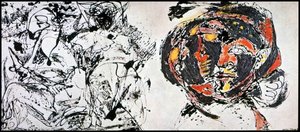
      Have it painted by hand →
      Untitled (Silkscreen I) by Jackson Pollock
      #60

      Untitled (Silkscreen I)

      In the realm of Abstract Expressionism, few works capture the raw, unbridled tension of human struggle as poignantly as Paul Jackson Pollock’s “Untitled (Silkscreen I).” This striking black…

      Order this canvas →
      Grayed Rainbow by Jackson Pollock
      #61

      Grayed Rainbow

      Art Institute of Chicago

      Jackson Pollock was a revolutionary figure in the abstract expressionist movement, reshaping artistic perception and challenging conventional notions of painting. His groundbreaking drip technique—characterized by pouring and splattering…

      Have it painted by hand →
      The Water Bull (1946) by Jackson Pollock
      #62

      The Water Bull

      1946 · Stedelijk Museum

      Subject and Composition This captivating abstract masterpiece immerses viewers in a whirlwind of vibrant colors and dynamic forms. While its subject remains open to interpretation, the energetic interplay…

      Bring this light home →
      Totem Lesson 2 (1945) by Jackson Pollock
      #63

      Totem Lesson 2

      1945

      Totem Lesson 2: An Exploration of Abstract Expressionism’s Chaotic Harmony Paul Jackson Pollock's "Totem Lesson 2," painted in 1945, stands as a cornerstone of Abstract Expressionism—a movement that…

      Have it painted by hand →
      Figure by Jackson Pollock
      #64

      Figure

      Jackson Pollock, a name synonymous with Abstract Expressionism and the revolutionary ‘drip’ technique, also harbored a period of intensely focused figuration that often goes unacknowledged. The work simply…

      Bring this light home →
      Untitled 9 by Jackson Pollock
      #65

      Untitled 9

      A Tempest of Emotion: Decoding Jackson Pollock’s “Untitled 9” This intensely evocative work by Jackson Pollock, designated “Untitled 9,” plunges the viewer into a swirling vortex of color…

      Have it painted by hand →
      Stenographic Figure (1942) by Jackson Pollock
      #66

      Stenographic Figure

      1942

      Jackson Pollock's 'Stenographic Figure,' painted in 1942, isn’t merely a depiction of a horse and rider; it’s a visceral embodiment of the anxieties and burgeoning freedom defining Abstract…

      Bring this light home →
      Number 3 (1949) by Jackson Pollock
      #67

      Number 3

      1949

      A Revolution in Paint: Exploring Jackson Pollock’s ‘Number 3’ Jackson Pollock's 'Number 3', created in 1949, stands as a monumental achievement within the Abstract Expressionist movement. Measuring 157…

      Order this canvas →
      Untitled 8 by Jackson Pollock
      #68

      Untitled 8

      The air feels heavy with the restless energy of Jackson Pollock as he confronts the vastness of "Untitled 8." This monumental painting emerges from a period of profound…

      Bring this light home →
      Number 8 by Jackson Pollock
      #69

      Number 8

      Jackson Pollock's "Number 8," created in 1949, stands as a pivotal work within the Abstract Expressionist movement. This piece exemplifies Pollock’s revolutionary “drip technique,” where paint was poured…

      Bring this light home →
      Head by Jackson Pollock
      #70

      Head

      A Visceral Exploration of the Human Condition Jackson Pollock’s *Head*, a work shrouded in some mystery due to its lack of definitive dating and detailed documentation, presents a…

      Have it painted by hand →
      Eyes in the Heat (1946) by Jackson Pollock
      #71

      Eyes in the Heat

      1946

      Eyes in the Heat Jackson Pollock's "Eyes in the Heat," created in 1946, is a seminal work that embodies the essence of Abstract Expressionism. This painting, measuring 137…

      Bring this light home →
      Circle (1941) by Jackson Pollock
      #72

      Circle

      1941

      Jackson Pollock’s Circle: A Dance of Color and Chaos Jackson Pollock's “Circle,” painted in 1941, isn’t merely a depiction of a circle; it’s an embodiment of the burgeoning…

      Order this canvas →
      Untitled 23 by Jackson Pollock
      #73

      Untitled 23

      A Chaotic Symphony in Black and White: Deconstructing Pollock’s “Untitled 23” Jackson Pollock's "Untitled 23" isn’t merely an ink drawing; it’s a visceral exploration of energy, anxiety, and…

      Order this canvas →
      Easter and the Totem (1953) by Jackson Pollock
      #74

      Easter and the Totem

      1953

      Unveiling Jackson Pollock’s “Easter and the Totem” A Masterpiece of Abstract Expressionism: Jackson Pollock's 1953 painting, Easter and the Totem, stands as a pivotal work within the Abstract…

      Bring this light home →
      Untitled 13 by Jackson Pollock
      #76

      Untitled 13

      In the pantheon of twentieth-century art, few names command as much visceral respect and intrigue as Jackson Pollock. His work Untitled 13 serves as a profound testament to…

      Have it painted by hand →
      Ritmo de otoño by Jackson Pollock
      #77

      Ritmo de otoño

      In the pantheon of twentieth-century art, few works possess the raw, kinetic energy found in Jackson Pollock’s Ritmo de otoño. Created in 1950, this masterpiece serves as a…

      Bring this light home →
      Male and Female (1942) by Jackson Pollock
      #78

      Male and Female

      1942

      Jackson Pollock: A Pioneer of Abstract Expressionism Jackson Pollock (1912–1956) stands as one of the most transformative figures in 20th-century art, irrevocably altering perceptions of painting and establishing…

      Order this canvas →
      Miners by Jackson Pollock
      #79

      Miners

      Paul Jackson Pollock: A Pioneer of Abstract Expressionism Paul Jackson Pollock (1912-1956) stands as one of the most influential figures in 20th-century art, irrevocably shaping the trajectory of…

      Order this canvas →
      GREETINGS by Jackson Pollock
      #80

      GREETINGS

      Paul Jackson Pollock's “Greetings” stands as a testament to the radical spirit of Abstract Expressionism, encapsulating the movement’s core tenets within a deceptively simple composition. This artwork, created…

      Have it painted by hand →
      Troubled Queen by Jackson Pollock
      #81

      Troubled Queen

      Photo Description: --Overall Impression-- The artwork presents a complex and chaotic abstract composition dominated by swirling lines, geometric shapes, and overlapping forms. It appears to be an oil…

      Order this canvas →
      Number 23 (1948) by Jackson Pollock
      #82

      Number 23

      1948

      Jackson Pollock’s “Number 23,” completed in 1948, stands as an undeniable cornerstone of Abstract Expressionism—a movement that fundamentally challenged artistic conventions and prioritized emotional expression over representational accuracy.…

      Have it painted by hand →
      Untitled (Silkcreen no. VI) by Jackson Pollock
      #83

      Untitled (Silkcreen no. VI)

      A Dance of Chaos and Connection: Exploring Jackson Pollock’s “Untitled (Silkcreen no. VI)” Paul Jackson Pollock's "Untitled (Silkcreen no. VI)" stands as an emblem of Abstract Expressionism, a…

      Order this canvas →
      Untitled 27 by Jackson Pollock
      #84

      Untitled 27

      Jackson Pollock's “Untitled 27,” a monumental drip painting from 1950, stands as an emblem of Abstract Expressionism—a movement that irrevocably altered the course of twentieth-century art. More than…

      Order this canvas →
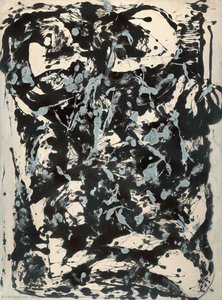
      Silver and Black I by Jackson Pollock
      #85

      Silver and Black I

      A Symphony of Chaos: Exploring Jackson Pollock’s “Silver and Black I” “Silver and Black I” is a powerful example of Jackson Pollock's revolutionary contribution to Abstract Expressionism, created…

      Bring this light home →
      Untitled 4 by Jackson Pollock
      #86

      Untitled 4

      In the realm of Abstract Expressionism, few works capture the raw, unbridled energy of the human psyche quite like Paul Jackson Pollock’s Untitled 4. This mesmerizing monochrome composition…

      Bring this light home →
      Shimmering Substance (1946) by Jackson Pollock
      #87

      Shimmering Substance

      1946

      Shimmering Substance: A Dance of Chaos and Control Jackson Pollock’s “Shimmering Substance,” completed in 1946, stands as a cornerstone of Abstract Expressionism—a movement that irrevocably altered the landscape…

      Order this canvas →
      Composition by Jackson Pollock
      #88

      Composition

      Jackson Pollock executed the painting titled Composition in 1949. This work emerged during a period when the artist was developing a specific approach to the canvas, moving away…

      Have it painted by hand →
      Gothic by Jackson Pollock
      #89

      Gothic

      The canvas known as Gothic emerges from the creative mind of Paul Jackson Pollock. Created in 1944, this work exists within the permanent collection of The Museum of…

      Have it painted by hand →
      Untitled (Cut-out) by Jackson Pollock
      #91

      Untitled (Cut-out)

      In the pantheon of Abstract Expressionism, few works capture the raw, visceral energy of the mid-century avant-garde quite like Paul Jackson Pollock’s "Untitled (Cut-out)." Created in 1954, a…

      Bring this light home →
      Going West (1935) by Jackson Pollock
      #92

      Going West

      1935

      Jackson Pollock's "Going West," painted in 1935, isn’t merely a depiction of a winter landscape; it’s a deeply personal narrative woven into the fabric of American pioneering spirit.…

      Order this canvas →
      Number 2 (1951) by Jackson Pollock
      #93

      Number 2

      1951

      A Symphony of Chaos and Color: Decoding Jackson Pollock’s “Number 2” Jackson Pollock's "Number 2," completed in 1951, stands as a cornerstone of Abstract Expressionism—a movement that irrevocably…

      Have it painted by hand →
      Number 3, 1950 by Jackson Pollock
      #94

      Number 3, 1950

      A Universe of Color: Exploring Jackson Pollock’s Number 3, 1950 Jackson Pollock's *Number 3, 1950* is arguably one of the most iconic and significant works of Abstract Expressionism.…

      Order this canvas →
      Untitled 1 by Jackson Pollock
      #95

      Untitled 1

      Paul Jackson Pollock (1912-1956), a titan of Abstract Expressionism, remains one of the most enigmatic figures in twentieth-century art. His monumental canvases—like “Untitled 1”—are not merely splashes of…

      Have it painted by hand →
      Echo by Jackson Pollock
      #96

      Echo

      Jackson Pollock’s “Echo,” Number 25, 1951, stands as a testament to the fervor of Abstract Expressionism—a movement that sought to liberate art from representational constraints and delve into…

      Order this canvas →
      Composition with Woman by Jackson Pollock
      #97

      Composition with Woman

      A Vortex of Emotion: Decoding Jackson Pollock’s Abstract Expressionism This captivating painting embodies the raw energy and emotional intensity that define Jackson Pollock's revolutionary contribution to 20th-century art.…

      Have it painted by hand →
      Untitled (1941) by Jackson Pollock
      #98

      Untitled

      1941

      Jackson Pollock's "Untitled," painted in 1941, stands as a cornerstone of Abstract Expressionism—a movement that fundamentally challenged artistic conventions and prioritized spontaneous gesture over meticulous representation. This monumental…

      Order this canvas →
      Oransje Hode by Jackson Pollock
      #99

      Oransje Hode

      I hjertet av det 20. århundrets kunstrevolusjon ligger abstraksjonalismen, en bevegelse som utfordret tradisjonelle definisjoner av representasjon og skapte et rom for intens subjektivitet og rå materialhåndtering. Jackson…

      Have it painted by hand →
      Untitled (13) (1943) by Jackson Pollock
      #100

      Untitled (13)

      1943

      Jackson Pollock: A Pioneer of Abstract Expressionism Jackson Pollock (1912-1956) stands as one of the most influential figures in 20th-century art, irrevocably altering the landscape of painting and…

      Have it painted by hand →

      Jackson Pollock's canvases, period by period

      What Jackson Pollock painted most

      The four subjects that return most often on these canvases, each with its best-loved example.

      Where Jackson Pollock's canvases hang

      The 6 museums that hold the most of the paintings on this page.

      Museum City Works by Jackson Pollock Paintings from this list
      MoMA - Museum of Modern Art, New York CityMoMA - Museum of Modern Art New York City 4 Hvit Lys, Number 1, There Were Seven in Eight
      Art Institute of Chicago, ChicagoArt Institute of Chicago Chicago 3 The key, Untitled, Grayed Rainbow
      Private collection, New York CityPrivate collection New York City 1 Nummer 1, 1949
      Chrysler Museum of Art, NorfolkChrysler Museum of Art Norfolk 1 Number 23, 1951
      Tate Modern, LondonTate Modern London 1 Summertime: Number 9A
      Stedelijk Museum, AmsterdamStedelijk Museum Amsterdam 1 The Water Bull

      Jackson Pollock's best-loved canvas of each decade

      1. 1930s
        The Flame (1938) by Jackson Pollock
        Ranked 23 of 100

        The Flame

        Age 18 – 27

        The painting The Flame consists of oil on fiberboard, measuring 51 x 76 cm. The surface features a central motif of an incandescent blaze that moves through an…

      2. 1940s
        Number 5 (1948) by Jackson Pollock
        Ranked 7 of 100

        Number 5

        Age 28 – 37

        A Universe Unfurled: Decoding Jackson Pollock’s No. 5, 1948 Jackson Pollock’s *No. 5, 1948* isn't simply a painting; it is an event frozen in time – a visual…

      3. 1950s
        Nummer 1, 1949 (1950) by Jackson Pollock
        Ranked 2 of 100

        Nummer 1, 1949

        Age 38 – 44 · Private collection

        Skapt i 1950, legemliggjør dette fascinerende verket revolusjonens ånd innenfor Abstrakt Ekspresjonisme og står som et fremragende eksempel på Jackson Pollocks ikoniske “drypp”-teknikk. Med sine imponerende mål –…

      About Jackson Pollock's canvases: your questions answered

      What is the best-known painting by Jackson Pollock?Read the answer

      Høstrytme. Nummer 30, 1950, followed by Nummer 1, 1949 (1950) and Konvergens.

      What are the 10 most famous paintings by Jackson Pollock?Read the answer

      Høstrytme. Nummer 30, 1950, Nummer 1, 1949, Konvergens, Tall nummer 1A, Hvit Lys, One. Number 31, 1950, Number 5, Mural, Number 5 and Alchemy. Each canvas in the ranking above comes with its year and its museum.

      How many works did Jackson Pollock paint in all?Read the answer

      186 works by Jackson Pollock are in our catalogue, dated 1935 to 1954.

      Where can I see Jackson Pollock's most famous canvases?Read the answer

      Mostly in MoMA - Museum of Modern Art (New York City), Art Institute of Chicago (Chicago) and Private collection (New York City); the list above names each museum and its canvases.

      When did Jackson Pollock paint the best-loved canvases?Read the answer

      In 1940s, which gave 29 of the 100 works on this page, Number 5 among them.

      Which are Jackson Pollock's earliest and latest famous canvases?Read the answer

      The earliest canvas here is Going West (1935); the latest is Hvit Lys (1954).

      What did Jackson Pollock paint most often?Read the answer

      Drip painting (44), Color field (31) and Chaos (26), across the 100 works on this page.

      Which medium did Jackson Pollock paint in most often?Read the answer

      Acrylic On Canvas, used in 39 of the 100 works on this page.

      Which movement is Jackson Pollock's painting part of?Read the answer

      Abstract expressionism, as the canvases on this page show.

      Which Jackson Pollock canvases hang at the MoMA - Museum of Modern Art?Read the answer

      The MoMA - Museum of Modern Art, New York City holds 3 of the works on this page, among them Hvit Lys, Number 1 and There Were Seven in Eight.

      Can I buy a reproduction of a Jackson Pollock canvas?Read the answer

      Yes. Every painting on this page can be ordered from its own page as an oil reproduction painted by hand, or as a fine art print, in the size you choose.

      Jackson Pollock: a life in paint

      Tidlig liv, familie og utdanning

      Historien om Paul Jackson Pollock begynner i det røffe landskapet i Cody, Wyoming, hvor han ble født den 28. januar 1912. Han var den yngste av fem brødre, født av Stella May McClure og LeRoy Pollock. Faren arbeidet som landmåler, et yrke som krevde konstant bevegelse over det enorme amerikanske vesten. Denne nomadiske tilværelsen betydde at den unge guttens tidlige år var preget av hyppige flyttinger, en rastløshet som virket å speile de skiftende horisontene i farens arbeid. Disse tidlige reisene gjennom vesten ga ham et direkte, uformidlet møte med naturen og den åndelige resonansen i urfolkskunst – inntrykk som ville sette seg stille i hans underbevissthet lenge før han i det hele tatt holdt i en pensel.

      Etter hvert som han vokste til, ledet søken etter tilhørighet ham mot den urbane energien ved kysten. Han begynte ved Manual Arts High School i Los Angeles, i et forsøk på å finne en formell struktur for sine spirende impulser. Men den virkelige formingen av hans kunstneriske hånd skjedde langt senere, da han flyttet til New York City. Det var der, ved Art Students League, at han startet en lang og transformativ studieperiode. Fra 1929 til 1942 arbeidet han under veiledning av Thomas Hart Benton. Mens Benton la vekt på rytmiske komposisjoner og den narrative tyngden i det amerikanske livet, var den unge studenten allerede i ferd med å drive mot sine egne, mer abstrakte og indre sannheter.

      Utviklingen av en unik teknikk

      Innen 1947 hadde et dyptgående skifte funnet sted i måten han nærmet seg lerretet på. Han vendte ryggen til det tradisjonelle staffeliet og valgte i stedet å legge lerretene direkte på gulvet. Denne endringen gjorde det mulig for ham å stå over verket sitt, slik at han ble en integrert del av selve den kreative handlingen. Han påførte ikke bare maling; han dryppet, sprutet og kastet den fra oven, og lot den flytende substansen falle i uforutsigbare mønstre. Denne metoden forvandlet selve malingsprosessen til en fysisk prestasjon, der tyngdekraften og gestikuleringen dikterte den endelige formen.

      Verktøyene hans var like ukonvensjonelle som metodene. Han grep til pinner, kniver og til og med sprøyter for å manipulere det flytende mediet. Noen ganger brukte han murerskeier eller tyntflytende maling for å oppnå spesifikke teksturer. Han risset ofte i overflaten eller brukte fremmede gjenstander for å bygge opp et tykt lag med maling, noe som tilførte verket en taktil og skulpturell kvalitet. Denne prosessen handlet mindre om kontrollert penselføring og mer om en rytmisk, nesten primal utløsning av energi mot overflaten.

      Viktige verk og kunstneriske uttrykk

      Etter hvert som han beveget seg bort fra staffeliets begrensninger, begynte lerretene hans å reflektere en mer visceral og kroppslig omgang med mediet. I 1943 skapte han Mural, et massivt verk som måler 2,4 ganger 6,1 meter, noe som demonstrerte hans evne til å mestre en enorm flate. I denne perioden førte hans utforskning av det underbevisste og selve malingsakten til verk som Eyes in the Heat, malt rundt 1946. Disse verkene var ikke bare bilder, men snarere nedtegnelser av et fysisk nærvær, der bevegelsene til hele kroppen hans dikterte plasseringen av hver eneste fargeflekk og hver eneste klatte.

      Årene som fulgte ble preget av at han perfeksjonerte de rytmiske, gjennomgående komposisjonene som skulle definere hans rykte. Han søkte å skape en følelse av grenseløst rom, hvor ingen enkeltpunkter dominerte over de andre. Denne tilnærmingen er tydelig i Number 1, 1949, et verk som fanger en rå utstrømming av energi, og i Lavender Mist, Number 1, 1950, som forblir et sentralt verk i hans produksjon. I disse verkene skaper samspillet mellom kontroll og tilfeldighet en delikat balanse, som om malingen ble utløst snarere enn påført.

      Hans senere eksperimenter fortsatte å tøye grensene for hvordan maling kunne manipuleres på en horisontal flate. Han brukte ofte pinner, kniver eller til og med selve malingsspannene for å kaste pigmentet, noe som resulterte i komplekse nettverk av linjer. Denne metoden er tydelig synlig i Blue Poles, Number 11, 1952 og i det energiske verket Convergence. Gjennom disse verkene oppnådde han en tilstand der maleriet virket å besitte sitt eget liv, fremvokst fra en dyp fordypning i hans egen fantasi.

      Mestere, atelier og oppdrag

      Veien mot kunstnerisk anerkjennelse ble formet av både samfunnets behov og sjenerøsiteten fra noen få, avgjørende støttespillere. Mellom 1938 og 1942 fant han fast arbeid som maler for WPA Federal Art Project, en periode som tilførte en nødvendig rytme til hans fremvoksende kunstneriske praksis. Denne stabiliteten vek til slutt plass for en mer personlig og transformativ allianse da Peggy Guggenheim tilbød ham en gallerikontrakt i juli 1943. Hennes støtte viste seg å være langt mer enn bare profesjonell; i 1945 stilte hun opp med et forskudd på 2 000 dollar for å hjelpe ham med å sikre seg et hjem, en gest som knyttet hans personlige liv uløselig sammen med hans kunstneriske overlevelse.

      Hans kreative liv fant til slutt sitt sentrum i East Hampton, New York. Der, i Pollock-Krasner-huset og atelieret, levde og arbeidet han side om side med sin kone, Lee Krasner. Atelieret var et sted preget av intens fysisk bevegelse, et rom hvor grensene mellom kunstneren og lerretet gikk i oppløsning. Han vendte seg ofte bort fra det tradisjonelle staffeliet og foretrakk i stedet å legge lerretene direkte på gulvet, slik at han kunne gå i dialog med malingen fra alle sider. Dette arbeidsområdet var ikke bare et rom for produksjon, men en arena for en dyp og rastløs energi, hvor hans mest radikale eksperimenter fant sted.

      De siste årene og døden

      Kunstnerens privatliv var dypt sammenvevd med hans kreative kamper. I 1945 giftet han seg med kunstneren Lee Krasner, et ekteskap som utgjorde en betydelig støtte i hans liv gjennom hans mest transformative år. Likevel, under overflaten av hans profesjonelle storhetstid, hvilte en vedvarende skygge. Han kjempet mot alkoholavhengighet gjennom hele livet, en kamp som ofte kompliserte hans eksistens og hans evne til å håndtere presset fra sin voksende berømmelse.

      Denne indre og ytre turbulensen fikk en tragisk avslutning i East Hampton, New York, USA. Den 11. august 1956, i en alder av 44 år, ble livet hans brått avbrutt i en plutselig og voldsom ulykke. Under kjøring ble han involvert i en enkeltbilulykke forårsaket av alkohol. Kollisjonen ble fatal og etterlot seg en arv som var like stormfull som malingen han kastet over lerretene sine.

      Arv og innflytelse på moderne kunst

      Ringvirkningene av hans radikale metoder strakte seg langt utenfor atelierets vegger i East Hampton. Ved å bryte det tradisjonelle båndet mellom penselen og staffeliet, ble han en sentral skikkelse i den abstrakte ekspresjonismen – et skifte som fundamentalt endret retningen for amerikansk kreativitet. Hans tilstedeværelse bidro til å befeste New York Citys posisjon som et globalt sentrum for moderne kunst, og flyttet avantgardens hjerte bort fra det europeiske hegemoniet. Han var blant de første amerikanske malerne som ble anerkjent som en likeverdig med de store europeiske mestrene fra det 20. århundre, og beviste at et nytt og visceralt språk kunne vokse frem fra amerikansk jord.

      Hans innflytelse fungerte som en katalysator for mange påfølgende kunstbevegelser som fulgte i hans fotspor. Måten han engasjerte seg i lerretet på – ved å behandle det som en arena for fysisk handling snarere enn bare en flate for representasjon – åpnet dører for mange som søkte å uttrykke det underbevisste gjennom gestikulering. Denne vektleggingen av selve skapelsesprosessen har satt et permanent avtrykk i den moderne kunsthistorien, og har sikret at det spontane og det uplanlagte for alltid vil ha en plass i kunstnerens verktøykasse.

      Hvor man kan se verkene i dag

      For å kunne vitne de fysiske sporene etter hans bevegelser, må man reise til de store institusjonene som har bevart hans radikale energi. I New York City huser Museum of Modern Art flere av hans lerreter, noe som gir betrakteren muligheten til å stå ansikt til ansikt med de enorme, usentrerte komposisjonene som definerte hans epoke. National Gallery of Art i Washington D.C. forvalter også hans verker, og tilbyr et rom for å observere de intrikate nettverkene av farger han oppnådde gjennom sine unike metoder. Over Atlanteren holder Tate Gallery i London hans nærvær levende i sine samlinger, noe som sikrer at hans innflytelse strekker seg langt utover amerikanske kyster.

      For de som søker en mer intim forbindelse til hans prosess, tilbyr Pollock-Krasner House and Studio i East Hampton en dyp følelse av stedets ånd. Dette stedet, som er et nasjonalt historisk landemerke, var rommet der han og hans kone, Lee Krasner, levde og arbeidet. Eiendommen forblir et livsviktig bindeledd til hans liv, og bevarer miljøet som fostret hans overgang fra tradisjonelle former til de spontane metodene på gulvet som endret den moderne maleriens kurs. Å vandre gjennom disse rommene gir en følelse av skalaen og den fysiske virkeligheten i hans kreative kamp.

      • Number 1, 1949
      • Blue Poles: Number 11, 1952
      • Mural (1943)
      • Convergence

      All 186 works by Jackson Pollock →