
Atelier — Gratis frakt til hele verden — Leveringstid 2–6 uker
      Marija Prymatsjenko, 1908 – 1997

      Marija Prymatsjenko: De 97 mest kjente maleriene

      Av alle Marija Prymatsjenkos malerier er Three Parrots on a Soldier's Grave (1982) det mest kjente. Like bak følger I Give My Little Stars to Children (1983) og The Little Elephant Who Wanted to Be a Sailor (1973). Blant de 97 verkene av Marija Prymatsjenko i vår katalog, er disse 97 de mest kjente, hver vist med dato, museum og historie.

      Rangert etter vår popularitetsscore, som kombinerer søk, besøk og bestillinger for hvert verk. Oppdatert October 2026.

      Portrett av Marija Prymatsjenko
      Marija Prymatsjenko · 1908 – 1997
      Født · død
      1908 – 1997, Bolotnia
      Bevegelse
      Naive art / primitivism
      Verker i vår katalog
      97
      Mest kjente
      Three Parrots on a Soldier's Grave (1982)

      Marija Prymatsjenkos 10 mest kjente malerier

      Let Us Go to the Betrothal Party (1968) av Marija Prymatsjenko
      7

      Let Us Go to the Betrothal Party

      1968 · Gouache

      In the vibrant tapestry of twentieth-century Naive Art, few works radiate as much warmth and cultural vitality as Maria Primachenko’s 1968 masterpiece, "Let Us Go to the Betrothal Party." This gouache painting is far more than a mere depiction of a festive occasion; it is an immersive window into the heart of Ukrainian folklore. At its center, a man and a woman stand in a tender embrace, their figures rendered…

      Flax Blooms and a Cossack Goes to a Girl (1982) av Marija Prymatsjenko
      8

      Flax Blooms and a Cossack Goes to a Girl

      1982 · Acrylic On Canvas

      In the enchanting realm of Maria Primachenko’s artistry, the boundaries between reality and folklore dissolve into a vibrant tapestry of color and cultural memory. Her masterpiece, Flax Blooms and a Cossack Goes to a Girl, serves as a breathtaking window into the soul of Ukraine. At first glance, the viewer is swept up in a whirlwind of saturated hues and whimsical forms that evoke the joyous spirit of a traditional…

      Marija Prymatsjenko sine malerier rangert fra 11 til 97

      My Flowers To Those Who Love Peace (1983) av Marija Prymatsjenko
      #11

      My Flowers To Those Who Love Peace

      1983

      In this 1983 work, Maria Primachenko offers a quiet, colorful meditation on the concept of tranquility. The composition centers on a stylized, ornamental structure, reminiscent of a central…

      Wild Bull and Raven Are Friends (1983) av Marija Prymatsjenko
      #14

      Wild Bull and Raven Are Friends

      1983

      In the enchanting realm of Maria Primachenko’s 1983 masterpiece, "Wild Bull and Raven Are Friends," the boundaries between reality and folklore dissolve into a vibrant tapestry of color…

      Crane Makes Friends with a Fox (1979) av Marija Prymatsjenko
      #15

      Crane Makes Friends with a Fox

      1979

      The Maria Primachenko painting, "Crane Makes Friends with a Fox", is a captivating example of Naive Art/Primitivism, a style characterized by its simplicity, flat rendering, and lack of…

      Lovely Spring, What Did You Bring. (1977) av Marija Prymatsjenko
      #16

      Lovely Spring, What Did You Bring.

      1977

      In the vibrant masterpiece "Lovely Spring, What Did You Bring," the legendary Ukrainian artist Maria Primachenko invites us into a world where nature and myth intertwine with breathtaking…

      Two-Headed Chicken (1977) av Marija Prymatsjenko
      #17

      Two-Headed Chicken

      1977

      In this 1977 composition, two large yellow birds occupy the central space of a 62 x 85 cm canvas. These avian figures possess elongated necks and are positioned…

      Ukrainian Wedding (1966) av Marija Prymatsjenko
      #18

      Ukrainian Wedding

      1966

      In the vibrant tapestry of twentieth-century Naive Art, few threads are as luminous and emotionally resonant as those woven by Maria Primachenlyko. Her 1966 masterpiece, Ukrainian Wedding, serves…

      Ukraine Blooming (1979) av Marija Prymatsjenko
      #19

      Ukraine Blooming

      1979

      In the enchanting realm of Naive Art, few works capture the pure, unadulterated joy of nature quite like Maria Primachenko’s Ukraine Blooming. Created in 1979, this masterpiece serves…

      Flax Blooms, a Bride Goes to Her Groom (1983) av Marija Prymatsjenko
      #20

      Flax Blooms, a Bride Goes to Her Groom

      1983

      In the enchanting realm of Maria Primachenko’s imagination, reality dissolves into a tapestry of myth and memory. Flax Blooms, a Bride Goes to Her Groom serves as a…

      Do I Love Orchards, Do I Love Forests (1968) av Marija Prymatsjenko
      #21

      Do I Love Orchards, Do I Love Forests

      1968

      In the vibrant masterpiece Do I Love Orchards, Do I Love Forests, created in 1968, the legendary Ukrainian artist Maria Primachenko invites us into a world where the…

      Wild and Big-Eared (1977) av Marija Prymatsjenko
      #22

      Wild and Big-Eared

      1977

      The Naive Art/Primitivism style has always been a fascinating genre, and one artist who embodies its spirit is Maria Primachenko. Her painting, Wild and Big-Eared, created in 1977,…
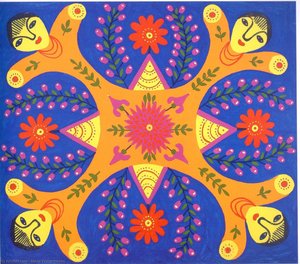
      Tablecloth (1976) av Marija Prymatsjenko
      #23

      Tablecloth

      1976

      Created in 1976, this gouache work by Maria Primachenko utilizes a flattened perspective to organize a complex visual field. The composition centers on a large circle, which is…

      Ukrainian Dancers (1983) av Marija Prymatsjenko
      #24

      Ukrainian Dancers

      1983

      In the vibrant tapestry of twentieth-century Ukrainian art, few works capture the pure, unadulterated joy of nature quite like Maria Primachenko’s Ukrainian Dancers. Created in 1983, this masterpiece…

      Monkey Riding a Four-Headed Beast (1982) av Marija Prymatsjenko
      #25

      Monkey Riding a Four-Headed Beast

      1982

      The painting Monkey Riding a Four-Headed Beast by Maria Primachenko is a vibrant and captivating example of Naive Art/Primitivism, a style characterized by its simplicity, flat rendering, and…

      Dumplings on the Shelf (1979) av Marija Prymatsjenko
      #26

      Dumplings on the Shelf

      1979

      In the tender, vibrant strokes of "Dumplings on the Shelf," we encounter the enchanting world of Maria Primachenko, a master of Naive Art who transformed the mundane into…
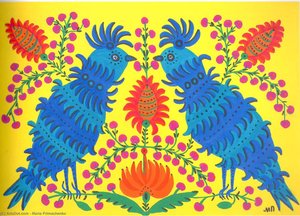
      Two Kites (1982) av Marija Prymatsjenko
      #27

      Two Kites

      1982

      In the vibrant realm of Naive Art, few works capture the whimsical essence of nature as tenderly as Maria Primachenko’s 1982 masterpiece, Two Kites. This enchanting gouache painting…

      Red Poppies (1982) av Marija Prymatsjenko
      #29

      Red Poppies

      1982

      Red Poppies is a work by Maria Prymachenko, executed in 1982. Measuring 85 x 61 cm, the piece belongs to the Naive Art and Primitivism movements. It reflects…

      Poppy (1983) av Marija Prymatsjenko
      #52

      Poppy

      1983

      In the enchanting realm of Naive Art, few works capture the rhythmic pulse of life as tenderly as Maria Primachenko’s Poppy. Created in 1983, this masterpiece serves as…

      This Bear Wants to Have Some Flour Milled (1972) av Marija Prymatsjenko
      #54

      This Bear Wants to Have Some Flour Milled

      1972

      In the enchanting realm of Maria Primachenko’s imagination, the boundaries between the mundane and the magical dissolve into a vibrant tapestry of color and folklore. Her captivating gouache…

      Tiger Laughs (1982) av Marija Prymatsjenko
      #66

      Tiger Laughs

      1982

      Here are the cantos, eighteen of them, each one different in form, mood, color, beat, scale, and key. There are no cadenzas. Each is separate. Each can stand…

      Pigeons (1968) av Marija Prymatsjenko
      #75

      Pigeons

      1968

      In the vast landscape of twentieth-century art, few voices resonate with as much pure, unadulterated joy as that of Maria Primachenko. Her 1968 masterpiece, "Pigeons," serves as a…

      A Cow Like That Gives 5,000 Liters a Day (1978) av Marija Prymatsjenko
      #76

      A Cow Like That Gives 5,000 Liters a Day

      1978

      The painting "A Cow Like That Gives 5,000 Liters a Day" by Maria Primachenko is a stunning example of Naive Art/Primitivism, a style characterized by its simplicity, flat…

      Ukrainian Dough Looks Into Every House (1977) av Marija Prymatsjenko
      #77

      Ukrainian Dough Looks Into Every House

      1977

      In the enchanting realm of Maria Primachenko’s 1977 masterpiece, "Ukrainian Dough Looks Into Every House," the boundaries between reality and myth dissolve into a vibrant, dreamlike landscape. This…

      My Bouquet to Grain Growers (1983) av Marija Prymatsjenko
      #78

      My Bouquet to Grain Growers

      1983

      In the vibrant tapestry of twentieth-century Ukrainian art, few works capture the whimsical essence of life quite like Maria Primachenko’s My Bouquet to Grain Growers. Created in 1983,…

      Our Army, Our Protectors (1978) av Marija Prymatsjenko
      #79

      Our Army, Our Protectors

      1978

      The painting "Our Army, Our Protectors" by Maria Primachenko is a stunning example of Naive Art/Primitivism, a style characterized by its simplicity, flat rendering, and lack of formal…

      Savage Hump-Shaker (1977) av Marija Prymatsjenko
      #80

      Savage Hump-Shaker

      1977

      The Naive Art/Primitivism style has always been a fascinating genre, and one artist who embodies its spirit is Maria Primachenko. Her painting, Savage Hump-Shaker, created in 1977, is…

      Maiden and Cossack Enjoying a Ride on Horseback (1982) av Marija Prymatsjenko
      #81

      Maiden and Cossack Enjoying a Ride on Horseback

      1982

      The painting Maiden and Cossack Enjoying a Ride on Horseback by Maria Primachenko is a stunning example of Naive Art, a style characterized by its simplicity, flat rendering,…

      A Hare's Birthday Party (1977) av Marija Prymatsjenko
      #82

      A Hare's Birthday Party

      1977

      The Naive Art/Primitivism style has always been a fascinating genre, and one artist who embodies its spirit is Maria Primachenko. Her painting, "A Hare's Birthday Party", created in…

      A Coward Went A-Hunting (1983) av Marija Prymatsjenko
      #83

      A Coward Went A-Hunting

      1983

      The Naive Art/Primitivism movement has long been a source of fascination for art enthusiasts, and Maria Primachenko's work is a stunning example of this style. Her painting, A…

      A Bunch of Red Flowers on Read Army Day (1970) av Marija Prymatsjenko
      #84

      A Bunch of Red Flowers on Read Army Day

      1970

      The painting A Bunch of Red Flowers on Read Army Day is a stunning example of Naive Art/Primitivism, a style characterized by its simplicity, flat rendering, and lack…

      October Flowers (1968) av Marija Prymatsjenko
      #85

      October Flowers

      1968

      The painting October Flowers is a stunning example of Naive Art/Primitivism, a style characterized by its simplicity, flat rendering, and lack of formal training. Created in 1968 by…

      This Beast is Making Magic (1983) av Marija Prymatsjenko
      #86

      This Beast is Making Magic

      1983

      The painting "This Beast is Making Magic" by Maria Primachenko is a captivating example of Naive Art/Primitivism, a style characterized by its simplicity, flat rendering, and lack of…

      Menagerie (1977) av Marija Prymatsjenko
      #87

      Menagerie

      1977

      The Menagerie by Maria Primachenko is a captivating example of Naive Art/Primitivism, a style characterized by its simplicity, flat rendering, and lack of formal training. Created in 1977,…

      An Outer Space Memory (1977) av Marija Prymatsjenko
      #88

      An Outer Space Memory

      1977

      The Maria Primachenko painting, An Outer Space Memory, is a fascinating example of Naive Art/Primitivism. Created in 1977, this piece showcases the artist's unique style and perspective. The…
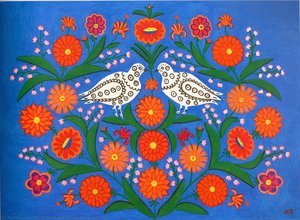
      Pigeon and Dove (1982) av Marija Prymatsjenko
      #89

      Pigeon and Dove

      1982

      The painting "Pigeon and Dove" by Maria Primachenko is a stunning example of Naive Art/Primitivism, a style characterized by its simplicity, flat rendering, and lack of formal training.…

      Blue Birds in Flowers (1983) av Marija Prymatsjenko
      #90

      Blue Birds in Flowers

      1983

      The painting Blue Birds in Flowers by Maria Primachenko is a stunning example of Naive Art, a style characterized by its simplicity, flat rendering, and lack of formal…

      Dear Cosmonauts, I Give You These Red Poppies (1983) av Marija Prymatsjenko
      #91

      Dear Cosmonauts, I Give You These Red Poppies

      1983

      The painting Dear Cosmonauts, I Give You These Red Poppies is a stunning example of Naive Art/Primitivism, a style characterized by its simplicity, flat rendering, and lack of…

      Wild Cat (1977) av Marija Prymatsjenko
      #92

      Wild Cat

      1977

      The Wild Cat painting by Maria Primachenko is a stunning example of Naive Art/Primitivism, a style characterized by its simplicity, flat rendering, and lack of formal training. Created…

      Red Snowball Tree Blooms Over a Well (1982) av Marija Prymatsjenko
      #93

      Red Snowball Tree Blooms Over a Well

      1982

      The painting "Red Snowball Tree Blooms Over a Well" by Maria Primachenko is a stunning example of Naive Art/Primitivism, a style characterized by its simplicity, flat rendering, and…

      A Dove Has Spread Her Wings and Asks for Peace (1982) av Marija Prymatsjenko
      #94

      A Dove Has Spread Her Wings and Asks for Peace

      1982

      The painting A Dove Has Spread Her Wings and Asks for Peace by Maria Primachenko is a stunning example of Naive Art/Primitivism, a style characterized by its simplicity,…

      Ukrainian Milkmaids Work Hard Like Miners (1970) av Marija Prymatsjenko
      #95

      Ukrainian Milkmaids Work Hard Like Miners

      1970

      The Ukrainian Milkmaids Work Hard Like Miners painting by Maria Primachenko is a stunning example of Naive Art/Primitivism, a style characterized by its simplicity, flat rendering, and lack…

      Ola Man and Old Woman Carry a Turnip (1983) av Marija Prymatsjenko
      #96

      Ola Man and Old Woman Carry a Turnip

      1983

      The painting "Ola Man and Old Woman Carry a Turnip" by Maria Primachenko is a stunning example of Naive Art/Primitivism, a style characterized by its simplicity, flat rendering,…

      The Lark (1976) av Marija Prymatsjenko
      #97

      The Lark

      1976

      The Maria Primachenko painting, The Lark, is a stunning example of Naive Art/Primitivism, a style characterized by its simplicity, flat rendering, and lack of formal training. Created in…

      Marija Prymatsjenkos lerreter, periode for periode

      Hva Marija Prymatsjenko malte mest av

      De fire motivene som går igjen oftest på disse lerretene, hver med sitt mest kjente eksempel.

      Tiår for tiår: Marija Prymatsjenkos mest feirede lerreter

      1. 1930s
      2. 1960s
        Let Us Go to the Betrothal Party (1968) av Marija Prymatsjenko
        7 av 97

        Let Us Go to the Betrothal Party

        Alder 52 – 61

        In the vibrant tapestry of twentieth-century Naive Art, few works radiate as much warmth and cultural vitality as Maria Primachenko’s 1968 masterpiece, "Let Us Go to the Betrothal…

      3. 1970s
      4. 1980s

      Dine spørsmål om Marija Prymatsjenkos malerier, besvart

      Hvilket er det mest kjente maleriet av Marija Prymatsjenko?Les svaret

      Three Parrots on a Soldier's Grave (1982), etterfulgt av I Give My Little Stars to Children (1983) og The Little Elephant Who Wanted to Be a Sailor (1973).

      Hvor gammel var Marija Prymatsjenko da Three Parrots on a Soldier's Grave ble laget?Les svaret

      Marija Prymatsjenko, født i 1908, var 74 år gammel: Three Parrots on a Soldier's Grave er fra 1982.

      Hvilke ti malerier er Marija Prymatsjenko mest kjent for?Les svaret

      Three Parrots on a Soldier's Grave, I Give My Little Stars to Children, The Little Elephant Who Wanted to Be a Sailor, Corncob Horse in Outer Space, Lamd Has Harnesed a Wolf, Magpie in Roses, Let Us Go to the Betrothal Party, Flax Blooms and a Cossack Goes to a Girl, Black Beast og Taras Hryhorovych Shevchenko Arrives From His Exile to Flowering Ukraine. Hvert lerret i rangeringen ovenfor er oppgitt med årstall og museum.

      Hvor mange malerier av Marija Prymatsjenko er kjent?Les svaret

      97 verk av Marija Prymatsjenko finnes i vår katalog, datert fra 1936 til 1983.

      I hvilke år malte Marija Prymatsjenko sine mest berømte verk?Les svaret

      I 1980s, som utgjorde 46 av de 97 verkene på denne siden, var Three Parrots on a Soldier's Grave blant dem.

      Hva er de første og de siste av Marija Prymatsjenkos berømte malerier?Les svaret

      Det eldste lerretet her er fra Black Beast (1936); det nyeste er fra I Give My Little Stars to Children (1983).

      Hvilke motiver går oftest igjen i Marija Prymatsjenko sine malerier?Les svaret

      Animals (30), Flowers (23) og Birds (14), fordelt på 97 verk på denne siden.

      Hva pleide Marija Prymatsjenko vanligvis å male med?Les svaret

      Gouache, brukt i 24 av de 97 verkene på denne siden.

      Hvilken kunstretning tilhører Marija Prymatsjenko?Les svaret

      Naive art / primitivism, som lerretet på denne siden viser.

      Marija Prymatsjenko: malerens historie

      Et liv rotfestet i ukrainsk jord

      Maria Aksentievna Primachenko, født i den lille landsbyen Bolotnya nær Kyiv i 1908, vokste frem som en av Ukrainas mest berømte og særegne kunstnere – en sann visjonær hvis verk overgår enhver kategorisering. Hennes liv var dypt sammenvevd med rytmen i det rurale livet, en verden gjennomsyret av eldgammel folklore, levende tradisletter og en intim forbindelse til naturen. Fra ung alder vek Marias vei bort fra konvensjonelle forventninger; barndommens kamp mot polio holdt henne innendørs i lange perioder, men denne isolasjonen viste seg å være et uventet fruktbart jordsmonn for kunstnerisk blomstring. Hennes mor og bestemor, dyktige broderister, overbrakte de intrikate teknikkene og det symbolske språket fra ukrainsk folkekunst – en arv som skulle bli selve fundamentet i hennes unike stil. Disse tidlige leksjonene var ikke bare tekniske; de var en overføring av kulturelt minne, en måte å se verden på, gjennomsyret av mening og magi. Det var i disse formative årene, omgitt av fargerike tråder og eldgamle mønstre, at Maria begynte å utvikle et ekstraordinært visuelt vokabular.

      Den naive åpenbaringen: En stil uten grenser

      Primachenkos kunst beskrives ofte som «naiv», et begrep som kan være villedende begrensende. Selv om hun ikke mottok noen formell kunstnerisk opplæring, besitter hennes arbeid en dyp sofistikering – en rå, utemmet energi kombinert med en dyp forståelse for komposisjon og farge. På 1930-tallet, etter å ha blitt oppdaget av kunstneren Tetiana Floru, ble Maria medlem av Kyivs kooperative broderiforening, hvor hennes talent raskt ble åpenbart. Dette førte til en invitasjon til å delta i eksperimentelle verksteder ved Kyiv Museum of Ukrainian Art, noe som markerte et vendepakt i hennes kunstneriske reise. Det var her hun begynte å oversette broderiets motiver og teknikker til maleri – store lerreter fylt med fantastiske skapninger, levende blomster og scener fra dagliglivet, gjenskapt gjennom et unikt personlig blikk. Motivene hennes sprang ikke bare ut av observasjon; de sprang ut av drømmer, minner og en dyp kilde av fantasi. Løver med menneskeansikter, fugler involvert i lekne paringsritualer, hester prydet med intrikate mønstre – dette var ikke bare representasjoner, men legemliggjørelser av håp, frykt og Ukrainas utholdende ånd.

      Symbolikk vevd inn i hvert penselstrøk

      Kraften i Primachenkos kunst ligger ikke bare i dens visuelle overflod, men også i dens rike symbolikk. Maleriene hennes er fulle av motiver hentet fra ukrainsk folklore – eldgamle solhjul som representerer liv og fornyelse, fugler som symboliserer frihet og fred, og hester som fungerer som beskyttere mot onde ånder. Disse symbolene ble ikke bevisst brukt som en form for kodet budskap; snarere vokste de organisk frem fra hennes kulturelle bakgrunn og intuitive forståelse av naturen. Dyrene i maleriene hennes antar ofte menneskelige egenskaper – de deltar i bryllup, bursdager og andre sosiale begivenheter – noe som visker ut grensene mellom dyreriket og menneskets verden. Denne antropomorfismen er ikke bare lekende, men reflekterer en dyp respekt for alle levende skapninger og en tro på deres iboende verdighet. Bruken av farger er like betydningsfull – dristige, mettede nyanser som fremmaner glede, vitalitet og en følelse av overjordisk skjønnhet. Lagene av mønstre og teksturer skaper en dynamisk visuell flate som drar betrakteren inn i hennes fantastiske verden.

      Anerkjennelse og en evig arv

      Maria Primachenkos talent forble ikke uoppdaget. I 1937 ble hennes arbeid stilt ut på verdensutstillingen i Paris, hvor det trollbandt publikum – og til og med vant beundringen til Pablo Picasso, som berømt erklærte at hun kunne ha blitt mer kjent enn ham selv dersom hun hadde levd i Frankrike. Hun mottok en gullmedalje under utstillingen og oppnådde internasjonal anerkjennelse for sin unike stil. Til tross for perioder med motgang og politisk uro, fortsatte Primachenko å male gjennom hele livet, og skapte over 800 verk som feirer Ukrainas skjønnhet og motstandskraft. Kunsten hennes ble et symbol på nasjonal identitet – et vitnesbyrd om folkekunstens og menneskeåndens vedvarende kraft. I dag blir Maria Primachenko hyllet som en av Ukrainas viktigste kunstnere, med sitt ansikt preget på både frimerker og mynter. De nylige angrepene på Ivankiv historiske museum, som huset mange av hennes malerier, har bare tjent til å understreke viktigheten av å bevare hennes arv – en kulturell skatt som legemliggjør en nasjons hjerte og sjel.

      Et rop om fred: Primachenko i den moderne verden

      I kjølvannet av den russiske invasjonen av Ukraina i 2022, har Maria Primachenkos kunst fått en ny resonans. Hennes livlige malerier, som ofte skildrer scener med harmoni mellom mennesker og dyr, har blitt kraftfulle symboler på fred og motstand. Ødeleggelsen av noen av hennes verk under angrepene på Ivankiv fungerte som en brutal påminnelse om kulturarvens sårbarhet i tider med konflikt. Likevel utløste det også en fornyet verdsettelse av hennes kunst – et bevis på dens varige kraft og universelle budskap. Primachenkos malerier er ikke bare estetiske objekter; de er uttrykk for håp, motstandskraft og en dyp kjærlighet til Ukraina. Hennes arv fortsetter å inspirere kunstnere og publikum over hele verden, og minner oss om viktigheten av å bevare kulturelle tradisjoner og feire menneskelig kreativitet i møte med motgang.

      Alle 97 verk av Marija Prymatsjenko →