Pracownia — Darmowa wysyłka na cały świat — Czas dostawy: 2–6 tygodni
Obraz ze zdjęcia Lista życzeń Koszyk
Podgląd w skaliPodgląd w skali Podgląd ARPodgląd AR Zamów wydruk Zamów wydrukPrzełącz na obraz Przełącz na obraz Wyślij jako kartkęWyślij jako kartkę
Szczegóły dziełaSzczegóły dzieła Dodaj do ulubionych Dodaj do ulubionych PobierzPobierz Podobne obiektyPodobne obiekty RTGRTG Pokaz slajdówPokaz slajdów

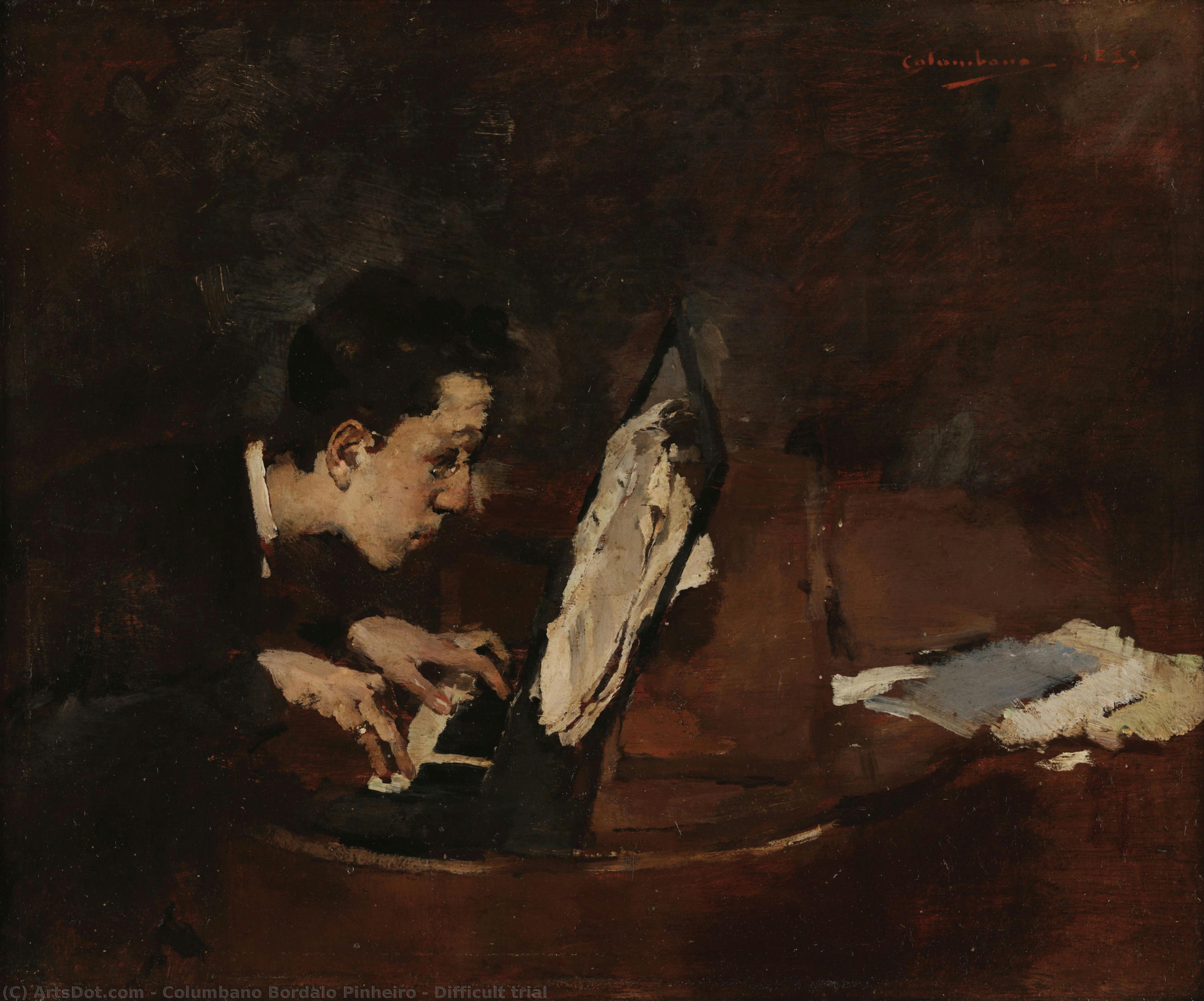
Trudne doświadczenie

Poznaj obraz "Trudne doświadczenie" Columbano Bordalo Pinheirogo – poruszającą reprodukcję realizmu z roku 1883 przedstawiającą fascynację naukową i wewnętrzną refleksję. Sztuka portugalska, technika impasto.

Columbano Bordalo Pinheiro (1857-1929) był wybitnym portugalskim malarzem realizmowym, znanym z głębokich portretów i oddania ducha portugalskiego społeczeństwa. Wpływy naturalizmu i impresjonizmu.

Ręcznie malowana reprodukcja olejowa

Ręcznie malowany obraz olejny na płótnie, wykonany na zamówienie przez naszych artystów w wybranym przez Ciebie wymiarze i oprawie. (Zamów wydruk Zamów wydrukPrzełącz na obraz Przełącz na obraz)

P118B $10
P118H $10
P118W $10
P438Z $10
P508JH $12
P508YH $12
P805H $10
P805Z $10
P919BZ $10
P919G $10
P919XJ $10
P959ZH $10
P968JZ $12
W106C $8
W218G $10
W218JH $8
W218Y $10
W307PJ $10
W316G $10
W316PJ $8
W316Y $10
W398PJ $8
W4111J $10
W500HY $15
W500JH $15
W692G $12
W849H $8
W940BG $15
W953PJ $8

Standard
custom
CM
INCH

Wybierz spośród naszych standardowych rozmiarów, które zachowują oryginalne proporcje dzieła sztuki.

szerokość
wysokość

Możesz wprowadzić własne wymiary, aby dopasować obraz do konkretnej ramy lub przestrzeni. Jeśli wybrany rozmiar nie będzie odpowiadał proporcjom oryginału, przytniecie dzieło sztuki lub rozszerzymy je o dodatkowe elementy, ręcznie domalowane przez artystę. Przed rozpoczęciem produkcji wyślemy projekt cyfrowy do Twojej akceptacji.
Należy pamiętać, że podgląd na ekranie nie odzwierciedla rzeczywistego przycinania ani rozszerzania obrazu. Tylko projekt dokładnie pokaże ostateczną kompozycję.
Choć oferujemy możliwość zamówienia niestandardowych rozmiarów, zalecamy wybór wymiaru z gotowej listy, aby zachować oryginalne proporcje dzieła.

Przykłady możliwych zmian: Zamień twarz na zdjęcie klienta; Dodaj zwierzę domowe (np. zamień kota na psa); Ukryj wiadomość w tle; Zmień krajobraz lub elementy tła.
Po złożeniu zamówienia zespół TopImpressionists.com skontaktuje się z klientem drogą mailową w celu uzyskania instrukcji i prześle wizualizację projektu

Dostawa na całym świecie () w ciągu 3–4 tygodni zamiast standardowych 5 tygodni. (11 Sierpień). Bez kompromisów w kwestii jakości.

why_choose_icon
Bezpłatna ekspresowa wysyłka na cały świat
why_choose_icon
Wysokiej jakości płótno lniane
why_choose_icon
Pełne ubezpieczenie przesyłki
why_choose_icon
Gwarancja zwrotu należności celnych i podatków importowych
why_choose_icon
Gwarancja wiernego odwzorowania kolorów
why_choose_icon
Polityka 60-dniowego zwrotu (tylko w przypadku wad)
why_choose_icon
Gwarancja 100% zwrotu kosztów
why_choose_icon
Zniżka przy zamówieniu wielu produktów

Suma całkowita

$ 269

reproduction

Trudne doświadczenie

Technika reprodukcji

Wymiary reprodukcji

-

Cena całkowita

$ 269

Szybki podgląd

  • Year: 1883
  • Artistic style: Academic Painting
  • Movement: Realism
  • Title: Difficult Trial
  • Influences:
    • Courbet
    • Manet
  • Subject or theme: Scientific observation; Introspection
  • Medium: Oil on canvas

Opis dzieła

Difficult Trial - A Portrait of Scientific Observation

The artwork "Difficult Trial" by Columbano Bordalo Pinheiro, completed in 1883, transcends mere visual representation; it’s a profound meditation on intellectuality, perseverance, and the quiet contemplation inherent within scientific inquiry. Painted during Portugal's burgeoning artistic landscape—influenced heavily by Impressionism and Naturalism—this piece exemplifies Bordalo Pinheiro’s signature style: meticulous realism imbued with psychological depth. It depicts a solitary man meticulously examining a dissected fish specimen under a magnifying glass, an image that speaks volumes about the era’s fascination with anatomical study and its exploration of human consciousness.
  • Artist Background: Columbano Bordalo Pinheiro (1857-1929) emerged as Portugal's foremost realist painter, establishing himself as a master of capturing nuanced emotions and portraying the complexities of Portuguese society. His formative years were shaped by training under prominent sculptors like Simões de Almeida and Miguel Ângelo Lupi, fostering an unwavering dedication to precise observation and masterful execution.
  • Historical Context: Bordalo Pinheiro’s work aligns perfectly with the intellectual currents of late 19th-century Europe. The Naturalist movement championed scientific accuracy alongside artistic sensitivity—a paradigm shift from Romantic idealism—and Bordalo Pinheiro skillfully embodies this ethos through his detailed depiction of a subject rooted in scientific endeavor.
  • Composition & Technique: The painting’s central focus is undeniably the man, positioned against a muted backdrop that emphasizes the dramatic interplay of light and shadow. Bordalo Pinheiro employs *impasto*, applying thick layers of paint to create a tactile surface that enhances the realism of the scene—a technique characteristic of academic painting and indicative of his commitment to capturing texture and form with exceptional fidelity.
  • Color Palette & Symbolism: Dominated by earthy tones – browns, ochres, and muted reds – the color palette contributes significantly to the artwork’s contemplative mood. The subdued hues mirror the seriousness of the subject matter—the painstaking dissection of an animal—and subtly convey a sense of melancholy or introspection.
  • Emotional Impact: “Difficult Trial” isn't merely about portraying a scientific process; it delves into the psychological state of its protagonist. The man’s unwavering gaze and focused posture communicate a dedication to knowledge, coupled with perhaps a quiet awareness of mortality—themes that resonate powerfully within the broader context of Victorian intellectualism.

Detailed Analysis: Style & Technique

Bordalo Pinheiro's stylistic choices underscore his mastery of realism and his adherence to academic conventions. The meticulous rendering of anatomical detail – particularly evident in the fish specimen – demonstrates an unwavering commitment to scientific accuracy, mirroring the spirit of Naturalism. Furthermore, the impasto technique—characterized by thick brushstrokes that build up texture—elevates the artwork beyond a simple visual representation; it invites viewers to engage with the surface materiality and experience the scene as if they were physically present. This deliberate textural element reinforces the painting's emotional impact, conveying both intellectual rigor and palpable feeling.

Exploring Artistic Influences

Like many artists of his time, Bordalo Pinheiro drew inspiration from movements such as Impressionism and Naturalism. The influence of Courbet’s unflinching realism—particularly in portraying everyday subjects with uncompromising honesty—is palpable in Bordalo Pinheiro's approach to depicting the human figure and its surroundings. Similarly, Manet’s exploration of psychological nuance and Degas’s masterful observation of movement contribute to the overall artistic sensibility evident throughout “Difficult Trial.”

A Reproduction Worth Considering

A high-quality reproduction of "Difficult Trial" offers an exceptional opportunity to appreciate Bordalo Pinheiro's artistic vision. TopImpressionists.com presents a meticulously crafted print that faithfully captures the painting’s nuanced tonal range, textural richness, and evocative composition—allowing collectors and interior designers alike to experience the artwork's profound beauty and intellectual depth within their own spaces.

O artyście

A Portuguese Master of Realism: The Life and Art of Columbano Bordalo Pinheiro

Columbano Bordalo Pinheiro, born in Faro, Portugal (1857), stands as a cornerstone of Portuguese art history—a painter who transcended mere representation to become a profound observer and interpreter of his era. He wasn’t merely capturing landscapes or portraits; he wrestled with the anxieties and aspirations of his fellow countrymen during a period marked by seismic shifts toward republican ideals. His artistic lineage was already impressive: Manuel Maria Bordalo Pinheiro, his father, established himself as a celebrated Romantic painter, while Rafael Bordalo Pinheiro, his brother, gained renown for his satirical caricatures—a heritage that instilled in Columbano an innate appreciation for both meticulous craftsmanship and expressive storytelling. Early Training and Artistic Foundations From the outset, Bordalo Pinheiro’s artistic journey was guided by exceptional mentors. His formative years were spent under the tutelage of José Simões de Almeida and Miguel Ángel Lupi at Lisbon’s Academy of Fine Arts, absorbing techniques honed over decades of experience. These instructors instilled in him a disciplined approach to observation—a cornerstone of his distinctive style—and fostered an understanding of sculptural principles that would inform his later artistic endeavors. Crucially, he benefited from the influence of Rafael Bordalo Pinheiro, whose satirical prowess served as a counterpoint to the idealized visions prevalent at the time, encouraging Columbano to question conventional artistic norms. The Parisian Breakthrough and Naturalist Inspiration A scholarship awarded in 1881 propelled Bordalo Pinheiro onto an international stage—specifically, Paris. This pivotal moment exposed him to the burgeoning currents of Impressionism, Realism, and Naturalism, movements that irrevocably shaped his artistic sensibilities. Embracing the tenets championed by luminaries like Courbet, Manet, and Degas, Bordalo Pinheiro skillfully blended influences without succumbing to imitation; he cultivated a style characterized by subdued palettes and an introspective gaze—a stylistic hallmark that resonated deeply with the Portuguese soul. The fervor for Naturalism’s commitment to truthful depiction fueled his artistic exploration, prompting him to delve beyond surface appearances into the psychological complexities of his subjects. ‘Grupo do Leão’ and Artistic Engagement Bordalo Pinheiro wasn't solely devoted to studio pursuits; he actively participated in intellectual life—co-establishing ‘Grupo do Leão,’ a vibrant salon that convened at Lisbon’s famed Leão de Ouro restaurant. This collective served as a crucible for artistic debate and innovation, passionately advocating for Naturalism as an antidote to academic artifice. The group's discussions fostered a critical spirit that encouraged Bordalo Pinheiro to confront societal realities—a commitment reflected in his unflinching portrayals of human vulnerability and ambition. His dedication extended beyond aesthetics; he championed the cause of republican ideals, actively engaging in political discourse and contributing to Portugal’s transformation into a modern nation. Portraits as Psychological Explorations: Quental and Beyond Bordalo Pinheiro's artistic legacy rests primarily upon his portraiture—a genre where he achieved unparalleled mastery. He became the favored artist of Portugal’s intellectual elite, capturing the essence of figures like José Maria de Eça de Queiroz, Teófilo Braga, and Raul Brandão with remarkable sensitivity. Unlike mere likenesses, Bordalo Pinheiro's portraits functioned as windows into the psyche—revealing hidden anxieties, unspoken desires, and the indelible marks of experience. The portrait of Antero de Quental exemplifies this profound insight: completed in 1889, it anticipates Quental’s tragic suicide with unsettling prescience—a testament to Bordalo Pinheiro's uncanny ability to perceive and portray the inner turmoil beneath outward composure. Works such as “Portrait of Cunha Vasco” demonstrate his masterful manipulation of light and shadow, amplifying the subject’s intellectual intensity and conveying a palpable sense of emotional depth. A Lasting Legacy: Republicanism, Museums, and Artistic Influence Bordalo Pinheiro's influence extended far beyond the easel—solidifying his position as director of the National Museum of Contemporary Art (now Chiado Museum) from 1914 to 1927. During this tenure, he championed modern art and tirelessly amassed a collection that reflected Portugal’s evolving cultural landscape. His own paintings – “The Peasant of Fontainebleau” and “Difficult Trial” – stand as emblems of his artistic vision—a commitment to social commentary interwoven with technical brilliance. Columbano Bordalo Pinheiro died in 1929, leaving behind an oeuvre celebrated for its psychological depth and unwavering fidelity to reality. He remains a beacon of Portuguese art history—recognized as the greatest painter of his century, alongside masters like Wilhelm Leibl and John Singer Sargent—a figure whose work continues to inspire contemplation and admiration today.

Columbano Bordalo Pinheiro

Columbano Bordalo Pinheiro

1857 - 1929 , Portugalia

Krótka nota

  • Artistic Movement Or Style: Realism, Naturalism
  • Artists Or Movements Influenced By This Artist: ['Grupo do Leão']
  • Artists Who Influenced This Artist:
    • Wilhelm Leibl
    • John Singer Sargent
  • Date Of Birth: November 21, 1857
  • Date Of Death: 1929
  • Full Name: Columbano Bordalo Pinheiro
  • Nationality: Portuguese
  • Notable Artworks:
    • Antero de Quental portrait
    • Cunha Vasco portrait
    • The Peasant of Fontainebleau
  • Place Of Birth: Faro, Portugal
Odkryj dzieła sztuki uporządkowane według tematów, stylów i cech charakterystycznych.
© TopImpressionists.com — Wszelkie prawa zastrzeżone  ·  100% Ręcznie malowane · Gwarancja satysfakcji · Darmowa wysyłka na cały świat
VISA MASTERCARD