Pracownia — Bezpłatna wysyłka na cały świat — Czas dostawy: 2–6 tygodni
      Edwin Willard Deming, 1860 – 1942

      8 najsłynniejszych obrazów artysty Edwin Willard Deming, zestawienie

      Najbardziej cenionym obrazem Edwin Willard Deming jest The Mourning Brave (1892), który znajduje się w Smithsonian American Art Museum w Waszyngton. Następne w zestawieniu płócien najlepiej znanych czytelnikom są The Indian Horse Race (1900) oraz Indian Procession. Nasz katalog zawiera 10 dzieł autorstwa Edwin Willard Deming: oto 8 najsłynniejszych z nich, z podaniem roku powstania, muzeum oraz tego, co czyni je wyjątkowymi.

      Ranking oparty na naszym wskaźniku popularności, który łączy liczbę wyszukiwań, wizyt oraz zamówień dla każdego dzieła. Aktualizacja: Listopad 2026. Każdy obraz na tej stronie można zamówić jako ręcznie malowaną reprodukcję olejną na płótnie lnianym lub jako wysokiej jakości wydruk artystyczny, wykonany w wybranym przez Ciebie formacie.

      Portret Edwin Willard Deming
      Edwin Willard Deming · 1860 – 1942
      Urodzony · zmarł
      1860 – 1942, Ashland
      Dzieła w naszym katalogu
      10
      Najsłynniejsze
      The Mourning Brave (1892)
      Najwięcej dzieł w
      Smithsonian American Art Museum

      Najsłynniejsze 10 obrazów Edwin Willard Deming: płótna, które zna każdy

      Co najczęściej malował Edwin Willard Deming

      Cztery tematy najczęściej pojawiające się na tych płótnach, z których każdy wraz z jego najbardziej cenionym przykładem.

      Gdzie wiszą płótna Edwin Willard Deming

      Muzeum, w którym znajduje się najwięcej obrazów prezentowanych na tej stronie.

      Muzea Miasto Dzieła artysty Edwin Willard Deming Obrazy z tej listy
      Smithsonian American Art Museum, WaszyngtonSmithsonian American Art Museum Waszyngton 2 The Mourning Brave, Blackfoot Camp Scene

      Najukochańsze płótna Edwin Willard Deming rok po roku

      Oto dzieła Edwin Willard Deming z okresu dziesięciu lat malarstwa, od 1892 do 1900: przejdź przez nie rok po roku.

      1. 1892
      2. 1900

      O płótnach Edwin Willard Deming: odpowiedzi na Twoje pytania

      Jakie jest najsłynniejsze dzieło Edwin Willard Deming?Przeczytaj odpowiedź

      The Mourning Brave (1892), Smithsonian American Art Museum, Waszyngton. Następują po nim The Indian Horse Race (1900) oraz Indian Procession.

      W jakim wieku był Edwin Willard Deming, gdy namalowano The Mourning Brave?Przeczytaj odpowiedź

      Edwin Willard Deming, urodzony/a w 1860, miał/a 32 lat: The Mourning Brave pochodzi z 1892.

      Ile dzieł namalował Edwin Willard Deming?Przeczytaj odpowiedź

      W naszym katalogu znajduje się 10 dzieł artysty Edwin Willard Deming, datowanych od 1892 do 1900.

      Gdzie mogę zobaczyć najsłynniejsze płótna Edwin Willard Deming?Przeczytaj odpowiedź

      Większość znajduje się w Smithsonian American Art Museum (Waszyngton); powyższa lista wymienia każde muzeum oraz jego płótna.

      Które z najsłynniejszych płócien Edwin Willard Deming powstały na początku i na końcu jego twórczości?Przeczytaj odpowiedź

      Najwcześniejsze płótno pochodzi z The Mourning Brave (1892), a najpóźniejsze z The Indian Horse Race (1900).

      Które płótna Edwin Willard Deming znajdują się w Smithsonian American Art Museum?Przeczytaj odpowiedź

      Muzeum Smithsonian American Art Museum, Waszyngton posiada 2 dzieł widocznych na tej stronie, w tym The Mourning Brave i Blackfoot Camp Scene.

      Czy mogę kupić reprodukcję płótna autorstwa Edwin Willard Deming?Przeczytaj odpowiedź

      Tak. Każdy obraz na tej stronie można zamówić z jego własnej podstrony jako ręcznie malowaną reprodukcję olejną lub jako wysokiej jakości wydruk artystyczny w wybranym przez Ciebie rozmiarze.

      Edwin Willard Deming: życie w malarstwie

      The Soul of the American West: The Life and Legacy of Edwin Willard Deming

      Edwin Willard Deming was far more than a mere chronicler of the American frontier; he was a poet of the canvas, a man who breathed life into the fading echoes of a vanishing era. Born on August 26, 1860, in the quiet landscape of Ashland, Ohio, Deming’s early years were steeped in a profound connection to the natural world. This foundational intimacy with nature would later become the heartbeat of his work, manifesting as an unwavering devotion to detail and an almost spiritual reverence for the subjects he portrayed. Though his journey took him far from the Ohio homestead, the observant eye nurtured in his youth remained his most vital tool, allowing him to capture the subtle textures of fur, the heavy atmosphere of a storm, and the dignified sorrow in a human gaze. As he ventured toward the vibrant artistic hubs of the East, specifically New York City in 1886, Deming began to weave together a complex tapestry of influences. He was not content with simple imitation; instead, he sought a synthesis of styles that could convey the profound emotional truths he perceived in life. His work became a sophisticated dialogue between Realism and Symbolism. Drawing inspiration from the delicate compositions of Japanese prints—a movement known as Japonisme—and the haunting, emotive depths of Symbolist masters like Gustave Moreau, Deming developed what many now call "Romantic Realism." He possessed a rare ability to render the physical world with meticulous accuracy while simultaneously imbuing his subjects with a sense of mythic importance and melancholic beauty.

      A Visionary of Indigenous Culture and Wild Majesty

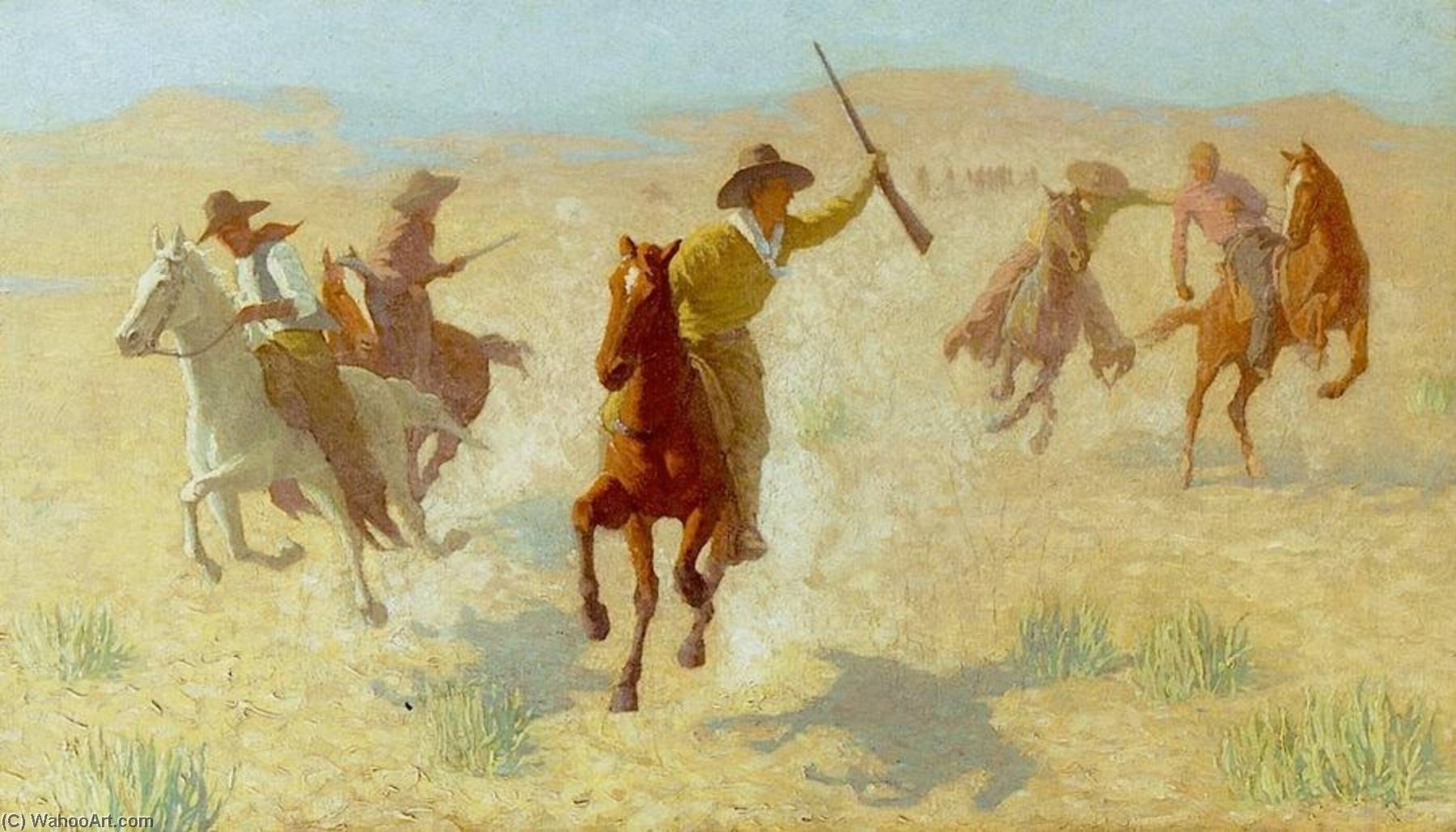
      The true essence of Deming’s genius emerged through his profound engagement with the indigenous tribes of the American West, most notably the Blackfeet. Rather than presenting mere ethnographic studies, he approached his subjects with a deep-seated respect that transcended the colonial gaze of his time. His paintings, such as the evocative Dog Travois Blackfoot Camp or the sweeping Indian Procession, are masterclasses in narrative tension and atmospheric depth. He captured the dignity of tribal life, the strength of the warriors, and the quiet, poignant moments of communal existence, often imbuing these scenes with a sense of timelessness that suggests a world existing both within and beyond the reach of modern industry. This mastery extended to his portrayals of wild animals, where he utilized his technical prowess to capture the raw, untamed spirit of the wilderness. Whether depicting a dynamic cavalry scene in The Indian Horse Race or the somber, heavy emotions found in The Mourning Brave, Deming’s brushwork served a higher purpose: to evoke the spiritual resonance of the land itself. His ability to balance tonal harmony with expressive, textured strokes allowed him to create landscapes that felt less like static images and more like living, breathing entities, often characterized by a certain haunting, solitary beauty.

      Artistic Versatility and Lasting Significance

      Deming’s creative output was remarkably diverse, reflecting an artist who refused to be confined by a single medium or discipline. While he is most celebrated for his oil paintings, his talents as a sculptor, illustrator, and muralist allowed him to leave a multifaceted mark on American art history. His skill as an illustrator brought fine art to a broader audience, and his monumental murals even reached the heights of national recognition when one of his designs was adapted for use on United States postage. This versatility ensured that his vision of the American spirit permeated both the galleries of the elite and the everyday lives of the public. The historical significance of Edwin Willard Deming lies in his role as a bridge between eras. He stood at the intersection of the 19th-century tradition of meticulous observation and the 20th-century movement toward psychological and symbolic expression. Through his work, the legends of the American West were preserved not just as historical facts, but as enduring symbols of human resilience and natural majesty. Today, his legacy continues to captivate, offering a window into a period of profound transformation through an artistic lens that remains as evocative and emotionally resonant as ever.