Pracownia — Bezpłatna wysyłka na cały świat — Czas dostawy: 2–6 tygodni
      Michael Dahl, 1659 – 1743

      100 najsłynniejszych obrazów artysty Michael Dahl

      Portrait of Jonathan Swift (1734) to obraz, z którego najbardziej znany jest Michael Dahl; znajduje się on w Finnish National Gallery, Helsinki. Mrs Françoise Leijoncrona (1700) oraz Portrait of a Woman (1719) dopełniają trio najbardziej uwielbianych płócien. Nasz katalog obejmuje 180 dzieł autorstwa Michael Dahl. Oto 100 najsłynniejszych z nich, wraz z rokiem powstania, informacją o muzeum oraz historią każdego płótna.

      Ranking oparty na naszym wskaźniku popularności, który łączy liczbę wyszukiwań, wizyt oraz zamówień dla każdego dzieła. Aktualizacja: Listopad 2026. Każdy obraz na tej stronie można zamówić jako ręcznie malowaną reprodukcję olejną na płótnie lnianym lub jako wysokiej jakości wydruk artystyczny, wykonany w wybranym przez Ciebie formacie.

      Portret Michael Dahl
      Michael Dahl · 1659 – 1743
      Urodzony · zmarł
      1659 – 1743, Sztokholm
      Nurt
      Baroque
      Dzieła w naszym katalogu
      180
      Najsłynniejsze
      Portrait of Jonathan Swift (1734)
      Najwięcej dzieł w
      National Maritime Museum

      Dziesięć najpopularniejszych obrazów, których autorem jest Michael Dahl

      Portrait of Jonathan Swift (1734) autorstwa Michael Dahl
      1

      Portrait of Jonathan Swift

      1734 · Oil · Finnish National Gallery, Helsinki

      A heavy silence settles over the canvas. The subject sits in a high-backed chair, a figure of quiet authority carved from shadow and light. He is draped in voluminous white sleeves that catch the light like fresh snow against the dark, indeterminate void behind him. His clerical attire, a white rochet paired with a black chimere, speaks of a life lived within the strictures of religious and academic discipline. The…

      Ręcznie malowana reprodukcja olejowa od $195 29 × 35 cm Rozmiar zgodny z oryginałem $586 102 × 128 cm Zamów w oryginalnym rozmiarze →
      Mrs Françoise Leijoncrona (1700) autorstwa Michael Dahl
      2

      Mrs Françoise Leijoncrona

      1700 · Oil On Canvas · Nationalmuseum, Stockholm

      Mrs Françoise Leijoncrona is a portrait executed by the Swedish painter Michael Dahl. Created about 1700, the work captures the sitter during a period when Dahl was active in London. The artist, who lived from 1659 to 1743, established a significant presence in the English art scene after moving from his native Stockholm.

      Ręcznie malowana reprodukcja olejowa od $195 29 × 35 cm Rozmiar zgodny z oryginałem $610 108 × 129 cm Zamów w oryginalnym rozmiarze →
      Portrait of a Woman (1719) autorstwa Michael Dahl
      3

      Portrait of a Woman

      1719 · Oil On Canvas · Metropolitan Museum of Art, Nowy Jork

      The sitter rests within a composition defined by the interplay of light and shadow. Draped in a deep purple gown, her presence is anchored by the heavy folds of silk that catch a directional light from the upper left. A dark teal mantle provides a sharp contrast to the warm ochre tones of her attire. She holds a small sprig of flowers, while a basket of roses sits nearby, introducing…

      Ręcznie malowana reprodukcja olejowa od $195 26 × 39 cm Rozmiar zgodny z oryginałem $994 131 × 196 cm Zamów w oryginalnym rozmiarze →
      King Karl XII of Sweden (1710) autorstwa Michael Dahl
      4

      King Karl XII of Sweden

      1710 · Oil On Canvas · Nationalmuseum, Stockholm

      King Karl XII of Sweden is a portrait executed by the Swedish artist Michael Dahl. Created between 1710 and 1717, the work captures the monarch during his early reign. The composition presents the subject from the knees up, focusing on the physical presence and stature of the young King Karl XII.

      Ręcznie malowana reprodukcja olejowa od $195 28 × 36 cm Rozmiar zgodny z oryginałem $600 103 × 131 cm Zamów w oryginalnym rozmiarze →
      John Locke (1696) autorstwa Michael Dahl
      5

      John Locke

      1696 · Oil On Canvas · National Portrait Gallery, Londyn

      Michael Dahl painted this portrait of the philosopher John Locke in 1696. The work is held within the National Portrait Gallery collection in London. It captures the subject during a period of significant intellectual influence, presenting the thinker in a formal, dignified manner.

      Ręcznie malowana reprodukcja olejowa od $195 29 × 35 cm Rozmiar zgodny z oryginałem $321 64 × 76 cm Zamów w oryginalnym rozmiarze →
      Christoffer Leijoncrona, Swedish Minister in London (1700) autorstwa Michael Dahl
      6

      Christoffer Leijoncrona, Swedish Minister in London

      1700 · Oil · Nationalmuseum, Stockholm

      Christoffer Leijoncrona, Swedish Minister in London is a portrait executed by Michael Dahl in 1700. The sitter, a Swedish diplomat, is presented with the formal dignity characteristic of the period's aristocratic portraiture. Dahl’s work captures the subject in a manner that emphasizes his official status and presence within the English social landscape.

      Ręcznie malowana reprodukcja olejowa od $195 29 × 35 cm Rozmiar zgodny z oryginałem $613 108 × 129 cm Zamów w oryginalnym rozmiarze →
      Sir Watkin Williams Wynn (1692–1749), Bt (1720) autorstwa Michael Dahl
      8

      Sir Watkin Williams Wynn (1692–1749), Bt

      In the quiet, hallowed halls of the National Library of Wales, there exists a window into the soul of the eighteenth century—a moment frozen in time through Michael Dahl’s masterful 1720 portrait of Sir Watkin Williams Wynn. To gaze upon this work is to be transported immediately to the height of the Enlightenment, an era where status was not merely whispered but visually proclaimed through the meticulous language of art.…

      Ręcznie malowana reprodukcja olejowa od $195 29 × 35 cm Rozmiar zgodny z oryginałem $368 70 × 90 cm Zamów w oryginalnym rozmiarze →
      Henry Robartes (c.1695–1741), 3rd Earl of Radnor, as a Boy (1704) autorstwa Michael Dahl
      9

      Henry Robartes (c.1695–1741), 3rd Earl of Radnor, as a Boy

      1704 · Oil On Canvas · National Trust, Bodmin

      Michael Dahl's “Henry Robartes (c.1695–1741), 3rd Earl of Radnor, as a Boy” is more than just a painted likeness; it’s a carefully constructed tableau of aristocratic youth, imbued with an almost palpable sense of quiet dignity and nascent power. Completed in 1704, this exquisite portrait offers a rare glimpse into the formative years of a man destined for prominence within the English court, capturing not merely his physical appearance but…

      Ręcznie malowana reprodukcja olejowa od $195 28 × 36 cm Rozmiar zgodny z oryginałem $583 102 × 127 cm Zamów w oryginalnym rozmiarze →
      Mary Osbaldeston (1678–before 1721), Lady Wroth (1710) autorstwa Michael Dahl
      10

      Mary Osbaldeston (1678–before 1721), Lady Wroth

      1710 · Oil On Canvas · National Trust, Exeter

      Michael Dahl’s “Mary Osbaldeston, Lady Wroth” is more than simply a likeness; it's a carefully constructed tableau of status, grace, and subtle introspection. Painted in the heart of 1710, this oil-on-canvas portrait offers a rare glimpse into the life of a woman navigating the complexities of aristocratic society in England – a woman whose story, though partially obscured by time, resonates with an enduring elegance.

      Ręcznie malowana reprodukcja olejowa od $195 27 × 37 cm Rozmiar zgodny z oryginałem $583 102 × 127 cm Zamów w oryginalnym rozmiarze →

      Michael Dahl: płótna od 11 do 100 w rankingu

      The Flesher Family (1734) autorstwa Michael Dahl

      In The Flesher Family, Michael Dahl organizes six figures into a rigid, formal geometry. A central woman anchors the group, her presence stabilized by the symmetrical arrangement of…

      Zamów to płótno od $320 →
      John Locke (1696) autorstwa Michael Dahl
      #70

      John Locke

      1696 · National Portrait Gallery

      The philosopher John Locke gazes out from this portrait by Michael Dahl, captured in the year 1696. The sitter appears as an elderly man, his face marked by…

      Zamów to płótno od $195 →

      Co najczęściej malował Michael Dahl

      Cztery tematy najczęściej pojawiające się na tych płótnach, z których każdy wraz z jego najbardziej cenionym przykładem.

      Gdzie wiszą płótna Michael Dahl

      8 muzeów, w których znajduje się najwięcej obrazów z tej strony.

      Muzea Miasto Dzieła artysty Michael Dahl Obrazy z tej listy
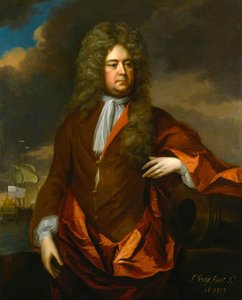
      National Maritime Museum, LondynNational Maritime Museum Londyn 12 Commodore the Honourable William Kerr (active 1688–1708), Admiral Sir Cloudesley Shovell (1650–1707), Sir Cloudesley Shovell (1650–1707)
      Petworth House, PetworthPetworth House Petworth 8 Lady Anne de Vere Capel (1674–1752), Countess of Carlisle, Margaret Sawyer (d.1746), Countess of Pembroke, The Honourable Rachel Russell (1674–1725), Duchess of Devonshire
      National Portrait Gallery, LondynNational Portrait Gallery Londyn 7 John Locke, Sir George Rooke, Michael Dahl
      Nationalmuseum, StockholmNationalmuseum Stockholm 5 Mrs Françoise Leijoncrona, King Karl XII of Sweden, Christoffer Leijoncrona, Swedish Minister in London
      National Trust, BodminNational Trust Bodmin 5 Henry Robartes (c.1695–1741), 3rd Earl of Radnor, as a Boy, George Hunt (1720 –1798), as a Child, Lady Mary Robartes (d.1741), with Her Son Henry Robartes (c.1695–1741), Later 3rd Earl of Radnor
      Llyfrgell Genedlaethol Cymru / The National Library of Wales, AberystwythLlyfrgell Genedlaethol Cymru / The National Library of Wales Aberystwyth 3 Sir Watkin Williams Wynn (1692–1749), Bt, Portrait of a Gentleman in a Red Turban, Jane Wyndham of Dunraven
      Royal Collection, LondynRoyal Collection Londyn 3 Prince George of Denmark (1653-1708), Portrait of an Officer, Prince George of Denmark (1653-1708)
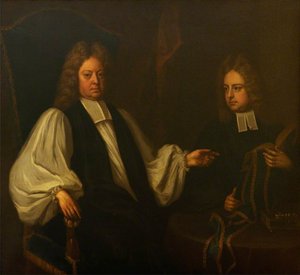
      Biblioteka Bodlejańska, OksfordBiblioteka Bodlejańska Oksford 4 Thomas Sprat (1635–1713), and His Son Thomas (1679–1720), John Friend (1675–1728)

      Najsłynniejsze płótno Michael Dahl, dekada po dekadzie

      1. 1680s
        Queen Christina of Sweden (1626-1689) in Rome (1687) autorstwa Michael Dahl
        Płótno 14 z 100

        Queen Christina of Sweden (1626-1689) in Rome

        Wiek 21 – 30 · Attingham Park

        The portrait presents Queen Christina of Sweden in a three-quarter length composition, positioned slightly off-center against a backdrop of the Roman cityscape. She is depicted wearing voluminous garments…

      2. 1690s
        John Locke (1696) autorstwa Michael Dahl
        5 z 100

        John Locke

        Wiek 31 – 40 · National Portrait Gallery

        Michael Dahl painted this portrait of the philosopher John Locke in 1696. The work is held within the National Portrait Gallery collection in London. It captures the subject…

      3. 1700s
        Mrs Françoise Leijoncrona (1700) autorstwa Michael Dahl
        2 z 100

        Mrs Françoise Leijoncrona

        Wiek 41 – 50 · Nationalmuseum

        Mrs Françoise Leijoncrona is a portrait executed by the Swedish painter Michael Dahl. Created about 1700, the work captures the sitter during a period when Dahl was active…

      4. 1710s
        Portrait of a Woman (1719) autorstwa Michael Dahl
        3 z 100

        Portrait of a Woman

        Wiek 51 – 60 · Metropolitan Museum of Art

        The sitter rests within a composition defined by the interplay of light and shadow. Draped in a deep purple gown, her presence is anchored by the heavy folds…

      5. 1720s
        Sir Watkin Williams Wynn (1692–1749), Bt (1720) autorstwa Michael Dahl
        Miejsce 8 z 100

        Sir Watkin Williams Wynn (1692–1749), Bt

        Wiek 61 – 70 · Llyfrgell Genedlaethol Cymru / The National Library of Wales

        In the quiet, hallowed halls of the National Library of Wales, there exists a window into the soul of the eighteenth century—a moment frozen in time through Michael…

      6. 1730s
        Portrait of Jonathan Swift (1734) autorstwa Michael Dahl
        Miejsce 1 z 100

        Portrait of Jonathan Swift

        Wiek 71 – 80 · Finnish National Gallery

        A heavy silence settles over the canvas. The subject sits in a high-backed chair, a figure of quiet authority carved from shadow and light. He is draped in…

      7. 1740s
        Portrait of a man (1742) autorstwa Michael Dahl
        Miejsce 46 z 100

        Portrait of a man

        Wiek 81 – 84 · Amsterdam Museum

        The work titled Portrait of a man is a painting by Michael Dahl. This portrait captures a single figure, presented in a formal manner that reflects the social…

      Płótna Michael Dahl krok po kroku

      Z którego płótna najbardziej zapisał się Michael Dahl?Przeczytaj odpowiedź

      Portrait of Jonathan Swift (1734), Finnish National Gallery, Helsinki. Następują po nim Mrs Françoise Leijoncrona (1700) oraz Portrait of a Woman (1719).

      Portrait of Jonathan Swift: w jakim wieku był Michael Dahl, gdy powstało to dzieło?Przeczytaj odpowiedź

      Michael Dahl, urodzony/a w 1659, miał/a 75 lat: Portrait of Jonathan Swift pochodzi z 1734.

      Jakie są dziesięć najsłynniejszych płócien Michael Dahl?Przeczytaj odpowiedź

      Portrait of Jonathan Swift, Mrs Françoise Leijoncrona, Portrait of a Woman, King Karl XII of Sweden, John Locke, Christoffer Leijoncrona, Swedish Minister in London, Lady Susanna Holworthy (c. 1640-1690), Sir Watkin Williams Wynn (1692–1749), Bt, Henry Robartes (c.1695–1741), 3rd Earl of Radnor, as a Boy i Mary Osbaldeston (1678–before 1721), Lady Wroth. Każde płótno w powyższym rankingu zawiera informację o roku powstania oraz muzeum.

      Ile obrazów stworzył/a Michael Dahl?Przeczytaj odpowiedź

      W naszym katalogu znajduje się 180 dzieł artysty Michael Dahl, datowanych od 1685 do 1742.

      Gdzie dziś znajdują się najsłynniejsze płótna Michael Dahl?Przeczytaj odpowiedź

      Większość znajduje się w National Maritime Museum (Londyn), Petworth House (Petworth) i National Portrait Gallery (Londyn); powyższa lista wymienia każde muzeum oraz jego płótna.

      Kiedy Michael Dahl namalował swoje najsłynniejsze płótna?Przeczytaj odpowiedź

      W 1700s, który obejmuje 30 z 100 dzieł na tej stronie, wśród nich znajduje się Mrs Françoise Leijoncrona.

      Które słynne płótno Michael Dahl powstało jako pierwsze, a które jako ostatnie?Przeczytaj odpowiedź

      Najwcześniejsze płótno pochodzi z Peter Mews (1619–1706), DCL, Bishop of Bath and Wells (1672–1684) (1685), a najpóźniejsze z Portrait of a man (1742).

      Jakie tematy najczęściej malował Michael Dahl?Przeczytaj odpowiedź

      Man (33), Woman (29) i 18th century (23), w ramach 100 dzieł na tej stronie.

      Która technika najczęściej pojawia się w obrazach Michael Dahl?Przeczytaj odpowiedź

      Oil On Canvas, użyte w 82 z 100 dzieł na tej stronie.

      Z jakim nurtem związany jest Michael Dahl?Przeczytaj odpowiedź

      Baroque, co pokazują płótna na tej stronie.

      Które obrazy Michael Dahl znajdują się w zbiorach National Maritime Museum?Przeczytaj odpowiedź

      Muzeum National Maritime Museum, Londyn posiada 9 dzieł widocznych na tej stronie, w tym Commodore the Honourable William Kerr (active 1688–1708), Admiral Sir Cloudesley Shovell (1650–1707) i Sir Cloudesley Shovell (1650–1707).

      Gdzie mogę kupić reprodukcję obrazu Michael Dahl?Przeczytaj odpowiedź

      Tak. Każdy obraz na tej stronie można zamówić z jego własnej podstrony jako ręcznie malowaną reprodukcję olejną lub jako wysokiej jakości wydruk artystyczny w wybranym przez Ciebie rozmiarze.

      Poznaj artystę: Michael Dahl

      A Life Bridging Worlds: The Artistic Journey of Michael Dahl

      Michael Dahl, a name resonating with the elegance and refinement of 18th-century portraiture, was a Swedish artist who indelibly marked his presence on the English art scene. Born in Stockholm around 1659 – sources vary slightly between 1658 and 1659 – Dahl’s trajectory wasn't one confined by national borders but rather defined by an ambitious pursuit of artistic mastery that led him across Europe and ultimately established him as a leading portraitist in England. His story is one of familial sacrifice, rigorous training, religious conversion born of opportunity, and the skillful navigation of diverse cultural landscapes. The dedication of his mother, Catarina Dahl, to nurturing his talent laid the foundation for a career that would see him paint royalty, nobility, and leave behind a legacy of exquisite paintings celebrated for their aristocratic grace.

      From Swedish Foundations to Italian Influences

      Dahl’s artistic education began in Sweden under Martin Hannibal in 1674, who had been brought from Italy by David Klöcker Ehrenstrahl to establish a portrait academy. This initial training provided him with foundational skills before he transitioned to study directly with Ehrenstrahl himself, indicating his promise as a student. However, Dahl’s ambition extended beyond the Swedish capital. In 1682, he embarked on an extensive educational journey across Europe, armed with a passport that allowed travel and a thirst for artistic knowledge. His arrival in London proved pivotal; he came under the tutelage of Robert White, a skilled engraver and painter, assisting him with engraving projects – including a portrait of King Charles XI of Sweden. This experience was crucial, providing practical skills and an introduction to the English art world. Yet, it was his encounter with Godfrey Kneller that truly shaped his understanding of the market. Kneller imparted not only technical expertise but also the pragmatism required to cater to public demand – a stark contrast to Ehrenstrahl’s more court-focused approach. Dahl's travels continued to Paris and then Rome, where he absorbed the Baroque aesthetic that would become characteristic of his mature work.

      Rome, Conversion, and Patronage

      The exiled Queen Christina of Sweden played a transformative role in Dahl’s career during his time in Rome. Recognizing the importance of access to influential circles and papal patronage, Dahl converted to Roman Catholicism at her urging. This decision opened doors that would otherwise have remained closed, allowing him to paint portraits of the Queen herself and present his work to Pope Innocent XI, who bestowed upon him a gold medal – a testament to his burgeoning talent. The conversion, while perhaps strategically motivated, underscores Dahl’s willingness to adapt and navigate complex social and religious landscapes in pursuit of artistic advancement. It was in Rome that he honed his skills further, absorbing the Baroque aesthetic prevalent during his time and developing a distinctive style characterized by rich colors, meticulous attention to detail in textures, and an overall sense of grandeur.

      A Master of English Portraiture

      Upon returning to England, Michael Dahl swiftly established himself as a highly sought-after portraitist. He became renowned for his elegant and refined style, capturing not merely the likeness but also the status and personality of his aristocratic sitters. His portraits are distinguished by rich colors, meticulous attention to detail in textures, and an overall sense of grandeur. He painted numerous prominent figures, including Queen Anne, Prince George of Denmark, and a constellation of members from the English nobility. Notable works include striking portraits of Sir William Carew, John Churchill (1st Duke of Marlborough), and Sir Robert Walpole. Perhaps one of his most impressive achievements is the triple portrait of the 2nd Earl of Burlington, the 1st Duke of Kingston upon Hull, and the 3rd Baron Berkeley of Stratton – a masterful display of his skill in group portraiture, showcasing his ability to balance individual characterization with compositional harmony.

      Legacy and Historical Significance

      Dahl’s artistic style was a compelling synthesis of Swedish, Italian, and English influences. He absorbed the technical foundations from Hannibal and Ehrenstrahl, learned market savvy from Kneller, and benefited immensely from the patronage system he encountered in Rome. His work embodies the Baroque aesthetic prevalent during his time but infused with a uniquely refined sensibility. He influenced subsequent generations of portrait painters with his elegant style and technical proficiency, leaving an enduring mark on English portraiture. Beyond his artistic contributions, Michael Dahl’s success as a Swedish artist flourishing primarily in England highlights the international nature of artistic exchange during the Baroque period. He skillfully navigated different cultural contexts, establishing himself as a leading portraitist whose legacy continues to be admired today. His portraits offer invaluable insights into the lives and appearances of the English aristocracy during the early 18th century, serving as both historical documents and enduring works of art.