Pracownia — Bezpłatna wysyłka na cały świat — Czas dostawy: 2–6 tygodni
      Thomas Bardwell, 1704 – 1767

      46 najsłynniejszych obrazów artysty Thomas Bardwell

      Stainborough Castle, Folly in the Grounds of Wentworth Castle (1745) to obraz, z którego najbardziej znany jest Thomas Bardwell; znajduje się on w Government Art Collection, Londyn. Captain Robert Fenwick (1716–1802), His Wife Isabella Orde (d.1789), and Her Sister Ann (1746) oraz John Campbell, 2nd Duke of Argyll and Duke of Greenwich (1740) dopełniają trio najbardziej uwielbianych płócien. Nasz katalog obejmuje 55 dzieł autorstwa Thomas Bardwell. Oto 46 najsłynniejszych z nich, wraz z rokiem powstania, informacją o muzeum oraz historią każdego płótna.

      Ranking oparty na naszym wskaźniku popularności, który łączy liczbę wyszukiwań, wizyt oraz zamówień dla każdego dzieła. Aktualizacja: Listopad 2026. Każdy obraz na tej stronie można zamówić jako ręcznie malowaną reprodukcję olejną na płótnie lnianym lub jako wysokiej jakości wydruk artystyczny, wykonany w wybranym przez Ciebie formacie.

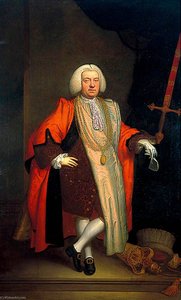
      Portret Thomas Bardwell
      Thomas Bardwell · 1704 – 1767
      Urodzony · zmarł
      1704 – 1767
      Nurt
      Neoclassicism
      Dzieła w naszym katalogu
      55
      Najsłynniejsze
      Stainborough Castle, Folly in the Grounds of Wentworth Castle (1745)
      Najwięcej dzieł w
      Blackfriars' Hall

      Dziesięć najpopularniejszych obrazów, których autorem jest Thomas Bardwell

      Stainborough Castle, Folly in the Grounds of Wentworth Castle (1745) autorstwa Thomas Bardwell
      1

      Stainborough Castle, Folly in the Grounds of Wentworth Castle

      1745 · Oil On Canvas · Government Art Collection, Londyn

      The oil on canvas painting titled Stainborough Castle, Folly in the Grounds of Wentworth Castle was executed by the English artist Thomas Bardwell. This work dates to about 1745. The artist, who lived from 1704 to 1767, was a figure painter, portraitist, art copyist, and writer. His professional practice included the creation of decorative paintings and the production of technical writings on the subject of art.

      Ręcznie malowana reprodukcja olejowa od $195 42 × 24 cm Rozmiar zgodny z oryginałem $483 128 × 77 cm Zamów w oryginalnym rozmiarze →
      Captain Robert Fenwick (1716–1802), His Wife Isabella Orde (d.1789), and Her Sister Ann (1746) autorstwa Thomas Bardwell
      2

      Captain Robert Fenwick (1716–1802), His Wife Isabella Orde (d.1789), and Her Sister Ann

      1746 · Oil On Canvas · Laing Art Gallery, Newcastle upon Tyne

      Thomas Bardwell (1704–1767) executed Captain Robert Fenwick (1716–1802), His Wife Isabella Orde (d.1789), and Her Sister Ann between 1746 and 1753. The composition commemorates the 1746 marriage of Robert Fenwick and Isabella Orde. The subjects represent two prominent families from Newcastle.

      Ręcznie malowana reprodukcja olejowa od $195 29 × 35 cm Rozmiar zgodny z oryginałem $718 120 × 143 cm Zamów w oryginalnym rozmiarze →
      William Henry Nassau de Zuylestein (1717–1781), 4th Earl of Rochford (1741) autorstwa Thomas Bardwell
      4

      William Henry Nassau de Zuylestein (1717–1781), 4th Earl of Rochford

      1741 · Oil On Canvas · The National Trust For Scotland, Brodick

      In this 1741 portrait, we find William Henry Nassau de Zuylestein, the 4th Earl of Rochford, positioned within a landscape that speaks of both status and the quietude of the English countryside. The composition is balanced, arranging the figures and the horse in a diagonal movement that draws the eye toward the soft, receding horizon. There is a certain grace in the way the subjects are placed, suggesting a moment…

      Ręcznie malowana reprodukcja olejowa od $220 37 × 27 cm Rozmiar zgodny z oryginałem $1285 212 × 161 cm Zamów w oryginalnym rozmiarze →
      Elisabeth Anne Spencer (died 1771). Wife of Richard van Nassau-Zuylensteyn-Savage (1750) autorstwa Thomas Bardwell
      5

      Elisabeth Anne Spencer (died 1771). Wife of Richard van Nassau-Zuylensteyn-Savage

      1750 · Oil On Canvas

      The air in the room seems to settle around the figure of Elisabeth Anne Spencer, captured in a moment of quiet, noble repose. She sits in a three-quarter view, her presence commanding the space through a soft, directional light that spills from the upper left. This illumination catches the luminous sheen of her satin gown, turning the fabric into a landscape of silver and white that contrasts sharply against the…

      Ręcznie malowana reprodukcja olejowa od $195 29 × 35 cm Rozmiar zgodny z oryginałem $319 63 × 76 cm Zamów w oryginalnym rozmiarze →
      William Crowe (d.1778), Mayor of Norwich (1747) (1746) autorstwa Thomas Bardwell
      6

      William Crowe (d.1778), Mayor of Norwich (1747)

      1746 · Oil On Canvas

      The portrait of William Crowe (d.1778), Mayor of Norwich (1747) by Thomas Bardwell captures a man at the threshold of civic authority. This painting emerges from a significant moment in the history of Norwich, commissioned by the artillery company of the city to honor a man who would ascend to the mayoralty in 1747. The subject gazes out from the canvas, his presence fixed in a moment of dignified repose…

      Ręcznie malowana reprodukcja olejowa od $195 24 × 41 cm Rozmiar zgodny z oryginałem $1245 147 × 229 cm Zamów w oryginalnym rozmiarze →
      Thomas Fermor, 1st Earl of Pomfret, and Henrietta Louisa, Countess of Pomfret (1750) autorstwa Thomas Bardwell
      7

      Thomas Fermor, 1st Earl of Pomfret, and Henrietta Louisa, Countess of Pomfret

      1750 · Oil On Canvas · Ashmolean Museum of Art and Archaeology, Oksford

      This oil on canvas portrait depicts Thomas Fermor, 1st Earl of Pomfret, and Henrietta Louisa, Countess of Pomfret. The work is attributed to the British artist Thomas Bardwell. It was executed about 1750.

      Ręcznie malowana reprodukcja olejowa od $220 24 × 41 cm Rozmiar zgodny z oryginałem $1051 124 × 216 cm Zamów w oryginalnym rozmiarze →
      Sir Thomas Churchman (1702–1781), Mayor of Norwich (1761) (1761) autorstwa Thomas Bardwell
      8

      Sir Thomas Churchman (1702–1781), Mayor of Norwich (1761)

      1761 · Oil On Canvas

      In this 1761 portrait, we encounter Sir Thomas Churchman, a man whose presence commands the space he occupies. He is seated with a quiet, settled confidence, his gaze meeting the viewer with the steady composure of one accustomed to leadership. The composition is centered and deliberate, focusing our attention on the interplay of light and shadow across his features. A strong light source from the left illuminates his face and…

      Ręcznie malowana reprodukcja olejowa od $195 25 × 41 cm Rozmiar zgodny z oryginałem $1312 149 × 240 cm Zamów w oryginalnym rozmiarze →
      David Garrick (1717–1779), as Richard III (from 'Richard III' by William Shakespeare) autorstwa Thomas Bardwell
      9

      David Garrick (1717–1779), as Richard III (from 'Richard III' by William Shakespeare)

      Oil On Canvas

      The portrait depicts a man positioned in a three-quarter view, facing the viewer. He wears a red jacket characterized by a white collar and intricate lace trim at the neck. A hat adorned with feathers rests upon his head. His facial features include a beard and a mustache. Two ties are visible near his neck, one on the left side and one on the right. The subject's gaze is directed…

      Ręcznie malowana reprodukcja olejowa od $195 29 × 35 cm Rozmiar zgodny z oryginałem $315 62 × 75 cm Zamów w oryginalnym rozmiarze →
      The Broke and the Bowes Families (1740) autorstwa Thomas Bardwell
      10

      The Broke and the Bowes Families

      1740 · Oil On Canvas · Government Art Collection, Londyn

      The Broke and the Bowes Families is an oil on canvas painted by Thomas Bardwell in 1740. This portrait captures a gathering of family members, including men, women, and children, arranged around a dining table. The composition utilizes natural light from a large window to illuminate the subjects within the room.

      Ręcznie malowana reprodukcja olejowa od $195 34 × 30 cm Rozmiar zgodny z oryginałem $526 112 × 100 cm Zamów w oryginalnym rozmiarze →

      Thomas Bardwell: płótna od 11 do 46 w rankingu

      John Buxton of Channonz (1750) autorstwa Thomas Bardwell
      #12

      John Buxton of Channonz

      1750 · Norwich Castle Museum And Art Gallery

      In the quiet, dignified presence of John Buxton of Channonz, we encounter more than just a portrait; we step into the refined atmosphere of the mid-18th century. Painted…

      Zamów to płótno od $195 →
      Leonard Buxton (1751) autorstwa Thomas Bardwell
      #18

      Leonard Buxton

      1751 · Norwich Castle Museum And Art Gallery

      In this 1751 portrait, titled Leonard Buxton, the artist Thomas Bardwell captures a man of significant presence. The subject is depicted wearing a red coat, detailed with white…

      Zamów to płótno od $195 →
      Maurice Suckling (1764) autorstwa Thomas Bardwell
      #37

      Maurice Suckling

      1764

      The portrait depicts a man seated in a chair, positioned against a dark, undifferentiated background. He is oriented toward the viewer, with his gaze directed forward. His left…

      Zamów to płótno od $195 →
      Maurice Suckling (1764) autorstwa Thomas Bardwell
      #38

      Maurice Suckling

      1764 · National Portrait Gallery

      In this portrait titled Maurice Suckling, the artist Thomas Bardwell captures a figure of significant historical weight. Painted in 1764, the work presents George Washington, the first president…

      Zamów to płótno od $195 →
      Mary Phipps (1749) autorstwa Thomas Bardwell
      #43

      Mary Phipps

      1749

      The portrait of Mary Phipps is an oil on canvas work by the British painter Thomas Bardwell. Created in 1749, the painting captures a specific moment in the…

      Zamów to płótno od $195 →

      Płótna Thomas Bardwell epoka po epoce

      Co najczęściej malował Thomas Bardwell

      Cztery tematy najczęściej pojawiające się na tych płótnach, z których każdy wraz z jego najbardziej cenionym przykładem.

      Gdzie wiszą płótna Thomas Bardwell

      8 muzeów, w których znajduje się najwięcej obrazów z tej strony.

      Muzea Miasto Dzieła artysty Thomas Bardwell Obrazy z tej listy
      Blackfriars' Hall, NorwichBlackfriars' Hall Norwich 3 John Goodman, Mayor of Norwich, Jermy Harcourt, Mayor of Norwich, John Press, Mayor of Norwich
      Government Art Collection, LondynGovernment Art Collection Londyn 2 Stainborough Castle, Folly in the Grounds of Wentworth Castle, The Broke and the Bowes Families
      The National Trust For Scotland, BrodickThe National Trust For Scotland Brodick 2 William Henry Nassau de Zuylestein (1717–1781), 4th Earl of Rochford, Portrait of a Lady (possibly of the Nassau de Zuylestein family)
      Norwich Castle Museum And Art Gallery, NorwichNorwich Castle Museum And Art Gallery Norwich 2 John Buxton of Channonz, Leonard Buxton
      National Portrait Gallery, LondynNational Portrait Gallery Londyn 2 John Campbell, 2nd Duke of Argyll and Duke of Greenwich, Maurice Suckling
      Laing Art Gallery, Newcastle upon TyneLaing Art Gallery Newcastle upon Tyne 1 Captain Robert Fenwick (1716–1802), His Wife Isabella Orde (d.1789), and Her Sister Ann
      Ashmolean Museum of Art and Archaeology, OksfordAshmolean Museum of Art and Archaeology Oksford 1 Thomas Fermor, 1st Earl of Pomfret, and Henrietta Louisa, Countess of Pomfret
      The Geffrye, LondynThe Geffrye Londyn 1 Group Portrait (possibly of the Brewster Family), in a Domestic Interior

      Najsłynniejsze płótno Thomas Bardwell, dekada po dekadzie

      1. 1730s
      2. 1740s
      3. 1750s
      4. 1760s

      Płótna Thomas Bardwell krok po kroku

      Z którego płótna najbardziej zapisał się Thomas Bardwell?Przeczytaj odpowiedź

      Stainborough Castle, Folly in the Grounds of Wentworth Castle (1745), Government Art Collection, Londyn. Następują po nim Captain Robert Fenwick (1716–1802), His Wife Isabella Orde (d.1789), and Her Sister Ann (1746) oraz John Campbell, 2nd Duke of Argyll and Duke of Greenwich (1740).

      Stainborough Castle, Folly in the Grounds of Wentworth Castle: w jakim wieku był Thomas Bardwell, gdy powstało to dzieło?Przeczytaj odpowiedź

      Thomas Bardwell, urodzony/a w 1704, miał/a 41 lat: Stainborough Castle, Folly in the Grounds of Wentworth Castle pochodzi z 1745.

      Jakie są dziesięć najsłynniejszych płócien Thomas Bardwell?Przeczytaj odpowiedź

      Stainborough Castle, Folly in the Grounds of Wentworth Castle, Captain Robert Fenwick (1716–1802), His Wife Isabella Orde (d.1789), and Her Sister Ann, John Campbell, 2nd Duke of Argyll and Duke of Greenwich, William Henry Nassau de Zuylestein (1717–1781), 4th Earl of Rochford, Elisabeth Anne Spencer (died 1771). Wife of Richard van Nassau-Zuylensteyn-Savage, William Crowe (d.1778), Mayor of Norwich (1747), Thomas Fermor, 1st Earl of Pomfret, and Henrietta Louisa, Countess of Pomfret, Sir Thomas Churchman (1702–1781), Mayor of Norwich (1761), David Garrick (1717–1779), as Richard III (from 'Richard III' by William Shakespeare) i The Broke and the Bowes Families. Każde płótno w powyższym rankingu zawiera informację o roku powstania oraz muzeum.

      Ile obrazów stworzył/a Thomas Bardwell?Przeczytaj odpowiedź

      W naszym katalogu znajduje się 55 dzieł artysty Thomas Bardwell, datowanych od 1730 do 1767.

      Gdzie dziś znajdują się najsłynniejsze płótna Thomas Bardwell?Przeczytaj odpowiedź

      Większość znajduje się w Blackfriars' Hall (Norwich), Government Art Collection (Londyn) i The National Trust For Scotland (Brodick); powyższa lista wymienia każde muzeum oraz jego płótna.

      Kiedy Thomas Bardwell namalował swoje najsłynniejsze płótna?Przeczytaj odpowiedź

      W 1750s, który obejmuje 18 z 46 dzieł na tej stronie, wśród nich znajduje się Elisabeth Anne Spencer (died 1771). Wife of Richard van Nassau-Zuylensteyn-Savage.

      Które słynne płótno Thomas Bardwell powstało jako pierwsze, a które jako ostatnie?Przeczytaj odpowiedź

      Najwcześniejsze płótno pochodzi z View of Perry Hall, near Birmingham (1730), a najpóźniejsze z James Poole (d.1780), Mayor of Norwich (1765) (1767).

      Jakie tematy najczęściej malował Thomas Bardwell?Przeczytaj odpowiedź

      Man (27), Woman (11) i Red coat (8), w ramach 46 dzieł na tej stronie.

      Która technika najczęściej pojawia się w obrazach Thomas Bardwell?Przeczytaj odpowiedź

      Oil On Canvas, użyte w 33 z 46 dzieł na tej stronie.

      Z jakim nurtem związany jest Thomas Bardwell?Przeczytaj odpowiedź

      Neoclassicism i Baroque, co pokazują płótna na tej stronie.

      Które obrazy Thomas Bardwell znajdują się w zbiorach Blackfriars' Hall?Przeczytaj odpowiedź

      Muzeum Blackfriars' Hall, Norwich posiada 3 dzieł widocznych na tej stronie, w tym John Goodman, Mayor of Norwich, Jermy Harcourt, Mayor of Norwich i John Press, Mayor of Norwich.

      Gdzie mogę kupić reprodukcję obrazu Thomas Bardwell?Przeczytaj odpowiedź

      Tak. Każdy obraz na tej stronie można zamówić z jego własnej podstrony jako ręcznie malowaną reprodukcję olejną lub jako wysokiej jakości wydruk artystyczny w wybranym przez Ciebie rozmiarze.

      Poznaj artystę: Thomas Bardwell

      Early Life and Apprenticeship

      Thomas Bardwell, born in 1704, emerged from a family deeply rooted in the decorative arts rather than the established world of fine painting. His initial foray into artistry wasn’t through formal training but within the practical demands of his family's business in Bungay, Suffolk. He began by crafting painted panels – functional embellishments that nonetheless required a keen eye for composition and color. This early experience, though seemingly humble, laid a crucial foundation for his later success. It instilled in him a meticulous approach to craft and an understanding of the visual impact of imagery, even before he consciously aspired to be a portraitist. The earliest documented works, conversation pieces from 1736 – notably one potentially depicting the Brewster family of Beccles now held by the Geffrye Museum – offer glimpses into this formative period. These paintings, intimate scenes capturing familial life, reveal an emerging talent for characterization and narrative detail, hinting at a sensibility that would blossom in his more ambitious commissions.

      Breaking New Ground in Norwich

      Bardwell’s trajectory took a significant turn in 1746 when he secured a commission from the Artillery Company of Norwich to paint William Crowe, who was soon to become mayor. This wasn't merely another portrait; it represented a challenge to the established artistic order within the city. Until then, John Theodore Heins, a German-born artist, had held a virtual monopoly on civic portraiture in Norwich. Bardwell’s success in capturing Crowe’s likeness – and securing this prestigious commission – effectively broke that hold, marking him as a formidable new presence on the local art scene. This initial triumph led to a series of nine portraits for St Andrew's Hall in Norwich, solidifying his reputation and establishing a distinctive style favored by the city’s prominent citizens. He wasn’t simply painting faces; he was becoming an integral part of documenting Norwich society itself.

      London Commissions and Allegorical Depth

      The 1740s and 50s saw Bardwell extend his reach to London, where he undertook a variety of portrait commissions. However, it was during this period that he ventured beyond straightforward representation, demonstrating an ambition for more complex allegorical works. Joshua Ward Receiving Money from Britannia (and bestowing it as charity on the needy), painted in 1748 and now residing within the Royal College of Surgeons’ collection, stands as a prime example. This painting isn't just a portrait of Dr. Joshua Ward; it’s a carefully constructed visual narrative. The symbolic figures of Britannia and Charity flanking Ward, coupled with the throng of grateful patients, elevate the work beyond mere likeness to a celebration of philanthropy and civic virtue. An engraving after this piece, likely by Bernard Baron, further disseminated his imagery and influence. This period reveals Bardwell's growing sophistication in using symbolism to imbue his portraits with deeper meaning, moving him away from purely descriptive representation towards works that actively engaged with moral and social themes.

      Yorkshire, Scotland, and a Return to Norwich

      Bardwell’s artistic journey wasn’t confined to the south of England. Between 1752 and 1753, he embarked on an extensive series of commissions in Yorkshire and Scotland, broadening his exposure to different patrons and regional styles. This period likely influenced his technique and further refined his ability to adapt to diverse aesthetic preferences. However, by 1759, Bardwell made the decision to settle permanently in Norwich. He became a central figure within the city’s artistic community, celebrated for his skill and dedication. An obituary published in a local newspaper lauded him as “an eminent portrait painter…who principally through the power of genius and dint of application, acquired a degree of perfection in his art.”

      Legacy and Theoretical Contributions

      Bardwell’s impact extended beyond the canvas. In 1756, he published The Practice of Painting and Perspective Made Easy, a 64-page treatise dedicated to the Earl of Rochford. This work wasn't merely a technical manual; it reflected his own artistic philosophy and offered practical guidance for aspiring painters. It demonstrates a commitment to sharing his knowledge and promoting the art of painting beyond his immediate circle. According to a general history of Norfolk published in 1829, “the best of his portraits are at Langley,” with works by Turner and Carr also noted as holding historical subjects painted by Bardwell. While perhaps not achieving the widespread fame of some of his contemporaries, Thomas Bardwell carved out a significant niche for himself as a skilled portraitist, a breaker of artistic monopolies, and a thoughtful contributor to the discourse surrounding painting in 18th-century England. His legacy resides not only in the faces he captured but also in the enduring quality of his craftsmanship and his dedication to elevating the art of portraiture within his community.