Pracownia — Bezpłatna wysyłka na cały świat — Czas dostawy: 2–6 tygodni
      Thomas Couture, 1815 – 1879

      Thomas Couture: 100 najsłynniejszych obrazów

      Spośród wszystkich obrazów Thomas Couture, najbardziej znanym jest The Romans of the Decadence; znajduje się on w Musée d'Orsay w Paryż. Tuż za nimi plasują się Romans of the Decadence (1847) oraz Lust for Gold (1844). Spośród 221 dzieł Thomas Couture w naszym katalogu, tych 100 jest najbardziej znanych – każde z nich zostało przedstawione wraz z datą powstania, muzeum oraz historią.

      Ranking oparty na naszym wskaźniku popularności, który łączy liczbę wyszukiwań, wizyt oraz zamówień dla każdego dzieła. Aktualizacja: Październik 2026. Każdy obraz na tej stronie można zamówić jako ręcznie malowaną reprodukcję olejną na płótnie lnianym lub jako wysokiej jakości wydruk artystyczny, wykonany w wybranym przez Ciebie formacie.

      Portret Thomas Couture
      Thomas Couture · 1815 – 1879
      Urodzony · zmarł
      1815 – 1879, Senlis
      Nurt
      Academicism
      Dzieła w naszym katalogu
      221
      Najsłynniejsze
      The Romans of the Decadence
      Najwięcej dzieł w
      Museum of Fine Arts

      10 najsłynniejszych obrazów artysty Thomas Couture

      The Romans of the Decadence autorstwa Thomas Couture
      1

      The Romans of the Decadence

      Oil On Canvas · Musée d'Orsay, Paryż

      The painting The Romans of the Decadence by Thomas Couture is a quintessential representation of the Academic art movement, which dominated the 19th century. This large-scale oil on canvas work, measuring 472 cm x 772 cm, was completed in 1847 and is now housed at the Musée d'Orsay in Paris. Historical Context The Academic art movement emerged as a response to the Romanticism that preceded it. It emphasized traditional forms…

      Hand-painted oil reproduction from $178 41 × 24 cm
      Romans of the Decadence (1847) autorstwa Thomas Couture
      2

      Romans of the Decadence

      1847 · Oil On Canvas · Musée d'Orsay, Paryż

      In the hallowed, quiet corridors of the Musée d'Orsay, there exists a window into a world of fading glory, captured through the masterful lens of Thomas Couture. His 1847 masterpiece, Romans in Their Decadence, is far more than a mere historical tableau; it is a visceral exploration of an empire in its twilight. This colossal oil on canvas, measuring an imposing 466 x 773 cm, stands as an arresting testament…

      Hand-painted oil reproduction from $353 41 × 24 cm
      Lust for Gold (1844) autorstwa Thomas Couture
      3

      Lust for Gold

      1844 · Oil On Canvas · Rijksmuseum, Amsterdam

      The air in the room feels heavy, thick with the scent of unwashed linen and the metallic tang of coin. A group of figures huddles around a table draped in a deep red cloth, their bodies pressing into a tight, claustrophobic circle. Light falls sharply across the scene, catching the pale curve of a woman's shoulder and the glint of yellow metal, while the rest of the room dissolves into…

      Hand-painted oil reproduction from $253 36 × 28 cm Same size as the original $271 45 × 35 cm Order at original size →
      Reverie autorstwa Thomas Couture
      5

      Reverie

      Oil On Canvas

      In this monochromatic portrait, we find ourselves drawn into a private moment of introspection. The subject, a young woman, is captured in a bust-length composition that feels deeply intimate. Her gaze is directed downward and slightly to the left, a posture that suggests a mind turned inward, perhaps lost in a memory or a quiet melancholy. The darkness of the background recedes, ensuring that the viewer's attention remains fixed upon…

      Hand-painted oil reproduction from $178 31 × 33 cm
      La Noblesse autorstwa Thomas Couture
      6

      La Noblesse

      Charcoal

      This study reflects an academic approach that bridges the gap between classicism and romanticism. It prioritizes the exploration of light and shadow to establish volume, moving away from rigid, sterile rules toward a more intuitive method of execution. The work functions as a visual investigation into how symbolic elements—such as the tools of labor and the architecture of the throne—interact to convey a specific social or mythological concept. Through these…

      Hand-painted oil reproduction from $178 26 × 39 cm
      Portrait de jeune fille autorstwa Thomas Couture
      7

      Portrait de jeune fille

      Oil

      In this intimate portrait, titled Portrait de jeune fille, the artist Thomas Couture turns his attention to a single subject. The work is a portrait in the genre of painting, focusing on the presence of a young woman. There is a quietude to the piece that suggests we are witnessing a private moment of contemplation.

      Hand-painted oil reproduction from $178 29 × 35 cm
      La commandite autorstwa Thomas Couture
      8

      La commandite

      Oil On Canvas

      La commandite is an oil on canvas work by the French history painter and teacher Thomas Couture. Created about 1860-1869, the painting reflects the artist's established presence in the mid-nineteenth-century art world. Couture, born in Senlis, France, was a significant figure in the transition between Romanticism and Realism, known for his ability to bridge these movements through his instruction and his own historical compositions.

      Hand-painted oil reproduction from $278 35 × 29 cm
      The Prodigal Son (1850) autorstwa Thomas Couture
      9

      The Prodigal Son

      1850 · Oil On Canvas · Walters Art Museum, Baltimore

      The heavy atmosphere of the scene centers on The Prodigal Son, a work by the French artist Thomas Couture. This painting, dating to 1850, captures a moment of profound emotional weight. It exists as a replica of a previous composition that once appeared before the public at the Paris Salon of 1841. The figures remain frozen in their dramatic tension, caught in a cycle of shadow and light that defines…

      Hand-painted oil reproduction from $228 28 × 35 cm
      Timon of Athens (1857) autorstwa Thomas Couture
      10

      Timon of Athens

      1857 · Oil On Canvas · Wallace Collection, Londyn

      The oil on canvas known as Timon of Athens emerges from the brush of Thomas Couture, a painter who captures a heavy, dramatic moment of human frailty. Created in 1857, this work presents a profound allegory of greed. The scene draws its lifeblood from the themes of Shakespeare's play, transforming a literary tragedy into a visual meditation on the corrupting nature of wealth. Every figure within the frame seems caught…

      Hand-painted oil reproduction from $228 36 × 28 cm

      Obrazy artysty Thomas Couture od miejsca 11 do 100

      Drummer Boy (1857) autorstwa Thomas Couture
      #11

      Drummer Boy

      1857 · Detroit Institute of Arts

      This impressively scaled oil on canvas, titled Drummer Boy, was executed by the French painter Thomas Couture in 1857. It belongs to the genre art tradition, focusing on…

      Zamów ręczne malowanie from $178 →
      Alice Ozy (1855) autorstwa Thomas Couture
      #14

      Alice Ozy

      1855 · Toledo Museum of Art

      In this 1855 portrait, Thomas Couture presents us with Alice Ozy. The work captures a seated woman in a moment of quietude, a subject that allows the artist…

      Zamów to płótno from $178 →
      Young Italian Girl (1877) autorstwa Thomas Couture
      #43

      Young Italian Girl

      1877 · Bristol Museum - Art Gallery

      Thomas Couture’s Young Italian Girl, painted in 1877, immediately draws the viewer into its intimate sphere. It is a portrait that transcends mere likeness; it captures a moment…

      Zamów ręczne malowanie from $178 →
      Horace and Lydia (1843) autorstwa Thomas Couture
      #45

      Horace and Lydia

      1843 · Wallace Collection

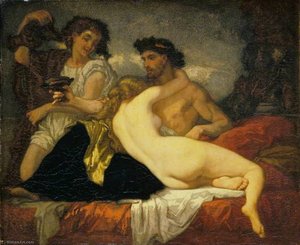
      Thomas Couture’s Horace and Lydia, painted in 1843, invites the viewer into an intimate tableau steeped in the rich, enveloping warmth of red. This is not merely a…

      Zamów to płótno from $178 →
      Caught by the Tide (1875) autorstwa Thomas Couture
      #46

      Caught by the Tide

      1875 · National Gallery

      The oil painting depicts a group of three figures positioned upon a dark, jagged rock formation in the foreground. These figures are arranged in a triangular formation, creating…

      Zamów to płótno from $178 →

      Co najczęściej malował Thomas Couture

      Cztery tematy najczęściej pojawiające się na tych płótnach, z których każdy wraz z jego najbardziej cenionym przykładem.

      Gdzie wiszą płótna Thomas Couture

      8 muzeów, w których znajduje się najwięcej obrazów z tej strony.

      Muzea Miasto Dzieła artysty Thomas Couture Obrazy z tej listy
      Museum of Fine Arts, BostonMuseum of Fine Arts Boston 8 Two Soldiers, Nymph and Cupids, Head of a Woman in Profile
      Wallace Collection, LondynWallace Collection Londyn 6 The Young Drummer, Timon of Athens, Harlequin and Pierrot
      Musée d'Orsay, ParyżMusée d'Orsay Paryż 6 The Romans of the Decadence, Romans of the Decadence, Romans of the Decadence (detail)
      Walters Art Museum, BaltimoreWalters Art Museum Baltimore 4 The Prodigal Son, Horace and Lydia, Daydreams
      National Gallery of Ireland, DublinNational Gallery of Ireland Dublin 3 A Sleeping Judge, La Peinture Réaliste, Pifferaro
      Rhode Island School of Design Museum of Art, ProvidenceRhode Island School of Design Museum of Art Providence 4 Gamin, The Little Confectioner
      Petit Palais, ParyżPetit Palais Paryż 3 Study Made After Jules Michelet, Detail Study for "Les Romains de la décadence": The Two Philosophers
      Bawarskie Państwowe Zbiory Malarstwa, MonachiumBawarskie Państwowe Zbiory Malarstwa Monachium 2 Female Head (Study of a Model), Odalisque

      Dekada po dekadzie: najsłynniejsze płótna Thomas Couture

      1. 1840s
        Romans of the Decadence (1847) autorstwa Thomas Couture
        Miejsce 2 z 100

        Romans of the Decadence

        Wiek 25 – 34 · Musée d'Orsay

        In the hallowed, quiet corridors of the Musée d'Orsay, there exists a window into a world of fading glory, captured through the masterful lens of Thomas Couture. His…

      2. 1850s
        The Young Drummer (1857) autorstwa Thomas Couture
        Miejsce 4 z 100

        The Young Drummer

        Wiek 35 – 44 · Wallace Collection

        The Young Drummer is an oil on canvas painting by the French artist Thomas Couture. Created in 1857, this work is also recognized by the alternative title Drummer…

      3. 1860s
      4. 1870s
        Pifferaro (1877) autorstwa Thomas Couture
        Miejsce 38 z 100

        Pifferaro

        Wiek 55 – 64 · National Gallery of Ireland

      Odpowiedzi na pytania dotyczące obrazów Thomas Couture

      Który obraz autorstwa Thomas Couture jest najbardziej znany?Przeczytaj odpowiedź

      The Romans of the Decadence, Musée d'Orsay, Paryż. Następują po nim Romans of the Decadence (1847) oraz Lust for Gold (1844).

      Z jakich dziesięciu obrazów najbardziej słynie Thomas Couture?Przeczytaj odpowiedź

      The Romans of the Decadence, Romans of the Decadence, Lust for Gold, The Young Drummer, Reverie, La Noblesse, Portrait de jeune fille, La commandite, The Prodigal Son i Timon of Athens. Każde płótno w powyższym rankingu zawiera informację o roku powstania oraz muzeum.

      Ile znanych obrazów namalował Thomas Couture?Przeczytaj odpowiedź

      W naszym katalogu znajduje się 221 dzieł artysty Thomas Couture, datowanych od 1840 do 1879.

      W których muzeach znajdują się najsłynniejsze płótna Thomas Couture?Przeczytaj odpowiedź

      Większość znajduje się w Museum of Fine Arts (Boston), Wallace Collection (Londyn) i Musée d'Orsay (Paryż); powyższa lista wymienia każde muzeum oraz jego płótna.

      W których latach Thomas Couture namalował swoje najsłynniejsze płótna?Przeczytaj odpowiedź

      W 1850s, który obejmuje 22 z 100 dzieł na tej stronie, wśród nich znajduje się The Young Drummer.

      Jakie są pierwsze i ostatnie słynne płótna Thomas Couture?Przeczytaj odpowiedź

      Najwcześniejsze płótno pochodzi z A Widow (1840), a najpóźniejsze z Le Petit Gilles (1879).

      Jakie tematy najczęściej powracają w obrazach Thomas Couture?Przeczytaj odpowiedź

      Woman (10), Portraiture (6) i Man (5), w ramach 100 dzieł na tej stronie.

      Czym zazwyczaj malował Thomas Couture?Przeczytaj odpowiedź

      Oil On Canvas, użyte w 18 z 100 dzieł na tej stronie.

      Do jakiego nurtu artystycznego należy Thomas Couture?Przeczytaj odpowiedź

      Academicism i Romantic & realism, co pokazują płótna na tej stronie.

      Co można zobaczyć od Thomas Couture w Museum of Fine Arts?Przeczytaj odpowiedź

      Muzeum Museum of Fine Arts, Boston posiada 7 dzieł widocznych na tej stronie, w tym Two Soldiers, Nymph and Cupids i Head of a Woman in Profile.

      Czy mogę zamówić ręcznie malowaną kopię obrazu autorstwa Thomas Couture?Przeczytaj odpowiedź

      Tak. Każdy obraz na tej stronie można zamówić z jego własnej podstrony jako ręcznie malowaną reprodukcję olejną lub jako wysokiej jakości wydruk artystyczny w wybranym przez Ciebie rozmiarze.

      Thomas Couture: historia artysty

      A Rebel in the Atelier: The Life and Legacy of Thomas Couture

      Thomas Couture (1815–1879) stands as a singular figure in 19th-century French art—a painter who defied academic expectations while simultaneously mastering their formal conventions. Born in Senlis, France, his journey toward artistic recognition was marked by persistent rejection from the Prix de Rome competition, an event that would have secured him residency at the Académie de France in Rome. Rather than succumbing to disappointment, these setbacks instilled within Couture a conviction that the prevailing artistic system demanded reform, propelling him to forge his own path and establishing an independent atelier—a space dedicated to those yearning for alternatives to traditional instruction. This spirit of defiance would define not only his artistic practice but also his enduring legacy as a teacher and innovator.

      Early Life and Artistic Formation

      Jean Couture, Thomas’s father, was a shoemaker who instilled in his son a love for craftsmanship and an appreciation for the tangible world—values that would inform Couture's artistic sensibilities throughout his life. Despite his father’s encouragement to pursue scholarly pursuits, Couture harbored a deep fascination with art from a young age, immersing himself in classical literature and philosophy alongside honing his drawing skills. Recognizing his talent, Jean Couture secured him admission to the École gratuite de dessin at the Conservatoire des arts et métiers in Paris—a formative experience that exposed Couture to the burgeoning currents of Romanticism and emphasized the importance of combining artistic vision with technical proficiency. He continued his studies at the École des Beaux-Arts under Antoine Gros and Paul Delaroche, absorbing their stylistic influences while simultaneously cultivating a distinctive aesthetic sensibility.

      The Scandalous “Romans During the Decadence”

      Couture’s breakthrough arrived in 1847 with *Romans During the Decadence*, a monumental painting that immediately captivated audiences at the Paris Salon and ignited considerable controversy. Departing from the idealized depictions favored by academic painters, Couture presented a searing social critique—inspired by Juvenal's satirical verses—that exposed the moral corruption and opulent excess plaguing Roman society. The canvas pulsates with an unrestrained energy, populated by figures draped in sumptuous fabrics amidst crumbling classical ruins—a deliberate juxtaposition designed to mirror the perceived decline of French civilization under the Second Republic. Couture’s masterful manipulation of tonal contrasts—dark hues punctuated by brilliant highlights—amplified the painting's dramatic impact and underscored its symbolic significance. Critics lauded Couture’s boldness and originality, recognizing his refusal to conform to artistic conventions as a courageous assertion of intellectual independence.

      A Teacher Shaping Artistic Voices

      Beyond his own artistic achievements, Couture exerted considerable influence through his role as an educator—a vocation he embraced wholeheartedly. He opened his atelier to a diverse cohort of aspiring artists, rejecting the rigid formalism of the École des Beaux-Arts and fostering an environment conducive to experimentation and critical engagement. Among Couture’s most celebrated pupils were luminaries who would reshape the landscape of modern art: Édouard Manet, Henri Fantin-Latour, Pierre Puvis de Chavannes, John La Farge, and many others. Couture championed “quick painting,” anticipating techniques later adopted by Impressionists, stressing the importance of direct observation from life, and encouraging students to develop their individual artistic voices—a pedagogical approach that prioritized intuition and expressive freedom over slavish adherence to academic rules.

      Legacy and Enduring Influence

      Thomas Couture’s contribution to art history extends far beyond his impressive oeuvre. His *Méthode et entretiens d'atelier* (Method and Workshop Interviews), published in 1867, remains a seminal text—a forceful critique of artistic dogma advocating for an approach rooted in observation and emotional responsiveness. This treatise solidified Couture’s reputation as a visionary thinker who challenged prevailing assumptions about the nature of artmaking and inspired generations of artists to pursue their own creative paths. His legacy persists not only through his paintings—particularly *Romans During the Decadence*—but also through the indelible mark he left on the artistic sensibilities of some of France's most influential figures, cementing his place as a pivotal innovator in the history of art.