Pracownia — Bezpłatna wysyłka na cały świat — Czas dostawy: 2–6 tygodni
      Augustus Edwin John, 1878 – 1961

      100 najsłynniejszych obrazów artysty Augustus Edwin John

      Portrait of the Rt. Hon. William Morris Hughes (1919) to obraz, z którego najbardziej znany jest Augustus Edwin John; znajduje się on w Art Gallery of New South Wales, Sydney. Portrait of a Young Man (1929) oraz Air Mechanic Shaw (Colonel T. E. Lawrence of Arabia, 1888–1935) (1935) dopełniają trio najbardziej uwielbianych płócien. Nasz katalog obejmuje 244 dzieł autorstwa Augustus Edwin John. Oto 100 najsłynniejszych z nich, wraz z rokiem powstania, informacją o muzeum oraz historią każdego płótna.

      Ranking oparty na naszym wskaźniku popularności, który łączy liczbę wyszukiwań, wizyt oraz zamówień dla każdego dzieła. Aktualizacja: Październik 2026.

      Portret Augustus Edwin John
      Augustus Edwin John · 1878 – 1961
      Urodzony · zmarł
      1878 – 1961, Tenby
      Nurt
      Post-impressionism
      Dzieła w naszym katalogu
      244
      Najsłynniejsze
      Portrait of the Rt. Hon. William Morris Hughes (1919)
      Najwięcej dzieł w
      Fitzwilliam College

      Dziesięć najpopularniejszych obrazów, których autorem jest Augustus Edwin John

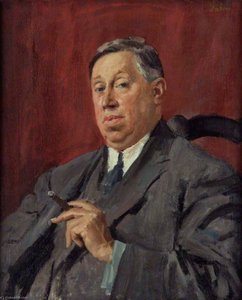
      Portrait of the Rt. Hon. William Morris Hughes (1919) autorstwa Augustus Edwin John
      1

      Portrait of the Rt. Hon. William Morris Hughes

      The portrait captures the likeness of William Morris Hughes in 1919, rendered in oil on canvas. The composition focuses on the psychological presence of the subject, moving beyond mere physical resemblance to seek an instantaneous attitude of the sitter. Through fluid brushwork and a command of tonal harmony, the artist attempts to reveal the inner life and fleeting emotions of the man. The work reflects a period of transition, executed…

      Air Mechanic Shaw (Colonel T. E. Lawrence of Arabia, 1888–1935) (1935) autorstwa Augustus Edwin John
      3

      Air Mechanic Shaw (Colonel T. E. Lawrence of Arabia, 1888–1935)

      1935 · Oil On Canvas · Grundy Art Gallery, Blackpool

      In the evocative portrait Air Mechanic Shaw (Colonel T. E. Lawrence of Arabia, 1888–1935), the viewer is invited into a profound encounter with one of the most complex figures of the twentieth century. Painted by the celebrated Welsh artist Augustus Edwin John in 1935, this work transcends mere military documentation to offer a psychological study of a man caught between identities. The subject, famously known as Lawrence of Arabia, is…

      Corner, Vielle, France (1920) autorstwa Augustus Edwin John
      4

      Corner, Vielle, France

      1920 · Oil On Canvas · Art Gallery of New South Wales, Sydney

      Corner, Vielle, France is an oil on canvas painting by the artist Augustus Edwin John. The work is signed in the lower left corner with the name "John" rendered in brown paint. This piece is part of the collection at the Art Gallery of New South Wales.

      Two Jamaican Girls (1937) autorstwa Augustus Edwin John
      5

      Two Jamaican Girls

      1937 · Oil On Canvas · Walker Art Gallery, Liverpool

      The painting is a portrait of two young girls sitting next to each other on a porch. They appear to be looking at the viewer with curiosity or interest. The girls are wearing dresses, which adds a sense of innocence and youthfulness to their appearance. In addition to the girls, there are several other elements in the painting that contribute to its overall atmosphere. A chair is visible on the…

      Girl Leaning on a Stick (1910) autorstwa Augustus Edwin John
      7

      Girl Leaning on a Stick

      1910 · Oil On Canvas · Fitzwilliam College, Cambridge

      In "Girl Leaning on a Stick," Augustus Edwin John presents a quiet study of a young woman. Painted about 1910, this work captures a moment of stillness. The subject is positioned in a contemplative pose, her presence defined by a sense of introspection. There is a certain weight to her stillness, a feeling of a private thought caught in a fleeting instant.

      Augustus Edwin John: płótna od 11 do 100 w rankingu

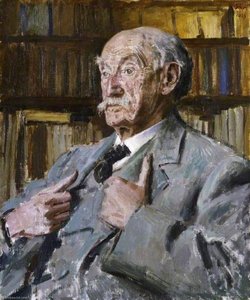
      Thomas Hardy (1840–1928) (1923) autorstwa Augustus Edwin John
      #14

      Thomas Hardy (1840–1928)

      1923 · Fitzwilliam College

      The portrait captures an elderly man seated within the quiet density of a library. He is framed by the weight of accumulated knowledge, surrounded by books that occupy…

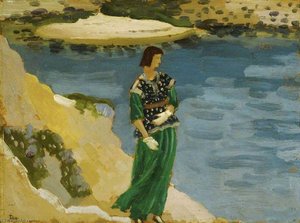
      The Blue Pool (1910) autorstwa Augustus Edwin John
      #15

      The Blue Pool

      1910 · Fitzwilliam College

      A solitary woman rests upon a rugged, rocky outcrop, her gaze meeting the viewer from the edge of a silent world. She wears a verdant green gown, the…

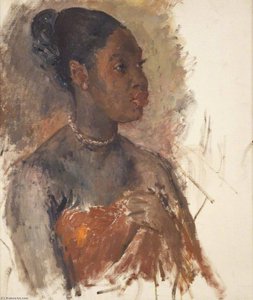
      Study in Provence (1926) autorstwa Augustus Edwin John
      #23

      Study in Provence

      1926 · Fitzwilliam College

      Study in Provence is an oil on canvas painting created circa AD 1926. The work features a portrait of a woman positioned in the center, standing before a…

      David and Dorelia in Normandy (1908) autorstwa Augustus Edwin John
      #29

      David and Dorelia in Normandy

      1908 · Fitzwilliam College

      In this 1908 portrait, David and Dorelia in Normandy captures a quiet, intimate scene set against a scenic landscape. The composition depicts David Garnett and Dorelia McNeill reclining…

      Lord Conway of Allington (1930) autorstwa Augustus Edwin John
      #30

      Lord Conway of Allington

      1930 · Courtauld Gallery

      Augustus Edwin John's “Lord Conway of Allington,” painted in 1930, isn’t merely a portrait; it’s a carefully constructed tableau vivant—a snapshot of a man brimming with intellect, experience,…

      Caspar (1909) autorstwa Augustus Edwin John
      #31

      Caspar

      1909 · Fitzwilliam College

      In the tenderly rendered portrait Caspar, created in 1909 by the celebrated Welsh artist Augustus Edwin John, we are invited into a moment of profound quietude. This intimate…

      Sir Edmund Craster (1879–1959) (1944) autorstwa Augustus Edwin John
      #32

      Sir Edmund Craster (1879–1959)

      1944 · Biblioteka Bodleja

      Augustus Edwin John’s 1944 portrait of Sir Edmund Craster is more than simply a likeness; it's a carefully constructed tableau of understated power and contemplative melancholy. The painting…

      Sir William Nicholson (1872–1949) (1909) autorstwa Augustus Edwin John
      #33

      Sir William Nicholson (1872–1949)

      1909 · Fitzwilliam College

      In this evocative portrait from 1909, Augustus Edwin John captures more than just the likeness of a man; he captures a moment of profound introspection. The subject, Sir…

      Dorelia and the Children at Martigues (1910) autorstwa Augustus Edwin John
      #34

      Dorelia and the Children at Martigues

      1910 · Fitzwilliam College

      In the gentle light of 1910, Augustus Edwin John captured a scene of profound intimacy and coastal serenity in Dorelia and the Children at Martigues. This exquisite painting…

      Villiers David (1932) autorstwa Augustus Edwin John
      #35

      Villiers David

      1932 · Ashmolean Museum of Art and Archaeology

      “ Villiers David,” painted in 1932 by Augustus Edwin John, isn’t a grand historical portrait or a flamboyant depiction of celebrity. Instead, it offers a remarkably intimate glimpse…

      Major Clifford Hugh Douglas (1879–1952) (1933) autorstwa Augustus Edwin John
      #36

      Major Clifford Hugh Douglas (1879–1952)

      1933 · Walker Art Gallery

      Augustus Edwin John’s 1933 portrait of Major Clifford Hugh Douglas is more than a simple likeness; it's a carefully constructed tableau of authority, intellect, and the nascent seeds…

      Dorelia Seated and Holding Flowers (1912) autorstwa Augustus Edwin John
      #37

      Dorelia Seated and Holding Flowers

      1912 · Fitzwilliam College

      Augustus Edwin John’s “Dorelia Seated and Holding Flowers” is not merely a depiction of a woman; it's an immersion into a moment of profound serenity, a carefully constructed…

      Yvonne (1922) autorstwa Augustus Edwin John
      #39

      Yvonne

      1922 · Nottingham Castle Museum And Art Gallery

      Augustus Edwin John, a name often associated with the bohemian spirit of late 19th and early 20th-century Wales, gifted us with a remarkable series of portraits that transcend…

      The Emir Feisal (1919) autorstwa Augustus Edwin John
      #40

      The Emir Feisal

      1919 · Ashmolean Museum of Art and Archaeology

      In the quiet intensity of Augustus Edwin John’s 1919 masterpiece, The Emir Feisal, one encounters more than a mere historical likeness; one meets a profound study of human…

      Płótna Augustus Edwin John epoka po epoce

      Co najczęściej malował Augustus Edwin John

      Cztery tematy najczęściej pojawiające się na tych płótnach, z których każdy wraz z jego najbardziej cenionym przykładem.

      Gdzie wiszą płótna Augustus Edwin John

      8 muzeów, w których znajduje się najwięcej obrazów z tej strony.

      Muzeum Miasto Dzieła artysty Augustus Edwin John Obrazy z tej listy
      Fitzwilliam College, CambridgeFitzwilliam College Cambridge 18 Girl Leaning on a Stick, Thomas Hardy (1840–1928), The Blue Pool
      Narodowa Galeria Kanady, OttawaNarodowa Galeria Kanady Ottawa 12 Vincent Massey, A Summer Noon, Dorelia by the Gate
      Art Gallery of New South Wales, SydneyArt Gallery of New South Wales Sydney 5 Portrait of the Rt. Hon. William Morris Hughes, Corner, Vielle, France, Welsh mountains in snow
      Fitzwilliam MuseumFitzwilliam Museum 4 Woman with a daffodil, Sir William Nicholson, David and Dorelia in Normandy
      Walker Art Gallery, LiverpoolWalker Art Gallery Liverpool 3 Two Jamaican Girls, Major Clifford Hugh Douglas (1879–1952)
      Ashmolean Museum of Art and Archaeology, OksfordAshmolean Museum of Art and Archaeology Oksford 3 Villiers David, The Emir Feisal
      Jerwood Gallery, HastingsJerwood Gallery Hastings 3 Boy's Head, Two Disciples
      Grundy Art Gallery, BlackpoolGrundy Art Gallery Blackpool 1 Air Mechanic Shaw (Colonel T. E. Lawrence of Arabia, 1888–1935)

      Najsłynniejsze płótno Augustus Edwin John, dekada po dekadzie

      1. 1890s
      2. 1900s
        Carlotta (1904) autorstwa Augustus Edwin John
        Miejsce 6 z 100

        Carlotta

        Wiek 22 – 31 · National Gallery of Ireland
      3. 1910s
        Portrait of the Rt. Hon. William Morris Hughes (1919) autorstwa Augustus Edwin John
        Płótno 1 z 100

        Portrait of the Rt. Hon. William Morris Hughes

        Wiek 32 – 41 · Art Gallery of New South Wales

        The portrait captures the likeness of William Morris Hughes in 1919, rendered in oil on canvas. The composition focuses on the psychological presence of the subject, moving beyond…

      4. 1920s
      5. 1930s
      6. 1940s

      Płótna Augustus Edwin John krok po kroku

      Z którego płótna najbardziej zapisał się Augustus Edwin John?Przeczytaj odpowiedź

      Portrait of the Rt. Hon. William Morris Hughes (1919), Art Gallery of New South Wales, Sydney. Następują po nim Portrait of a Young Man (1929) oraz Air Mechanic Shaw (Colonel T. E. Lawrence of Arabia, 1888–1935) (1935).

      Portrait of the Rt. Hon. William Morris Hughes: w jakim wieku był Augustus Edwin John, gdy powstało to dzieło?Przeczytaj odpowiedź

      Augustus Edwin John, urodzony/a w 1878, miał/a 41 lat: Portrait of the Rt. Hon. William Morris Hughes pochodzi z 1919.

      Jakie są dziesięć najsłynniejszych płócien Augustus Edwin John?Przeczytaj odpowiedź

      Portrait of the Rt. Hon. William Morris Hughes, Portrait of a Young Man, Air Mechanic Shaw (Colonel T. E. Lawrence of Arabia, 1888–1935), Corner, Vielle, France, Two Jamaican Girls, Carlotta, Girl Leaning on a Stick, Woman with a daffodil, The Tutor i Dorelia McNeill (1881–1969), in the Garden at Alderney Manor. Każde płótno w powyższym rankingu zawiera informację o roku powstania oraz muzeum.

      Ile obrazów stworzył/a Augustus Edwin John?Przeczytaj odpowiedź

      W naszym katalogu znajduje się 244 dzieł artysty Augustus Edwin John, datowanych od 1898 do 1944.

      Gdzie dziś znajdują się najsłynniejsze płótna Augustus Edwin John?Przeczytaj odpowiedź

      Większość znajduje się w Fitzwilliam College (Cambridge), Narodowa Galeria Kanady (Ottawa) i Art Gallery of New South Wales (Sydney); powyższa lista wymienia każde muzeum oraz jego płótna.

      Kiedy Augustus Edwin John namalował swoje najsłynniejsze płótna?Przeczytaj odpowiedź

      W 1910s, który obejmuje 33 z 100 dzieł na tej stronie, wśród nich znajduje się Portrait of the Rt. Hon. William Morris Hughes.

      Które słynne płótno Augustus Edwin John powstało jako pierwsze, a które jako ostatnie?Przeczytaj odpowiedź

      Najwcześniejsze płótno pochodzi z Mrs A. A. Jack (d.c.1953) (1898), a najpóźniejsze z Sir Edmund Craster (1879–1959) (1944).

      Jakie tematy najczęściej malował Augustus Edwin John?Przeczytaj odpowiedź

      Portrait (27), Woman (10) i Reflection (9), w ramach 100 dzieł na tej stronie.

      Która technika najczęściej pojawia się w obrazach Augustus Edwin John?Przeczytaj odpowiedź

      Oil On Canvas, użyte w 9 z 100 dzieł na tej stronie.

      Z jakim nurtem związany jest Augustus Edwin John?Przeczytaj odpowiedź

      Post-impressionism, co pokazują płótna na tej stronie.

      Które obrazy Augustus Edwin John znajdują się w zbiorach Fitzwilliam College?Przeczytaj odpowiedź

      Muzeum Fitzwilliam College, Cambridge posiada 9 dzieł widocznych na tej stronie, w tym Girl Leaning on a Stick, Thomas Hardy (1840–1928) i The Blue Pool.

      Poznaj artystę: Augustus Edwin John

      A Welsh Bohemian: The Life and Art of Augustus Edwin John

      Augustus Edwin John, a name synonymous with vibrant color and intensely personal portraits, emerged as one of the most distinctive figures in early 20th-century British art. Born on January 4, 1878, in Tenby, a charming coastal town nestled within the Pembrokeshire county of Wales, his life was a tapestry woven with artistic passion, bohemian adventures, and a profound connection to both the natural world and its marginalized communities. From his humble beginnings as the third child of Edwin William John, a solicitor, and Augusta Smith (who tragically died when he was just six years old), John’s early exposure to art—primarily through his elder sister Gwen’s drawing lessons—laid the foundation for a career that would challenge conventions and leave an indelible mark on the British artistic landscape.

      Early Influences and Artistic Training

      John's artistic journey began formally at the Tenby School of Art, where his innate talent quickly became evident. However, it was his enrollment at the Slade School of Fine Art in London in 1894 that truly shaped his development. Under the tutelage of Henry Tonks, a renowned and demanding instructor, John honed his draughtsmanship to an extraordinary degree, mastering the fundamentals of line, form, and perspective with remarkable precision. The Slade’s rigorous curriculum instilled in him a deep appreciation for academic tradition while simultaneously encouraging experimentation and innovation—a balance that would become characteristic of his artistic style. Crucially, during this period, John's exposure to the works of Old Masters like Peter Paul Rubens profoundly influenced his approach to composition, color, and dramatic lighting. Simultaneously, he absorbed the spirit of French Impressionists such as Matisse and Gauguin, embracing their use of vibrant hues and a rejection of traditional academic constraints. The subtle tonal harmonies of Puvis de Chavannes also resonated deeply with John’s aesthetic sensibilities, informing his ability to capture fleeting emotions and atmospheric effects. A pivotal moment arrived in 1897 when a diving accident in Tenby resulted in a severe head injury. This traumatic event dramatically altered John's personality, unleashing a newfound spontaneity and boldness that would become central to his artistic expression.

      The Romani Connection and a Life Beyond the Studio

      Following the Slade years, John embarked on a period of intense exploration, seeking inspiration beyond the confines of London’s art scene. He spent considerable time in France, immersing himself in the vibrant culture of Montmartre, and later found himself captivated by the landscapes and people of Provence. However, it was his encounter with the Romani (Gypsy) community that proved to be a transformative experience. Drawn to their nomadic lifestyle, rich traditions, and captivating spirit, John became deeply involved in documenting their lives through painting, photography, and extensive research. He traveled extensively throughout Europe and Britain, living alongside the Roma, learning their language, customs, and beliefs. This immersion profoundly impacted his art, imbuing it with a sense of freedom, wanderlust, and an appreciation for the beauty of the natural world—qualities that are particularly evident in works like *Air Mechanic Shaw* (1935), a powerful portrait of T.E. Lawrence capturing both his heroic stature and underlying vulnerability. His presidency of the Gypsy Lore Society further solidified his commitment to understanding and celebrating this often-misunderstood community.

      A Portraitist of Distinction: Capturing the Essence of Character

      While John’s engagement with Romani culture is undeniably significant, he is perhaps most celebrated for his extraordinary portraits. Possessing an uncanny ability to capture not just likeness but also the inner life of his subjects—their personality, mood, and fleeting emotions—John created some of the most psychologically astute and compelling portraits of the early 20th century. His style was characterized by a loose, expressive brushwork, vibrant colors, and a willingness to experiment with unconventional techniques. He famously described his approach as seeking an “instantaneous attitude,” striving to capture a momentary glimpse into the soul of his sitter. From aristocratic figures like Lord Leverhulme (whose notoriously unhappy portrait is a testament to John’s uncompromising honesty) to literary giants such as George Bernard Shaw and Dylan Thomas, John's portraits graced the walls of homes and galleries across Britain and beyond. Notable works include *Caspar* (1909), a poignant depiction of youthful innocence, and numerous studies of Gwen John, his sister and lifelong companion.

      Legacy and Critical Reception

      Throughout his career, Augustus Edwin John experienced both widespread acclaim and periods of critical fluctuation. Initially celebrated for his innovative oil sketching techniques and figure drawings, some critics later found his work to be overly flamboyant or lacking in painterly finesse. His service as a war artist during World War I, attached to the Canadian forces, yielded memorable portraits of soldiers, but an unfortunate incident led to his recall to England. Despite these challenges, John remained a significant force in British art history. He was one of the few artists of his time to achieve widespread public recognition and played a crucial role in popularizing Post-Impressionism within the United Kingdom. Awarded the Order of Merit in 1942, he also documented his life and artistic philosophy in two volumes of autobiography: *Chiaroscuro* (1952) and *Finishing Touches* (published posthumously in 1964). While his reputation waned somewhat after World War II, there has been a renewed appreciation for his work in recent years, particularly for the vibrancy and originality of his early pieces. Augustus Edwin John’s art continues to captivate and inspire, reminding us of the power of individual expression and the enduring allure of a life lived with passion and artistic integrity.

      Wszystkie 244 dzieła artysty Augustus Edwin John →