Pracownia — Bezpłatna wysyłka na cały świat — Czas dostawy: 2–6 tygodni
      Donatello, 1386 – 1466

      Donatello: 100 najsłynniejszych obrazów

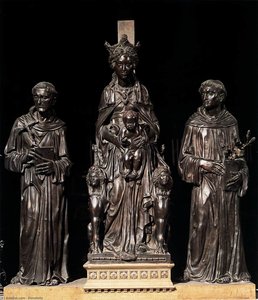
      Spośród wszystkich obrazów Donatello, najbardziej znanym jest Madonna and Child between St Francis and St Anthony (1448); znajduje się on w Bazylika Sant'Antonio w Padwa. Tuż za nimi plasują się Cantoria (1439) oraz Entombment (1447). Spośród 148 dzieł Donatello w naszym katalogu, tych 100 jest najbardziej znanych – każde z nich zostało przedstawione wraz z datą powstania, muzeum oraz historią.

      Ranking oparty na naszym wskaźniku popularności, który łączy liczbę wyszukiwań, wizyt oraz zamówień dla każdego dzieła. Aktualizacja: Październik 2026. Każdy obraz na tej stronie można zamówić jako ręcznie malowaną reprodukcję olejną na płótnie lnianym lub jako wysokiej jakości wydruk artystyczny, wykonany w wybranym przez Ciebie formacie.

      Portret Donatello
      Donatello · 1386 – 1466
      Urodzony · zmarł
      1386 – 1466, Florencja
      Nurt
      Wczesny renesans
      Dzieła w naszym katalogu
      148
      Najsłynniejsze
      Madonna and Child between St Francis and St Anthony (1448)
      Najwięcej dzieł w
      Museo dell'Opera del Duomo

      10 najsłynniejszych obrazów artysty Donatello

      Madonna and Child between St Francis and St Anthony (1448) autorstwa Donatello
      1

      Madonna and Child between St Francis and St Anthony

      1448 · Bronze · Bazylika Sant'Antonio, Padwa

      In the heart of the Italian Renaissance, where the shadows of antiquity met the burgeoning light of humanism, Donatello breathed life into metal with his masterpiece, Madonna and Child between St Francis and St Anthony. Created around 1448, this profound bronze sculpture serves as a window into a period of unparalleled spiritual and artistic transformation. The composition is a masterclass in symmetrical grace; at its center, the Virgin Mary cradles…

      Cantoria (1439) autorstwa Donatello
      2

      Cantoria

      1439 · Marble · Museo dell'Opera del Duomo, Florencja

      To stand before Donatello’s Cantoria is to witness the very moment the Renaissance found its pulse. Completed around 1439 for the Cathedral of Santa Maria del Fiore in Florence, this monumental marble relief is far more than a functional singers' gallery; it is a breathtaking explosion of movement and spiritual ecstasy. While much of the era’s sculpture remained tethered to the static, formal traditions of the Byzantine style, Donatello broke…

      Entombment (1447) autorstwa Donatello
      3

      Entombment

      1447 · Oil On Canvas · Bazylika Sant'Antonio, Padwa

      To stand before Donatello's depiction of the Entombment is to be enveloped in an atmosphere so thick with grief, it feels almost palpable. This scene transcends mere narrative illustration; it is a profound meditation on loss, sacrifice, and the solemn weight of human devotion. The composition draws the viewer into the immediate aftermath of unimaginable tragedy. Jesus Christ lies within the tomb, not merely as a subject, but as the…

      Miracle of the Repentant Son (1447) autorstwa Donatello
      4

      Miracle of the Repentant Son

      1447 · Acrylic · Bazylika Sant'Antonio, Padwa

      Donatello’s bronze sculpture, "Miracle of the Repentant Son," transcends mere representation; it's a profound meditation on faith, remorse, and divine grace. Created in 1447 during the apex of his artistic maturity, this work embodies the burgeoning humanism and emotional depth that defined the Early Renaissance in Florence. More than just a depiction of a biblical miracle – the restoration of a severed limb by St. Anthony – it’s a study…

      Crucifix (1412) autorstwa Donatello
      5

      Crucifix

      1412 · Acrylic On Canvas · Bazylika Świętego Krzyża we Florencji, Florencja

      Donatello's 1412 Crucifix, housed within the Basilica of Santa Croce in Florence, isn’t merely a depiction of Christ on the cross; it’s a visceral experience. This early Renaissance masterpiece transcends simple representation, plunging the viewer into the heart of Christian theology and embodying the profound tension between suffering and redemption. Crafted from richly-toned pearwood, the sculpture immediately commands attention with its remarkably realistic portrayal of the human form – a…

      Annunciation (1435) autorstwa Donatello
      6

      Annunciation

      1435 · Acrylic On Canvas · Bazylika Świętego Krzyża we Florencji, Florencja

      Donatello’s 1435 Annunciation, housed within the Basilica di Santa Croce in Florence, isn’t merely a depiction of a biblical moment; it’s a profound meditation on grace, humility, and the transformative power of faith. Commissioned during a pivotal period of artistic innovation – bridging the Gothic and Renaissance eras – this sculpture embodies Donatello's revolutionary approach to humanism and his masterful command of classical forms. The scene unfolds with an arresting…

      St George (detail) (1416) autorstwa Donatello
      7

      St George (detail)

      1416 · Marble · Museo Nazionale del Bargello, Florencja

      The marble figure of St. George, sculpted by Donatello around 1416, stands as more than just a depiction of a saint; it's a pivotal moment in the evolution of Renaissance sculpture – a testament to the artist’s innovative spirit and his profound understanding of human form and narrative. Originally gracing the north wall of Orsanmichele, Florence’s imposing guildhall, this statue immediately captivated viewers with its dynamic energy and strikingly realistic…

      Herod's Banquet (1427) autorstwa Donatello
      8

      Herod's Banquet

      1427 · Bronze · Baptisterium w Sienie, Siena

      Donatello's Herod’s Banquet, crafted around 1427 for the baptismal font of Siena’s San Giovanni Baptistery, isn’t merely a depiction of a biblical episode; it’s a profound meditation on power, betrayal, and the chilling consequences of unchecked ambition. Commissioned amidst the competitive fervor of Renaissance Florence and Siena, this bronze relief stands as a testament to Donatello's burgeoning mastery – a pivotal work that showcases his innovative approach to sculpture and…

      Bearded Prophet (1418) autorstwa Donatello
      9

      Bearded Prophet

      1418 · Bronze · Museo dell'Opera del Duomo, Florencja

      In the heart of the Florentine Renaissance, where the shadows of antiquity began to dance with the light of new humanism, Donatello breathed life into bronze with his Bearded Prophet. Created around 1418, this monumental figure is far more than a mere sculpture; it is a profound meditation on the weight of divine knowledge and the solemnity of faith. As one gazes upon the weathered surface of the bronze, there…

      St. John the Evangelist (1415) autorstwa Donatello
      10

      St. John the Evangelist

      1415 · Marble

      St. John the Evangelist is a marble sculpture created by the artist Donatello. Dated 1410, this work depicts one of the twelve apostles of Jesus. The subject is rendered as an elderly man, presented with a face etched with lines and a gaze that suggests a state of contemplation and wisdom. This choice of representation presents the figure as a philosopher-like individual.

      Obrazy artysty Donatello od miejsca 11 do 100

      St Mark (1411) autorstwa Donatello
      #11

      St Mark

      1411 · Orsanmichele

      Within the echoing halls of Orsanmichele in Florence, stands Donatello's sculpture of St. Mark – more than just a depiction of a biblical figure; it is a profound…

      Prophet with Scroll (detail) (1418) autorstwa Donatello
      #12

      Prophet with Scroll (detail)

      1418 · Museo dell'Opera del Duomo

      To stand before this detail of a prophet is to encounter a moment suspended in time—a profound echo from the heart of the Italian Renaissance. The marble itself,…

      St John on Patmos (1428) autorstwa Donatello
      #13

      St John on Patmos

      1428

      The St John on Patmos painting, created by the renowned artist Donatello in 1428, is a stunning example of Renaissance art. This masterpiece is a testament to Donatello's…

      David (detail) (1409) autorstwa Donatello
      #14

      David (detail)

      1409 · Museo Nazionale del Bargello

      To stand before this detail of Donatello's David is to encounter not merely a sculpture, but a profound meditation on nascent heroism. The marble seems to breathe with…

      Pietà (1447) autorstwa Donatello
      #15

      Pietà

      1447 · Bazylika Sant'Antonio

      In the quiet sanctity of the Basilica di Sant’Antonio in Padua, there exists a moment frozen in bronze, a profound intersection of divine tragedy and human vulnerability. Donatello’s…

      Pulpit (on the right) (1465) autorstwa Donatello
      #16

      Pulpit (on the right)

      1465 · Bazylika San Lorenzo w Florencji

      In the hallowed, sun-drenched silence of the Basilica of San Lorenzo in Florence, there exists a sculptural marvel that captures the very essence of a soul nearing its…

      Prophet Jeremiah (1423) autorstwa Donatello
      #17

      Prophet Jeremiah

      1423 · Museo dell'Opera del Duomo

      To stand before Donatello’s Prophet Jeremiah is to encounter not merely carved stone, but the very weight of human contemplation. This marble masterpiece transports us into a moment…

      Prophet Habakkuk (1427) autorstwa Donatello
      #18

      Prophet Habakkuk

      1427 · Museo dell'Opera del Duomo

      In the heart of Florence, within the hallowed halls of the Museo dell'Opera del Duomo, stands a figure that seems to breathe with the weight of centuries. Donatello’s…

      Pulpit (1438) autorstwa Donatello
      #19

      Pulpit

      1438 · Museum of the Cathedral

      The Pulpit by Donatello emerged from the stone and the shared vision of a workshop. In 1438, the artist completed this marble structure, working alongside collaborators Michelozzo and…

      Miracle of the New-born Child (detail) (1447) autorstwa Donatello
      #20

      Miracle of the New-born Child (detail)

      1447 · Bazylika Sant'Antonio

      This bronze detail captures an aged figure rendered with profound realism. The sculpture focuses on the upper torso and head, where deep wrinkles and facial contours convey experience…

      Miracle of the Ass (1447) autorstwa Donatello
      #21

      Miracle of the Ass

      1447 · Bazylika Sant'Antonio

      In the heart of the Italian Renaissance, amidst the burgeoning humanism of Florence, Donatello breathed life into metal with his 1447 masterpiece, The Miracle of the Ass. This…

      Cantoria (detail) (1439) autorstwa Donatello
      #22

      Cantoria (detail)

      1439 · Museo dell'Opera del Duomo

      The “Cantoria,” or Singing Gallery, crafted by the towering figure of Donatello between 1439 and 1440, isn't merely a decorative element within Florence’s Duomo; it’s an immersive experience,…

      Evangelist Luke (1428) autorstwa Donatello
      #23

      Evangelist Luke

      1428

      The "Evangelist Luke" is a remarkable painting created by the renowned artist Donatello in 1428. This stunning work of art, crafted from stucco and measuring 215 x 215…

      Zamów to płótno →
      Pulpit (detail) (1438) autorstwa Donatello
      #24

      Pulpit (detail)

      1438 · Museo dell'Opera del Duomo

      To look closely at this detail from the pulpit is to witness a quiet revolution in stone. The marble figures emerge from their setting with a sense of…

      Christ before Pilate and Caiaphas (1460) autorstwa Donatello
      #25

      Christ before Pilate and Caiaphas

      1460 · Bazylika San Lorenzo w Florencji

      Donatello's 1460 bronze sculpture, “Christ Before Pilate and Caiaphas,” stands as a monumental achievement within the burgeoning artistic landscape of the Italian Renaissance. Housed in the San Lorenzo…

      David (1409) autorstwa Donatello
      #26

      David

      1409 · Museo Nazionale del Bargello

      To stand before Donatello’s David is not merely to observe a sculpture; it is to witness a suspended moment of profound human potential. Carved from luminous marble, this…

      St George and the Dragon (1416) autorstwa Donatello
      #27

      St George and the Dragon

      1416 · Museo Nazionale del Bargello

      Gazing upon this marble bust is to confront a moment frozen in time—a powerful confluence of classical revivalism and raw human emotion. The subject, rendered with breathtaking verisimilitude,…

      Saint George (1417) autorstwa Donatello
      #28

      Saint George

      1417 · Museo Nazionale del Bargello

      In the heart of Florence, where the echoes of the Quattrocento still resonate through the cobblestone streets, stands a figure of unparalleled poise and quiet strength. Donatello’s Saint…

      St John the Evangelist (detail) (1410) autorstwa Donatello
      #29

      St John the Evangelist (detail)

      1410 · Museo dell'Opera del Duomo

      Donatello's “St John the Evangelist (detail),” a remarkably preserved marble sculpture created around 1410-1411, stands as a pivotal work in the transition from the late Gothic to the…

      St John the Evangelist (1410) autorstwa Donatello
      #30

      St John the Evangelist

      1410 · Museo dell'Opera del Duomo

      St John the Evangelist is a marble sculpture created by the artist Donatello. The work is dated 1410. It depicts one of the twelve apostles of Jesus, specifically…

      Deposition (detail) (1465) autorstwa Donatello
      #31

      Deposition (detail)

      1465 · Bazylika San Lorenzo w Florencji

      Donatello's Deposition, a pivotal work from 1465, isn’t merely a depiction of Christ being lowered from the cross; it’s a profound meditation on grief, loss, and the nascent…

      Zamów ręczne malowanie →
      North pulpit (1460) autorstwa Donatello
      #33

      North pulpit

      1460 · Bazylika San Lorenzo w Florencji

      To stand before the North Pulpit is to witness a profound moment in the evolution of Western art, where the rigid structures of the Middle Ages began to…

      David (1430) autorstwa Donatello
      #35

      David

      1430 · Museo Nazionale del Bargello

      Michelangelo’s “David,” a colossal marble sculpture residing within the Galleria dell’Accademia in Florence, isn't merely a depiction of a biblical hero; it’s an embodiment of human potential, a…

      Zabierz to światło do swojego domu →
      Miracle of the Avaricious Man's Heart (1447) autorstwa Donatello
      #37

      Miracle of the Avaricious Man's Heart

      1447 · Bazylika Sant'Antonio

      Within the hallowed, sun-drenched walls of the Basilica di Sant’Antonio in Padua, there exists a moment frozen in time, a bronze whisper of the divine captured by the…

      Allegoric Figure of a Boy (Atys), rear view (1430) autorstwa Donatello
      #38

      Allegoric Figure of a Boy (Atys), rear view

      1430 · Museo Nazionale del Bargello

      To stand before an image evoking this bronze figure is to feel the very breath of the Renaissance wind against one's skin. This depiction, titled Allegoric Figure of…

      St George (detail) (1416) autorstwa Donatello
      #39

      St George (detail)

      1416 · Museo Nazionale del Bargello

      In the heart of Florence, within the hallowed halls of the Museo Nazionale del Bargello, resides a fragment of eternal courage. Donatello’s St. George, specifically captured in this…

      Cantoria (detail) (1439) autorstwa Donatello
      #40

      Cantoria (detail)

      1439 · Museo dell'Opera del Duomo

      In the heart of Florence, within the hallowed halls of the Museo dell’Opera del Duomo, lies a fragment of divine ecstasy known as the Cantoria. Created by the…

      Marzocco (1419) autorstwa Donatello
      #43

      Marzocco

      1419 · Museo Nazionale del Bargello

      In the heart of the Renaissance, amidst the political tremors and cultural rebirth of 15th-century Florence, Donatello breathed life into stone to create one of the city's most…

      Prophet Jeremiah (detail) (1423) autorstwa Donatello
      #44

      Prophet Jeremiah (detail)

      1423 · Museo dell'Opera del Duomo

      Donatello's “Prophet Jeremiah (detail),” a poignant study carved from pristine white marble around 1423-1427, transcends mere portraiture to become a profound meditation on faith, suffering, and the weight…

      Zamów to płótno →
      Cantoria (detail) (1439) autorstwa Donatello
      #45

      Cantoria (detail)

      1439 · Museo dell'Opera del Duomo

      Donatello's "Cantoria," a breathtaking detail from the larger marble relief adorning the south sacristy doors of the Duomo in Florence, isn’t merely a sculpture; it’s a vibrant snapshot…

      Zamów to płótno →
      Herod's Banquet (detail) (1427) autorstwa Donatello
      #46

      Herod's Banquet (detail)

      1427 · Baptisterium w Sienie

      In the hallowed, quiet corridors of the Siena Baptistery, there exists a moment frozen in time, captured not in paint, but in the enduring strength of bronze. Donatello’s…

      Miracle of the Avaricious Man's Heart (detail) (1447) autorstwa Donatello
      #47

      Miracle of the Avaricious Man's Heart (detail)

      1447 · Bazylika Sant'Antonio

      The Miracle of the Avaricious Man's Heart is a remarkable bronze relief created by the renowned Italian artist Donatello in 1447. This stunning work of art is located…

      Bearded Prophet (detail) (1418) autorstwa Donatello
      #48

      Bearded Prophet (detail)

      1418 · Museo dell'Opera del Duomo

      Donatello's "Bearded Prophet" – often referred to as “Pensieroso,” meaning “the Thinker” – stands not merely as a sculpture, but as a profound meditation on humanity’s relationship with…

      Cantoria (detail) (1439) autorstwa Donatello
      #49

      Cantoria (detail)

      1439 · Museo dell'Opera del Duomo

      Donatello's Cantoria, a breathtaking marble relief sculpture from the Duomo di Firenze (Florence Cathedral), isn’t merely a decorative element; it’s a vibrant snapshot of Renaissance ambition and artistic…

      Zamów ręczne malowanie →
      Prophet Jeremiah (1423) autorstwa Donatello
      #50

      Prophet Jeremiah

      1423 · Museo dell'Opera del Duomo

      Prophet Jeremiah is a marble sculpture created by the artist Donatello. Dated 1423, the work represents a significant religious subject through the depiction of the biblical prophet. The…

      South pulpit (1460) autorstwa Donatello
      #51

      South pulpit

      1460 · Bazylika San Lorenzo w Florencji

      Donatello’s Passion Pulpit, a monumental bronze ensemble housed within the Basilica of San Lorenzo in Florence, isn’t merely a religious depiction; it’s a visceral embodiment of the artist’s…

      Zamów to płótno →
      Deposition (1465) autorstwa Donatello
      #52

      Deposition

      1465 · Bazylika San Lorenzo w Florencji

      Donatello's Deposition, completed in 1465, isn’t merely a sculpture; it’s a profound meditation on loss, faith, and the raw vulnerability of humanity. Carved from rich, burnished bronze –…

      St George (1416) autorstwa Donatello
      #53

      St George

      1416 · Museo Nazionale del Bargello

      Donatello’s “St. George,” sculpted in 1416 for the Museo Nazionale del Bargello in Florence, isn’t merely a depiction of a biblical hero; it’s a potent distillation of Renaissance…

      Cantoria (1439) autorstwa Donatello
      #54

      Cantoria

      1439 · Museo dell'Opera del Duomo

      Within the hallowed halls of the Museo dell'Opera del Duomo in Florence resides a sculpture that transcends mere stone and marble – it is an embodiment of Renaissance…

      Faith (1427) autorstwa Donatello
      #55

      Faith

      1427 · Baptisterium w Sienie

      Donatello's "Faith," crafted in bronze around 1427-1429 for the baptismal font within Siena Cathedral, stands as a pivotal work bridging the late Gothic and burgeoning Early Renaissance styles.…

      Old Sacristy (1428) autorstwa Donatello
      #56

      Old Sacristy

      1428 · Bazylika San Lorenzo w Florencji

      To step into the Old Sacristy within the Basilica of San Lorenzo is to leave the chaotic bustle of Florence behind and enter a realm of profound mathematical…

      Annunciation (detail) (1435) autorstwa Donatello
      #57

      Annunciation (detail)

      1435 · Bazylika Świętego Krzyża we Florencji

      Donatello's "Annunciation," specifically this exquisite detail from the relief adorning the Cavalcanti Chapel in Santa Croce, Florence, stands as a pivotal moment in the burgeoning Renaissance. Crafted around…

      Zamów to płótno →
      Pulpit (on the left) (1465) autorstwa Donatello
      #58

      Pulpit (on the left)

      1465 · Bazylika San Lorenzo w Florencji

      Within the serene confines of San Lorenzo church in Florence resides a sculpture that transcends mere marble; it is a profound meditation on faith, humanity, and the very…

      Zamów to płótno →
      Prophet with Scroll (1418) autorstwa Donatello
      #59

      Prophet with Scroll

      1418 · Museo dell'Opera del Duomo

      Donatello’s “Prophet with Scroll,” crafted between 1415 and 1418, stands as a pivotal work in the burgeoning Early Renaissance of Florence. More than simply a depiction of biblical…

      Prophet Habakkuk (1427) autorstwa Donatello
      #61

      Prophet Habakkuk

      1427 · Museo dell'Opera del Duomo

      In the hallowed, sun-drenched halls of the Museo dell'Opera del Duomo in Florence, there exists a figure that seems to breathe with the heavy weight of centuries. Donatello’s…

      Entombment (1465) autorstwa Donatello
      #62

      Entombment

      1465 · Bazylika San Lorenzo w Florencji

      Donatello's “Entombment,” completed around 1465 in Florence, stands as a monumental achievement within the Early Renaissance—a sculpture that transcends mere representation to embody profound human emotion and theological…

      Cantoria (9) (1439) autorstwa Donatello
      #63

      Cantoria (9)

      1439 · Museo dell'Opera del Duomo

      Donatello's "Cantoria," completed in 1439 for the Duomo of Florence, isn’t merely a decorative element; it’s a vibrant embodiment of Renaissance ideals – a testament to human ingenuity,…

      Zabierz to światło do swojego domu →
      Lamentation over the Dead Christ autorstwa Donatello
      #64

      Lamentation over the Dead Christ

      Victoria and Albert Museum

      Donatello, one of the most influential artists of the Italian Renaissance, created the Lamentation Over The Dead Christ around 1455-1460. This remarkable bronze relief is currently housed in…

      St George (1416) autorstwa Donatello
      #65

      St George

      1416 · Museo Nazionale del Bargello

      Donatello's *Saint George*, sculpted in 1416 during the nascent Renaissance, is more than just a marble statue; it’s a potent distillation of classical ideals interwoven with burgeoning humanist…

      St John the Baptist (1438) autorstwa Donatello
      #66

      St John the Baptist

      1438 · Bazylika Santa Maria Gloriosa dei Frari

      Donatello’s “St. John the Baptist,” sculpted around 1438 in Carrara marble and now residing within the serene Chapel of St. John the Baptist at Santa Maria Gloriosa dei…

      Zamów to płótno →
      Madonna with the Child (1448) autorstwa Donatello
      #67

      Madonna with the Child

      1448 · Bazylika Sant'Antonio

      Donatello's Madonna with the Child, sculpted in 1448 for the High Altar of the Basilica di Sant’Antonio in Padua, isn’t merely a depiction of Mary and Jesus; it’s…

      Zamów ręczne malowanie →
      Chellini Madonna, verso autorstwa Donatello
      #68

      Chellini Madonna, verso

      Victoria and Albert Museum

      Donatello's "Chellini Madonna," a bronze relief cast in the mid-15th century, stands as a remarkably intimate and profoundly moving work within the artist’s oeuvre. More than simply a…

      St Cosmas and St Damian (1428) autorstwa Donatello
      #69

      St Cosmas and St Damian

      1428

      Two figures emerge from an ornate stone backdrop, their presence defined by a quiet, shared intensity. These men, identified as the twin saints Cosmas and Damian, are positioned…

      St Mary Magdalen (1457) autorstwa Donatello
      #70

      St Mary Magdalen

      1457 · Museo dell'Opera del Duomo

      St Mary Magdalen is a sculptural work created by the Italian Renaissance sculptor Donatello. This figure is slightly larger than life size and was originally made for the…

      Bust of Niccolo da Uzzano (1430) autorstwa Donatello
      #71

      Bust of Niccolo da Uzzano

      1430 · Museo Nazionale del Bargello

      Donatello's 1430s marble bust of Niccolò da Uzzano is more than just a sculpted likeness; it’s a profound meditation on leadership, duty, and the quiet strength required to…

      Crucifixion (1465) autorstwa Donatello
      #72

      Crucifixion

      1465 · Museo Nazionale del Bargello

      A Moment Frozen in Time: Donatello’s Crucifixion The bronze sculpture “Crucifixion” by Donatello stands as an enduring testament to the artistic fervor of the Florentine Renaissance, capturing not…

      Prophet Habbakuk (1426) autorstwa Donatello
      #74

      Prophet Habbakuk

      1426

      To stand before this marble figure is to encounter a man caught in a moment of profound spiritual tension. Created between 1423 and 1426, this sculpture of the…

      The Feast of Herod (1427) autorstwa Donatello
      #75

      The Feast of Herod

      1427

      The air in the room feels heavy, thick with the tension of a moment that refuses to pass. Around a central banquet table, figures are caught in a…

      St Stephen and St Lawrence (1428) autorstwa Donatello
      #76

      St Stephen and St Lawrence

      1428

      The artwork presents two figures positioned within a recessed, arched niche. These figures are rendered in a relief sculpture technique, where the forms emerge from a flat plane…

      Evangelist Mark (1428) autorstwa Donatello
      #77

      Evangelist Mark

      1428

      This high-relief marble sculpture captures a moment of quiet scholarly devotion. Within an oval frame, the figure of the Evangelist is seated at a writing desk, his attention…

      Pulpit (1438) autorstwa Donatello
      #79

      Pulpit

      1438 · Cathedral

      A Masterpiece of Renaissance Sculpture: Donatello's Marble Pulpit Donatello’s marble pulpit, created in 1438 for the Church of San Lorenzo in Florence, stands as a pivotal work within…

      Zamów ręczne malowanie →
      Agony in the Garden (1465) autorstwa Donatello
      #80

      Agony in the Garden

      1465 · Bazylika San Lorenzo w Florencji

      Giovanni Bellini's "Agony in the Garden," housed within the venerable halls of the National Gallery, London, isn’t merely a depiction of a biblical scene; it’s a profound meditation…

      Zamów ręczne malowanie →
      Funeral Monument to John XXIII (detail) (1435) autorstwa Donatello
      #81

      Funeral Monument to John XXIII (detail)

      1435 · Bazylika św. Jana Chrzciciela

      The Funeral Monument to John XXIII (detail) is a work by the sculptor Donatello. This specific fragment captures a moment of stillness within a larger funerary structure. It…

      Chellini Madonna, recto autorstwa Donatello
      #82

      Chellini Madonna, recto

      Victoria and Albert Museum

      To gaze upon the Chellini Madonna is to step into the very heart of the Florentine Renaissance, where the divine and the human intersect through the masterful hands…

      Hope (1427) autorstwa Donatello
      #83

      Hope

      1427 · Baptisterium w Sienie

      Within the quiet, hallowed space of the Baptistery of San Giovanni in the Siena Cathedral, a figure emerges from the shadows of a shallow marble niche. This is…

      St Mark (1411) autorstwa Donatello
      #84

      St Mark

      1411 · Orsanmichele

      In the Orsanmichele of Florence, a marble figure of St Mark emerges from its Gothic niche, marking a departure from the rigid traditions of the Middle Ages. Created…

      St Rossore (1425) autorstwa Donatello
      #86

      St Rossore

      1425 · Museo Nazionale di San Matteo

      In the quiet presence of Donatello’s St Rossore, one does not merely observe a sculpture; one encounters a profound dialogue between the earthly and the divine. Created around…

      Musician Angels (1447) autorstwa Donatello
      #90

      Musician Angels

      1447 · Bazylika Sant'Antonio

      In the hallowed stillness of the Basilica of Saint Anthony in Padua, there exists a moment where time seems to suspend itself, captured forever in the shimmering bronze…

      Płótna Donatello epoka po epoce

      Co najczęściej malował Donatello

      Cztery tematy najczęściej pojawiające się na tych płótnach, z których każdy wraz z jego najbardziej cenionym przykładem.

      Gdzie wiszą płótna Donatello

      8 muzeów, w których znajduje się najwięcej obrazów z tej strony.

      Muzeum Miasto Dzieła artysty Donatello Obrazy z tej listy
      Museo dell'Opera del Duomo, FlorencjaMuseo dell'Opera del Duomo Florencja 22 Cantoria, Bearded Prophet, Prophet with Scroll (detail)
      Museo Nazionale del Bargello, FlorencjaMuseo Nazionale del Bargello Florencja 13 St George (detail), David (detail), David
      Bazylika Sant'Antonio, PadwaBazylika Sant'Antonio Padwa 12 Madonna and Child between St Francis and St Anthony, Entombment, Miracle of the Repentant Son
      Bazylika San Lorenzo w Florencji, FlorencjaBazylika San Lorenzo w Florencji Florencja 12 Pulpit (on the right), Christ before Pilate and Caiaphas, Deposition (detail)
      Piazza del Santo, PadwaPiazza del Santo Padwa 6 Equestrian Statue of Gattamelata (8), Pomnik Rycerski Gattamelaty, Equestrian Statue of Gattamelata
      Baptisterium w Sienie, SienaBaptisterium w Sienie Siena 4 Herod's Banquet, Herod's Banquet (detail), Faith
      Bazylika św. Jana Chrzciciela, FlorencjaBazylika św. Jana Chrzciciela Florencja 4 Funeral Monument to John XXIII (detail), Funeral Monument to John XXIII (detail), Funeral Monument to John XXIII (detail)
      Bazylika Świętego Krzyża we Florencji, FlorencjaBazylika Świętego Krzyża we Florencji Florencja 3 Crucifix, Annunciation, Annunciation (detail)

      Dekada po dekadzie: najsłynniejsze płótna Donatello

      1. 1400s
        David (detail) (1409) autorstwa Donatello
        14 z 100

        David (detail)

        Wiek 14 – 23 · Museo Nazionale del Bargello

        To stand before this detail of Donatello's David is to encounter not merely a sculpture, but a profound meditation on nascent heroism. The marble seems to breathe with…

      2. 1410s
        Crucifix (1412) autorstwa Donatello
        Płótno 5 z 100

        Crucifix

        Wiek 24 – 33 · Bazylika Świętego Krzyża we Florencji

        Donatello's 1412 Crucifix, housed within the Basilica of Santa Croce in Florence, isn’t merely a depiction of Christ on the cross; it’s a visceral experience. This early Renaissance…

      3. 1420s
        Herod's Banquet (1427) autorstwa Donatello
        8 z 100

        Herod's Banquet

        Wiek 34 – 43 · Baptisterium w Sienie

        Donatello's Herod’s Banquet, crafted around 1427 for the baptismal font of Siena’s San Giovanni Baptistery, isn’t merely a depiction of a biblical episode; it’s a profound meditation on…

      4. 1430s
        Cantoria (1439) autorstwa Donatello
        Miejsce 2 z 100

        Cantoria

        Wiek 44 – 53 · Museo dell'Opera del Duomo

        To stand before Donatello’s Cantoria is to witness the very moment the Renaissance found its pulse. Completed around 1439 for the Cathedral of Santa Maria del Fiore in…

      5. 1440s
        Madonna and Child between St Francis and St Anthony (1448) autorstwa Donatello
        1 z 100

        Madonna and Child between St Francis and St Anthony

        Wiek 54 – 63 · Bazylika Sant'Antonio

        In the heart of the Italian Renaissance, where the shadows of antiquity met the burgeoning light of humanism, Donatello breathed life into metal with his masterpiece, Madonna and…

      6. 1450s
        St Mary Magdalen (1457) autorstwa Donatello
        70 z 100

        St Mary Magdalen

        Wiek 64 – 73 · Museo dell'Opera del Duomo

        St Mary Magdalen is a sculptural work created by the Italian Renaissance sculptor Donatello. This figure is slightly larger than life size and was originally made for the…

      7. 1460s
        Pulpit (on the right) (1465) autorstwa Donatello
        Płótno 16 z 100

        Pulpit (on the right)

        Wiek 74 – 80 · Bazylika San Lorenzo w Florencji

        In the hallowed, sun-drenched silence of the Basilica of San Lorenzo in Florence, there exists a sculptural marvel that captures the very essence of a soul nearing its…

      Odpowiedzi na pytania dotyczące obrazów Donatello

      Który obraz autorstwa Donatello jest najbardziej znany?Przeczytaj odpowiedź

      Madonna and Child between St Francis and St Anthony (1448), Bazylika Sant'Antonio, Padwa. Następują po nim Cantoria (1439) oraz Entombment (1447).

      Ile lat miał(a) Donatello w czasie powstania Madonna and Child between St Francis and St Anthony?Przeczytaj odpowiedź

      Donatello, urodzony/a w 1386, miał/a 62 lat: Madonna and Child between St Francis and St Anthony pochodzi z 1448.

      Z jakich dziesięciu obrazów najbardziej słynie Donatello?Przeczytaj odpowiedź

      Madonna and Child between St Francis and St Anthony, Cantoria, Entombment, Miracle of the Repentant Son, Crucifix, Annunciation, St George (detail), Herod's Banquet, Bearded Prophet i St. John the Evangelist. Każde płótno w powyższym rankingu zawiera informację o roku powstania oraz muzeum.

      Ile znanych obrazów namalował Donatello?Przeczytaj odpowiedź

      W naszym katalogu znajduje się 148 dzieł artysty Donatello, datowanych od 1406 do 1465.

      W których muzeach znajdują się najsłynniejsze płótna Donatello?Przeczytaj odpowiedź

      Większość znajduje się w Museo dell'Opera del Duomo (Florencja), Museo Nazionale del Bargello (Florencja) i Bazylika Sant'Antonio (Padwa); powyższa lista wymienia każde muzeum oraz jego płótna.

      W których latach Donatello namalował swoje najsłynniejsze płótna?Przeczytaj odpowiedź

      W 1430s, który obejmuje 22 z 100 dzieł na tej stronie, wśród nich znajduje się Cantoria.

      Jakie są pierwsze i ostatnie słynne płótna Donatello?Przeczytaj odpowiedź

      Najwcześniejsze płótno pochodzi z Prophet (left of the Porta della Mandorla) (1406), a najpóźniejsze z Pulpit (on the right) (1465).

      Jakie tematy najczęściej powracają w obrazach Donatello?Przeczytaj odpowiedź

      Renaissance (46), Sculpture (35) i Renaissance art (18), w ramach 100 dzieł na tej stronie.

      Czym zazwyczaj malował Donatello?Przeczytaj odpowiedź

      Marble, użyte w 30 z 100 dzieł na tej stronie.

      Do jakiego nurtu artystycznego należy Donatello?Przeczytaj odpowiedź

      Wczesny renesans, co pokazują płótna na tej stronie.

      Co można zobaczyć od Donatello w Museo dell'Opera del Duomo?Przeczytaj odpowiedź

      Muzeum Museo dell'Opera del Duomo, Florencja posiada 21 dzieł widocznych na tej stronie, w tym Cantoria, Bearded Prophet i Prophet with Scroll (detail).

      Czy mogę zamówić ręcznie malowaną kopię obrazu autorstwa Donatello?Przeczytaj odpowiedź

      Tak. Każdy obraz na tej stronie można zamówić z jego własnej podstrony jako ręcznie malowaną reprodukcję olejną lub jako wysokiej jakości wydruk artystyczny w wybranym przez Ciebie rozmiarze.

      Donatello: historia artysty

      Życie i tożsamość Donatella

      Urodzony jako Donato di Niccolò di Betto Bardi, człowiek znany historii jako Donatello, spędził całe swoje życie w murach włoskiej Florencji. Przybył na świat około 1386 roku, w czasach, gdy miasto zaczynało kształtować swój własny wizerunek poprzez kamień i brąz. Jego obecność w florenckim krajobrazie była stała, naznaczona pewną ręką i skupieniem na fizycznej rzeczywistości jego podmiotów. Był rzeźbiarzem włoskiego renesansu, który doskonale rozumiał ciężar materiałów, którymi manipulował – od twardości marmuru po płynność wosku.

      Jego praca nie była samotnym dążeniem do doskonałości, lecz serią odpowiedzi na potrzeby jego czasów. Przemierzał ulice Florencji, pracując w różnych mediach i pozostawiając po sobie szlak postaci, które chwytały specyficzną, ludzką obecność. Choć znany był z życzliwości i był lubiany przez otoczenie, zmagał się z praktycznymi aspektami prowadzenia warsztatu. Często przyjmował więcej zleceń, niż jego dłonie mogły ukończyć w terminie, czasem pozostawiając ostatnie szlify innym lub dostarczając dzieła później, niż oczekiwano. Ta skłonność do nadmiernego zaangażowania sugeruje człowieka bardziej pochłoniętego samym aktem tworzenia niż zarządzaniem pracownią.

      Donatello zmarł we Florencji 13 grudnia 1466 roku. Pozostawił po sobie dorobek, który zmienił sposób, w jaki rzeźbiarze podchodzili do ludzkiej formy, odchodząc od sztywnych tradycji przeszłości w stronę czegoś bardziej osadzonego w rzeczywistości i ekspresyjnego. Jego życie było nierozerwalnie związane z miastem, a jego tożsamość pozostaje nieodłączna od florenckiej ziemi, na której żył i tworzył.

      Wczesne lata i kształcenie artystyczne

      Urodzony we Florencji, we Włoszech, Donatello dorastał w mieście, które stanowiło główne epicentrum rodzącego się Renesansu. To właśnie to otoczenie dostarczyło niezbędnej energii kulturowej dla jego rozwoju. Pierwsze lata życia spędził zanurzony w lokalnej atmosferze, w której odchodzenie od sztywnych, średniowiecznych tradycji zdążyło już na dobre zagościć w tkance miejskiej. Jego więź z florenckim krajobrazem była głęboka, gdyż ewoluujące wartości miasta ukształtowały jego wczesne podejście do formy i figury.

      Jego edukacja opierała się na wnikliwej studiach nad rzeźbą klasyczną. To skupienie na antyku pomogło mu zwrócić się ku nowemu stylowi, który stawiał na realizm i humanizm. Zanim odnalazł własny, unikalny głos, uczył się stylu gotyku międzynarodowego pod okiem Lorenzo Ghibertiego. Ten okres nauki pozwolił mu opanować techniczne aspekty rzemiosła, zanim zaczął odważnie odchodzić od ustalonych tradycji. Tworzył w wielu materiiach, pracując w kamieniu, brązie, drewnie, glinie, stiuku i wosku, często wykorzystując szkło w niezwykle pomysłowy sposób, aby osiągnąć specyficzne, artystyczne efekty.

      Mecenasi, warsztat i zamówienia

      Dłonie Donatella niemal zawsze były zajęte. Artysta miał tendencję do przyjmowania większej liczby zleceń, niż jego harmonogram był w stanie pomieścić, co sprawiało, że projekty bywały kończone z opóźnieniem lub przekazywane innym rzemieślnikom do dokończenia. Tak ogromne obciążenie pracą wymagało stałej obecności w jego warsztacie, gdzie tworzył ramię w ramię z grupą wykwalifikowanych asystentów. Typowe dla jego pracowni było wsparcie czterech pomocników, którzy pomagali mu sprostać fizycznym wyzwaniom, jakie niosło ze sobą kształtowanie kamienia, odlewanie brązu czy formowanie gliny.

      Niezmiennym filarem jego twórczości była rodzina Medyceuszy, która zapewniając stałe wsparcie, oferowała mecenat pozwalający mu na swobodne realizowanie dzieł na różnych etapach życia. Twórczy zasięg artysty wykraczał daleko poza ulice Florencji; podróżował on, by realizować zamówienia w Rzymie, Padwie i Sienie. Ta nieustanna wędrówka między miastami sprawiała, że jego praktyka artystyczna nigdy nie była ograniczona do jednego miejsca, gdyż przenosił on swoje unikalne metody i grupę asystentów do różnych ośrodków kulturalnych.

      Innowacyjne techniki i styl artystyczny

      Podejście Donatella do rzeźby stanowiło odważne odejście od sztywnych tradycji stylu gotyku międzynarodowego. Artysta wypracował styl wczesnorenesansowy, który faworyzował nową formę realizmu, osiąganą dzięki głębokiemu zrozumieniu ludzkiej anatomii oraz fascynującemu sposobowi, w jaki światło operuje na powierzchni materiału. Jego talent nie znał ograniczeń materiałowych; zamiast trzymać się jednej techniki, mistrz swobodnie posługiwał się kamieniem, brązem, drewnem, gliną, stiukiem i woskiem. Wykazywał się wręcz niezwykłą pomysłowością, znajdując sposoby na wykorzystanie szkła, aby nadać swoim postaciom niezwykły detal.

      Jednym z jego najbardziej unikalnych wkładów w rozwój techniki rzeźbiarskiej było opracowanie rilievo stiacciato. Jest to niezwykle płytki rodzaj płaskorzeźby, w której żłobienia są tak subtelne, że tworzą iluzję głębi poprzez minimalne różnice w grubości warstwy. Dzięki tej metodzie Donatello potrafił zasugerować perspektywę i dystans na niemal płaskiej powierzchni. Jego dzieła często emanują napięciem między fizycznym ciężarem materiału a ekspresyjnym ruchem przedstawianego tematu. Potrafił sprawić, że marmur wydawał się miękki niczym ludzka skóra, podczas gdy brąz tętnił ciężką, muskularną energią.

      • David (brąz)
      • Pomnik konny Gattamelaty
      • Święty Jerzy (marmur)

      Najważniejsze arcydzieła rzeźbiarskie

      W 1416 roku artysta ukończył Świętego Jerzego, marmurową postać, która w sposób niezwykły oddaje poczucie niezłomnej odwagi. Rzeźba przedstawia rycerza w pełnej zbroi, który nie stoi w tradycyjnym kontrapoście, lecz balansuje na poduszkach stóp, co nadaje mu dynamizmu. Pod powierzchnią kamienia wyczuwalny jest niemal fizyczny wysiłek pracujących mięśni. Dzieło to było jednym z wielu zamówień florenckich cechów, mających ozdobić zewnętrzne nisze kościoła Orsanmichele.

      Jego brązowy Dawid pozostaje przełomowym momentem w historii rzeźby, będąc pierwszą od czasów antyku wolnostojącą, nagą męską rzeźbą. Postać ukazana jest z zagadkowym uśmiechem, z jedną stopą spoczywającą na odciętej głowie Goliata. Choć marmurowa wersja tego tematu była wczesnym zamówieniem, to właśnie odlew z brązu zachwyca swoją delikatną, androgyniczną budową ciała oraz sposobem, w jaki nagość młodzieńca kontrastuje z ciężkim mieczem spoczywającym w dłoni.

      W późniejszym okresie twórczości Donatello zwrócił się ku innym materiałom i skali. Stworzony w 1453 roku Pomnik konny Gattamelaty to monumentalne dzieło z brązu, znajdujące się w Padwie. Około 1440 roku artysta wykonał również Maria Magdalena Pokutująca – rzeźbę z białego topoli. Ta postać jest wychudzona i wynędzniała, co stanowi radykalne odejście od typowych przedstawień pięknej, młodej kobiety. Surowe i niezwykle szczegółowe cięcie ukazuje zupełnie inne oblicze jego technicznego mistrzostwa.

      • Święty Jerzy, 1416
      • Dawid (brąz), ok. 1440
      • Maria Magdalena Pokutująca, ok. 1440
      • Pomnik konny Gattamelaty, 1453

      Dziedzictwo i wpływ artystyczny

      Podejście Donatella do formy nie spotkało się z natychmiastowym uznaniem w jego własnym środowisku. Jego twórczość ewoluowała przez wyraźne fazy, rozpoczynając od skupienia na klasycznej monumentalności, by z czasem przejść w stronę coraz większej ekspresji. W miarę jak jego kariera nabierała tempa, ten nowatorski styl zyskiwał na znaczeniu, stając się ostatecznie najbardziej popularną metodą twórczą w całym regionie. Wpływ artysty wykraczał daleko poza granice Florencji, przenikając na inne włoskie dwory i oddziałując na artystów w całej Europie.

      Sposób, w jaki operował materiałem, pozwalał mu na osiągnięcie niezwykłej głębi emocjonalnej. Przeszedł drogę od ciężkiej, solidnej obecności swoich wczesnych, marmurowych figur, aż po dzieła bardziej surowe, a nawet brutalne w późniejszych latach życia. Ta ewolucja świadczyła o gotowości do zgłębiania ludzkiej kondycji poprzez różnorodne tekstury – od gładkich powierzchni kamienia po chropowate, wychudzone drewno jego późniejszych rzeźb religijnych. Jego zdolność do uchwycenia ruchu oraz psychologicznego ciężaru postaci na zawsze zmieniła sposób, w jaki rzeźbiarze podchodzili do przedstawiania ludzkiej figury.

      • Dawid (brąz)
      • Pomnik konny Gattamelaty
      • Święty Jerzy
      • Maria Magdalena Pokutująca

      Wszystkie 148 dzieła artysty Donatello →