Pracownia — Bezpłatna wysyłka na cały świat — Czas dostawy: 2–6 tygodni
      Frank Stella, 1936 – 2024

      55 najsłynniejszych obrazów artysty Frank Stella

      Hyena Stomp (1962) to obraz, z którego najbardziej znany jest Frank Stella. Die Fahne Hoch! (1959) oraz Gran Cairo (1962) dopełniają trio najbardziej uwielbianych płócien. Nasz katalog obejmuje 55 dzieł autorstwa Frank Stella. Oto 55 najsłynniejszych z nich, wraz z rokiem powstania, informacją o muzeum oraz historią każdego płótna.

      Ranking oparty na naszym wskaźniku popularności, który łączy liczbę wyszukiwań, wizyt oraz zamówień dla każdego dzieła. Aktualizacja: Październik 2026.

      Portret Frank Stella
      Frank Stella · 1936 – 2024
      Urodzony · zmarł
      1936 – 2024, Malden
      Nurt
      Post-painterly abstraction
      Dzieła w naszym katalogu
      55
      Najsłynniejsze
      Hyena Stomp (1962)
      Najwięcej dzieł w
      Whitney Museum of American Art

      Dziesięć najpopularniejszych obrazów, których autorem jest Frank Stella

      Hyena Stomp (1962) autorstwa Frank Stella
      1

      Hyena Stomp

      1962

      In the vast landscape of twentieth-century abstraction, few works capture the electric pulse of innovation quite like Frank Stella’s 1962 masterpiece, Hyena Stomp. This painting serves as a breathtaking testament to a pivotal moment in art history when the boundaries of the canvas were being radically redefined. At first glance, the viewer is met with an explosion of color—a rhythmic dance of concentric squares that seem to pulse with their…

      Die Fahne Hoch! (1959) autorstwa Frank Stella
      2

      Die Fahne Hoch!

      1959 · Acrylic On Canvas · Whitney Museum of American Art, Nowy Jork

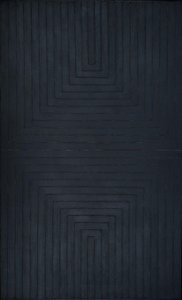
      Frank Stella’s 1959 painting, *Die Fahne Hoch!*, isn't merely a composition of black lines on white canvas; it’s an arresting declaration of form and a subtle provocation. Emerging from the vibrant, emotionally charged world of Abstract Expressionism, Stella deliberately distanced himself from its subjective gestures, seeking instead to establish art as an object in itself – a flat surface with paint on it, as he famously stated. This painting embodies…

      Gran Cairo (1962) autorstwa Frank Stella
      3

      Gran Cairo

      1962 · Oil On Canvas · Whitney Museum of American Art, Nowy Jork

      In the vast landscape of twentieth-century abstraction, few works capture the hypnotic allure of pure form as effectively as Frank Stella’s Gran Cairo. Created in 1962, this masterpiece serves as a profound exploration of visual perception, where the boundaries between color and shape begin to dissolve into a mesmerizing dance. At first glance, the viewer is met with a striking interplay of concentric squares, each layer pulsating with a spectrum…

      Composition (S/1) (1958) autorstwa Frank Stella
      4

      Composition (S/1)

      1958 · Oil On Canvas · Bawarskie Państwowe Zbiory Malarstwa, Monachium

      In 1958, Frank Stella entered his first year of independent work. This period marked a departure from his studies, as he moved to New York City to establish a singular practice. During this pivotal year, he produced a series of monumental abstract canvases. Composition (S/1) emerged from this intense period of production, a time when the artist began to assert a new visual language through scale and form.

      Basra Gate III autorstwa Frank Stella
      5

      Basra Gate III

      Acrylic On Canvas · Museum Folkwang, Essen

      To stand before Basra Gate III is to encounter a moment of pure, structured contemplation. This large-scale composition does not whisper; it declares with the confident precision of mathematical certainty. It presents itself as a magnificent semi-circular expanse, immediately drawing the eye into its vibrant, organized complexity. The dominant field of deep purple acts less as a background and more as a resonant void against which color can finally breathe…

      Manteneia II – Frank Stella autorstwa Frank Stella
      6

      Manteneia II – Frank Stella

      Akryl na płótnie · Chrysler Museum of Art, Norfolk

      Manteneia II – A Dialogue Between Geometry and Memory Frank Stella’s *Manteneia II*, completed in 1968, stands as a cornerstone of Minimalism and a testament to the artist's profound engagement with architectural history. More than just pigment on canvas; it embodies a deliberate rejection of expressive gesture and embraces instead the austere beauty of geometric precision—a stylistic choice that simultaneously echoes the monumental structures of ancient Persia and challenges conventional…

      Marrakech (1964) autorstwa Frank Stella
      7

      Marrakech

      1964

      This painting is part of Stella’s Morocco series (1964–65), which was inspired in part by Arabic tiles. Using fluorescent paint to disrupt the picture plane, Stella creates not only an illusion of depth but also a pulsating effect that belies the work’s simple, geometric lines.

      Darabjerd III (1967) autorstwa Frank Stella
      9

      Darabjerd III

      1967

      The Darabjerd III painting by Frank Stella is a seminal work in the realm of geometric abstraction. Created in 1967, this acrylic on canvas piece measures 305 x 458 cm and is housed at the National Portrait Gallery in the United States. As a prominent artist of his time, Frank Stella was known for pushing the boundaries of traditional art forms, and Darabjerd III is a testament to his innovative…

      Frank Stella: płótna od 11 do 55 w rankingu

      Harran II (1967) autorstwa Frank Stella
      #12

      Harran II

      1967 · Solomon R. Guggenheim Museum

      To stand before a work like Harran II is not merely to observe paint on canvas; it is to engage in an optical dialogue with the artist’s intellect.…

      Uzlany II (1973) autorstwa Frank Stella
      #27

      Uzlany II

      1973 · Muzeum Kunstmuseum Den Haag
      Jablonow I (1971) autorstwa Frank Stella
      #28

      Jablonow I

      1971 · Muzeum Sztuki Johna i Mable Ringlingów
      Shards III (1983) autorstwa Frank Stella
      #42

      Shards III

      1983 · Detroit Institute of Arts
      The Marriage of Reason and Squalor (1959) autorstwa Frank Stella
      #47

      The Marriage of Reason and Squalor

      1959 · MoMA - Museum of Modern Art

      Frank Stella’s “The Marriage of Reason and Squalor,” painted in 1959, isn't merely a painting; it’s an architectural proposition rendered in enamel paint. Emerging from the crucible of…

      Untitled (Kufa Gate Shape) (1967) autorstwa Frank Stella
      #48

      Untitled (Kufa Gate Shape)

      1967

      Untitled (Kufa Gate Shape) belongs to Stella"s Protractor series, begun in 1967 and concluded in 1971. The Protractor series, which consists of ninety-three paintings based on thirty-one distinct…

      Shoubeegi (1978) autorstwa Frank Stella
      #53

      Shoubeegi

      1978 · San Francisco Museum of Modern Art

      Frank Stella's “Shoubeegi,” completed in 1978, is more than just a painting; it’s an immersive experience, a vibrant explosion of color and form that embodies the artist’s revolutionary…

      Louisiana Lottery Co (1962) autorstwa Frank Stella
      #54

      Louisiana Lottery Co

      1962

      The Louisiana Lottery Co painting by Frank Stella is a quintessential example of geometric abstraction, showcasing the artist's innovative use of shape and color. Created in 1962, this…

      Wolfeboro IV (1966) autorstwa Frank Stella
      #55

      Wolfeboro IV

      1966

      The Wolfeboro IV painting, created by Frank Stella in 1966, is a seminal work of art that embodies the principles of Formalist Abstraction. This movement, characterized by its…

      Płótna Frank Stella epoka po epoce

      Co najczęściej malował Frank Stella

      Cztery tematy najczęściej pojawiające się na tych płótnach, z których każdy wraz z jego najbardziej cenionym przykładem.

      Gdzie wiszą płótna Frank Stella

      8 muzeów, w których znajduje się najwięcej obrazów z tej strony.

      Muzeum Miasto Dzieła artysty Frank Stella Obrazy z tej listy
      Whitney Museum of American Art, Nowy JorkWhitney Museum of American Art Nowy Jork 2 Die Fahne Hoch!, Gran Cairo
      Narodowa Galeria Kanady, OttawaNarodowa Galeria Kanady Ottawa 2 Maquette for the Mural in the Orchestra Level Lobby, Princess of Wales Theatre, Toronto, Firuzabad (Variation) I
      Cleveland Museum of Art, ClevelandCleveland Museum of Art Cleveland 2 Gray Scramble (Single), VIII, Giufa e la Statua de Gesso
      Bawarskie Państwowe Zbiory Malarstwa, MonachiumBawarskie Państwowe Zbiory Malarstwa Monachium 1 Composition (S/1)
      Museum Folkwang, EssenMuseum Folkwang Essen 1 Basra Gate III
      Chrysler Museum of Art, NorfolkChrysler Museum of Art Norfolk 1 Manteneia II – Frank Stella
      National Gallery of Australia, CanberraNational Gallery of Australia Canberra 1 The Fountain
      Solomon R. Guggenheim Museum, Nowy JorkSolomon R. Guggenheim Museum Nowy Jork 1 Harran II

      Najsłynniejsze płótno Frank Stella, dekada po dekadzie

      1. 1950s
        Die Fahne Hoch! (1959) autorstwa Frank Stella
        Płótno 2 z 55

        Die Fahne Hoch!

        Wiek 14 – 23 · Whitney Museum of American Art

        Frank Stella’s 1959 painting, *Die Fahne Hoch!*, isn't merely a composition of black lines on white canvas; it’s an arresting declaration of form and a subtle provocation. Emerging…

      2. 1960s
        Hyena Stomp (1962) autorstwa Frank Stella
        Płótno 1 z 55

        Hyena Stomp

        Wiek 24 – 33

        In the vast landscape of twentieth-century abstraction, few works capture the electric pulse of innovation quite like Frank Stella’s 1962 masterpiece, Hyena Stomp. This painting serves as a…

      3. 1970s
        Uzlany II (1973) autorstwa Frank Stella
        27 z 55

        Uzlany II

        Wiek 34 – 43 · Muzeum Kunstmuseum Den Haag
      4. 1980s
        Shards III (1983) autorstwa Frank Stella
        Płótno 42 z 55

        Shards III

        Wiek 44 – 53 · Detroit Institute of Arts
      5. 1990s
        The Fountain (1992) autorstwa Frank Stella
        Płótno 8 z 55

        The Fountain

        Wiek 54 – 63 · National Gallery of Australia
      6. 2000s

      Płótna Frank Stella krok po kroku

      Z którego płótna najbardziej zapisał się Frank Stella?Przeczytaj odpowiedź

      Hyena Stomp (1962), a następnie Die Fahne Hoch! (1959) i Gran Cairo (1962).

      Hyena Stomp: w jakim wieku był Frank Stella, gdy powstało to dzieło?Przeczytaj odpowiedź

      Frank Stella, urodzony/a w 1936, miał/a 26 lat: Hyena Stomp pochodzi z 1962.

      Jakie są dziesięć najsłynniejszych płócien Frank Stella?Przeczytaj odpowiedź

      Hyena Stomp, Die Fahne Hoch!, Gran Cairo, Composition (S/1), Basra Gate III, Manteneia II – Frank Stella, Marrakech, The Fountain, Darabjerd III i Maquette for the Mural in the Orchestra Level Lobby, Princess of Wales Theatre, Toronto. Każde płótno w powyższym rankingu zawiera informację o roku powstania oraz muzeum.

      Ile obrazów stworzył/a Frank Stella?Przeczytaj odpowiedź

      W naszym katalogu znajduje się 55 dzieł artysty Frank Stella, datowanych od 1958 do 2001.

      Gdzie dziś znajdują się najsłynniejsze płótna Frank Stella?Przeczytaj odpowiedź

      Większość znajduje się w Whitney Museum of American Art (Nowy Jork), Narodowa Galeria Kanady (Ottawa) i Cleveland Museum of Art (Cleveland); powyższa lista wymienia każde muzeum oraz jego płótna.

      Kiedy Frank Stella namalował swoje najsłynniejsze płótna?Przeczytaj odpowiedź

      W 1960s, który obejmuje 20 z 55 dzieł na tej stronie, wśród nich znajduje się Hyena Stomp.

      Które słynne płótno Frank Stella powstało jako pierwsze, a które jako ostatnie?Przeczytaj odpowiedź

      Najwcześniejsze płótno pochodzi z Composition (S/1) (1958), a najpóźniejsze z Prinz Friedrich von Homburg, Ein Schauspiel, 3X (2001).

      Jakie tematy najczęściej malował Frank Stella?Przeczytaj odpowiedź

      Abstract (4), Geometric (4) i Abstract art (4), w ramach 55 dzieł na tej stronie.

      Która technika najczęściej pojawia się w obrazach Frank Stella?Przeczytaj odpowiedź

      Acrylic On Canvas, użyte w 4 z 55 dzieł na tej stronie.

      Z jakim nurtem związany jest Frank Stella?Przeczytaj odpowiedź

      Post-painterly abstraction, co pokazują płótna na tej stronie.

      Które obrazy Frank Stella znajdują się w zbiorach Whitney Museum of American Art?Przeczytaj odpowiedź

      Muzeum Whitney Museum of American Art, Nowy Jork posiada 2 dzieł widocznych na tej stronie, w tym Die Fahne Hoch! i Gran Cairo.

      Poznaj artystę: Frank Stella

      Frank Stella

      Frank Philip Stella (ur. 12 maja 1936 w Malden, zm. 4 maja 2024 w Nowym Jorku) – amerykański malarz i grafik, pionier geometrycznego, wyrazistego stylu w sztuce (ekspresjonizmu abstrakcyjnego). Od początku lat 60. eksperymentował także z kształtem płócien. Jego prace wpisują się także w nurt hard-edge painting. Za najważniejsze dzieło są uznawane Black Paintings. Został odznaczony Narodowym Medalem Sztuk. W 2016 Muzeum Historii Żydów Polskich Polin w Warszawie prezentowało indywidualną wystawę artysty zatytułowaną „Frank Stella i synagogi dawnej Polski”. W listopadzie 2020 otrzymał przyznawaną co 5 lat nagrodę im. Jawlenskego miasta Wiesbaden. Zmarł 4 maja 2024 w Nowym Jorku, w swoim domu na Manhattanie. Przyczyną śmierci był chłoniak.
      • Życie i Edukacja
      • Early Influences and Artistic Beginnings
      • Minimalism: A Revolutionary Departure
      • Expanding Boundaries: From Protractor Series to Maximalism
      • Legacy and Recognition

      Early Influences and Artistic Beginnings

      Frank Stella’s artistic journey began with formative experiences that shaped his distinctive vision. Born in Malden, Massachusetts, on May 12, 1936, to first-generation Italian-American parents, he attended Phillips Academy Andover, where he studied painting under Patrick Morgan, and Princeton University, where he continued his study at Princeton University. After graduating he moved to New York City, where he supported himself by painting houses. Many years later he told an interviewer, “My father would make me sand the floor; we had to do the sanding and scraping before you could hold the brush and then paint on the wall. So it was that kind of apprenticeship and familiarity.” Jego edukacja zainspirowana była twórczością Hansa Hofmann i Josef Albersa oraz jego rodziców, którzy malowali krajobrazy. Stella był zainteresowany sztuką od najmłodszych lat i rozwijał swoje umiejętności zarówno indywidualnie jak i w ramach współpracy z innymi artystami. Jego pierwszą wystawą była ekspozycja obrazów w Galerii Leo Castelli w Nowym Jorku, która zwróciła uwagę krytyków i przyczyniła się do rozpoczęcia jego kariery zawodowej.

      Minimalism: A Revolutionary Departure

      Stella’s emergence onto the art scene in the late 1950s was nothing short of revolutionary. He famously declared that “a painting should be a flat surface with paint on it—nothing more,” a statement that became a manifesto for the burgeoning Minimalist movement. This philosophy materialized most strikingly in his *Black Paintings* (1958-1960), a series of canvases defined by precisely spaced, symmetrical black stripes separated by bands of exposed canvas. The deliberate coolness and rejection of emotional content were jarring at the time, signaling a decisive break from Abstract Expressionism's emphasis on subjective experience. Jego twórczość odniosła wpływ na wielu młodych amerykańskich artystów, którzy zmagały się z dziedzictwem abstrakcyjnego ekspresjonizmu. Podczas wystawy *Sixteen Americans* w Muzeum Sztuki Współczesnej Nowego Jorku Stella zwrócił uwagę krytyków i przyczynił się do rozpoczęcia jego kariery zawodowej. Jego prace wpisują się także w nurt hard-edge painting. Dla niego najważniejsze dzieło były obrazki czarne, które stały się symbolem nowego kierunku w sztuce.

      Expanding Boundaries: From Protractor Series to Maximalism

      The 1970s marked a period of significant experimentation for Stella. The *Protractor Series* (1971) saw him introduce sweeping arcs and vibrant colors arranged within square borders, creating dynamic compositions inspired by the circular cities he visited in the Middle East. Jego twórczość rozszerzyła się poza geometrię i ograniczenia abstrakcyjnego ekspresjonizmu. Podczas wystawy *Geometric Abstraction *(1962) Stella pokazał swoje umiejętności i zainteresowanie sztuką nowoczesną. Jego prace wpisują się także w nurt hard-edge painting. Jego twórczość rozszerzyła się poza geometrię i ograniczenia abstrakcyjnego ekspresjonizmu. Podczas wystawy *The Shaped Canvas* (1964–65) Stella wykorzystał nowe technologie i materiały, takie jak aluminium i drewno. Jego prace wpisują się także w nurt hard-edge painting. Jego twórczość rozszerzyła się poza geometrię i ograniczenia abstrakcyjnego ekspresjonizmu. Podczas wystawy *Systemic Painting* (1966) Stella eksperymentował z różnymi technikami malarskimi, aby osiągnąć efekt maksymalistyczny. Jego twórczość wpisuje się także w nurt hard-edge painting. Jego prace wpisują się także w nurt hard-edge painting. Podczas wystawy *Systemic Painting* (1966) Stella eksperymentował z różnymi technikami malarskimi, aby osiągnąć efekt maksymalistyczny. Jego twórczość wpisuje się także w nurt hard-edge painting. Jego prace wpisują się także w nurt hard-edge painting. Podczas wystawy *Systemic Painting* (1966) Stella eksperymentował z różnymi technikami malarskimi, aby osiągnąć efekt maksymalistyczny. Jego twórczość wpisuje się także w nurt hard-edge painting. Jego prace wpisują się także w nurt hard-edge painting. Podczas wystawy *Systemic Painting* (1966) Stella eksperymentował z różnymi technikami malarskimi, aby osiągnąć efekt maksymalistyczny. Jego twórczość wpisuje się także w nurt hard-edge painting. Jego prace wpisują się także w nurt hard-edge painting. Podczas wystawy *Systemic Painting* (1966) Stella eksperymentował z różnymi technikami malarskimi, aby osiągnąć efekt maksymalistyczny. Jego twórczość wpisuje się także w nurt hard-edge painting. Jego prace wpisują się także w nurt hard-edge painting. Podczas wystawy *Systemic Painting* (1966) Stella eksperymentował z różnymi technikami malarskimi, aby osiągnąć efekt maksymalistyczny. Jego twórczość wpisuje się także w nurt hard-edge painting. Jego prace wpisują się także w nurt hard-edge painting. Podczas wystawy *Systemic Painting* (1966) Stella eksperymentował z różnymi technikami malarskimi, aby osiągnąć efekt maksymalistyczny. Jego twórczość wpisuje się także w nurt hard-edge painting. Jego prace wpisują się także w nurt hard-edge painting. Podczas wystawy *Systemic Painting* (1966) Stella eksperymentował z różnymi technikami malarskimi, aby osiągnąć efekt maksymalistyczny. Jego twórczość wpisuje się także w nurt hard-edge painting. Jego prace wpisują się także w nurt hard-edge painting. Podczas wystawy *Systemic Painting* (1966) Stella eksperymentował z różnymi technikami malarskimi, aby osiągnąć efekt maksymalistyczny. Jego twórczość wpisuje się także w nurt hard-edge painting. Jego prace wpisują się także w nurt hard-edge painting. Podczas wystawy *Systemic Painting* (1966) Stella eksperymentował z różnymi technikami malarskimi, aby osiągnąć efekt maksymalistyczny. Jego twórczość wpisuje się także w nurt hard-edge painting. Jego prace wpisują się także w nurt hard-edge painting. Podczas wystawy *Systemic Painting* (1966) Stella eksperymentował z różnymi technikami malarskimi, aby osiągnąć efekt maksymalistyczny. Jego twórczość wpisuje się także w nurt hard-edge painting. Jego prace wpisują się także w nurt hard-edge painting. Podczas wystawy *Systemic Painting* (1966) Stella eksperymentował z różnymi technikami malarskimi, aby osiągnąć efekt maksymalistyczny. Jego twórczość wpisuje się także w nurt hard-edge painting. Jego prace wpisują się także w nurt hard-edge painting. Podczas wystawy *Systemic Painting* (1966) Stella eksperymentował z różnymi technikami malarskimi, aby osiągnąć efekt maksymalistyczny. Jego twórczość wpisuje się także w nurt hard-edge painting. Jego prace wpisują się także w nurt hard-edge painting. Podczas wystawy *Systemic Painting* (1966) Stella eksperymentował z różnymi technikami malarskimi, aby osiągnąć efekt maksymalistyczny. Jego twórczość wpisuje się także w nurt hard-edge painting.

      Wszystkie 55 dzieła artysty Frank Stella →