

1
Bąbelki (Scena Lato)
Discover Jean Frédéric Bazille’s captivating landscapes and portraits – explore high-quality reproductions of “Bathers (Summer Scene)” at wahooart.com
Najbardziej cenionym obrazem Frédéric Bazille jest Bąbelki (Scena Lato) (1869), który znajduje się w Fogg Art Museum w Cambridge. Następne w zestawieniu płócien najlepiej znanych czytelnikom są Rodzina Zjednoczona (1867) oraz The Pink Dress (1864). Nasz katalog zawiera 88 dzieł autorstwa Frédéric Bazille: oto 88 najsłynniejszych z nich, z podaniem roku powstania, muzeum oraz tego, co czyni je wyjątkowymi.
Ranking oparty na naszym wskaźniku popularności, który łączy liczbę wyszukiwań, wizyt oraz zamówień dla każdego dzieła. Aktualizacja: Październik 2026. Każdy obraz na tej stronie można zamówić jako ręcznie malowaną reprodukcję olejną na płótnie lnianym lub jako wysokiej jakości wydruk artystyczny, wykonany w wybranym przez Ciebie formacie.

Discover Jean Frédéric Bazille’s captivating landscapes and portraits – explore high-quality reproductions of “Bathers (Summer Scene)” at wahooart.com

„Zjednoczona Rodzina” Jeana Frédérica Bazille’a to pełne życia i niezwykle szczegółowe przedstawienie spotkania towarzyskiego na łonie natury. Stworzone w 1867 roku dzieło przenosi nas do tętniącej życiem sceny rozgrywającej się pod rozłożystym drzewem, gdzie grupa ludzi oddaje się swobodnym rozmowom i beztroskim aktywnościom. Kompozycja ta zachwyca bogactwem detali, oferując misterne wzory i tekstury, które sprawiają, że cała scena zdaje się tętnić autentycznym życiem.

Marilyn Monroe’s “Pink Dress,” designed by William Travilla for Howard Hawks’ 1953 film *Gentlemen Prefer Blondes*, transcends mere costume; it embodies an enduring symbol of glamour, ambition, and the seductive allure of Hollywood. The dress itself—a shocking pink silk satin gown adorned with black satin lining and a large bow—represents more than just fabric and embellishments; it encapsulates a pivotal moment in cinematic history and continues to fascinate audiences today.

The Painting's Significance and Context La Toilette, an oil-on-canvas painting by Jean Frédéric Bazille, is a remarkable work of art that showcases the artist's skill in capturing intimate moments. Created in 1869-1870, this painting is one of Bazille's last works before his untimely death in the Franco-Prussian War. Composition and Symbolism The painting depicts three women in a room, with one woman lying on a bed while the other two…

Landscape on the Shore of Lez is a significant work by Frédéric Bazille, an artist whose life was marked by a brief but intense period of creativity. Born in 1841, Bazille’s career was tragically cut short when he died in 1870. This particular painting, completed in June 1870, represents one of his final artistic statements. It is a large landscape that the artist himself described as an eclogue, a term…

To stand before The Family Gathering is to step directly into a sun-dappled afternoon of pure, unscripted joy. This painting by Jean Frédéric Bazille captures more than just a social assembly; it arrests the very essence of conviviality. One feels the gentle warmth emanating from the canvas, as if the viewer has stumbled upon this private moment in time. The composition is masterfully arranged beneath the generous canopy of a…


In this intimate oil portrait, we find ourselves drawn into a quiet, private moment with a young man. The composition is a close-up, bust-length study that pushes the subject toward the viewer through a dramatic use of chiaroscuro. A deep, nearly black background provides a void from which the sitter emerges, illuminated by a highly directional light source. This light catches the contours of his face, leaving the other side…

A young woman occupies the central vertical axis of this oil on canvas, positioned against a receding metropolitan street. She is depicted from the waist up, her body…
Zabierz to światło do swojego domu →



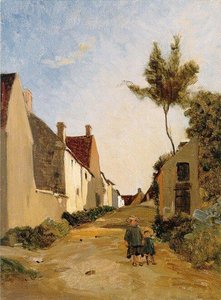
Jean Frédéric Bazille’s “View of the Village,” painted in 1868, stands as a quintessential example of the Impressionist spirit—a movement that sought to capture fleeting impressions of light…
Zamów ręczne malowanie →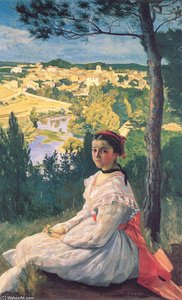

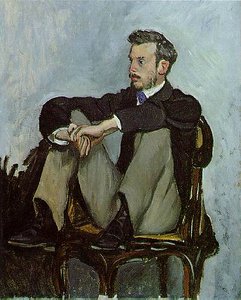
Jean Frédéric Bazille's “Portrait of Renoir” stands as a testament to the burgeoning Impressionist movement, capturing not merely an likeness but also a palpable sense of contemplative emotion.…
Zabierz to światło do swojego domu →
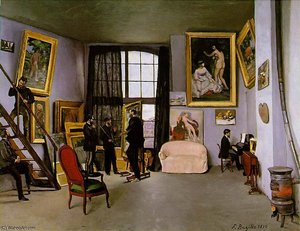
Jean Frédéric Bazille’s “The Studio on the Rue La Condamine” isn't merely a snapshot of a Parisian artist’s workspace; it’s a vibrant tableau brimming with intellectual energy, artistic…
Zamów to płótno →
In the quiet corners of art history, certain works possess the power to halt time, offering a window into a moment of profound stillness. Jean Frédéric Bazille’s “Portrait…
Zamów ręczne malowanie →
Jean Frédéric Bazille's 'Reclining Nude,' painted in 1864, is more than just a depiction of the human form; it’s a carefully constructed evocation of serenity and sensual grace,…
Zamów to płótno →
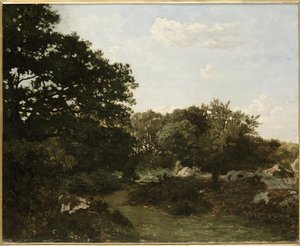
In this 1865 oil on canvas, we find ourselves standing at the edge of the Fontainebleau forest. The composition is asymmetrical, drawing the eye toward a dense, dark…
Zamów to płótno →
“Portrait of Édouard Blau,” painted by Jean Frédéric Bazille in 1866, stands as a testament to the burgeoning Impressionist movement's fascination with capturing fleeting moments of light and…
Zamów to płótno →
In this poignant Self Portrait, painted in 1870, we encounter Frédéric Bazille not merely as a painter, but as a man caught in the delicate transition between youthful…
Zamów to płótno →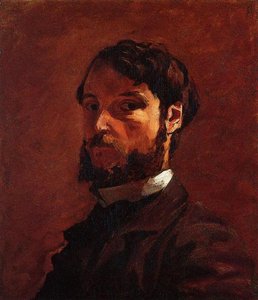
In the quiet intensity of Frédéric Bazille’s Portrait of a Man, painted in 1867, we are invited into a moment of profound stillness. This work serves as a…
Zabierz to światło do swojego domu →
Self-Portrait is an oil on canvas painting by the artist Frédéric Bazille. Created in France, this work belongs to the Impressionism movement. The subject of the painting is…
Zamów to płótno →
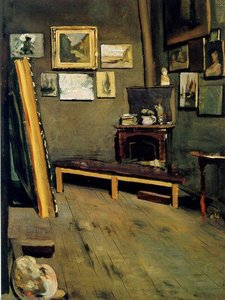
Studio on the Rue de Furstenberg, painted in 1865 by Jean Frédéric Bazille, is more than just a depiction of a Parisian studio; it's a poignant snapshot of…
Zabierz to światło do swojego domu →











Jean Frédéric Bazille's "Queens Gate at Aigues-Mortes," painted in 1867, isn’t merely a depiction of a medieval fortification; it’s an exquisite distillation of Impressionist philosophy and a poignant…
Zamów to płótno →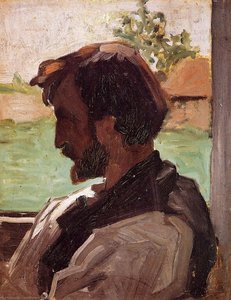
The canvas holds a quiet intensity, a moment captured with the delicate precision characteristic of Jean Frédéric Bazille's early work. This self-portrait, painted in 1867, offers a rare…
Zamów ręczne malowanie →
Jean Frédéric Bazille’s “Landscape at Chailly,” painted in 1865, isn't merely a depiction of a Swiss hillside; it’s a distilled essence of Impressionist philosophy—a fleeting capture of light,…
Zamów ręczne malowanie →



Painted in 1870, tragically just months before Jean Frédéric Bazille's untimely death at the age of twenty-nine, *Toilet* (La Toilette) is a pivotal work within the burgeoning Impressionist…
Zamów ręczne malowanie →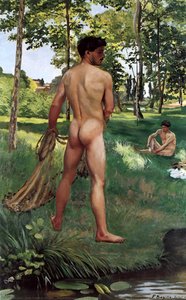
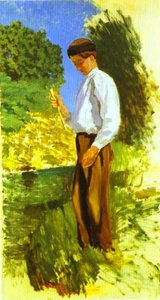
The painting The Fisherman with a Net by Jean Frederic Bazille, created in 1868, is an exemplary work of the Impressionist movement. This oil on canvas piece showcases…
Zabierz to światło do swojego domu →
Jean Frédéric Bazille's “Summer Scene (Bathers)” captures a quintessential moment of leisure and joy, transporting the viewer to the sun-drenched landscapes of Provence. Painted in 1873, just months…
Zabierz to światło do swojego domu →
In the quiet, sun-drenched corners of art history, few moments capture the raw essence of human connection as poignantly as Jean Frédéric Bazille’s 1865 masterpiece, The Improvised Field…
Zamów to płótno →


Jean Frédéric Bazille's "Self Portrait with Palette," painted in 1865, is more than just a depiction of an artist; it’s a poignant snapshot of ambition, vulnerability, and the…
Zabierz to światło do swojego domu →

The Portrait of Renoir is an oil on canvas figure portrait created by the artist Frédéric Bazille. Executed in 1867, this work depicts Pierre-Auguste Renoir, who was a…
Zamów ręczne malowanie →
This oil on canvas work, titled Edouard Blau, was executed by the French artist Frédéric Bazille. It offers a quiet study of the sitter, a French dramatist, critic,…
Zamów ręczne malowanie →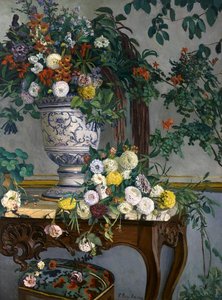


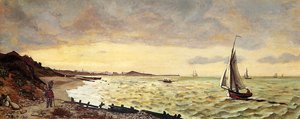
In his evocative masterpiece, The Western Ramparts at Aigues-Mortes, Frédéric Bazille invites the viewer to step onto a warm, sandy shore and gaze across a tranquil expanse of…
Zamów ręczne malowanie →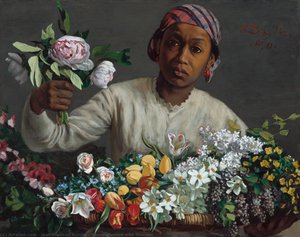
Holding a bunch of peonies in one hand, a woman with brown skin leans forward, toward us from behind a large basket holding dozens of flowers in this…
Zamów to płótno →Cztery tematy najczęściej pojawiające się na tych płótnach, z których każdy wraz z jego najbardziej cenionym przykładem.
8 muzeów, w których znajduje się najwięcej obrazów z tej strony.
| Muzeum | Miasto | Dzieła artysty Frédéric Bazille | Obrazy z tej listy |
|---|---|---|---|
 Musée Fabre |
Montpellier | 23 | La Toilette, The Scoter, Petite Italienne chanteuse des rues |
 Musée d'Orsay |
Paryż | 8 | Rodzina Zjednoczona, The Pink Dress, The Family Gathering |
 National Gallery of Art |
Waszyngton | 6 | Portrait of Edmond Maitre, Portrait of Edouard Blau, Edmond Maître |
 Minneapolis Institute of Art |
Minneapolis | 2 | Self-Portrait, The Banks of the Lez |
 Art Institute of Chicago |
Chicago | 2 | Landscape at Chailly, Self Portrait with Palette |
 Fogg Art Museum |
Cambridge | 1 | Bąbelki (Scena Lato) |
 Museum of Fine Arts |
Houston | 1 | Le petit jardinier, ca Museum of Fine Arts, |
 Muzeum Sztuki w Dallas |
Dallas | 1 | Portrait of an Unknown Sitter as a Troubadour |

Discover Jean Frédéric Bazille’s captivating landscapes and portraits – explore high-quality reproductions of “Bathers (Summer Scene)” at wahooart.com

The Painting's Significance and Context La Toilette, an oil-on-canvas painting by Jean Frédéric Bazille, is a remarkable work of art that showcases the artist's skill in capturing intimate…
Bąbelki (Scena Lato) (1869), Fogg Art Museum, Cambridge. Następują po nim Rodzina Zjednoczona (1867) oraz The Pink Dress (1864).
Frédéric Bazille, urodzony/a w 1841, miał/a 28 lat: Bąbelki (Scena Lato) pochodzi z 1869.
Bąbelki (Scena Lato), Rodzina Zjednoczona, The Pink Dress, La Toilette, Landscape on the Shore of Lez, The Family Gathering, The Scoter, Le petit jardinier, ca Museum of Fine Arts,, Saint-Saveur i Portrait of an Unknown Sitter as a Troubadour. Każde płótno w powyższym rankingu zawiera informację o roku powstania oraz muzeum.
W naszym katalogu znajduje się 88 dzieł artysty Frédéric Bazille, datowanych od 1859 do 1870.
Większość znajduje się w Musée Fabre (Montpellier), Musée d'Orsay (Paryż) i National Gallery of Art (Waszyngton); powyższa lista wymienia każde muzeum oraz jego płótna.
W 1860s, który obejmuje 54 z 88 dzieł na tej stronie, wśród nich znajduje się Bąbelki (Scena Lato).
Najwcześniejsze płótno pochodzi z Mystic marriage of Saint Catherine (1859), a najpóźniejsze z La Toilette (1870).
Portraits (6), Men (6) i Man (5), w ramach 88 dzieł na tej stronie.
Oil On Canvas, użyte w 22 z 88 dzieł na tej stronie.
Impressionist landscape, co pokazują płótna na tej stronie.
Muzeum Musée Fabre, Montpellier posiada 23 dzieł widocznych na tej stronie, w tym La Toilette, The Scoter i Petite Italienne chanteuse des rues.
Tak. Każdy obraz na tej stronie można zamówić z jego własnej podstrony jako ręcznie malowaną reprodukcję olejną lub jako wysokiej jakości wydruk artystyczny w wybranym przez Ciebie rozmiarze.


