Pracownia — Bezpłatna wysyłka na cały świat — Czas dostawy: 2–6 tygodni
      George Bellows, 1882 – 1925

      100 najsłynniejszych obrazów artysty George Bellows

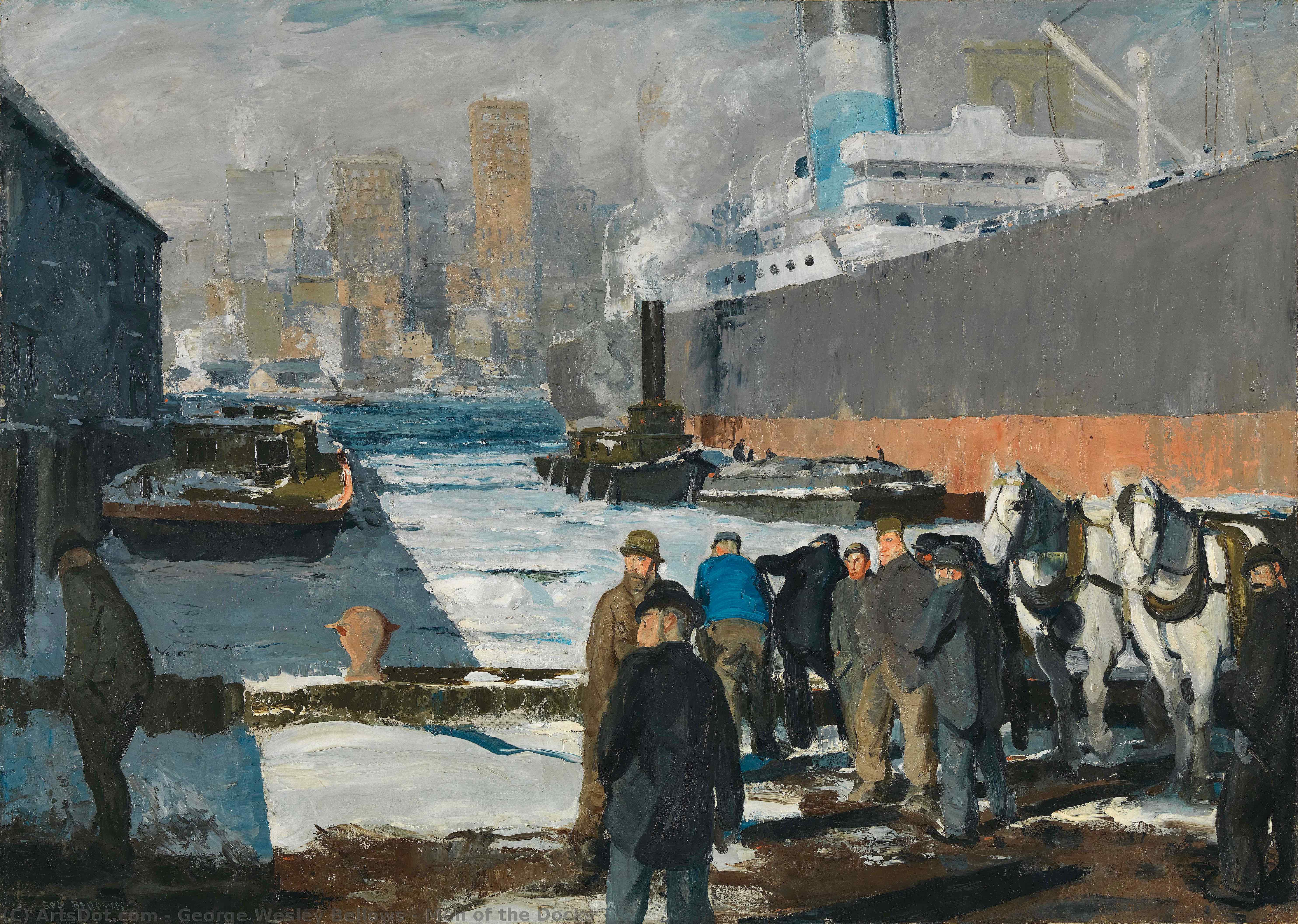
      Men of the Docks (1912) to obraz, z którego najbardziej znany jest George Bellows; znajduje się on w National Gallery, Londyn. Ringside Seats (1924) oraz Forty-Two Kids (1907) dopełniają trio najbardziej uwielbianych płócien. Nasz katalog obejmuje 318 dzieł autorstwa George Bellows. Oto 100 najsłynniejszych z nich, wraz z rokiem powstania, informacją o muzeum oraz historią każdego płótna.

      Ranking oparty na naszym wskaźniku popularności, który łączy liczbę wyszukiwań, wizyt oraz zamówień dla każdego dzieła. Aktualizacja: Październik 2026. Każdy obraz na tej stronie można zamówić jako ręcznie malowaną reprodukcję olejną na płótnie lnianym lub jako wysokiej jakości wydruk artystyczny, wykonany w wybranym przez Ciebie formacie.

      Portret George Bellows
      George Bellows · 1882 – 1925
      Urodzony · zmarł
      1882 – 1925, Columbus
      Nurt
      Realism
      Dzieła w naszym katalogu
      318
      Najsłynniejsze
      Men of the Docks (1912)
      Najwięcej dzieł w
      National Gallery of Art

      Dziesięć najpopularniejszych obrazów, których autorem jest George Bellows

      Men of the Docks (1912) autorstwa George Bellows
      1

      Men of the Docks

      1912 · Obraz olejny na płótnie · National Gallery, Londyn

      Zachwycająca morska scena miejskiego przemysłu Zanurz się w żywym portrecie życia przy nabrzeżu na początku XX wieku, gdzie ludzka aktywność i postęp przemysłowy zbiegają się w jednym punkcie. Ta dynamiczna scena ukazuje tętniący życiem port, pełen robotników portowych, statków i otaczającej go panoramy miasta, oferując przejmujący wgląd w surową rzeczywistość miejskiej pracy. Postacie ubrane w stonowane barwy uosabiają wytrwałość i trud klasy robotniczej, podczas gdy monumentalne statki oraz elementy przemysłowe…

      Ringside Seats (1924) autorstwa George Bellows
      2

      Ringside Seats

      1924 · Oil On Canvas

      In the heart of the early twentieth century, amidst the grit and burgeoning energy of New York City, George Wesley Bellows captured a moment of pure, unadulterated tension in his 1924 masterpiece, Ringside Seats. This dramatic oil painting serves as more than just a depiction of a boxing match; it is a visceral window into the soul of the Ashcan School. The composition pulls the viewer directly into the fray,…

      Forty-Two Kids (1907) autorstwa George Bellows
      3

      Forty-Two Kids

      1907 · Oil On Canvas · National Gallery of Art, Waszyngton

      In the heart of 1907, George Wesley Bellows captured a fleeting moment of raw, uninhibited energy in his masterpiece, Forty-Two Kids. This large-scale oil on canvas serves as a breathtaking window into a bygone era of urban leisure, transporting the viewer to the edge of a dilapidated wharf jutting out over New York City’s East River. The scene is teeming with life, presenting a band of nude and partially clothed…

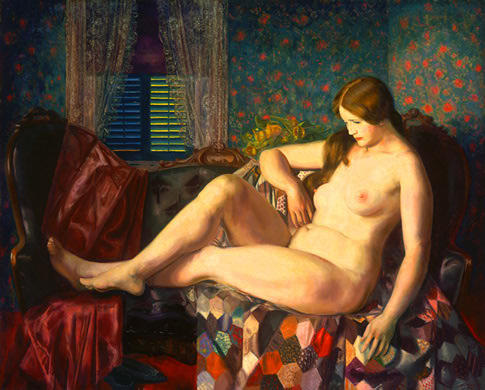
      Nude with Hexagonal Quilt (1924) autorstwa George Bellows
      4

      Nude with Hexagonal Quilt

      1924 · Acrylic On Canvas · National Gallery of Art, Waszyngton

      George Wesley Bellows’s “Nude with Hexagonal Quilt,” painted in 1924, is more than just a depiction of a reclining woman; it's a carefully constructed tableau that encapsulates the burgeoning complexities of American life at the cusp of the 20th century. Emerging from the heart of the Ashcan School movement, Bellows masterfully blends realism with a subtle undercurrent of social commentary and psychological depth, all within a remarkably intimate domestic setting.…

      The Germans Arrive (1918) autorstwa George Bellows
      5

      The Germans Arrive

      1918 · Acrylic On Canvas · National Gallery of Art, Waszyngton

      The Raw Edge of War: Bellows’ “The Germans Arrive” George Wesley Bellows' "The Germans Arrive," painted in 1918, isn’t merely a depiction of a battlefield; it’s a visceral plunge into the heart of World War I’s brutal reality. Captured during a period of immense national upheaval and fueled by the anxieties of a rapidly changing world, the painting confronts viewers with an unsettling honesty rarely found in historical art. Bellows,…

      The Sea (1911) autorstwa George Bellows
      6

      The Sea

      1911 · Oil On Canvas · Hirshhorn Museum and Sculpture Garden, Washington, D.C.

      George Wesley Bellows’ “The Sea,” painted in 1911, isn't merely a depiction of an ocean scene; it’s a visceral experience. This oil on canvas, now residing within the Hirshhorn Museum and Sculpture Garden in Washington D.C., captures a pivotal moment – the raw, untamed power of nature colliding with the steadfast solidity of land. The painting immediately draws the viewer into a world of turbulent energy: colossal waves relentlessly assault…

      Pennsylvania Station Excavation (1909) autorstwa George Bellows
      7

      Pennsylvania Station Excavation

      1909 · Oil On Canvas · Brooklyn Museum, Nowy Jork

      George Wesley Bellows’ “Pennsylvania Station Excavation,” painted in 1909, is more than just a depiction of a landscape; it's a vibrant snapshot of America on the cusp of profound change. This large-scale oil on canvas captures a fleeting moment – a group of figures exploring an industrial site, a castle-like structure billowing with smoke, and a solitary horse adding an unexpected layer to the scene. Bellows, a key figure in…

      Little Girl in White (also known as Queenie Barnett) (1907) autorstwa George Bellows
      8

      Little Girl in White (also known as Queenie Barnett)

      1907 · Oil On Canvas · National Gallery of Art, Waszyngton

      George Wesley Bellows' “Little Girl in White,” more commonly known as “Queenie Barnett,” is far more than a simple portrait of a young girl. Painted in 1907, this work stands as a poignant window into the realities of early 20th-century New York City – a city grappling with rapid industrialization and the struggles of its working class. Bellows, a pivotal figure in American realism, wasn’t interested in romanticizing poverty; instead,…

      Hudson at Saugerties (1920) autorstwa George Bellows
      9

      Hudson at Saugerties

      1920 · Oil On Canvas · Columbia Museum of Art, Columbus

      George Wesley Bellows' "Hudson at Saugerties," painted in 1920, isn't merely a depiction of a river landscape; it’s a carefully constructed tableau of light, atmosphere, and the quiet dignity of rural life. Housed originally within the Columbia Museum of Art in Columbus, Ohio, this oil on canvas transports the viewer to the heart of the Hudson River Valley, capturing a fleeting moment of tranquility amidst the burgeoning energy of early…

      Emma in the Black Print (1919) autorstwa George Bellows
      10

      Emma in the Black Print

      1919 · Oil On Canvas · Museum of Fine Arts, Boston

      Emma in the Black Print by George Wesley Bellows George Wesley Bellows’ “Emma in the Black Print,” completed in 1919, stands as a testament to his mastery of realist portraiture and his profound engagement with the spirit of American modernity. Housed at the Museum of Fine Arts, Boston, this oil-on-canvas painting transcends mere representation; it captures a moment frozen in time—a glimpse into the domestic life of Bellows’ wife, Emma…

      George Bellows: płótna od 11 do 100 w rankingu

      The Sawdust Trail (1916) autorstwa George Bellows
      #11

      The Sawdust Trail

      1916

      George Bellows’ “The Sawdust Trail”: A Window into Early 20th Century Urban Life Subject Matter: "The Sawdust Trail," painted in 1916 by George Wesley Bellows, is a vibrant…

      Zamów ręczne malowanie →
      A Grandmother (1914) autorstwa George Bellows
      #12

      A Grandmother

      1914 · Thyssen-Bornemisza Museum

      In the quiet light of summer 1914, George Bellows finds himself on Monhegan, a small island off the coast of Maine. Here, amidst the salt air and the…

      Zamów ręczne malowanie →
      Katherine Rosen (1921) autorstwa George Bellows
      #13

      Katherine Rosen

      1921 · Yale University Art Gallery

      George Wesley Bellows' 1921 painting, "Katherine Rosen," residing within the hallowed halls of the Yale University Art Gallery, isn’t merely a portrait; it’s a carefully constructed tableau of…

      Zamów ręczne malowanie →
      Mrs. T. in Cream Silk, No.2 (1920) autorstwa George Bellows
      #16

      Mrs. T. in Cream Silk, No.2

      1920 · Minneapolis Institute of Art

      Mrs. T. in Cream Silk, No.2 is an oil on canvas painting by George Bellows. Created in 1920, the work identifies its subject as Mrs. Mary Brown Tyler.…

      Zamów to płótno →
      Mrs. Chester Dale (1919) autorstwa George Bellows
      #17

      Mrs. Chester Dale

      1919 · Metropolitan Museum of Art

      The room falls into deep shadow, leaving only the figure of Mrs. Chester Dale to hold the light. She sits with a quiet, heavy dignity, her form emerging…

      Zamów to płótno →
      Love of Winter (1914) autorstwa George Bellows
      #18

      Love of Winter

      1914 · Art Institute of Chicago

      This evocative portrayal of winter’s delight stands as a cornerstone of American realist art, demonstrating Bellows' profound understanding of both visual artistry and human psychology. Its legacy continues…

      Zamów ręczne malowanie →
      Evening Group (1914) autorstwa George Bellows
      #20

      Evening Group

      1914

      To gaze upon George Wesley Bellows' Evening Group is to step directly into a sun-drenched moment suspended in time. This magnificent painting, executed in 1914, transcends a mere…

      Zamów ręczne malowanie →
      Frankie the Organ Boy (1907) autorstwa George Bellows
      #21

      Frankie the Organ Boy

      1907 · Nelson-Atkins Museum of Art

      George Wesley Bellows’ “Frankie the Organ Boy,” painted in 1907, isn't merely a portrait; it’s a carefully constructed tableau of urban life, imbued with a poignant sense of…

      Zamów ręczne malowanie →
      The Newsboy (1908) autorstwa George Bellows
      #24

      The Newsboy

      1908 · Brooklyn Museum

      The Newsboy is an oil on canvas painting created by the American artist George Bellows in 1908. The subject of this portrait is a working-class newsboy, identified in…

      Zamów to płótno →
      Nude with Red Hair (1920) autorstwa George Bellows
      #34

      Nude with Red Hair

      1920 · National Gallery of Art

      In this 1920 oil on canvas, we find a moment of profound stillness. The subject is a woman seated upon a bed, her form partially obscured by a…

      Zamów to płótno →
      The Circus (1912) autorstwa George Bellows
      #43

      The Circus

      1912 · Addison Gallery of American Art

      The Circus is a large oil on canvas painted by George Wesley Bellows in 1912. The scene depicts a circus performance occurring within a tent, characterized by a…

      Zamów ręczne malowanie →
      Waldo Peirce (1920) autorstwa George Bellows
      #44

      Waldo Peirce

      1920 · Fine Arts Museums of San Francisco

      George Bellows' 1920 oil painting, "Waldo Peirce," isn’t merely a likeness; it’s a carefully constructed tableau of late Edwardian masculinity – a study in weathered grace and understated…

      Zamów ręczne malowanie →
      Snow-Capped River (1911) autorstwa George Bellows
      #47

      Snow-Capped River

      1911

      George Wesley Bellows’ Snow-Capped River transports the viewer to a moment suspended in crystalline quietude. This painting, executed in 1911, is more than just a depiction of a…

      Zamów to płótno →
      The Teamster (1916) autorstwa George Bellows
      #49

      The Teamster

      1916

      To stand before George Wesley Bellows' magnificent canvas, The Teamster, is to be transported directly into the vibrant, sweat-and-steam heart of early twentieth-century America. This painting is far…

      Zamów ręczne malowanie →
      Pueblo Tesuque, No. 2 (1917) autorstwa George Bellows
      #52

      Pueblo Tesuque, No. 2

      1917 · Nelson-Atkins Museum of Art

      George Bellows captured the quiet rhythms of New Mexican life in Pueblo Tesuque, No. 2. Painted in October 1917, this oil on canvas work offers a glimpse into…

      Zamów to płótno →
      Shipyard Society (1916) autorstwa George Bellows
      #57

      Shipyard Society

      1916 · Virginia Museum of Fine Arts

      In the heart of George Wesley Bellows’ 1916 masterpiece, "Shipyard Society," lies a profound meditation on the pulse of early twentieth-century American life. This monumental oil on panel…

      Zamów ręczne malowanie →
      The Big Dory autorstwa George Bellows
      #59

      The Big Dory

      New Britain Museum of American Art

      is a genre painting by George Wesley Bellows. Created in 1913, the work belongs to the American Realism movement. It captures a specific moment of physical labor as…

      Zabierz to światło do swojego domu →
      Monhegan Island (1913) autorstwa George Bellows
      #61

      Monhegan Island

      1913 · Worcester Art Museum

      A Storm’s Embrace: Bellows' Monhegan Island George Wesley Bellows’ “Monhegan Island,” painted in 1913, isn’t merely a depiction of a coastal scene; it’s a visceral embodiment of the…

      Zamów ręczne malowanie →
      The Village Houses (1920) autorstwa George Bellows
      #62

      The Village Houses

      1920 · Art Institute of Chicago

      is a painting by George Wesley Bellows. Also known by the alternative title Pigeon house, the work was created c. 1920. This piece belongs to the artist's body…

      Zamów to płótno →
      Blue Morning (1909) autorstwa George Bellows
      #64

      Blue Morning

      1909 · National Gallery of Art

      The morning light filters through a hazy atmosphere in Blue Morning, a work painted by George Bellows in 1909. This scene captures the massive construction site of the…

      Zamów ręczne malowanie →
      Ox Team, Wharf at Matinicus (1916) autorstwa George Bellows
      #66

      Ox Team, Wharf at Matinicus

      1916 · Metropolitan Museum of Art

      George Wesley Bellows' "Ox Team, Wharf at Matinicus," painted in 1916, isn’t merely a depiction of a rural New England scene; it’s a carefully constructed tableau brimming with…

      Zamów ręczne malowanie →
      Clouds and Meadow (1919) autorstwa George Bellows
      #68

      Clouds and Meadow

      1919

      In Clouds and Meadow, George Bellows captures a quiet moment of rural life. Created about 1919, this work presents a lush green meadow that stretches across the landscape.…

      Zamów ręczne malowanie →
      The Picnic (1924) autorstwa George Bellows
      #69

      The Picnic

      1924 · Baltimore Museum of Art

      In the golden light of 1924, George Wesley Bellows captured more than just a landscape; he froze a heartbeat of American life in his masterpiece, "The Picnic." This…

      Zabierz to światło do swojego domu →
      Snow Dumpers (1911) autorstwa George Bellows
      #70

      Snow Dumpers

      1911

      In the frost-bitten landscape of 1911, George Wesley Bellows captured a moment that transcends mere seasonal documentation, offering instead a visceral encounter with the raw energy of American…

      Zamów to płótno →
      Portrait of Anne (1915) autorstwa George Bellows
      #71

      Portrait of Anne

      1915 · High Museum of Art

      In the vast landscape of early 20th-century American realism, few works capture the intimate intersection of domestic peace and historical tension as poignantly as George Wesley Bellows’ “Portrait…

      Zamów to płótno →
      The White Horse (1922) autorstwa George Bellows
      #72

      The White Horse

      1922 · Worcester Art Museum

      George Wesley Bellows: A Vision of Grit and Grace George Wesley Bellows (August 12 or August 19, 1882 – January 8, 1925) stands as a monumental figure in…

      Zamów to płótno →

      Płótna George Bellows epoka po epoce

      Co najczęściej malował George Bellows

      Cztery tematy najczęściej pojawiające się na tych płótnach, z których każdy wraz z jego najbardziej cenionym przykładem.

      Gdzie wiszą płótna George Bellows

      8 muzeów, w których znajduje się najwięcej obrazów z tej strony.

      Muzeum Miasto Dzieła artysty George Bellows Obrazy z tej listy
      National Gallery of Art, WaszyngtonNational Gallery of Art Waszyngton 21 Forty-Two Kids, Nude with Hexagonal Quilt, The Germans Arrive
      Metropolitan Museum of Art, Nowy JorkMetropolitan Museum of Art Nowy Jork 11 Mrs. Chester Dale, Padre, Samuel Knopf
      Museum of Fine Arts, HoustonMuseum of Fine Arts Houston 4 Haystacks and Barn, The Grove — Monhegan
      Yale University Art Gallery, HartfordYale University Art Gallery Hartford 3 Katherine Rosen, The Rope (also known as Builders of Ships)
      Art Institute of Chicago, ChicagoArt Institute of Chicago Chicago 3 Love of Winter, The Village Houses
      Rhode Island School of Design Museum of Art, ProvidenceRhode Island School of Design Museum of Art Providence 3 Portrait of Walter Littlefield, Rain on the River
      Brooklyn Museum, Nowy JorkBrooklyn Museum Nowy Jork 2 Pennsylvania Station Excavation, A Morning Snow - Hudson River
      Minneapolis Institute of Art, MinneapolisMinneapolis Institute of Art Minneapolis 2 Mrs. T. in Cream Silk, No.2, The Harbor, Monhegan Coast, Maine

      Najsłynniejsze płótno George Bellows, dekada po dekadzie

      1. 1900s
        Forty-Two Kids (1907) autorstwa George Bellows
        Płótno 3 z 100

        Forty-Two Kids

        Wiek 18 – 27 · National Gallery of Art

        In the heart of 1907, George Wesley Bellows captured a fleeting moment of raw, uninhibited energy in his masterpiece, Forty-Two Kids. This large-scale oil on canvas serves as…

      2. 1910s
        Men of the Docks (1912) autorstwa George Bellows
        Płótno 1 z 100

        Men of the Docks

        Wiek 28 – 37 · National Gallery

        Zachwycająca morska scena miejskiego przemysłu Zanurz się w żywym portrecie życia przy nabrzeżu na początku XX wieku, gdzie ludzka aktywność i postęp przemysłowy zbiegają się w jednym punkcie.…

      3. 1920s
        Ringside Seats (1924) autorstwa George Bellows
        2 z 100

        Ringside Seats

        Wiek 38 – 43

        In the heart of the early twentieth century, amidst the grit and burgeoning energy of New York City, George Wesley Bellows captured a moment of pure, unadulterated tension…

      Płótna George Bellows krok po kroku

      Z którego płótna najbardziej zapisał się George Bellows?Przeczytaj odpowiedź

      Men of the Docks (1912), National Gallery, Londyn. Następują po nim Ringside Seats (1924) oraz Forty-Two Kids (1907).

      Men of the Docks: w jakim wieku był George Bellows, gdy powstało to dzieło?Przeczytaj odpowiedź

      George Bellows, urodzony/a w 1882, miał/a 30 lat: Men of the Docks pochodzi z 1912.

      Jakie są dziesięć najsłynniejszych płócien George Bellows?Przeczytaj odpowiedź

      Men of the Docks, Ringside Seats, Forty-Two Kids, Nude with Hexagonal Quilt, The Germans Arrive, The Sea, Pennsylvania Station Excavation, Little Girl in White (also known as Queenie Barnett), Hudson at Saugerties i Emma in the Black Print. Każde płótno w powyższym rankingu zawiera informację o roku powstania oraz muzeum.

      Ile obrazów stworzył/a George Bellows?Przeczytaj odpowiedź

      W naszym katalogu znajduje się 318 dzieł artysty George Bellows, datowanych od 1905 do 1924.

      Gdzie dziś znajdują się najsłynniejsze płótna George Bellows?Przeczytaj odpowiedź

      Większość znajduje się w National Gallery of Art (Waszyngton), Metropolitan Museum of Art (Nowy Jork) i Museum of Fine Arts (Houston); powyższa lista wymienia każde muzeum oraz jego płótna.

      Kiedy George Bellows namalował swoje najsłynniejsze płótna?Przeczytaj odpowiedź

      W 1910s, który obejmuje 42 z 100 dzieł na tej stronie, wśród nich znajduje się Men of the Docks.

      Które słynne płótno George Bellows powstało jako pierwsze, a które jako ostatnie?Przeczytaj odpowiedź

      Najwcześniejsze płótno pochodzi z Robin (also known as Portrait of Clifton Webb) (1905), a najpóźniejsze z Ringside Seats (1924).

      Jakie tematy najczęściej malował George Bellows?Przeczytaj odpowiedź

      American art (14), Portrait (11) i People (9), w ramach 100 dzieł na tej stronie.

      Która technika najczęściej pojawia się w obrazach George Bellows?Przeczytaj odpowiedź

      Oil On Canvas, użyte w 35 z 100 dzieł na tej stronie.

      Z jakim nurtem związany jest George Bellows?Przeczytaj odpowiedź

      Realism, co pokazują płótna na tej stronie.

      Które obrazy George Bellows znajdują się w zbiorach National Gallery of Art?Przeczytaj odpowiedź

      Muzeum National Gallery of Art, Waszyngton posiada 8 dzieł widocznych na tej stronie, w tym Forty-Two Kids, Nude with Hexagonal Quilt i The Germans Arrive.

      Gdzie mogę kupić reprodukcję obrazu George Bellows?Przeczytaj odpowiedź

      Tak. Każdy obraz na tej stronie można zamówić z jego własnej podstrony jako ręcznie malowaną reprodukcję olejną lub jako wysokiej jakości wydruk artystyczny w wybranym przez Ciebie rozmiarze.

      Poznaj artystę: George Bellows

      A Bold Vision of American Life: The World of George Bellows

      George Wesley Bellows, a name synonymous with the raw energy and burgeoning modernity of early 20th-century America, emerged as a pivotal figure in realist painting. Born in Columbus, Ohio, on August 12 or 19, 1882, his journey from athletic promise to artistic renown is a testament to the power of passion and unwavering dedication. Even before formal schooling, young George displayed an innate talent for drawing, filling notebooks with sketches that hinted at the observant eye and burgeoning skill within. His upbringing wasn’t solely focused on art; he excelled in sports, playing both baseball and basketball at Ohio State University – a duality that would profoundly influence his artistic perspective, imbuing his work with a sense of dynamic movement and physicality. This athletic background instilled in him not only discipline but also an appreciation for the human form in action, a theme that would become central to his most celebrated paintings. He left university just before graduating, driven by an irresistible pull towards New York City and the promise of artistic training.

      Forging a Path: The Ashcan School and Beyond

      Arriving in New York in 1904, Bellows quickly found mentorship under Robert Henri, a leading figure of the Ashcan School. This group of artists – including John Sloan, William Glackens, and George Luks – deliberately turned away from academic conventions, choosing instead to depict the gritty realities of urban life: crowded tenements, bustling streets, and the everyday struggles of working-class Americans. Bellows embraced this ethos wholeheartedly, initially mirroring Henri’s loose brushwork and commitment to social realism. However, he wasn't content merely to replicate his teacher’s style; he possessed an ambition to forge his own distinct artistic voice. He established a studio with fellow artist Edward Keefe in 1906, marking the beginning of a prolific period of experimentation and growth. His early works, like those exhibited in 1908, were met with mixed reactions – some critics found them crude, while others recognized their audacious boldness and innovative spirit. Bellows’s subject matter was often controversial for its time, challenging prevailing notions of what constituted “acceptable” art. He didn't shy away from portraying the less glamorous aspects of city life, capturing scenes of poverty, labor, and leisure with unflinching honesty.

      The Arena of Life: Boxing and Urban Spectacle

      While Bellows’s oeuvre encompassed a wide range of subjects – portraits, landscapes, seascapes – he is perhaps best known for his powerful depictions of boxing matches. These weren't merely sporting events to him; they were microcosms of human drama, embodying themes of struggle, resilience, and the primal instincts that drive competition. He frequented smoky boxing clubs, meticulously studying the movements of fighters, the intensity of their gaze, and the raw energy of the crowd. Paintings like *Both Members of This Club* (1909) and *Stag at Sharkey’s* (1909) are masterful examples of his ability to capture this atmosphere, utilizing dramatic lighting, dynamic compositions, and a palpable sense of tension. The boxing scenes weren't simply about the sport itself; they were metaphors for life’s battles, reflecting the social Darwinism prevalent in American society at the time. Beyond boxing, Bellows also found inspiration in other spectacles of urban life – parades, circuses, and crowded streets – all offering opportunities to explore themes of movement, energy, and the collective experience.

      Evolving Style and Lasting Legacy

      As Bellows matured as an artist, his style underwent a subtle but significant evolution. While he retained his commitment to realism, he began to move away from the loose brushwork of his early years, adopting a more stylized aesthetic characterized by smooth curves, monumental forms, and a heightened sense of drama. This shift is evident in later works like *Dempsey and Firpo* (1924), a monumental canvas capturing the climactic moment of a legendary boxing match with breathtaking intensity. He also experimented with lithography, producing a series of striking prints that showcased his mastery of line and tone. Despite achieving considerable success during his lifetime – including election to the National Academy of Design in 1913 – Bellows remained committed to pushing artistic boundaries and challenging conventional norms. His untimely death in 1925 at the age of 42 cut short a promising career, but his legacy endures as one of America’s most important realist painters. *He left behind a body of work that continues to resonate with audiences today*, offering a powerful and unflinching portrait of American life in the early 20th century – a world brimming with energy, conflict, and the enduring spirit of humanity. His influence can be seen in subsequent generations of artists who sought to capture the dynamism and complexity of modern urban experience.

      Major Works & Recognition

      • *Both Members of This Club* (1909) – A seminal work capturing the atmosphere of a boxing club.
      • *Stag at Sharkey’s* (1909) – Another iconic depiction of a boxing match, renowned for its dramatic lighting and composition.
      • *Men of the Docks* (1912) – A powerful portrayal of working-class laborers, showcasing Bellows's skill in capturing physicality and texture.
      • *The Germans Arrive* (1918) – A series of lithographs depicting the atrocities committed during World War I, demonstrating his engagement with social and political issues.
      • *Dempsey and Firpo* (1924) – A monumental canvas capturing a pivotal moment in boxing history, showcasing Bellows’s evolved style and mastery of composition.
      Bellows's work is held in major museum collections across the United States, including The Museum of Modern Art (New York), the National Gallery of Art (Washington D.C.), the Smithsonian American Art Museum, and the Whitney Museum of American Art. His paintings continue to be exhibited and studied by art historians and enthusiasts alike, solidifying his place as a cornerstone of American artistic heritage.

      Wszystkie 318 dzieła artysty George Bellows →