Pracownia — Bezpłatna wysyłka na cały świat — Czas dostawy: 2–6 tygodni
      Georges Braque, 1882 – 1963

      The 100 Most Famous Georges Braque Paintings, Ranked

      The best-loved painting by Georges Braque is Mandolina (1910), which hangs in the Tate Gallery, Londyn. Mężczyzna z gitarą (1914) and Domki Przy Estace come next among the canvases readers know best. Our catalogue holds 700 works by Georges Braque: here are the 100 most famous, each with its year, its museum and what makes it memorable.

      Ranking oparty na naszym wskaźniku popularności, który łączy liczbę wyszukiwań, wizyt oraz zamówień dla każdego dzieła. Aktualizacja: Październik 2026.

      Portret Georges Braque
      Georges Braque · 1882 – 1963
      Urodzony · zmarł
      1882 – 1963, Argenteuil
      Nurt
      Kubizm
      Dzieła w naszym katalogu
      700
      Najsłynniejsze
      Mandolina (1910)
      Najwięcej dzieł w
      The Phillips Collection

      Top 10 Georges Braque paintings: the canvases everyone knows

      Mandolina (1910) autorstwa Georges Braque
      1

      Mandolina

      1910 · Obraz olejny na płótnie · Tate Gallery, Londyn

      Georges Braque i „Mandola” – Kamień Milowy Analizy Kubizmu „Mandola”, stworzona przez Georges’a Braquę w roku 1910, stanowi niezwykle istotną pracę dla rozwoju stylu analizy kubizmu – rewolucyjnego kierunku sztuki, który zrewolucjonizował konwencje artystyczne. Nie jest to jedynie obraz instrumentu muzycznego; jest głęboką eksploracją kształtu, percepcji i samego aktu patrzenia. Braque nie prezentuje obrazu w sposób bezpośredni, lecz rozdziela jego strukturę na złożoną interakcję płaszczy geometrycznych, co wykracza poza tradycyjną…

      Mężczyzna z gitarą (1914) autorstwa Georges Braque
      2

      Mężczyzna z gitarą

      1914 · Obraz olejny na płótnie

      Georges Braque’s “Man with a Guitar”: A Fragmented Portrait of Modernity Georges Braque’s “Man with a Guitar” (1914) isn't merely a depiction of a musician; it’s a profound and intensely intellectual exploration of form, space, and the very way we perceive reality. This pivotal work, created during the tumultuous years of early 20th-century Paris, stands as a cornerstone of Analytical Cubism – a movement that irrevocably altered the course of…

      Domki Przy Estace autorstwa Georges Braque
      3

      Domki Przy Estace

      Obraz olejny na płótnie

      Arcydzieło proto-kubizmu: „Domki Przy L’Estaque” autorstwa Georges'a Braque'a Temat i Kompozycja „Domki Przy L’Estaque” Georges'a Braque'a to urzekająca eksploracja nadmorskiej wioski L’Estaque, przedstawiona w przełomowym, proto-kubistycznym stylu. Ten pejzaż chwyta istotę śródziemnomorskiej prowincji wraz z jej charakterystycznymi domostwami i otaczającą naturą. Kompozycja jest dynamiczna i pofragmentowana, operując nakładającymi się na siebie geometrycznymi formami, które rzucają wyzwanie tradycyjnej perspektywie, zachowując przy tym wrażenie głębi oraz trójwymiarowości. Styl i Technika Innowacyjne podejście…

      Harbor w Normandii (1909) autorstwa Georges Braque
      4

      Harbor w Normandii

      1909 · Obraz olejny na płótnie · Art Institute of Chicago, Chicago

      The painting exemplifies Braque's transition from Fauvism to Cubism, characterized by its emphasis on geometric abstraction and multiple perspectives. The Société des Artistes Indépendants, where Braque exhibited his works, played a crucial role in promoting avant-garde art.

      Kobieta Czytająca (1911) autorstwa Georges Braque
      5

      Kobieta Czytająca

      1911 · Obraz olejny na płótnie

      Arcydzieło kubistycznej innowacji „Kobieta Czytająca” Georges’a Braque’a z 1911 roku to urzekający przykład wczesnego kubizmu – rewolucyjnego nurtu, który nieodwracalnie odmienił oblicze świata sztuki. Ta misterna kompozycja ukazuje mistrzostwo Braque’a w operowaniu formą i perspektywą, zapraszając widzów do zgłębienia fragmentarycznego piękna tkwiącego w złożoności nowoczesnego życia. Temat i kompozycja Dzieło to przedstawia kobietę pochłoniętą lekturą, choć jej sylwetka została poddana abstrakcji, rozbita na złożony układ geometrycznych kształtów i przenikających się…

      Violin i Paleta (1910) autorstwa Georges Braque
      6

      Violin i Paleta

      1910 · Obraz olejny na płótnie · Solomon R. Guggenheim Museum, Nowy Jork

      Eksploracja tematu i kompozycji To urzekające dzieło prezentuje dynamiczną scenę martwej natury, przedstawiającą prawdopodobnie instrumenty muzyczne, takie jak skrzypce, oraz paletę, ułożone w sposób pofragmentowany i abstrakcyjny. Kompozycja zaprasza widza do odkrywania wielowarstwowej gry form, w której znane przedmioty zostają zdekonstruowane na geometryczne płaszczyzny. Tematyka ta celebruje proces artystycznej i muzycznej kreacji, symbolizując harmonię, kreatywność oraz wzajemne powiązania elementów sztuki. Intrygujący układ zachęca do kontemplacyjnego zaangażowania, ukazując piękno codziennych przedmiotów…

      Muzyk (1918) autorstwa Georges Braque
      7

      Muzyk

      1918 · Obraz olejny na płótnie

      „The Musician” to nie tylko obraz, to wyzwanie dla widza. To dynamiczna, abstrakcyjna interpretacja muzycznej ekspresji, stworzona przez Georgesa Braque’a w 1918 roku, w szczytowym okresie Synthetic Cubism. Obraz ten, mierzący 220,8 x 113 cm, zaprasza do głębokiej refleksji nad relacją między sztuką a dźwiękiem, pomiędzy wizualną formą a emocjonalnym przekazem. Braque, mistrz dekonstrukcji i reorganizacji, nie przedstawia nam dosłownej sceny – zamiast tego, oferuje nam fragmenty, poskładane w sposób,…

      Duet (Le Duo) (1937) autorstwa Georges Braque
      8

      Duet (Le Duo)

      1937 · Obraz olejny na płótnie · Centre Pompidou, Paryż

      Symfonia geometrii i wdzięku W ciszy 1937 roku Georges Braque uchwycił coś więcej niż tylko muzyczną chwilę; uwiecznił samą esencję harmonijnego dialogu. Duet (Le Duo) zaprasza widza do intymnego sanktuarium, w którym dwie postaci splatają się z rytmicznym pulsem fortepianu. Na pierwszy rzut oka scena ta wydaje się czułą migawką towarzystwa, jednak pod tą powierzchnią kryje się głęboka intelektualna rygorystyczność ruchu kubistycznego. Braque skrupulatnie dekonstruuje świat fizyczny, rozbijając postacie i…

      Kobieta z gitarą (1913) autorstwa Georges Braque
      9

      Kobieta z gitarą

      1913 · Akryl na płótnie

      Rewolucyjna fuzja: Analiza dzieła Braque’a „Kobieta z gitarą” (1913) „Kobieta z gitarą” Georges’a Braque’a, namalowana w 1913 roku, stanowi kluczowe dzieło łączące wibrującą energię fowizmu z przełomowymi innowacjami kubizmu. To nie jest jedynie przedstawienie muzyczki; to radykalna dekonstrukcja formy i percepcji, która nieodwracalnie zmieniła bieg sztuki nowoczesnej. Obraz ten jest ucieleśnieniem wyjątkowej zdolności Braque’a do syntetyzowania wpływów artystycznych, co zaowocowało kompozycją jednocześnie stymulującą intelektualnie i poruszającą emocjonalnie. Dekonstrukcja rzeczywistości: Kompozycja…

      Heracles autorstwa Georges Braque
      10

      Heracles

      Lithograph

      The Deconstruction of Heroism In the dawn of the twentieth century, Georges Braque embarked on a visual revolution that would forever alter the trajectory of modern art. His work, Heracles, stands as a profound testament to this era of radical reimagining. Executed around 1910, this monochrome lithograph does not merely recount the legendary exploits of the Greek hero; instead, it embodies the very essence of Cubism’s departure from traditional representation.…

      More Georges Braque canvases, 11 to 100

      Domy w L'Estaque, Muzeum Sztuki w Bernie (1908) autorstwa Georges Braque
      #11

      Domy w L'Estaque, Muzeum Sztuki w Bernie

      1908

      W cichych wzgórzach Prowansji, gdzie śródziemnomorski wiatr spotyka się z surowym terenem L’Estaque, Georges Braque uchwycił coś więcej niż tylko krajobraz; uchwycił moment, w którym pękło lustro tradycyjnej…

      Violin and candlestick (1910) autorstwa Georges Braque
      #12

      Violin and candlestick

      1910

      Georges Braque's "Violin and Candlestick," painted in 1910, isn’t merely a depiction of objects; it’s an architectural exploration of perception itself. This pivotal work, rendered in the heart…

      Zatoka, Les Lecques (1906) autorstwa Georges Braque
      #13

      Zatoka, Les Lecques

      1906 · Centre Pompidou

      W annałach sztuki nowoczesnej niewiele chwil oddaje surową, nieokiełznaną energię stylistycznej rewolucji tak jak Zatoka, Les Lecques autorstwa Georges'a Braque'a. Namalowane w 1906 roku arcydzieło stanowi zapierające dech…

      Guitar and Sheet Music (1919) autorstwa Georges Braque
      #14

      Guitar and Sheet Music

      1919

      In the quiet revolution of early 20th-century modernism, few works capture the delicate tension between structure and soul as poignantly as Georges Braque’s “Guitar and Sheet Music.” Painted…

      Viaduct at L_Estaque (1908) autorstwa Georges Braque
      #15

      Viaduct at L_Estaque

      1908

      In the sun-drenched landscapes of southern France, a revolution was quietly brewing, captured forever in the vibrant strokes of Georges Braque’s Viaduct at L’Estaque. Painted during a pivotal…

      Mężczyzna z gitarą (1911) autorstwa Georges Braque
      #16

      Mężczyzna z gitarą

      1911 · MoMA - Museum of Modern Art

      Dzieło Georges’a Braque’a pt. „Mężczyzna z gitarą”, ukończone w 1914 roku, stanowi kamień milowy analitycznego kubizmu – nurtu, który nieodwracalnie zmienił bieg historii sztuki. To coś więcej niż…

      Still-life with Guitar (Still-life with Mandolin) (1912) autorstwa Georges Braque
      #17

      Still-life with Guitar (Still-life with Mandolin)

      1912 · Museo del Novecento

      Georges Braque's "Still Life with Guitar (Still-life with Mandolin)," painted in 1912, is more than just a depiction of musical instruments; it’s a pivotal snapshot of the burgeoning…

      Still life with harp and violin (1911) autorstwa Georges Braque
      #18

      Still life with harp and violin

      1911

      To gaze upon Georges Braque’s Still Life with Harp and Violin is to witness the very moment the mirror of traditional art was shattered and reassembled into something…

      Fox autorstwa Georges Braque
      #19

      Fox

      In the quiet, monochromatic depths of Georges Braque’s Fox, we encounter a profound moment in the evolution of modern vision. Created in 1911 and published the following year,…

      Violin and pitcher, Kunstmuseum Basel (1910) autorstwa Georges Braque
      #20

      Violin and pitcher, Kunstmuseum Basel

      1910

      In the quiet halls of the Kunstmuseum Basel, a profound dialogue between light and shadow unfolds within Georges Braque’s 1910 masterpiece, Violin and Pitcher. To gaze upon this…

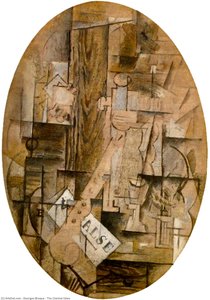
      The Clarinet Valse (1912) autorstwa Georges Braque
      #21

      The Clarinet Valse

      1912

      To gaze upon Georges Braque’s 1912 masterpiece, The Clarinet Valse, is to step into a world where the boundaries between sound and sight begin to dissolve. This is…

      Martwa natura z harfą i skrzypcami (1912) autorstwa Georges Braque
      #22

      Martwa natura z harfą i skrzypcami

      1912

      Martwa natura z harfą i skrzypcami autorstwa Georges’a Braque’a, namalowana w 1912 roku, to dzieło przełomowe, stanowiące kwintesencję szczytowego okresu kubizmu analitycznego. Nie jest to tradycyjna martwa natura…

      Large nude (1908) autorstwa Georges Braque
      #23

      Large nude

      1908

      A Glimpse into Early Modern Sensuality: Georges Braque’s *Large Nude* (1908) This captivating painting by Georges Braque, created in 1908, offers a compelling window into the artistic ferment…

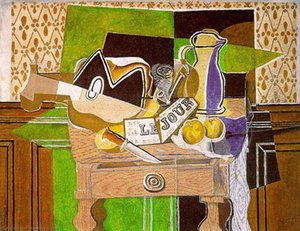
      Still-Life Le Jour (1929) autorstwa Georges Braque
      #24

      Still-Life Le Jour

      1929

      Georges Braque’s “Still Life Le Jour,” painted in 1929, stands as a cornerstone of Fauvist art—a movement that irrevocably altered the course of twentieth-century painting. More than just…

      Metronom (1909) autorstwa Georges Braque
      #25

      Metronom

      1909 · Statens Museum for Kunst

      Metronom spoczywa w lewym górnym rogu, stanowiąc piramidalny ciężar w odcieniach ochry i sjeny. Jego drewniana obudowa została rozbita na trapezoidalne fasety, które nakładają się na krawędzie mandoli.…

      Bottle, Glass, and Newspaper (1914) autorstwa Georges Braque
      #26

      Bottle, Glass, and Newspaper

      1914

      In Georges Braque’s 1914 masterpiece, Bottle, Glass, and Newspaper, the boundaries between reality and representation dissolve into a captivating visual conversation. This work is not merely a depiction…

      Plums, Pears, Nuts and Knife (1926) autorstwa Georges Braque
      #27

      Plums, Pears, Nuts and Knife

      1926 · The Phillips Collection

      In this 1926 oil on canvas, we find a composition that feels remarkably intimate, as if we have just stepped into a private moment of stillness. The subject…

      L'Estaque (1906) autorstwa Georges Braque
      #28

      L'Estaque

      1906

      In the sun-drenched landscape of 1906, Georges Braque captured something far more profound than a mere Mediterranean vista; he captured the very moment art began to break free…

      Bottle and Fishes (1910) autorstwa Georges Braque
      #29

      Bottle and Fishes

      1910

      In the quiet revolution of early twentieth-century modernism, few works capture the intellectual tension between reality and perception as poignantly as Georges Braque’s “Bottle and Fishes.” Executed around…

      Still Life with Guitar (1935) autorstwa Georges Braque
      #30

      Still Life with Guitar

      1935

      In the quietude of 1935, Georges Braque captured a moment of profound stillness that transcends the simple arrangement of domestic objects. Still Life with Guitar is not merely…

      Still Life with Grapes (1918) autorstwa Georges Braque
      #31

      Still Life with Grapes

      1918

      A Fragmented Reflection of Modernity In 1918, as the world emerged from the profound shadows of the Great War, Georges Braque was busy redefining the very essence of…

      Dwa ptaki (1955) autorstwa Georges Braque
      #32

      Dwa ptaki

      1955 · Muzeum Sztuki w Tel Awiwie

      „Dwa ptaki” Georges’a Braque’a, ukończone w 1955 roku, to coś więcej niż tylko przedstawienie form ptasich; to skondensowana esencja rewolucji artystycznej, która tętniła życiem we Francji na początku…

      Fruitdish and Glass (1912) autorstwa Georges Braque
      #33

      Fruitdish and Glass

      1912

      Georges Braque’s Fruitdish and Glass stands as a pivotal work in the history of art, marking a significant milestone in the development of Cubism. Created in 1912, this…

      Still Life: The Table (1928) autorstwa Georges Braque
      #34

      Still Life: The Table

      1928

      Georges Braque’s “Still Life: The Table,” painted in 1928, isn't merely a depiction of objects; it’s an invitation into a carefully constructed world of fragmented perception and deliberate…

      Portrait of a Woman (1911) autorstwa Georges Braque
      #35

      Portrait of a Woman

      1911

      In the annals of modern art, few moments are as transformative as the birth of Cubism, and few works capture this seismic shift with such intimate grace as…

      Still Life with a Guitar (1919) autorstwa Georges Braque
      #36

      Still Life with a Guitar

      1919

      Georges Braque's "Still Life with a Guitar," painted in 1919, isn’t merely a depiction of objects; it’s a profound exploration of perception and the very nature of representation.…

      Fruit Dish, Ace of Clubs (1913) autorstwa Georges Braque
      #37

      Fruit Dish, Ace of Clubs

      1913

      A Cubist Still Life: Deconstructing Reality in Braque’s ‘Fruit Dish, Ace of Clubs’ Georges Braque's *Fruit Dish, Ace of Clubs*, painted in 1913, is a quintessential example of…

      Leaves in color of light (1953) autorstwa Georges Braque
      #38

      Leaves in color of light

      1953

      A Symphony of Verdant Light To gaze upon Georges Braque’s Leaves, Color, Light is to step into a quiet sanctuary of color and form. Created during the artist's…

      Portuguese (1911) autorstwa Georges Braque
      #39

      Portuguese

      1911

      In the quiet, fractured landscape of 1911, Georges Braque achieved something far more profound than a mere depiction of a musician; he captured the very vibration of sound…

      Persephone autorstwa Georges Braque
      #40

      Persephone

      The Fragmented Echo of Myth In the quiet, striking depths of Georges Braque’s Persephone, we encounter more than just a depiction of a Greek deity; we witness the…

      Landscape autorstwa Georges Braque
      #41

      Landscape

      A Pivotal Moment in Modernity In 1906, the tranquil hills of L’Estaque became the stage for a quiet revolution that would forever alter the trajectory of Western art.…

      At Sunset, Bird XVI (1958) autorstwa Georges Braque
      #42

      At Sunset, Bird XVI

      1958

      In the quiet, evocative depths of Georges Braque’s "At Sunset, Bird XVI," we encounter a moment where the boundaries between the physical world and abstract emotion begin to…

      Szklanka lilii autorstwa Georges Braque
      #43

      Szklanka lilii

      Dzieło Georges'a Braque'a „Szklanka lilii” stanowi żywy testament transformacyjnej mocy kubizmu. Współcześnie, dzięki wysokiej jakości reprodukcjom malarstwa olejnego, możemy w przystępny sposób doświadczyć tego przełomowego arcydzieła na własne…

      Nature Morte (1926) autorstwa Georges Braque
      #44

      Nature Morte

      1926 · Art Gallery of Hamilton

      Georges Braque’s “Nature Morte,” painted in 1926, stands as a cornerstone of Cubist exploration and a testament to the artist's profound engagement with visual perception. More than just…

      Dead nature autorstwa Georges Braque
      #45

      Dead nature

      To gaze upon Georges Braque’s “Dead Nature” is to witness a profound moment of stillness within the turbulent currents of modern art history. Created in 1930, this work…

      Still Life on a Table Gillette (1914) autorstwa Georges Braque
      #48

      Still Life on a Table Gillette

      1914

      Georges Braque’s Still Life on a Table Gillette: A Fragmented Reflection of Modern Consciousness Still Life on a Table Gillette by Georges Braque stands as a cornerstone of…

      Portrait of a woman 1 autorstwa Georges Braque
      #49

      Portrait of a woman 1

      To stand before Georges Braque’s "Portrait of a Woman 1" is to witness the very moment the mirror of traditional art was shattered and reassembled into something far…

      Big Nude (1908) autorstwa Georges Braque
      #50

      Big Nude

      1908

      In the annals of modern art, few moments are as transformative as the birth of Cubism, and few works capture this seismic shift as viscerally as Georges Braque’s…

      Still Life with a Violin (1911) autorstwa Georges Braque
      #51

      Still Life with a Violin

      1911

      To gaze upon Georges Braque’s “Still Life with a Violin,” painted in the transformative year of 1911, is to witness the very moment the mirror of traditional art…

      Factory of Rio Tinto in the L'estanque autorstwa Georges Braque
      #52

      Factory of Rio Tinto in the L'estanque

      To gaze upon Georges Braque’s Factory of Rio Tinto in the L'estanque is to witness the very moment the mirror of traditional art was shattered and reassembled into…

      Ceiling: The Birds (1953) autorstwa Georges Braque
      #53

      Ceiling: The Birds

      1953

      High above the floor of the Salle Henri II in the Louvre, a monumental vision unfolds within an oval frame. The air feels thick with the weight of…

      Seated woman 1 autorstwa Georges Braque
      #54

      Seated woman 1

      The studio overlooks the Normandy coast, yet the view is broken into shards. A woman sits at her easel, her form caught in a web of grey planes…

      Guitar ''Program statue d'epouvante'' (1913) autorstwa Georges Braque
      #55

      Guitar ''Program statue d'epouvante''

      1913

      A Cubist Still Life: Deconstructing Form in Braque’s ‘Guitar ''Program statue d'epouvante''’ Georges Braque’s *Guitar ''Program statue d'epouvante''* (1913) is a pivotal example of Analytical Cubism, showcasing the…

      Cytryny, brzoskwinie i kompotier (1927) autorstwa Georges Braque
      #56

      Cytryny, brzoskwinie i kompotier

      1927 · The Phillips Collection

      Światło chwyta krawędź misy z owocami, odsłaniając świat, w którym przedmioty istnieją w stanie cichej fragmentacji. W tej kompozycji z 1927 roku cytryny, brzoskwinie i kompotier spoczywają w…

      Ceiling: The Birds (1953) autorstwa Georges Braque
      #58

      Ceiling: The Birds

      1953

      To stand beneath this oval expanse is to witness a moment where the heavy weight of architecture dissolves into something far more fluid. Created between 1952 and 1953,…

      Studium dachu Luwru autorstwa Georges Braque
      #59

      Studium dachu Luwru

      „Studium dachu Luwru” autorstwa Georges’a Braque’a to urzekająca eksploracja form ptasich i niebiańskiego zachwytu, która wykracza poza zwykłą reprezentację, stając się głęboką medytacją nad przestrzenią, światłem i przyrodzoną…

      Churth at Carrieres Saint-Denis (1909) autorstwa Georges Braque
      #60

      Churth at Carrieres Saint-Denis

      1909

      The painting is a depiction of a village with buildings and stairs. The scene features a muted palette dominated by earthy tones—greens, yellows, and browns—creating an atmosphere of…

      The Round Table (1929) autorstwa Georges Braque
      #61

      The Round Table

      1929

      Georges Braque’s “The Round Table”: A Dialogue Between Tradition and Innovation Subject Matter and Composition: Cubist Style and Technique: Historical Context – The Birth of Cubism: Symbolic Resonance…

      Glass, Pipe and Playing Cards (1918) autorstwa Georges Braque
      #62

      Glass, Pipe and Playing Cards

      1918 · Des Moines Art Center

      A Study in Fragmented Reality Glass, Pipe and Playing Cards presents us with a quiet, intellectual puzzle. At first glance, one might see only the remnants of a…

      Landscape at L'Estaque (1907) autorstwa Georges Braque
      #63

      Landscape at L'Estaque

      1907

      In the annals of modern art, few moments capture the raw, unbridled energy of a revolution quite like Georges Braque’s Landscape at L'Estaque. Painted in 1907, this oil…

      Yellow Seacoast autorstwa Georges Braque
      #64

      Yellow Seacoast

      In the quiet evolution of modern art, few works capture the delicate balance between structural revolution and serene observation as masterfully as Georges Braque’s Yellow Seacoast. This evocative…

      Pedestal Table (1913) autorstwa Georges Braque
      #66

      Pedestal Table

      1913

      The painting Pedestal Table is a collage that presents a seemingly chaotic arrangement of various objects. Within the composition, a vase is positioned in the middle of the…

      Still Life with Grapes and Clarinet (1927) autorstwa Georges Braque
      #67

      Still Life with Grapes and Clarinet

      1927 · The Phillips Collection

      The eye wanders across a surface where wood grain and marble appear to ripple through layers of oil paint. A clarinet rests within this arrangement, its dark, slender…

      Woman with a Mandolin (1910) autorstwa Georges Braque
      #68

      Woman with a Mandolin

      1910

      In the quiet revolution of early twentieth-century modernism, few works capture the seismic shift in human perception as profoundly as Georges Braque’s Woman with a Mandolin. Created in…

      Karty i kości (1914) autorstwa Georges Braque
      #69

      Karty i kości

      1914 · Museo Nacional Centro de Arte Reina Sofía

      Obraz olejny na płótnie Karty i kości prezentuje kompozycję zamkniętą w owalnym kształcie, osadzoną na ciemnym, prostokątnym tle naznaczonym pionowymi pasami. Powierzchnia dzieła została uporządkowana za pomocą serii…

      White Bird autorstwa Georges Braque
      #70

      White Bird

      In the vast landscape of early twentieth-century modernism, few works possess the quiet, arresting power of Georges Braque’s “White Bird.” To gaze upon this piece is to witness…

      Port of La Ciotat (1907) autorstwa Georges Braque
      #71

      Port of La Ciotat

      1907

      A Harbor in Fragments The water at La Ciotat holds a heavy, fractured light. In this 1907 scene, sailboats and yachts drift through a landscape broken into geometric…

      Tithonos autorstwa Georges Braque
      #72

      Tithonos

      In the quiet evolution of modernism, few moments are as profound as the emergence of Analytical Cubism, and few works capture this seismic shift with such poetic restraint…

      Bottle (1914) autorstwa Georges Braque
      #73

      Bottle

      1914

      In this 1914 work, we find ourselves looking at a scene that has been carefully dismantled and reassembled. The composition centers on a bowl and various bottles, yet…

      Still Life with a Pair of Banderillas (1911) autorstwa Georges Braque
      #74

      Still Life with a Pair of Banderillas

      1911

      In this 1911 oil on canvas, the surface is occupied by a collection of everyday items arranged upon a dining table and near a chair. Two banderillas, used…

      A Table Grise autorstwa Georges Braque
      #75

      A Table Grise

      A Window Into Cubist Still Life: Georges Braque’s “A Table Grise” Georges Braque's "A Table Grise" (1930) isn’t merely a depiction of an arrangement; it’s a carefully constructed…

      Violin and Glass (1913) autorstwa Georges Braque
      #76

      Violin and Glass

      1913 · Kunstmuseum Basel

      In this 1913 composition, we find ourselves observing a quiet arrangement of everyday objects that have been carefully deconstructed. A violin rests upon a wooden bow, positioned near…

      Nature Morte a la Guitare (1938) autorstwa Georges Braque
      #77

      Nature Morte a la Guitare

      1938

      The scene unfolds through a fractured lens, where the boundaries between objects and space dissolve into a rhythmic dance of planes. A guitar neck and body emerge from…

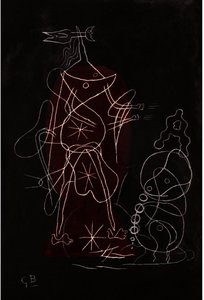
      Saint-Pol Roux autorstwa Georges Braque
      #78

      Saint-Pol Roux

      The composition is defined by a stark, graphic tension between deep black silhouettes and a cream-colored ground. A profile face, rendered as a solid dark form, is integrated…

      The Violin Valse (1913) autorstwa Georges Braque
      #79

      The Violin Valse

      1913

      Created in 1913, The Violin Valse is a still life painting that utilizes charcoal, oil, and canvas. The artwork features the contour of a violin, including its f-holes…

      Viaduct At L'estaque. Le Viadue De L'estaque autorstwa Georges Braque
      #80

      Viaduct At L'estaque. Le Viadue De L'estaque

      Georges Braque’s “Viaduct At L’Estaque,” painted in 1907, stands as a pivotal moment in the burgeoning Cubist movement—a bold assertion of artistic innovation that simultaneously honors and departs…

      untitled autorstwa Georges Braque
      #81

      untitled

      In the quiet revolution that redefined the boundaries of modern vision, Georges Braque’s “untitled (7718)” emerges as a profound meditation on the nature of sight itself. This seminal…

      untitled (928) autorstwa Georges Braque
      #83

      untitled (928)

      In the realm of modern art, few moments are as profoundly transformative as the birth of Cubism, and Georges Braque’s “untitled (928)” stands as a breathtaking testament to…

      The Painter and His Model (1939) autorstwa Georges Braque
      #84

      The Painter and His Model

      1939

      In the quiet, contemplative atmosphere of 1939, Georges Braque captured more than just a moment in time; he captured the very essence of perception itself. The Painter and…

      embattled head autorstwa Georges Braque
      #85

      embattled head

      In the quiet intensity of Georges Braque’s embattled head, we encounter a profound meditation on the human condition, captured through the radical lens of Cubist innovation. Executed in…

      Pitchet, Glass And Lemons autorstwa Georges Braque
      #86

      Pitchet, Glass And Lemons

      Georges Braque’s 1942 painting, “Pitchet, Glass and Lemons,” isn’t merely a depiction of everyday objects; it’s a profound exploration of perception itself. Born in Argenteuil, France, in 1882,…

      untitled (3508) autorstwa Georges Braque
      #87

      untitled (3508)

      The painting features a guitarist playing an instrument set against a red background. The scene depicts a crowd, with several individuals visible throughout the composition.

      L'Estaque (1906) autorstwa Georges Braque
      #88

      L'Estaque

      1906

      In the quiet landscape of 1906, a profound transformation was taking place within the confines of a canvas. Georges Braque’s L'Estaque is far more than a mere depiction…

      Terrace Of Hotel Mistral autorstwa Georges Braque
      #89

      Terrace Of Hotel Mistral

      The painting Terrace Of Hotel Mistral captures a sunlit scene featuring a group of trees positioned in front of the hotel. Some trees appear closer to the foreground,…

      Still Life with Ace of Hearts (1914) autorstwa Georges Braque
      #90

      Still Life with Ace of Hearts

      1914

      To stand before Georges Braque’s Still Life with Ace of Hearts is to step directly into the crucible of early 20th-century modernism. This painting, executed in 1914, is…

      The large trees autorstwa Georges Braque
      #91

      The large trees

      In the quiet, sun-dappled groves of the French countryside, Georges Braque captured something far more profound than a mere landscape; he captured the very pulse of nature. “The…

      The Chariot II autorstwa Georges Braque
      #92

      The Chariot II

      In The Chariot II, we encounter a profound exploration of movement and structural deconstruction, a piece that serves as a window into the radical shifts of early twentieth-century…

      Head Of A Woman autorstwa Georges Braque
      #93

      Head Of A Woman

      A Fragmented Gaze: Exploring Braque’s “Head of a Woman” Georges Braque’s “Head of a Woman” is a compelling example of Analytical Cubism, a revolutionary style he pioneered alongside…

      The Studio (III) (1949) autorstwa Georges Braque
      #94

      The Studio (III)

      1949

      The painting The Studio (III), executed by Georges Braque in 1949, presents a room viewed through a fractured lens. The composition is built from geometric planes, primarily rectangular…

      Landscape at L'Estaque (1906) autorstwa Georges Braque
      #95

      Landscape at L'Estaque

      1906

      In the quiet coastal reaches of Provence, where the Mediterranean sun warms the earth, Georges Braque captured a moment that would forever alter the trajectory of Western art.…

      The Bottle of Rum (1914) autorstwa Georges Braque
      #96

      The Bottle of Rum

      1914

      In the quiet, revolutionary atmosphere of 1914, Georges Braque captured more than just a still life; he captured the very fracturing of modern perception. The Bottle of Rum…

      The Birds (1953) autorstwa Georges Braque
      #97

      The Birds

      1953

      Georges Braque’s “The Birds”: A Symphony of Geometric Abstraction “The Birds,” completed in 1953, stands as a testament to Georges Braque's unwavering commitment to Cubist principles even amidst…

      untitled (9288) autorstwa Georges Braque
      #98

      untitled (9288)

      Georges Braque’s “untitled (9288)” stands as a testament to the transformative power of artistic experimentation during the early years of the 20th century. Executed in 1974, this photolithograph…

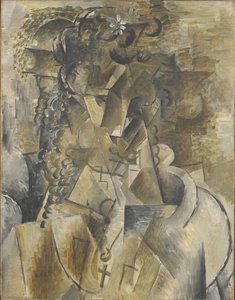
      Girl with a Cross (1911) autorstwa Georges Braque
      #99

      Girl with a Cross

      1911 · Kimbell Art Museum

      In the quiet, fractured landscape of Georges Braque’s 1911 masterpiece, Girl with a Cross, the viewer is invited into a world where reality is not merely observed, but…

      Guitar and Still Life on a Guéridon (1922) autorstwa Georges Braque
      #100

      Guitar and Still Life on a Guéridon

      1922

      A Moment Frozen in Time: Georges Braque’s “Guitar and Still Life on a Guéridon” Georges Braque's "Guitar and Still Life on a Guéridon" isn’t merely a depiction of…

      Georges Braque's canvases, period by period

      What Georges Braque painted most

      The four subjects that return most often on these canvases, each with its best-loved example.

      Where Georges Braque's canvases hang

      8 muzeów, w których znajduje się najwięcej obrazów z tej strony.

      Muzeum Miasto Dzieła artysty Georges Braque Obrazy z tej listy
      The Phillips Collection, WaszyngtonThe Phillips Collection Waszyngton 11 Plums, Pears, Nuts and Knife, Cytryny, brzoskwinie i kompotier, Still Life with Grapes and Clarinet
      Centre Pompidou, ParyżCentre Pompidou Paryż 4 Duet (Le Duo), Zatoka, Les Lecques, Little Bay at La Ciotat (also known as Cove at La Ciotat)
      Art Institute of Chicago, ChicagoArt Institute of Chicago Chicago 5 Harbor w Normandii, Still Life with Glass, Dice, Newspaper and Playing Card
      Statens Museum for Kunst, KopenhagaStatens Museum for Kunst Kopenhaga 8 Metronom
      Kunstmuseum Basel, BazyleaKunstmuseum Basel Bazylea 5 Violin and Glass
      Kunstsammlung Nordrhein-Westfalen, DüsseldorfKunstsammlung Nordrhein-Westfalen Düsseldorf 2 Still life with fruit bowl, bottle and mandolin (Nature morte au compotier, bouteille et mandoline)
      Tate Gallery, LondynTate Gallery Londyn 1 Mandolina
      Solomon R. Guggenheim Museum, Nowy JorkSolomon R. Guggenheim Museum Nowy Jork 1 Violin i Paleta

      Georges Braque's best-loved canvas of each decade

      1. 1900s
        Harbor w Normandii (1909) autorstwa Georges Braque
        Canvas 4 of 100

        Harbor w Normandii

        Wiek 18 – 27 · Art Institute of Chicago

        The painting exemplifies Braque's transition from Fauvism to Cubism, characterized by its emphasis on geometric abstraction and multiple perspectives. The Société des Artistes Indépendants, where Braque exhibited his…

      2. 1910s
        Mandolina (1910) autorstwa Georges Braque
        Ranked 1 of 100

        Mandolina

        Wiek 28 – 37 · Tate Gallery

        Georges Braque i „Mandola” – Kamień Milowy Analizy Kubizmu „Mandola”, stworzona przez Georges’a Braquę w roku 1910, stanowi niezwykle istotną pracę dla rozwoju stylu analizy kubizmu – rewolucyjnego…

      3. 1920s
        Still-Life Le Jour (1929) autorstwa Georges Braque
        Ranked 24 of 100

        Still-Life Le Jour

        Wiek 38 – 47

        Georges Braque’s “Still Life Le Jour,” painted in 1929, stands as a cornerstone of Fauvist art—a movement that irrevocably altered the course of twentieth-century painting. More than just…

      4. 1930s
        Duet (Le Duo) (1937) autorstwa Georges Braque
        Ranked 8 of 100

        Duet (Le Duo)

        Wiek 48 – 57 · Centre Pompidou

        Symfonia geometrii i wdzięku W ciszy 1937 roku Georges Braque uchwycił coś więcej niż tylko muzyczną chwilę; uwiecznił samą esencję harmonijnego dialogu. Duet (Le Duo) zaprasza widza do…

      5. 1940s
        The Studio (III) (1949) autorstwa Georges Braque
        Ranked 94 of 100

        The Studio (III)

        Wiek 58 – 67

        The painting The Studio (III), executed by Georges Braque in 1949, presents a room viewed through a fractured lens. The composition is built from geometric planes, primarily rectangular…

      6. 1950s
        Dwa ptaki (1955) autorstwa Georges Braque
        32 of 100

        Dwa ptaki

        Wiek 68 – 77 · Muzeum Sztuki w Tel Awiwie

        „Dwa ptaki” Georges’a Braque’a, ukończone w 1955 roku, to coś więcej niż tylko przedstawienie form ptasich; to skondensowana esencja rewolucji artystycznej, która tętniła życiem we Francji na początku…

      About Georges Braque's canvases: your questions answered

      What is the best-known painting by Georges Braque?Read the answer

      Mandolina (1910), Tate Gallery, Londyn. Mężczyzna z gitarą (1914) and Domki Przy Estace follow.

      What age was Georges Braque when Mandolina was painted?Read the answer

      Georges Braque, born in 1882, was 28 years old: Mandolina dates from 1910.

      What are the 10 most famous paintings by Georges Braque?Read the answer

      Mandolina, Mężczyzna z gitarą, Domki Przy Estace, Harbor w Normandii, Kobieta Czytająca, Violin i Paleta, Muzyk, Duet (Le Duo), Kobieta z gitarą i Heracles. Each canvas in the ranking above comes with its year and its museum.

      How many works did Georges Braque paint in all?Read the answer

      700 works by Georges Braque are in our catalogue, dated 1906 to 1958.

      Where can I see Georges Braque's most famous canvases?Read the answer

      Mostly in The Phillips Collection (Waszyngton), Centre Pompidou (Paryż) i Art Institute of Chicago (Chicago); the list above names each museum and its canvases.

      When did Georges Braque paint the best-loved canvases?Read the answer

      In 1910s, which gave 37 of the 100 works on this page, Mandolina among them.

      Which are Georges Braque's earliest and latest famous canvases?Read the answer

      The earliest canvas here is Zatoka, Les Lecques (1906); the latest is At Sunset, Bird XVI (1958).

      What did Georges Braque paint most often?Read the answer

      Geometric forms (21), Geometric shapes (13) i Geometric (12), across the 100 works on this page.

      Which medium did Georges Braque paint in most often?Read the answer

      Oil On Canvas, used in 49 of the 100 works on this page.

      Which movement is Georges Braque's painting part of?Read the answer

      Kubizm, as the canvases on this page show.

      Which Georges Braque canvases hang at the The Phillips Collection?Read the answer

      The The Phillips Collection, Waszyngton holds 3 of the works on this page, among them Plums, Pears, Nuts and Knife, Cytryny, brzoskwinie i kompotier i Still Life with Grapes and Clarinet.

      Georges Braque: a life in paint

      Wczesne lata, rodzina i wykształcenie

      Georges Braque urodził się w 1882 roku w Argenteuil we Francji. Jego wczesne lata upłynęły w Le Havre, w domu, którego codzienność definiowały praktyczne aspekty dekoracji i koloru. Dorastając w rodzinie malarzy i dekoratorów domów, od najmłodszych lat był zanurzony w namacalnej rzeczywistości swojego rzemiosła. To wychowanie zapewniło mu fundament technicznego warsztatu, który w późniejszych latach nadał głębi jego podejściu do płótna.

      Zanim poświęcił się sztukom pięknym, podążył wytyczoną ścieżką swoich krewnych, odbywając praktykę jako malarz i dekorator wnętrz. Ten okres pracy fizycznej zaszczepił w nim specyficzne zrozumienie materiałów oraz fizycznych właściwości powierzchni. Takie praktyczne przeszkolenie zaoferowało mu ugruntowaną perspektywę na to, jak pigmenty wchodzą w interakcję z różnymi teksturami – wrażliwość, która ostatecznie wyróżniła jego późniejsze eksperymenty z materialnością.

      Przejście od rzemiosła do formalnych studiów zaprowadziło go w 1902 roku do Paryża. To właśnie tam kontynuował naukę w Académie Humbert, starając się oszlifować swoje wrodzone skłonności poprzez akademicką dyscyplinę. Ten okres formalnego kształcenia zapewnił niezbędną strukturę dla jego rozwijającej się wizji, budując most między manualnym nakładaniem farby a intelektualnym poszukiwaniem kompozycji.

      Okres Fauwizmu i wpływ Cézanne'a

      Wczesne lata kariery Georges Braque były kształtowane przez unoszące się w tle cienie impresjonizmu i postimpresjonizmu. Jego początkowe poszukiwania zmierzały ku uchwyceniu ulotnych właściwości światła i atmosfery, jednak z czasem zaczęło w nim narastać głębokie pragnienie strukturalnej głębi. Do 1905 roku zwrócił się ku zasadom fauwizmu, przyjmując bardziej intensywne i nienaturalistyczne użycie koloru, aby przekazać emocje. Ten okres charakteryzował się odejściem od czystej obserwacji, gdyż artysta zaczął przedkładać ekspresyjną moc palety barw nad dosłowne przedstawianie swoich tematów.

      Ta nowo odnaleziona wolność kolorystyczna znalazła swoje niezbędne zakotwiczenie w twórczości, którą pozostawił Paul Cézanne. Georges Braque poczuł przyciąganie do sposobu, w jaki Cézanne wykorzystywał solidne struktury i przemyślane podejście do koloru, aby organizować pole wizualne. To właśnie to przecięcie fauwistycznego koloru z Cézanne’owską geometrią zdefiniowało jego przejście w stronę bardziej radykalnego sposobu widzenia. Dążył on do pogodzenia emocjonalnej intensywności barw z poczuciem architektonicznej trwałości.

      Efekty tej syntezy są wyraźnie widoczne w jego dziele z 1908 roku, Houses at L'Estaque. W tym obrazie krajobraz przestaje być zbiorem miękkich wrażeń, stając się serią kolorowych, nachylonych płaszczyzn i geometrycznych kształtów. Wpływ Cézanne'a jest tutaj nie do pomylenia, gdyż teren zostaje sprowadzony do swoich esencjonalnych brył. Artysta zaczął demontować tradycyjną perspektywę krajobrazu, zastępując ją pofragmentowaną, ustrukturyzowaną rzeczywistością, która nadawała priorytet ukrytej formie świata.

      Rozwój Kubizmu

      W latach między 1907 a 1914 rokiem Paryż stał się miejscem głębokiej wizualnej restrukturyzacji, której fundamentem była współpraca, jaką podjęli Georges Braque oraz Pablo Picasso. To niezwykłe partnerstwo wykroczyło poza emocjonalną intensywność fauwizmu, kierując się ku bardziej intelektualnej, wręcz cerebralnej analizie formy. Wspólnie wypracowali oni kubizm analityczny – metodę, która dokonywała sekcji przedmiotów na rozczłonkowane, geometryczne kształty. Zamiast próbować odtworzyć iluzję trójwymiarowej przestrzeni, dążyli do przedstawienia pełni obiektu poprzez ukazanie wielu punktów widzenia jednocześnie. To podejście odrzuciło tradycyjną perspektywę, zastępując ją złożonym układem płaszczyzn i linii.

      Około 1912 roku ruch ten przeszedł znaczącą transformację w stronę kubizmu syntetycznego. Faza ta odeszła od rozkładania form na części pierwsze na rzecz budowania nowych obrazów poprzez zestawianie ze sobą różnorodnych elementów. Georges Braque był kluczowym innowatorem tego zwrotu, tworząc pierwsze papier collé poprzez naklejanie tapety na rysunek. Ten akt wprowadzania fizycznych materiałów na powierzchnię płótna rzucił wyzwanie tradycyjnym granicom obrazu, ustanawiając go jako autonomiczny obiekt, a nie tylko okno na inny świat. Jego twórczość w tym okresie koncentrowała się na subtelnej relacji między reprezentacją a namacalną rzeczywistością użytych materiałów.

      Technika i artystyczna innowacja

      Podejście Georges Braque do płótna definiowała nieustanna, wręcz niespokojna ciekawość dotycząca fizycznych właściwości stosowanych materiałów. Artysta wykraczał poza tradycyjne granice malarstwa olejnego, wprowadzając elementy, które rzucały wyzwanie iluzji głębi. Poprzez włączanie do kompozycji przedmiotów pochodzących z rzeczywistego świata, takich jak wycinki z gazet, tapety czy fragmenty tkanin, Georges Braque zakłócał jednolity charakter perspektywy obrazu. Te eksperymenty doprowadziły do narodzin techniki papier collé – metody naklejania papieru, która pozwoliła mu na bezpośrednią integrację tekstur codzienności z jego dziełami. Dążył on w ten sposób do zasypania przepaści dzielącej namalowany obraz od namacalnego przedmiotu.

      Jego warsztat charakteryzował się niemal rzeźbiarską, haptyczną wrażliwością. Często mieszał pigmenty z piaskiem, aby zmienić fakturę powierzchni, tworząc ziarnistość, która w nieoczekiwany sposób załamywała światło. Aby jeszcze bardziej manipulować percepcją przestrzeni i materialności przez widza, eksperymentował z naśladowaniem wzorów słojów drewna czy marmuru. Nie był to jedynie zabieg dekoracyjny, lecz sposób na zbadanie, w jaki sposób różne powierzchnie wchodzą w interakcję ze światłem i formą. W swoich pracach wykorzystywał również szablony liter, co nadawało kompozycjom wymiar graficzny i pomagało osadzić je w nowoczesnej, czytelnej rzeczywistości.

      • Miska z owocami i szklanka (1912)
      • Skrzypce i fajka (1912)
      • Klarnet i butelka rumu na kominku (1912)

      Wojna i ewolucja stylu

      Wybuch I wojny światowej w 1914 roku przyniósł nagłe, gwałtowne przerwanie intelektualnej dyscypliny ruchu kubistycznego. Georges Braque został powołany do służby wojskowej, co stało się okresem, który fundamentalnie zmienił zarówno jego stan zdrowia, jak i temperament twórczy. W 1915 roku odniósł poważny uraz głowy w okopach – ranę, która doprowadziła do czasowej ślepoty i wymagała trepanacji, aby odzyskać wzrok. To spotkanie z mrokiem wymusiło zmianę w jego percepcji. Sztywne, analityczne struktury, które definiowały jego wcześniejsze lata, zaczęły łagodnieć, ustępując miejsca bardziej osobistemu i lirycznemu podejściu do podejmowanych tematów.

      Po powrocie z wojny surowe, geometryczne ograniczenia jego poprzedniej współpracy z Picassiem przestały być jego jedynym obszarem zainteresowań. Jego styl ewoluował, włączając elementy kompozycji klasycznej, poszukując poczucia równowagi i harmonii, które wydawały się bardziej osadzone w fizycznym świecie. Odszedł od czysto intelektualnej sekcji formy, przyjmując bardziej niuansowe i kontemplacyjne spojrzenie. Jego twórczość przestała skupiać się na fragmentacji przestrzeni, a zaczęła celebrować cichą, pełną spokoju atmosferę samych przedmiotów.

      • Martwa natura z kartami do gry (1919)

      Kluczowe dzieła i najważniejsze kompozycje

      Trajektoria kariery, którą wyznaczył Georges Braque, jest naznaczona konkretnymi kompozycjami, które sygnalizują jego ewolucję myślenia oraz przemiany techniczne. W 1908 roku wyłoniły się Domy przy L'Estaque, wykorzystujące kolorowe, nachylone płaszczyzny i geometryczne kształty, które stanowiły odejście od tradycyjnej perspektywy. Ten okres eksperymentów trwał nadal w 1910 roku wraz z dziełem Skrzypce i paleta – pracą, w której wykorzystano papier i techniki mieszane, aby zbadać, w jaki sposób kolor wchodzi w interakcję z formą. Do 1911 roku jego uwaga przesunęła się w stronę dekonstrukcji przestrzeni w Człowieku z gitarą, dziele będącym wzorcowym przykładem analitycznego podejścia, które wypracował u boku swoich współczesnych.

      W miarę jak jego metody ewoluowały, wprowadzenie nowych materiałów zmieniało samą teksturę płócien. Praca z 1912 roku, Miska owoców i szkło, zaprezentowała przejście w stronę stylu, w którym rozpoznawalna tematyka została ponownie włączona do obrazu poprzez zastosowanie kolażu. Nawet po wstrząsach spowodowanych wojną, jego twórczość zachowywała więź z wcześniejszymi poszukiwaniami. Muzyk, stworzony w 1918 roku, odzwierciedla okres osobistej transformacji, podczas gdy jego znacznie późniejszy obraz z 1955 roku, Dwa ptaki, ukazuje niesłabnące zainteresowanie fundamentalnymi właściwościami wybranych przez niego tematów.

      Dziedzictwo i nieprzemijający wpływ

      W chwili śmierci, która nastąpiła 31 sierpnia 1963 roku, Georges Braque fundamentalnie zmienił sposób, w jaki rozumiemy postrzeganie i reprezentację świata. Jako współtwórca ruchu kubizmu, pomógł on zburzyć wieloletnią zależność od tradycyjnej perspektywy, zastępując ją fragmentaryczną, wielowymiarową rzeczywistością. Jego twórczość wykraczała poza zwykłe naśladowanie natury; zamiast tego dążyła do uchwycenia esencji przedmiotów poprzez rygorystyczne studium formy i przestrzeni. To przesunięcie wymusiło trwałą zmianę w języku wizualnym dwudziestego wieku.

      Jego wpływ na kolejne pokolenia artystów pozostaje niezmierzony. Wprowadzając technikę papier collé i integrując codzienne materiały w swoje kompozycje, Georges Braque zasypał przepaść między płótnem a namacalnym światem. Ta innowacja rzuciła wyzwanie granicom tego, czym może być obraz, torując drogę przyszłym poszukiwaniom w dziedzinie tekstury i materialności. Nawet gdy w późniejszych latach jego styl ewoluował w stronę bardziej lirycznych i pełnych spokoju tematów, strukturalna integralność jego kubistycznych fundamentów pozostawała stałym elementem jego dorobku.

      • Houses at L'Estaque
      • Man with a Guitar
      • Fruit Dish and Glass
      • Violin and Pipe

      Wszystkie 700 dzieła artysty Georges Braque →