Pracownia — Bezpłatna wysyłka na cały świat — Czas dostawy: 2–6 tygodni
      Jan Steen, 1626 – 1679

      Jan Steen: 100 najsłynniejszych obrazów

      Spośród wszystkich obrazów Jan Steen, najbardziej znanym jest The Dissolute Household (1663); znajduje się on w Metropolitan Museum of Art w Nowy Jork. Tuż za nimi plasują się The feast of Saint Nicholas (1670) oraz Merry Company on a Terrace (1670). Spośród 499 dzieł Jan Steen w naszym katalogu, tych 100 jest najbardziej znanych – każde z nich zostało przedstawione wraz z datą powstania, muzeum oraz historią.

      Ranking oparty na naszym wskaźniku popularności, który łączy liczbę wyszukiwań, wizyt oraz zamówień dla każdego dzieła. Aktualizacja: Październik 2026. Każdy obraz na tej stronie można zamówić jako ręcznie malowaną reprodukcję olejną na płótnie lnianym lub jako wysokiej jakości wydruk artystyczny, wykonany w wybranym przez Ciebie formacie.

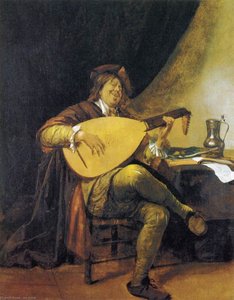
      Portret Jan Steen
      Jan Steen · 1626 – 1679
      Urodzony · zmarł
      1626 – 1679, Lejda
      Nurt
      Baroque realism
      Dzieła w naszym katalogu
      499
      Najsłynniejsze
      The Dissolute Household (1663)
      Najwięcej dzieł w
      National Gallery

      10 najsłynniejszych obrazów artysty Jan Steen

      The Dissolute Household (1663) autorstwa Jan Steen
      1

      The Dissolute Household

      1663 · Oil On Canvas · Metropolitan Museum of Art, Nowy Jork

      A Symphony of Chaos: Unveiling Jan Steen’s Masterpiece The Dissolute Household is not merely a painting; it is a theatrical performance frozen in time, a vibrant window into the boisterous and often unruly heart of the Dutch Golden Age. Created around 1663 by the incomparable Jan Havickszoon Steen, this work serves as a masterful exploration of human frailty, humor, and the delightful disorder of domestic life. As one gazes upon…

      The feast of Saint Nicholas (1670) autorstwa Jan Steen
      2

      The feast of Saint Nicholas

      1670 · Oil On Canvas · Museum Boijmans Van Beuningen, Rotterdam

      Step into this room and you are immediately caught in the middle of a Dutch household in mid-December. The air feels heavy with the scent of citrus and spiced bread. We are witnessing the Feast of Saint Nicholas, a tradition where the boundaries between reward and punishment are laid bare. In the foreground, a young girl holds a tin bucket overflowing with treats, her expression one of quiet triumph. Contrast…

      Merry Company on a Terrace (1670) autorstwa Jan Steen
      3

      Merry Company on a Terrace

      1670 · Oil On Canvas · Metropolitan Museum of Art, Nowy Jork

      In the heart of the seventeenth century, amidst the burgeoning prosperity of the Dutch Golden Age, Jan Havickszoon Steen captured a moment that transcends time. "Merry Company on a Terrace" is not merely a painting; it is a vibrant, breathing window into a world of conviviality and controlled chaos. As one gazes upon this monumental canvas, completed around 1670, the viewer is immediately swept into a bustling courtyard where the…

      The Dancing Couple (1663) autorstwa Jan Steen
      4

      The Dancing Couple

      1663 · Oil On Canvas · National Gallery of Art, Waszyngton

      To gaze upon Jan Steen’s “The Dancing Couple” is to be instantly swept up in the boisterous, uninhibited spirit of a seventeenth-century Dutch kermis. Painted in 1663, this masterpiece serves as much more than a mere visual record of a village fair; it is an immersive sensory experience that captures the very heartbeat of the Dutch Golden Age. Steen, a master of the human comedy, avoids the stiff formality often…

      'As the Old Sing, so Pipe the Young' (1664) autorstwa Jan Steen
      5

      'As the Old Sing, so Pipe the Young'

      1664 · Oil On Canvas · Mauritshuis, Haga

      A boisterous domestic interior unfolds in a dense, multi-layered composition, capturing a moment of chaotic conviviality. The scene centers on a family gathering where the boundaries between celebration and disorder are blurred. At the heart of the room, a laughing man—often identified as a self-portrait of the artist—gestures toward the folly of the assembly, while an elderly woman in the foreground examines a sheet of music. This document contains the…

      Merry family (1668) autorstwa Jan Steen
      6

      Merry family

      1668 · Oil On Canvas

      The air in the room feels thick with the sudden, boisterous energy of the Merry family. Painted by Jan Steen in 1668, this scene captures a moment of unrestrained domestic life that seems to pulse with life even now. It is a genre painting, a window into the everyday realities of the Dutch Golden Age, where the boundaries between celebration and chaos blur. One can almost hear the sudden burst…

      Village school (1670) autorstwa Jan Steen
      7

      Village school

      1670 · Oil On Canvas

      In the heart of the seventeenth century, amidst the burgeoning prosperity of the Netherlands, Jan Steen captured a world that was as chaotic as it was charming. His masterpiece, Village School, painted around 1670, serves as a vibrant portal into the daily rhythms of rural life during the Dutch Golden Age. Unlike the grand, often stiff historical allegories favored by some of his contemporaries, Steen possessed a singular gift for…

      Dissolute Household (1664) autorstwa Jan Steen
      8

      Dissolute Household

      1664 · Oil On Canvas

      The air in the room feels heavy with the scent of spilled wine and the frantic energy of a household left to its own devices. At the center of this swirling commotion, a man sits with a sly smirk, his fingers entwined with those of a maid as she pours a generous serving of wine for his wife. The woman, seemingly oblivious to the flirtation unfolding beside her, remains focused…

      The Lovesick Maiden (1660) autorstwa Jan Steen
      9

      The Lovesick Maiden

      1660 · Oil On Canvas · Metropolitan Museum of Art, Nowy Jork

      In the quiet, shadowed corners of seventeenth-century Dutch life, Jan Steen captured moments that whispered of much more than what met the eye. His masterpiece, The Lovesick Maiden, painted around 1660, is far more than a mere domestic scene; it is a profound psychological drama staged within the intimate confines of a bourgeois interior. At first glance, the viewer is drawn to the central figure—a young woman slumped in a…

      Revelry at an Inn (1674) autorstwa Jan Steen
      10

      Revelry at an Inn

      1674 · Oil On Canvas · Luwr, Paryż

      In the heart of the Dutch Golden Age, few artists could capture the delightful disorder of human existence as masterfully as Jan Havickszoon Steen. His 1674 masterpiece, “Revelry at an Inn,” invites the viewer into a boisterous, sensory-rich world that feels remarkably alive even centuries after its creation. This is not a painting of quiet contemplation or distant myth; rather, it is a vivid snapshot of a bustling tavern, where…

      Obrazy artysty Jan Steen od miejsca 11 do 100

      In Luxury, Look Out (1663) autorstwa Jan Steen
      #11

      In Luxury, Look Out

      1663 · Kunsthistorisches Museum

      In the heart of the Dutch Golden Age, few artists possessed the wit and psychological depth of Jan Havickszoon Steen. His 1663 masterpiece, "In Luxury, Look Out" (also…

      Zamów to płótno →
      A Merry Party (detail) (1660) autorstwa Jan Steen
      #13

      A Merry Party (detail)

      1660 · Szépművészeti Múzeum

      In the heart of the Dutch Golden Age, few artists possessed the ability to capture the chaotic, beautiful, and often hilarious pulse of human existence quite like Jan…

      Zamów to płótno →
      Samson and Delilah (1668) autorstwa Jan Steen
      #14

      Samson and Delilah

      1668

      Samson and Delilah is an oil on canvas painting by Jan Steen, executed in 1668. Originating from Holland, this work belongs to the genre of religious art. It…

      Zamów to płótno →
      Boerenkermis (1670) autorstwa Jan Steen
      #16

      Boerenkermis

      1670 · Muzeum Fransa Halsa

      Jan Havickszoon Steen – „Boerenkermis” Jan Havickszoon Steen (1626–1679) pozostaje wyjątkowym twórcą złotego wieku holenderskiego, który skupił się na uchwyceniu żywotności i humoru obecnego w codziennym życiu ludzkim.…

      Zamów to płótno →
      The Scholar and Death (1660) autorstwa Jan Steen
      #20

      The Scholar and Death

      1660 · National Gallery Prague

      A single window on the left spills a pale, directional light across a room heavy with the scent of old parchment and dust. In the foreground, a scholar…

      Zamów to płótno →
      The Miser (1650) autorstwa Jan Steen
      #25

      The Miser

      1650 · Statens Museum for Kunst

      An elderly man hunches over a dark wooden table, his body a slumped silhouette against the shadows of a Dutch interior. He is consumed by a single coin,…

      Zabierz to światło do swojego domu →
      The Tempting Offer (1650) autorstwa Jan Steen
      #26

      The Tempting Offer

      1650 · Kunsthalle Bremen

      The Tempting Offer is a monochromatic, grayscale oil painting that captures an intimate, quiet scene between two figures in an outdoor or semi-outdoor setting. The composition is centered…

      Zamów to płótno →
      Esther before Ahasuerus (1660) autorstwa Jan Steen
      #28

      Esther before Ahasuerus

      1660 · Ermitaż

      The composition centers on two primary figures positioned within a dark, interior palace setting. Queen Esther, dressed in luminous white and blue garments, faces King Ahasuerus. The king…

      Zamów ręczne malowanie →
      The Christening Feast (1660) autorstwa Jan Steen
      #34

      The Christening Feast

      1660 · Finnish National Gallery

      The air in the room feels heavy with the scent of roasted meats and spilled ale. Light spills from an unseen window, cutting through the dim, rustic interior…

      Zamów ręczne malowanie →
      Singer with a Guitar (1660) autorstwa Jan Steen
      #35

      Singer with a Guitar

      1660 · Statens Museum for Kunst

      A single musician occupies the center of this monochromatic oil painting. The man is positioned behind a stone ledge or windowsill, his body angled toward the viewer. He…

      Zamów to płótno →
      Cat family autorstwa Jan Steen
      #38

      Cat family

      Szépművészeti Múzeum

      To gaze upon Jan Havickszoon Steen’s "Cat Family" is to step directly into the warm, convivial heart of 17th-century Dutch life. This Baroque masterpiece transcends a mere depiction…

      Zamów to płótno →
      Smoker (1650) autorstwa Jan Steen
      #45

      Smoker

      1650 · Ermitaż

      Step closer to the panel and notice how the light settles upon the central figure. We find ourselves in a dimly lit interior, a space defined by deep…

      Zamów ręczne malowanie →
      The village wedding (1653) autorstwa Jan Steen
      #47

      The village wedding

      1653 · Museum Boijmans Van Beuningen

      is an oil on canvas work by the Dutch artist Jan Steen, executed in 1653. This piece represents a significant moment in the artist's early career, demonstrating his…

      Zamów to płótno →
      The Sense of Hearing (1661) autorstwa Jan Steen
      #49

      The Sense of Hearing

      1661 · Upton House

      The Sense of Hearing is an oil painting on panel, executed upon a surface of oak. This work, originating from Holland, carries the hand of Jan Steen. The…

      Zamów to płótno →
      Bathsheba (1668) autorstwa Jan Steen
      #52

      Bathsheba

      1668 · Norton Simon Museum

      In this 1668 work, Jan Steen captures a moment of heavy, unspoken tension. The scene focuses on Bathsheba as she receives a letter from Joab, a message that…

      Zamów ręczne malowanie →
      Merrymaking in a Tavern (1674) autorstwa Jan Steen
      #54

      Merrymaking in a Tavern

      1674 · Wallace Collection

      The composition presents a crowded tavern scene, characterized by a complex, multi-layered arrangement of figures. In the foreground, various individuals engage in disparate activities, creating a sense of…

      Zamów to płótno →
      Couple at an Inn Table (1660) autorstwa Jan Steen
      #66

      Couple at an Inn Table

      1660 · Statens Museum for Kunst

      Jan Havickszoon Steen produced Couple at an Inn Table in 1660. This oil on panel work captures a specific moment of social interaction within a Dutch interior. The…

      Zamów ręczne malowanie →
      Rape of the Sabine Women (1666) autorstwa Jan Steen
      #67

      Rape of the Sabine Women

      1666 · Muzeum Sztuki Johna i Mable Ringlingów

      The oil on canvas titled Rape of the Sabine Women captures a moment of profound upheaval. Jan Steen, an artist born in Leiden, Netherlands, in 1626, rendered this…

      Zamów to płótno →
      Interior (1660) autorstwa Jan Steen
      #69

      Interior

      1660 · National Gallery of Victoria

      The composition presents a crowded, boisterous interior scene filled with figures engaged in various activities. A pyramidal arrangement of bodies directs the eye through a series of overlapping…

      Zamów ręczne malowanie →
      Twelfth-Night Feast (1666) autorstwa Jan Steen
      #72

      Twelfth-Night Feast

      1666 · Królewskie Muzea Sztuk Pięknych w Belgii

      The artwork titled Twelfth-Night Feast is a painting by the artist Jan Steen. This work is executed in oil on canvas and dates to 1662. It depicts a…

      Zamów to płótno →
      The Bean Feast (1668) autorstwa Jan Steen
      #74

      The Bean Feast

      1668 · Staatliche Museen Kassel

      Jan Havickszoon Steen's "The Bean Feast," painted in 1668, is more than just a depiction of a communal meal; it’s a vibrant window into the everyday life and…

      Zamów to płótno →
      The Doctor's Visit (1661) autorstwa Jan Steen
      #75

      The Doctor's Visit

      1661 · Victoria and Albert Museum

      To stand before a work by Jan Havickszoon Steen is to step unceremoniously into the heart of 17th-century Dutch life. This painting, The Doctor's Visit, is not merely…

      Zamów ręczne malowanie →

      Płótna Jan Steen epoka po epoce

      Co najczęściej malował Jan Steen

      Cztery tematy najczęściej pojawiające się na tych płótnach, z których każdy wraz z jego najbardziej cenionym przykładem.

      Gdzie wiszą płótna Jan Steen

      8 muzeów, w których znajduje się najwięcej obrazów z tej strony.

      Muzeum Miasto Dzieła artysty Jan Steen Obrazy z tej listy
      National Gallery, LondynNational Gallery Londyn 10 The Interior of an Inn, A Pedlar selling Spectacles outside a Cottage, An Interior with a Man offering an Oyster to a Woman
      Rijksmuseum, AmsterdamRijksmuseum Amsterdam 34 The Feast of St. Nicholas, Interior with a Woman Feeding a Parrot, Known as ‘The Parrot Cage’, Man with a fiddle in bad company, Jan Havicksz. Steen (copy after), 1670 - 1700
      Mauritshuis, HagaMauritshuis Haga 16 'As the Old Sing, so Pipe the Young', The Oyster-eater, An Old Couple Making Caudle
      Ermitaż, Sankt PetersburgErmitaż Sankt Petersburg 9 Esther before Ahasuerus, Smoker, Tric-Trac Players
      Metropolitan Museum of Art, Nowy JorkMetropolitan Museum of Art Nowy Jork 7 The Dissolute Household, Merry Company on a Terrace, The Lovesick Maiden
      Museum Boijmans Van Beuningen, RotterdamMuseum Boijmans Van Beuningen Rotterdam 7 The feast of Saint Nicholas, The village wedding, Cutting for the stone
      Szépművészeti Múzeum, BudapesztSzépművészeti Múzeum Budapeszt 5 A Merry Party (detail), A Merry Party (detail), Cat family
      Statens Museum for Kunst, KopenhagaStatens Museum for Kunst Kopenhaga 5 The Miser, Singer with a Guitar, Couple at an Inn Table

      Dekada po dekadzie: najsłynniejsze płótna Jan Steen

      1. 1640s
        Peasants merry-making outside an Inn (1647) autorstwa Jan Steen
        Płótno 32 z 100

        Peasants merry-making outside an Inn

        Wiek 14 – 23 · National Gallery

        The scene unfolds beneath a heavy, leafy canopy that forms a natural ceiling over a group of figures gathered outside an inn. On the left, a large, dark…

      2. 1650s
      3. 1660s
        The Dissolute Household (1663) autorstwa Jan Steen
        Miejsce 1 z 100

        The Dissolute Household

        Wiek 34 – 43 · Metropolitan Museum of Art

        A Symphony of Chaos: Unveiling Jan Steen’s Masterpiece The Dissolute Household is not merely a painting; it is a theatrical performance frozen in time, a vibrant window into…

      4. 1670s
        The feast of Saint Nicholas (1670) autorstwa Jan Steen
        2 z 100

        The feast of Saint Nicholas

        Wiek 44 – 53 · Museum Boijmans Van Beuningen

        Step into this room and you are immediately caught in the middle of a Dutch household in mid-December. The air feels heavy with the scent of citrus and…

      Odpowiedzi na pytania dotyczące obrazów Jan Steen

      Który obraz autorstwa Jan Steen jest najbardziej znany?Przeczytaj odpowiedź

      The Dissolute Household (1663), Metropolitan Museum of Art, Nowy Jork. Następują po nim The feast of Saint Nicholas (1670) oraz Merry Company on a Terrace (1670).

      Ile lat miał(a) Jan Steen w czasie powstania The Dissolute Household?Przeczytaj odpowiedź

      Jan Steen, urodzony/a w 1626, miał/a 37 lat: The Dissolute Household pochodzi z 1663.

      Z jakich dziesięciu obrazów najbardziej słynie Jan Steen?Przeczytaj odpowiedź

      The Dissolute Household, The feast of Saint Nicholas, Merry Company on a Terrace, The Dancing Couple, 'As the Old Sing, so Pipe the Young', Merry family, Village school, Dissolute Household, The Lovesick Maiden i Revelry at an Inn. Każde płótno w powyższym rankingu zawiera informację o roku powstania oraz muzeum.

      Ile znanych obrazów namalował Jan Steen?Przeczytaj odpowiedź

      W naszym katalogu znajduje się 499 dzieł artysty Jan Steen, datowanych od 1640 do 1676.

      W których muzeach znajdują się najsłynniejsze płótna Jan Steen?Przeczytaj odpowiedź

      Większość znajduje się w National Gallery (Londyn), Rijksmuseum (Amsterdam) i Mauritshuis (Haga); powyższa lista wymienia każde muzeum oraz jego płótna.

      W których latach Jan Steen namalował swoje najsłynniejsze płótna?Przeczytaj odpowiedź

      W 1660s, który obejmuje 59 z 100 dzieł na tej stronie, wśród nich znajduje się The Dissolute Household.

      Jakie są pierwsze i ostatnie słynne płótna Jan Steen?Przeczytaj odpowiedź

      Najwcześniejsze płótno pochodzi z Under the Influence outside Voorschoten (1640), a najpóźniejsze z Jacob Confronting Laban (1676).

      Jakie tematy najczęściej powracają w obrazach Jan Steen?Przeczytaj odpowiedź

      Man (25), Woman (23) i People (21), w ramach 100 dzieł na tej stronie.

      Czym zazwyczaj malował Jan Steen?Przeczytaj odpowiedź

      Oil On Canvas, użyte w 42 z 100 dzieł na tej stronie.

      Do jakiego nurtu artystycznego należy Jan Steen?Przeczytaj odpowiedź

      Baroque realism, co pokazują płótna na tej stronie.

      Co można zobaczyć od Jan Steen w National Gallery?Przeczytaj odpowiedź

      Muzeum National Gallery, Londyn posiada 6 dzieł widocznych na tej stronie, w tym The Interior of an Inn, A Pedlar selling Spectacles outside a Cottage i An Interior with a Man offering an Oyster to a Woman.

      Czy mogę zamówić ręcznie malowaną kopię obrazu autorstwa Jan Steen?Przeczytaj odpowiedź

      Tak. Każdy obraz na tej stronie można zamówić z jego własnej podstrony jako ręcznie malowaną reprodukcję olejną lub jako wysokiej jakości wydruk artystyczny w wybranym przez Ciebie rozmiarze.

      Jan Steen: historia artysty

      Wczesne lata, rodzina i szkolenie

      Jan Steen urodził się w Leiden około 1626 roku w rodzinie, która doskonale rozumiała mechanizmy rządzące życiem towarzyskim. Jako najstarszy z co najmniej ośmiorga dzieci, został ukształtowany przez komercyjne realia życia swojego ojca, Havicka Steena. Havick był kupcem zbożowym i piwowarem, który prowadził karczmę Red Halbert. To domowe środowisko, zakorzenione w katolickiej społeczności Leiden, zapewniło mu bezpośredni wgląd w głośne, często chaotyczne interakcje społeczne, które w przyszłości miały zdefiniować jego twórczość zawodową. Nie był on jedynie obserwatorem tego życia; był jego integralnym produktem.

      Jego formalna edukacja oraz rejestracja zawodowa ukazują człowieka poruszającego się w ramach ustrukturyzowanych systemów intelektualnych i cechowych Republiki Zjednoczonych Prowincji. W 1646 roku Steen został wpisany na listę studentów Uniwersytetu w Leiden. Do 1648 roku osiągnął status mistrza malarstwa dzięki rejestracji w cechu św. Łucjana w Leiden. Ten proces przejścia od ucznia do uznanego profesjonalisty wyznacza początek kariery opartej na technicznej legitymacji, a nie tylko na samej obserwacji rzeczywistości.

      Szczegóły jego wczesnego szkolenia pozostają kwestią historycznych przypuszczeń, a nie udokumentowanych faktów. Choć nie zachowały się żadne oficjalne zapisy o terminowaniu, trajektoria jego umiejętności sugeruje, że przyswoił on metody kilku znaczących postaci. Prawdopodobnie czerpał wiedzę techniczną od Jana van Goyena, Nicolausa Knüpfera oraz Adriena van Ostade'a. Te wpływy położyły fundament pod styl, który ostatecznie postawił psychologiczne niuanse ludzkiego zachowania ponad wielkie alegorie tak bardzo cenione przez jego współczesnych.

      Okresy aktywności i miejsca zamieszkania

      Kariera Jana Steena była naznaczona nieustannym ruchem przez miejskie ośrodki Republiki Zjednoczonych Prowincji. Artysta nie pozostał przywiązany do jednego miejsca, lecz zmieniał swoje miejsce zamieszkania wraz z rozwojem życia zawodowego. W 1649 roku ożenił się w Hadze z Margarethą van Goyen, co stało się dla niego łącznikiem z wpływowymi kręgami artystycznymi tamtej epoki. Ten etap jego życia charakteryzował nomadyczny tryb pracy; przemieszczał się między różnymi miastami, aby budować swoją reputację i odnaleźć się w dynamicznie zmieniających się wymaganiach rynku sztuki.

      Jego wędrówki zostały precyzyjnie udokumentowane w kilku kluczowych regionach. Między 1656 a 1660 rokiem był aktywny w Warmond, po czym nastąpiła dekada spędzona w Haarlem, gdzie mieszkał od 1661 do 1670 roku. Ten czas spędzony w Haarlem stanowi istotną część jego najbardziej płodnych lat, podczas których ugruntował swoją pozycję na holenderskiej scenie artystycznej. Ostatecznie powrócił do miejsca swojego urodzenia, mieszkając w Leiden aż do śmierci.

      Ta mobilność geograficzna nie była jedynie kwestią osobistych preferencji, lecz odzwierciedlała praktyczne realia życia malarza w XVII wieku. Zdolność do adaptacji w odmiennych środowiskach miejskich – od wyspecjalizowanej atmosfery Haarlem po ugruntowane tradycje Leiden – pozwoliła mu zachować ciągłość twórczą mimo częstych przeprowadzek. Jego życie było pasmem przejść między światem przemysłu piwowarskiego a profesjonalnymi strukturami cechowymi miast, w których przyszło mu tworzyć.

      Technika i styl artystyczny

      Język wizualny, którym posługuje się Jan Steen, opiera się na błyskotliwym poczuciu humoru oraz głębokiej wglądzie psychologicznym, który przenika powierzchnię jego scen. Artysta nie ogranicza się jedynie do przedstawiania ludzi; on chwyta specyficzne, często chaotyczne ludzkie impulsy, które nimi kierują. Jego wczesne kompozycje z lat 40. XVII wieku skłaniały się ku grotesce, wykorzystując wyolbrzymione i zniekształcone postaci do prowadzenia narracji. To surowe, niemal uderzające podejście do charakterystyki postaci położyło fundament pod bardziej niuansowe obserwacje społeczne, które zdefiniowały jego późniejszą twórczość.

      Kolorystyka stosowana przez artystę jest zdecydowana i obfita. Wykorzystuje on szeroką paletę barw, aby oddać różnorodność tekstur życia domowego oraz chaotyczną energię zatłoczonego pokoju. W miarę rozwoju kariery jego warsztat techniczny przeszedł wyraźną ewolucję. Ciężkie, momentami wręcz szorstkie charakterystyki z okresu młodości ustąpiły miejsca bardziej wyrafinowanej estetyce. Jego późniejsze dzieła charakteryzują się mniejszą liczbą postaci, które są bardziej indywidualizowane, odchodząc od tłocznych, groteskowych kompozycji wczesnych lat w stronę stylu definiowanego przez większą równowagę i subtelne palety kolorystyczne.

      Ta ewolucja odzwierciedla przejście od ostrej satyry młodości ku bardziej wyrafinowanej metodzie komentarza społecznego. Poprzez dopracowanie warsztatu malarskiego i skupienie się na szczegółach indywidualnej ekspresji, artysta przeszedł od malowania typów ludzkich do malowania konkretnych ludzi. Rezultatem jest dorobek artystyczny, który w mistrzowski sposób równoważy absurd ludzkiego zachowania z kontrolowaną, celową precyzją techniczną.

      Kluczowe dzieła i najważniejsze obrazy

      Twórczość Steena pozostaje niezwykle istotna, ponieważ artysta osadził swoje narracje w nieuporządkowanej, surowej rzeczywistości XVII-wiecznego życia. W obrazie Wizyta u lekarza wykracza on poza ramy zwykłego portretu, tworząc scenę o głębi psychologicznej i moralnych podtekstach. Ta umiejętność odnajdywania ciężaru gatunkowego w sferze domowej jest wyraźnie widoczna w dziele Zjadacz ostryg, datowanym na około 1658 rok, które uchwyca konkretny, pełen życia moment holenderskich interakcji społecznych. Te prace nie opierają się na wielkich alegoriach; ich siła tkwi w napięciu między postaciami a ich bezpośrednim otoczeniem.

      Artysta często wykorzystywał chaos, aby uwypuklić ludzkie błędy. Rozwiązłe gospodarstwo (1663) oraz Wesoła rodzina (1668) funkcjonują jako wizualne studia nieładu, wykorzystując huczne, głośne scenerie, by skłonić do refleksji nad konsekwencjami nadmiaru. Nawet w bardziej uporządkowanych kompozycjach, takich jak Tańcząca para z 1663 roku, uwaga widza skupiona pozostaje na specyficznych, ulotnych gestach bohaterów. Jego prace z połowy lat 60. XVII wieku, w tym Uczta św. Mikołaja (około 1665 roku), demonstrują mistrzostwo w operowaniu kolorem i światłem, które sprawia, że te obserwacje społeczne są ponadczasowe.

      • Zjadacz ostryg (około 1658)
      • Tańcząca para (1663)
      • Rozwiązłe gospodarstwo (1663)
      • Uczta św. Mikołaja (około 1665)
      • Wesoła rodzina (1668)

      Wszystkie 499 dzieła artysty Jan Steen →