Pracownia — Bezpłatna wysyłka na cały świat — Czas dostawy: 2–6 tygodni
      Paul Klee, 1879 – 1940

      Paul Klee: The 100 Best-Known Paintings

      Of all Paul Klee's paintings, Nowy Anioł (1920) is the most famous; it hangs in the Israel Museum, Jerozolima. Close behind come Twittering Machine 1 and To Parnassus - Il Parnaso (1932). Among the 669 works by Paul Klee in our catalogue, these 100 are the most celebrated, each shown with its date, its museum and its story.

      Ranking oparty na naszym wskaźniku popularności, który łączy liczbę wyszukiwań, wizyt oraz zamówień dla każdego dzieła. Aktualizacja: Październik 2026. Each painting on this page can be ordered as an oil reproduction painted by hand on linen canvas, or as a fine art print, made to the size you choose.

      Portret Paul Klee
      Paul Klee · 1879 – 1940
      Urodzony · zmarł
      1879 – 1940, Münchenbuchsee
      Nurt
      Ekspresjonizm
      Dzieła w naszym katalogu
      669
      Najsłynniejsze
      Nowy Anioł (1920)
      Najwięcej dzieł w
      Metropolitan Museum of Art

      Paul Klee's 10 most celebrated paintings

      Nowy Anioł (1920) autorstwa Paul Klee
      1

      Nowy Anioł

      1920 · Monotypia · Israel Museum, Jerozolima

      Stworzony w 1920 roku Nowy Anioł autorstwa Paula Klee oferuje wgląd w niezwykłą, unikalną wizję artysty. Dzieło to jest monotypią – wybór ten odzwierciedla zainteresowanie Klee unikalnymi, niepowtarzalnymi właściwościami pojedynczego odcisku. To cicha praca, która opiera się na surowej, czarno-białej palecie barw, aby zamanifestować swoją obecność. Kompozycja skupia się na ptasiej głowie, motywie, do którego Klee powracał wielokrotnie, przedstawionej tak, jakby obserwowała widza z poczuciem inteligentnej ciekawości.

      Twittering Machine 1 autorstwa Paul Klee
      2

      Twittering Machine 1

      Tusz na papierze · MoMA - Museum of Modern Art, Nowy Jork

      Created around 1922, this captivating artwork by Paul Klee embodies the spirit of early modernism, blending playful imagery with profound symbolic depth. Often referred to as “Twittering Machine,” it’s a seminal example of Klee's unique artistic language – one that bridges abstraction, expressionism, and a childlike sense of wonder.

      To Parnassus - Il Parnaso (1932) autorstwa Paul Klee
      3

      To Parnassus - Il Parnaso

      1932 · Akryl na płótnie · Kunstmuseum Bern, Berno

      To Parnassus – A Symphony of Geometry and Dream This striking artwork by Paul Klee isn’t merely a landscape; it's an invitation into a realm where imagination reigns supreme, underpinned by meticulous artistic craftsmanship. Created in 1932 during the fervent experimentation of modern art—a period marked by artists actively dismantling traditional conventions—‘To Parnassus’ embodies the spirit of Expressionism, Cubism, and Surrealism, blending influences from diverse artistic movements into a uniquely…

      Legenda Nilu (1937) autorstwa Paul Klee
      4

      Legenda Nilu

      1937 · Obraz olejny na płótnie · Kunstmuseum Bern, Berno

      Eksploracja bogatej tematyki i symboliki kulturowej Zanurz się w tętniącej życiem tkaninie kulturowych opowieści i mitycznej symboliki dzięki temu urzekającemu dziełu. Zainspirowana legendarnym Nilem, kompozycja ta przędzie narrację o wodzie, życiu i duchowości poprzez abstrakcyjne motywy oraz symboliczne formy. Dzieło to przywołuje tematy starożytnego Egiptu, wykorzystując symbole przypominające hieroglify, stylizowane rośliny oraz stworzenia wodne, które przywołują ponadczasową więź między rzeką Nilem a kolebką cywilizacji. Obraz ten zaprasza widzów do interpretacji…

      Flora on sand (1927) autorstwa Paul Klee
      5

      Flora on sand

      1927 · Obraz olejny na płótnie

      Flora on Sand: A Symphony of Color and Geometric Form Paul Klee, a Swiss-born German painter, was renowned for his unique blend of expressionism, cubism, and surrealism. His impact on modern art is evident in his theoretical writings, notably his 'Paul Klee Notebooks.' One of his notable works, Flora on Sand, created in 1927, exemplifies his abstract style and showcases his fascination with children's art. This painting isn’t merely a…

      Krajobraz z żółtymi ptakami (1923) autorstwa Paul Klee
      6

      Krajobraz z żółtymi ptakami

      1923 · Akryl na płótnie

      Krajobraz z żółtymi ptakami Krajobraz z żółtymi ptakami autorstwa Paula Klee to kwintesencja unikalnego połączenia ekspresjonizmu i surrealizmu, które definiuje styl tego artysty. Namalowane w 1923 roku dzieło stanowi fascynujące świadectwo nowatorskiego podejścia Klee do koloru, formy oraz kompozycji, przenosząc widza w świat wykraczający poza ramy rzeczywistości. Kontekst artystyczny Paul Klee, urodzony w Szwajcarii niemiecki artysta, odegrał kluczową rolę w rozwoju sztuki nowoczesnej. Jego twórczość kształtowała się pod wpływem różnorodnych…

      Fish Image (1925) autorstwa Paul Klee
      7

      Fish Image

      1925 · Akryl na płótnie

      A World Suspended: Decoding Paul Klee’s *Fish Image* (1925) Paul Klee's *Fish Image*, created in 1925, is more than just a depiction of aquatic life; it’s a captivating exploration of movement, symbolism, and the liminal space between reality and dream. Measuring 40 x 61 cm, this delicate painting exemplifies Klee’s unique artistic voice – one deeply rooted in Expressionism yet subtly influenced by Cubism and Surrealism. It invites viewers into…

      With the eagle autorstwa Paul Klee
      8

      With the eagle

      Painting · Zentrum Paul Klee, Bern

      In the vast, kaleidoscopic landscape of twentieth-century modernism, few artists possess the ability to translate the invisible rhythms of the soul onto canvas as masterfully as Paul Klee. His work, With the Eagle, serves as a profound testament to this unique gift, acting not merely as a painting, but as a window into a psychological realm where color and form dance in a delicate, often mysterious, equilibrium. Created during the…

      In the Style of Kairouan (1914) autorstwa Paul Klee
      9

      In the Style of Kairouan

      1914

      In the annals of modern art, few moments are as transformative as Paul Klee’s 1914 masterpiece, "In the Style of Kairouan." This work serves as a profound declaration of independence from the constraints of representational art, marking Klee's pivotal transition toward an abstract expressionism that would redefine the twentieth century. The painting is not merely a composition of shapes; it is a visual manifestation of a spiritual and artistic epiphany.…

      Różany ogród (1920) autorstwa Paul Klee
      10

      Różany ogród

      1920 · Techniki mieszane · Lenbachhaus, Monachium

      W cichych zakątkach muzeum Lenbachhaus w Monachium czeka „Różany ogród” (1920) Paula Klee, oferując doświadczenie wizualne, które wykracza poza granice zwykłego malarstwa. Spojrzenie na to arcydzieło jest jak wkroczenie do świata, w którym to, co organiczne i architektoniczne, tańczy w doskonałej, rytmicznej jedności. Dzieło powstałe w przełomowym momencie życia Klee — krótko po jego służbie podczas I wojny światowej i w czasie, gdy dołączył do legendarnej kadry Bauhausu — stanowi…

      Paul Klee paintings ranked 11 to 100

      Szkoła (1920) autorstwa Paul Klee
      #11

      Szkoła

      1920 · Art Institute of Chicago

      Podejdź bliżej i przyjrzyj się, jak przestrzeń zdaje się zapadać w samą siebie. W dziele Szkoła napotykamy świat, który nie przestrzega zasad perspektywy, do których jesteśmy przyzwyczajeni. Zamiast…

      Order this canvas →
      Ulotka komików (1938) autorstwa Paul Klee
      #12

      Ulotka komików

      1938 · Metropolitan Museum of Art

      Wprowadzenie do postaci Paula Klee i dzieła Comedians' Handbill Paul Klee, urodzony w Szwajcarii niemiecki malarz (1879-1940), zyskał sławę dzięki swojemmu unikalnemu połączeniu ekspresjonizmu, kubizmu i surrealizmu. Jako…

      Have it painted by hand →
      May Picture (1925) autorstwa Paul Klee
      #13

      May Picture

      1925 · Metropolitan Museum of Art

      May Picture: A Fragmented Landscape of Color and Rhythm Paul Klee’s “May Picture,” painted in 1925, stands as a testament to the artist's unwavering commitment to abstraction while…

      Bring this light home →
      Prestidigitator (Sztuczka Magiczna) (1927) autorstwa Paul Klee
      #14

      Prestidigitator (Sztuczka Magiczna)

      1927 · Philadelphia Museum of Art

      Płótno skrywa skupisko kształtów, które odmawiają spoczynku. Ciemna, kolista kula spoczywa ciężko na tle nakrapianej czerwieni i różu, niczym oko obserwujące zza kurtyny. Cienkie, czarne linie kreślą szkieletowe…

      Order this canvas →
      Analiza różnych perwersji (1922) autorstwa Paul Klee
      #15

      Analiza różnych perwersji

      1922 · Centre Pompidou

      Dzieło prezentuje warstwową aranżację kształtów geometrycznych i organicznych na papierowej powierzchni osadzonej na tekturze. Paleta barw składa się z przygaszonych tonów, w tym fioletu, magenty, głębokiego błękitu i…

      Have it painted by hand →
      Arktyczna Rosa (1920) autorstwa Paul Klee
      #16

      Arktyczna Rosa

      1920 · Sezon Museum of Modern Art

      W eterycznym świecie „Arktycznej Rosy” Paula Klee, granice między rzeczywistością a wyobraźnią rozpuszczają się w świetlistym tańcu koloru i rytmu. Stworzone w 1920 roku, to hipnotyzujące dzieło stanowi…

      Bring this light home →
      Untitled (1914) autorstwa Paul Klee
      #17

      Untitled

      1914 · Metropolitan Museum of Art

      There is a quiet, rhythmic pulse within this 1914 watercolor that suggests a world composed entirely of light and geometry. The piece presents an arrangement of overlapping rectangular…

      Bring this light home →
      Serpent (1926) autorstwa Paul Klee
      #18

      Serpent

      1926 · Museum of Fine Arts

      In the quiet, monochromatic realm of Paul Klee’s 1926 masterpiece, Serpent (also known as Schlangenbeute), a primal drama unfolds with breathtaking subtlety. This graphite drawing is far more…

      Bring this light home →
      Wieczorna Żar (1929) autorstwa Paul Klee
      #19

      Wieczorna Żar

      1929

      „Wieczorna Żar” Paula Klee, powstałe w 1929 roku, to urzekający przykład sztuki abstrakcyjnej, który rzuca wyzwanie tradycyjnemu postrzeganiu rzeczywistości. Artysta świadomie rezygnuje z wiernej reprezentacji świata, skupiając się…

      Order this canvas →
      The messenger of autumn (1922) autorstwa Paul Klee
      #20

      The messenger of autumn

      1922

      The Messenger of Autumn Paul Klee’s “The Messenger of Autumn” stands as an emblem of artistic innovation—a painting that transcends mere representation to embody a profound exploration of…

      Have it painted by hand →
      La Kash-Ne (1933) autorstwa Paul Klee
      #21

      La Kash-Ne

      1933 · Metropolitan Museum of Art

      W 1933 roku, w czasach naznaczonych głębokimi przemianami politycznymi i osobistym wyobcowaniem, artysta stworzył La Kash-Ne. Dzieło to stanowi studium monochromatyzmu, w którym brak koloru całkowicie kieruje naszą…

      Have it painted by hand →
      Wallflower autorstwa Paul Klee
      #23

      Wallflower

      In the quiet, contemplative realm of Paul Klee’s 1938 masterpiece, 'Wallflower,' we encounter a work that transcends mere botanical depiction to become a profound meditation on existence. At…

      Order this canvas →
      Flora na skałach Słońce (1940) autorstwa Paul Klee
      #24

      Flora na skałach Słońce

      1940 · Kunstsammlung Nordrhein-Westfalen

      U schyłku swojej niezwykłej kariery Paul Klee podarował światu sztuki 'Flora na skałach Słońce' – arcydzieło z 1940 roku, które stanowi głęboką medytację nad punktem styku tego, co…

      Bring this light home →
      Botaniczny Teatr (1934) autorstwa Paul Klee
      #25

      Botaniczny Teatr

      1934 · Lenbachhaus

      Kraina snów: Flora i forma W cichym, pełnym sugestii świecie Botanicznego Teatru Paula Klee, granice między rzeczywistością a wyobraźnią rozmywają się w hipnotyzującym tańcu koloru i linii. Namalowane…

      Bring this light home →
      Woman in Peasant Dress (1940) autorstwa Paul Klee
      #26

      Woman in Peasant Dress

      1940

      Paul Klee, a Swiss-born German painter whose legacy extends far beyond his artistic output, remains an enigma to many. Born December 18, 1879, he defied categorization, forging a…

      Bring this light home →
      Kolekcja figurek (1926) autorstwa Paul Klee
      #27

      Kolekcja figurek

      1926 · Metropolitan Museum of Art

      Wprowadzenie do postaci Paula Klee i nurtu ekspresjonizmu Paul Klee, urodzony w Szwajcarii niemiecki malarz (1879-1940), zyskał sławę dzięki swojemu unikalnemu połączeniu ekspresjonizmu, kubizmu i surrealizmu. Jako mistrz…

      Have it painted by hand →
      Dancing Girl (1940) autorstwa Paul Klee
      #28

      Dancing Girl

      1940 · Art Institute of Chicago

      A single, dark figure moves across a textured field. This humanoid form, rendered with thick and gestural lines, suggests a skeletal grace. It is a stick-figure shape that…

      Have it painted by hand →
      Kobieta robiąca na drutach (1915) autorstwa Paul Klee
      #29

      Kobieta robiąca na drutach

      1915 · Boca Raton Museum of Art

      Kobieta robiąca na drutach – fragment geometrycznej harmonii Dzieło Paula Klee pt. „Kobieta robiąca na drutach” stanowi zwodniczo proste, a jednocześnie głęboko rezonujące studium domowości i abstrakcji, zrodzone…

      Order this canvas →
      Black prince autorstwa Paul Klee
      #30

      Black prince

      A Fragmented Soul Emerging from the Void In the haunting depths of Paul Klee’s Black Prince, the viewer is not merely observing a portrait but witnessing a psychological…

      Order this canvas →
      Silny Sen (1929) autorstwa Paul Klee
      #31

      Silny Sen

      1929

      Okno do podświadomości: Eksploracja „Silnego Snu” Paula Klee „Silny Sen” Paula Klee, powstały w 1929 roku, to urzekający przykład sztuki nowoczesnej, która zagłębia się w głąb krainy marzeń…

      Have it painted by hand →
      With the Egg (1917) autorstwa Paul Klee
      #32

      With the Egg

      1917

      Introduction to Paul Klee and His Artistic Style Paul Klee, a Swiss-born German painter (1879-1940), was celebrated for his unique blend of expressionism, cubism, and surrealism. A master…

      Have it painted by hand →
      Seventeen (1923) autorstwa Paul Klee
      #33

      Seventeen

      1923

      Paul Klee's “Seventeen,” created in 1927, stands as a cornerstone of Surrealist art—a testament to his singular ability to translate inner vision onto canvas. More than just an…

      Have it painted by hand →
      Mask of Fear autorstwa Paul Klee
      #35

      Mask of Fear

      MoMA - Museum of Modern Art

      Introduction to Paul Klee and Expressionism Paul Klee, a Swiss-born German painter (1879-1940), was celebrated for his unique blend of expressionism, cubism, and surrealism. A master draftsman with…

      Bring this light home →
      Hot Pursuit (1939) autorstwa Paul Klee
      #36

      Hot Pursuit

      1939 · Fogg Museum

      The canvas breathes with a primitive energy, as if we are witnessing a ritual frozen in a moment of frantic motion. Dark, heavy black lines slash across the…

      Order this canvas →
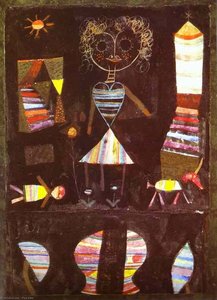
      Puppet theater (1923) autorstwa Paul Klee
      #37

      Puppet theater

      1923

      Puppet Theater: A Surrealist Dance of Forms by Paul Klee Paul Klee’s “Puppet Theater,” painted in 1923, isn't merely a depiction of theatrical imagery; it’s an embodiment of…

      Order this canvas →
      Temple Gardens (1920) autorstwa Paul Klee
      #38

      Temple Gardens

      1920 · Metropolitan Museum of Art

      Paul Klee's “Three Panels,” painted circa 1920, isn’t merely a collection of landscapes; it’s a carefully constructed meditation on perception, memory, and the fractured nature of experience. Emerging…

      Have it painted by hand →
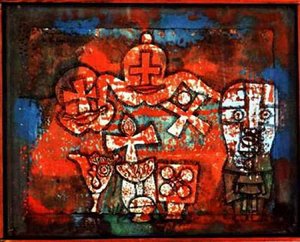
      Chinese porcelain (1940) autorstwa Paul Klee
      #39

      Chinese porcelain

      1940

      A Symphony of Geometric Abstraction In the twilight of his life, Paul Klee composed a visual masterpiece that transcends mere pigment on canvas. The Four Faces, painted in…

      Order this canvas →
      Egzotyka (1939) autorstwa Paul Klee
      #40

      Egzotyka

      1939 · Art Institute of Chicago

      Wzrok błądzi po krajobrazie przeplatających się kształtów, w którym głęboka terakota i palona sienna zderzają się z plamami łupkowego błękitu oraz musztardowej żółci. Nie ma tu horyzontu, jedynie…

      Have it painted by hand →
      Remembrance of a Garden (1914) autorstwa Paul Klee
      #41

      Remembrance of a Garden

      1914

      A Visionary Landscape of MemoryIn Paul Klee’s 1914 masterpiece, Remembrance of a Garden, the viewer is not merely presented with a landscape, but invited into a profound meditation…

      Bring this light home →
      Dziwne spojrzenie (1930) autorstwa Paul Klee
      #42

      Dziwne spojrzenie

      1930 · Art Institute of Chicago

      W samym centrum ciemnego, teksturowanego pola dominuje owalny kształt, który poprzez minimalistyczną geometrię sugeruje obecność twarzy. Kompozycja opiera się na ponurej palecie barw, w której dominują odcienie nocnego…

      Have it painted by hand →
      Boy in Fancy Dress (1931) autorstwa Paul Klee
      #43

      Boy in Fancy Dress

      1931 · Metropolitan Museum of Art

      A single figure emerges from a dense, rhythmic grid of color, appearing less like a solid person and more like a delicate arrangement of tiny, rectangular patches. This…

      Bring this light home →
      The Pathos of Fertility (1921) autorstwa Paul Klee
      #44

      The Pathos of Fertility

      1921 · Metropolitan Museum of Art

      The artwork consists of a centered, seated humanoid figure rendered through delicate black outlines on paper. The figure possesses a large, rounded belly that is decorated with organic…

      Bring this light home →
      Heroiczne Skrzypkowanie autorstwa Paul Klee
      #45

      Heroiczne Skrzypkowanie

      MoMA - Museum of Modern Art

      Wprowadzenie: Paul Klee, urodzony w Szwajcarii niemiecki malarz (1879-1940), był ceniony za swoje unikalne połączenie ekspresjonizmu, kubizmu i surrealizmu. Jako mistrz rysunku z głębokim zrozumieniem teorii koloru, wpływ…

      Order this canvas →
      Arab Song (1932) autorstwa Paul Klee
      #46

      Arab Song

      1932 · The Phillips Collection

      In 1932, Paul Klee composed a visual arrangement that translates the atmosphere of North Africa into a simplified, rhythmic language. The work utilizes oil on burlap to create…

      Bring this light home →
      Flower Family V. (1922) autorstwa Paul Klee
      #48

      Flower Family V.

      1922 · Solomon R. Guggenheim Museum

      Three stylized figures, possessing qualities of both human forms and botanical life, occupy a dark, textured space. A larger figure with an orange-toned body and a circular white…

      Order this canvas →
      Forgetful angel autorstwa Paul Klee
      #49

      Forgetful angel

      Paul Klee's “Forgetful Angel,” painted in 1939 amidst the gathering storm clouds of war, is not merely a depiction of an angel; it’s a profound meditation on memory,…

      Have it painted by hand →
      Singer of the Comic Opera (1927) autorstwa Paul Klee
      #50

      Singer of the Comic Opera

      1927 · Bawarskie Państwowe Zbiory Malarstwa

      Step closer to observe the way the light seems to emerge from within the figure itself. In Singer of the Comic Opera, we encounter a form that feels…

      Bring this light home →
      A Couple of Gods (1924) autorstwa Paul Klee
      #51

      A Couple of Gods

      1924 · Scharf-Gerstenberg Collection

      Step closer to observe these two figures. They emerge from a dark, textured void, appearing less like painted subjects and more like relics unearthed from a forgotten era.…

      Have it painted by hand →
      Walpurgis Night (1935) autorstwa Paul Klee
      #53

      Walpurgis Night

      1935

      The surface of Walpurgis Night consists of gouache applied to fabric stretched over plywood. A monochromatic blue palette dominates the visual field, ranging from deep navy and near-black…

      Bring this light home →
      Static-Dynamic Gradation autorstwa Paul Klee
      #54

      Static-Dynamic Gradation

      Metropolitan Museum of Art

      # Introduction to Expressionism and Paul Klee Expressionism is an art movement that emerged in the early 20th century, characterized by its emphasis on emotional experience and individual…

      Bring this light home →
      Colorful Architecture (1917) autorstwa Paul Klee
      #55

      Colorful Architecture

      1917 · Metropolitan Museum of Art

      A City Born of Dreams: Unveiling Paul Klee’s “Colorful Architecture” Paul Klee's 1917 watercolor, “Colorful Architecture,” is not a rendering of any identifiable place, but rather an evocation—a…

      Have it painted by hand →
      Possibilities at Sea (1932) autorstwa Paul Klee
      #56

      Possibilities at Sea

      1932 · Norton Simon Museum

      A white-outlined diamond holds red grid lines against a dark grey background. On the right, this structure dominates the space. A single, bright white arrow points toward a…

      Have it painted by hand →
      Rose Wind autorstwa Paul Klee
      #57

      Rose Wind

      A Symphony in Color: Exploring Paul Klee’s Rose Wind The moment one encounters Rose Wind, there is an immediate sense of being swept into a rhythmic, breathing landscape…

      Bring this light home →
      Angel in the Making autorstwa Paul Klee
      #59

      Angel in the Making

      Paul Klee's ‘Angel in the Making’, painted around an unspecified date, is not merely a visual composition; it’s a whispered meditation on potentiality, a glimpse into the nascent…

      Order this canvas →
      Dying Down (1940) autorstwa Paul Klee
      #60

      Dying Down

      1940 · Scharf-Gerstenberg Collection

      The composition presents an arrangement of calligraphic, black lines that weave through patches of saturated color. These thick, fluid strokes intersect with deep crimson, burnt sienna, and ochre,…

      Bring this light home →
      Tighter rhythms and freer autorstwa Paul Klee
      #61

      Tighter rhythms and freer

      In the vibrant realm of Expressionist abstraction, Paul Klee’s Tighter rhythms and freer stands as a captivating exploration of color and structure. The painting presents an intricate composition…

      Bring this light home →
      The rumors (1939) autorstwa Paul Klee
      #62

      The rumors

      1939 · Fundacja Barnesa

      In the quiet, evocative depths of Paul Klee’s 1939 watercolor masterpiece, "The Rumors," we encounter a visual language that speaks far more than words ever could. Created during…

      Bring this light home →
      Rose garden (1920) autorstwa Paul Klee
      #63

      Rose garden

      1920

      A Garden of Geometric Dreams: Unveiling Paul Klee’s ‘Rose Garden’ Paul Klee's *Rose Garden*, painted in 1920, is far more than a depiction of flowers; it’s a pivotal…

      Bring this light home →
      Ad marginem (1930) autorstwa Paul Klee
      #64

      Ad marginem

      1930 · Kunstmuseum Basel

      Step closer to observe the quiet tension held within this 1930 composition. At first glance, the eye is drawn to a central, deep terracotta red orb, a circular…

      Bring this light home →
      Untitled (Reconstruction) (1926) autorstwa Paul Klee
      #65

      Untitled (Reconstruction)

      1926 · KODE Art museums and composer homes

      A Labyrinth of Form Step closer to observe the density of this 1926 composition. There is no single point for the eye to rest; instead, one finds oneself…

      Have it painted by hand →
      Tree Nursery (1929) autorstwa Paul Klee
      #67

      Tree Nursery

      1929 · The Phillips Collection

      A rhythmic, horizontal composition defines this 1929 work, utilizing layered bands of pale blue, soft pink, light yellow, sage green, and earthy ochre. The surface is marked by…

      Order this canvas →
      Fire in the Evening (1929) autorstwa Paul Klee
      #68

      Fire in the Evening

      1929 · MoMA - Museum of Modern Art

      To look closely at this small work is to encounter a quiet, structured energy. Created in 1929, the piece presents itself through an arrangement of horizontal bands and…

      Bring this light home →
      The rumors (1939) autorstwa Paul Klee
      #69

      The rumors

      1939

      In the quiet, evocative depths of Paul Klee’s 1939 masterpiece, “The Rumors,” we encounter a visual language that speaks far more than words ever could. Created during one…

      Bring this light home →
      Dotknięte miasto (1936) autorstwa Paul Klee
      #71

      Dotknięte miasto

      1936 · Metropolitan Museum of Art

      Kompozycja prezentuje abstrakcyjną, silnie teksturowaną powierzchnię, która przywodzi na myśl pofragmentowane, szkieletowe środowisko miejskie. Duża, pełna czarna strzała opada ze środka górnej części płótna, kierując wzrok ku gęstej…

      Order this canvas →
      Popularny malunek ścienny (1922) autorstwa Paul Klee
      #72

      Popularny malunek ścienny

      1922 · Metropolitan Museum of Art

      W samym centrum papieru dominuje pojedyncza, wydłużona postać, której obecność odczuwamy poprzez subtelne zestawienie kształtów i linii. Kobieta spogląda na świat wielkimi, migdałowatymi oczami, które zdają się skrywać…

      Have it painted by hand →
      Kolory z dystansu (1932) autorstwa Paul Klee
      #76

      Kolory z dystansu

      1932 · Israel Museum

      Kompozycja ta prezentuje gęstą, nieprzedstawiającą rzeczywistości siatkę nachodzących na siebie kwadratów i prostokątów. Sieć drobnych, ciemnych linii przecina powierzchnię płótna, tworząc małe, komórkowe kształty, które przywodzą na myśl…

      Bring this light home →
      View into the Fertile Country (1932) autorstwa Paul Klee
      #77

      View into the Fertile Country

      1932 · Städel Museum

      The Nile flows as a single, wavy line across the foreground. Behind this blue thread, geometric shapes rise like silent buildings. Rows of multicolored horizontal stripes stretch toward…

      Bring this light home →
      Polyphony (1932) autorstwa Paul Klee
      #78

      Polyphony

      1932 · Kunstmuseum Basel

      Small squares of deep blue, forest green, and ochre settle into a dense, rhythmic grid. Each rectangle rests against its neighbor like a note placed upon a staff.…

      Bring this light home →
      Bust of a Child autorstwa Paul Klee
      #80

      Bust of a Child

      Bust of a Child: An Expressionist Exploration by Paul Klee A Glimpse into Childhood Through Abstract Forms Paul Klee's "Bust of a Child" is a captivating artwork that…

      Order this canvas →
      The Lamb (1920) autorstwa Paul Klee
      #81

      The Lamb

      1920 · Städel Museum

      In the quiet, transformative landscape of early twentieth-century modernism, few works capture the intersection of spiritual devotion and geometric innovation as poignantly as Paul Klee’s “The Lamb,” completed…

      Bring this light home →
      Interior with the Clock (1913) autorstwa Paul Klee
      #82

      Interior with the Clock

      1913 · National Gallery of Art

      The paper holds a soft, ethereal world where shapes drift like clouds through an unseen room. Pale yellows and light blues mingle with lavender and dusty rose, creating…

      Have it painted by hand →
      Girl with Doll autorstwa Paul Klee
      #84

      Girl with Doll

      In the vast landscape of modern art, few works possess the intimate, rhythmic charm found in Paul Klee’s "Girl with Doll Carriage" (Mädchen mit Puppenwagen). Painted in 1923,…

      Bring this light home →
      Municipal Jewel (1917) autorstwa Paul Klee
      #85

      Municipal Jewel

      1917 · Metropolitan Museum of Art

      The painting Municipal Jewel presents an intricate cityscape composed of various shapes and colors. The palette features a vibrant mix of red, blue, yellow, green, and purple. Within…

      Have it painted by hand →
      Diana w Wietrze Jesiennym (1934) autorstwa Paul Klee
      #87

      Diana w Wietrze Jesiennym

      1934

      Diana w Wietrze Jesiennym – Odkrycie Surrealistycznej Elegancji Paula Klee Paul Klee’s *Diana w Wietrze Jesiennym* (Diana in the Autumn Wind) is more than just a painting; it's…

      Order this canvas →
      Fruits on Red (1930) autorstwa Paul Klee
      #88

      Fruits on Red

      1930 · Lenbachhaus

      The composition presents a delicate network of thin stems and rounded geometric forms set against a warm copper-red ground. Rather than a traditional arrangement of harvested produce, the…

      Bring this light home →
      Brama w ogrodzie (1926) autorstwa Paul Klee
      #89

      Brama w ogrodzie

      1926 · Kunstmuseum Bern

      W głębi mrocznej, nastrojowej atmosfery zaczyna rozwijać się rytmiczny taniec tekstur. Wzrok natychmiast przyciąga lewy górny róg, gdzie prostokątna forma pulsuje koncentrycznymi pomarańczowymi i czerwonymi liniami. Ta struktura…

      Order this canvas →
      Captive (1940) autorstwa Paul Klee
      #91

      Captive

      1940

      A Portrait of Resilience: Paul Klee’s “Captive” Paul Klee's "Captive," painted in 1940 during the twilight years of his life and just months before his passing, is far…

      Bring this light home →
      Sunset (1930) autorstwa Paul Klee
      #92

      Sunset

      1930 · Art Institute of Chicago

      The oil on canvas, measuring 46.1 x 70.5 cm, presents an abstract arrangement of geometric and organic shapes. A neutral background is covered by a dense, layered pattern…

      Have it painted by hand →
      In Position (1939) autorstwa Paul Klee
      #93

      In Position

      1939

      Step closer to observe the delicate balance within this 1939 watercolor. There is a certain stillness here, an arrangement that feels both intentional and fragile. The composition rests…

      Order this canvas →
      Enclosure for Pachyderms (1940) autorstwa Paul Klee
      #94

      Enclosure for Pachyderms

      1940 · KODE Art museums and composer homes

      Created in 1940, this oil on canvas presents a structured network of thick, black, irregular lines that traverse the surface in a grid-like pattern. These dark strokes vary…

      Order this canvas →
      Crystal Gradation autorstwa Paul Klee
      #95

      Crystal Gradation

      Kunstmuseum Basel

      In the vast landscape of twentieth-century abstraction, few works possess the hypnotic, rhythmic quality found in Paul Klee’s "Crystal Gradation." Created during the artist's profound period in Murnau,…

      Order this canvas →
      El conquistador autorstwa Paul Klee
      #96

      El conquistador

      “The Great Bear,” painted in 1938 during Klee’s prolific period at Bauhaus Dessau, stands as a cornerstone of his artistic legacy. More than just a depiction of an…

      Order this canvas →
      Landscape with yellow church tower (1920) autorstwa Paul Klee
      #97

      Landscape with yellow church tower

      1920 · Bawarskie Państwowe Zbiory Malarstwa

      A complex, grid-like structure defines this 1920 landscape, utilizing a mosaic of geometric shapes to suggest a village setting. Horizontal lines traverse the canvas, establishing a rhythmic, layered…

      Have it painted by hand →
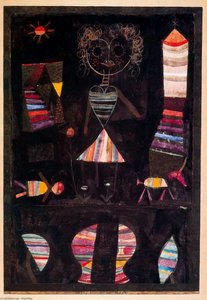
      Puppet Theatre autorstwa Paul Klee
      #98

      Puppet Theatre

      Paul Klee's "Puppet Theater" is far more than a mere depiction of figures; it serves as a profound invitation to delve into the realm of subconscious thought and…

      Have it painted by hand →

      Paul Klee's canvases, period by period

      What Paul Klee painted most

      The four subjects that return most often on these canvases, each with its best-loved example.

      Where Paul Klee's canvases hang

      8 muzeów, w których znajduje się najwięcej obrazów z tej strony.

      Muzeum Miasto Dzieła artysty Paul Klee Obrazy z tej listy
      Metropolitan Museum of Art, Nowy JorkMetropolitan Museum of Art Nowy Jork 56 Ulotka komików, May Picture, Untitled
      Art Institute of Chicago, ChicagoArt Institute of Chicago Chicago 10 Szkoła, Dancing Girl, Egzotyka
      MoMA - Museum of Modern Art, Nowy JorkMoMA - Museum of Modern Art Nowy Jork 9 Twittering Machine 1, Mask of Fear, Heroiczne Skrzypkowanie
      Kunstmuseum Basel, BazyleaKunstmuseum Basel Bazylea 8 Ad marginem, Polyphony, Crystal Gradation
      Lenbachhaus, MonachiumLenbachhaus Monachium 6 Różany ogród, Botaniczny Teatr, Fruits on Red
      Bawarskie Państwowe Zbiory Malarstwa, MonachiumBawarskie Państwowe Zbiory Malarstwa Monachium 20 Singer of the Comic Opera, Landscape with yellow church tower
      The Phillips Collection, WaszyngtonThe Phillips Collection Waszyngton 8 Arab Song, Tree Nursery
      Scharf-Gerstenberg Collection, BerlinScharf-Gerstenberg Collection Berlin 6 A Couple of Gods, Dying Down

      Decade by decade: Paul Klee's most celebrated canvas

      1. 1910s
        In the Style of Kairouan (1914) autorstwa Paul Klee
        9 of 100

        In the Style of Kairouan

        Wiek 31 – 40

        In the annals of modern art, few moments are as transformative as Paul Klee’s 1914 masterpiece, "In the Style of Kairouan." This work serves as a profound declaration…

      2. 1920s
        Nowy Anioł (1920) autorstwa Paul Klee
        1 of 100

        Nowy Anioł

        Wiek 41 – 50 · Israel Museum

        Stworzony w 1920 roku Nowy Anioł autorstwa Paula Klee oferuje wgląd w niezwykłą, unikalną wizję artysty. Dzieło to jest monotypią – wybór ten odzwierciedla zainteresowanie Klee unikalnymi, niepowtarzalnymi…

      3. 1930s
        To Parnassus - Il Parnaso (1932) autorstwa Paul Klee
        Ranked 3 of 100

        To Parnassus - Il Parnaso

        Wiek 51 – 60 · Kunstmuseum Bern

        To Parnassus – A Symphony of Geometry and Dream This striking artwork by Paul Klee isn’t merely a landscape; it's an invitation into a realm where imagination reigns…

      4. 1940s
        Flora na skałach Słońce (1940) autorstwa Paul Klee
        Ranked 24 of 100

        Flora na skałach Słońce

        Wiek: 61 · Kunstsammlung Nordrhein-Westfalen

        U schyłku swojej niezwykłej kariery Paul Klee podarował światu sztuki 'Flora na skałach Słońce' – arcydzieło z 1940 roku, które stanowi głęboką medytację nad punktem styku tego, co…

      Your questions on Paul Klee's paintings, answered

      Which is the most celebrated painting by Paul Klee?Read the answer

      Nowy Anioł (1920), Israel Museum, Jerozolima. Twittering Machine 1 and To Parnassus - Il Parnaso (1932) follow.

      How old was Paul Klee at the time of Nowy Anioł?Read the answer

      Paul Klee, born in 1879, was 41 years old: Nowy Anioł dates from 1920.

      Which ten paintings is Paul Klee most famous for?Read the answer

      Nowy Anioł, Twittering Machine 1, To Parnassus - Il Parnaso, Legenda Nilu, Flora on sand, Krajobraz z żółtymi ptakami, Fish Image, With the eagle, In the Style of Kairouan i Różany ogród. Each canvas in the ranking above comes with its year and its museum.

      How many paintings by Paul Klee are known?Read the answer

      669 works by Paul Klee are in our catalogue, dated 1910 to 1940.

      Which museums hold Paul Klee's best-known canvases?Read the answer

      Mostly in Metropolitan Museum of Art (Nowy Jork), Art Institute of Chicago (Chicago) i MoMA - Museum of Modern Art (Nowy Jork); the list above names each museum and its canvases.

      In which years did Paul Klee paint the most celebrated canvases?Read the answer

      In 1920s, which gave 36 of the 100 works on this page, Nowy Anioł among them.

      What are the first and the last of Paul Klee's famous canvases?Read the answer

      The earliest canvas here is Flower stand with watering can and bucket (1910); the latest is Flora na skałach Słońce (1940).

      Which subjects return most often in Paul Klee's paintings?Read the answer

      Geometric shapes (44), Color theory (12) i Landscape (9), across the 100 works on this page.

      What did Paul Klee usually paint with?Read the answer

      Watercolor, used in 21 of the 100 works on this page.

      To which art movement does Paul Klee belong?Read the answer

      Ekspresjonizm, as the canvases on this page show.

      What can I see by Paul Klee at the Metropolitan Museum of Art?Read the answer

      The Metropolitan Museum of Art, Nowy Jork holds 17 of the works on this page, among them Ulotka komików, May Picture i Untitled.

      Can I order a hand-painted copy of a painting by Paul Klee?Read the answer

      Yes. Every painting on this page can be ordered from its own page as an oil reproduction painted by hand, or as a fine art print, in the size you choose.

      Paul Klee: the painter's story

      Wczesne lata Paula Klee

      Urodzony 18 grudnia 1879 roku w Münchenbuchsee koło Berna w Szwajcarii, Paul Klee dorastał w domu, w którym rytm życia wyznaczała dyscyplina muzyki. Był drugim dzieckiem Hansa Wilhelma Klee, niemieckiego nauczyciela muzyki, oraz Idy Marie Klee, szwajcarskiej śpiewaczki. Dźwięki towarzyszące profesjom rodziców prawdopodobnie ukształtowały atmosferę jego dzieciństwa, kładąc rytmiczny fundament, który towarzyszył mu przez wszystkie późniejsze lata. Już w wieku jedenastu lat Klee wykazywał znaczący talent do gry na skrzypcach, co zaowocowało zaproszeniem do występów z Stowarzyszeniem Muzycznym w Bernie.

      Mimo muzycznego predyspozycji, wraz z upływem czasu coraz silniej zaczęła go przyciągać inna ścieżka. W 1898 roku przeprowadził się do Monachium, aby rozpocząć studia w Akademii Sztuk Pięknych. W latach 1898–1901 kształcił się pod okiem Heinricha Knirra oraz Franza von Stucka. Te wczesne lata formalnej edukacji były czasem intensywnej nauki i zmagań. Choć wykazywał naturalne predyspozycje do rysunku, podczas pierwszych mroźnych zim w Monachium posługiwanie się kolorem często stanowiło dla niego trudną do pokonania barierę.

      Podróż ku abstrakcji

      Droga ku nowemu sposobowi widzenia nie była linią prostą. W swoich wczesnych latach, od października 1901 do maja 1902 roku, Paul Klee podróżował do Włoch wraz z Hermannem Hallerem. Choć to doświadczenie było niezwykle istotne, artysta wspominał później, że zmagania z kolorem pozostawały dla niego trudnym, długofalowym wyzwaniem. Czuł się zawieszony między klasycznymi tradycjami przeszłości a narastającą potrzebą odnalezienia bardziej osobistego języka wizualnego. Przez długi czas jego twórczość koncentrowała się głównie na rysunku i kompozycjach czarno-białych, często skłaniając się ku grotesce lub satyrze.

      Głęboka przemiana dokonała się w 1914 roku podczas wyprawy do Tunezji z Augustem Macke i Louisem Moilliet. Przejrzyste światło Afryki Północnej zmieniło dla niego wszystko. W tym intensywnym słońcu zaczął on uwalniać kolor od jego obowiązku opisywania fizycznych przedmiotów. Zamiast używać barw do naśladowania świata, uczynił z nich niezależną siłę. To olśnienie dało mu impuls niezbędny do wkroczenia w świat abstrakcji. Do 1915 roku Paul Klee odwrócił się od natury i nigdy więcej nie malował z modelu, wybierając zamiast tego wyrażanie świata poprzez własne, wewnętrzne symbole i wyobraźnię.

      • Hammamet ze swoją meczetem (1914)

      Lata Bauhausu i dojrzewanie stylu

      W 1920 roku rozpoczął się zupełnie nowy rozdział w jego życiu, kiedy Walter Gropius zaprosił Paul Klee do grona wykładowców Bauhausu. Przez następną dekadę artysta tworzył w murach tej słynnej szkoły, pracując ramię w ramię z Wassylym Kandinskym. Był to prawdopodobnie najbardziej płodny okres w jego karierze, gdyż niemal połowa całego dorobku artystycznego powstała właśnie w ciągu tych dziesięciu lat. Pobyt w Bauhausie pozwolił mu na zgłębianie relacji między kolorem a formą z niemal naukową precyzją, którą skrupulatnie dokumentował w swoich notatnikach. Te zapiski stały się nieodzownym źródłem wiedzy dla każdego, kto pragnie zrozumieć mechanizmy współczesnej kompozycji.

      Stabilizacja kariery pedagogicznej została jednak brutalnie przerwana przez polityczne wstrząsy w Niemczech. W 1933 roku, w wyniku dojścia do władzy reżimu narodowosocjalistycznego, który uznał jego twórczość za „sztukę zdegenerowaną”, Paul Klee został zwolniony ze stanowiska w Akademii Sztuk Pięknych w Düsseldorfie. Wydarzenie to zmusiło go do opuszczenia akademii i powrotu do rodzinnego Berna. Zmiana otoczenia oraz narastający niepokój polityczny zaczęły nieodwracalnie wpływać na ton jego prac, prowadząc go od radosnej fantazji wczesnych lat w stronę bardziej mrocznej, ciężkiej i pełnej powagi perspektywy.

      Technika i styl artystyczny

      Paul Klee był z natury wybitnym rysownikiem, który posiadał głębokie, niemal naukowe zrozumienie teorii koloru. Jego podejście do płótna rzadko polegało na prostej imitacji rzeczywistości; zamiast tego budował swoje kompozycje poprzez niezwykle indywidualny styl, w którym przeplatały się wpływy ekspresjonizmu, kubizmu i surrealizmu. Często pracował w małej skali, sięgając po delikatne media, takie jak akwarela na tiulu lub papierze zagruntowanym kredą. Te eksperymenty pozwalały mu badać interakcję światła i pigmentu w sposób, którego tradycyjne malarstwo olejne nie było w stanie uchwycić. Był również płodnym grafikiem, wykorzystującym techniki miedziorytu na cynku oraz litografię, aby nieustannie rozszerzać swój wizualny język.

      W jego obrazowaniu odnaleźć można pewną radosną grę, która wydaje się jednocześnie wyrafinowana i prosta. Często wypełniał swoje dzieła powracającymi motywami: małymi, kreskowymi postaciami, zawieszonymi rybami czy księżycowymi twarzami. Symbole te były zazwyczaj układane w siatki lub wzory, które sprawiały wrażenie wizualnej muzyki. Techniczna ciekawość prowadziła go nawet ku niekonwencjonalnym metodom, takim jak rysowanie igłą na czarnym szkle – technikę, dzięki której stworzył pięćdziesiąt siedem unikalnych prac. Metoda ta wymagała niezwykle pewnej ręki oraz precyzyjnego zrozumienia tego, jak światło będzie załamywać się na rysach pozostawionych na ciemnej powierzchni.

      Kluczowe dzieła i wybitne kompozycje

      Zdolność, jaką posiadał Paul Klee do przekładania tego, co niewidzialne, na język widzialny, objawia się najpełniej w jego dziełach z okresu dojrzałego. W 1915 roku namalował Woman Knitting – płótno, które w niezwykły sposób chwyta poczucie cichego, rytmicznego ruchu. W miarę jak jego fascynacja relacją między kolorem a formą pogłębiała się, w 1925 roku powstała Fish Magic, dzieło demonstrujące jego unikalną umiejętność wykorzystywania prostych kształtów do sugerowania czegoś znacznie bardziej złożonego i tajemniczego. Jego kompozycje często opierały się na specyficznej formie wizualnej muzyki, w której linie i barwy działały niczym nuty zapisane na pięciolinii.

      Pod koniec lat 20. XX wieku jego twórczość nabrała bardziej ustrukturyzowanego, niemal architektonicznego charakteru. Obraz Ships in the Dark, stworzony w 1927 roku, ukazuje jego mistrzostwo w balansowaniu światłem i cieniem w celu wykreowania głębi przestrzennej. Wraz z tym, jak polityczny klimat w Europie stawał się coraz cięższy, jego sztuka podążała tym samym tropem. Beztroska wczesnych lat zaczęła ustępować miejsca bardziej ponurej tonacji. Ta przemiana jest wyraźnie widoczna w dziele Comedians' Handbill z 1938 roku, gdzie linie stają się grubsze, a formy bardziej ogólne. Nawet w ostatnich latach życia, w obliczu pogarszającego się stanu zdrowia, artysta nie przestawał szukać sposobów na wyrażenie powagi otaczającego go świata, co doskonale obrazuje praca z 1939 roku Angel Applicant.

      • Woman Knitting (1915)
      • Fish Magic (1925)
      • Ships in the Dark (1927)
      • Comedians' Handbill (1938)
      • Angel Applicant (1939)

      Późne lata i śmierć

      W latach 30. XX wieku sytuacja polityczna w Europie zaczęła gwałtownie ciemnieć. W 1933 roku naziści uznali jego sztukę za „zdegenerowaną”, co doprowadziło do odebrania mu stanowiska wykładowcy w Akademii Sztuk Pięknych w Düsseldorfie. To bolesne zwolnienie położyło kres okresowi względnej stabilizacji i zmusiło artystę do powrotu do rodzinnego Berna. W miarę jak cienie wojny i politycznego chaosu stawały się coraz wyraźniejsze, jego twórczość zaczęła ulegać transformacji. Lekkość wczesnych lat ustąpiła miejsca bardziej ponurej, melancholijnej perspektywie. Linie na jego płótnach stały się cięższe, często przybierając formę grubych, czarnych pasów, a kształty stały się bardziej ogólne i rozbudowane.

      Ta ewolucja w malarstwie była lustrem coraz większego niepokoju otaczającego świat. Kapryśność i zabawa, które niegdyś definiowały jego kompozycje, ustąpiły miejsca poczuciu ciężaru i powagi. Nawet w obliczu pogarszającego się stanu zdrowia, Paul Klee nie przestał tworzyć dzieł, które potrafiły uchwycić napięcie tamtej epoki. Jego późniejsze prace sprawiały wrażenie bardziej surowych, wykorzystując prostsze kolory i bardziej masywne formy, aby wyrazić poczucie straty lub powagi. Artysta odszedł 29 czerwca 1940 roku w Muralto, w Szwajcarii.

      • Comedians' Handbill (1938)
      • Angel Applicant (1939)

      Gdzie dziś można podziwiać jego dzieła

      Aby odnaleźć ślady jego niezwykle płodnej twórczości, warto udać się do Berna w Szwajcarii. To właśnie tam znajduje się Zentrum Paul Klee, które stanowi serce jego artystycznego dziedzictwa, oferując przestrzeń do intymnego spotkania z unikalnym językiem wizualnym, który Paul Klee wypracowywał przez całe swoje życie. Nieopodal, Kunstmuseum Bern również przechowuje fragmenty jego fascynującej historii, prezentując między innymi dzieła takie jak To Parnassus.

      Wpływ, jaki wywarł na światową sztukę, wykracza daleko poza granice Szwajcarii. W Nowym Jorku Metropolitan Museum of Art posiada znaczącą kolekcję, obejmującą dziewięćdziesiąt prac podarowanych przez Heinza Berggruena. Te płótna pozwalają widzom prześledzić ewolucję jego myśli poprzez specyficzne, niemal metafizyczne podejście do koloru i formy. Z kolei w Londynie kolekcja Tate skrywa kilka jego kompozycji, wśród których odnaleźć można m.in. Walpurgis Night.

      • To Parnassus
      • Walpurgis Night

      Wszystkie 669 dzieła artysty Paul Klee →