Pracownia — Bezpłatna wysyłka na cały świat — Czas dostawy: 2–6 tygodni
      Paul Nash, 1889 – 1946

      100 najsłynniejszych obrazów artysty Paul Nash, zestawienie

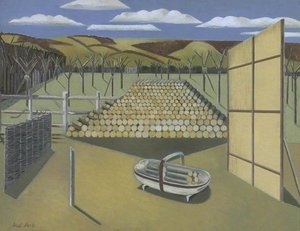
      Najbardziej uwielbianym obrazem Paul Nash jest The Separation of Light from Darkness (1924). Następne w zestawieniu płócien najlepiej znanych czytelnikom są The Stackyard (1925) oraz Sunflower and sun (1942). Nasz katalog zawiera 111 dzieł autorstwa Paul Nash: oto 100 najsłynniejszych z nich, z podaniem roku powstania, muzeum oraz tego, co czyni je wyjątkowymi.

      Ranking oparty na naszym wskaźniku popularności, który łączy liczbę wyszukiwań, wizyt oraz zamówień dla każdego dzieła. Aktualizacja: Październik 2026. Każdy obraz na tej stronie można zamówić jako ręcznie malowaną reprodukcję olejną na płótnie lnianym lub jako wysokiej jakości wydruk artystyczny, wykonany w wybranym przez Ciebie formacie.

      Portret Paul Nash
      Paul Nash · 1889 – 1946
      Urodzony · zmarł
      1889 – 1946, Kensington
      Nurt
      Surrealism
      Dzieła w naszym katalogu
      111
      Najsłynniejsze
      The Separation of Light from Darkness (1924)
      Najwięcej dzieł w
      Narodowa Galeria Kanady

      Najsłynniejsze 10 obrazów Paul Nash: płótna, które zna każdy

      The Separation of Light from Darkness (1924) autorstwa Paul Nash
      1

      The Separation of Light from Darkness

      1924 · Woodcut

      We are looking at The Separation of Light from Darkness, a work created by Paul Nash in 1924. This piece emerged during a significant period in the artist's development, following his formative years in the United Kingdom. Nash was born in Kensington, United Kingdom, in 1889, and his perspective was shaped by the landscapes and environments of his home country.

      Landscape of the Moon's Last Phase (1944) autorstwa Paul Nash
      4

      Landscape of the Moon's Last Phase

      1944 · Oil On Canvas · Walker Art Gallery, Liverpool

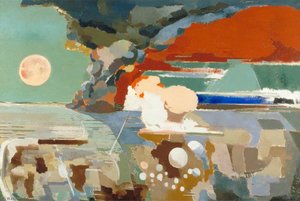
      Paul Nash’s Landscape of the Moon's Last Phase transports the viewer to a moment suspended between night and dawn, a breathtaking tableau dominated by the soft, yet profound, luminescence of a waning moon. This painting is more than a mere depiction of nature; it is an atmospheric meditation on cycles—the ebb and flow of light, life, and time itself. The composition draws the eye across a sweeping vista where foreground…

      Circle of the Monoliths (1938) autorstwa Paul Nash
      5

      Circle of the Monoliths

      1938 · Oil On Canvas · Leeds Art Gallery, Leeds

      Paul Nash's “Circle of the Monoliths,” painted in 1938, isn’t merely a landscape; it’s a meticulously constructed dreamscape, a potent distillation of memory, myth, and the unsettling beauty of the British countryside. This remarkable work, housed at Leeds Museums and Galleries, invites viewers into a realm where familiar forms are fractured, perspectives shift, and an ancient, almost primeval energy permeates every detail. Nash, deeply influenced by William Blake’s visionary poetry…

      The Creation of the Firmament (1924) autorstwa Paul Nash
      6

      The Creation of the Firmament

      1924 · Woodcut

      In this 1924 woodcut, we witness a moment of profound, almost violent transition. The work, part of a series of illustrations for the book Genesis, moves away from the figurative to explore the very mechanics of existence. It is a stark, monochromatic vision where the separation of light from darkness is rendered not as a gentle dawn, but as a rhythmic, angular tension. The composition is dominated by a series…

      The Creation of Land (1924) autorstwa Paul Nash
      7

      The Creation of Land

      1924 · Woodcut

      The Creation of Land emerges from the shadows of a profound transformation. Created by Paul Nash in 1924, this work exists as a singular moment within a larger, rhythmic sequence. It belongs to a series of woodcuts that draw their strength from the biblical Genesis, capturing the very instant when the world begins to take shape through a jerky, frightening cataclysm. The landscape does not merely appear; it erupts.

      Oxford During the War (1942) autorstwa Paul Nash
      8

      Oxford During the War

      1942 · Oil On Canvas · Worcester College, Oxford

      Paul Nash’s "Oxford During the War," painted in 1942, is far more than a mere depiction of an English landscape; it is a profound meditation on endurance. The canvas captures a scene steeped in the palpable tension of wartime, yet simultaneously breathes with an almost defiant tranquility. One gazes upon the foreground, drawn immediately to the imposing presence of the parked tank—a stark emblem of military reality—which anchors the composition.…

      The Diving Stage (1928) autorstwa Paul Nash
      9

      The Diving Stage

      1928 · Oil On Canvas · Brytyjska Kolekcja Councilu, Londyn

      The Haunting Stillness of “The Diving Stage” Paul Nash’s “The Diving Stage,” painted in 1928, isn't merely a depiction of a seaside structure; it’s a meticulously crafted tableau of isolation, anticipation, and the unsettling beauty of suspended time. Emerging from the British Council Collection, this work transcends its subject matter to become a profound meditation on human presence within a vast, indifferent landscape. The painting immediately commands attention with its…

      The Creation of the Starry Firmament (1924) autorstwa Paul Nash
      10

      The Creation of the Starry Firmament

      1924 · Woodcut

      The Creation of the Starry Firmament is a significant woodcut by the British artist Paul Nash. Created in 1924, this work emerged from a period of intense creative development for the artist. It was produced as part of a series of illustrations for the book Genesis, a project that sought to visualize the biblical narrative through a modern, abstracted lens. The piece captures a moment of cosmic emergence, translating the…

      Więcej płócien artysty Paul Nash, od 11 do 100

      November Moon (1942) autorstwa Paul Nash
      #88

      November Moon

      1942 · Fitzwilliam College

      In the quietude of 1942, amidst a world gripped by the profound tensions of global conflict, Paul Nash captured a moment of profound stillness in his evocative masterpiece,…

      Zamów to płótno →
      Telecommunications (1934) autorstwa Paul Nash
      #89

      Telecommunications

      1934 · Walker Art Gallery

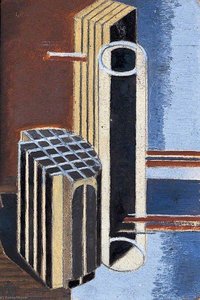
      Paul Nash’s 1934 painting, “Telecommunications,” isn’t merely a still life; it’s a carefully constructed visual argument about the burgeoning anxieties and promises of modernity. Rendered in a restrained…

      Zamów ręczne malowanie →
      Druid Landscape (1938) autorstwa Paul Nash
      #91

      Druid Landscape

      1938 · Brytyjska Kolekcja Councilu

      Paul Nash’s Druid Landscape, painted in 1938, isn't merely a depiction of a landscape; it’s an immersion into a carefully constructed dreamscape. Created during a period of profound…

      Zamów ręczne malowanie →
      Dymchurch Steps autorstwa Paul Nash
      #93

      Dymchurch Steps

      Narodowa Galeria Kanady

      The oil on canvas titled Dymchurch Steps is a work by the British artist Paul Nash. This piece was painted and re-worked between 1924 and 1944. It measures…

      Zamów to płótno →
      Chestnut Waters autorstwa Paul Nash
      #94

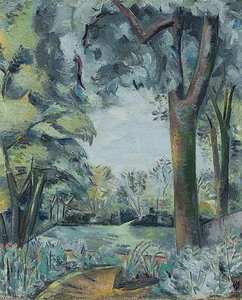
      Chestnut Waters

      Narodowa Galeria Kanady

      Paul Nash presents Chestnut Waters, an oil on canvas that captures a specific, quiet moment in the English landscape. The work originated in 1923 and was later reworked…

      Zamów ręczne malowanie →
      Landscape (verso) autorstwa Paul Nash
      #100

      Landscape (verso)

      Fitzwilliam College

      In the quiet corners of art history, few works capture the delicate equilibrium between the tangible world and the ethereal spirit quite like Paul Nash’s Landscape (verso). This…

      Zamów to płótno →

      Płótna Paul Nash epoka po epoce

      Co najczęściej malował Paul Nash

      Cztery tematy najczęściej pojawiające się na tych płótnach, z których każdy wraz z jego najbardziej cenionym przykładem.

      Gdzie wiszą płótna Paul Nash

      8 muzeów, w których znajduje się najwięcej obrazów z tej strony.

      Muzeum Miasto Dzieła artysty Paul Nash Obrazy z tej listy
      Narodowa Galeria Kanady, OttawaNarodowa Galeria Kanady Ottawa 9 A Night Bombardment, Void, Night Fighter
      Government Art Collection, LondynGovernment Art Collection Londyn 5 Pink Hyacinth, Riviera Window, Cros de Cagnes, Landscape
      Brytyjska Kolekcja Councilu, LondynBrytyjska Kolekcja Councilu Londyn 4 The Diving Stage, Eclipse of the Sunflower, Druid Landscape
      Leeds Art Gallery, LeedsLeeds Art Gallery Leeds 3 Circle of the Monoliths, Still Life with Bog Cotton, The Shore
      Fitzwilliam College, CambridgeFitzwilliam College Cambridge 3 Coronilla (recto), November Moon, Landscape (verso)
      Imperialne Muzeum Wojny, LondynImperialne Muzeum Wojny Londyn 6 Follow the Fuhrer Above the Clouds, Battle of Germany
      Art Gallery of New South Wales, SydneyArt Gallery of New South Wales Sydney 2 Sunflower and sun, Mimosa Wood
      Walker Art Gallery, LiverpoolWalker Art Gallery Liverpool 2 Landscape of the Moon's Last Phase, Telecommunications

      Najukochańsze płótno Paul Nash z każdej dekady

      1. 1910s
      2. 1920s
        The Separation of Light from Darkness (1924) autorstwa Paul Nash
        Płótno 1 z 100

        The Separation of Light from Darkness

        Wiek 31 – 40

        We are looking at The Separation of Light from Darkness, a work created by Paul Nash in 1924. This piece emerged during a significant period in the artist's…

      3. 1930s
        Circle of the Monoliths (1938) autorstwa Paul Nash
        5 z 100

        Circle of the Monoliths

        Wiek 41 – 50 · Leeds Art Gallery

        Paul Nash's “Circle of the Monoliths,” painted in 1938, isn’t merely a landscape; it’s a meticulously constructed dreamscape, a potent distillation of memory, myth, and the unsettling beauty…

      4. 1940s
        Sunflower and sun (1942) autorstwa Paul Nash
        Płótno 3 z 100

        Sunflower and sun

        Wiek 51 – 57 · Art Gallery of New South Wales

      O płótnach Paul Nash: odpowiedzi na Twoje pytania

      Jakie jest najsłynniejsze dzieło Paul Nash?Przeczytaj odpowiedź

      The Separation of Light from Darkness (1924), a następnie The Stackyard (1925) i Sunflower and sun (1942).

      W jakim wieku był Paul Nash, gdy namalowano The Separation of Light from Darkness?Przeczytaj odpowiedź

      Paul Nash, urodzony/a w 1889, miał/a 35 lat: The Separation of Light from Darkness pochodzi z 1924.

      Jakie są 10 najsłynniejszych obrazów autorstwa Paul Nash?Przeczytaj odpowiedź

      The Separation of Light from Darkness, The Stackyard, Sunflower and sun, Landscape of the Moon's Last Phase, Circle of the Monoliths, The Creation of the Firmament, The Creation of Land, Oxford During the War, The Diving Stage i The Creation of the Starry Firmament. Każde płótno w powyższym rankingu zawiera informację o roku powstania oraz muzeum.

      Ile dzieł namalował Paul Nash?Przeczytaj odpowiedź

      W naszym katalogu znajduje się 111 dzieł artysty Paul Nash, datowanych od 1914 do 1945.

      Gdzie mogę zobaczyć najsłynniejsze płótna Paul Nash?Przeczytaj odpowiedź

      Większość znajduje się w Narodowa Galeria Kanady (Ottawa), Government Art Collection (Londyn) i Brytyjska Kolekcja Councilu (Londyn); powyższa lista wymienia każde muzeum oraz jego płótna.

      Kiedy Paul Nash namalował swoje najbardziej uwielbiane płótna?Przeczytaj odpowiedź

      W 1920s, który obejmuje 35 z 100 dzieł na tej stronie, wśród nich znajduje się The Separation of Light from Darkness.

      Które z najsłynniejszych płócien Paul Nash powstały na początku i na końcu jego twórczości?Przeczytaj odpowiedź

      Najwcześniejsze płótno pochodzi z The Orchard (1914), a najpóźniejsze z Solstice of the Sunflower (1945).

      Co najczęściej malował Paul Nash?Przeczytaj odpowiedź

      Landscape (20), Geometric shapes (8) i British art (8), w ramach 100 dzieł na tej stronie.

      W jakiej technice najczęściej malował Paul Nash?Przeczytaj odpowiedź

      Oil On Canvas, użyte w 8 z 100 dzieł na tej stronie.

      Do jakiego nurtu należy obraz Paul Nash?Przeczytaj odpowiedź

      Surrealism, co pokazują płótna na tej stronie.

      Które płótna Paul Nash znajdują się w Narodowa Galeria Kanady?Przeczytaj odpowiedź

      Muzeum Narodowa Galeria Kanady, Ottawa posiada 9 dzieł widocznych na tej stronie, w tym A Night Bombardment, Void i Night Fighter.

      Czy mogę kupić reprodukcję płótna autorstwa Paul Nash?Przeczytaj odpowiedź

      Tak. Każdy obraz na tej stronie można zamówić z jego własnej podstrony jako ręcznie malowaną reprodukcję olejną lub jako wysokiej jakości wydruk artystyczny w wybranym przez Ciebie rozmiarze.

      Paul Nash: życie w malarstwie

      Paul Nash: Wizjoner Krajobrazu i Kronikarz Wojny

      Paul Nash, urodzony w 1889 roku w Londynie jako John Northcote Nash, był postacią kluczową w brytyjskim modernizmie, artystą, który z niezwykłą wrażliwością łączył tradycję krajobrazu z nowatorskimi tendencjami modernistycznymi i surrealistycznymi. Jego życie, naznaczone zarówno osobistymi tragediami – chorobami psychicznymi matki, jak i doświadczeniami wojennymi, głęboko wpłynęło na jego twórczość, nadając jej wyjątkowy charakter i głębię symboliczną. Wychowany w rodzinie, gdzie ojciec był prawnikiem, a matka wykazywała oznaki choroby psychicznej, Nash przeniósł się z rodziną do Iver Heath, co miało poprawić stan zdrowia jego matki. To właśnie tam, otoczony bujną przyrodą i starożytnymi zabytkami – grobami kurhanowymi i pozostałościami kultury epoki kamienia – kształtowały się jego wczesne inspiracje. Edukację artystyczną podjął w Parsons School of Art oraz Slade School of Fine Art, gdzie choć wykazywał talent do malarstwa krajobrazowego, z trudem radził sobie z rysunkiem figuralnym. Wczesne prace Nasha noszą ślady wpływu Williama Blake’a i J.M.W. Turnera, mistrzów romantyzmu, a także fascynacji historycznymi pejzażami, nasyconymi atmosferą minionych epok.

      Od Modernizmu do Surrealistycznych Inspiracji

      Styl Paula Nasha stanowił unikalne połączenie modernistycznej awangardy z tradycyjną techniką malarską. Wykorzystywał odważne kolory, geometryczne kształty i elementy abstrakcji, co wyróżniało go na tle ówczesnych artystów. W 1928 roku, po obejrzeniu wystawy Giorgio de Chirico, Nash uległ wpływowi surrealizmu, choć nigdy nie uznawał się za pełnoprawnego przedstawiciela tego nurtu. Surrealistyczne inspiracje przełożyły się na jego krajobrazy, w których codzienne obiekty nabierały symbolicznego znaczenia, tworząc atmosferę tajemniczości i oniryczności. Jego prace z tego okresu charakteryzują się niezwykłą kompozycją i precyzją detalu, a jednocześnie emanują subtelną melancholią i poczuciem niepokoju. Nash był pionierem brytyjskiego modernizmu, artystą, który potrafił łączyć tradycję z nowoczesnością, tworząc dzieła o ponadczasowej wartości.

      Wojenne Widzienia: "The Menin Road" i "Aerial Creatures"

      Doświadczenia wojenne miały fundamentalny wpływ na twórczość Paula Nasha. Służąc jako oficjalny artysta wojenny podczas I i II wojny światowej, dokumentował okrucieństwa i zniszczenia spowodowane konfliktem. Jego obrazy z pola bitwy, takie jak słynne "The Menin Road" (Droga do Menina), to nie gloryfikujące sceny walki, lecz przejmujące wizje zranionej ziemi, symbolizujące bezsens wojny i jej tragiczny wpływ na krajobraz. W czasie II wojny światowej Nash stworzył cykl "Aerial Creatures" ("Lotne Stworzenia"), przedstawiający wraki samolotów w krajobrazach – antropomorficzne obrazy maszyn śmierci, które stały się wyrazem jego rozczarowania technologią i jej destrukcyjnym potencjałem. Te prace, łączące elementy surrealizmu z realizmem, świadczą o ewolucji stylu Nasha i pogłębianiu jego symboliki.

      Dziedzictwo i Trwałe Znaczenie

      Paul Nash zmarł w 1946 roku, pozostawiając po sobie bogate dziedzictwo artystyczne. Jego prace do dziś zachwycają widzów swoją niezwykłą siłą wyrazu, głębią symboliczną i pięknem krajobrazów. Był współzałożycielem grupy Unit One w 1933 roku, obok takich artystów jak Ben Nicholson i Barbara Hepworth, co umocniło jego pozycję w brytyjskiej awangardzie. Jego twórczość wywarła wpływ na kolejne pokolenia artystów, a jego obrazy znajdują się w prestiżowych kolekcjach muzealnych, takich jak Tate Britain, Imperial War Museum i York Art Gallery. Nash pozostaje jednym z najważniejszych przedstawicieli brytyjskiego modernizmu, artystą, który potrafił uchwycić ducha swojej epoki i przekazać go przyszłym pokoleniom w sposób niezapomniany. Jego krajobrazy, nasycone symboliką i emocjami, stanowią świadectwo głębokiej wrażliwości i niezwykłego talentu artysty.

      Wszystkie 111 dzieła artysty Paul Nash →