Pracownia — Bezpłatna wysyłka na cały świat — Czas dostawy: 2–6 tygodni
      Ravi Varma, 1848 – 1906

      Ravi Varma: The 100 Best-Known Paintings

      Of all Ravi Varma's paintings, Damayanti And Hamsam (1899) is the most famous; it hangs in the Sandeep - Gitanjali Maini Foundation, Bengaluru. Close behind come Maharani Chimnabai II (1889) and Music Hath Charms (Kadambari) (1890). Among the 136 works by Ravi Varma in our catalogue, these 100 are the most celebrated, each shown with its date, its museum and its story.

      Ranking oparty na naszym wskaźniku popularności, który łączy liczbę wyszukiwań, wizyt oraz zamówień dla każdego dzieła. Aktualizacja: Październik 2026. Each painting on this page can be ordered as an oil reproduction painted by hand on linen canvas, or as a fine art print, made to the size you choose.

      Portret Ravi Varma
      Ravi Varma · 1848 – 1906
      Urodzony · zmarł
      1848 – 1906, Kilmangaro
      Nurt
      Academic & indian fusion
      Dzieła w naszym katalogu
      136
      Najsłynniejsze
      Damayanti And Hamsam (1899)
      Najwięcej dzieł w
      The Raja Ravi Varma Heritage Foundation

      Ravi Varma's 10 most celebrated paintings

      Damayanti And Hamsam (1899) autorstwa Ravi Varma
      1

      Damayanti And Hamsam

      1899 · Oil On Canvas · Sandeep - Gitanjali Maini Foundation, Bengaluru

      In the quietude of a sun-drenched afternoon, Raja Ravi Varma captures a scene that transcends time, inviting the viewer into a realm where myth and reality softly intertwine. Damayanti And Hamsam is not merely a painting; it is a window into the soul of Indian classical storytelling. The artwork presents a serene encounter between the beautiful Damayanti, daughter of King Bhima, and a graceful white swan, or hamsa. As she…

      Maharani Chimnabai II (1889) autorstwa Ravi Varma
      2

      Maharani Chimnabai II

      1889 · Painting · The Raja Ravi Varma Heritage Foundation, Bangalore

      To stand before Maharani Chimnabai II is to be enveloped in an atmosphere of opulent grace and quiet power. Painted by the masterful hand of Raja Ravi Varma in 1889, this portrait transcends a mere depiction; it is a window into the zenith of late 19th-century Indian aristocracy, filtered through the sophisticated lens of European academic painting techniques. The subject herself commands attention—a vision of regal poise seated upon an…

      Music Hath Charms (Kadambari) (1890) autorstwa Ravi Varma
      3

      Music Hath Charms (Kadambari)

      1890 · Oil On Canvas · The Raja Ravi Varma Heritage Foundation, Bangalore

      A woman sits upon a bench, her fingers poised near the strings of a sitar. She wears a traditional sari and a bindi rests upon her forehead. Around her, the world is quieted by the presence of greenery and two birds resting in the background. A clock hangs on the wall above her head, marking the passage of time in this indoor space. The scene captures a moment of focused…

      Nair Lady With A Mirror (1894) autorstwa Ravi Varma
      4

      Nair Lady With A Mirror

      1894 · Oil On Canvas · Sandeep - Gitanjali Maini Foundation, Bengaluru

      This exquisite portrait, titled Nair Lady With A Mirror, invites the viewer into an intimate, almost whispered moment of personal contemplation. It captures a lady caught in the gentle ritual of grooming—the act of brushing her hair while gazing into the reflective surface before her. Raja Ravi Varma, master chronicler of everyday Indian life imbued with classical grace, has gifted us more than just a likeness; he offers a window…

      Woman Holding a Fan (1895) autorstwa Ravi Varma
      5

      Woman Holding a Fan

      1895 · Oil On Canvas · Victoria and Albert Museum, Londyn

      A woman leans against a stone balustrade, her silhouette softened by the fading light of a sunset. She wears a sari of shimmering light blue and silver, the fabric catching the glow like water under a summer moon. Her dark hair falls in fluid lines down her back, a deep contrast to the warm pinks and oranges of the sky behind her. In her hand, she holds a red fan,…

      Shakuntala writing a love letter on a lotus leaf (1880) autorstwa Ravi Varma
      6

      Shakuntala writing a love letter on a lotus leaf

      1880 · Oil On Canvas · Ashmolean Museum, Oksford

      In the secluded shade of a forest hermitage, a woman pauses to compose her thoughts. This oil on canvas, dated between 1880 and 1885, captures Shakuntala in a moment of profound intimacy. She sits amidst lush, dark foliage, focused on a lotus leaf that serves as her parchment. Her companions observe from the periphery, their presence grounding the scene in a shared, silent experience. The composition utilizes a triangular arrangement…

      Draupadi at the Court of Virat (1897) autorstwa Ravi Varma
      7

      Draupadi at the Court of Virat

      1897 · Oil On Canvas · The Ganesh Shivaswamy Foundation, Bangalore

      In the grand tapestry of Indian mythological storytelling, few moments resonate with as much profound tension and moral complexity as the scene captured in Raja Ravi Varma’s 1897 masterpiece, Draupadi at the Court of Virat. This painting serves as a breathtaking window into a pivotal moment of the Mahabharata, where the sanctity of a queen is challenged within the very halls meant to protect her. The composition centers on Draupadi,…

      Radha in the Moonlight (1890) autorstwa Ravi Varma
      8

      Radha in the Moonlight

      1890 · Acrylic On Canvas · The Ganesh Shivaswamy Foundation, Bangalore

      Raja Ravi Varma's *Radha in the Moonlight*, painted in 1890, stands as a pinnacle of Indian Romanticism and a testament to his unparalleled skill in synthesizing Western academic training with deeply rooted Hindu iconography. This captivating portrait transcends mere representation; it embodies the essence of the ‘uttama nayika,’ the ideal woman figure from classical Sanskrit literature – a being of profound beauty, intelligence, and spiritual grace. The painting’s enduring appeal…

      Maharani Travancore (1887) autorstwa Ravi Varma
      9

      Maharani Travancore

      1887 · Obraz olejny na płótnie · Royal Collection, Londyn

      Raja Ravi Varma, jeden z najwybitniejszych malarzy indyjskiej historii, stworzył dzieło, które emanuje bogactwem, powściągliwością i głębokim zrozumieniem kultury. „Maharani z Travancore” to nie tylko portret królowej; to fascynujący obraz, który przenosi nas do serca XVI-wiecznego Królestwa Travancore w południowej Indiach. Zostały uchwycone subtelne gesty, dystyngowana postura i majestatyczny wygląd kobiety, która symbolizuje zarówno władzę, jak i wdzięk. Dzieło to jest świadectwem umiejętności Ravi Varmy w łączeniu tradycyjnych indyjskich motywów…

      His Highness Chamarajendra Wadiyar X (1885) autorstwa Ravi Varma
      10

      His Highness Chamarajendra Wadiyar X

      1885 · Oil On Canvas · The Raja Ravi Varma Heritage Foundation, Bangalore

      To stand before this portrait is to step directly into the opulent drawing rooms and grand processions of late 19th-century Indian royalty. Depicting His Highness Chamarajendra Wadiyar X, the painting radiates an aura of inherited power and refined dignity. The subject himself is rendered with a commanding presence; his attire speaks volumes of his station, particularly the magnificent gold crown that crowns his noble brow. Every element—from the meticulously painted…

      Ravi Varma paintings ranked 11 to 100

      Keechaka and Sairandhri (1891) autorstwa Ravi Varma
      #11

      Keechaka and Sairandhri

      1891 · The Raja Ravi Varma Heritage Foundation

      To gaze upon this depiction of Keechaka and Sairandhri is to step directly into the heart of Indian mythology, where devotion intertwines with dramatic human emotion. The scene…

      Have it painted by hand →
      Sketch Of An Unconscious Woman (1897) autorstwa Ravi Varma
      #12

      Sketch Of An Unconscious Woman

      1897 · The Raja Ravi Varma Heritage Foundation

      To gaze upon this sketch is to encounter a moment suspended in time—a tableau vivant steeped in the profound weight of human emotion. While the image itself presents…

      Order this canvas →
      Bandi Balaiah Naidu (1904) autorstwa Ravi Varma
      #13

      Bandi Balaiah Naidu

      1904 · Sandeep - Gitanjali Maini Foundation

      To gaze upon this portrait of Bandi Balaiah Naidu is to encounter a moment suspended in time—a confluence of regal bearing and quiet contemplation. Painted in 1904, the…

      Have it painted by hand →
      Men In Headdress (1885) autorstwa Ravi Varma
      #15

      Men In Headdress

      1885 · The Raja Ravi Varma Heritage Foundation

      To stand before this depiction of two men in headdresses is to step across a threshold into a moment suspended between conversation and contemplation. Raja Ravi Varma, master…

      Order this canvas →
      Untitled (Tilottama) (1896) autorstwa Ravi Varma
      #16

      Untitled (Tilottama)

      1896 · The Raja Ravi Varma Heritage Foundation

      To gaze upon "Untitled (Tilottama)" by Raja Ravi Varma is to step directly into a moment suspended between earthly performance and divine rapture. This magnificent oil on canvas,…

      Have it painted by hand →
      Bombay Singer (Bombay Songstress) (1893) autorstwa Ravi Varma
      #18

      Bombay Singer (Bombay Songstress)

      1893 · The Raja Ravi Varma Heritage Foundation

      Raja Ravi Varma's "Bombay Singer" (Bombay Songstress), painted in 1893, is more than a mere portrait; it’s a captivating window into the vibrant cultural landscape of late Victorian…

      Order this canvas →
      The Coquette (1893) autorstwa Ravi Varma
      #19

      The Coquette

      1893 · The Raja Ravi Varma Heritage Foundation

      In the golden era of Indian academic realism, few names command as much reverence as Raja Ravi Varma. His masterpiece, The Coquette, painted in 1893, serves as a…

      Bring this light home →
      Lady Making A Garland (1895) autorstwa Ravi Varma
      #20

      Lady Making A Garland

      1895 · The Raja Ravi Varma Heritage Foundation

      In the quiet, luminous moments captured within Lady Making A Garland, we encounter the profound mastery of Raja Ravi Varma, a titan of Indian art who dared to…

      Bring this light home →
      Sita in Ashoka Grove (1894) autorstwa Ravi Varma
      #21

      Sita in Ashoka Grove

      1894 · The Raja Ravi Varma Heritage Foundation

      In the masterwork Sita in Ashoka Grove, painted in 1894, Raja Ravi Varma invites us into a scene of profound emotional complexity and breathtaking beauty. The painting captures…

      Have it painted by hand →
      The Coquette (1893) autorstwa Ravi Varma
      #22

      The Coquette

      1893 · The Raja Ravi Varma Heritage Foundation

      In the golden era of Indian academic realism, few names command as much reverence as Raja Ravi Varma. His masterpiece, The Coquette, painted in 1893, serves as a…

      Order this canvas →
      Krishna (1905) autorstwa Ravi Varma
      #23

      Krishna

      1905 · The Raja Ravi Varma Heritage Foundation

      In the luminous realm of early 20th-century Indian art, few names command as much reverence as Raja Ravi Varma. His masterpiece, Krishna, dating from 1905, serves as a…

      Order this canvas →
      Shakuntala And Her Companion (1880) autorstwa Ravi Varma
      #24

      Shakuntala And Her Companion

      1880 · The Raja Ravi Varma Heritage Foundation

      In the luminous realm of Raja Ravi Varma’s 1880 masterpiece, Shakuntala And Her Companion, we are transported to an era where myth and reality dance in a delicate…

      Bring this light home →
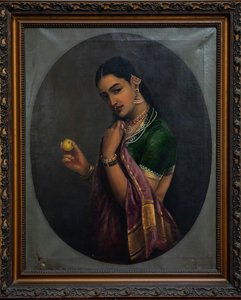
      Woman Holding a Fruit (1800) autorstwa Ravi Varma
      #26

      Woman Holding a Fruit

      1800 · National Gallery of Modern Art

      Raja Ravi Varma's "Woman Holding a Fruit," painted around 1800, isn’t merely a portrait; it’s a pivotal moment in the history of Indian art. Born in Kilimanjaro, India,…

      Order this canvas →
      Toddy Tapper (1895) autorstwa Ravi Varma
      #29

      Toddy Tapper

      1895 · The Raja Ravi Varma Heritage Foundation

      Raja Ravi Varma, twórca którego dzieła zdefiniowały oblicze nowoczesnej sztuki indyjskiej, urodził się w rodzinie królewskiej Kilimanjaro w Kerala podczas pierwszej połowy XIX wieku. Jego życie było głęboko…

      Bring this light home →
      Letter Written by Raja Ravi Varma (1906) autorstwa Ravi Varma
      #30

      Letter Written by Raja Ravi Varma

      1906 · The Raja Ravi Varma Heritage Foundation

      A Still Life of Reflection: Examining Raja Ravi Varma’s ‘Letter Written by Raja Ravi Varma’ Raja Ravi Varma stands as an undeniable titan amongst Indian artists, a figure…

      Order this canvas →
      Sita Bhumipravesh (1880) autorstwa Ravi Varma
      #31

      Sita Bhumipravesh

      1880 · The Raja Ravi Varma Heritage Foundation

      Raja Ravi Varma’s “Sita Bhumipravesh,” completed around 1880, is more than a depiction of a pivotal moment in Hindu mythology; it's a meticulously crafted testament to the burgeoning…

      Bring this light home →
      Judith (1889) autorstwa Ravi Varma
      #32

      Judith

      1889 · The Raja Ravi Varma Heritage Foundation

      Raja Ravi Varma: Bridging Tradition & Modernity in 1890s Indian Art Raja Ravi Varma stands as an unparalleled figure in the annals of Indian art history—a painter who…

      Bring this light home →
      Woman Reclining On The Waterfront (1898) autorstwa Ravi Varma
      #33

      Woman Reclining On The Waterfront

      1898 · The Raja Ravi Varma Heritage Foundation

      A Moment of Tranquility: Raja Ravi Varma’s “Woman Reclining On The Waterfront” This evocative sketch, “Woman Reclining On The Waterfront,” offers a poignant glimpse into the artistic sensibilities…

      Have it painted by hand →
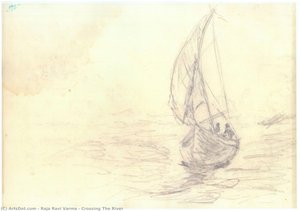
      Crossing The River (1895) autorstwa Ravi Varma
      #41

      Crossing The River

      1895 · The Raja Ravi Varma Heritage Foundation

      To gaze upon this depiction of Crossing The River is to be instantly transported to a moment suspended between two shores—a quintessential vision of passage and serene human…

      Order this canvas →
      Hesitation (1880) autorstwa Ravi Varma
      #43

      Hesitation

      1880 · The Raja Ravi Varma Heritage Foundation

      Raja Ravi Varma’s “Hesitation,” painted circa 1880, is more than just a depiction of a man and woman; it's a profound meditation on emotion, memory, and the delicate…

      Order this canvas →
      Waiting For The Train (1891) autorstwa Ravi Varma
      #44

      Waiting For The Train

      1891 · The Raja Ravi Varma Heritage Foundation

      To gaze upon this evocative black and white drawing, "Waiting For The Train," is to be instantly transported to a liminal space—that charged moment between departure and arrival.…

      Order this canvas →
      Reverie (1900) autorstwa Ravi Varma
      #46

      Reverie

      1900 · Kerala Museum

      A Keralite lady sits in a state of idle and pleasant contemplation. Her gaze is directed downward, lost in thought. She wears a white dress, her long hair…

      Have it painted by hand →
      Hanuman (1870) autorstwa Ravi Varma
      #48

      Hanuman

      1870 · The Raja Ravi Varma Heritage Foundation

      In the quiet, focused atmosphere of 1870, a young Raja Ravi Varma captured a moment of profound spiritual instruction that would resonate through the annals of Indian art…

      Order this canvas →
      An Adaptation of the poem (1898) autorstwa Ravi Varma
      #49

      An Adaptation of the poem

      1898 · The Ganesh Shivaswamy Foundation

      Raja Ravi Varma’s “An Adaptation of the Poem,” painted in 1898, is more than a depiction of a forest scene; it's a meticulously crafted tableau brimming with symbolic…

      Order this canvas →
      Woman With Musical Instrument (1880) autorstwa Ravi Varma
      #60

      Woman With Musical Instrument

      1880 · The Raja Ravi Varma Heritage Foundation

      In the quietude of a sun-drenched moment, Woman With Musical Instrument invites the viewer into a realm where melody and stillness converge. Painted in 1880 by the legendary…

      Have it painted by hand →
      The Gypsies Of South India (1893) autorstwa Ravi Varma
      #61

      The Gypsies Of South India

      1893 · The Raja Ravi Varma Heritage Foundation

      In the vast and storied oeuvre of Raja Ravi Varma, few works resonate with such raw, unvarnished humanity as The Gypsies Of South India. Created around 1893, this…

      Have it painted by hand →
      Yashoda and Krishna autorstwa Ravi Varma
      #72

      Yashoda and Krishna

      The Ganesh Shivaswamy Foundation

      Raja Ravi Varma: Bridging Tradition & Modernity in 19th-Century Indian Art Raja Ravi Varma stands as an unparalleled figure in the annals of Indian art history—a visionary who…

      Order this canvas →
      Gangawataran Sketch (1890) autorstwa Ravi Varma
      #73

      Gangawataran Sketch

      1890 · The Raja Ravi Varma Heritage Foundation

      In the delicate strokes of Raja Ravi Varma’s Gangawataran Sketch, we find ourselves transported to a serene pastoral landscape that breathes with the quiet vitality of late 19th-century…

      Bring this light home →
      Initial Sketch Of Gangawataran (1893) autorstwa Ravi Varma
      #74

      Initial Sketch Of Gangawataran

      1893 · The Raja Ravi Varma Heritage Foundation

      In the quiet, preparatory moments of artistic creation, there exists a raw energy that finished masterpieces often refine into stillness. Initial Sketch Of Gangawataran, a profound glimpse into…

      Bring this light home →
      Untitled (Damayanti) (1890) autorstwa Ravi Varma
      #75

      Untitled (Damayanti)

      1890 · The Raja Ravi Varma Heritage Foundation

      In the delicate interplay of light and shadow within Untitled (Damayanti), we encounter a moment frozen in time, where the boundaries between the earthly and the divine begin…

      Order this canvas →
      Malabar Lady with Veena - Raja Ravi Varma (2026) autorstwa Ravi Varma
      #76

      Malabar Lady with Veena - Raja Ravi Varma

      2026

      A Symphony of Serenity: Romantic Echoes in Malabar Lady This exquisite acrylic painting on canvas embodies the spirit of Romanticism—a movement that prioritized emotion and imagination above strict…

      A Study for Yogi Gopichand autorstwa Ravi Varma
      #79

      A Study for Yogi Gopichand

      The Ganesh Shivaswamy Foundation

      In the quiet, intimate space of an artist's studio, before the grand narratives of mythology are draped in rich oils and vibrant pigments, there exists a moment of…

      Bring this light home →
      A Tamil Lady (1900) autorstwa Ravi Varma
      #81

      A Tamil Lady

      1900 · The Raja Ravi Varma Heritage Foundation

      In the quiet intimacy of A Tamil Lady, we encounter more than just a portrait; we enter a moment frozen in time by the masterful hand of Raja…

      Order this canvas →
      A Study of a Temple Sculpture autorstwa Ravi Varma
      #82

      A Study of a Temple Sculpture

      The Ganesh Shivaswamy Foundation

      This captivating study presents an intimate look behind the curtain of artistic creation, offering viewers not just finished masterpieces, but the very process of observation itself. The composition,…

      Order this canvas →
      A Parsi Couple autorstwa Ravi Varma
      #85

      A Parsi Couple

      The Ganesh Shivaswamy Foundation

      A Parsi Couple presumably waiting for a train while the lady is seated on a railway-platform bench. She is attired in the typical Gujarati style saree. In a…

      Bring this light home →
      Portrait Of Gentleman autorstwa Ravi Varma
      #87

      Portrait Of Gentleman

      A Regal Presence: Unveiling Raja Ravi Varma’s “Portrait of a Gentleman” This captivating portrait by Raja Ravi Varma offers a compelling glimpse into late 19th or early 20th-century…

      Have it painted by hand →
      Kerala Varma Valiya Koil Thampuran (1880) autorstwa Ravi Varma
      #88

      Kerala Varma Valiya Koil Thampuran

      1880 · The Ganesh Shivaswamy Foundation

      Raja Ravi Varma’s “Kerala Varma Valiya Koil Thampuran,” painted in 1880, is more than a simple portrait; it's a meticulously crafted window into the opulent world of late…

      Order this canvas →
      Reclining Nair Lady (1902) autorstwa Ravi Varma
      #89

      Reclining Nair Lady

      1902 · The Raja Ravi Varma Heritage Foundation

      Raja Ravi Varma's “Reclining Nair Lady,” painted in 1902, is more than just a portrait; it’s a meticulously crafted tableau that offers a rare glimpse into the social…

      Order this canvas →

      Ravi Varma's canvases, period by period

      What Ravi Varma painted most

      The four subjects that return most often on these canvases, each with its best-loved example.

      Where Ravi Varma's canvases hang

      8 muzeów, w których znajduje się najwięcej obrazów z tej strony.

      Muzeum Miasto Dzieła artysty Ravi Varma Obrazy z tej listy
      The Raja Ravi Varma Heritage Foundation, BangaloreThe Raja Ravi Varma Heritage Foundation Bangalore 52 Maharani Chimnabai II, Music Hath Charms (Kadambari), His Highness Chamarajendra Wadiyar X
      The Ganesh Shivaswamy Foundation, BangaloreThe Ganesh Shivaswamy Foundation Bangalore 28 Draupadi at the Court of Virat, Radha in the Moonlight, Shakuntala Patra Lekhan of Shakuntala Writing a Love Letter
      Sandeep - Gitanjali Maini Foundation, BengaluruSandeep - Gitanjali Maini Foundation Bengaluru 5 Damayanti And Hamsam, Nair Lady With A Mirror, Bandi Balaiah Naidu
      Sree Chitra Art Gallery 3 Maharani Lakshmi Bayi, Charity, The Milkmaid
      National Gallery of Modern Art, New DelhiNational Gallery of Modern Art New Delhi 2 Woman Holding a Fruit
      Victoria and Albert Museum, LondynVictoria and Albert Museum Londyn 1 Woman Holding a Fan
      Ashmolean Museum, OksfordAshmolean Museum Oksford 1 Shakuntala writing a love letter on a lotus leaf
      Royal Collection, LondynRoyal Collection Londyn 1 Maharani Travancore

      Decade by decade: Ravi Varma's most celebrated canvas

      1. 1870s
        Hanuman (1870) autorstwa Ravi Varma
        48 of 100

        Hanuman

        Wiek 22 – 31 · The Raja Ravi Varma Heritage Foundation

        In the quiet, focused atmosphere of 1870, a young Raja Ravi Varma captured a moment of profound spiritual instruction that would resonate through the annals of Indian art…

      2. 1880s
        Maharani Chimnabai II (1889) autorstwa Ravi Varma
        Ranked 2 of 100

        Maharani Chimnabai II

        Wiek 32 – 41 · The Raja Ravi Varma Heritage Foundation

        To stand before Maharani Chimnabai II is to be enveloped in an atmosphere of opulent grace and quiet power. Painted by the masterful hand of Raja Ravi Varma…

      3. 1890s
        Damayanti And Hamsam (1899) autorstwa Ravi Varma
        Canvas 1 of 100

        Damayanti And Hamsam

        Wiek 42 – 51 · Sandeep - Gitanjali Maini Foundation

        In the quietude of a sun-drenched afternoon, Raja Ravi Varma captures a scene that transcends time, inviting the viewer into a realm where myth and reality softly intertwine.…

      4. 1900s
        Bandi Balaiah Naidu (1904) autorstwa Ravi Varma
        Canvas 13 of 100

        Bandi Balaiah Naidu

        Wiek 52 – 58 · Sandeep - Gitanjali Maini Foundation

        To gaze upon this portrait of Bandi Balaiah Naidu is to encounter a moment suspended in time—a confluence of regal bearing and quiet contemplation. Painted in 1904, the…

      Your questions on Ravi Varma's paintings, answered

      Which is the most celebrated painting by Ravi Varma?Read the answer

      Damayanti And Hamsam (1899), Sandeep - Gitanjali Maini Foundation, Bengaluru. Maharani Chimnabai II (1889) and Music Hath Charms (Kadambari) (1890) follow.

      How old was Ravi Varma at the time of Damayanti And Hamsam?Read the answer

      Ravi Varma, born in 1848, was 51 years old: Damayanti And Hamsam dates from 1899.

      Which ten paintings is Ravi Varma most famous for?Read the answer

      Damayanti And Hamsam, Maharani Chimnabai II, Music Hath Charms (Kadambari), Nair Lady With A Mirror, Woman Holding a Fan, Shakuntala writing a love letter on a lotus leaf, Draupadi at the Court of Virat, Radha in the Moonlight, Maharani Travancore i His Highness Chamarajendra Wadiyar X. Each canvas in the ranking above comes with its year and its museum.

      How many paintings by Ravi Varma are known?Read the answer

      136 works by Ravi Varma are in our catalogue, dated 1870 to 1906.

      Which museums hold Ravi Varma's best-known canvases?Read the answer

      Mostly in The Raja Ravi Varma Heritage Foundation (Bangalore), The Ganesh Shivaswamy Foundation (Bangalore) i Sandeep - Gitanjali Maini Foundation (Bengaluru); the list above names each museum and its canvases.

      In which years did Ravi Varma paint the most celebrated canvases?Read the answer

      In 1890s, which gave 36 of the 100 works on this page, Damayanti And Hamsam among them.

      What are the first and the last of Ravi Varma's famous canvases?Read the answer

      The earliest canvas here is Hanuman (1870); the latest is Letter Written by Raja Ravi Varma (1906).

      Which subjects return most often in Ravi Varma's paintings?Read the answer

      Portrait (16), Woman (15) i Portraiture (12), across the 100 works on this page.

      What did Ravi Varma usually paint with?Read the answer

      Oil On Canvas, used in 28 of the 100 works on this page.

      To which art movement does Ravi Varma belong?Read the answer

      Academic & indian fusion, as the canvases on this page show.

      What can I see by Ravi Varma at the The Raja Ravi Varma Heritage Foundation?Read the answer

      The The Raja Ravi Varma Heritage Foundation, Bangalore holds 50 of the works on this page, among them Maharani Chimnabai II, Music Hath Charms (Kadambari) i His Highness Chamarajendra Wadiyar X.

      Can I order a hand-painted copy of a painting by Ravi Varma?Read the answer

      Yes. Every painting on this page can be ordered from its own page as an oil reproduction painted by hand, or as a fine art print, in the size you choose.

      Ravi Varma: the painter's story

      The Princely Brush: Raja Ravi Varma and the Dawn of Modern Indian Painting

      Raja Ravi Varma, a name that resonates with artistic innovation in India, emerged from the royal lineage of Kilimanoor Palace in Kerala during the mid-19th century. Born on April 29, 1848, his life was steeped in both aristocratic tradition and an innate creative spirit. He wasn’t merely a painter; he was a cultural bridge, skillfully blending European academic techniques with the rich tapestry of Indian mythology and aesthetics. His family's long-standing connection to the Travancore royal house – indeed, two of his daughters were later adopted into that very family – provided both privilege and a deep understanding of Indian courtly life, which would profoundly influence his artistic vision. From an early age, Ravi Varma displayed a remarkable aptitude for art, nurtured by his uncle Raja Raja Varma, who initiated him into the world of drawing and painting, primarily within the Tanjore School tradition. However, young Ravi’s ambition extended beyond imitation; he sought to master techniques that would allow him to capture not just likeness but also emotion and narrative depth.

      A Fusion of Worlds: Technique and Inspiration

      Varma's artistic journey took a pivotal turn when he encountered the works of European masters, particularly during his travels and through interactions with British officials stationed in India. He was captivated by the realism and technical precision of academic painting, diligently studying its principles – perspective, anatomy, light, and shadow. Yet, unlike many of his contemporaries who simply mimicked Western styles, Varma ingeniously adapted these techniques to serve distinctly Indian subjects. His canvases became vibrant stages for scenes from the Ramayana, the Mahabharata, and the Puranas, populated by gods and goddesses rendered with a newfound naturalism. He didn’t merely illustrate religious stories; he imbued them with human emotion and psychological complexity. Consider, for example, his portrayal of *Hansa Damayanthi*, where the heroine's longing gaze and delicate posture convey a depth of feeling rarely seen in Indian art before. This was revolutionary. Before Varma, depictions of deities often adhered to rigid iconographic conventions. He dared to portray them as relatable figures, beautiful and powerful yet accessible to the common viewer. His mastery of oil painting – a relatively new medium in India at the time – allowed him to achieve an unprecedented level of detail and luminosity, further enhancing the emotional impact of his work. The Maharani of Travancore, with its regal composure and intricate detailing, exemplifies Varma’s ability to capture both outward appearance and inner character.

      Democratizing Art: Lithographs and Public Appeal

      Raja Ravi Varma’s influence extended far beyond the elite circles of royalty and art connoisseurs. Recognizing that original paintings were inaccessible to most Indians, he established the Raja Ravi Varma Fine Arts Lithographic Press in 1894. This groundbreaking venture allowed for the mass production of affordable lithographs based on his paintings. Suddenly, images of Hindu deities and mythological scenes were no longer confined to temples or palaces; they adorned homes across India, becoming objects of worship and cultural pride. The lithographs weren’t simply reproductions; they were carefully crafted interpretations that captured the essence of Varma's originals. This act of “democratizing art” had a profound impact on Indian society, fostering a wider appreciation for visual culture and shaping popular perceptions of religious iconography. Shakuntala, perhaps one of his most beloved works, found its way into countless homes through these lithographs, transforming the aesthetic landscape of India.

      Royal Patronage and Artistic Development

      Ravi Varma’s early artistic development was profoundly shaped by royal patronage. Born into a family deeply intertwined with the Travancore court, he received an exceptional education that combined traditional Indian art forms – particularly those practiced in the Tanjore School – with Western academic techniques. His uncle, Raja Raja Varma, recognized his talent and provided him with formal training, introducing him to painting within the palace environment. This early exposure instilled in him a deep appreciation for both tradition and innovation. Later, he benefited from the guidance of Theodor Jenson, a Danish-born British artist who served as court painter in Travancore. Jenson’s expertise in oil painting proved invaluable, allowing Varma to master this challenging medium and achieve a level of realism previously unseen in Indian art. His travels across India, documenting diverse cultures and landscapes, further broadened his artistic horizons and informed his distinctive style.

      Legacy and Enduring Influence

      Raja Ravi Varma passed away in 1906, leaving behind a legacy that continues to resonate today. His work not only transformed the landscape of Indian painting but also laid the foundation for modern Indian art. He challenged conventional norms, embraced innovation, and skillfully blended tradition with modernity. His influence can be seen in the works of subsequent generations of Indian artists who sought to create a distinctly national artistic identity. Museums like The Raja Ravi Varma Heritage Foundation in Bangalore and The Ganesh Shivaswamy Foundation preserve and celebrate his art, ensuring that his vision endures for future generations. His paintings remain powerful testaments to his genius – masterpieces that capture the beauty, spirituality, and cultural richness of India. His ability to connect with audiences on both an aesthetic and emotional level cemented his place as a true pioneer, forever changing the way Indians perceived art and their own cultural heritage.

      Exploring Varma’s World Today

      For those seeking to delve deeper into the world of Raja Ravi Varma, numerous resources are available. The Kiran Nadar Museum of Art in New Delhi houses a selection of his works alongside other modern and contemporary Indian artists. Online platforms like TopImpressionists offer high-quality reproductions of his iconic paintings, allowing art enthusiasts worldwide to experience his artistry firsthand. Furthermore, scholarly articles and books continue to shed light on his life, techniques, and lasting impact. The Wikipedia page dedicated to Raja Ravi Varma provides a comprehensive overview of his biography and artistic achievements, while Google Arts & Culture offers insightful stories about his life and work, including contributions from his great-great granddaughter.
      • Explore artworks: Discover masterpieces like "Portrait of a Gentleman," "Hansa Damayanthi," and "The Maharani of Travancore" through online databases.
      • Visit museums: Immerse yourself in Varma’s legacy at The Raja Ravi Varma Heritage Foundation, The Ganesh Shivaswamy Foundation, and the Kiran Nadar Museum of Art.
      • Further research: Consult Wikipedia and Google Arts & Culture for detailed biographical information and scholarly insights.
      Raja Ravi Varma’s story is a testament to the power of art to transcend cultural boundaries, inspire generations, and shape national identity.

      Wszystkie 136 dzieła artysty Ravi Varma →