Pracownia — Bezpłatna wysyłka na cały świat — Czas dostawy: 2–6 tygodni
      Simon Vouet, 1590 – 1649

      100 najsłynniejszych obrazów artysty Simon Vouet, zestawienie

      Najbardziej cenionym obrazem Simon Vouet jest Venus i Adonis (1642), który znajduje się w Muzeum J. Paula Getty'ego w Los Angeles. Następne w zestawieniu płócien najlepiej znanych czytelnikom są The Muses of Urania and Calliope (1634) oraz Annunciation (1640). Nasz katalog zawiera 166 dzieł autorstwa Simon Vouet: oto 100 najsłynniejszych z nich, z podaniem roku powstania, muzeum oraz tego, co czyni je wyjątkowymi.

      Ranking oparty na naszym wskaźniku popularności, który łączy liczbę wyszukiwań, wizyt oraz zamówień dla każdego dzieła. Aktualizacja: Październik 2026. Każdy obraz na tej stronie można zamówić jako ręcznie malowaną reprodukcję olejną na płótnie lnianym lub jako wysokiej jakości wydruk artystyczny, wykonany w wybranym przez Ciebie formacie.

      Portret Simon Vouet
      Simon Vouet · 1590 – 1649
      Urodzony · zmarł
      1590 – 1649, Paryż
      Nurt
      French baroque
      Dzieła w naszym katalogu
      166
      Najsłynniejsze
      Venus i Adonis (1642)
      Najwięcej dzieł w
      Luwr

      Najsłynniejsze 10 obrazów Simon Vouet: płótna, które zna każdy

      Venus i Adonis (1642) autorstwa Simon Vouet
      1

      Venus i Adonis

      1642 · Akryl na płótnie · Muzeum J. Paula Getty'ego, Los Angeles

      Venus and Adonis – A Baroque Symphony of Desire and Mortality Simon Vouet’s “Venus and Adonis,” completed in 1642, transcends mere depiction; it embodies the very essence of French Baroque art—a masterful fusion of Italian artistic influences and profound emotional resonance. This iconic scene from Ovid's *Metamorphoses* captures the pivotal moment where Venus relentlessly pursues Adonis, who steadfastly rejects her advances, foreshadowing his tragic fate. Vouet’s genius lies not only…

      The Muses of Urania and Calliope (1634) autorstwa Simon Vouet
      2

      The Muses of Urania and Calliope

      1634 · Acrylic On Canvas · National Gallery of Art, Waszyngton

      Simon Vouet’s “The Muses Urania and Calliope”: A Symphony of Baroque Grace Simon Vouet (1590-1649) stands as a pivotal figure in the artistic landscape of 17th-century France, marking the decisive transition from Mannerism to the opulent grandeur of the Baroque style. His legacy resides not merely in his prolific output but also in his unwavering dedication to mastering Italian influences—a pursuit that fundamentally reshaped French painting and cemented Vouet’s place…

      Annunciation (1640) autorstwa Simon Vouet
      3

      Annunciation

      1640 · Oil On Canvas · Galleria degli Uffizi, Florencja

      Simon Vouet's "Annunciation," painted in 1640, is more than just a religious depiction; it’s a masterful orchestration of light, shadow, and human emotion. This captivating work transports the viewer to an intimate interior space, where the momentous announcement of Mary’s divine conception unfolds with breathtaking drama. The painting immediately draws the eye to the kneeling figure of the Virgin Mary, bathed in a warm, golden glow emanating from the right…

      The Fortuneteller (detail) (1617) autorstwa Simon Vouet
      4

      The Fortuneteller (detail)

      1617 · Oil On Canvas · Galleria Nazionale d'Arte Antica, Rzym

      In the heart of 1617, amidst the vibrant and transformative atmosphere of Roman artistic circles, Simon Vouet captured a moment of profound human connection in his masterpiece, The Fortuneteller. This work, particularly when viewed in its intimate details, serves as much more than a mere portrait; it is an emblem of the burgeoning Baroque style that was beginning to reshape the visual landscape of Europe. The scene unfolds with a…

      Sleeping Venus (1630) autorstwa Simon Vouet
      5

      Sleeping Venus

      1630 · Acrylic On Canvas · Szépművészeti Múzeum, Budapeszt

      Simon Vouet's "Sleeping Venus," painted around 1630, is not merely a depiction of a reclining nude; it’s an exquisite distillation of Renaissance ideals and the burgeoning Baroque aesthetic. This captivating work transcends simple portraiture, offering instead a profound meditation on beauty, repose, and the delicate balance between earthly pleasure and spiritual contemplation. The painting immediately draws the viewer into a world of hushed tranquility, inviting us to share in the…

      Allegory of Virtue (1634) autorstwa Simon Vouet
      6

      Allegory of Virtue

      1634 · Acrylic On Canvas · Luwr, Paryż

      Simon Vouet’s “Allegory of Virtue,” completed around 1634, stands as a testament to the burgeoning Baroque aesthetic infiltrating French artistic circles during Louis XIII's reign. More than just a portrait—though it undeniably depicts a woman radiating grace and authority—the painting delves into profound philosophical concepts rooted in humanist ideals prevalent at the time.

      The Entombment (1638) autorstwa Simon Vouet
      7

      The Entombment

      1638 · Oil On Canvas · Fitzwilliam College, Cambridge

      Simon Vouet's "The Entombment," painted in 1635–1638, is not merely a depiction of a biblical scene; it’s an exquisitely rendered meditation on grief, faith, and the profound dignity of sacrifice. This monumental work, currently residing within the collection of the Fitzwilliam Museum in Cambridge, transcends its subject matter to become a powerful testament to the Baroque era's ability to evoke intense emotion through masterful technique and carefully considered symbolism. Vouet,…

      Angels with Attributes of the Passion: Angel Holding the Vessel and Towel for washing the hands of Pontius Pilate (1624) autorstwa Simon Vouet
      8

      Angels with Attributes of the Passion: Angel Holding the Vessel and Towel for washing the hands of Pontius Pilate

      1624 · Oil · Minneapolis Institute of Art, Minneapolis

      A single celestial figure emerges from a deep, near-black void, commanding the space with an intimate and monumental presence. This angel, caught in a moment of profound spiritual devotion, gazes upward with eyes full of soulful contemplation or sorrow. The light descends from the upper left, carving the figure out of the darkness and casting soft, tender shadows across a face etched with emotion. Every detail feels immediate, from the…

      Saint John (1623) autorstwa Simon Vouet
      9

      Saint John

      1623 · Oil On Canvas · Philadelphia Museum of Art, Filadelfia

      A young man turns his face toward a light that remains unseen. His eyes, wide and searching, catch a glimmer that pulls his gaze upward, away from the dark, murky depths of the background. Thick, dark curls frame a pale face, creating a sharp contrast against the heavy shadows that swallow the space around him. He is caught in a moment of sudden, quiet realization. The light does not merely…

      Virgin and Child, with an Angel (1642) autorstwa Simon Vouet
      10

      Virgin and Child, with an Angel

      1642 · Oil On Panel · Philadelphia Museum of Art, Filadelfia

      The light falls softly upon the skin of the Virgin Mary, catching the curve of her cheek and the small, smooth hands of the Christ Child. They sit within a triangular arrangement that anchors the composition, surrounded by the deep shadows of a dense woodland. An angel leans into this intimate circle, its robes glowing with warm yellows and golds that contrast against the heavy, dark trees behind them. At…

      Więcej płócien artysty Simon Vouet, od 11 do 100

      Madonna with Child (1625) autorstwa Simon Vouet
      #11

      Madonna with Child

      1625 · Ermitaż

      The room falls away into a deep, near-black shadow, leaving only two figures bathed in a soft, directional light. From the upper left, a gentle glow spills across…

      Zamów to płótno →
      Heavenly Charity (1640) autorstwa Simon Vouet
      #14

      Heavenly Charity

      1640 · Luwr

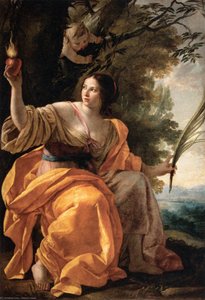
      A Beacon of Baroque Virtue: Simon Vouet’s Heavenly Charity Simon Vouet's "Heavenly Charity," completed around 1640, stands as a cornerstone of French Baroque painting—a testament to Louis XIII’s…

      Zabierz to światło do swojego domu →
      Allegory (1640) autorstwa Simon Vouet
      #15

      Allegory

      1640 · Musei Capitolini

      Simon Vouet executed Allegory during his residency in Rome, a period spanning from 1614 to 1627. The work was commissioned by Marcello Sacchetti, a 17th-century Italian merchant and…

      Zabierz to światło do swojego domu →
      Sacrifice of Isaac (1642) autorstwa Simon Vouet
      #17

      Sacrifice of Isaac

      1642 · Milwaukee Art Museum

      The painting titled Sacrifice of Isaac is a work of religious art. It is attributed to the French artist Simon Vouet (1590-1649) and Pierre Patel, the Elder (1605-1676).…

      Zamów to płótno →
      The Muse Clio (1640) autorstwa Simon Vouet
      #22

      The Muse Clio

      1640 · Staatliche Kunsthalle Karlsruhe

      The Muse Clio is an oil on canvas painting by the artist Simon Vouet. Created about 1640, this work depicts the mythological figure Clio, who is recognized as…

      Zamów to płótno →
      Vanitas (1621) autorstwa Simon Vouet
      #24

      Vanitas

      1621 · Muzeum Narodowe w Warszawie

      In Vanitas, Simon Vouet centers the composition on a tight, intimate encounter between two figures. A young woman and an older man emerge from a deep, near-black background…

      Zabierz to światło do swojego domu →
      Mary Adoring the Christ child (1623) autorstwa Simon Vouet
      #61

      Mary Adoring the Christ child

      1623 · Museum Boijmans Van Beuningen

      Mary Adoring the Christ child is a religious oil painting by the French artist Simon Vouet. Executed in 1623, the work belongs to the Baroque tradition, focusing on…

      Zamów to płótno →
      Toilet of Venus (1628) autorstwa Simon Vouet
      #64

      Toilet of Venus

      1628 · Art Museum

      To gaze upon Simon Vouet’s Toilet of Venus is to step directly into a moment suspended in opulent leisure—a scene dripping with the sensuality and refined drama characteristic…

      Zamów to płótno →
      The Rape of Europa (1640) autorstwa Simon Vouet
      #67

      The Rape of Europa

      1640 · Thyssen-Bornemisza Museum

      To gaze upon Simon Vouet's depiction of The Rape of Europa is to step directly into the charged, dramatic heart of the Baroque era. This canvas is not…

      Zamów to płótno →
      St Catherine (1614) autorstwa Simon Vouet
      #69

      St Catherine

      1614 · Pałac Quirinale

      To stand before Simon Vouet's depiction of St Catherine is to step directly into the vibrant, emotionally charged atmosphere of early seventeenth-century Paris. This portrait captures more than…

      Zamów ręczne malowanie →
      Prince Marcantonio Doria (1621) autorstwa Simon Vouet
      #70

      Prince Marcantonio Doria

      1621 · Luwr

      In the hallowed halls of the Musée du Louvre, there exists a window into the soul of the seventeenth century, captured through the masterful brushstrokes of Simon Vouet.…

      Zamów to płótno →
      The Holy Family (1630) autorstwa Simon Vouet
      #79

      The Holy Family

      1630 · Kunsthalle Bremen

      In the heart of the seventeenth century, as the rigid structures of Mannerism began to dissolve under the weight of a new, more visceral era, Simon Vouet emerged…

      Zamów ręczne malowanie →
      Allegory of Peace (1627) autorstwa Simon Vouet
      #82

      Allegory of Peace

      1627 · Galleria Nazionale d'Arte Antica

      Completed in 1627, Allegory of Peace by Simon Vouet offers a profound look into the intellectual fervor and humanist aspirations of the seventeenth century. This work emerged during…

      Zamów to płótno →
      Allegory of Wealth (1630) autorstwa Simon Vouet
      #83

      Allegory of Wealth

      1630 · Luwr

      Simon Vouet's 1630 *Allegory of Wealth* is not merely a painting; it’s an immersive experience, a meticulously crafted tableau that speaks volumes about the values and aspirations of…

      Zamów to płótno →
      Caritas Romana autorstwa Simon Vouet
      #92

      Caritas Romana

      Muzeum Narodowe w Warszawie

      In Caritas Romana, Simon Vouet presents a quiet, emotionally charged encounter between two figures. The composition centers on a woman cradling an older, bearded man, creating an intimate…

      Zamów to płótno →
      St Jerome and the Angel (1622) autorstwa Simon Vouet
      #93

      St Jerome and the Angel

      1622 · National Gallery of Art

      Simon Vouet’s “St. Jerome and the Angel,” painted in 1622, is more than just a depiction of a biblical scene; it's a carefully constructed meditation on divine guidance,…

      Zamów to płótno →
      The Fortune Teller (1617) autorstwa Simon Vouet
      #94

      The Fortune Teller

      1617 · Galleria Nazionale d'Arte Antica

      Simon Vouet's "The Fortune Teller," painted in 1617, isn’t merely a portrait; it’s a carefully constructed tableau brimming with intrigue and a palpable sense of the mystical. Housed…

      Zamów ręczne malowanie →
      LE CHRIST EN CROIX autorstwa Simon Vouet
      #95

      LE CHRIST EN CROIX

      Luwr

      is a significant work by the French Baroque painter Simon Vouet. The composition centers on the crucifixion of Jesus Christ, a central event of the New Testament. The…

      Zamów to płótno →

      Płótna Simon Vouet epoka po epoce

      Co najczęściej malował Simon Vouet

      Cztery tematy najczęściej pojawiające się na tych płótnach, z których każdy wraz z jego najbardziej cenionym przykładem.

      Gdzie wiszą płótna Simon Vouet

      8 muzeów, w których znajduje się najwięcej obrazów z tej strony.

      Muzeum Miasto Dzieła artysty Simon Vouet Obrazy z tej listy
      Luwr, ParyżLuwr Paryż 20 Allegory of Virtue, Heavenly Charity, POLYMNIE, MUSE DE L'ELOQUENCE
      Szépművészeti Múzeum, BudapesztSzépművészeti Múzeum Budapeszt 5 Sleeping Venus, Parnassus or Apollo and the Muses, Parnassus or Apollo and the Muses (detail)
      National Gallery of Art, WaszyngtonNational Gallery of Art Waszyngton 4 The Muses of Urania and Calliope, The Muses Urania and Calliope, Madonna and Child
      Galleria Nazionale d'Arte Antica, RzymGalleria Nazionale d'Arte Antica Rzym 4 The Fortuneteller (detail), Allegory of Peace, The Fortune Teller
      Muzeum Narodowe w Warszawie, WarszawaMuzeum Narodowe w Warszawie Warszawa 4 Vanitas, Caritas Romana
      Los Angeles County Museum of Art, Los AngelesLos Angeles County Museum of Art Los Angeles 3 Model for Altarpiece in St. Peter's, Model for Altarpiece in St. Peter's
      Minneapolis Institute of Art, MinneapolisMinneapolis Institute of Art Minneapolis 2 Angels with Attributes of the Passion: Angel Holding the Vessel and Towel for washing the hands of Pontius Pilate, Angels with Attributes of the Passion, the Superscription from the Cross
      Philadelphia Museum of Art, FiladelfiaPhiladelphia Museum of Art Filadelfia 2 Saint John, Virgin and Child, with an Angel

      Najukochańsze płótno Simon Vouet z każdej dekady

      1. 1610s
        The Fortuneteller (detail) (1617) autorstwa Simon Vouet
        Płótno 4 z 100

        The Fortuneteller (detail)

        Wiek 20 – 29 · Galleria Nazionale d'Arte Antica

        In the heart of 1617, amidst the vibrant and transformative atmosphere of Roman artistic circles, Simon Vouet captured a moment of profound human connection in his masterpiece, The…

      2. 1620s
      3. 1630s
        The Muses of Urania and Calliope (1634) autorstwa Simon Vouet
        Płótno 2 z 100

        The Muses of Urania and Calliope

        Wiek 40 – 49 · National Gallery of Art

        Simon Vouet’s “The Muses Urania and Calliope”: A Symphony of Baroque Grace Simon Vouet (1590-1649) stands as a pivotal figure in the artistic landscape of 17th-century France, marking…

      4. 1640s
        Venus i Adonis (1642) autorstwa Simon Vouet
        1 z 100

        Venus i Adonis

        Wiek 50 – 59 · Muzeum J. Paula Getty'ego

        Venus and Adonis – A Baroque Symphony of Desire and Mortality Simon Vouet’s “Venus and Adonis,” completed in 1642, transcends mere depiction; it embodies the very essence of…

      O płótnach Simon Vouet: odpowiedzi na Twoje pytania

      Jakie jest najsłynniejsze dzieło Simon Vouet?Przeczytaj odpowiedź

      Venus i Adonis (1642), Muzeum J. Paula Getty'ego, Los Angeles. Następują po nim The Muses of Urania and Calliope (1634) oraz Annunciation (1640).

      W jakim wieku był Simon Vouet, gdy namalowano Venus i Adonis?Przeczytaj odpowiedź

      Simon Vouet, urodzony/a w 1590, miał/a 52 lat: Venus i Adonis pochodzi z 1642.

      Jakie są 10 najsłynniejszych obrazów autorstwa Simon Vouet?Przeczytaj odpowiedź

      Venus i Adonis, The Muses of Urania and Calliope, Annunciation, The Fortuneteller (detail), Sleeping Venus, Allegory of Virtue, The Entombment, Angels with Attributes of the Passion: Angel Holding the Vessel and Towel for washing the hands of Pontius Pilate, Saint John i Virgin and Child, with an Angel. Każde płótno w powyższym rankingu zawiera informację o roku powstania oraz muzeum.

      Ile dzieł namalował Simon Vouet?Przeczytaj odpowiedź

      W naszym katalogu znajduje się 166 dzieł artysty Simon Vouet, datowanych od 1614 do 1645.

      Gdzie mogę zobaczyć najsłynniejsze płótna Simon Vouet?Przeczytaj odpowiedź

      Większość znajduje się w Luwr (Paryż), Szépművészeti Múzeum (Budapeszt) i National Gallery of Art (Waszyngton); powyższa lista wymienia każde muzeum oraz jego płótna.

      Kiedy Simon Vouet namalował swoje najbardziej uwielbiane płótna?Przeczytaj odpowiedź

      W 1620s, który obejmuje 31 z 100 dzieł na tej stronie, wśród nich znajduje się Angels with Attributes of the Passion: Angel Holding the Vessel and Towel for washing the hands of Pontius Pilate.

      Które z najsłynniejszych płócien Simon Vouet powstały na początku i na końcu jego twórczości?Przeczytaj odpowiedź

      Najwcześniejsze płótno pochodzi z Lovers (1614), a najpóźniejsze z Allegory of Prudence (1645).

      Co najczęściej malował Simon Vouet?Przeczytaj odpowiedź

      Woman (15), Renaissance (11) i Man (9), w ramach 100 dzieł na tej stronie.

      W jakiej technice najczęściej malował Simon Vouet?Przeczytaj odpowiedź

      Oil On Canvas, użyte w 40 z 100 dzieł na tej stronie.

      Do jakiego nurtu należy obraz Simon Vouet?Przeczytaj odpowiedź

      French baroque, co pokazują płótna na tej stronie.

      Które płótna Simon Vouet znajdują się w Luwr?Przeczytaj odpowiedź

      Muzeum Luwr, Paryż posiada 12 dzieł widocznych na tej stronie, w tym Allegory of Virtue, Heavenly Charity i POLYMNIE, MUSE DE L'ELOQUENCE.

      Czy mogę kupić reprodukcję płótna autorstwa Simon Vouet?Przeczytaj odpowiedź

      Tak. Każdy obraz na tej stronie można zamówić z jego własnej podstrony jako ręcznie malowaną reprodukcję olejną lub jako wysokiej jakości wydruk artystyczny w wybranym przez Ciebie rozmiarze.

      Simon Vouet: życie w malarstwie

      Simon Vouet: Francuski Pionier Baroku

      Simon Vouet, urodzony w Paryżu 9 stycznia 1590 roku i zmarły tamże 30 czerwca 1649 roku, to postać kluczowa w historii sztuki francuskiej. Jego twórczość stanowiła pomost pomiędzy manieryzmem a dynamicznym, pełnym ekspresji stylem barokowym, który na dobre wrył się w europejską kulturę artystyczną XVII wieku. Pochodząc z rodziny związanej ze sztuką – jego ojciec Laurent był malarzem, a brat Aubin również podążył śladami rodziny – Vouet od najmłodszych lat otoczony był środowiskiem artystycznym, co zaowocowało wczesnym talentem i niezwykłą wrażliwością na piękno.

      Wczesne lata jego kariery naznaczone były portreturami, które szybko przyniosły mu uznanie. Już jako czternastoletni chłopak został wezwany do Londynu, aby namalować portret angielskiej królowej – świadectwo rosnącej sławy i niezwykłego talentu młodego artysty. Kolejnym etapem jego edukacji artystycznej było udanie się na służbę barona de Sancy, ambasadora Francji w Imperium Osmańskim. Ta podróż, która poprowadziła go przez Stambuł, a następnie do Wenecji w 1612 roku, otworzyła przed nim nowe horyzonty i pozwoliła zgłębić bogactwo kultur oraz stylów artystycznych. Weneckie pejzaże i koloryt wywarły na nim ogromny wpływ, który później znalazł odzwierciedlenie w jego własnej twórczości.

      Rzymski Rozkwit i Inspiracje

      Najważniejszy rozdział w życiu artystycznym Voueta to trzynastoletni pobyt w Rzymie (1614-1627). To właśnie tam, w sercu europejskiego baroku, doskonalił swoje umiejętności, studiując dzieła mistrzów i czerpiąc inspirację z bogatego środowiska artystycznego. Zafascynowany dramatycznym światłem Caravaggia, Vouet opanował technikę chiaroscuro, nadając swoim obrazom głębię i ekspresję. Analizował również kompozycje Paolo Veronesego, zwracając szczególną uwagę na palety barw i mistrzowskie wykorzystanie perspektywy di sotto in su. Nie mniej istotny był wpływ szkoły bolońskiej, reprezentowanej przez Carracciego, Guercino, Lanfranco i Guido Reniego – Vouet zręcznie łączył elementy ich stylów, tworząc własną, unikalną wizję artystyczną.

      Sukces w Rzymie nie mógł pozostać niezauważony. W 1624 roku Vouet został wybrany na prezydenta prestiżowej Akademii św. Łukasza – najwyższe uznanie dla jego talentu i umiejętności, potwierdzone przez środowisko artystyczne. To właśnie w tym okresie jego styl nabiera charakteru barokowego, charakteryzującego się monumentalnością, dynamizmem i bogactwem dekoracyjnym.

      Powrót do Francji i Wpływ na Sztukę Narodową

      W 1627 roku Vouet powrócił do Francji, gdzie został mianowany Premier peintre du Roi – Pierwszym Malarzem Króla. To wydarzenie oznaczało początek nowego rozdziału w jego życiu i karierze artystycznej. Jako nadworny malarz Louisa XIII, Vouet miał możliwość kształtowania gustów dworskich i wpływania na rozwój sztuki francuskiej. Jego zadaniem było wprowadzenie do Francji stylu barokowego, który już od dawna królował w Rzymie i Wenecji.

      Vouet nie tylko tworzył własne dzieła, ale również prowadził rozległą pracownię, kształcąc kolejne pokolenia artystów. Do jego uczniów należeli m.in. Charles Le Brun – późniejszy organizator wszystkich prac malarskich w Wersalu – Valentin de Boulogne, Charles Alphonse du Fresnoy, Pierre Mignard i Eustache Le Sueur. Dzięki nim styl Voueta rozprzestrzenił się po całej Francji, tworząc silną szkołę barokową, której wpływ można dostrzec w monumentalnych dekoracjach pałacowych i kościelnych.

      Dziedzictwo

      Simon Vouet pozostaje jedną z najważniejszych postaci w historii sztuki francuskiej. Jego twórczość stanowiła pomost pomiędzy tradycją manieryzmu a nowym, dynamicznym stylem barokowym. Dzięki niemu Francja mogła podziwiać bogactwo i ekspresję włoskiego baroku, a jego uczniowie przyczynili się do rozwoju sztuki narodowej. Dziedzictwo Voueta jest żywe po dziś dzień – jego obrazy zachwycają swoją monumentalnością, dynamizmem i niezwykłą dbałością o szczegóły, stanowiąc cenne świadectwo epoki.

      Wszystkie 166 dzieła artysty Simon Vouet →