Pracownia — Bezpłatna wysyłka na cały świat — Czas dostawy: 2–6 tygodni
      Theodore Clement Steele, 1847 – 1926

      Theodore Clement Steele's 100 Most Famous Paintings

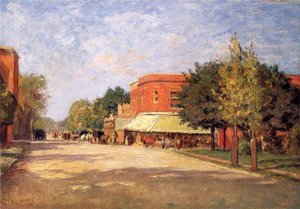
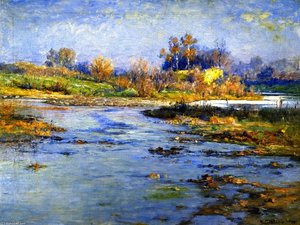
      Świerki is the painting Theodore Clement Steele is best remembered for. Ukośny bieg (1885) and In the Whitewater Valley near Metamora (1894) complete the trio of best-loved canvases. Our catalogue counts 490 works by Theodore Clement Steele. Here are the 100 most famous, with the year, the museum and the story of each canvas.

      Ranking oparty na naszym wskaźniku popularności, który łączy liczbę wyszukiwań, wizyt oraz zamówień dla każdego dzieła. Aktualizacja: Październik 2026. Each painting on this page can be ordered as an oil reproduction painted by hand on linen canvas, or as a fine art print, made to the size you choose.

      Portret Theodore Clement Steele
      Theodore Clement Steele · 1847 – 1926
      Urodzony · zmarł
      1847 – 1926, Hrabstwo Owen
      Nurt
      Impressionist landscape
      Dzieła w naszym katalogu
      490
      Najsłynniejsze
      Świerki
      Najwięcej dzieł w
      Indianapolis Museum of Art

      The ten best-loved paintings by Theodore Clement Steele

      Świerki autorstwa Theodore Clement Steele
      1

      Świerki

      Obraz olejny na płótnie

      Imagine stepping into a hushed forest, where sunlight filters through a canopy of emerald leaves and the air is thick with the scent of damp earth and pine. This feeling – this profound sense of tranquility – is precisely what Theodore Clement Steele masterfully captures in his iconic painting, "Beech Trees." More than just a landscape, it’s an invitation to pause, reflect, and connect with the enduring power of nature,…

      Ukośny bieg (1885) autorstwa Theodore Clement Steele
      2

      Ukośny bieg

      1885 · Obraz olejny na płótnie · Indianapolis Museum of Art, Indianapolis

      Theodore Clement Steele’s “Pleasant Run,” painted in 1885, is more than just a landscape; it's an immersion into a world of quiet contemplation and the subtle beauty of the American Midwest. This evocative work, now beautifully reproduced on wahooart.com, transports us to a misty autumn scene – a stream meandering through a dense woodland, reflecting the muted light of a gray sky. Steele’s genius lies in his ability to capture…

      Theodore Clement Steele: canvases 11 to 100 of the ranking

      Portrait of James Whitcomb Riley (1891) autorstwa Theodore Clement Steele
      #21

      Portrait of James Whitcomb Riley

      1891 · Indianapolis Museum of Art

      Portrait of James Whitcomb Riley – A Hoosier Soul Captured in Light The year is 1891. Indianapolis, Indiana, a burgeoning Midwestern city brimming with ambition and the spirit…

      Order this canvas →
      On the Muscatatuck (1886) autorstwa Theodore Clement Steele
      #40

      On the Muscatatuck

      1886

      A Serene Pastoral: Theodore Clement Steele's "On the Muscatatuck" Step into a tranquil moment captured in time with Theodore Clement Steele’s “On the Muscatatuck” (1886). This evocative oil…

      Have it painted by hand →

      Theodore Clement Steele's canvases, period by period

      Late Medieval

      1884 – 1901 · 3 dzieł na tej liście

      What Theodore Clement Steele painted most

      The four subjects that return most often on these canvases, each with its best-loved example.

      Where Theodore Clement Steele's canvases hang

      2 muzeów, w których znajduje się najwięcej obrazów z tej strony.

      Muzeum Miasto Dzieła artysty Theodore Clement Steele Obrazy z tej listy
      Indianapolis Museum of Art, IndianapolisIndianapolis Museum of Art Indianapolis 35 Ukośny bieg, The Munich Model, The Pierce Children
      Brauer Museum of Art, Porter CountyBrauer Museum of Art Porter County 1 Brookville

      Theodore Clement Steele's most famous canvas, decade after decade

      1. 1870s
      2. 1880s
        Ukośny bieg (1885) autorstwa Theodore Clement Steele
        2 of 100

        Ukośny bieg

        Wiek 33 – 42 · Indianapolis Museum of Art

        Theodore Clement Steele’s “Pleasant Run,” painted in 1885, is more than just a landscape; it's an immersion into a world of quiet contemplation and the subtle beauty of…

      3. 1890s
      4. 1900s
      5. 1910s

      Theodore Clement Steele's canvases, question by question

      Which canvas is Theodore Clement Steele most remembered for?Read the answer

      Świerki, followed by Ukośny bieg (1885) and In the Whitewater Valley near Metamora (1894).

      What are Theodore Clement Steele's ten most famous canvases?Read the answer

      Świerki, Ukośny bieg, In the Whitewater Valley near Metamora, Cumberland Mountains, Roan Mountain, Study of male nude, study of male nude 2, The Creek, The Munich Model i Winter Afternoon - Old Munich. Each canvas in the ranking above comes with its year and its museum.

      How many paintings did Theodore Clement Steele create?Read the answer

      490 works by Theodore Clement Steele are in our catalogue, dated 1878 to 1910.

      Where do Theodore Clement Steele's most famous canvases hang today?Read the answer

      Mostly in Indianapolis Museum of Art (Indianapolis) i Brauer Museum of Art (Porter County); the list above names each museum and its canvases.

      When did Theodore Clement Steele paint the most famous canvases?Read the answer

      In 1890s, which gave 31 of the 100 works on this page, In the Whitewater Valley near Metamora among them.

      Which famous Theodore Clement Steele canvas came first, and which came last?Read the answer

      The earliest canvas here is Still Life of Fruit and Urn (1878); the latest is The Girl by the Window (1910).

      Which subjects did Theodore Clement Steele paint most?Read the answer

      Nudes (8), Men (8) i Roads (6), across the 100 works on this page.

      Which medium appears most in Theodore Clement Steele's paintings?Read the answer

      Obraz olejny na płótnie, used in 2 of the 100 works on this page.

      Which movement is Theodore Clement Steele associated with?Read the answer

      Impressionist landscape, as the canvases on this page show.

      Which paintings by Theodore Clement Steele are held by the Indianapolis Museum of Art?Read the answer

      The Indianapolis Museum of Art, Indianapolis holds 23 of the works on this page, among them Ukośny bieg, The Munich Model i The Pierce Children.

      Where can I buy a reproduction of a Theodore Clement Steele painting?Read the answer

      Yes. Every painting on this page can be ordered from its own page as an oil reproduction painted by hand, or as a fine art print, in the size you choose.

      Meet the painter: Theodore Clement Steele

      A Luminary of the American Landscape: The Life and Art of Theodore Clement Steele

      Theodore Clement Steele, a name inextricably linked to the flourishing of American Impressionism, stands as a pivotal figure in our nation’s artistic heritage. Born in 1847 amidst the serene beauty of Owen County, Indiana, his journey was one marked by dedicated study, transatlantic influences, and an unwavering commitment to translating the soul of his native land onto canvas. His life unfolded during a period of profound transformation – a time when American art sought to break free from mere imitation of European masters, forging its own distinct visual language rooted in the experiences of its people. From humble beginnings sketching in the rolling hills of Indiana, Steele embarked on a path that led him to Munich’s prestigious Royal Academy and back again, forever shaped by his experiences yet deeply connected to the landscapes he held dear. He wasn't simply painting what he saw; he was conveying an emotional resonance with nature, imbuing each work with a sense of quiet contemplation and profound beauty.

      European Training and the Embrace of Impressionism

      Steele’s artistic inclinations were nurtured early on through initial studies at Indiana State University, providing him with a solid foundation in drawing and painting techniques. However, recognizing the need for more rigorous training and exposure to contemporary artistic trends, he ventured to Europe in 1880, settling in Munich – a vibrant hub of artistic innovation during that era. It was here, amidst the bustling studios and galleries of Germany, that Steele truly blossomed, immersing himself fully in the burgeoning Impressionist movement. The influence of French masters like Monet and Pissarro is undeniably present in his evolving style; a shift away from the darker, more academic palettes prevalent in earlier art towards brighter, more luminous colors and broken brushstrokes – a technique designed to capture the fleeting effects of light and atmosphere. This wasn’t merely a superficial adoption; it represented a fundamental philosophical change. Steele began prioritizing the *feeling* of being present in a particular moment, striving to convey not just what he saw but also how it *felt* to experience that scene. He meticulously studied the way sunlight danced through leaves, the subtle shifts in color as clouds drifted across the sky, and the interplay of light and shadow on landscapes – skills he would later bring back to his beloved Indiana.

      The Hoosier Group and a Distinctly American Vision

      Upon returning to Indiana in 1885, Steele became an integral part of the “Hoosier Group,” a collective of artists dedicated to establishing a uniquely American style of landscape painting. Alongside fellow artists like William Forsyth, J. Ottis Adams, Richard B. Gruelle, and Otto Stark, he championed the depiction of Midwestern landscapes – the rolling hills, lush forests, and tranquil waterways of his homeland. While deeply influenced by European techniques and artistic principles, Steele and his colleagues were determined to create a distinctly *American* vision. They sought to capture the spirit of their region, its rugged beauty, and its quiet charm, moving beyond mere topographical representation. This synthesis resulted in works that possessed both technical sophistication – honed through years of study abroad – and an authentic sense of place, reflecting the unique character of Indiana’s natural world. Steele's portraits also garnered recognition, including commissions to paint official portraits of several Indiana governors, demonstrating his versatility as an artist.

      The House of the Singing Winds and a Legacy of Inspiration

      Steele’s artistic journey reached its zenith in 1907 when he purchased a vast tract of land in Brown County, Indiana, and built “The House of the Singing Winds” – a home and studio that became both his personal sanctuary and a beacon for future generations of artists. This idyllic setting, surrounded by rolling hills and dense forests, provided him with endless inspiration and allowed him to fully immerse himself in his artistic pursuits. The house quickly became a gathering place for fellow artists, fostering a vibrant community known as the Brown County Art Colony – a testament to Steele’s generosity and vision. He later married Selma Neubacher, the sister of his son-in-law, solidifying this creative haven. In 1922, Steele accepted an honorary professorship at Indiana University in Bloomington, further cementing his role as a mentor and advocate for the arts within his state. His legacy extends beyond his paintings; he was a dedicated educator, lecturer, and champion of artistic expression.

      A Lasting Impression on American Art

      Theodore Clement Steele’s work continues to captivate audiences today, not only for its aesthetic beauty but also for its historical significance. He played a crucial role in bridging the gap between European traditions and American innovation, helping to forge a uniquely American artistic identity. His paintings are held in prestigious collections across the country – including those of the Indianapolis Museum of Art, the Los Angeles County Museum of Art, and the Indiana University Art Museum – serving as enduring reminders of his talent and vision. Steele’s ability to translate light, color, and emotion onto canvas ensures his place as a true luminary in the history of American art, inspiring generations of artists to embrace their own unique perspectives and capture the beauty that surrounds them. His work stands as a testament to the power of observation, dedication, and a profound connection with the natural world.

      Wszystkie 490 dzieła artysty Theodore Clement Steele →