Pracownia — Bezpłatna wysyłka na cały świat — Czas dostawy: 2–6 tygodni
      William Hogarth, 1697 – 1764

      William Hogarth's 100 Most Famous Paintings

      Płytka pierwsza, z „Podróż rakiowa” is the painting William Hogarth is best remembered for. Płytka szósta z „Podróż za fasadę” and Gin Lane (1750) complete the trio of best-loved canvases. Our catalogue counts 307 works by William Hogarth. Here are the 100 most famous, with the year, the museum and the story of each canvas.

      Ranking oparty na naszym wskaźniku popularności, który łączy liczbę wyszukiwań, wizyt oraz zamówień dla każdego dzieła. Aktualizacja: Październik 2026. Each painting on this page can be ordered as an oil reproduction painted by hand on linen canvas, or as a fine art print, made to the size you choose.

      Portret William Hogarth
      William Hogarth · 1697 – 1764
      Urodzony · zmarł
      1697 – 1764, Londyn
      Dzieła w naszym katalogu
      307
      Najsłynniejsze
      Płytka pierwsza, z „Podróż rakiowa”
      Najwięcej dzieł w
      Sir John Soane's Museum

      The ten best-loved paintings by William Hogarth

      Płytka pierwsza, z „Podróż rakiowa” autorstwa William Hogarth
      1

      Płytka pierwsza, z „Podróż rakiowa”

      Rytownictwo

      „Plate one, from A Rake’s Progress” to William Hogarth to przenosi nas do serca 18-wiecznej Londynu – do jego pracowni, gdzie chaos twórczy splata się z obserwacją ludzkiej natury. To nie jest zwykła scena; to dynamiczny portret moralnego upadku, przedstawiający Tom Rakewella, młodego mężczyznę, który, wkraczając w błyskotliwe kręgi miasta, traci wszystko, co posiada. Hogarth, mistrz satyry i niezwykle spostrzegawczy obserwator społeczeństwa, zręcznie łączy realistyczne detale z narracyjną złożonością, tworząc…

      Płytka szósta z „Podróż za fasadę” autorstwa William Hogarth
      2

      Płytka szósta z „Podróż za fasadę”

      Rytownictwo

      Plate six, from A Rake’s Progress – A Glimpse into 18th-Century Satire William Hogarth's "Plate six, from A Rake’s Progress" isn’t merely an engraving; it’s a meticulously crafted snapshot of Georgian society—a scene brimming with moral critique and theatrical energy. Published in 1735 as part of his monumental series “A Rake’s Progress,” this artwork captures the frenetic pulse of London’s taverns, where wealth and vice intertwine under the watchful gaze…

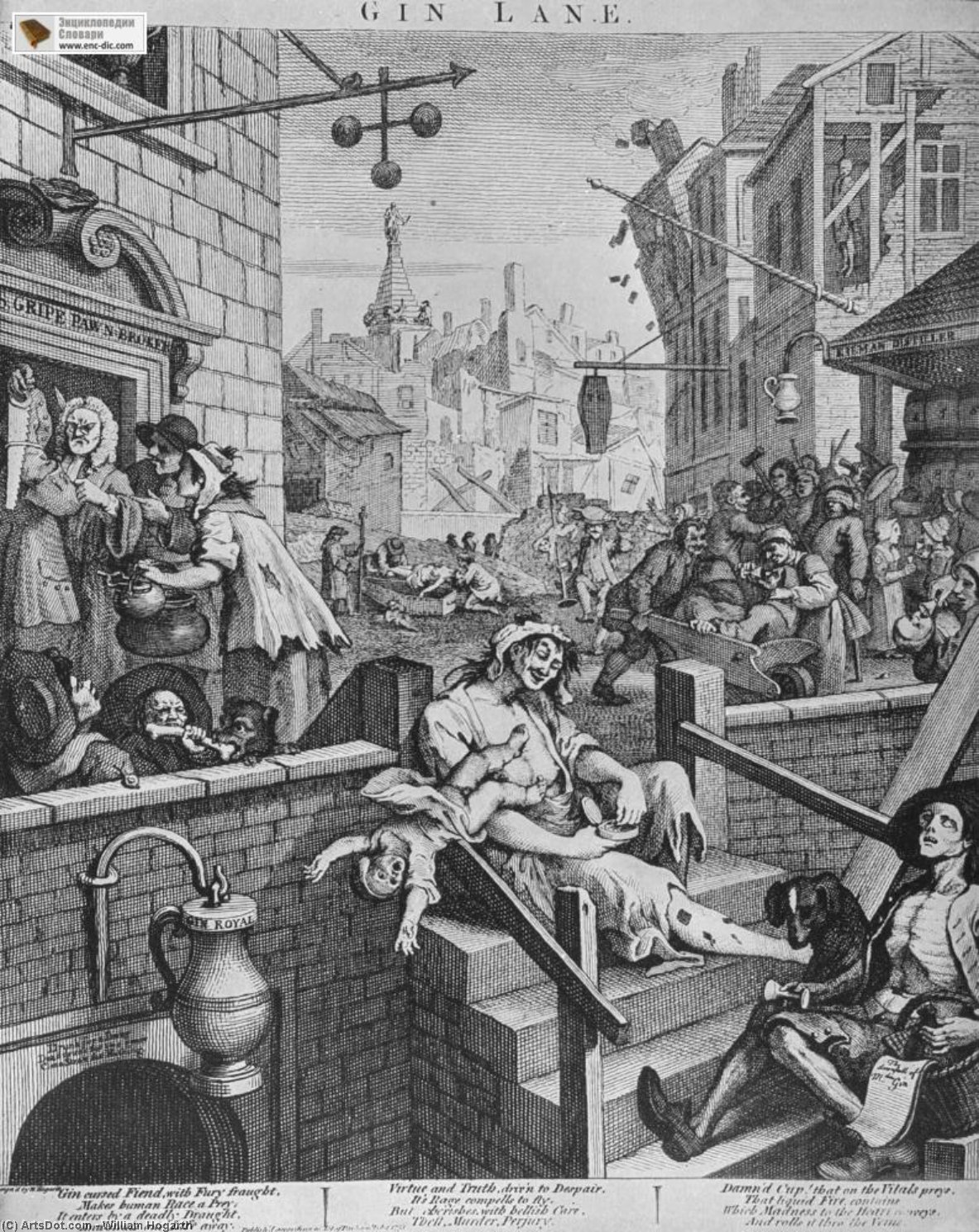
      Gin Lane (1750) autorstwa William Hogarth
      3

      Gin Lane

      1750 · Engraving

      In the heart of 18th-century London, amidst the swirling fog and the growing shadows of social upheaval, William Hogarth captured a moment of profound human tragedy that continues to haunt the viewer centuries later. His masterpiece, Gin Lane, is far more than a mere engraving; it is a visceral, breathing chronicle of a city in the throes of moral and physical decay. Completed in 1751, this work serves as a…

      The Marriage Contract (1745) autorstwa William Hogarth
      4

      The Marriage Contract

      1745 · Acrylic On Canvas

      A Window Into Georgian Society In the heart of 1745, William Hogarth captured more than a mere domestic arrangement; he froze a pivotal moment of social negotiation in "The Marriage Contract." This meticulously crafted tableau invites the viewer into a room thick with the palpable anxieties and lofty aspirations of Georgian England. As we gaze upon the central table where a man proposes to his prospective bride, we are not…

      Uczta (1755) autorstwa William Hogarth
      5

      Uczta

      1755 · Obraz olejny na płótnie · Sir John Soane's Museum, Londyn

      Wesoła scena z życia XVIII wieku: Analiza dzieła „Uczta” Williama Hogartha (1755) William Hogarth’s *Uczta*, namalowana w 1755 roku, to pełne życia i gęsto wypełnione postaciami płótno olejowe, które oferuje fascynujący wgląd w obyczaje społeczne georgiańskiej Anglii. To monumentalne dzieło o wymiarach 101 x 127 cm nie jest jedynie przedstawieniem uczty; to starannie skonstruowany komentarz na temat społeczeństwa, rozpasania oraz często chaotycznej natury ludzkich interakcji.Tematyka i narracja Obraz przedstawia tętniącą…

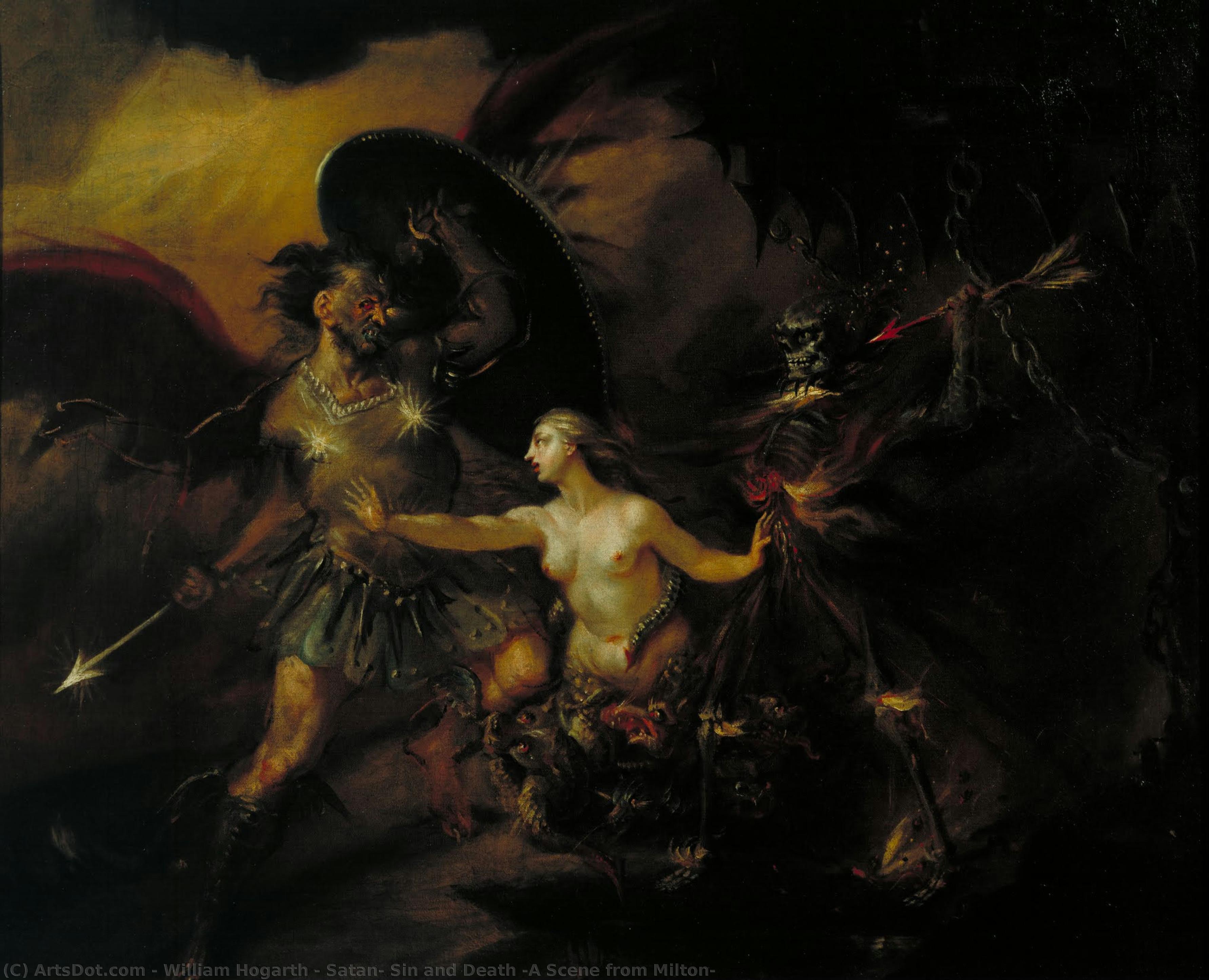
      Satan, Grzech i Śmierć (Scena z Miltona) (1735) autorstwa William Hogarth
      6

      Satan, Grzech i Śmierć (Scena z Miltona)

      1735 · Obraz olejny na płótnie · Tate Britain, Londyn

      „Satan, Sin, and Death” Williama Hogartha, namalowane w 1735 roku, to znacznie więcej niż tylko ilustracja do epopei Johna Miltona, *Raj utracony*; to pieczołowicie skonstruowana alegoria moralna, która wrzuca widza w świat pokus, konsekwencji i wiecznego konfliktu. To olej na płótnie, znajdujące się obecnie w Tate Britain w Londynie, o wymiarach 74 x 61 cm, oferuje niezwykle intymny wgląd w głębokie zrozumienie przez Hogartha motywów miltonowskich – uwodzicielskiej mocy grzechu,…

      The Painter and his Pug (1745) autorstwa William Hogarth
      7

      The Painter and his Pug

      1745 · Oil On Canvas · Tate Gallery, Londyn

      A Portrait of Intimacy: William Hogarth’s ‘The Painter and his Pug’ Subject & Composition: This captivating 1745 portrait by William Hogarth offers a charmingly informal glimpse into the artist's personal life. It depicts Hogarth himself, seated and gazing directly at the viewer, accompanied by his beloved pug, Trump. The composition is remarkably balanced; Hogarth occupies the central space while Trump rests comfortably to his right, creating an intimate and relaxed…

      Samobójstwo Kontesjentki autorstwa William Hogarth
      8

      Samobójstwo Kontesjentki

      Obraz olejny na płótnie

      William Hogarth i „Samobójstwo Księżnej”: Krytyczny Głos XVIII Wieku „Samobójstwo Księżnej” autorstwa Williama Hogartha stanowi niezwykle istotny obraz z cyklu „Małżeństwo na modzie”, który nie tylko prezentuje dramatyczną historię kobiety, ale przede wszystkim stanowi gorący komentarz społeczny na temat wartości XVIII wieku. Stworzony między 1743 a 1745 rokiem, dzieło to doskonale podsumowuje narrację dotyczącą destrukcyjnych konsekwencji małżeństw opartych wyłącznie na korzyści finansowej, odchodząc od romantycznych idei uczucia i wspólnego życia.…

      The Four Times of Day: Night (1738) autorstwa William Hogarth
      9

      The Four Times of Day: Night

      1738 · Acrylic On Canvas · Cleveland Museum of Art, Cleveland

      William Hogarth's "The Four Times of Day: Night," painted in 1738, isn’t merely a depiction of a London street scene; it’s a meticulously crafted window into the social and moral landscape of eighteenth-century England. This remarkable work, now immortalized through WahooArt’s hand-painted reproductions, captures a moment of revelry – or perhaps reckless abandon – with an unparalleled level of detail and satirical observation that defines Hogarth's unique artistic legacy. The…

      A Harlot's Progress: Quarrels with her Jewish Protector (1743) autorstwa William Hogarth
      10

      A Harlot's Progress: Quarrels with her Jewish Protector

      1743 · Oil On Canvas · Ascott House, Leighton Buzzard

      The room holds a sudden, sharp noise. A tea-table tilts, porcelain clatters, and the heavy weight of an argument settles over the fine fabrics. Mary, known as Moll Hackabout, moves with a violent intent, her arm a decisive line against the opulent interior. She kicks at the furniture to draw eyes away from the doorway, where a lover slips quietly into the shadows. A black serving boy stands near, a…

      William Hogarth: canvases 11 to 100 of the ranking

      Autoportret (1757) autorstwa William Hogarth
      #11

      Autoportret

      1757 · National Portrait Gallery

      Autoportret Williama Hogartha, namalowany w 1757 roku, stanowi urzekające okno na życie i praktykę artystyczną jednego z najważniejszych brytyjskich twórców. To dzieło olejowe na płótnie (4mu45 x 42…

      Bring this light home →
      Soliciting Votes (1754) autorstwa William Hogarth
      #12

      Soliciting Votes

      1754 · Sir John Soane's Museum

      William Hogarth's "Soliciting Votes," completed in 1754, stands as a masterful distillation of Enlightenment satire and a poignant reflection on the burgeoning political landscape of London. More than…

      Bring this light home →
      The heir (1735) autorstwa William Hogarth
      #13

      The heir

      1735 · Sir John Soane's Museum

      William Hogarth’s “The Heir,” completed in 1735, is more than simply a depiction of a domestic scene; it’s a meticulously crafted social commentary rendered with the precision and…

      Bring this light home →
      A Scene from The Beggar's Opera (1729) autorstwa William Hogarth
      #14

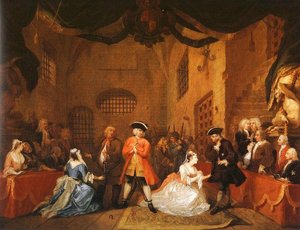
      A Scene from The Beggar's Opera

      1729 · National Gallery of Art

      William Hogarth's "A Scene from The Beggar’s Opera," painted in 1729, isn’t merely a depiction of a theatrical performance; it’s a meticulously crafted snapshot of 18th-century London life…

      Have it painted by hand →
      South Sea Scheme autorstwa William Hogarth
      #15

      South Sea Scheme

      In the swirling currents of 1721 London, amidst a fever of unbridled greed and financial delirium, William Hogarth unleashed a visual critique that would forever etch itself into…

      Order this canvas →
      Małżeństwo w modzie (1743) autorstwa William Hogarth
      #16

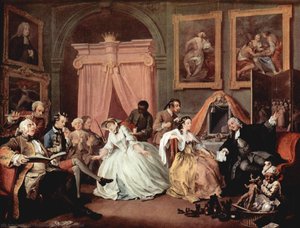
      Małżeństwo w modzie

      1743 · National Gallery

      W wielkiej tkaninie brytyjskiej sztuki osiemnastego wieku niewiele dzieł posiada tak cięty dowcip i głębię narracyjną jak Marriage à la Mode Williama Hogartha. Dokończona w 1743 roku, ta…

      Bring this light home →
      Plate dwa z A Raka Progresa autorstwa William Hogarth
      #17

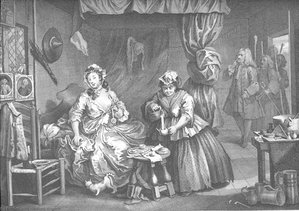
      Plate dwa z A Raka Progresa

      W świecie sztuki XVIII-wiecznej Anglii rzadko spotyka się artystę tak precyzyjnego, inteligentnego i bezkompromisowego jak William Hogarth. Jego seria *A Rake’s Progress* to nie tylko zbiór grafik, ale…

      Bring this light home →
      Hudibras autorstwa William Hogarth
      #19

      Hudibras

      William Hogarth's *Hudibras*, specifically the frontispiece and related engravings from Samuel Butler’s satirical poem, offers far more than a simple illustration; it’s a meticulously crafted social commentary frozen…

      Have it painted by hand →
      Wizyta u szarlatana (1745) autorstwa William Hogarth
      #20

      Wizyta u szarlatana

      1745

      W tętniącym życiem, a zarazem bezlitosnym świecie XVIII-wiecznego Londynu, dzieło Williama Hogartha „Wizyta u szarlatana” wyłania się jako głęboki, teatralny spektakl utrwalony na płótnie. Namalowane około 1745 roku…

      Order this canvas →
      The Times, plate 2 (1763) autorstwa William Hogarth
      #22

      The Times, plate 2

      1763

      The Pulse of an Era: London Unveiled In the year 1763, as the gears of the Industrial Revolution began to turn and the streets of London swelled with…

      Order this canvas →
      Autoportret (1745) autorstwa William Hogarth
      #24

      Autoportret

      1745

      Autoportret Williama Hogartha z 1745 roku to coś więcej niż tylko podobizna; to pieczołowicie skonstruowane okno do umysłu jednego z najbardziej przenikliwych i satyrycznych obserwatorów Anglii. Namalowane w…

      Order this canvas →
      Miss Mary Edwards (1742) autorstwa William Hogarth
      #25

      Miss Mary Edwards

      1742 · The Frick Collection

      A Portrait of Privilege and Virtue: Examining William Hogarth’s Miss Mary Edwards William Hogarth's "Miss Mary Edwards," completed in 1742, stands as an emblem of Enlightenment England—a meticulously…

      Have it painted by hand →
      The Battle of the Pictures (1743) autorstwa William Hogarth
      #26

      The Battle of the Pictures

      1743

      William Hogarth's "The Battle of the Pictures," completed in 1743, isn’t merely an engraving; it’s a vibrant, chaotic microcosm of 18th-century London’s art world – a scene brimming…

      Order this canvas →
      Suicide of the Countess (1745) autorstwa William Hogarth
      #27

      Suicide of the Countess

      1745

      Georgian England was gripped by a fervor for moral reform following the Enlightenment. Writers like Jonathan Swift satirized aristocratic excesses and championed reason over superstition, influencing artists like…

      Bring this light home →
      Canvassing for Votes autorstwa William Hogarth
      #28

      Canvassing for Votes

      William Hogarth’s “Canvassing for Votes” isn't merely a painting; it’s a meticulously crafted social commentary, a vibrant snapshot of corruption and manipulation embedded within the seemingly convivial atmosphere…

      Have it painted by hand →
      The Countess's Morning Levee (1745) autorstwa William Hogarth
      #29

      The Countess's Morning Levee

      1745

      William Hogarth’s “The Countess’s Morning Levee,” completed around 1745, stands as a cornerstone of Rococo art and a masterful distillation of Enlightenment observation. More than just a depiction…

      Bring this light home →
      The Ball (1745) autorstwa William Hogarth
      #30

      The Ball

      1745

      To stand before William Hogarth's depiction of "The Ball" is to be instantly transported across the threshold of time, directly into the glittering heart of an 18th-century London…

      Order this canvas →
      The Bench (1758) autorstwa William Hogarth
      #31

      The Bench

      1758

      A Gathering of Characters: Decoding Hogarth’s ‘The Bench’ Subject & Narrative: William Hogarth's 1758 engraving, ‘The Bench’, presents a tightly composed group of six men, each meticulously rendered…

      Order this canvas →
      The Denunciation (1729) autorstwa William Hogarth
      #33

      The Denunciation

      1729

      A Scene of Accusation: Unveiling Hogarth’s ‘The Denunciation’ William Hogarth's *The Denunciation*, painted in 1729, is far more than a depiction of a social gathering; it’s a meticulously…

      Bring this light home →
      Self-Portrait autorstwa William Hogarth
      #36

      Self-Portrait

      National Gallery of Ireland

      A middle-aged man gazes directly from an oval vignette, his expression calm and steady. He wears a soft red cap and a patterned blue robe, the heavy silk…

      Have it painted by hand →
      The triumph of Representatives (1755) autorstwa William Hogarth
      #38

      The triumph of Representatives

      1755 · Sir John Soane's Museum

      A Window Into Georgian Society: Examining William Hogarth’s “The Triumph of Representatives” William Hogarth's "The Triumph of Representatives," completed in 1755, isn’t merely a depiction of an event;…

      Bring this light home →
      Second stage of cruelty (1751) autorstwa William Hogarth
      #42

      Second stage of cruelty

      1751

      This powerful engraving, created by William Hogarth in 1751, offers a chilling glimpse into the realities of 18th-century England. Far from idealized landscapes or flattering portraits, this work…

      Have it painted by hand →
      The Reward of Cruelty (1751) autorstwa William Hogarth
      #45

      The Reward of Cruelty

      1751

      The Reward of Cruelty William Hogarth’s “The Reward of Cruelty,” published in 1751 as part of his monumental *Four Stages of Cruelty*, stands as a chilling indictment of…

      Bring this light home →
      Simon Lord Lovat autorstwa William Hogarth
      #46

      Simon Lord Lovat

      Simon Lord Lovat – A Portrait of Rebellion and Dignity William Hogarth’s “Simon Lord Lovat” stands as a remarkable testament to the artist's ability to capture not just…

      Order this canvas →
      Scholars at a Lecture autorstwa William Hogarth
      #48

      Scholars at a Lecture

      A Window Into Enlightenment: Examining William Hogarth’s “Scholars at a Lecture” The etching by William Hogarth, "Scholars at a Lecture," transcends mere depiction; it's an exquisitely crafted snapshot…

      Have it painted by hand →
      Sarah Malcolm in Prison autorstwa William Hogarth
      #50

      Sarah Malcolm in Prison

      Sarah Malcolm in Prison: A Portrait of Crime and Vulnerability William Hogarth’s *Sarah Malcolm in Prison* stands as a chilling testament to the moral anxieties of Georgian England,…

      Bring this light home →
      Gin Lane (1751) autorstwa William Hogarth
      #52

      Gin Lane

      1751

      In the heart of 18th-century London, amidst the swirling fog and the growing shadows of social upheaval, William Hogarth captured a moment of profound human tragedy that continues…

      Have it painted by hand →
      The murder of the count (1745) autorstwa William Hogarth
      #53

      The murder of the count

      1745

      William Hogarth’s “The Murder of the Count,” completed in 1745, is not merely a depiction of violence; it’s a meticulously constructed moral fable, a searing indictment of societal…

      Bring this light home →
      The Enraged Musician (1741) autorstwa William Hogarth
      #54

      The Enraged Musician

      1741

      In the heart of 1741 London, amidst the burgeoning energy of the Enlightenment, William Hogarth captured a moment of pure, unadulterated sensory overload. The Enraged Musician is not…

      Bring this light home →
      The Bathos autorstwa William Hogarth
      #55

      The Bathos

      William Hogarth's *The Bathos*, a powerfully unsettling engraving created towards the end of his life, is not merely an artwork; it’s a visual lament—a darkly satirical reckoning with…

      Bring this light home →
      The Beggar's Opera (1729) autorstwa William Hogarth
      #59

      The Beggar's Opera

      1729 · Yale Center for British Art

      A Window Into Georgian Society: Exploring Hogarth's "The Beggar's Opera" William Hogarth’s “The Beggar’s Opera,” completed in 1729, transcends mere visual representation; it serves as a meticulously crafted…

      Order this canvas →
      Lame theater autorstwa William Hogarth
      #62

      Lame theater

      William Hogarth’s “Lame Theater,” completed around 1730, stands as a cornerstone of English Rococo satire and a remarkably astute observation of the social landscape of Georgian London. More…

      Order this canvas →
      Southwark Fair autorstwa William Hogarth
      #63

      Southwark Fair

      Step into the swirling, sensory overload of William Hogarth’s Southwark Fair, a masterpiece that serves as a vivid, unvarnished window into the heart of 1730s London. This is…

      Order this canvas →
      Self Portrait autorstwa William Hogarth
      #64

      Self Portrait

      In the quiet intimacy of his studio, William Hogarth presents us with more than just a likeness; he offers a profound window into the very essence of Enlightenment…

      Bring this light home →
      Tyburn Large autorstwa William Hogarth
      #72

      Tyburn Large

      “Tyburn Large,” painted by William Hogarth in 1746, isn't merely a depiction of an execution; it’s a meticulously rendered snapshot of 18th-century London life, brimming with social commentary…

      Order this canvas →
      The Mackinen Children (1747) autorstwa William Hogarth
      #77

      The Mackinen Children

      1747 · National Gallery of Ireland

      “The Mackinen Children,” painted by William Hogarth in 1747, stands as a cornerstone of British Rococo art and exemplifies the artist’s masterful command of classical principles. More than…

      Order this canvas →
      Engraving of John Wilkes autorstwa William Hogarth
      #78

      Engraving of John Wilkes

      A Portrait of Moral Decay: Examining Hogarth’s Engraving of John Wilkes William Hogarth's "Engraving of John Wilkes" stands as a cornerstone of 18th-century British art and satire, capturing…

      Bring this light home →
      Richard Mouteney (1746) autorstwa William Hogarth
      #83

      Richard Mouteney

      1746 · Bawarskie Państwowe Zbiory Malarstwa

      The Weight of Presence A man sits in the center of a dark void. He wears a heavy black robe that swallows the light, its folds thick and…

      Order this canvas →
      Times of the Day: Morning autorstwa William Hogarth
      #86

      Times of the Day: Morning

      William Hogarth’s “Times of the Day – Morning,” a cornerstone of his celebrated series, isn’t merely a depiction of a London street; it’s a meticulously crafted observation of…

      Order this canvas →
      Satire on False Perspective autorstwa William Hogarth
      #87

      Satire on False Perspective

      Satire on False Perspective William Hogarth’s *Satire on False Perspective*, created in 1754 for Joshua Kirby's pamphlet *Method of Perspective*, stands as a masterful demonstration of artistic critique…

      Order this canvas →
      Analiza Piękna autorstwa William Hogarth
      #89

      Analiza Piękna

      Analisis of Beauty William Hogarth’s “Analysis of Beauty,” completed in 1753, stands as a monumental achievement in English visual culture—a testament to his meticulous observation of human behavior…

      Order this canvas →
      Thomas Pellett, M.D. (1737) autorstwa William Hogarth
      #93

      Thomas Pellett, M.D.

      1737

      An elderly gentleman, Thomas Pellett, M.D., occupies the center of this 1737 oil portrait. The composition utilizes a dark, oval vignette to focus attention on the subject's face…

      Bring this light home →
      Self-Portrait (1735) autorstwa William Hogarth
      #95

      Self-Portrait

      1735 · Yale Center for British Art

      In this 1735 self-portrait, we encounter the artist not as a distant figure, but in an intimate, eye-level encounter. The composition focuses on a bust-length view of a…

      Order this canvas →
      The Lottery autorstwa William Hogarth
      #96

      The Lottery

      The image is a black and white painting of a theater scene featuring a group of people gathered around a stage. The main focus of the painting is…

      Have it painted by hand →
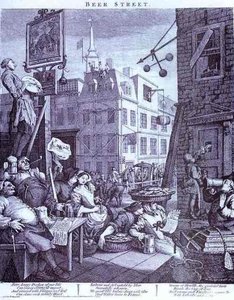
      Beer Street (1751) autorstwa William Hogarth
      #99

      Beer Street

      1751

      Beer Street, an iconic engraving created by William Hogarth in 1751, is a masterpiece that showcases the artist's ability to blend social commentary with artistic finesse. This work…

      Bring this light home →
      Rake's Progress' The Gaming House (1735) autorstwa William Hogarth
      #100

      Rake's Progress' The Gaming House

      1735 · Sir John Soane's Museum

      A Window into Georgian Society: Examining Hogarth’s “Rake’s Progress” William Hogarth's "Rake's Progress," completed in 1735, stands as a cornerstone of British Baroque art and a searing indictment…

      Order this canvas →

      William Hogarth's canvases, period by period

      What William Hogarth painted most

      The four subjects that return most often on these canvases, each with its best-loved example.

      Where William Hogarth's canvases hang

      8 muzeów, w których znajduje się najwięcej obrazów z tej strony.

      Muzeum Miasto Dzieła artysty William Hogarth Obrazy z tej listy
      Sir John Soane's Museum, LondynSir John Soane's Museum Londyn 14 Uczta, Soliciting Votes, The heir
      Yale Center for British Art, New HavenYale Center for British Art New Haven 11 The Beggar's Opera, The Family of John, 2nd Duke of Montagu and an attendant, William Augustus, Duke of Cumberland
      National Gallery of Ireland, DublinNational Gallery of Ireland Dublin 7 Self-Portrait, The Mackinen Children
      Upton House, BanburyUpton House Banbury 3 The Four Times of Day: Night, Gerard Anne Edwards Hamilton (1732–1773) in his Cradle
      Ascott House, Leighton BuzzardAscott House Leighton Buzzard 2 A Harlot's Progress: Quarrels with her Jewish Protector, An Unknown Lady, possibly Miss Woodley, later Mrs Henry Vaughan (not Mrs Jane Hogarth)
      National Gallery of Art, WaszyngtonNational Gallery of Art Waszyngton 2 A Scene from The Beggar's Opera, A Scene from the Beggar's Opera
      National Gallery, LondynNational Gallery Londyn 9 Małżeństwo w modzie
      Fitzwilliam MuseumFitzwilliam Museum 9 A prisoner of the Fleet being examined before a committee of the House of Commons

      William Hogarth's most famous canvas, decade after decade

      1. 1720s
        A Scene from The Beggar's Opera (1729) autorstwa William Hogarth
        Canvas 14 of 100

        A Scene from The Beggar's Opera

        Wiek 23 – 32 · National Gallery of Art

        William Hogarth's "A Scene from The Beggar’s Opera," painted in 1729, isn’t merely a depiction of a theatrical performance; it’s a meticulously crafted snapshot of 18th-century London life…

      2. 1730s
        Satan, Grzech i Śmierć (Scena z Miltona) (1735) autorstwa William Hogarth
        6 of 100

        Satan, Grzech i Śmierć (Scena z Miltona)

        Wiek 33 – 42 · Tate Britain

        „Satan, Sin, and Death” Williama Hogartha, namalowane w 1735 roku, to znacznie więcej niż tylko ilustracja do epopei Johna Miltona, *Raj utracony*; to pieczołowicie skonstruowana alegoria moralna, która…

      3. 1740s
        The Marriage Contract (1745) autorstwa William Hogarth
        Ranked 4 of 100

        The Marriage Contract

        Wiek 43 – 52

        A Window Into Georgian Society In the heart of 1745, William Hogarth captured more than a mere domestic arrangement; he froze a pivotal moment of social negotiation in…

      4. 1750s
        Gin Lane (1750) autorstwa William Hogarth
        Canvas 3 of 100

        Gin Lane

        Wiek 53 – 62

        In the heart of 18th-century London, amidst the swirling fog and the growing shadows of social upheaval, William Hogarth captured a moment of profound human tragedy that continues…

      5. 1760s
        The Times, plate 2 (1763) autorstwa William Hogarth
        22 of 100

        The Times, plate 2

        Wiek 63 – 67

        The Pulse of an Era: London Unveiled In the year 1763, as the gears of the Industrial Revolution began to turn and the streets of London swelled with…

      William Hogarth's canvases, question by question

      Which canvas is William Hogarth most remembered for?Read the answer

      Płytka pierwsza, z „Podróż rakiowa”, followed by Płytka szósta z „Podróż za fasadę” and Gin Lane (1750).

      What are William Hogarth's ten most famous canvases?Read the answer

      Płytka pierwsza, z „Podróż rakiowa”, Płytka szósta z „Podróż za fasadę”, Gin Lane, The Marriage Contract, Uczta, Satan, Grzech i Śmierć (Scena z Miltona), The Painter and his Pug, Samobójstwo Kontesjentki, The Four Times of Day: Night i A Harlot's Progress: Quarrels with her Jewish Protector. Each canvas in the ranking above comes with its year and its museum.

      How many paintings did William Hogarth create?Read the answer

      307 works by William Hogarth are in our catalogue, dated 1721 to 1763.

      Where do William Hogarth's most famous canvases hang today?Read the answer

      Mostly in Sir John Soane's Museum (Londyn), Yale Center for British Art (New Haven) i National Gallery of Ireland (Dublin); the list above names each museum and its canvases.

      When did William Hogarth paint the most famous canvases?Read the answer

      In 1740s, which gave 18 of the 100 works on this page, The Marriage Contract among them.

      Which famous William Hogarth canvas came first, and which came last?Read the answer

      The earliest canvas here is Emblematical print of the South Sea Scheme (1721); the latest is The Times, plate 2 (1763).

      Which subjects did William Hogarth paint most?Read the answer

      Social commentary (30), Satire (25) i 18th century (24), across the 100 works on this page.

      Which medium appears most in William Hogarth's paintings?Read the answer

      Acrylic On Canvas, used in 29 of the 100 works on this page.

      Which paintings by William Hogarth are held by the Sir John Soane's Museum?Read the answer

      The Sir John Soane's Museum, Londyn holds 5 of the works on this page, among them Uczta, Soliciting Votes i The heir.

      Where can I buy a reproduction of a William Hogarth painting?Read the answer

      Yes. Every painting on this page can be ordered from its own page as an oil reproduction painted by hand, or as a fine art print, in the size you choose.

      Meet the painter: William Hogarth

      Życie Williama Hogartha

      Londyn, 1697 rok. Powietrze w Bartholomew Close jest gęste od odgłosów rosnącej metropolii. To właśnie tutaj William Hogarth wkracza w świat niepewnej stabilności. Jego ojciec, Richard Hogarth, mozolnie próbuje utrzymać się z nauczania łaciny i pisania podręczników. Finanse rodziny ulegają ciągłym wahaniom; w pewnym momencie Richard musi zmierzyć się z brutalną rzeczywistością więzienia za długi w Fleet Prison. Ta wczesna konfrontacja z niestabilnością miejskiego życia odciska trwałe piętno na jego duszy. William Hogarth dorasta, obserwując przepaść dzielącą klasy społeczne – perspektywę, która ostatecznie zdefiniuje jego karierę jako malarza, rytownika, satyryka, karykaturzysty i pisarza.

      Droga tego chłopca nie jest wybrukowana dziedziczonym majątkiem ani łatwym mecenatem. Jest to raczej życie ukształtowane przez surowość miasta. Przemierza ulice Londynu, przyglądając się postaciom wypełniającym kawiarnie i jarmarki. Jego matka, Anne Gibbons, stanowi domową kotwicę w życiu naznaczonym przez ekonomiczne zawirowania epoki. Zanim jeszcze zacznie wyznaczać własne ścieżki w świecie sztuki, staje się człowiekiem wielu talentów, używając atramentu i farb, by dokonać wiwisekcji społeczeństwa, które go wychowało.

      • A Harlot's Progress (1731/1732)
      • A Rake's Progress (1735)
      • Marriage A-la-Mode (1743–1745)

      Wczesne lata, rodzina i kształcenie

      Londyn, rok 1697. William dorasta w cieniu niepewności, będąc synem Richarda Hogartha, nauczyciela łaciny i okazjonalnego pisarza, człowieka zmagającego się z losem w nieustannym poszukiwaniu stabilizacji w sercu metropolii. Domowa niepewność przybiera dramatyczny obrót, gdy Richard zostaje uwięziony w Fleet Prison na pięć lat z powodu nieuregulowanych długów. Ten czas wyrzeczeń, naznaczony kruchością rodzinnych finansów, odciska trwałe piętno na młodym obserwatorze miejskiego życia, kształtując jego wrażliwość na społeczny nieład.

      W 1714 roku uwaga artysty przenosi się na techniczne aspekty rzemiosła. Hogarth rozpoczyna naukę u Ellisa Gamble'a, grawera złota i srebra działającego w Leicester Fields. To właśnie tam uczy się precyzji niezbędnej przy tworzeniu kart handlowych i innych drobnych form graficznych, zdobywając fundamentalną biegłość w pracy z miedzianą płytą. To techniczne przygotowanie staje się fundamentem dla kariery, która z czasem wykroczy daleko poza ramy zwykłej, komercyjnej reprodukcji.

      Kierunek jego rozwoju ulega jednak zmianie, gdy zaczyna dążyć do formalnego wykształcenia artystycznego. W 1720 roku zapisuje się do St Martin's Lane Academy. Jego warsztat rozwija się jeszcze dynamiczniej pod okiem Sir Jamesa Thornhilla, nadwornego malarza króla Jerzego I. Pod okiem mistrza punkt ciężkości przesuwa się z drobiazgowej precyzji grawerstwa w stronę złożoności malarstwa i kompozycji. William Hogarth ewoluuje, przechodząc od skrupulatnej pracy rzemieślnika ku wielkiej skali sztuk pięknych.

      Technika i styl artystyczny

      Twórczość, którą pozostawił William Hogarth, oscyluje między precyzją realistycznego portretu a dynamiczną, sekwencyjną energią serii przypominających dzisiejsze komiksy. On nie tylko maluje; on konstruuje wielowarstwowe narracje. Podejście to osiąga swój szczyt w koncepcji „nowych tematów moralnych” – metodzie, w której artysta wykorzystuje wizualną opowieść do bezlitosnej krytyki tkanki społecznej. Płótno oraz miedziana płyta stają się dla niego scenami, na których rozgrywa się dramat, a on sam, posługując się wyrafinowaną mieszanką humoru i ostrej satyry, z niezwykłą siłą przebija się przez konwenanse epoki.

      Fundamentem technicznym jego dzieł jest mistrzostwo w dziedzinie miedziorytu. William Hogarth doskonale rozumiał ciężar każdej linii oraz potęgę grafiki, która ma moc docierania do masowego odbiorcy. W 1753 roku dokonał zwrotu od czystej praktyki ku teorii, wydając swoje dzieło Analysis of Beauty. To właśnie tam, wykraczając poza ramy zwykłej obserwacji, skodyfikował swoje teorie estetyczne, kładąc szczególny nacisk na znaczenie „linii serpentynowej” jako fundamentalnego zasady piękna i ruchu.

      • A Harlot's Progress (1731/1732)
      • A Rake's Progress (1735)
      • Marriage A-la-Mode (1743–1745)

      Kluczowe dzieła i cykle

      Narracyjna potęga twórczości, którą reprezentuje William Hogarth, osiąga swoje apogeum w „nowoczesnych tematach moralnych” – serii obrazów zaprojektowanych tak, aby funkcjonować niczym wizualne powieści. W latach 1731–1732 A Harlot's Progress kreśli tragiczną historię upadku młodej kobiety, która przybywa do Londynu, by ostatecznie ulec jego mrocznym pokusom. Ten motyw społecznego regresu powraca w 1735 roku w cyklu A Rake's Progress, śledzącym losy Toma Rakewella, który roztrwania swój spadek na hazard i rozwiązłość. Dzieła te nie ograniczają się jedynie do przedstawiania scen; one skrupulatnie dokumentują konsekwencje moralnego rozkładu, wykorzystując do tego celu niezwykłą dbałość o szczegół oraz bogatą symbolikę.

      W późniejszych latach artysta przesuwa punkt ciężkości z jednostkowej ruiny na gwałtowne zderzenie klas społecznych, co doskonale obrazuje seria Marriage A-la-Mode, powstała w latach 1743–1745. To właśnie tutaj William Hogarth z bezlitosną precyzją punktuje katastrofalne skutki aranżowanych małżeństw oraz bezmyślnej pogoni za statusem. Napięcie między przepychem wnętrz bogaczy a nędzą panującą w świecie biedoty staje się tu motywem przewodnim. Nawet w dojrzałym wieku jego komentarz pozostaje niezwykle celny. W 1748 roku w dziele O the Roast Beef of Old England podejmuje temat tożsamości narodowej, natomiast w powstałym w 1750 roku The March of the Guards to Finchley ukazuje chaotyczne i huczne oblicze życia wojskowego, zestawiając zdyscyplinowane szeregi majaczące w oddali z wrzawą i nieokiełznanym zachowaniem żołnierzy na pierwszym planie.

      • A Harlot's Progress (1731/1732)
      • A Rake's Progress (1735)
      • Marriage A-la-Mode (1743–1745)
      • O the Roast Beef of Old England (1748)
      • The March of the Guards to Finchley (1750)

      Dziedzictwo i trwały wpływ

      Wiek XVIII stał się świadkiem narodzin wyraźnie brytyjskiej szkoły sztuki, ruchu, którego powstanie przyspieszył nieugięty opór, jaki stawiał William Hogarth wobec kontynentalnych wzorców. Zamiast ograniczać się do czystej imitacji obcych stylów, artysta ten wypracował własny, unikalny język wizualny, którego korzenie tkwiły głęboko w brukowanych ulicach Londynu. Ta zmiana ma fundamentalne znaczenie; Hogarth stał się najważniejszym angielskim artystą swojego pokolenia, a jego wpływ okazał się tak wszechobecny, że termin „hogarthowski” na stałe wszedł do słownika, by opisać jego specyficzny, przenikliwy styl satyrycznej obserwacji.

      Komercyjny wymiar jego sukcesu przyniósł jednak ze sobą zupełnie nowy rodzaj konfliktów. W miarę jak jego grafiki zyskiwały ogromną popularność, przyciągały również falę nieautoryzowanych reprodukcji. Plagiat stał się nieustannym zagrożeniem dla jego bytu, a narastające napięcie doprowadziło do konfrontacji na polu prawnym, która na zawsze zmieniła krajobraz własności intelektualnej. Dzięki jego staraniom na rzecz ustawy o prawie autorskim z 1735 roku, zabezpieczono prawa twórców przed tymi, którzy chcieli czerpać zyski z ich pracy bez żadnej zgody.

      Metoda opowiadania historii za pomocą sekwencji obrazów stworzyła swoisty fundament dla przyszłych mediów. William Hogarth stał się bezpośrednim prekursorem współczesnej karykatury politycznej oraz komiksu. Wykorzystując ciąg ilustracji do sekcji społecznych zachowań, dostarczył wzorca dla narracji wizualnych, które wymagają od odbiorcy nie tylko patrzenia, ale przede wszystkim czytania i interpretacji. Jego wpływ rozciąga się od satyrycznych rycin z lat 1700, aż po same fundamenty współczesnej kultury popularnej.

      Gdzie dziś można podziwiać jego dzieła

      Fizyczne ślady społecznej krytyki, którą uprawiał William Hogarth, pozostają rozproszone w najważniejszych instytucjach sztuki. W Londynie National Gallery przechowuje fragmenty serii Marriage à la Mode, gdzie zachowana została wizualna narracja o rozkładzie społecznym. Niedaleko stąd, w Tate Britain, można odnaleźć Satan, Sin and Death (A Scene from Milton>) – dzieło, które doskonale ukazuje jego niezwykłą zdolność do przekładania złożonych tematów literackich na formę wizualną. W mieście obecne jest również Foundling Museum, w którego zbiorach znajduje się The March of the Guards to Finchley, obraz oddający chaotyczną energię XVIII-wiecznego życia wojskowego.

      Zasięg twórczości artysty wykracza daleko poza granice Zjednoczonego Królestwa. W Nowym Jorku Frick Collection zachowuje Miss Mary Edwards, portret będący świadectwem jego kunsztu w chwytaniu indywidualnego charakteru postaci. Kolekcje te oferują możliwość obcowania z niezwykłymi detalami jego rycin i malarstwa w ich pierwotnym kontekście. Odwiedzający mogą dostrzec jego wpływ w sposobie, w jaki instytucje te balansują między sztuką wysoką a popularną satyrą.

      Wszystkie 307 dzieła artysty William Hogarth →