


 Visualizar em escala
 Enviar
 Compartilhar
 Ver detalhes
 Guia de Obras do Aluno

 Baixar imagem
 Semelhantes
 Raio X
 Apresentação de slides
 Estatísticas
Journey
 Oil
Oil- WallArt
- Bengal School of Art
 1913
1913- 19th Century
 210.0 x 150.0 cm
 National Gallery of Modern Art
Discover Abanindranath Tagore’s ‘Journey’, a masterpiece of Bengal School art! Explore its Mughal-inspired beauty, emotive lines & rich colors – a unique Indian aesthetic.
 Ver mais
Descubra Abanindranath Tagore (1871-1951), pioneiro da arte indiana moderna e fundador da Escola de Bengala! Explore suas pinturas Mughal, Rajput e Orientalistas que refletem valores Swadeshi e beleza lírica.
Reprodução em Óleo Feita à Mão
Óleo sobre tela pintado à mão no tamanho e moldura de sua escolha, feito sob encomenda pelos nossos artistas. ( Alternar para Impressão Ver Imagem Digital)




P118B €10

P118H €10

P118W €10

P438Z €10

P508JH €12

P508YH €12

P805H €10

P805Z €10

P919BZ €10

P919G €10

P919XJ €10

P959ZH €10

P968JZ €12

W106C €8

W218G €10

W218JH €8

W218Y €10

W307PJ €10

W316G €10

W316PJ €8

W316Y €10

W398PJ €8

W4111J €10

W500HY €15

W500JH €15

W692G €12

W849H €8

W940BG €15

W953PJ €8




Padrão
sob medida
CM
INCH
Escolha entre os nossos tamanhos pré-definidos que respeitam as proporções originais da obra de arte.
Loading sizes...

largura
altura
Digite a largura e a altura de que necessita, para se ajustar à sua moldura ou à sua parede. Esta obra é pintada à mão, por isso, para um tamanho com uma proporção diferente, o artista pode pintar um pouco mais ao redor da imagem ou cortar um pouco — você escolhe. Enviamos-lhe uma maquete digital para aprovação antes de a pintura começar. A imagem exibida nesta página não mostra o resultado real — apenas a maquete mostra.
Exemplos do que pode ser personalizado: Substituir o rosto pela foto do cliente; Adicionar um animal de estimação (ex: substituir gato por cão); Incluir uma mensagem oculta no fundo; Alterar a paisagem ou elementos do fundo.
Após o pedido, a equipa TopImpressionists.com enviará um e-mail ao cliente para solicitar instruções e fornecer uma prévia do esboço.
Após o pedido, a equipa TopImpressionists.com enviará um e-mail ao cliente para solicitar instruções e fornecer uma prévia do esboço.
Entrega mundial () em 3 a 4 semanas, em vez das 5 semanas padrão. (22 Outubro). Sem comprometer a qualidade.

Envio expresso gratuito para todo o mundo

Tela de Linho Premium

Seguro de transporte total

Garantia de Reembolso de Impostos Alfandegários

Garantia de Fidelidade de Cor

Política de Devolução em 100 Dias (Apenas para Defeitos)

Garantia de reembolso de 100%

Desconto para múltiplas unidades
 A opção de vidro está disponível apenas para tamanhos inferiores a 110 cm

Journey
Técnica de Reprodução
Dimensões da Reprodução
-


Preço Total
€ 236
The Soul of the Bengal School: A Study of Abanindranath Tagore’s Journey
In the twilight of the 19th century, a profound artistic revolution began to stir within the heart of India, led by a visionary who sought to reclaim a national identity through the brush. Abanindranath Tagore, a central figure of the illustrious Tagore family, stood at the forefront of this movement, challenging the rigid dominance of British academic realism. His masterpiece, Journey (often referred to as Journey’s End), serves as a poignant testament to this era of transition. Created in 1913, the painting is not merely a depiction of a weary animal; it is a soulful rejection of Western oil traditions in favor of a new, indigenous aesthetic that blended the delicate precision of Mughal miniature traditions with the ethereal, misty qualities of the Japanese wash technique.
The composition invites the viewer into a moment of profound stillness and quietude. At its center lies a camel, collapsed under the immense weight of a heavy load, resting upon a bed of cloth. There is an undeniable intimacy in how Tagore captures this scene; the subject matter—a traditional vignette of trade and travel—is stripped of grandiosity to focus on the raw, emotive essence of endurance. The palette is masterfully subdued, dominated by warm, earthy tones that evoke a sense of dust, heat, and the passage of time. Through his precise yet delicate linework, Tagore defines the contours of the camel’s body and the irregular folds of its burden, creating a rhythmic harmony between the organic forms of the animal and the textured layers of the surrounding fabric.
Technique and the Ethereal Atmosphere
What distinguishes Journey from the heavy, physical presence of contemporary European oil paintings is its luminous, almost translucent quality. Tagore utilized a technique that favored a soft, atmospheric glow over harsh shadows. The light appears to descend from above, casting gentle shadows that lend a subtle three-dimensionality to the forms without breaking the flattened, decorative perspective characteristic of the Bengal School. This approach creates a misty, dreamlike appearance, where the boundaries between the subject and its environment seem to blur into a unified, emotive atmosphere.
For the discerning collector or interior designer, this artwork offers a sophisticated balance of texture and tone. The brushstrokes, while appearing slightly rough in certain areas to suggest the grit of travel, are applied with a finesse that allows for a sense of light to permeate the surface. This interplay of light and shadow makes the piece an exceptional focal point for spaces that require a sense of calm, depth, and historical resonance. It is a work that does not shout for attention but rather commands it through its quiet, persistent beauty.
Symbolism and Emotional Resonance
Beyond its technical brilliance, Journey is steeped in profound symbolism. The camel, burdened by its heavy load after long distances, serves as a powerful metaphor for resilience and the indomitable spirit of endurance. It reflects the very struggle of the Indian art movement itself—the weight of colonial influence being carried toward a new, self-determined destination. The load represents the labor, commerce, and the heavy history of a nation in flux, while the stillness of the scene suggests a moment of necessary reflection and rest amidst the toil.
To possess a reproduction of this masterpiece is to bring a piece of the Bengali Renaissance into one's personal sanctuary. The painting evokes a melancholic yet peaceful mood, making it an ideal selection for those seeking to infuse their interiors with intellectual depth and emotional warmth. It remains an unforgettable image, capturing a pivotal moment in art history where tradition was not merely preserved but reimagined to create something truly eternal.
Perguntas e Respostas
Qual é o formato de "Journey"?
"Journey" de Abanindranath Tagore é uma composição em Landscape. As proporções valem a pena ser conferidas antes de escolher o tamanho da impressão.
Posso usar realidade aumentada para ver "Journey" de Abanindranath Tagore no meu ambiente?
"Journey" possui uma prévia em realidade aumentada: a página de Visualização em RA da obra mostra como ela ficaria no seu próprio espaço através de um dispositivo compatível.
Quais cores predominam em "Journey" de Abanindranath Tagore?
"Journey" de Abanindranath Tagore utiliza uma paleta Dark, com Walnut (#683f27) como cor dominante.
Biografia do Artista
Primeiros Anos e Origens
- Nascimento: 7 de maio de 1861, Joransanko, Calcutá, Índia Britânica
- Falecimento: 5 de dezembro de 1951
- Família: Membro da distinta família Tagore; sobrinho de Rabindranath Tagore. Seu avô era Girindranath Tagore, e seu pai era Gunendranath Tagore.
- Educação: Estudou no Sanskrit College, Kolkata, na década de 1880 e, posteriormente, frequentou a Calcutta School of Art.
Desenvolvimento Artístico e Influências
- Formação Inicial: Aprendeu técnicas de pastel com O. Ghilardi e pintura a óleo com Charles Palmer na Calcutta School of Art.
- Estilos Mughal e Rajput: Buscou modernizar estes estilos, rejeitando os modelos de arte ocidental.
- Valores Swadeshi: Incorporou os valores Swadeshi em sua arte, promovendo as tradições indianas.
- Esteticismo de Whistler: Influenciado pelos princípios estéticos de Whistler.
- Influência Japonesa: Mais tarde, incorporou as tradições caligráficas chinesas e japonesas ao seu estilo após conhecer os artistas Tikan e Hesida.
Principais Obras e Contribuições Artísticas
- Rohini II: Uma obra notável que demonstra sua habilidade artística.
- Passing of Shajahan: Outra pintura significativa que reflete seu estilo.
- Season Flower in a Vase: Demonstra seu domínio de técnica e temática.
- Série As Mil e Uma Noites (1930): Considerada um de seus maiores feitos, utilizando as histórias das Mil e Uma Noites para explorar a Calcutá colonial.
- Bharat Mata: Uma pintura significativa que simboliza a Mãe Índia.
- Fundador da Escola de Arte de Bengala: Desempenhou um papel fundamental na formação da pintura indiana moderna e na promoção da arte nacionalista.
- Sociedade Indiana de Arte Oriental (1907): Fundou esta sociedade para promover as formas tradicionais de arte indiana.
Legado e Significância Histórica
- Pioneiro da Pintura Indiana Moderna: Reconhecido como uma figura chave no desenvolvimento da arte indiana moderna.
- Influência em Artistas Posteriores: Mentor de artistas notáveis como Nandalal Bose, Asit Halder, Kshitindranath Majumdar e Jamini Roy.
- Renascimento das Formas de Arte Tradicionais: Defendeu o retorno às técnicas e estilos tradicionais indianos.
- Impacto na Literatura Infantil Bengali: Escreveu livros infantis influentes como Rajkahini, Budo Angla, Nalak e Khirer Putul.
- Tesouros Artísticos Nacionais: Suas obras são consideradas Tesouros Artísticos Nacionais.

Abanindranath Tagore
1871 - 1951 , Índia
Informações Rápidas
- Artistic Movement Or Style: Escola de Arte de Bengala
- Artists Or Movements Influenced By This Artist:
- Nandalal Bose
- Kshitindranath Majumdar
- Jamini Roy
- Artists Who Influenced This Artist:
- Whistler
- artistas Mogóis
- artistas Rajput
- Date Of Birth: 7 de maio de 1871
- Date Of Death: 5 de dezembro de 1951
- Full Name: Abanindranath Tagore
- Nationality: Indiano
- Notable Artworks:
- Rohini II
- Passing of Shajahan
- Season Flower in a Vase
- Place Of Birth: Jorasanko, Índia
Artigos Relacionados
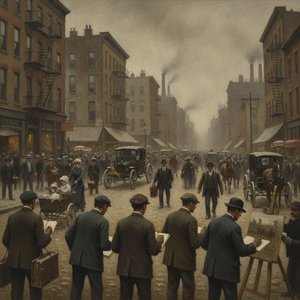
The Ashcan School: Capturing the Raw, Unfiltered Soul of Urban Life through American Realism
Discover the raw beauty of the Ashcan School. Explore how masters like Bellows and Henri captured the gritty, vibrant soul of early 20th-century New York through profound American Realism and evocative urban landscapes.

The Barbizon School: The Soulful Origins of Impressionism's Natural Light and Atmospheric Mastery
Discover the profound influence of the Barbizon School on Impressionism. Explore how these masters captured natural light and atmospheric beauty through plein air painting, paving the way for Monet and Renoir. A journey into the soulful origins of landscape art history.
Explore obras de arte organizadas por temas, estilos e características.
