


 Visualizar em escala
 Enviar
 Compartilhar
 Ver detalhes
 Guia de Obras do Aluno

 Baixar imagem
 Semelhantes
 Raio X
 Apresentação de slides
 Estatísticas
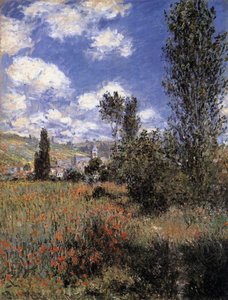
Paisagem em Vétheuil


Claude Monet capturou a beleza da luz e atmosfera em Vétheuil (1879), criando uma obra emblemática do Impressionismo. Uma paisagem serena que celebra a natureza e o espírito artístico de um período revolucionário.
 Ver mais
Explore o mundo de Claude Monet, o mestre impressionista renomado por capturar a luz e as cores fugazes através de paisagens icônicas como 'Nenúfares' e 'Palheiros'.
Reprodução em Óleo Feita à Mão
Óleo sobre tela pintado à mão no tamanho e moldura de sua escolha, feito sob encomenda pelos nossos artistas. ( Alternar para Impressão Ver Imagem Digital)




P118B €10

P118H €10

P118W €10

P438Z €10

P508JH €12

P508YH €12

P805H €10

P805Z €10

P919BZ €10

P919G €10

P919XJ €10

P959ZH €10

P968JZ €12

W106C €8

W218G €10

W218JH €8

W218Y €10

W307PJ €10

W316G €10

W316PJ €8

W316Y €10

W398PJ €8

W4111J €10

W500HY €15

W500JH €15

W692G €12

W849H €8

W940BG €15

W953PJ €8




Padrão
sob medida
CM
INCH
Escolha entre os nossos tamanhos pré-definidos que respeitam as proporções originais da obra de arte.
Loading sizes...

largura
altura
Digite a largura e a altura de que necessita, para se ajustar à sua moldura ou à sua parede. Esta obra é pintada à mão, por isso, para um tamanho com uma proporção diferente, o artista pode pintar um pouco mais ao redor da imagem ou cortar um pouco — você escolhe. Enviamos-lhe uma maquete digital para aprovação antes de a pintura começar. A imagem exibida nesta página não mostra o resultado real — apenas a maquete mostra.
Exemplos do que pode ser personalizado: Substituir o rosto pela foto do cliente; Adicionar um animal de estimação (ex: substituir gato por cão); Incluir uma mensagem oculta no fundo; Alterar a paisagem ou elementos do fundo.
Após o pedido, a equipa TopImpressionists.com enviará um e-mail ao cliente para solicitar instruções e fornecer uma prévia do esboço.
Após o pedido, a equipa TopImpressionists.com enviará um e-mail ao cliente para solicitar instruções e fornecer uma prévia do esboço.
Entrega mundial () em 3 a 4 semanas, em vez das 5 semanas padrão. (22 Outubro). Sem comprometer a qualidade.

Envio expresso gratuito para todo o mundo

Tela de Linho Premium

Seguro de transporte total

Garantia de Reembolso de Impostos Alfandegários

Garantia de Fidelidade de Cor

Política de Devolução em 100 Dias (Apenas para Defeitos)

Garantia de reembolso de 100%

Desconto para múltiplas unidades
 A opção de vidro está disponível apenas para tamanhos inferiores a 110 cm

Paisagem em Vétheuil
Técnica de Reprodução
Dimensões da Reprodução
-


Preço Total
€ 236
A Glimpse into Impressionist Harmony: Claude Monet’s Vétheuil Landscape
Claude Monet (1840-1926) stands as a titan of 19th-century art, and a central figure in the birth of Impressionism – a movement that irrevocably altered the course of modern painting. His dedication to capturing the fleeting effects of light and atmosphere, *en plein air*, revolutionized artistic practice and continues to inspire awe today. This landscape, painted in 1879 at Vétheuil, exemplifies his groundbreaking approach. It’s more than just a depiction of a village nestled along the Seine; it's an embodiment of Monet’s profound connection with nature and his masterful exploration of color and light—elements that define the very essence of Impressionism.Vétheuil: A Sanctuary on the Seine
Monet resided in Vétheuil, a charming village northwest of Paris, from 1878 to 1881, a period marked by both personal hardship – the recent loss of his wife Camille – and artistic exploration. The painting depicts a serene scene viewed from an island within the Seine River. A winding footpath, punctuated by vibrant poppies in the foreground, draws the eye towards the distant church tower of Vétheuil. A stand of poplar trees partially obscures the water, creating layers of depth and visual interest. This wasn’t merely a depiction of place; it was an intimate study of light, color, and atmosphere within a landscape that offered solace during a difficult time—a testament to Monet's ability to transform personal sorrow into artistic brilliance.The Essence of Impressionism: Technique & Style
- Loose Brushwork: Monet’s signature style is immediately apparent in the visible, broken brushstrokes. These aren't intended to meticulously recreate reality but rather to capture the *impression* of light and movement. Imagine a painter’s hand dancing across the canvas—each stroke deliberately placed to convey not just what he sees, but how it feels.
- Vibrant Palette: The painting bursts with color – the golden hues of the wheat fields, the fiery reds of the poppies, and the subtle variations in greens and blues reflecting off the water. Monet’s masterful use of complementary colors enhances the vibrancy and visual impact; yellow and violet, for instance, create a dazzling interplay that captures the brilliance of sunlight.
- Atmospheric Perspective: The artist skillfully employs atmospheric perspective, rendering distant objects paler and less defined to create a sense of depth and spaciousness. It’s as if Monet is inviting you to step into the painting itself—to feel the coolness of the air and the vastness of the landscape.
- Plein Air Painting: Executed *en plein air*, the painting embodies the Impressionist commitment to observing nature directly and capturing its ephemeral qualities. This immediacy is crucial to the work’s emotional resonance, allowing viewers to experience the same sensations as Monet himself.
Historical Context & Artistic Innovation
The late 19th century was a period of rapid change, both socially and artistically. Traditional academic painting emphasized historical or mythological subjects rendered with meticulous detail—a formal approach that contrasted sharply with Monet’s revolutionary vision. He and his fellow Impressionists rejected these conventions, choosing instead to focus on everyday life and the beauty of the natural world. Their emphasis on subjective perception and the fleeting moment paved the way for many subsequent artistic movements, including Post-Impressionism and Fauvism—a legacy that continues to inspire artists today. Monet’s series paintings – where he repeatedly depicted the same subject under different lighting conditions – were particularly innovative, demonstrating his fascination with the changing effects of light and time.Symbolism & Emotional Impact
While not overtly symbolic in a grand narrative sense, Landscape at Vétheuil evokes a profound feeling of tranquility and harmony. The winding path can be interpreted as representing life’s journey—a meandering exploration toward an unknown destination—while the church tower symbolizes faith and community—a grounding presence amidst the beauty of the natural world. The overall effect is one of peaceful contemplation and an appreciation for the simple beauty of rural life, capturing a moment frozen in time—a reminder that true art speaks to our deepest emotions.Bringing Monet’s Vision Home
A reproduction of Landscape at Vétheuil offers a unique opportunity to infuse your space with the serenity and vibrancy of Impressionism. Its warm color palette and serene composition make it an ideal addition to living rooms, bedrooms, or studies—a visual celebration of light, color, and nature’s enduring beauty. Consider framing it in a neutral tone to allow Monet's masterful artistry to shine through—a timeless masterpiece destined to inspire generations to come. Photo Description: --Overall Impression-- The artwork is a landscape painting in the style of Impressionism, depicting a field of golden wheat and poppies under a cloudy sky. It evokes a sense of tranquility and rural beauty. Compositionally, the scene is divided into foreground, middle ground, and background, with the field dominating the lower half and a distant village nestled amongst rolling hills. The brushstrokes are loose and visible, characteristic of Impressionistic technique. Color plays a crucial role in conveying light and atmosphere. Lines are predominantly short and broken, creating a sense of movement and capturing fleeting moments. Shapes are largely organic – fields, trees, houses – rendered with an emphasis on color rather than precise detail. Texture is achieved through the layering of paint and the visible brushstrokes, giving the impression of a rough, textured surface. Lighting appears diffused, suggesting an overcast day. Perspective is somewhat flattened, typical of Impressionism, prioritizing the overall effect over strict realism. Depth is created through atmospheric perspective – objects in the distance are paler and less distinct. The subject matter focuses on a rural scene, specifically a field with wildflowers, offering a glimpse of a village in the background. Symbolically, the painting represents a connection to nature and the beauty of the countryside. The style aligns closely with Monet’s work, emphasizing capturing light and color rather than precise representation. The technique involves applying paint in short, broken brushstrokes, often side-by-side, allowing the colors to blend optically when viewed from a distance. Materials used appear to be oil paints on canvas. Size: Unknown Date: Unknown ARTIST INFORMATION: ================== Artist: Claude Monet Birth Year: 1840 Death Year: 1926 Birth City: Paris Birth Country: France Biography:A Life Immersed in Light: The World of Claude Monet
Oscar-Claude Monet, a name synonymous with Impressionism, wasn't merely a painter of landscapes; he was a chronicler of fleeting moments, a poet of light and color. Born on November 14, 1840 on the fifth floor of 45 rue Laffitte, in the 9th arrondissement of Paris. He was the second son of Claude Adolphe Monet (1800–1871) and Louise Justine Aubrée Monet (1805–1857), both of them second-generation Parisians. On 20 May 1841, he was baptised in the local Paris church, Notre-Dame-de-Lorette, as Oscar-Claude, but his parents called him simply Oscar. He was raised in Le Havre, Normandy, and became interested in the outdoors and drawing from an early age. Although his mother, Louise-Justine Aubrée Monet, supported his ambitions to be a painter, his father, Claude-Adolphe, disapproved and wanted him to go into the family's ship-chandling and grocery business, but Monet wanted to become an artist. His mother was a singer, and supported Monet’s desire for a career in art.
He entered Le Havre secondary school of the arts in 1859. He was an apathetic student who, after showing skill in art from a young age, began drawing caricatures and portraits of acquaintances at age 15 for money. He began his first drawing lessons from Eugène Boudin, who would encourage Monet to develop his techniques, teach him the “en plein air” (outdoor) techniques for painting and take Monet on painting excursions. Boudin didn't just teach Monet *how* to paint; he instilled within him the revolutionary idea of painting en plein air—directly from nature—a practice that would define his entire artistic journey.
Monet’s formal training began in Paris, briefly at the Académie Suisse, and under the academic history painter Charles Gleyre, where he was a classmate of Auguste Renoir. His early works include landscapes, seascapes, and portraits, but attracted little attention. A key early influence was Eugène Boudin, who introduced him to the concept of plein air painting.
From 1870 Monet married Camille Doncieux.
He continued his artistic journey until 5 December 1926.
Perguntas e Respostas
Que tipo de obra de arte é "Paisagem em Vétheuil" de Claude Monet?
"Paisagem em Vétheuil" é uma peça de Arte de Parede.
Qual é o formato de "Paisagem em Vétheuil"?
"Paisagem em Vétheuil" de Claude Monet é uma composição em Paisagem. As proporções valem a pena ser conferidas antes de escolher o tamanho da impressão.
De que material é feita a obra "Paisagem em Vétheuil" e em qual estilo?
"Paisagem em Vétheuil" é feita em Óleo sobre tela, no estilo Impressionismo.
Obras Relacionadas



Biografia do Artista
Uma Vida Imersa na Luz: O Mundo de Claude Monet
Oscar-Claude Monet, um nome sinônimo do Impressionismo, não era meramente um pintor de paisagens; ele era um cronista de momentos fugazes, um poeta da luz e da cor. Nascido em Paris em 14 de novembro de 1840, sua vida inicial tomou uma reviravolta inesperada quando sua família se mudou para Le Havre, na Normandia, aos cinco anos de idade. Embora inicialmente destinado a uma carreira comercial por seu pai, o talento artístico inato do jovem Claude logo surgiu, manifestando-se primeiro em caricaturas a carvão vendidas localmente – um testemunho tanto de sua habilidade quanto de seu espírito empreendedor. No entanto, foi seu encontro com Eugène Boudin que se provou crucial. Boudin não apenas ensinou Monet como pintar; ele instilou nele a ideia revolucionária de pintar en plein air—diretamente da natureza—uma prática que definiria toda sua jornada artística.
O treinamento formal de Monet começou em Paris, brevemente na Académie Suisse e, mais tarde, sob a tutela de Charles Gleyre. Foi aqui que ele forjou amizades duradouras com colegas artistas como Auguste Renoir, um vínculo construído sobre frustrações artísticas compartilhadas e o desejo de libertar-se das restrições da pintura acadêmica tradicional. Suas primeiras obras, embora demonstrassem proficiência técnica, careciam da voz distinta que logo caracterizaria seu estilo. Um período de turbulência se seguiu – a Guerra Franco-Prussiana forçou Monet a buscar refúgio em Londres, onde mergulhou na obra de mestres da paisagem inglesa, como J.M.W. Turner, absorvendo seus efeitos atmosféricos e o uso inovador da cor.
O Nascimento de uma Revolução Estética
Ao retornar à França, Monet tornou-se uma figura central em uma rebelião artística emergente. Insatisfeito com os padrões conservadores do Salão, ele uniu forças com outros artistas de pensamento semelhante para organizar exposições independentes. A exposição de 1874 provou ser um momento divisor de águas, não apenas para Monet, mas para todo o mundo da arte. Foi ali que sua pintura “Impression, soleil levant” (Impressão, Nascer do Sol) – uma representação nebulosa do porto de Le Havre ao amanhecer – foi exibida, e de onde originou o termo depreciativo "Impressionismo". No entanto, o nome permaneceu, evoluindo para um emblema de honra para um movimento que buscava capturar a impressão subjetiva de uma cena, em vez de sua representação precisa.
O estilo característico de Monet floresceu durante este período: pinceladas soltas e visíveis, cores vibrantes e muitas vezes não misturadas aplicadas lado a lado (uma técnica conhecida como “cor fragmentada”), e um foco inabalável em capturar as qualidades efêmeras da luz. Ele perseguiu incansavelmente sua prática en plein air, trabalhando rapidamente para registrar suas percepções imediatas antes que as condições mutáveis alterassem a cena. Essa dedicação não era simplesmente sobre retratar o que ele via, mas sim como ele se sentia em resposta a isso – um afastamento radical das convenções artísticas.
Giverny: Um Paraíso de Luz e Reflexo
Em 1883, Monet estabeleceu-se em Giverny, ao noroeste de Paris, criando um lar e um jardim que se tornariam tanto seu santuário quanto sua maior fonte de inspiração. Ele transformou meticulosamente a propriedade em um paraíso elaborado, repleto de flores exóticas, salgueiros chorões e, o mais famoso, um lago de ninféias atravessado por uma ponte japonesa. Este não era apenas um jardim decorativo; era um laboratório vivo onde Monet podia estudar os efeitos da luz sobre a água, a folhagem e os reflexos em condições controladas.
As últimas décadas de sua vida foram quase inteiramente dedicadas à pintura do lago de ninféias em Giverny. Ele embarcou na monumental série Nymphéas (Nenúfares), criando vastas telas que retratavam a superfície do lago como uma tapeçaria de cor e luz em constante mutação. Estas não eram simplesmente pinturas de flores; eram experiências imersivas, projetadas para envolver o espectador em um mundo de beleza serena e quietude contemplativa. A escala dessas obras é de tirar o fôlego, desafiando os limites da pintura tradicional e antecipando o expressionismo abstrato.
Legado: Um Impacto Duradouro na História da Arte
O impacto de Claude Monet na história da arte é imensurável. Ele não foi apenas o fundador do Impressionismo; ele alterou fundamentalmente a maneira como os artistas percebiam e representavam o mundo ao seu redor. Sua ênfase na experiência subjetiva, sua adoção da pintura en plein air e suas técnicas inovadoras pavimentaram o caminho para a exploração da abstração e das formas não representacionais na arte moderna.
Monet alcançou um sucesso comercial considerável durante sua vida – uma raridade para os artistas de vanguarda de sua era. Sua obra continua a inspirar admiração e a cativar públicos em todo o mundo, consolidando seu lugar como uma das figuras mais importantes da arte ocidental. Ele faleceu em 5 de dezembro de 1926, deixando um legado que ressoa através de gerações de artistas e amantes da arte. Coleções significativas de suas obras-primas estão guardadas em instituições prestigiadas, como o Musée d'Orsay e o Musée Marmottan Monet em Paris, garantindo que sua visão continue a iluminar o mundo.
Principais Técnicas Artísticas
- Pintura Plein Air: Central para seu desenvolvimento, permitindo a observação direta da luz e da atmosfera. <
- Cor Fragmentada: Aplicação de pequenas pinceladas de cor pura lado a lado para a mistura óptica.
- Pintura de Séries: Representação do mesmo tema sob diferentes condições de iluminação e clima – demonstrando o poder transformador do tempo e da luz.

Claude Monet
1840 - 1926 , França
Informações Rápidas
- Artistas Que O Influenciaram:
- Eugène Boudin
- J.M.W. Turner
- Artistas/Movimentos Influenciados: ['Arte Moderna']
- Data Da Morte: 5 de dezembro de 1926
- Data De Nascimento: 14 de novembro de 1840
- Local De Nascimento: Paris, França
- Movimento Artístico: Impressionismo
- Nacionalidade: Francês
- Nome Completo: Oscar-Claude Monet
- Obras Notáveis:
- Impressão, nascer do sol
- Série Nenúfares
- Almofadas de feno
Artigos Relacionados

Os 25 Tesouros do Musée d'Orsay: Impressionismo e Arte para Decorar
Descubra os 25 tesouros do Musée d'Orsay! Explore Monet, Renoir, Van Gogh e outros mestres do Impressionismo. A história por trás das pinturas mais famosas para inspirar sua decoração. Encontre reproduções de arte exclusivas em TopImpressionists.com.

Os 10 Mestres do Impressionismo e a Paisagem que Mudou a Arte | TopImpressionists
Descubra os 10 quadros impressionistas que revolucionaram a arte! Explore Monet, Renoir e outros mestres da paisagem francesa. Encontre reproduções de alta qualidade para decorar sua casa com beleza e história em TopImpressionists.com.

Paisagens Impressionistas Icônicas: 10 Obras que Mudaram a Arte | TopImpressionists
Descubra as 10 obras impressionistas que revolucionaram a arte! Explore Monet, Renoir e outros mestres da paisagem. Encontre reproduções de alta qualidade para decorar sua casa com a beleza do Impressionismo em TopImpressionists.com.

Claude Monet: As 25 Obras-Primas Essenciais para Amantes da Arte e Decoração
Descubra as 25 obras-primas de Claude Monet, o mestre do Impressionismo! Explore a história por trás dos nenúfares, paisagens e cores vibrantes que revolucionaram a arte. Encontre reproduções de alta qualidade para decorar sua casa com a beleza atemporal de Monet em TopImpressionists.com.

Paul Cézanne: As 25 Obras-Primas que Definiram um Gênio da Arte Moderna | TopImpressionists
Descubra as 25 obras-primas de Paul Cézanne, o mestre do pós-impressionismo! Explore a história, técnica e cores vibrantes por trás de quadros icônicos como 'Les Baigneurs' e 'Mont Sainte-Victoire'. Encontre reproduções de arte exclusivas para decorar sua casa com elegância em TopImpressionists.com.
Explore obras de arte organizadas por temas, estilos e características.


