Ateliê — Envio gratuito para todo o mundo — Entrega em 2–6 semanas
      Cephas Thompson, 1775 – 1856

      As 55 pinturas mais famosas de Cephas Thompson, classificadas

      A pintura mais amada de Cephas Thompson é Mrs. Cephas Thompson (Olivia Leonard) (1810), que está exposta no Metropolitan Museum of Art, Nova York. The Frightened Girl (1810) e Maria De Wolf (Mrs. Robert Rogers) (1805) vêm a seguir entre as telas que os leitores mais conhecem. O nosso catálogo contém 55 obras de Cephas Thompson: aqui estão as 55 mais famosas, cada uma com o seu ano, o seu museu e o que a torna memorável.

      Classificado de acordo com o nosso índice de popularidade, que combina buscas, visitas e pedidos de cada obra. Atualizado em Novembro 2026. Cada pintura nesta página pode ser encomendada como uma reprodução a óleo pintada à mão sobre tela de linho, ou como uma impressão fine art, feita no tamanho que escolher.

      Retrato de Cephas Thompson
      Cephas Thompson · 1775 – 1856
      Nascimento · falecimento
      1775 – 1856, Middleborough
      Movimento
      Impressionism
      Obras em nosso catálogo
      55
      As mais famosas
      Mrs. Cephas Thompson (Olivia Leonard) (1810)
      Mais obras em
      Galeria Nacional do Canadá

      As 10 principais pinturas de Cephas Thompson: as telas que todos conhecem

      Mrs. Cephas Thompson (Olivia Leonard) (1810) de Cephas Thompson
      1

      Mrs. Cephas Thompson (Olivia Leonard)

      1810 · Oil On Canvas · Metropolitan Museum of Art, Nova York

      The portrait titled Mrs. Cephas Thompson (Olivia Leonard) captures a quiet moment of presence. It was painted by Cephas Thompson, an American artist born in Middleborough, Massachusetts. The subject of this work is Olive Leonard, the wife of the painter. Their connection is etched into the very intent of the brushwork, turning a formal likeness into a private record of a shared life.

      Reprodução em óleo pintada à mão de $178 26 × 39 cm Mesmo tamanho da original $444 80 × 122 cm Encomendar no tamanho original →
      The Frightened Girl (1810) de Cephas Thompson
      2

      The Frightened Girl

      1810 · Oil On Canvas · Museu de Belas Artes de Boston, Boston

      The Frightened Girl is an oil on canvas work by the American painter Cephas Thompson. Executed about 1810, the portrait captures a woman positioned within a landscape. Thompson, born in Middleborough, Massachusetts, was a prominent figure in early nineteenth-century American portraiture, known for his ability to navigate both intimate miniatures and larger-scale compositions.

      Reprodução em óleo pintada à mão de $203 29 × 35 cm Mesmo tamanho da original $321 64 × 76 cm Encomendar no tamanho original →
      Maria De Wolf (Mrs. Robert Rogers) (1805) de Cephas Thompson
      3

      Maria De Wolf (Mrs. Robert Rogers)

      1805 · Oil On Canvas · Museu de Belas Artes de Boston, Boston

      In this vertically oriented portrait from about 1805, Cephas Thompson captures Maria De Wolf (Mrs. Robert Rogers) in a quiet, three-quarter view. She is positioned slightly to the left of center, her presence anchored by the weight of an open book held in her hands. The subject rests within a muted, architectural setting where the straight lines of a window frame and a table provide a structured geometry to the…

      Reprodução em óleo pintada à mão de $178 29 × 35 cm Mesmo tamanho da original $265 56 × 69 cm Encomendar no tamanho original →
      Giant's Tomb, Georgian Bay de Cephas Thompson
      4

      Giant's Tomb, Georgian Bay

      Oil

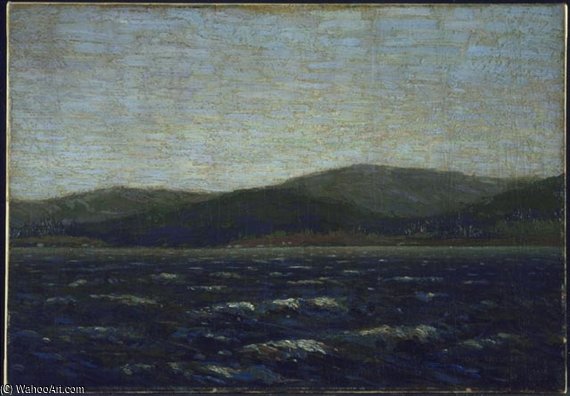
      Giant's Tomb, Georgian Bay is a work by the American painter Cephas Thompson. Born in 1775, Thompson established a presence in the American art landscape during the early nineteenth century. His practice was characterized by a transition from the precision of portraiture toward the expansive study of natural environments.

      Reprodução em óleo pintada à mão de $178 35 × 28 cm

      Mais telas de Cephas Thompson, de 11 a 55

      O que Cephas Thompson mais pintou

      Os quatro temas que mais aparecem nestas telas, cada um com o seu exemplo mais amado.

      Onde as telas de Cephas Thompson estão expostas

      Os 3 museus que detêm a maioria das pinturas desta página.

      Museus Cidade Obras de Cephas Thompson Pinturas desta lista
      Galeria Nacional do Canadá, OttawaGaleria Nacional do Canadá Ottawa 5 Spring, French River, Lumber Dam, Split Rock, Georgian Bay
      Museu de Belas Artes de Boston, BostonMuseu de Belas Artes de Boston Boston 2 The Frightened Girl, Maria De Wolf (Mrs. Robert Rogers)
      Metropolitan Museum of Art, Nova YorkMetropolitan Museum of Art Nova York 1 Mrs. Cephas Thompson (Olivia Leonard)

      As telas mais amadas de Cephas Thompson, ano a ano

      As telas datadas de Cephas Thompson nesta página abrangem apenas 6 anos, de 1805 a 1810: acompanhe-as ano a ano, sob a sua própria luz.

      1. 1805
        Maria De Wolf (Mrs. Robert Rogers) (1805) de Cephas Thompson
        Classificado em 3 de 55

        Maria De Wolf (Mrs. Robert Rogers)

        Idade: 30 · Museu de Belas Artes de Boston

        In this vertically oriented portrait from about 1805, Cephas Thompson captures Maria De Wolf (Mrs. Robert Rogers) in a quiet, three-quarter view. She is positioned slightly to the…

      2. 1810
        Mrs. Cephas Thompson (Olivia Leonard) (1810) de Cephas Thompson
        Tela 1 de 55

        Mrs. Cephas Thompson (Olivia Leonard)

        Idade: 35 · Metropolitan Museum of Art

        The portrait titled Mrs. Cephas Thompson (Olivia Leonard) captures a quiet moment of presence. It was painted by Cephas Thompson, an American artist born in Middleborough, Massachusetts. The…

      3. 1810
        The Frightened Girl (1810) de Cephas Thompson
        Tela 2 de 55

        The Frightened Girl

        Idade: 35 · Museu de Belas Artes de Boston

        The Frightened Girl is an oil on canvas work by the American painter Cephas Thompson. Executed about 1810, the portrait captures a woman positioned within a landscape. Thompson,…

      Sobre as telas de Cephas Thompson: suas perguntas respondidas

      Qual é a pintura mais conhecida de Cephas Thompson?Leia a resposta

      Mrs. Cephas Thompson (Olivia Leonard) (1810), Metropolitan Museum of Art, Nova York. Seguidos por The Frightened Girl (1810) e Maria De Wolf (Mrs. Robert Rogers) (1805).

      Qual era a idade de Cephas Thompson quando Mrs. Cephas Thompson (Olivia Leonard) foi pintada?Leia a resposta

      Cephas Thompson, nascido(a) em 1775, tinha 35 anos: Mrs. Cephas Thompson (Olivia Leonard) data de 1810.

      Quais são as 10 pinturas mais famosas de Cephas Thompson?Leia a resposta

      Mrs. Cephas Thompson (Olivia Leonard), The Frightened Girl, Maria De Wolf (Mrs. Robert Rogers), Giant's Tomb, Georgian Bay, Nicholas Robinson -, Reverend William Bruce, Lake In Algonquin Park, Lake, Shore And Sky, Autumn, Algonquin Park e James Ingram. Cada tela no ranking acima inclui o seu ano e o seu museu.

      Quantas obras Cephas Thompson pintou ao todo?Leia a resposta

      55 obras de Cephas Thompson estão em nosso catálogo, datadas de 1805 a 1810.

      Onde posso ver as telas mais famosas de Cephas Thompson?Leia a resposta

      Principalmente em Galeria Nacional do Canadá (Ottawa), Museu de Belas Artes de Boston (Boston) e Metropolitan Museum of Art (Nova York); a lista acima indica cada museu e as suas telas.

      Quando é que Cephas Thompson pintou as suas telas mais amadas?Leia a resposta

      Em 1810, que compreende 2 das 55 obras desta página, Mrs. Cephas Thompson (Olivia Leonard) entre elas.

      Quais são as primeiras e as últimas telas famosas de Cephas Thompson?Leia a resposta

      A tela mais antiga aqui é de Maria De Wolf (Mrs. Robert Rogers) (1805); a mais recente é de Mrs. Cephas Thompson (Olivia Leonard) (1810).

      O que Cephas Thompson mais pintou?Leia a resposta

      Sky (6), Landscape (5) e Lakes (5), entre as 55 obras nesta página.

      Com qual técnica Cephas Thompson pintou com mais frequência?Leia a resposta

      Oil On Canvas, utilizado em 3 das 55 obras nesta página.

      A que movimento pertence a pintura de Cephas Thompson?Leia a resposta

      Impressionism, como mostram as telas nesta página.

      Quais telas de Cephas Thompson estão expostas no Galeria Nacional do Canadá?Leia a resposta

      O Galeria Nacional do Canadá, Ottawa detém 5 das obras desta página, entre elas Spring, French River, Lumber Dam e Split Rock, Georgian Bay.

      Posso comprar uma reprodução de uma tela de Cephas Thompson?Leia a resposta

      Sim. Todas as pinturas desta página podem ser encomendadas a partir de sua própria página como uma reprodução a óleo pintada à mão, ou como uma impressão fine art, no tamanho de sua escolha.

      Cephas Thompson: uma vida em pintura

      The Luminescent Legacy of Thomas Clement Thompson

      In the grand tapestry of nineteenth-century art, few threads are as delicately woven as those left by Thomas Clement Thompson. A master of both the intimate and the expansive, Thompson’s career serves as a bridge between the meticulous precision of Georgian portraiture and the atmospheric, emotive depths of the Luminist movement. Born in Belfast in 1780, his life was shaped by the intellectual and artistic currents of an era defined by transition. His early training at the Dublin Society Schools, which began in 1796, provided him with a rigorous academic foundation, instilling a profound command over draughtsmanship and tonal manipulation that would remain the hallmark of his artistry throughout his long and distinguished life.

      Thompson first rose to prominence through the delicate medium of portrait miniatures. These small-scale works, characterized by their remarkable sensitivity, allowed him to capture the very essence of his subjects with a precision that enchanted the high society of Belfast and Dublin. There is an inherent intimacy in the miniature, a quiet dialogue between the artist and the sitter, which Thompson navigated with unparalleled grace. His ability to render nuanced expressions and the subtle textures of skin and fabric made him a sought-after chronicler of the era's most notable figures, including royalty such as George IV.

      A Transition Toward the Sublime

      As the nineteenth century progressed, Thompson underwent a profound artistic metamorphosis. Between 1803 and 1809, he made the deliberate and daring decision to pivot from the miniature format toward large-scale portraiture and landscape painting. This shift was not merely a change in scale, but a fundamental evolution in his aesthetic philosophy. Influenced by the monumental styles of Joshua Reynolds and Benjamin West, Thompson began to explore the concept of the sublime—the idea that art should evoke awe through the depiction of nature's grandeur and the play of light.

      This period saw him embracing the principles of Luminism, a style that prioritizes the effects of light and atmosphere. In his landscapes, such as the evocative Early Snow, Algonquin Park or the dynamic Thunder Cloud, one can witness his mastery of atmospheric perspective. He utilized soft, diffused light and muted color palettes to create immersive vistas where the boundaries between earth and sky seem to dissolve. Through these works, Thompson did not merely paint scenery; he captured the ephemeral, fleeting moments of weather and light that define the human experience of the natural world.

      Legacy and Historical Significance

      Thompson’s influence extended far beyond the borders of Ireland. By 1817, his burgeoning success led him to establish a new studio in London, where he became a regular fixture at the prestigious Royal Academy exhibitions. His presence in the London art scene solidified his reputation as an international figure of significant merit. His commitment to the institutionalization of art was equally profound; as a founding member of the Royal Hibernian Academy, he played a crucial role in shaping the artistic landscape of Ireland for generations to come.

      The later years of his life saw him settling in Cheltenham, where he continued to refine his craft until his passing in 1857. When reflecting on his body of work, several key achievements emerge:

      • Mastery of Scale: His seamless transition from the microscopic detail of miniatures to the sweeping vistas of landscape painting.
      • Luminist Innovation: His ability to use light as a primary subject, creating atmospheric depth and emotional resonance.
      • Institutional Impact: His foundational role in the Royal Hibernian Academy, fostering a structured environment for Irish artists.
      • Societal Connection: His skill in capturing the likenesses of the political and social elite, preserving the visual history of the Georgian and Victorian eras.

      Today, the works of Thomas Clement Thompson remain vital touchstones for students of art history. They stand as a testament to an artist who could move effortlessly between the quietest whisper of a portrait and the thunderous roar of a storm-swept sky, leaving behind a legacy of light, shadow, and enduring beauty.