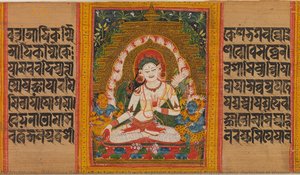
Mahavihara Master: A Legacy of Buddhist Art from Bengal
Mahavihara Master, a name whispered in the halls of art history and revered within the Buddhist community, stands as one of the most significant figures in the artistic landscape of Pala-era India. Born in Bengaluru, India – though his precise birthdate remains shrouded in the mists of time – he emerged from the rich tradition of monastic painting centered around Somapura Mahavihara in modern-day Bangladesh. His work isn’t merely decorative; it's a profound visual meditation on Buddhist philosophy and practice, offering an intimate glimpse into the spiritual world of 12th-century Bengal.
Little is definitively known about his early life. He likely began his artistic training within the walls of Somapura Mahavihara, a renowned center of learning and artistic production during the Pala dynasty (8th to 12th centuries). This era witnessed a remarkable flourishing of Buddhist art in eastern India, fueled by royal patronage and a deep engagement with Mahayana Buddhism. The Master’s style reflects this environment – a harmonious blend of influences, incorporating elements from earlier Pan-Indian Ajanta styles while simultaneously forging a distinct regional identity.
The Ashtasahasrika Prajnaparamita Sutra: A Foundation for His Art
Mahavihara Master is most celebrated for his meticulous and profoundly moving illustrations of the Ashtasahasrika Prajnaparamita Sutra, a cornerstone text in Mahayana Buddhism. This vast treatise on the perfection of wisdom explores the path to enlightenment through profound contemplation and skillful means. The manuscript he illuminated – now shared between the National Museum in New Delhi and the Los Angeles County Museum of Art – is considered one of the finest examples of Pala-era Buddhist art, showcasing a remarkable level of detail and spiritual depth.
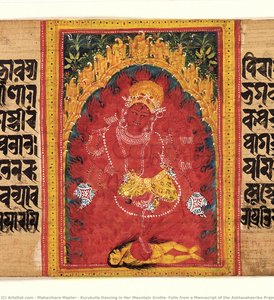
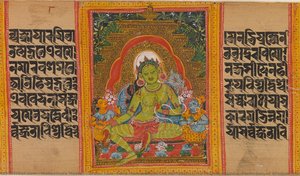
The sheer scale of the project demanded immense patience and skill. Each folio, meticulously rendered on palm leaves, depicts key moments within the sutra’s narrative, often featuring vibrant depictions of Bodhisattvas, deities, and enlightened beings. The Master's approach is characterized by a remarkable sense of volume – figures appear to emerge from the page with startling realism – achieved through subtle shading and masterful use of perspective. His color palette is equally restrained yet evocative, employing earthy tones and delicate washes to convey a profound sense of serenity and grace.
Key Works: Embodiments of Buddhist Wisdom
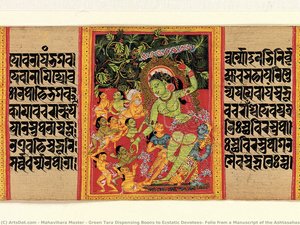
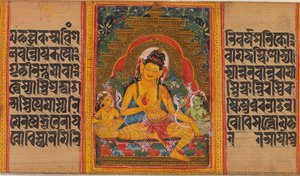
Among his most celebrated works are the depictions of Green Tara dispensing boons to ecstatic devotees and Avalokiteshvara, the Bodhisattva of Compassion. The “Green Tara” folio (circa 1101) is particularly striking for its dynamic composition and the palpable energy radiating from the central figure. She’s not merely a serene goddess; she's an active force of compassion, bestowing blessings upon her devotees with effortless grace. Similarly, the Avalokiteshvara folio captures the essence of his role as a guide to enlightenment, conveying both wisdom and empathy through his compassionate gaze and outstretched hands.
- Green Tara Dispensing Boons: A vibrant depiction showcasing the Bodhisattva’s boundless compassion.
- Bodhisattva Avalokiteshvara Dispensing Boons: An illustration emphasizing the path to enlightenment through wisdom and compassion.
Influence and Legacy
Mahavihara Master's work represents a pivotal moment in Indian Buddhist art, bridging the gap between earlier Pan-Indian styles and the evolving traditions of Bengal. His meticulous attention to detail, his profound understanding of Buddhist iconography, and his masterful use of color and perspective have secured his place as one of the most important artists of the Pala period. His influence can be seen in subsequent generations of Indian Buddhist painters, who continued to draw inspiration from his elegant style and spiritual depth.
Beyond its artistic merit, Mahavihara Master’s work offers a valuable window into the religious and cultural landscape of 12th-century Bengal. It reflects the fervent devotion to Buddhism that characterized the Pala dynasty, as well as the sophisticated intellectual traditions fostered within the monastic centers of the era. His legacy continues to inspire artists and scholars today, reminding us of the enduring power of Buddhist art to illuminate the path to enlightenment.
Further Exploration
The Bodhisattva Avalokiteshvara Dispensing Boons: Folio from an Ashtasahasrika Prajnaparamita Manuscript (Metropolitan Museum of Art)
Los Angeles County Museum of Art
Ravi Varma | Biography, Paintings, Royal Court Artist, & Printmaker (Britannica)