Ateliê — Envio gratuito para todo o mundo — Entrega em 2–6 semanas
      Simão Vouet, 1590 – 1649

      As 100 pinturas mais famosas de Simão Vouet, classificadas

      A pintura mais amada de Simão Vouet é Venus e Adonis (1642), que está exposta no J. Paul Getty Museum, Los Angeles. The Muses of Urania and Calliope (1634) e Annunciation (1640) vêm a seguir entre as telas que os leitores mais conhecem. O nosso catálogo contém 166 obras de Simão Vouet: aqui estão as 100 mais famosas, cada uma com o seu ano, o seu museu e o que a torna memorável.

      Classificado de acordo com o nosso índice de popularidade, que combina buscas, visitas e pedidos de cada obra. Atualizado em Novembro 2026. Cada pintura nesta página pode ser encomendada como uma reprodução a óleo pintada à mão sobre tela de linho, ou como uma impressão fine art, feita no tamanho que escolher.

      Retrato de Simão Vouet
      Simão Vouet · 1590 – 1649
      Nascimento · falecimento
      1590 – 1649, Paris
      Movimento
      French baroque
      Obras em nosso catálogo
      166
      As mais famosas
      Venus e Adonis (1642)
      Mais obras em
      Museu do Louvre

      As 10 principais pinturas de Simão Vouet: as telas que todos conhecem

      Venus e Adonis (1642) de Simão Vouet
      1

      Venus e Adonis

      1642 · Acrílico sobre tela · J. Paul Getty Museum, Los Angeles

      Venus and Adonis: A Baroque Symphony of Desire and Mortality Simon Vouet’s “Venus and Adonis,” completed in 1642, transcends mere depiction; it embodies the very essence of French Baroque art—a masterful fusion of Italian influences and profound emotional resonance. This iconic scene from Ovid's *Metamorphoses* captures the pivotal moment where Venus attempts to persuade Adonis to abandon his pursuit of hunting, foreshadowing his tragic fate. Vouet doesn’t simply portray mythology;…

      Reprodução em óleo pintada à mão de $195 27 × 37 cm
      The Muses of Urania and Calliope (1634) de Simão Vouet
      2

      The Muses of Urania and Calliope

      1634 · Oil On Panel · National Gallery of Art, Washington

      The painting titled The Muses of Urania and Calliope is a mythological painting executed by the artist Simon Vouet. This work was completed in 1634. It depicts the figures of the goddesses Urania and Calliope within a structured setting.

      Reprodução em óleo pintada à mão de $195 40 × 25 cm Mesmo tamanho da original $488 125 × 80 cm Encomendar no tamanho original →
      Annunciation (1640) de Simão Vouet
      3

      Annunciation

      1640 · Oil On Canvas · Galleria degli Uffizi, Florença

      Simon Vouet's "Annunciation," painted in 1640, is more than just a religious depiction; it’s a masterful orchestration of light, shadow, and human emotion. This captivating work transports the viewer to an intimate interior space, where the momentous announcement of Mary’s divine conception unfolds with breathtaking drama. The painting immediately draws the eye to the kneeling figure of the Virgin Mary, bathed in a warm, golden glow emanating from the right…

      Reprodução em óleo pintada à mão de $370 27 × 37 cm Mesmo tamanho da original $676 86 × 121 cm Encomendar no tamanho original →
      The Fortuneteller (detail) (1617) de Simão Vouet
      4

      The Fortuneteller (detail)

      1617 · Oil On Canvas · Galleria Nazionale d'Arte Antica, Roma

      In the heart of 1617, amidst the vibrant and transformative atmosphere of Roman artistic circles, Simon Vouet captured a moment of profound human connection in his masterpiece, The Fortuneteller. This work, particularly when viewed in its intimate details, serves as much more than a mere portrait; it is an emblem of the burgeoning Baroque style that was beginning to reshape the visual landscape of Europe. The scene unfolds with a…

      Reprodução em óleo pintada à mão de $195 32 × 31 cm
      Sleeping Venus (1630) de Simão Vouet
      5

      Sleeping Venus

      1630 · Acrylic On Canvas · Szépművészeti Múzeum, Budapeste

      Simon Vouet's "Sleeping Venus," painted around 1630, is not merely a depiction of a reclining nude; it’s an exquisite distillation of Renaissance ideals and the burgeoning Baroque aesthetic. This captivating work transcends simple portraiture, offering instead a profound meditation on beauty, repose, and the delicate balance between earthly pleasure and spiritual contemplation. The painting immediately draws the viewer into a world of hushed tranquility, inviting us to share in the…

      Reprodução em óleo pintada à mão de $195 29 × 34 cm Mesmo tamanho da original $436 84 × 100 cm Encomendar no tamanho original →
      Allegory of Virtue (1634) de Simão Vouet
      6

      Allegory of Virtue

      1634 · Acrylic On Canvas · Museu do Louvre, Paris

      Simon Vouet’s “Allegory of Virtue,” completed around 1634, stands as a testament to the burgeoning Baroque aesthetic infiltrating French artistic circles during Louis XIII's reign. More than just a portrait—though it undeniably depicts a woman radiating grace and authority—the painting delves into profound philosophical concepts rooted in humanist ideals prevalent at the time.

      Reprodução em óleo pintada à mão de $195 23 × 43 cm Mesmo tamanho da original $928 113 × 210 cm Encomendar no tamanho original →
      The Entombment (1638) de Simão Vouet
      7

      The Entombment

      1638 · Oil On Canvas · Museu Fitzwilliam, Cambridge

      Simon Vouet's "The Entombment," painted in 1635–1638, is not merely a depiction of a biblical scene; it’s an exquisitely rendered meditation on grief, faith, and the profound dignity of sacrifice. This monumental work, currently residing within the collection of the Fitzwilliam Museum in Cambridge, transcends its subject matter to become a powerful testament to the Baroque era's ability to evoke intense emotion through masterful technique and carefully considered symbolism. Vouet,…

      Reprodução em óleo pintada à mão de $195 27 × 37 cm Mesmo tamanho da original $241 42 × 57 cm Encomendar no tamanho original →
      Angels with Attributes of the Passion: Angel Holding the Vessel and Towel for washing the hands of Pontius Pilate (1624) de Simão Vouet
      8

      Angels with Attributes of the Passion: Angel Holding the Vessel and Towel for washing the hands of Pontius Pilate

      1624 · Oil · Minneapolis Institute of Art, Minneapolis

      A single celestial figure emerges from a deep, near-black void, commanding the space with an intimate and monumental presence. This angel, caught in a moment of profound spiritual devotion, gazes upward with eyes full of soulful contemplation or sorrow. The light descends from the upper left, carving the figure out of the darkness and casting soft, tender shadows across a face etched with emotion. Every detail feels immediate, from the…

      Reprodução em óleo pintada à mão de $195 27 × 37 cm
      Saint John (1623) de Simão Vouet
      9

      Saint John

      1623 · Oil On Canvas · Philadelphia Museum of Art, Filadélfia

      A young man turns his face toward a light that remains unseen. His eyes, wide and searching, catch a glimmer that pulls his gaze upward, away from the dark, murky depths of the background. Thick, dark curls frame a pale face, creating a sharp contrast against the heavy shadows that swallow the space around him. He is caught in a moment of sudden, quiet realization. The light does not merely…

      Reprodução em óleo pintada à mão de $195 30 × 34 cm
      Virgin and Child, with an Angel (1642) de Simão Vouet
      10

      Virgin and Child, with an Angel

      1642 · Oil On Panel · Philadelphia Museum of Art, Filadélfia

      The light falls softly upon the skin of the Virgin Mary, catching the curve of her cheek and the small, smooth hands of the Christ Child. They sit within a triangular arrangement that anchors the composition, surrounded by the deep shadows of a dense woodland. An angel leans into this intimate circle, its robes glowing with warm yellows and golds that contrast against the heavy, dark trees behind them. At…

      Reprodução em óleo pintada à mão de $245 31 × 32 cm Mesmo tamanho da original $492 91 × 94 cm Encomendar no tamanho original →

      Mais telas de Simão Vouet, de 11 a 100

      Allegory (1640) de Simão Vouet
      #15

      Allegory

      1640 · Museus Capitolinos

      Simon Vouet executed Allegory during his residency in Rome, a period spanning from 1614 to 1627. The work was commissioned by Marcello Sacchetti, a 17th-century Italian merchant and…

      Leve esta luz para casa a partir de $295 →
      Vanitas (1621) de Simão Vouet
      #24

      Vanitas

      1621 · Museu Nacional de Varsóvia

      In Vanitas, Simon Vouet centers the composition on a tight, intimate encounter between two figures. A young woman and an older man emerge from a deep, near-black background…

      Leve esta luz para casa a partir de $220 →
      Saint Cecilia (1626) de Simão Vouet
      #40

      Saint Cecilia

      1626 · Blanton Museum of Art

      Simon Vouet’s Saint Cecilia dates to 1626. The artist, born in Paris, France, in 1590, produced this work during a period of significant stylistic transition. His training began…

      Encomende esta tela a partir de $220 →
      The Entombment (1637) de Simão Vouet
      #48

      The Entombment

      1637 · Musée d'Art Roger-Quilliot

      The Entombment is an oil painting by Simon Vouet, dated 1638. The work depicts the burial of Jesus Christ, a central subject in Christian iconography. The scene captures…

      Encomende esta tela a partir de $320 →
      Allegory of Peace (1627) de Simão Vouet
      #79

      Allegory of Peace

      1627 · Galleria Nazionale d'Arte Antica

      Completed in 1627, Allegory of Peace by Simon Vouet offers a profound look into the intellectual fervor and humanist aspirations of the seventeenth century. This work emerged during…

      Encomende esta tela a partir de $195 →
      Caritas Romana de Simão Vouet
      #88

      Caritas Romana

      Museu Nacional de Varsóvia

      In Caritas Romana, Simon Vouet presents a quiet, emotionally charged encounter between two figures. The composition centers on a woman cradling an older, bearded man, creating an intimate…

      Encomende esta tela a partir de $220 →

      As telas de Simão Vouet, período por período

      O que Simão Vouet mais pintou

      Os quatro temas que mais aparecem nestas telas, cada um com o seu exemplo mais amado.

      Onde as telas de Simão Vouet estão expostas

      Os 8 museus que detêm a maioria das pinturas desta página.

      Museus Cidade Obras de Simão Vouet Pinturas desta lista
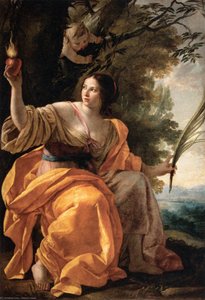
      Museu do Louvre, ParisMuseu do Louvre Paris 20 Allegory of Virtue, Heavenly Charity, POLYMNIE, MUSE DE L'ELOQUENCE
      Szépművészeti Múzeum, BudapesteSzépművészeti Múzeum Budapeste 5 Sleeping Venus, Parnassus or Apollo and the Muses, Parnassus or Apollo and the Muses (detail)
      Galleria Nazionale d'Arte Antica, RomaGalleria Nazionale d'Arte Antica Roma 4 The Fortuneteller (detail), Allegory of Peace, The Fortune Teller
      National Gallery of Art, WashingtonNational Gallery of Art Washington 3 The Muses of Urania and Calliope, Madonna and Child, St Jerome and the Angel
      Museu Nacional de Varsóvia, VarsóviaMuseu Nacional de Varsóvia Varsóvia 4 Vanitas, Caritas Romana
      Museu de Arte do Condado de Los Angeles, Los AngelesMuseu de Arte do Condado de Los Angeles Los Angeles 3 Model for Altarpiece in St. Peter's, Model for Altarpiece in St. Peter's
      Minneapolis Institute of Art, MinneapolisMinneapolis Institute of Art Minneapolis 2 Angels with Attributes of the Passion: Angel Holding the Vessel and Towel for washing the hands of Pontius Pilate, Angels with Attributes of the Passion, the Superscription from the Cross
      Philadelphia Museum of Art, FiladélfiaPhiladelphia Museum of Art Filadélfia 2 Saint John, Virgin and Child, with an Angel

      A tela mais amada de cada década de Simão Vouet

      1. 1610s
        The Fortuneteller (detail) (1617) de Simão Vouet
        Tela 4 de 100

        The Fortuneteller (detail)

        Idade 20 – 29 · Galleria Nazionale d'Arte Antica

        In the heart of 1617, amidst the vibrant and transformative atmosphere of Roman artistic circles, Simon Vouet captured a moment of profound human connection in his masterpiece, The…

      2. 1620s
      3. 1630s
        The Muses of Urania and Calliope (1634) de Simão Vouet
        Tela 2 de 100

        The Muses of Urania and Calliope

        Idade 40 – 49 · National Gallery of Art

        The painting titled The Muses of Urania and Calliope is a mythological painting executed by the artist Simon Vouet. This work was completed in 1634. It depicts the…

      4. 1640s
        Venus e Adonis (1642) de Simão Vouet
        1 de 100

        Venus e Adonis

        Idade 50 – 59 · J. Paul Getty Museum

        Venus and Adonis: A Baroque Symphony of Desire and Mortality Simon Vouet’s “Venus and Adonis,” completed in 1642, transcends mere depiction; it embodies the very essence of French…

      Sobre as telas de Simão Vouet: suas perguntas respondidas

      Qual é a pintura mais conhecida de Simão Vouet?Leia a resposta

      Venus e Adonis (1642), J. Paul Getty Museum, Los Angeles. Seguidos por The Muses of Urania and Calliope (1634) e Annunciation (1640).

      Qual era a idade de Simão Vouet quando Venus e Adonis foi pintada?Leia a resposta

      Simão Vouet, nascido(a) em 1590, tinha 52 anos: Venus e Adonis data de 1642.

      Quais são as 10 pinturas mais famosas de Simão Vouet?Leia a resposta

      Venus e Adonis, The Muses of Urania and Calliope, Annunciation, The Fortuneteller (detail), Sleeping Venus, Allegory of Virtue, The Entombment, Angels with Attributes of the Passion: Angel Holding the Vessel and Towel for washing the hands of Pontius Pilate, Saint John e Virgin and Child, with an Angel. Cada tela no ranking acima inclui o seu ano e o seu museu.

      Quantas obras Simão Vouet pintou ao todo?Leia a resposta

      166 obras de Simão Vouet estão em nosso catálogo, datadas de 1614 a 1645.

      Onde posso ver as telas mais famosas de Simão Vouet?Leia a resposta

      Principalmente em Museu do Louvre (Paris), Szépművészeti Múzeum (Budapeste) e Galleria Nazionale d'Arte Antica (Roma); a lista acima indica cada museu e as suas telas.

      Quando é que Simão Vouet pintou as suas telas mais amadas?Leia a resposta

      Em 1620s, que compreende 31 das 100 obras desta página, Angels with Attributes of the Passion: Angel Holding the Vessel and Towel for washing the hands of Pontius Pilate entre elas.

      Quais são as primeiras e as últimas telas famosas de Simão Vouet?Leia a resposta

      A tela mais antiga aqui é de Lovers (1614); a mais recente é de Allegory of Prudence (1645).

      O que Simão Vouet mais pintou?Leia a resposta

      Woman (37), Man (34) e Skin (16), entre as 100 obras nesta página.

      Com qual técnica Simão Vouet pintou com mais frequência?Leia a resposta

      Oil On Canvas, utilizado em 66 das 100 obras nesta página.

      A que movimento pertence a pintura de Simão Vouet?Leia a resposta

      French baroque, como mostram as telas nesta página.

      Quais telas de Simão Vouet estão expostas no Museu do Louvre?Leia a resposta

      O Museu do Louvre, Paris detém 12 das obras desta página, entre elas Allegory of Virtue, Heavenly Charity e POLYMNIE, MUSE DE L'ELOQUENCE.

      Posso comprar uma reprodução de uma tela de Simão Vouet?Leia a resposta

      Sim. Todas as pinturas desta página podem ser encomendadas a partir de sua própria página como uma reprodução a óleo pintada à mão, ou como uma impressão fine art, no tamanho de sua escolha.

      Simão Vouet: uma vida em pintura

      Simon Vouet: O Pioneiro da Pintura Barroca Francesa

      Simon Vouet emerge como uma figura crucial na transição da pintura francesa do Maneirismo para o vibrante estilo Barroco. Nascido em Paris, em 1590, numa família já dedicada às artes – seu pai, Laurent, era pintor e seu irmão, Aubin, também trilhou esse caminho artístico – Vouet recebeu uma formação inicial sólida que lançou as bases para sua futura ascensão. A continuidade da tradição familiar seria assegurada por seu neto, Ludovico Dorigny, perpetuando o legado artístico da família.

      Os Primeiros Passos e a Influência Italiana (1608-1627)

      A carreira de Vouet floresceu inicialmente através do retrato, demonstrando um talento precoce para capturar a essência dos seus modelos. Aos meros 14 anos, já se aventurava por terras estrangeiras, viajando para a Inglaterra a convite para pintar um retrato encomendado, sinalizando o reconhecimento crescente de seu nome. Em 1611, acompanhou o Barão de Sancy, embaixador francês no Império Otomano, numa jornada que o levou através de Constantinopla e, posteriormente, à encantadora Veneza em 1612. Roma, contudo, provou ser um ponto de inflexão transformador em sua trajetória artística. Durante os treze anos que passou na cidade, imergiu-se no fervilhante cenário artístico do período Barroco nascente.

      Sua estadia italiana foi uma verdadeira imersão em diversas influências artísticas. Vouet estudou avidamente as técnicas inovadoras de iluminação dramática de Caravaggio, abraçou elementos do Maneirismo italiano e analisou meticulosamente as paletas de cores e a perspectiva di sotto in su (perspectiva caputexta) magistralmente utilizada por Paolo Veronese. A inspiração também veio das obras dos irmãos Carracci, Guercino, Lanfranco e Guido Reni, sintetizando essas diversas influências num estilo único e pessoal.

      A Formação de um Estilo Distintivo

      O reconhecimento de Vouet em Roma culminou com sua eleição como presidente da prestigiosa Accademia di San Luca em 1624, uma prova incontestável de sua habilidade e prestígio no mundo da arte italiana. Seu estilo se caracterizava pela capacidade singular de absorver e refinar diversas influências artísticas, não apenas copiando, mas integrando-as numa estética Barroca distintamente italianizante. Ao retornar à França em 1627, desempenhou um papel crucial na introdução do estilo Barroco italiano à pintura francesa, impactando profundamente a paisagem artística do país.

      O Auge e o Legado

      A nomeação como Premier peintre du Roi (Primeiro Pintor do Rei) coroou sua carreira, conferindo-lhe prestígio e influência consideráveis. Vouet manteve um ateliê vasto e ativo, formando inúmeros artistas que moldariam a geração seguinte de pintores franceses. Entre seus alunos mais influentes destacam-se Charles Le Brun (que posteriormente organizou toda a pintura decorativa em Versalhes), Valentin de Boulogne, Charles Alphonse du Fresnoy, Pierre Mignard, Eustache Le Sueur e Claude Mellan. Sua influência se estende além de suas próprias obras; seus alunos disseminaram seu estilo e técnicas por toda a França, estabelecendo uma escola de pintura barroca distintamente francesa. A marca de Vouet é particularmente evidente nos grandiosos esquemas decorativos encomendados por Luís XIV.

      Significado Histórico

      O legado de Simon Vouet reside em seu papel fundamental como ponte entre a arte italiana e a francesa. Ele conseguiu importar com sucesso o dinamismo e a grandiosidade do Barroco italiano, transformando-o num estilo que ressoava com os gostos da corte e da aristocracia francesas. Sua influência é inegável no desenvolvimento da pintura francesa durante o século XVII, e suas contribuições continuam sendo reconhecidas por historiadores de arte até hoje.